


5088 Results
Form:
books
books

Actions:
Price:
$68.50
(available to order)
Summary:
No creature on earth is better at pretending than we humans. The title of this book is a way of saying that our daily life is nothing other than a show played out in our minds. We have a talent for creating a fantasy world. Luckily for us. He who is unable to daydream becomes hopelessly depressed. Our talent for simulating is so strong that we are even able to pretend(...)
Title:
Theo Jansen. The great pretender
Actions:
Price:
$68.50
(available to order)
Summary:
No creature on earth is better at pretending than we humans. The title of this book is a way of saying that our daily life is nothing other than a show played out in our minds. We have a talent for creating a fantasy world. Luckily for us. He who is unable to daydream becomes hopelessly depressed. Our talent for simulating is so strong that we are even able to pretend that we exist. We simulate a first-person form, an ’I’. In The Great Pretender, kinetic artist Theo Jansen shows that the ’I’ we envision is a tool in our evolution. We need this tool to be selfish. There can be no selfishness without the I-fantasy. Since 1990 Theo Jansen has been engaged in creating new forms of life: beach animals. These are not made of protein like the existing life-forms but from another basic stuff, yellow plastic tubing. Skeletons made from these tubes are able to walk. They get their energy from the wind, so they don’t have to eat like regular animals. They evolved over many generations, becoming increasingly adept at surviving storms and and water from the sea. Theo Jansen’s ultimate wish is to release herds of these animals on the shore. In redoing the Creation, so to speak, he hopes to become wiser in his dealings with the existing nature by encountering problems the Real Creator had to face. The Great Pretender is a testimonial to his experiences as God. It’s not easy being God; there are plenty of disappointments along the way. But on the few occasions that things work out, being God is the most wonderful thing in the world. Includes a companiond DVD of beach animal videos.
Form:
books
books
Publication:
October 2007, Rotterdam
October 2007, Rotterdam
Subject:
Architecture Monographs
Architecture Monographs
Form:
books
books
Price:
$47.00
(available to order)
Summary:
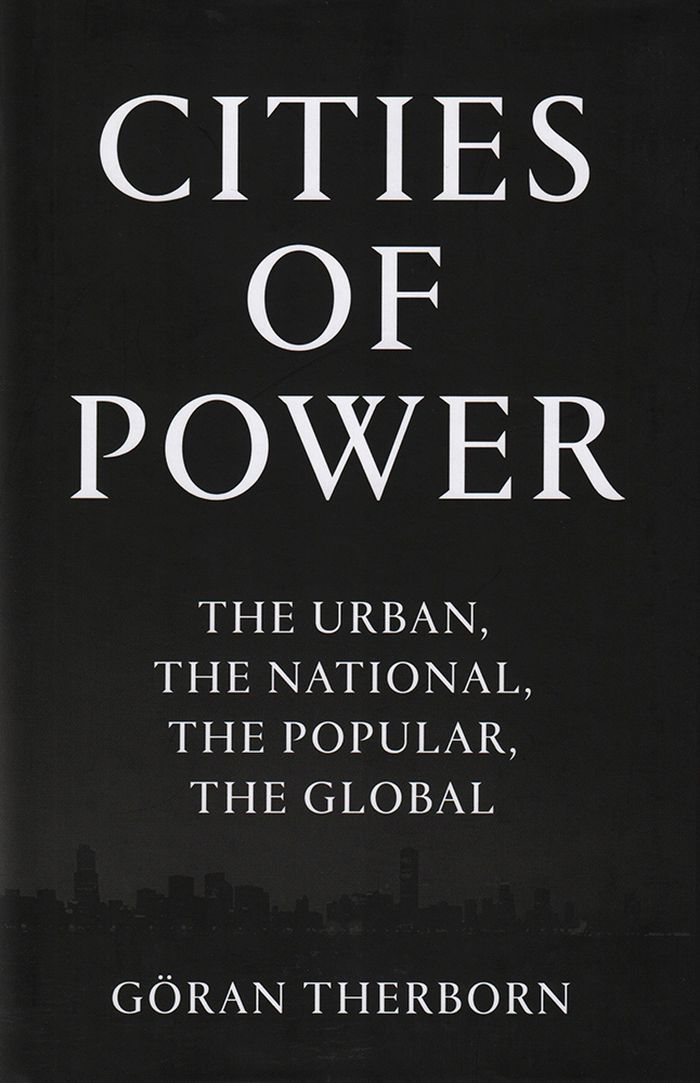
In this survey of the politics and meanings of urban landscapes, leading sociologist Göran Therborn offers a tour of the world’s major capital cities, showing how they have been shaped by national, popular, and global forces. Their stories begin with the emergence of various kinds of nation-state, each with its own special capital city problematic. In turn, radical shifts(...)
Title:
Cities of power: the urban, the national, the popular, the global
Actions:
Price:
$47.00
(available to order)
Summary:
In this survey of the politics and meanings of urban landscapes, leading sociologist Göran Therborn offers a tour of the world’s major capital cities, showing how they have been shaped by national, popular, and global forces. Their stories begin with the emergence of various kinds of nation-state, each with its own special capital city problematic. In turn, radical shifts of power have impacted on these cities’ development, in popular urban reforms or movements of protest and resistance; in the rise and fall of fascism and military dictatorships; and the coming and going of Communism. Therborn also analyzes global moments of urban formation, of historical globalized nationalism, as well as the cities of current global image capitalism and their variations of skyscraping, gating, and displays of novelty. Through a global, historical lens, and with a thematic range extending from the mutations of modernist architecture to the contemporary return of urban revolutions, Therborn questions received assumptions about the source, manifestations, and reach of urban power, combining perspectives on politics, sociology, urban planning, architecture, and urban iconography. He argues that, at a time when they seem to be moving apart, there is a strong link between the city and the nation-state, and that the current globalization of cities is largely driven by the global aspirations of politicians as well as those of national and local capital. With its unique systematic overview, from Washington, D.C. and revolutionary Paris to the flamboyant twenty- first-century capital Astana in Kazakhstan, its wealth of urban observations from all the populated continents, and its sharp and multi-faceted analyses, Cities of Power forces us to rethink our urban future, as well as our historically shaped present.
Form:
books
books
Publication:
May 2017
May 2017
Subject:
Urban Theory
Urban Theory
Form:
books
books
Actions:
Price:
$33.95
(available to order)
Summary:
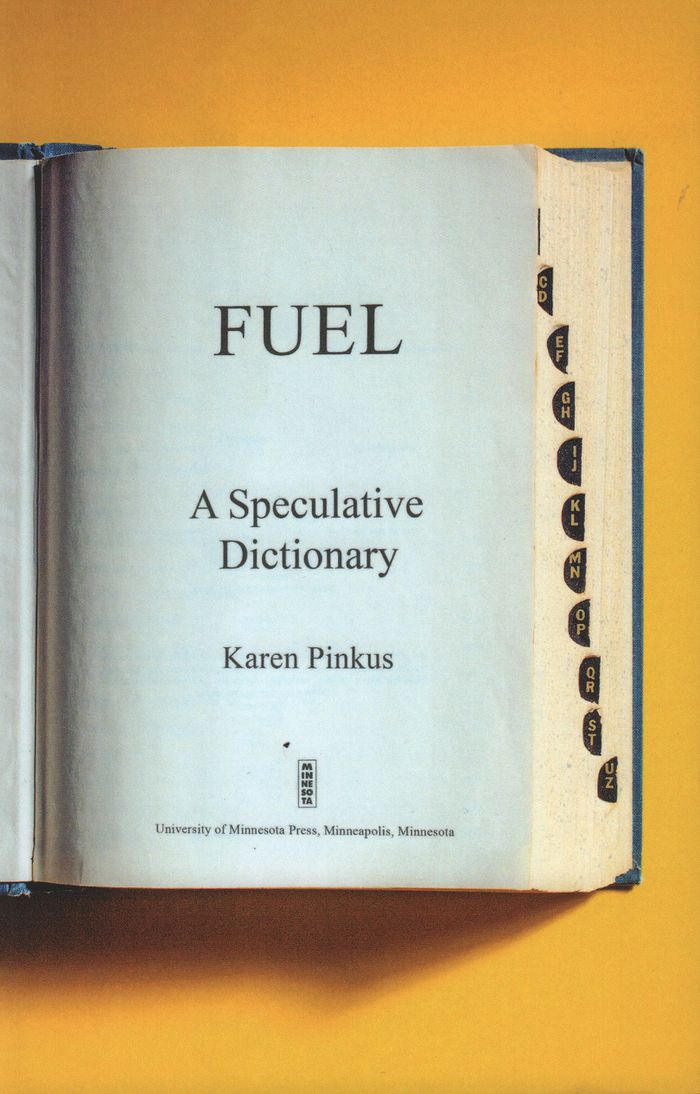
"Fuel" is an idiosyncratic, speculative dictionary of fuels, real and imagined, historical and futuristic, hopeless and utopian. Drawing on literature, film, and scientific treatises--most produced long before "climate change" was in circulation--"Fuel" argues for a distinction between energy (a system of power) and fuel (a substance, which can be thought of as(...)
Title:
Fuel : a speculative dictionary
Actions:
Price:
$33.95
(available to order)
Summary:
"Fuel" is an idiosyncratic, speculative dictionary of fuels, real and imagined, historical and futuristic, hopeless and utopian. Drawing on literature, film, and scientific treatises--most produced long before "climate change" was in circulation--"Fuel" argues for a distinction between energy (a system of power) and fuel (a substance, which can be thought of as "potentiality") as it endeavors to undo the dream that we can simply switch to renewables and all will be golden. From "Air" to "Zyklon B," entries in this unusual "dictionary" include Algae, Clathrates, Dilithium, Fleece, Goats, Theology, Whale Oil, and many, many more. The tone of the entries ranges as widely as the topics: from historical anecdotes (the Ford Fiesta "boozemobile") to eccentric readings of the classics of "energy lit" ( Germinal and Oil! ); from literary observations (a high octane Odyssey ?) to excursions into literary theory. The dictionary draws from an eccentric canon, including works by Jules Verne, George Eliot's Silas Marner , Paolo Bacigalupi's Windup Girl , and the Tom Cruise vehicle Oblivion , among others. A message from this ambitious project is that energy can be understood as a heterogeneous set of self-mystifying systems or machines that block access to thought as they fascinate us. Fuels emerge as more primal elements that the audience can grasp at various points along the way to consumption/combustion. This dictionary can help scramble our thinking about fuel--not in order to demonize energy and not in order to create a new hierarchy in which certain renewables take over from fossil fuels but instead to open up potential ways of interacting with real and imaginary substances, by wrenching them out of narrative and placing them into an idiosyncratic dictionary to be applied by readers into new narratives.
Form:
books
books
Publication:
November 2016
November 2016
Subject:
Environment and environmental theory
Environment and environmental theory
Form:
books
books
Actions:
Price:
$22.99
(available to order)
Summary:
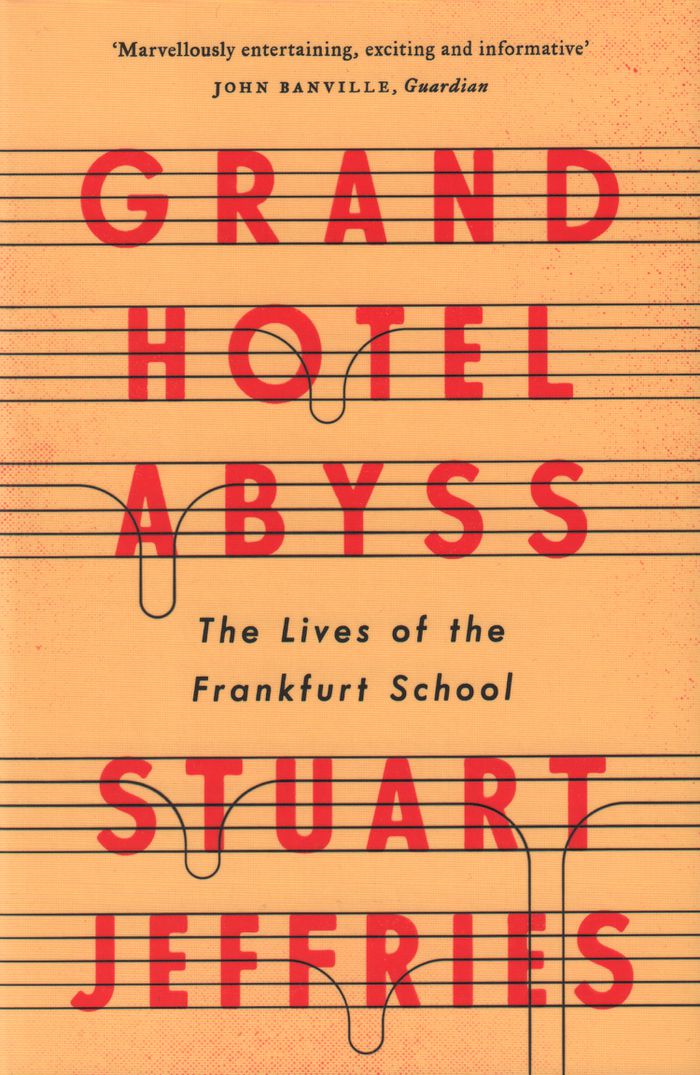
In 1923, a group of young radical German thinkers and intellectuals came together to at Victoria Alle 7, Frankfurt, determined to explain the workings of the modern world. Among the most prominent members of what became the Frankfurt School were the philosophers Walter Benjamin, Theodor Adorno, Max Horkheimer, and Herbert Marcuse. Not only would they change the way we(...)
Title:
Grand Hotel Abyss: the lives of the Frankfurt school
Actions:
Price:
$22.99
(available to order)
Summary:
In 1923, a group of young radical German thinkers and intellectuals came together to at Victoria Alle 7, Frankfurt, determined to explain the workings of the modern world. Among the most prominent members of what became the Frankfurt School were the philosophers Walter Benjamin, Theodor Adorno, Max Horkheimer, and Herbert Marcuse. Not only would they change the way we think, but also the subjects we deem worthy of intellectual investigation. Their lives, like their ideas, profoundly, sometimes tragically, reflected and shaped the shattering events of the twentieth century. "Grand Hotel Abyss" combines biography, philosophy, and storytelling to reveal how the Frankfurt thinkers gathered in hopes of understanding the politics of culture during the rise of fascism. Some of them, forced to escape the horrors of Nazi Germany, later found exile in the United States. Benjamin, with his last great work—the incomplete Arcades Project—in his suitcase, was arrested in Spain and committed suicide when threatened with deportation to Nazi-occupied France. On the other side of the Atlantic, Adorno failed in his bid to become a Hollywood screenwriter, denounced jazz, and even met Charlie Chaplin in Malibu. After the war, there was a resurgence of interest in the School. From the relative comfort of sun-drenched California, Herbert Marcuse wrote the classic One Dimensional Man, which influenced the 1960s counterculture and thinkers such as Angela Davis; while in a tragic coda, Adorno died from a heart attack following confrontations with student radicals in Berlin. By taking popular culture seriously as an object of study—whether it was film, music, ideas, or consumerism—the Frankfurt School elaborated upon the nature and crisis of our mass-produced, mechanised society. Grand Hotel Abyss shows how much these ideas still tell us about our age of social media and runaway consumption.
Form:
books
books
Publication:
September 2017
September 2017
Subject:
Critical Theory
Critical Theory
Form:
books
books
Actions:
Price:
$90.00
(available to order)
Summary:
"Things as they are" presents the story of photojournalism over fifty years, from 1955 until today. It takes us from the golden era of the illustrated press—the heyday of Life magazine and Picture Post, and the moment of the Museum of Modern Art’s defining Family of Man exhibition—to the explosion of digital media in the twenty-first century. This history is told through(...)
Publication:
March 2006, New York
March 2006, New York
Title:
Things as they are : photojournalism in context since 1955
Actions:
Price:
$90.00
(available to order)
Summary:
"Things as they are" presents the story of photojournalism over fifty years, from 1955 until today. It takes us from the golden era of the illustrated press—the heyday of Life magazine and Picture Post, and the moment of the Museum of Modern Art’s defining Family of Man exhibition—to the explosion of digital media in the twenty-first century. This history is told through the presentation of 125 photojournalism features shot and published throughout the world. These stories are presented in context—shown on the pages of newspapers and magazines, as the public originally experienced them. In this way, "Things as they are" reveals how the events of the world, the art of photographers, and the interests of publishers and the press converged on the printed page. It traces how photojournalism has developed over time alongside changing technology, media, fashions in photography—and a changing world. It includes photo-essays by photographers such as W. Eugene Smith, Sebastião Salgado, Mary Ellen Mark, and James Nachtwey, each accompanied by commentary. An international panel of one hundred photographers, editors, art directors, historians, and magazine collectors has made the final selections for the book. They have chosen stories that exemplify the highest quality of work published around the world during each period as well as stories that have played a key role in shaping the history of photojournalism itself, demonstrating important innovations in photography and in publishing. The book includes a preface by Michiel Munneke, director of World Press Photo; a foreword by Christian Caujolle, curator and founder of Agence Vu Press; an introduction by Mary Panzer that considers the past, present, and future of photojournalism; and a timeline of the period illustrated with iconic winners of the annual World Press Photo awards.
Form:
books
books
Publication:
March 2006, New York
March 2006, New York
Form:
books
books
Actions:
Price:
$24.95
(available to order)
Summary:
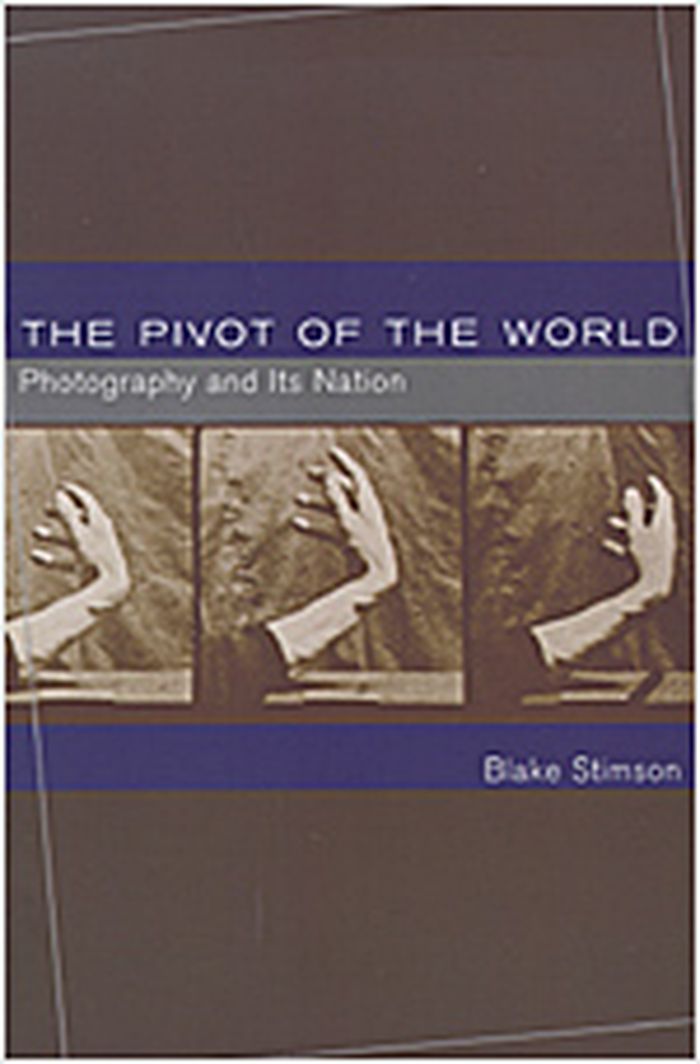
The old dream of social belonging and political sovereignty--the dream of nation--was fraught with anxiety and contradiction for many artists and intellectuals in the 1950s. On the one hand, memories of the Second World War remained vivid and the chauvinism that had enabled it threatened to return with the growing tensions of the Cold War. On the other hand, the need to(...)
Title:
The pivot of the world : photography and its nation
Actions:
Price:
$24.95
(available to order)
Summary:
The old dream of social belonging and political sovereignty--the dream of nation--was fraught with anxiety and contradiction for many artists and intellectuals in the 1950s. On the one hand, memories of the Second World War remained vivid and the chauvinism that had enabled it threatened to return with the growing tensions of the Cold War. On the other hand, the need to bind together into a new global identity--into a world nation or "family of man"--seemed ever more pressing as a bulwark against the rapidly expanding threat of a nuclear World War III. The Pivot of the World looks at an exceptional effort to work out that geopolitical tension by cultural means as developed in three hugely ambitious photographic projects: The Family of Man exhibition that opened in 1955 and traveled the world for the next decade; Robert Frank's influential book The Americans, photographed in 1955-1956 and first published in 1958; and Bernd and Hilla Becher's typological record of industrial architecture, begun in 1957 and continuing today. Each of these projects worked to release the dream of nation--of belonging and sovereignty--from its old civic trappings through the medium of photography's serial form, in the experience of one photograph followed by another and another and another, so that all seem at once intimately connected and at the same time autonomous and distinct. Innovations in the serial composition of photographic form could open new possibilities for social form while the modern desire for political belonging could be made cosmopolitan, could be globalized--but in the most human of ways. This epic sense of purpose lasted only for a moment--it had already passed by the beginning of the 1960s--but it bears particular interest for any historical understanding of the contest over globalization that continues to hold such great consequence for us now.
Form:
books
books
Publication:
January 2006, Cambridge, Mass.
January 2006, Cambridge, Mass.
Subject:
Theory of Photography
Theory of Photography
Form:
books
books
Title:
The space of appearance
The space of appearance
Actions:
Price:
$41.95
(available to order)
Summary:
What is architecture's place in the world? Combining history, theory, and polemic, George Baird probes into the conceptual lineage and current expressions of postmodernism and the critique of postmodern architecture over the past four decades, revealing the general failure of these theories to develop an architecture that is politically engaged and affirmative of the(...)
Title:
The space of appearance
Actions:
Price:
$41.95
(available to order)
Summary:
What is architecture's place in the world? Combining history, theory, and polemic, George Baird probes into the conceptual lineage and current expressions of postmodernism and the critique of postmodern architecture over the past four decades, revealing the general failure of these theories to develop an architecture that is politically engaged and affirmative of the public sphere. Hannah Arendt's imperative of worldliness plays a pivotal role in Baird's reading of what has come to be called architecture's belief system. It is not enough, he argues, to reject the totalizing models of publicness that have been typical both of modernism and of many of its postmodern successors. Rather, he insists, it is necessary to construct a "space of appearance" that is large and diverse enough to make places for all of us. Baird stakes out clearly and sharply the recent history of ideas that bear on the field, recovering influences and ideas that have been omitted from standard histories of modernism and building an understanding of our present dilemmas that is constructive and critically informed. The period from 1960 to the present has seen the collapse of the conditions that shored up modern architecture, as conventionally understood, and has also seen modernism succeeded by a whole series of tentative alternatives, none of which has successfully achieved the decisive legitimization modernism once held. After an extended introduction that situates architecture's current dilemmas within the broader currents of cultural theory, The Space of Appearance focuses on specific historical episodes or developments. Each chapter outlines a different controversy or series of controversies, or depicts the gradual and insidious erosion of certain firmly held beliefs. Each chapter is also structured around a conceptual account of issues that have evolved in the trajectory of contemporary cultural theory since the key interventions of Arendt in the 1950s. (first edition : 1995.)
Form:
books
books
Publication:
April 2003, Cambridge / London
April 2003, Cambridge / London
Subject:
Architectural Theory
Architectural Theory
Form:
books
books
Price:
$49.95
(available to order)
Summary:
"Last Landscapes" is an exploration of the cult and celebration of death, loss and memory. It traces the history and design of burial places throughout Europe and the USA, ranging from the picturesque tradition of the village churchyard to tightly packed ‘cities of the dead’, such as the Jewish Cemetery in Prague and Père Lachaise in Paris. Other landscapes that feature(...)
Title:
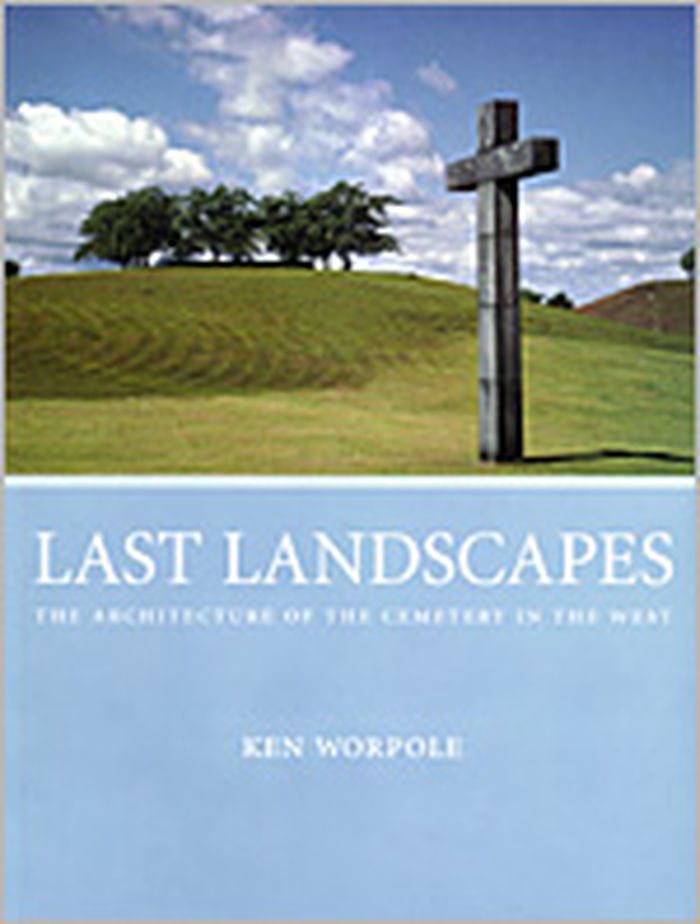
Last landscapes : the architecture of the cemetery in the west
Actions:
Price:
$49.95
(available to order)
Summary:
"Last Landscapes" is an exploration of the cult and celebration of death, loss and memory. It traces the history and design of burial places throughout Europe and the USA, ranging from the picturesque tradition of the village churchyard to tightly packed ‘cities of the dead’, such as the Jewish Cemetery in Prague and Père Lachaise in Paris. Other landscapes that feature in this book include the war cemeteries of northern France, Viking burial islands in central Sweden, Etruscan tombs and early Christian catacombs in Italy, the 17th-century Portuguese–Jewish cemetery 'Beth Haim' at Ouderkerk in the Netherlands, Forest Lawns in California, Derek Jarman’s garden in Kent and the Stockholm Woodland Cemetery. It is a fact that architecture ‘began with the tomb', yet, as Ken Worpole shows us in Last Landscapes, many historic cemeteries have been demolished or abandoned in recent times (notably the case with Jewish cemeteries in Eastern Europe), and there has been an increasing loss of inscription and memorialization in the modern urban cemetery. Too often cemeteries today are both poorly designed and physically and culturally marginalized. Worse, cremation denies a full architectural response to the mystery and solemnity of death. The author explores how modes of disposal – burial, cremation, inhumation in mausoleums and wall tombs – vary across Europe and North America, according to religious and other cultural influences. And Last Landscapes raises profound questions as to how, in an age of mass cremation, architects and landscape designers might create meaningful structures and settings in the absence of a body, since for most of history the human body itself has provided the fundamental structural scale. This evocative book also contemplates other forms of memorialization within modern societies, from sculptures to parks, most notably the extraordinary Duisberg Park, set in a former giant steelworks in Germany’s Ruhr Valley.
Form:
books
books
Publication:
June 2003, London
June 2003, London
Subject:
Gardens
Gardens
Form:
books
books
Actions:
Price:
$71.95
(available to order)
Summary:
Although many people view virtual reality as a totally new phenomenon, it has its foundations in an unrecognized history of immersive images. Indeed, the search for illusionary visual space can be traced back to antiquity. In this book Oliver Grau shows how virtual art fits into the art history of illusion and immersion. He describes the metamorphosis of the concepts of(...)
Title:
Virtual art from illusion to immersion
Actions:
Price:
$71.95
(available to order)
Summary:
Although many people view virtual reality as a totally new phenomenon, it has its foundations in an unrecognized history of immersive images. Indeed, the search for illusionary visual space can be traced back to antiquity. In this book Oliver Grau shows how virtual art fits into the art history of illusion and immersion. He describes the metamorphosis of the concepts of art and the image and relates those concepts to interactive art, interface design, agents, telepresence, and image evolution. Grau retells art history as media history, helping us to understand the phenomenon of virtual reality beyond the hype. Grau shows how each epoch used the technical means available to produce maximum illusion. He discusses frescoes such as those in the Villa dei Misteri in Pompeii and the gardens of the Villa Livia near Primaporta, Renaissance and Baroque illusion spaces, and panoramas, which were the most developed form of illusion achieved through traditional methods of painting and the mass image medium before film. Through a detailed analysis of perhaps the most important German panorama, Anton von Werner's 1883 The Battle of Sedan, Grau shows how immersion produced emotional responses. He traces immersive cinema through Cinerama, Sensorama, Expanded Cinema, 3-D, Omnimax and IMAX, and the head mounted display with its military origins. He also examines those characteristics of virtual reality that distinguish it from earlier forms of illusionary art. His analysis draws on the work of contemporary artists and groups ART+COM, Maurice Benayoun, Charlotte Davies, Monika Fleischmann, Ken Goldberg, Agnes Hegedues, Eduardo Kac, Knowbotic Research, Laurent Mignonneau, Michael Naimark, Simon Penny, Daniela Plewe, Paul Sermon, Jeffrey Shaw, Karl Sims, Christa Sommerer, and Wolfgang Strauss. Grau offers not just a history of illusionary space but also a theoretical framework for analyzing its phenomenologies, functions, and strategies throughout history and into the future.
Form:
books
books
Publication:
January 1900, Cambridge, Mass.
January 1900, Cambridge, Mass.
Subject:
Epistemology
Epistemology
Form:
books
books
Title:
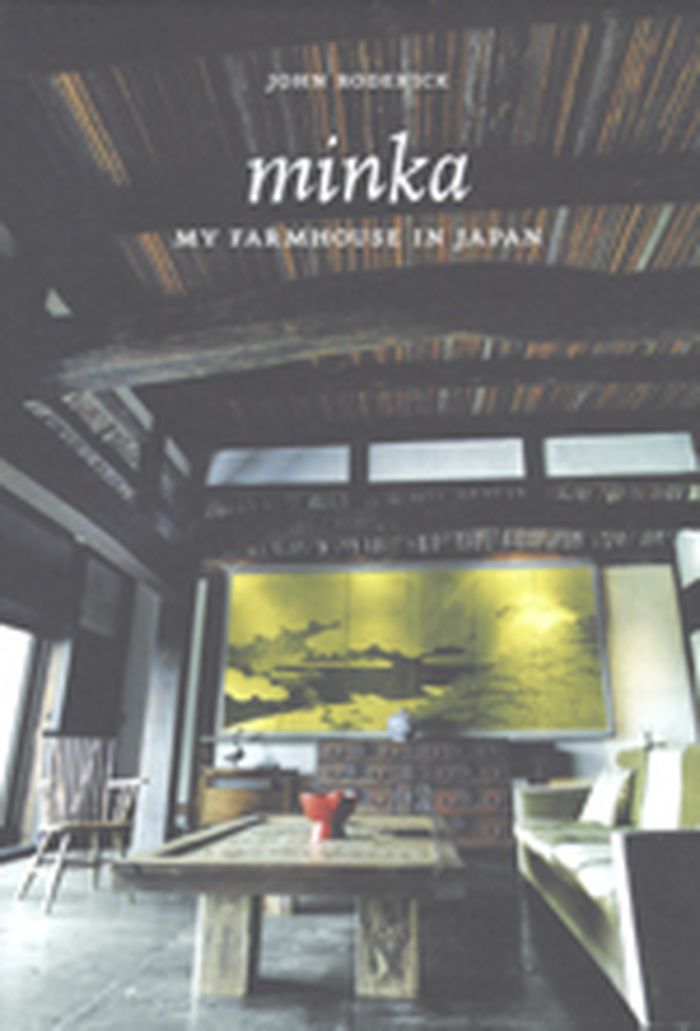
Minka, my farmhouse in Japan
Minka, my farmhouse in Japan
Actions:
Price:
$27.95
(available to order)
Summary:
In 1959 the journalist John Roderick joined the Tokyo bureau of the Associated Press. There, he befriended a Japanese family, the Takishitas. After musing offhandedly that he would like to one day have his own house in Japan, the family unbeknownst to John set out to grant his wish. They found Roderick a 250-year-old minka, or hand-built farmhouse, with a thatched roof(...)
Title:
Minka, my farmhouse in Japan
Actions:
Price:
$27.95
(available to order)
Summary:
In 1959 the journalist John Roderick joined the Tokyo bureau of the Associated Press. There, he befriended a Japanese family, the Takishitas. After musing offhandedly that he would like to one day have his own house in Japan, the family unbeknownst to John set out to grant his wish. They found Roderick a 250-year-old minka, or hand-built farmhouse, with a thatched roof and held together entirely by wooden pegs and joinery. It was about to be washed away by flooding and was being offered for only fourteen dollars. Roderick graciously bought the house, but was privately dismayed at the prospect of living in this enormous old relic lacking heating, bathing, plumbing, and proper kitchen facilities. So the minka was dismantled and stored, where Roderick secretly hoped it would stay, as it did for several years. But Roderick's reverence for natural materials and his appreciation of traditional Japanese and Shinto craftsmanship eventually got the better of him. Before long a team of experienced carpenters were hoisting massive beams, laying wide wooden floors, and attaching the split-bamboo ceiling. In just forty days they rebuilt the house on a hill overlooking Kamakura, the ancient capital of Japan. Working together, they renovated the farmhouse, adding features such as floor-to-ceiling sliding glass doors and a modern kitchen, bath, and toilet. From these humble beginnings, Roderick's minka has become internationally known and has hosted such luminaries as Senator Hillary Clinton. John Roderick's architectural memoir "Minka" tells the compelling and often poignant story of how one man fell in love with the people, culture, and ancient building traditions of Japan, and reminds us all about the importance of craftsmanship and the meaning of place and home in the process.
Form:
books
books
Publication:
November 2007, New York
November 2007, New York
Subject:
Contemporary Asian Architecture
Contemporary Asian Architecture


