


5088 Results
Form:
books
books
Price:
$44.95
(available to order)
Summary:
Why does technology change over time, how does it change, and what difference does it make? In this sweeping, ambitious look at a thousand years of Western experience, Robert Friedel argues that technological change comes largely through the pursuit of improvement--the deep-rooted belief that things could be done in a better way. What Friedel calls the "culture of(...)
Title:
A culture of improvement : technology and the western millennium
Actions:
Price:
$44.95
(available to order)
Summary:
Why does technology change over time, how does it change, and what difference does it make? In this sweeping, ambitious look at a thousand years of Western experience, Robert Friedel argues that technological change comes largely through the pursuit of improvement--the deep-rooted belief that things could be done in a better way. What Friedel calls the "culture of improvement" is manifested every day in the ways people carry out their tasks in life--from tilling fields and raising children to waging war. Improvements can be ephemeral or lasting, and one person’s improvement may not always be viewed as such by others. Friedel stresses the social processes by which we define what improvements are and decide which improvements will last and which will not. These processes, he emphasizes, have created both winners and losers in history. Friedel presents a series of narratives of Western technology that begin in the eleventh century and stretch into the twenty-first. Familiar figures from the history of invention are joined by others--the Italian preacher who described the first eyeglasses, the dairywomen displaced from their control over cheesemaking, and the little-known engineer who first suggested a grand tower to Gustav Eiffel. Friedel traces technology from the plow and the printing press to the internal combustion engine, the transistor, and the space shuttle. Friedel also reminds us that faith in improvement can sometimes have horrific consequences: improved weaponry makes warfare ever more deadly and the drive for improving human beings can lead to eugenics and even genocide. The most comprehensive attempt to tell the story of Western technology in many years, engagingly written and lavishly illustrated, A Culture of Improvement documents the ways in which the drive for improvement has shaped our modern world.
Form:
books
books
Publication:
May 2007, Cambridge / London
May 2007, Cambridge / London
Subject:
Engineering Structures
Engineering Structures
Form:
books
books
Actions:
Price:
$27.95
(available to order)
Summary:
For Sherry Turkle, "We think with the objects we love; we love the objects we think with." In "Evocative objects", Turkle collects writings by scientists, humanists, artists, and designers that trace the power of everyday things. These essays reveal objects as emotional and intellectual companions that anchor memory, sustain relationships, and provoke new ideas. This(...)
Title:
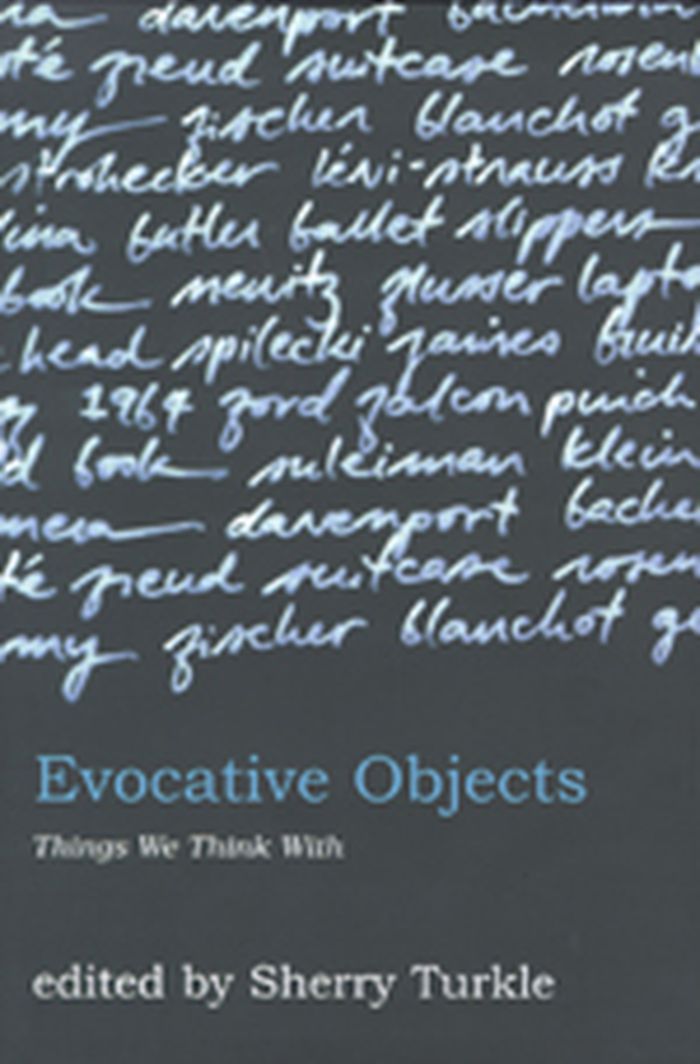
Evocative objects : things we think with
Actions:
Price:
$27.95
(available to order)
Summary:
For Sherry Turkle, "We think with the objects we love; we love the objects we think with." In "Evocative objects", Turkle collects writings by scientists, humanists, artists, and designers that trace the power of everyday things. These essays reveal objects as emotional and intellectual companions that anchor memory, sustain relationships, and provoke new ideas. This volume's special contribution is its focus on everyday riches: the simplest of objects - an apple, a datebook, a laptop computer - are shown to bring philosophy down to earth. The poet contends, "No ideas but in things." The notion of evocative objects goes further : objects carry both ideas and passions. In our relations to things, thought and feeling are inseparable. Whether it's a student's beloved 1964 Ford Falcon (left behind for a station wagon and motherhood), or a cello that inspires a meditation on fatherhood, the intimate objects in this collection are used to reflect on larger themes -the role of objects in design and play, discipline and desire, history and exchange, mourning and memory, transition and passage, meditation and new vision. In the interest of enriching these connections, Turkle pairs each autobiographical essay with a text from philosophy, history, literature, or theory, creating juxtapositions at once playful and profound. So we have Howard Gardner's keyboards and Lev Vygotsky's hobbyhorses; William Mitchell's Melbourne train and Roland Barthes' pleasures of text; Joseph Cevetello's glucometer and Donna Haraway's cyborgs. Each essay is framed by images that are themselves evocative. Essays by Turkle begin and end the collection, inviting us to look more closely at the everyday objects of our lives, the familiar objects that drive our routines, hold our affections, and open out our world in unexpected ways.
Form:
books
books
Publication:
April 2007, Cambridge (MA)
April 2007, Cambridge (MA)
Subject:
Design Theory
Design Theory
Form:
books
books
Price:
$46.95
(available to order)
Summary:
Working in rural China is unlike other countryside: it is full of contradiction, neither rural nor urban, both traditional and modern, abandoned in some areas and yet others are becoming cities overnight. It is in fact a laboratory for new ways of living. And it has become our laboratory for new ways of making architecture. Whereas contemporary architecture since the(...)
Title:
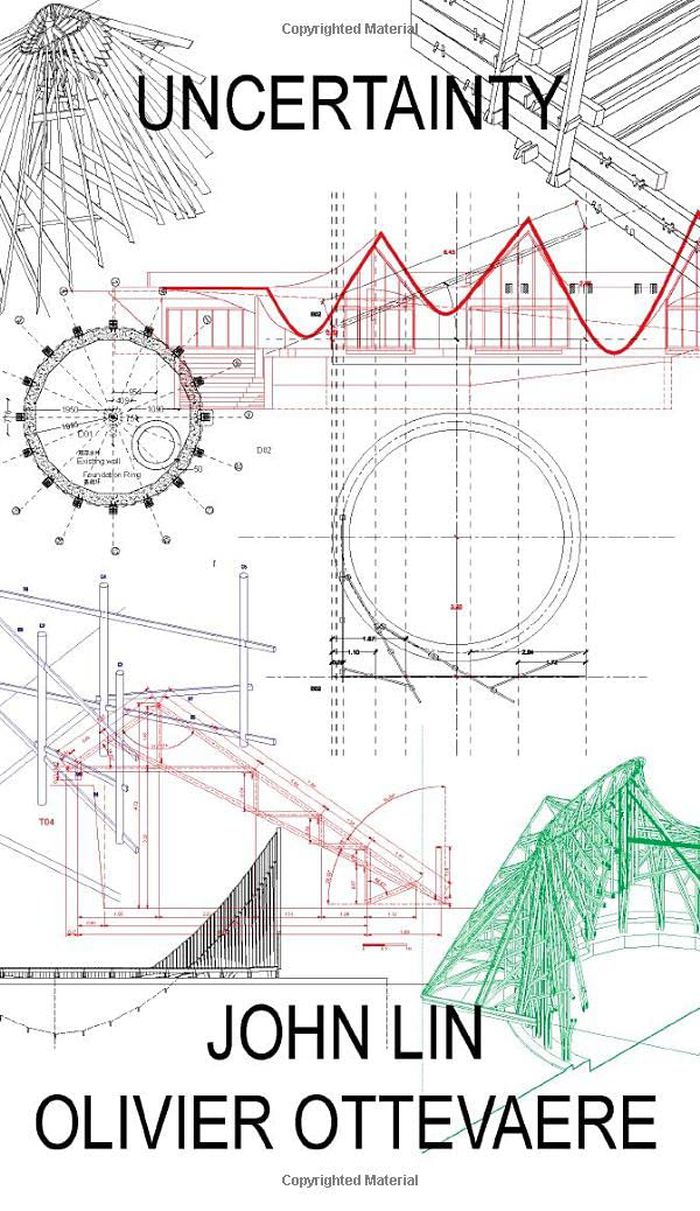
Uncertainty : Experiments in making from the Chinese countryside
Actions:
Price:
$46.95
(available to order)
Summary:
Working in rural China is unlike other countryside: it is full of contradiction, neither rural nor urban, both traditional and modern, abandoned in some areas and yet others are becoming cities overnight. It is in fact a laboratory for new ways of living. And it has become our laboratory for new ways of making architecture. Whereas contemporary architecture since the advent of modernism has developed increasingly controlled, prototypical, and standardized mechanisms for building, our experiments embrace the opposite: a lack of control, taking place within the flux of political, social and economic uncertainties. The experiments presented here are examples taken from a series of design and build projects conducted from the Department of Architecture at the University of Hong Kong over the past 10 years. They are remarkable in their diffuse explorations and situations. Some were urgent post-earthquake reconstructions, often adapting to extreme topographies or taking place in the midst of major urbanizing transformations, whereas other experiments occurred in forgotten villages with left-behind craftspeople and their disappearing building cultures. These forays and what can be best described as adventures in building, left us with varied and novel (sometimes failed) experiments with structure and program. But they are presented here for the trait they have in common: an exploration of the limits of material, geometry, construction methods, and even historical context. As often occurs for architects working in a foreign landscape, the differences in language and culture have proven to be a source of constant miscommunication and surprising discovery. The lack of a common spoken language- these remote areas speak their own dialects- has placed an emphasis on drawing as another means of communication. Through drawing we have explored a means of design and a means of building. Therefore, this is also a book about ways of drawing that represent ways of control and, inversely perhaps, what not to control.
Form:
books
books
Publication:
June 2022
June 2022
Subject:
Contemporary Architecture
Contemporary Architecture
Form:
journals and magazines
journals and magazines
Title:
Tennyson research bulletin.
Tennyson research bulletin.
Actions:
Author:
Subject:
Publication:
Lincoln, Eng. : Tennyson Society
Lincoln, Eng. : Tennyson Society
Form:
journals and magazines
journals and magazines
Publication:
Lincoln, Eng. : Tennyson Society
Lincoln, Eng. : Tennyson Society
Author:
Subject:
Form:
journals and magazines
journals and magazines
Price:
$71.50
(available to order)
Summary:
A ‘Pacific’ century, an Asian century or a Chinese century? On the threshold between the 20th and the 21st century, the transit from the Atlantic to the Pacific is forecasted by all; the move from America to Asia is noticed by many; and the replacement of the United States by China is feared by some: the awakening of the dragon provokes both wonder and distrust. After the(...)
Title:
AV Monografias / Monographs 109-110 (2004) : China boom, growth unlimited
Actions:
Price:
$71.50
(available to order)
Summary:
A ‘Pacific’ century, an Asian century or a Chinese century? On the threshold between the 20th and the 21st century, the transit from the Atlantic to the Pacific is forecasted by all; the move from America to Asia is noticed by many; and the replacement of the United States by China is feared by some: the awakening of the dragon provokes both wonder and distrust. After the reforms of Deng Xiaoping in 1978, in the last 25 years China has grown at a rate of 9 percent; in this period, its GNP has tripled, and the percentage of population living in cities has doubled, exceeding 40%. Fueled by exports, and backed by the postotalitarian protectionism of a single-party government, the stunning growth of China has not yet created global companies – the Sony or Hyundai that led the Japanese or Korean booms – but its large oil firms (PetroChina, Sinopec, CNOOC) try to find in several continents the energy needed by the world’s second importer; its technological companies (from Lenovo, that has purchased a division of IBM, to Huawei, that has created in Shenzhen a Silicon Valley-style campus, Doric Disney designs included) make up for scarce innovation with low labor costs; and its new breed of fancy millionaires, who build chateaux or buy French cosmetic brands, spearhead a large consumerist middle class, supplying a strong domestic demand that adds to the thrust of foreign markets. China’s unequal growth does not appear to be a large risk: the differences in income are similar to those of the US, and the contrast between the wealthy coast and the rural inland – where most upheavals have started, from Boxers to communists – is blurred as the development of Shanghai extends upriver along the Yangtze corridor, and as Hong Kong’s dynamism expands in concentric waves over the superregion of Guangdong, from that Pearl River Delta known as ‘the factory of the world’. More dangerous seem to be the weakness of the financial system, the persistence of administrative corruption and the scarcity of energy resources, the supply of which is being secured by heavy investments on the military, something that upsets its neighbors – Japan and Taiwan most of all, but also Korea and another awakening giant, India –, its competitors, and even the US, that urges its European allies to maintain the arms ban on China. On top of all this, in a country that has reached 1,300 million inhabitants in 2005, is the demographic scenario created by the single child policy and the accelerated ageing of the population, with an increasing number of 4+2+1 families, where now there are four grandparents and two parents satisfying the needs of a little emperor, but where in just 30 years a single adult will have to take care of six retirees. This huge economic and social transformation has expressed itself via an unprecedented urban explosion, shaped by titanic public works – large dams and suspended bridges, elevated highways and submarine tunnels – and with the foreseeable devastating impact on the environment and cultural heritage. The building frenzy that has attracted so many foreign architects to China – initially for technically complex or symbolically significant works, like some of the skyscrapers of Shanghai or the olympic projects in Beijing, but now more often for urban plans or conventional commercial developments – receives, according to The Economist, the added boost of a real-estate bubble that feeds on hot money placing its bets on the yuan’s revaluation. This process has turned some districts of Shanghai such as Pudong or Puxi into the most sought-after office areas in the world, and has caused in cities like Beijing an increasing decay of its architectural legacy, which barely respects World Heritage sites (The Great Wall, the Forbidden City, the Summer Palace, the Ming Imperial Tombs and the Temple of Heaven), besieged already by a unanimous tide of trivial constructions.
Form:
journals and magazines
journals and magazines
Publication:
August 2005, Madrid
August 2005, Madrid
Subject:
Magazines
Magazines
Form:
books
books
Title:
Frank Lloyd Wright
Frank Lloyd Wright
Actions:
Price:
$21.50
(available to order)
Summary:
The life and architecture of Frank Lloyd Wright (1867-1959) have been much-studied, yet there is a consistent division between analyses of his architecture, which exclude any discussion of his daily life, and books that tell the often sensational tale of his life, with barely a passing reference to the buildings themselves. The result is that, despite the large number of(...)
Title:
Frank Lloyd Wright
Actions:
Price:
$21.50
(available to order)
Summary:
The life and architecture of Frank Lloyd Wright (1867-1959) have been much-studied, yet there is a consistent division between analyses of his architecture, which exclude any discussion of his daily life, and books that tell the often sensational tale of his life, with barely a passing reference to the buildings themselves. The result is that, despite the large number of volumes on Wright, the most essential part of his life – his life as an architect, working, as he said, ‘in the cause of architecture’ – remains virtually unexplored. "Frank Lloyd Wright" offers an account of Wright’s life as an architect, the ideas, beliefs and relationships that shaped his life and work, and the manner in which these affected, and are reflected in, his architecture. During a tumultuous life and extensive career which includes such hugely defining buildings as the Guggenheim Museum, Fallingwater, Taliesin, Unity Temple, and the prolific Prairie Houses, Wright endeavoured to shape the emerging and evolving American democracy, its mode of dwelling, and its relation to the traditional conception of the city. Fusing ancient construction geometries with contemporary ideals of Transcendental philosophy, Wright sought to develop an appropriate architecture for the new world of the twentieth century. In doing so, he served as the primary inspiration for the emergence of Modern architecture around the world. Robert McCarter examines how Wright’s architecture crystallized key conceptions of both private dwelling and public citizenship for American society, and relates how, through his work and writings, Wright developed relationships with key leaders of the arts, industry and society. He analyses how and why Wright maintained that architecture was the ‘background or framework’ for daily life, never the literal ‘object’ of our attention, as well as Wright’s belief that architects have the most significant ethical responsibilities to improve the larger society and culture to which they belong. In exploring Wright’s life, times and culture, Robert McCarter shows how Wright was an architect of astonishing ability, whose works continue to shape the world around us, fifty years after his death.
Form:
books
books
Publication:
March 2006, London
March 2006, London
Subject:
Architecture Monographs
Architecture Monographs
Form:
books
books
Actions:
Price:
$24.95
(available to order)
Summary:
The artist's relationship to landscape was once invoked by a canvas on an easel in a picturesque vista. No more. In the 1960s, the Earth Artists started focusing on natural systems and entropy; in the 1970s, photographers in the New Topographics movement turned their attention unsentimentally to the industrialized "man-altered" environment; in the 1980s, artists animated(...)
Title:
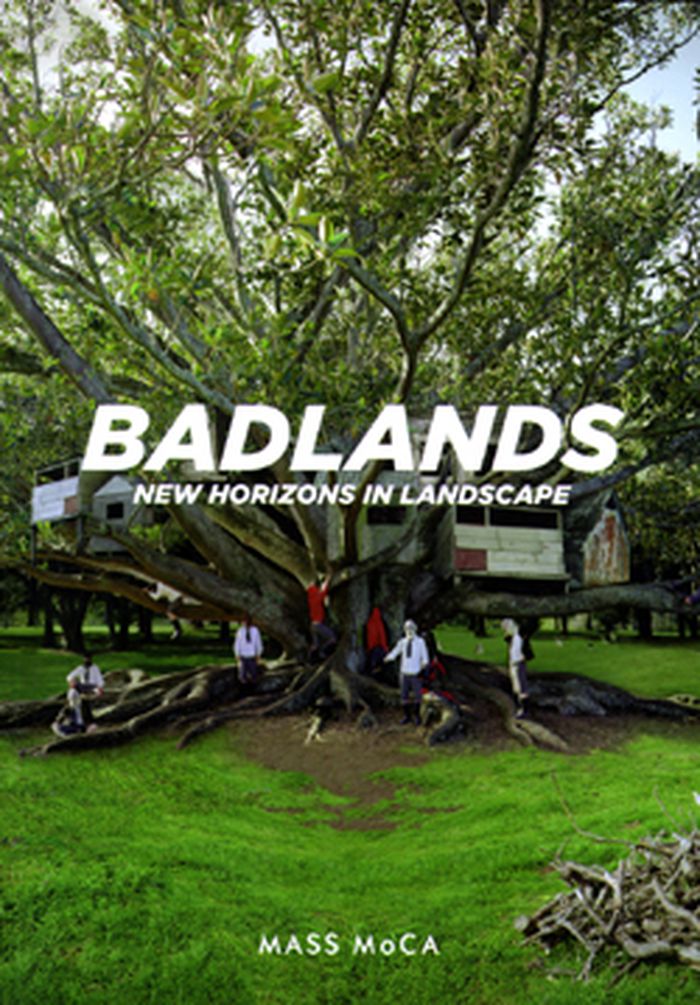
Badlands : new horizons in landscape
Actions:
Price:
$24.95
(available to order)
Summary:
The artist's relationship to landscape was once invoked by a canvas on an easel in a picturesque vista. No more. In the 1960s, the Earth Artists started focusing on natural systems and entropy; in the 1970s, photographers in the New Topographics movement turned their attention unsentimentally to the industrialized "man-altered" environment; in the 1980s, artists animated the natural landscape with art, movement, and performance; and in the 1990s, Eco-Artists collaborated with scientists to address sustainability, pollution, and politics. "Badlands" explores the latest manifestations of artists’ fascination with the earth, gathering work by contemporary artists who approach landscape through history, culture, and science. "Badlands", which accompanies an exhibition at MASS MoCA, approaches landscape as a theme with variations, grouping artists and their art (which is shown in 150 color illustrations) by category : Historians, who recontextualize the history of landscape depiction; Explorers, who explore the environment and our place within it; Activists and Pragmatists, who alert us to problems in the natural world and suggest solutions; and the Aestheticists, who look at the beauty found in nature. Each section begins with an essay : Gregory Volk maps the evolution of the genre from the Hudson River School to Earth Art; Ginger Strand examines the relationship between man and landscape through our cultural history; Tensie Whelan discusses environmental science, sustainability, and climate change; and Denise Markonish considers the new genre of landscape that emerges from the work displayed in Badlands. As a physical object, Badlands supports the values represented by its intellectual and artistic content: it was produced using FSC (Forest Stewardship Council) certified techniques including paper, printing, and inks. Artists: Robert Adams, Vaughn Bell, Boyle Family, Melissa Brown, Center for Land Use Interpretation, Leila Daw, Gregory Euclide, J. Henry Fair, Mike Glier, Anthony Goicolea, Marine Hugonnier, Paul Jacobsen, Mitchell Joachim/ Terreform, Nina Katchadourian, Jane Marsching, Alexis Rockman, Ed Ruscha, Joseph Smolinski, Yutaka Sone, Jennifer Steinkamp, Mary Temple. Copublished with MASS MoCA
Form:
books
books
Publication:
September 2008, North Adams
September 2008, North Adams
Subject:
Gardens
Gardens
Form:
books
books
Actions:
Price:
$39.95
(available to order)
Summary:
In postwar France, the aesthetics of appropriation and collage gave cultural form to a struggle over meaning. A new wave of avant-garde experimentation used - or stole, plagiarized, and expropriated - elements from advertising, journalism, literature, art, and other sources of common discourse (the ironically named "beautiful language" of this book's title, itself an(...)
Publication:
February 2007, Cambridge (MA)
February 2007, Cambridge (MA)
Title:
The beautiful language of my century : reinventing the language of contestation in postwar France, 1945-1968
Actions:
Price:
$39.95
(available to order)
Summary:
In postwar France, the aesthetics of appropriation and collage gave cultural form to a struggle over meaning. A new wave of avant-garde experimentation used - or stole, plagiarized, and expropriated - elements from advertising, journalism, literature, art, and other sources of common discourse (the ironically named "beautiful language" of this book's title, itself an appropriation from Guy Debord's collaged Mémoires). Redeployed, often in startling or pointed juxtapositions, these elements took on newly oppositional meanings. A famous photograph taken inside the occupied Sorbonne in May 1968, for example, shows a massive academic painting altered by a clever cartoonish speech bubble that transforms the painting into a parody of itself and memorializes an event very different from the one captured by the original artist."The beautiful language of my century" describes the various forms of critical culture that culminated in the events of May 1968, and investigates the ways those forms have come down to us today. McDonough explores the montage practice developed by Guy Debord and his situationist colleagues under the name of détournement and its expression in the later fifties as a form of cultural theft. He addresses the influence of colonialism on these practices, examining a 1961 exhibit of torn posters of the Algerian War ("La France déchirée"), Godard's early film Le Petit Soldat, and Christo's Project for a Temporary Wall of Steel Drums. He discusses the French left's adoption in the mid-sixties of the "end of art" as a theoretical position and describes the leftist idea of the fête as a Rabelaisian and revolutionary upwelling of everything that is low. This influential conception, inspired equally by the American urban revolts of the sixties and the writings of theorists Marcel Mauss and Georges Bataille, coalesced into a new image of revolution, a new model of contestation, in the events of May 1968 - when the struggle over language and culture merged with a broader resistance to capitalist modernization.
Form:
books
books
Publication:
February 2007, Cambridge (MA)
February 2007, Cambridge (MA)
Form:
books
books
Actions:
Price:
$28.00
(available in store)
Summary:
Over the past several decades, globalization has homogenized what we eat, and done so ruthlessly. The numbers are stark: Of the roughly six thousand different plants once consumed by human beings, only nine remain major staples today. Just three of these—rice, wheat, and corn—now provide fifty percent of all our calories.The source of much of the world’s food—seeds—is(...)
Title:
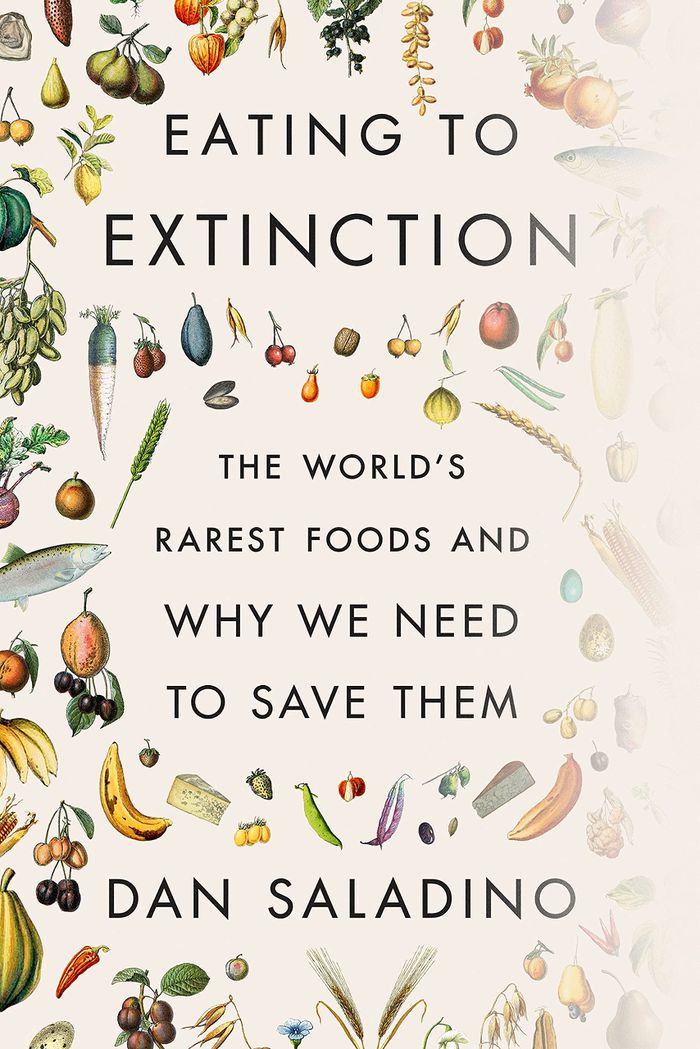
Eating to extinction: the world's rarest foods and why we need to save them
Actions:
Price:
$28.00
(available in store)
Summary:
Over the past several decades, globalization has homogenized what we eat, and done so ruthlessly. The numbers are stark: Of the roughly six thousand different plants once consumed by human beings, only nine remain major staples today. Just three of these—rice, wheat, and corn—now provide fifty percent of all our calories.The source of much of the world’s food—seeds—is mostly in the control of just four corporations. Ninety-five percent of milk consumed in the United States comes from a single breed of cow. Half of all the world’s cheese is made with bacteria or enzymes made by one company. And one in four beers drunk around the world is the product of one brewer. When we lose diversity and foods become endangered, we not only risk the loss of traditional foodways, but also of flavors, smells, and textures that may never be experienced again. And the consolidation of our food has other steep costs, including a lack of resilience in the face of climate change, pests, and parasites. Our food monoculture is a threat to our health—and to the planet. In ''Eating to Extinction'', the BBC food journalist Dan Saladino travels the world to experience and document our most at-risk foods before it’s too late. He tells the fascinating stories of the people who continue to cultivate, forage, hunt, cook, and consume what the rest of us have forgotten or didn’t even know existed. Take honey—not the familiar product sold in plastic bottles, but the wild honey gathered by the Hadza people of East Africa, whose diet consists of eight hundred different plants and animals and who communicate with birds in order to locate bees’ nests. Or consider murnong—once the staple food of Aboriginal Australians, this small root vegetable with the sweet taste of coconut is undergoing a revival after nearly being driven to extinction. And in Sierra Leone, there are just a few surviving stenophylla trees, a plant species now considered crucial to the future of coffee.
Form:
books
books
Publication:
January 2023
January 2023
Subject:
Food
Food
Form:
books
books
Title:
Breathless
Breathless
Actions:
Price:
$25.00
(available in store)
Summary:
''Breathless'' is published as part of an upcoming exhibition taking place within a pavilion on The Power Plant’s South Terrace Summer 2022. ''Breathless'' shares contributions on the paradoxes of air, atmosphere and the breath with key texts and artworks. The book begins in the smog of our current predicament, with philosopher Dehlia Hannah proposing a new vocabulary(...)
Title:
Breathless
Actions:
Price:
$25.00
(available in store)
Summary:
''Breathless'' is published as part of an upcoming exhibition taking place within a pavilion on The Power Plant’s South Terrace Summer 2022. ''Breathless'' shares contributions on the paradoxes of air, atmosphere and the breath with key texts and artworks. The book begins in the smog of our current predicament, with philosopher Dehlia Hannah proposing a new vocabulary for air in her text, ''Inversion Layer''. Following the flow of air, Flaka Haliti’s installation ''Speculating on the Blue'' opens a portal to an artificial atmosphere that defines boundaries of a closed reality. Connecting to parallel worlds, philosopher Achille Mbembe’s ''The Universal Right to Breathe'' captures a global perspective on breathing, offering alternative trajectories beyond suffocation. Marguerite Humeau’s speculative sculpture imagines a species that survives suffocation and evolves exclusively to breathe. Charles Stankievech exhumes the voices of Clarice Lispector and Lygia Clark as an interconnected mystical encounter in a text titled ''Breath with Me, A Breath of Life''. In ''Twilight of Sighs'', psychoanalyst and philosopher Alireza Taheri analyzes the sigh with a set of propositions. With the same intensity, Donna Kukama re-narrates history with her performance ''Chapter Q: Dem Short-Short-Falls'' as she breathes the memory of an invisible event. Invisibility of viral and virtual particles are positioned in the context of other historical times in Ala Roushan’s text ''Air of Our Closed World'', articulating the inversion experienced today within the domestic bubble/bunker. ''The Air Without'' by Kate Whiteway connects illness and metaphor to consider contradictions in the air that both oxygenates the lung while breathing diamond dust. With a granularity greater than dust, Heather Davis’s text ''Molecular Intimacy'' situates us at the nanoscale to position bodies within the atmosphere they breathe. This final text loops back to the start of the book in considering the air of our contemporary sky and the breath that exists in its precarious state. Under this arched sky, the book ends with ''Fire with Fire'', engulfed in the smoky aftermath of forest fires in the work of Julius von Bismarck.
Form:
books
books
Publication:
December 2021
December 2021
Subject:
Group Exhibitions
Group Exhibitions


