


5194 Results
Form:
books
books
Title:
Colour after Klein
Colour after Klein
Actions:
Price:
$53.95
(available to order)
Summary:
As suggested by the work of Yves Klein, this book is not about colour rules or colour theory; instead it takes pleasure in the oscillation between the aesthetic and the conceptual, materiality and immateriality, the object and the void, purification and mystification, and between erasure and colouring in. Colour is celebrated for its immanence, its quality of being in the(...)
$53.95
(available to order)
Summary:
As suggested by the work of Yves Klein, this book is not about colour rules or colour theory; instead it takes pleasure in the oscillation between the aesthetic and the conceptual, materiality and immateriality, the object and the void, purification and mystification, and between erasure and colouring in. Colour is celebrated for its immanence, its quality of being in the(...)
Title:
Colour after Klein
Actions:
Price:
$53.95
(available to order)
Summary:
As suggested by the work of Yves Klein, this book is not about colour rules or colour theory; instead it takes pleasure in the oscillation between the aesthetic and the conceptual, materiality and immateriality, the object and the void, purification and mystification, and between erasure and colouring in. Colour is celebrated for its immanence, its quality of being in the world, but also the potential it has to open up a psychic space, a world of lost feeling; with literally the power to take us over, colour us in. "Colour after Klein" explores the significance of colour as it emerges in the work of 20 of some influential artists of the twentieth and twenty-first centuries, including Yves Klein, Donald Judd, Bruce Nauman, Louise Bourgeois, Andy Warhol and James Turrell. Featuring an introduction by curator Jane Alison, an essay that explores the place of colour in the work of Yves Klein by art historian Nuit Banai, and profiles of each of the contributing artists, this book provides a new perspective on key works of Modern and contemporary art. Also included in the book are artists' writings on the subject of colour, with pieces by Klein, Judd and Hélio Oiticica. This book accompanies the exhibition "Colour after Klein" at the Barbican Art Gallery, London, 27 May to 11 September 2005.
Colour after Klein
Actions:
Price:
$53.95
(available to order)
Summary:
As suggested by the work of Yves Klein, this book is not about colour rules or colour theory; instead it takes pleasure in the oscillation between the aesthetic and the conceptual, materiality and immateriality, the object and the void, purification and mystification, and between erasure and colouring in. Colour is celebrated for its immanence, its quality of being in the world, but also the potential it has to open up a psychic space, a world of lost feeling; with literally the power to take us over, colour us in. "Colour after Klein" explores the significance of colour as it emerges in the work of 20 of some influential artists of the twentieth and twenty-first centuries, including Yves Klein, Donald Judd, Bruce Nauman, Louise Bourgeois, Andy Warhol and James Turrell. Featuring an introduction by curator Jane Alison, an essay that explores the place of colour in the work of Yves Klein by art historian Nuit Banai, and profiles of each of the contributing artists, this book provides a new perspective on key works of Modern and contemporary art. Also included in the book are artists' writings on the subject of colour, with pieces by Klein, Judd and Hélio Oiticica. This book accompanies the exhibition "Colour after Klein" at the Barbican Art Gallery, London, 27 May to 11 September 2005.
Form:
books
books
Publication:
September 2005, London
September 2005, London
Subject:
Contemporary Art Monographs
Contemporary Art Monographs
Form:
books
books
Actions:
Price:
$69.95
(available to order)
Summary:
An artist, curator, critic, and teacher, Ian Carr-Harris has been a central figure in Toronto’s art scene since the 1970s. By collecting his impressive output of essays, critical experiments, and reviews into a single volume, Tracings documents the growth of conceptual art and postmodernism in Canadian art, as well as the expansion of mediums and spaces, while providing(...)
$69.95
(available to order)
Summary:
An artist, curator, critic, and teacher, Ian Carr-Harris has been a central figure in Toronto’s art scene since the 1970s. By collecting his impressive output of essays, critical experiments, and reviews into a single volume, Tracings documents the growth of conceptual art and postmodernism in Canadian art, as well as the expansion of mediums and spaces, while providing(...)
Title:
Tracings: Writing art, 1975-2020
Actions:
Price:
$69.95
(available to order)
Summary:
An artist, curator, critic, and teacher, Ian Carr-Harris has been a central figure in Toronto’s art scene since the 1970s. By collecting his impressive output of essays, critical experiments, and reviews into a single volume, Tracings documents the growth of conceptual art and postmodernism in Canadian art, as well as the expansion of mediums and spaces, while providing insights into methods of representation and the role of criticism in contemporary art. In clear and intelligent prose, Carr-Harris offers detailed studies of individual artists and exhibitions as well as theoretically informed reflections on broader cultural concerns. Whether writing about the complexities involved in the construction and transmission of knowledge, meaning, and historical narrative; discussing the material matters of government cultural funding, patronage, and artist-run centres; or describing his own process and artworks, these pieces reveal a literary love of language and a nuanced and investigative mind at work. Throughout his writing, he considers themes of identity, cultural nationalism, postcolonialism, institutionalism, the act of viewing, and relations of power. An introduction by Dan Adler situates Carr-Harris’s work within the context of his contemporaries, collaborators, and cultural environment, pointing out the mutually reinforcing qualities and relationships between his art and his writing. Covering decades of critical thought and engagement, "Tracings" confirms why Ian Carr-Harris has indelibly written himself into Canadian art.
Tracings: Writing art, 1975-2020
Actions:
Price:
$69.95
(available to order)
Summary:
An artist, curator, critic, and teacher, Ian Carr-Harris has been a central figure in Toronto’s art scene since the 1970s. By collecting his impressive output of essays, critical experiments, and reviews into a single volume, Tracings documents the growth of conceptual art and postmodernism in Canadian art, as well as the expansion of mediums and spaces, while providing insights into methods of representation and the role of criticism in contemporary art. In clear and intelligent prose, Carr-Harris offers detailed studies of individual artists and exhibitions as well as theoretically informed reflections on broader cultural concerns. Whether writing about the complexities involved in the construction and transmission of knowledge, meaning, and historical narrative; discussing the material matters of government cultural funding, patronage, and artist-run centres; or describing his own process and artworks, these pieces reveal a literary love of language and a nuanced and investigative mind at work. Throughout his writing, he considers themes of identity, cultural nationalism, postcolonialism, institutionalism, the act of viewing, and relations of power. An introduction by Dan Adler situates Carr-Harris’s work within the context of his contemporaries, collaborators, and cultural environment, pointing out the mutually reinforcing qualities and relationships between his art and his writing. Covering decades of critical thought and engagement, "Tracings" confirms why Ian Carr-Harris has indelibly written himself into Canadian art.
Form:
books
books
Publication:
November 2024
November 2024
Subject:
Art Theory
Art Theory
Form:
books
books
Price:
$33.95
(available to order)
Summary:
Big Tech firms dominate the global economy. But what value do they actually produce? In this brilliant survey of global tech economy, Nick Dyer-Witheford and Alessandra Mularoni argue that the role of firms like Amazon and Google, Palantir and Uber, is in the automation of circulation. By applying digital technologies to processes of market exchange—everything from(...)
$33.95
(available to order)
Summary:
Big Tech firms dominate the global economy. But what value do they actually produce? In this brilliant survey of global tech economy, Nick Dyer-Witheford and Alessandra Mularoni argue that the role of firms like Amazon and Google, Palantir and Uber, is in the automation of circulation. By applying digital technologies to processes of market exchange—everything from(...)
Title:
Cybernetic circulation complex: Big tech and planetary crisis
Actions:
Price:
$33.95
(available to order)
Summary:
Big Tech firms dominate the global economy. But what value do they actually produce? In this brilliant survey of global tech economy, Nick Dyer-Witheford and Alessandra Mularoni argue that the role of firms like Amazon and Google, Palantir and Uber, is in the automation of circulation. By applying digital technologies to processes of market exchange—everything from advertising and shopping, to logistics and financial services—Big Tech aims to subject these activities to the level of control and predictability that capital has secured in industrial production. But there is a way out of the multiple crises that Big Tech has helped precipitate. If we are to break their grip on the global economy then it’ll take more than just antitrust legislation or reducing individual time online. By understanding the central role Big Tech plays in contemporary capitalism, Dyer-Witheford and Mularoni argue that what is required instead is a new, ambitious and comprehensive program of democratic collective planning that can move us beyond capitalism. ''Cybernetic Circulation Complex'' offers not only a compelling analysis of the power of Big Tech and their role in our current global crises, but a roadmap for a new form of life: biocommunism, a digital degrowth that can help us steer between the double boundaries of ecological sustainability and equitable social development.
Cybernetic circulation complex: Big tech and planetary crisis
Actions:
Price:
$33.95
(available to order)
Summary:
Big Tech firms dominate the global economy. But what value do they actually produce? In this brilliant survey of global tech economy, Nick Dyer-Witheford and Alessandra Mularoni argue that the role of firms like Amazon and Google, Palantir and Uber, is in the automation of circulation. By applying digital technologies to processes of market exchange—everything from advertising and shopping, to logistics and financial services—Big Tech aims to subject these activities to the level of control and predictability that capital has secured in industrial production. But there is a way out of the multiple crises that Big Tech has helped precipitate. If we are to break their grip on the global economy then it’ll take more than just antitrust legislation or reducing individual time online. By understanding the central role Big Tech plays in contemporary capitalism, Dyer-Witheford and Mularoni argue that what is required instead is a new, ambitious and comprehensive program of democratic collective planning that can move us beyond capitalism. ''Cybernetic Circulation Complex'' offers not only a compelling analysis of the power of Big Tech and their role in our current global crises, but a roadmap for a new form of life: biocommunism, a digital degrowth that can help us steer between the double boundaries of ecological sustainability and equitable social development.
Form:
books
books
Publication:
February 2025
February 2025
Subject:
Social
Social
Form:
books
books
Price:
$34.95
(available in store)
Summary:
National historic sites commemorate decisive moments in the making of Canada. But seen through an environmental lens, these sites become artifacts of a bigger story: the occupation and transformation of nature into nation. In an age of pressing discussions about environmental sustainability, there is a growing need to know more about the history of our relationship with(...)
$34.95
(available in store)
Summary:
National historic sites commemorate decisive moments in the making of Canada. But seen through an environmental lens, these sites become artifacts of a bigger story: the occupation and transformation of nature into nation. In an age of pressing discussions about environmental sustainability, there is a growing need to know more about the history of our relationship with(...)
Title:
Nature, place, and story: rethinking historic sites in Canada
Actions:
Price:
$34.95
(available in store)
Summary:
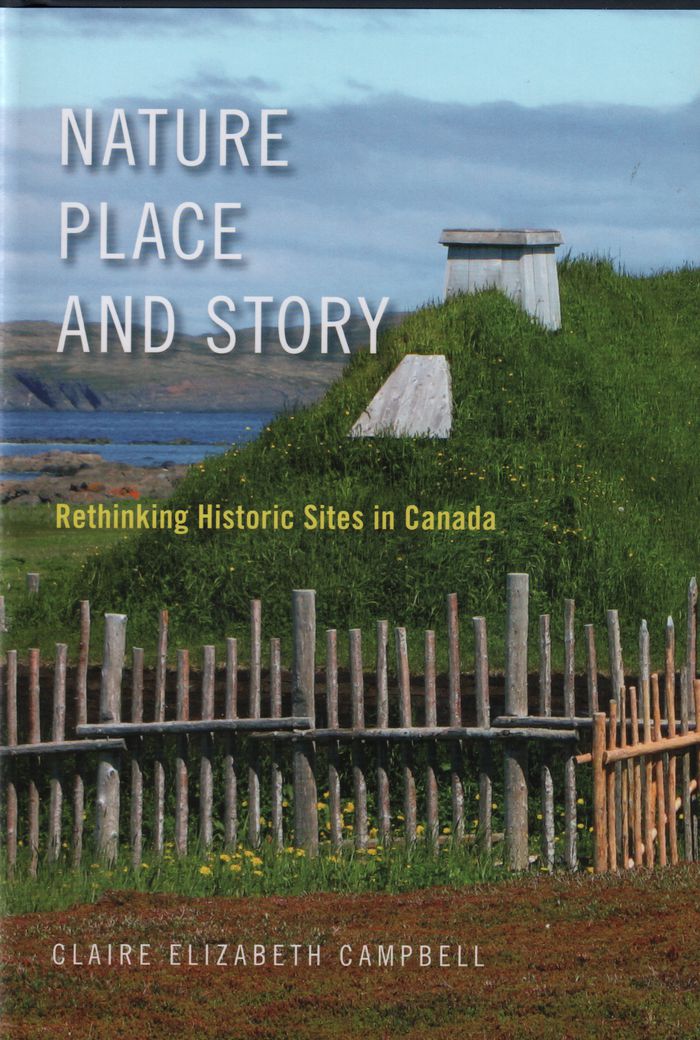
National historic sites commemorate decisive moments in the making of Canada. But seen through an environmental lens, these sites become artifacts of a bigger story: the occupation and transformation of nature into nation. In an age of pressing discussions about environmental sustainability, there is a growing need to know more about the history of our relationship with the natural world and what lessons these places of public history, regional identity, and national narrative can teach us. "Nature, place, and story" provides new interpretations for five of Canada’s largest and most iconic historic sites (two of which are UNESCO World Heritage Sites): L’Anse aux Meadows, Newfoundland; Grand Pré, Nova Scotia; Fort William, Ontario; the Forks of the Red River, Manitoba; and the Bar U Ranch, Alberta. At each location, Claire Campbell rewrites public history as environmental history, revealing the country’s debt to the power and fragility of the natural world, and the relevance of the past to understanding climate change, agricultural sustainability, wilderness protection, urban reclamation, and fossil fuel extraction. From the medieval Atlantic to modern ranchlands, environmental history speaks directly to contemporary questions about the health of Canada’s habitat. Bringing together public and environmental history in an entirely new way, "Nature, place, and story" is a lively and ambitious call for a fresh perspective on natural heritage.
Nature, place, and story: rethinking historic sites in Canada
Actions:
Price:
$34.95
(available in store)
Summary:
National historic sites commemorate decisive moments in the making of Canada. But seen through an environmental lens, these sites become artifacts of a bigger story: the occupation and transformation of nature into nation. In an age of pressing discussions about environmental sustainability, there is a growing need to know more about the history of our relationship with the natural world and what lessons these places of public history, regional identity, and national narrative can teach us. "Nature, place, and story" provides new interpretations for five of Canada’s largest and most iconic historic sites (two of which are UNESCO World Heritage Sites): L’Anse aux Meadows, Newfoundland; Grand Pré, Nova Scotia; Fort William, Ontario; the Forks of the Red River, Manitoba; and the Bar U Ranch, Alberta. At each location, Claire Campbell rewrites public history as environmental history, revealing the country’s debt to the power and fragility of the natural world, and the relevance of the past to understanding climate change, agricultural sustainability, wilderness protection, urban reclamation, and fossil fuel extraction. From the medieval Atlantic to modern ranchlands, environmental history speaks directly to contemporary questions about the health of Canada’s habitat. Bringing together public and environmental history in an entirely new way, "Nature, place, and story" is a lively and ambitious call for a fresh perspective on natural heritage.
Form:
books
books
Publication:
August 2017
August 2017
Subject:
Architecture in Canada
Architecture in Canada
Form:
books
books
Price:
$35.00
(available to order)
Summary:
A collection of essays in which revered poet Mary Oliver reflects on her willingness, as a young child and as an adult, to lose herself within the beauty and mysteries of both the natural world and the world of literature. Emphasizing the significance of her childhood “friend” Walt Whitman, through whose work she first understood that a poem is a temple, “a place to(...)
$35.00
(available to order)
Summary:
A collection of essays in which revered poet Mary Oliver reflects on her willingness, as a young child and as an adult, to lose herself within the beauty and mysteries of both the natural world and the world of literature. Emphasizing the significance of her childhood “friend” Walt Whitman, through whose work she first understood that a poem is a temple, “a place to(...)
Title:
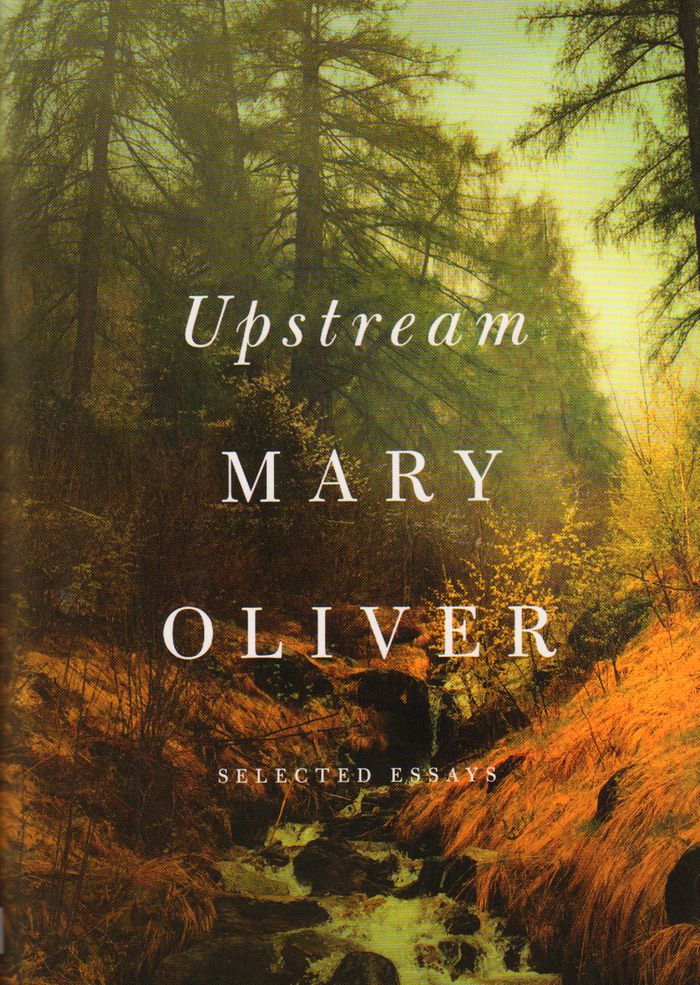
Upstream
Actions:
Price:
$35.00
(available to order)
Summary:
A collection of essays in which revered poet Mary Oliver reflects on her willingness, as a young child and as an adult, to lose herself within the beauty and mysteries of both the natural world and the world of literature. Emphasizing the significance of her childhood “friend” Walt Whitman, through whose work she first understood that a poem is a temple, “a place to enter, and in which to feel,” and who encouraged her to vanish into the world of her writing, Oliver meditates on the forces that allowed her to create a life for herself out of work and love. As she writes, “I could not be a poet without the natural world. Someone else could. But not me. For me the door to the woods is the door to the temple.” "Upstream" follows Oliver as she contemplates the pleasure of artistic labor, her boundless curiosity for the flora and fauna that surround her, and the responsibility she has inherited from Shelley, Wordsworth, Emerson, Poe, and Frost, the great thinkers and writers of the past, to live thoughtfully, intelligently, and to observe with passion. Throughout this collection, Oliver positions not just herself upstream but us as well as she encourages us all to keep moving, to lose ourselves in the awe of the unknown, and to give power and time to the creative and whimsical urges that live within us.
Upstream
Actions:
Price:
$35.00
(available to order)
Summary:
A collection of essays in which revered poet Mary Oliver reflects on her willingness, as a young child and as an adult, to lose herself within the beauty and mysteries of both the natural world and the world of literature. Emphasizing the significance of her childhood “friend” Walt Whitman, through whose work she first understood that a poem is a temple, “a place to enter, and in which to feel,” and who encouraged her to vanish into the world of her writing, Oliver meditates on the forces that allowed her to create a life for herself out of work and love. As she writes, “I could not be a poet without the natural world. Someone else could. But not me. For me the door to the woods is the door to the temple.” "Upstream" follows Oliver as she contemplates the pleasure of artistic labor, her boundless curiosity for the flora and fauna that surround her, and the responsibility she has inherited from Shelley, Wordsworth, Emerson, Poe, and Frost, the great thinkers and writers of the past, to live thoughtfully, intelligently, and to observe with passion. Throughout this collection, Oliver positions not just herself upstream but us as well as she encourages us all to keep moving, to lose ourselves in the awe of the unknown, and to give power and time to the creative and whimsical urges that live within us.
Form:
books
books
Publication:
October 2016
October 2016
Subject:
Landscape Theory
Landscape Theory
Form:
books
books
Price:
$51.95
(available to order)
Summary:
"The Organizational Complex" is a historical and theoretical analysis of corporate architecture in the United States after the Second World War. Its title refers to the aesthetic and technological extension of the military-industrial complex, in which architecture, computers, and corporations formed a network of objects, images, and discourses that realigned social(...)
$51.95
(available to order)
Summary:
"The Organizational Complex" is a historical and theoretical analysis of corporate architecture in the United States after the Second World War. Its title refers to the aesthetic and technological extension of the military-industrial complex, in which architecture, computers, and corporations formed a network of objects, images, and discourses that realigned social(...)
Subject:
Architectural Theory
Architectural Theory
Publication:
July 2003, Cambridge, Massachusetts
July 2003, Cambridge, Massachusetts
Title:
The organizational complex : architecture, media, and corporate space
Actions:
Price:
$51.95
(available to order)
Summary:
"The Organizational Complex" is a historical and theoretical analysis of corporate architecture in the United States after the Second World War. Its title refers to the aesthetic and technological extension of the military-industrial complex, in which architecture, computers, and corporations formed a network of objects, images, and discourses that realigned social relations and transformed the postwar landscape. In-depth case studies of architect Eero Saarinen's work for General Motors, IBM, and Bell Laboratories and analyses of office buildings designed by Skidmore, Owings & Merrill trace the emergence of a systems-based model of organization in architecture, in which the modular curtain wall acts as both an organizational device and a carrier of the corporate image. Such an image--of the corporation as a flexible, integrated system--is seen to correspond with a "humanization" of corporate life, as corporations decentralize both spatially and administratively. Parallel analyses follow the assimilation of cybernetics into aesthetics in the writings of artist and visual theorist Gyorgy Kepes, as art merges with techno-science in the service of a dynamic new "pattern-seeing." Image and system thus converge in the organizational complex, while top-down power dissolves into networked, pattern-based control. Architecture, as one among many media technologies, supplies the patterns--images of organic integration designed to regulate new and unstable human-machine assemblages.
The organizational complex : architecture, media, and corporate space
Actions:
Price:
$51.95
(available to order)
Summary:
"The Organizational Complex" is a historical and theoretical analysis of corporate architecture in the United States after the Second World War. Its title refers to the aesthetic and technological extension of the military-industrial complex, in which architecture, computers, and corporations formed a network of objects, images, and discourses that realigned social relations and transformed the postwar landscape. In-depth case studies of architect Eero Saarinen's work for General Motors, IBM, and Bell Laboratories and analyses of office buildings designed by Skidmore, Owings & Merrill trace the emergence of a systems-based model of organization in architecture, in which the modular curtain wall acts as both an organizational device and a carrier of the corporate image. Such an image--of the corporation as a flexible, integrated system--is seen to correspond with a "humanization" of corporate life, as corporations decentralize both spatially and administratively. Parallel analyses follow the assimilation of cybernetics into aesthetics in the writings of artist and visual theorist Gyorgy Kepes, as art merges with techno-science in the service of a dynamic new "pattern-seeing." Image and system thus converge in the organizational complex, while top-down power dissolves into networked, pattern-based control. Architecture, as one among many media technologies, supplies the patterns--images of organic integration designed to regulate new and unstable human-machine assemblages.
Form:
books
books
Publication:
July 2003, Cambridge, Massachusetts
July 2003, Cambridge, Massachusetts
Subject:
Architectural Theory
Architectural Theory
Form:
books
books
Price:
$120.00
(available to order)
Summary:
Addressing fundamental problems in modern Western approaches to art, this book proposes a conceptual frame-work for the analysis and understanding of all art by replacing the notion of the 'visual arts' with that of the 'spatial arts', which comprise two fundamental categories: 'real space' and 'virtual space'. Real space is the space we share with other people and(...)
$120.00
(available to order)
Summary:
Addressing fundamental problems in modern Western approaches to art, this book proposes a conceptual frame-work for the analysis and understanding of all art by replacing the notion of the 'visual arts' with that of the 'spatial arts', which comprise two fundamental categories: 'real space' and 'virtual space'. Real space is the space we share with other people and(...)
Title:
Real spaces : world art history and the rise of Western modernism
Actions:
Price:
$120.00
(available to order)
Summary:
Addressing fundamental problems in modern Western approaches to art, this book proposes a conceptual frame-work for the analysis and understanding of all art by replacing the notion of the 'visual arts' with that of the 'spatial arts', which comprise two fundamental categories: 'real space' and 'virtual space'. Real space is the space we share with other people and things, and its fundamental arts are sculpture - the art of personal space - and architecture, the art of social space. Virtual space, representing real space in two dimensions, as in paintings, drawings and prints, always entails a format in real space, thus making real space the primary category. Using these distinctions and adopting a wide definition of art that in principle embraces anything that is made, the author examines some of the basic characteristics of all art in a survey that traces the development of human skill from the first hominid tools to the sophisticated universal three-dimensional grid of modern technology, which he describes as 'metaoptical' space. Successive chapters deal with facture, refinement and the discovery of abstract relations; the making of places, boundaries and alignments; the creation of centres and the relations between art, order and political power; the origins of three-dimensional, planar and virtual images; planarity and the development of measures, ratios and grids; virtual images, the development of perspective and the essentially centreless metaoptical world of Western modernism.
Real spaces : world art history and the rise of Western modernism
Actions:
Price:
$120.00
(available to order)
Summary:
Addressing fundamental problems in modern Western approaches to art, this book proposes a conceptual frame-work for the analysis and understanding of all art by replacing the notion of the 'visual arts' with that of the 'spatial arts', which comprise two fundamental categories: 'real space' and 'virtual space'. Real space is the space we share with other people and things, and its fundamental arts are sculpture - the art of personal space - and architecture, the art of social space. Virtual space, representing real space in two dimensions, as in paintings, drawings and prints, always entails a format in real space, thus making real space the primary category. Using these distinctions and adopting a wide definition of art that in principle embraces anything that is made, the author examines some of the basic characteristics of all art in a survey that traces the development of human skill from the first hominid tools to the sophisticated universal three-dimensional grid of modern technology, which he describes as 'metaoptical' space. Successive chapters deal with facture, refinement and the discovery of abstract relations; the making of places, boundaries and alignments; the creation of centres and the relations between art, order and political power; the origins of three-dimensional, planar and virtual images; planarity and the development of measures, ratios and grids; virtual images, the development of perspective and the essentially centreless metaoptical world of Western modernism.
Form:
books
books
Publication:
May 2003, London / New York
May 2003, London / New York
Subject:
Architectural Theory
Architectural Theory
Form:
books
books
Price:
$76.95
(available in store)
Summary:
"Share: Conversations about contemporary architecture. The Nordic countries" is the first book in a new global series of investigative interviews about the modern architectural process. Initiated and undertaken by the Norway-based Canadian architect Todd Saunders, the Nordic Countries edition features interviews with 30 architectural practices from Finland, Norway,(...)
$76.95
(available in store)
Summary:
"Share: Conversations about contemporary architecture. The Nordic countries" is the first book in a new global series of investigative interviews about the modern architectural process. Initiated and undertaken by the Norway-based Canadian architect Todd Saunders, the Nordic Countries edition features interviews with 30 architectural practices from Finland, Norway,(...)
Subject:
Contemporary Architecture
Contemporary Architecture
Publication:
October 2022
October 2022
Title:
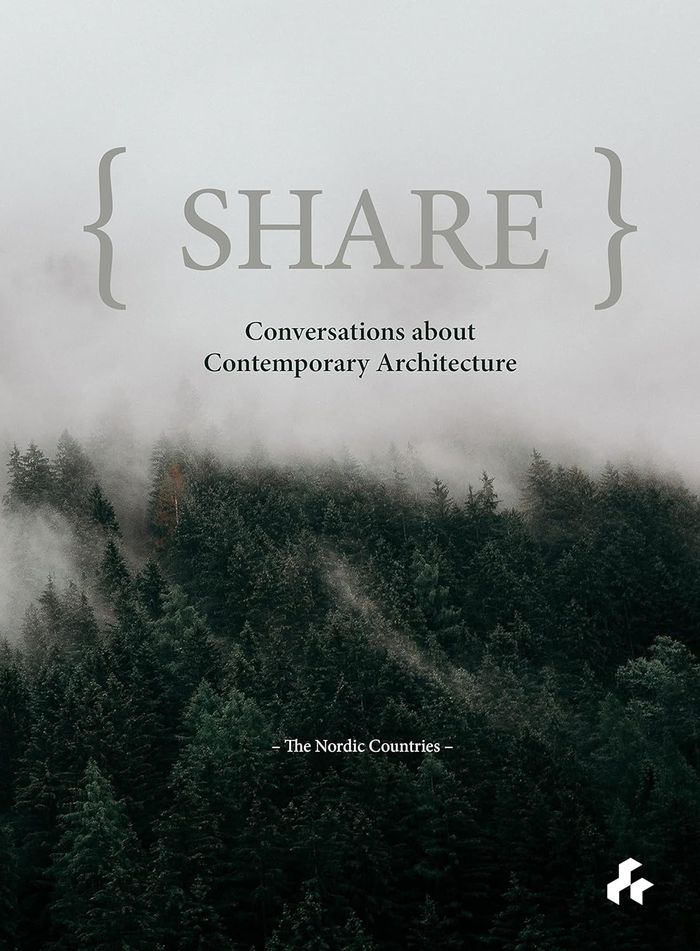
Share: Conversations about contemporary architecture. The Nordic countries
Actions:
Price:
$76.95
(available in store)
Summary:
"Share: Conversations about contemporary architecture. The Nordic countries" is the first book in a new global series of investigative interviews about the modern architectural process. Initiated and undertaken by the Norway-based Canadian architect Todd Saunders, the Nordic Countries edition features interviews with 30 architectural practices from Finland, Norway, Denmark, Sweden and Iceland. With more than 25 years of professional practice behind him, Saunders has always been fascinated by the role of creativity in everyday practice and the potential power alluded to it. In a series of interviews undertaken over the past year, Saunders has queried the changing role of the architect, the challenges of contemporary practice – especially the impact of the pandemic – and the ways in which architects can achieve the right balance in the relationship between site, client, craft and innovation. Presented as a series of candid conversations between architect and architect, the book offers insights that go beyond the polished histories that usually make it into print. In particular, the interviews explore the role of challenge and failure, conflict and mistakes, chance and coincidence; all familiar aspects of the architectural process yet elements that tend to be glossed over in conventional monographs. The Nordic countries edition will be followed by companion volumes that explore the work of architects in North and South America, central Europe and the Far East.
Share: Conversations about contemporary architecture. The Nordic countries
Actions:
Price:
$76.95
(available in store)
Summary:
"Share: Conversations about contemporary architecture. The Nordic countries" is the first book in a new global series of investigative interviews about the modern architectural process. Initiated and undertaken by the Norway-based Canadian architect Todd Saunders, the Nordic Countries edition features interviews with 30 architectural practices from Finland, Norway, Denmark, Sweden and Iceland. With more than 25 years of professional practice behind him, Saunders has always been fascinated by the role of creativity in everyday practice and the potential power alluded to it. In a series of interviews undertaken over the past year, Saunders has queried the changing role of the architect, the challenges of contemporary practice – especially the impact of the pandemic – and the ways in which architects can achieve the right balance in the relationship between site, client, craft and innovation. Presented as a series of candid conversations between architect and architect, the book offers insights that go beyond the polished histories that usually make it into print. In particular, the interviews explore the role of challenge and failure, conflict and mistakes, chance and coincidence; all familiar aspects of the architectural process yet elements that tend to be glossed over in conventional monographs. The Nordic countries edition will be followed by companion volumes that explore the work of architects in North and South America, central Europe and the Far East.
Form:
books
books
Publication:
October 2022
October 2022
Subject:
Contemporary Architecture
Contemporary Architecture
Form:
books
books
Actions:
Holdings:
Description:
xvi, 251 pages, 14 unnumbered pages of plates : illustrations, maps ; 25 cm
Description:
xvi, 251 pages, 14 unnumbered pages of plates : illustrations, maps ; 25 cm
Author:
Subject:
Publication:
New Haven ; London : Yale University Press, [2001], ©2001
New Haven ; London : Yale University Press, [2001], ©2001
Title:
Married to the mouse : Walt Disney World and Orlando / Richard E. Foglesong.
Actions:
Holdings:
Description:
xvi, 251 pages, 14 unnumbered pages of plates : illustrations, maps ; 25 cm
Married to the mouse : Walt Disney World and Orlando / Richard E. Foglesong.
Actions:
Holdings:
Description:
xvi, 251 pages, 14 unnumbered pages of plates : illustrations, maps ; 25 cm
Form:
books
books
Publication:
New Haven ; London : Yale University Press, [2001], ©2001
New Haven ; London : Yale University Press, [2001], ©2001
Author:
Subject:
Form:
books
books
Actions:
Holdings:
Description:
399 pages : color illustrations ; 25 cm
Description:
399 pages : color illustrations ; 25 cm
Author:
Subject:
Publication:
©2013, London : Aurum, 2013.
©2013, London : Aurum, 2013.
Title:
The world atlas of street art and graffiti / by Rafael Schacter ; foreword by John Fekner.
Actions:
Holdings:
Description:
399 pages : color illustrations ; 25 cm
The world atlas of street art and graffiti / by Rafael Schacter ; foreword by John Fekner.
Actions:
Holdings:
Description:
399 pages : color illustrations ; 25 cm
Form:
books
books
Publication:
©2013, London : Aurum, 2013.
©2013, London : Aurum, 2013.
Author:
Subject:


