


5194 Results
Form:
books
books
Actions:
Price:
$33.95
(available to order)
Summary:
"Fuel" is an idiosyncratic, speculative dictionary of fuels, real and imagined, historical and futuristic, hopeless and utopian. Drawing on literature, film, and scientific treatises--most produced long before "climate change" was in circulation--"Fuel" argues for a distinction between energy (a system of power) and fuel (a substance, which can be thought of as(...)
$33.95
(available to order)
Summary:
"Fuel" is an idiosyncratic, speculative dictionary of fuels, real and imagined, historical and futuristic, hopeless and utopian. Drawing on literature, film, and scientific treatises--most produced long before "climate change" was in circulation--"Fuel" argues for a distinction between energy (a system of power) and fuel (a substance, which can be thought of as(...)
Title:
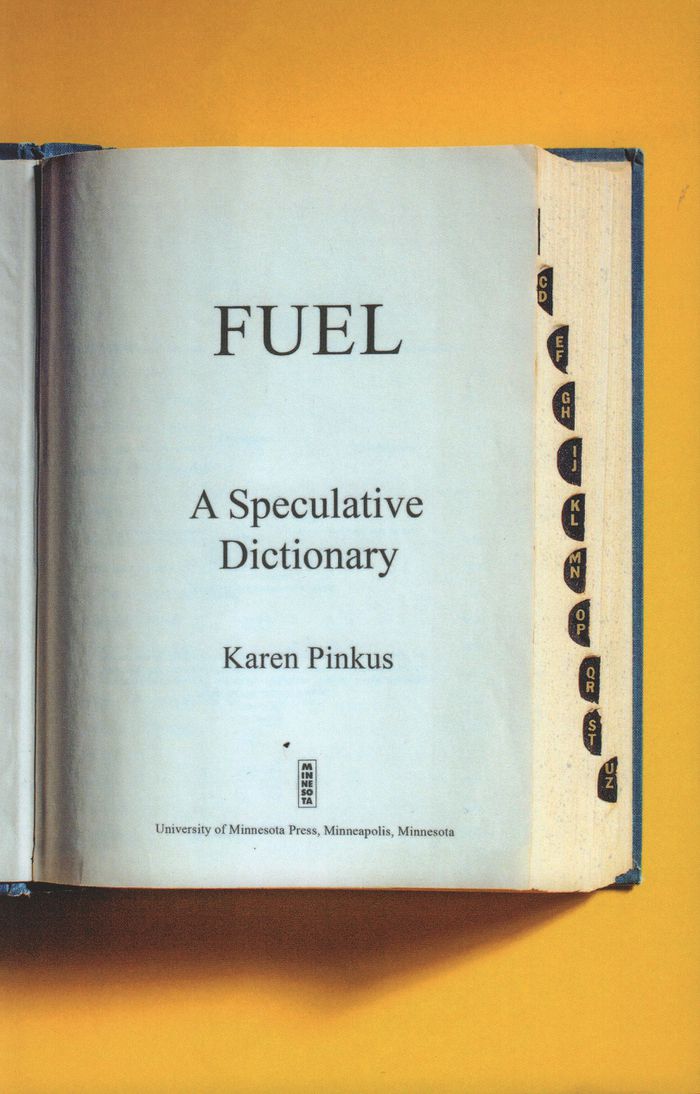
Fuel : a speculative dictionary
Actions:
Price:
$33.95
(available to order)
Summary:
"Fuel" is an idiosyncratic, speculative dictionary of fuels, real and imagined, historical and futuristic, hopeless and utopian. Drawing on literature, film, and scientific treatises--most produced long before "climate change" was in circulation--"Fuel" argues for a distinction between energy (a system of power) and fuel (a substance, which can be thought of as "potentiality") as it endeavors to undo the dream that we can simply switch to renewables and all will be golden. From "Air" to "Zyklon B," entries in this unusual "dictionary" include Algae, Clathrates, Dilithium, Fleece, Goats, Theology, Whale Oil, and many, many more. The tone of the entries ranges as widely as the topics: from historical anecdotes (the Ford Fiesta "boozemobile") to eccentric readings of the classics of "energy lit" ( Germinal and Oil! ); from literary observations (a high octane Odyssey ?) to excursions into literary theory. The dictionary draws from an eccentric canon, including works by Jules Verne, George Eliot's Silas Marner , Paolo Bacigalupi's Windup Girl , and the Tom Cruise vehicle Oblivion , among others. A message from this ambitious project is that energy can be understood as a heterogeneous set of self-mystifying systems or machines that block access to thought as they fascinate us. Fuels emerge as more primal elements that the audience can grasp at various points along the way to consumption/combustion. This dictionary can help scramble our thinking about fuel--not in order to demonize energy and not in order to create a new hierarchy in which certain renewables take over from fossil fuels but instead to open up potential ways of interacting with real and imaginary substances, by wrenching them out of narrative and placing them into an idiosyncratic dictionary to be applied by readers into new narratives.
Fuel : a speculative dictionary
Actions:
Price:
$33.95
(available to order)
Summary:
"Fuel" is an idiosyncratic, speculative dictionary of fuels, real and imagined, historical and futuristic, hopeless and utopian. Drawing on literature, film, and scientific treatises--most produced long before "climate change" was in circulation--"Fuel" argues for a distinction between energy (a system of power) and fuel (a substance, which can be thought of as "potentiality") as it endeavors to undo the dream that we can simply switch to renewables and all will be golden. From "Air" to "Zyklon B," entries in this unusual "dictionary" include Algae, Clathrates, Dilithium, Fleece, Goats, Theology, Whale Oil, and many, many more. The tone of the entries ranges as widely as the topics: from historical anecdotes (the Ford Fiesta "boozemobile") to eccentric readings of the classics of "energy lit" ( Germinal and Oil! ); from literary observations (a high octane Odyssey ?) to excursions into literary theory. The dictionary draws from an eccentric canon, including works by Jules Verne, George Eliot's Silas Marner , Paolo Bacigalupi's Windup Girl , and the Tom Cruise vehicle Oblivion , among others. A message from this ambitious project is that energy can be understood as a heterogeneous set of self-mystifying systems or machines that block access to thought as they fascinate us. Fuels emerge as more primal elements that the audience can grasp at various points along the way to consumption/combustion. This dictionary can help scramble our thinking about fuel--not in order to demonize energy and not in order to create a new hierarchy in which certain renewables take over from fossil fuels but instead to open up potential ways of interacting with real and imaginary substances, by wrenching them out of narrative and placing them into an idiosyncratic dictionary to be applied by readers into new narratives.
Form:
books
books
Publication:
November 2016
November 2016
Subject:
Environment and environmental theory
Environment and environmental theory
Form:
books
books
Title:
Guy Debord
Guy Debord
Actions:
Price:
$21.50
(available to order)
Summary:
Guy Debord (1931–94) was one of the most important and intriguing intellectual figures of the twentieth century. Filmmaker and poet, urban critic and political theorist, adventurer and activist extraordinaire during Paris’s May 1968 uprisings, Debord was simultaneously behind and ahead of his times. Best-known as guru of the avant-garde revolutionary movement the(...)
$21.50
(available to order)
Summary:
Guy Debord (1931–94) was one of the most important and intriguing intellectual figures of the twentieth century. Filmmaker and poet, urban critic and political theorist, adventurer and activist extraordinaire during Paris’s May 1968 uprisings, Debord was simultaneously behind and ahead of his times. Best-known as guru of the avant-garde revolutionary movement the(...)
Title:
Guy Debord
Actions:
Price:
$21.50
(available to order)
Summary:
Guy Debord (1931–94) was one of the most important and intriguing intellectual figures of the twentieth century. Filmmaker and poet, urban critic and political theorist, adventurer and activist extraordinaire during Paris’s May 1968 uprisings, Debord was simultaneously behind and ahead of his times. Best-known as guru of the avant-garde revolutionary movement the Situationist International (1957-72), and for a classic indictment of post-war capitalist consumerism The Society of the Spectacle (1967), Debord’s life and work remains fascinating to this day. Yet the man himself remained elusive and enigmatic throughout his life. Master urban tactician in the 1950s, political muckraker, organizer and theorist during the 1960s, vagabond throughout the 1970s, fleeing to Spain and Italy, he lived as a recluse during the 1980s and early 1990s in an isolated farmhouse in Champot (Auvergne), behind a high stone wall. Guy Debord crosses over that Champot wall, pushes back Debord’s shutters and peers through his windows. It crosses his threshold, drinks his wine, and listens to him talk. Andrew Merrifield focuses on the particulars of Debord’s life, shedding light on this admirable yet apparently impenetrable figure, a free spirit who was radically at odds with life but at the same time loved many things in it, and thought them worth fighting for. The book reveals the dynamics of the man, his ideas, and his times – which have much to say to our own, equally troubled times. The ideas of Guy Debord, who died only 10 years ago, continue to expose the fragility of our democracy and the mismatch between people and political power today; this book shows that the lessons of Debord are as fresh, subversive, and relevant now as they were forty years ago.
Guy Debord
Actions:
Price:
$21.50
(available to order)
Summary:
Guy Debord (1931–94) was one of the most important and intriguing intellectual figures of the twentieth century. Filmmaker and poet, urban critic and political theorist, adventurer and activist extraordinaire during Paris’s May 1968 uprisings, Debord was simultaneously behind and ahead of his times. Best-known as guru of the avant-garde revolutionary movement the Situationist International (1957-72), and for a classic indictment of post-war capitalist consumerism The Society of the Spectacle (1967), Debord’s life and work remains fascinating to this day. Yet the man himself remained elusive and enigmatic throughout his life. Master urban tactician in the 1950s, political muckraker, organizer and theorist during the 1960s, vagabond throughout the 1970s, fleeing to Spain and Italy, he lived as a recluse during the 1980s and early 1990s in an isolated farmhouse in Champot (Auvergne), behind a high stone wall. Guy Debord crosses over that Champot wall, pushes back Debord’s shutters and peers through his windows. It crosses his threshold, drinks his wine, and listens to him talk. Andrew Merrifield focuses on the particulars of Debord’s life, shedding light on this admirable yet apparently impenetrable figure, a free spirit who was radically at odds with life but at the same time loved many things in it, and thought them worth fighting for. The book reveals the dynamics of the man, his ideas, and his times – which have much to say to our own, equally troubled times. The ideas of Guy Debord, who died only 10 years ago, continue to expose the fragility of our democracy and the mismatch between people and political power today; this book shows that the lessons of Debord are as fresh, subversive, and relevant now as they were forty years ago.
Form:
books
books
Publication:
October 2005, London
October 2005, London
Subject:
Architectural Theory
Architectural Theory
Form:
books
books
Actions:
Price:
$56.50
(available to order)
Summary:
At its opening on July 16, 2004, Chicago’s Millennium Park was hailed as one of the most important millennium projects in the world. “Politicians come and go; business leaders come and go,” proclaimed mayor Richard M. Daley, “but artists really define a city.” Part park, part outdoor art museum, part cultural center, and part performance space, Millennium Park is now an(...)
$56.50
(available to order)
Summary:
At its opening on July 16, 2004, Chicago’s Millennium Park was hailed as one of the most important millennium projects in the world. “Politicians come and go; business leaders come and go,” proclaimed mayor Richard M. Daley, “but artists really define a city.” Part park, part outdoor art museum, part cultural center, and part performance space, Millennium Park is now an(...)
Subject:
Architecture since 1900, Europe
Architecture since 1900, Europe
Publication:
April 2006, Chicago, London
April 2006, Chicago, London
Title:
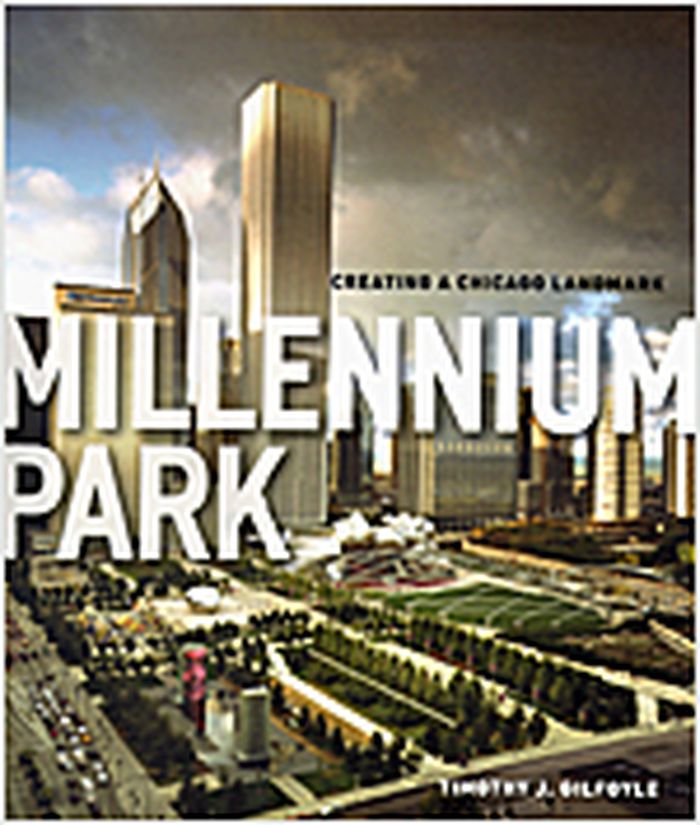
Millennium park : creating a Chicago landscape
Actions:
Price:
$56.50
(available to order)
Summary:
At its opening on July 16, 2004, Chicago’s Millennium Park was hailed as one of the most important millennium projects in the world. “Politicians come and go; business leaders come and go,” proclaimed mayor Richard M. Daley, “but artists really define a city.” Part park, part outdoor art museum, part cultural center, and part performance space, Millennium Park is now an unprecedented combination of distinctive architecture, monumental sculpture, and innovative landscaping. Including structures and works by Frank Gehry, Anish Kapoor, Jaume Plensa, and Kathryn Gustafson, the park represents the collaborative efforts of hundreds to turn an unused railroad yard in the heart of the city into a world-class civic space—and, in the process, to create an entirely new kind of cultural philanthropy. Timothy Gilfoyle here offers a biography of this phenomenal undertaking, beginning before 1850 when the site of the park, the “city’s front yard,” was part of Lake Michigan. Gilfoyle studied the history of downtown; spent years with the planners, artists, and public officials behind Millennium Park; documented it at every stage of its construction; and traced the skeins of financing through municipal government, global corporations, private foundations, and wealthy civic leaders. The result is an illustrated testament to the park, the city, and all those attempting to think and act on a monumental scale. And underlying Gilfoyle’s history is also a revealing study of the globalization of art, the use of culture as an engine of economic expansion, and the nature of political and philanthropic power. Born out of civic idealism, raised in political controversy, and maturing into a symbol of the new Chicago, Millennium Park is truly a twenty-first-century landmark, and it now has the history it deserves.
Millennium park : creating a Chicago landscape
Actions:
Price:
$56.50
(available to order)
Summary:
At its opening on July 16, 2004, Chicago’s Millennium Park was hailed as one of the most important millennium projects in the world. “Politicians come and go; business leaders come and go,” proclaimed mayor Richard M. Daley, “but artists really define a city.” Part park, part outdoor art museum, part cultural center, and part performance space, Millennium Park is now an unprecedented combination of distinctive architecture, monumental sculpture, and innovative landscaping. Including structures and works by Frank Gehry, Anish Kapoor, Jaume Plensa, and Kathryn Gustafson, the park represents the collaborative efforts of hundreds to turn an unused railroad yard in the heart of the city into a world-class civic space—and, in the process, to create an entirely new kind of cultural philanthropy. Timothy Gilfoyle here offers a biography of this phenomenal undertaking, beginning before 1850 when the site of the park, the “city’s front yard,” was part of Lake Michigan. Gilfoyle studied the history of downtown; spent years with the planners, artists, and public officials behind Millennium Park; documented it at every stage of its construction; and traced the skeins of financing through municipal government, global corporations, private foundations, and wealthy civic leaders. The result is an illustrated testament to the park, the city, and all those attempting to think and act on a monumental scale. And underlying Gilfoyle’s history is also a revealing study of the globalization of art, the use of culture as an engine of economic expansion, and the nature of political and philanthropic power. Born out of civic idealism, raised in political controversy, and maturing into a symbol of the new Chicago, Millennium Park is truly a twenty-first-century landmark, and it now has the history it deserves.
Form:
books
books
Publication:
April 2006, Chicago, London
April 2006, Chicago, London
Subject:
Architecture since 1900, Europe
Architecture since 1900, Europe
Form:
books
books
Price:
$67.95
(available to order)
Summary:
The dream of the twentieth century was the construction of mass utopia. As the century closes, this dream is being left behind; the belief that industrial modernization can bring about the good society by overcoming material scarcity for all has been challenged by the disintegration(...)
$67.95
(available to order)
Summary:
The dream of the twentieth century was the construction of mass utopia. As the century closes, this dream is being left behind; the belief that industrial modernization can bring about the good society by overcoming material scarcity for all has been challenged by the disintegration(...)
Title:
Dreamworld and catastrophe : the passing of mass utopia in East and West
Actions:
Price:
$67.95
(available to order)
Summary:
The dream of the twentieth century was the construction of mass utopia. As the century closes, this dream is being left behind; the belief that industrial modernization can bring about the good society by overcoming material scarcity for all has been challenged by the disintegration of European socialism, capitalist restructuring, and ecological constraints. The larger social vision has given way to private dreams of material happiness and to political cynicism. Developing the notion of dreamworld as both a poetic description of a collective mental state and an analytical concept, Susan Buck-Morss attempts to come to terms with mass dreamworlds at the moment of their passing. She shows how dreamworlds became dangerous when their energy was used by the structures of power as an instrument of force against the masses. Stressing the similarities between the East and West and using the end of the Cold War as her point of departure, she examines both extremes of mass utopia, dreamworld and catastrophe. The book is in four parts. "Dreamworlds of Democracy" asks whether collective sovereignty can ever be democratic. "Dreamworlds of History" calls for a rethinking of revolution by political and artistic avant-gardes. "Dreamworlds of Mass Culture" explores the affinities between mass culture's socialist and capitalist forms. An "Afterward" places the book in the historical context of the author's collaboration with a group of Moscow philosophers and artists over the past two tumultuous decades. The book is an experiment in visual culture, using images as philosophy, presenting, literally, a way of seeing the past. Its pictorial narratives rescue historical data that with the end of the Cold War are threatened with oblivion and challenge common conceptions of what this century was all about.
Dreamworld and catastrophe : the passing of mass utopia in East and West
Actions:
Price:
$67.95
(available to order)
Summary:
The dream of the twentieth century was the construction of mass utopia. As the century closes, this dream is being left behind; the belief that industrial modernization can bring about the good society by overcoming material scarcity for all has been challenged by the disintegration of European socialism, capitalist restructuring, and ecological constraints. The larger social vision has given way to private dreams of material happiness and to political cynicism. Developing the notion of dreamworld as both a poetic description of a collective mental state and an analytical concept, Susan Buck-Morss attempts to come to terms with mass dreamworlds at the moment of their passing. She shows how dreamworlds became dangerous when their energy was used by the structures of power as an instrument of force against the masses. Stressing the similarities between the East and West and using the end of the Cold War as her point of departure, she examines both extremes of mass utopia, dreamworld and catastrophe. The book is in four parts. "Dreamworlds of Democracy" asks whether collective sovereignty can ever be democratic. "Dreamworlds of History" calls for a rethinking of revolution by political and artistic avant-gardes. "Dreamworlds of Mass Culture" explores the affinities between mass culture's socialist and capitalist forms. An "Afterward" places the book in the historical context of the author's collaboration with a group of Moscow philosophers and artists over the past two tumultuous decades. The book is an experiment in visual culture, using images as philosophy, presenting, literally, a way of seeing the past. Its pictorial narratives rescue historical data that with the end of the Cold War are threatened with oblivion and challenge common conceptions of what this century was all about.
Form:
books
books
Publication:
January 1900, Cambridge
January 1900, Cambridge
Subject:
Architectural Theory
Architectural Theory
Form:
books
books
Actions:
Price:
$31.25
(available to order)
Summary:
"Sowing Empire" identifies the cultivation and landscaping of colonies as one of the primary ways imperial nations justified their empires. Planting and transplanting, seeding and reshaping - the landscaping practices that emerged in the eighteenth century - are inextricable from the contested terrain of empire within which they operated. From the plantations of the(...)
$31.25
(available to order)
Summary:
"Sowing Empire" identifies the cultivation and landscaping of colonies as one of the primary ways imperial nations justified their empires. Planting and transplanting, seeding and reshaping - the landscaping practices that emerged in the eighteenth century - are inextricable from the contested terrain of empire within which they operated. From the plantations of the(...)
Title:
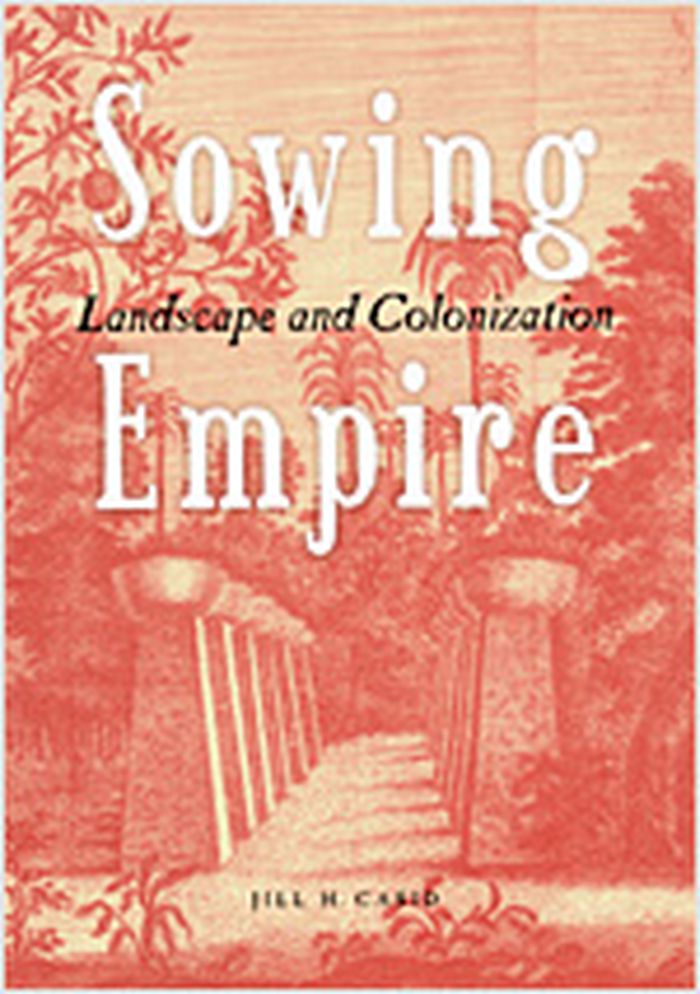
Sowing empire : landscape and colonization
Actions:
Price:
$31.25
(available to order)
Summary:
"Sowing Empire" identifies the cultivation and landscaping of colonies as one of the primary ways imperial nations justified their empires. Planting and transplanting, seeding and reshaping - the landscaping practices that emerged in the eighteenth century - are inextricable from the contested terrain of empire within which they operated. From the plantations of the “nabobs” to the island gardens of narrative fiction, from William Beckford’s estate at Fonthill to Marie Antoinette’s ornamented farm, "Sowing Empire" considers imperial relandscaping - its patriarchal organization, heterosexual reproduction, and slavery - and how it contributed to the construction of imperial power. At the same time, the book shows how these picturesque landscapes and sugar plantations contained within them the seeds of resistance - how, for instance, slave gardens and the Afro-Caribbean practice of Vodou threatened authority and created new possibilities for once again transforming the landscape. In an ambitious work of wide-ranging literary, visual, and historical allusion, Jill H. Casid examines how landscaping functioned in an imperial mode that defined and remade the “heartlands” of nations as well as the contact zones and colonial peripheries in the West and East Indies. Revealing the colonial landscape as far more than an agricultural system - as a means of regulating national, sexual, and gender identities - Casid also traces how the circulation of plants and hybridity influenced agriculture and landscaping on European soil and how colonial contacts materially shaped what we take as “European.” Utilizing a wide range of both visual and written sources - maps, literature, and travel writing - this book is interdisciplinary in its methodology and in its scope. Sowing Empire explores how postcolonial and queer studies can alter art history and visual studies and, in turn, what close attention to the visual may offer to both postcolonial theorizing and historically and materially based colonial cultural studies.
Sowing empire : landscape and colonization
Actions:
Price:
$31.25
(available to order)
Summary:
"Sowing Empire" identifies the cultivation and landscaping of colonies as one of the primary ways imperial nations justified their empires. Planting and transplanting, seeding and reshaping - the landscaping practices that emerged in the eighteenth century - are inextricable from the contested terrain of empire within which they operated. From the plantations of the “nabobs” to the island gardens of narrative fiction, from William Beckford’s estate at Fonthill to Marie Antoinette’s ornamented farm, "Sowing Empire" considers imperial relandscaping - its patriarchal organization, heterosexual reproduction, and slavery - and how it contributed to the construction of imperial power. At the same time, the book shows how these picturesque landscapes and sugar plantations contained within them the seeds of resistance - how, for instance, slave gardens and the Afro-Caribbean practice of Vodou threatened authority and created new possibilities for once again transforming the landscape. In an ambitious work of wide-ranging literary, visual, and historical allusion, Jill H. Casid examines how landscaping functioned in an imperial mode that defined and remade the “heartlands” of nations as well as the contact zones and colonial peripheries in the West and East Indies. Revealing the colonial landscape as far more than an agricultural system - as a means of regulating national, sexual, and gender identities - Casid also traces how the circulation of plants and hybridity influenced agriculture and landscaping on European soil and how colonial contacts materially shaped what we take as “European.” Utilizing a wide range of both visual and written sources - maps, literature, and travel writing - this book is interdisciplinary in its methodology and in its scope. Sowing Empire explores how postcolonial and queer studies can alter art history and visual studies and, in turn, what close attention to the visual may offer to both postcolonial theorizing and historically and materially based colonial cultural studies.
Form:
books
books
Publication:
January 2005, Minneapolis
January 2005, Minneapolis
Subject:
Landscape Theory
Landscape Theory
Form:
books
books
Actions:
Description:
1 online resource (69 pages).
Author:
Subject:
Publication:
München : Hatje Cantz Verlag, 2012.
München : Hatje Cantz Verlag, 2012.
Title:
Dream index = Aus der Traum (Kartei) / Durs Grünbein ; introduction: Michael Eskin ; [translations: Christopher Jenkin-Jones].
Actions:
Description:
1 online resource (69 pages).
Dream index = Aus der Traum (Kartei) / Durs Grünbein ; introduction: Michael Eskin ; [translations: Christopher Jenkin-Jones].
Actions:
Description:
1 online resource (69 pages).
Form:
books
books
Publication:
München : Hatje Cantz Verlag, 2012.
München : Hatje Cantz Verlag, 2012.
Author:
Subject:
Form:
books
books
Subject:
Publication:
Hatje Cantz 2012
Hatje Cantz 2012
Form:
books
books
Publication:
Hatje Cantz 2012
Hatje Cantz 2012
Subject:
Form:
audio
audio
Actions:
Description:
1 online resource.
Author:
Subject:
Publication:
[Place of publication not identified] : Lateral Addition, 2018.
[Place of publication not identified] : Lateral Addition, 2018.
Form:
audio
audio
Publication:
[Place of publication not identified] : Lateral Addition, 2018.
[Place of publication not identified] : Lateral Addition, 2018.
Author:
Subject:
Form:
books
books
Actions:
Holdings:
Description:
ix, 454 pages : 2 : illustrations (chiefly color) ; 29 cm
Description:
ix, 454 pages : 2 : illustrations (chiefly color) ; 29 cm
Author:
Subject:
Publication:
New Haven : Yale University Press, [2014]
New Haven : Yale University Press, [2014]
Title:
Gothic wonder : art, artifice and the decorated style 1290-1350 / Paul Binski.
Actions:
Holdings:
Description:
ix, 454 pages : 2 : illustrations (chiefly color) ; 29 cm
Gothic wonder : art, artifice and the decorated style 1290-1350 / Paul Binski.
Actions:
Holdings:
Description:
ix, 454 pages : 2 : illustrations (chiefly color) ; 29 cm
Form:
books
books
Publication:
New Haven : Yale University Press, [2014]
New Haven : Yale University Press, [2014]
Author:
Subject:
Form:
books
books
Actions:
Holdings:
Description:
231 pages ; 22 cm
Description:
231 pages ; 22 cm
Author:
Subject:
Publication:
New York : Farrar, Straus, Giroux, ©1984.
New York : Farrar, Straus, Giroux, ©1984.
Title:
The dark brain of Piranesi and other essays / Marguerite Yourcenar ; translated by Richard Howard in collaboration with the author.
Actions:
Holdings:
Description:
231 pages ; 22 cm
The dark brain of Piranesi and other essays / Marguerite Yourcenar ; translated by Richard Howard in collaboration with the author.
Actions:
Holdings:
Description:
231 pages ; 22 cm
Form:
books
books
Publication:
New York : Farrar, Straus, Giroux, ©1984.
New York : Farrar, Straus, Giroux, ©1984.
Author:
Subject:


