


12071 Results
Form:
books
books
Actions:
Price:
$60.95
(available in store)
Summary:
This issue of a+u magazine features the work of Sancho-Madridejos Architecture Office (S-MAO). An ensemble of 20 projects, framed according to two investigative themes, are featured in this monograph, supported by axonometric diagrams and concept models. An essay by the founders’ close friends, Antón García-Abril and Débora Mesa, reveals the deeper origins to S-MAO’s(...)
$60.95
(available in store)
Summary:
This issue of a+u magazine features the work of Sancho-Madridejos Architecture Office (S-MAO). An ensemble of 20 projects, framed according to two investigative themes, are featured in this monograph, supported by axonometric diagrams and concept models. An essay by the founders’ close friends, Antón García-Abril and Débora Mesa, reveals the deeper origins to S-MAO’s(...)
Title:
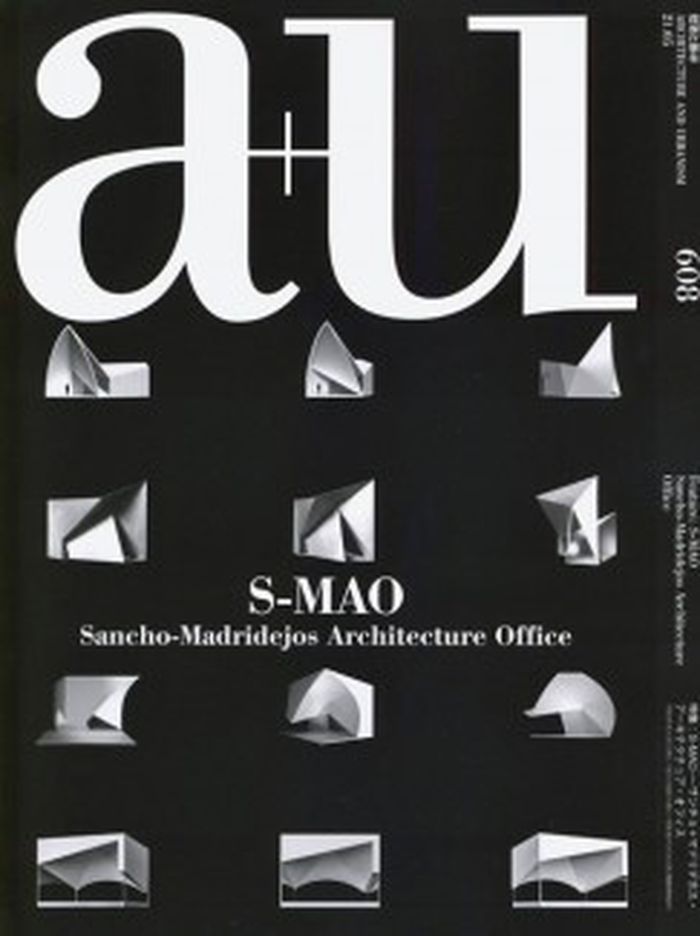
A+U 608 21:05 S-Mao Sancho-Madridejos Architecture Office
Actions:
Price:
$60.95
(available in store)
Summary:
This issue of a+u magazine features the work of Sancho-Madridejos Architecture Office (S-MAO). An ensemble of 20 projects, framed according to two investigative themes, are featured in this monograph, supported by axonometric diagrams and concept models. An essay by the founders’ close friends, Antón García-Abril and Débora Mesa, reveals the deeper origins to S-MAO’s approach and describes how their trials and investigations have yielded 'new processes in engineering, new construction systems, and a new language'. Based in Madrid and established in 1982, the office has developed a nuanced and committed practice, rooted in investigations in plastic arts and aesthetic theory.
A+U 608 21:05 S-Mao Sancho-Madridejos Architecture Office
Actions:
Price:
$60.95
(available in store)
Summary:
This issue of a+u magazine features the work of Sancho-Madridejos Architecture Office (S-MAO). An ensemble of 20 projects, framed according to two investigative themes, are featured in this monograph, supported by axonometric diagrams and concept models. An essay by the founders’ close friends, Antón García-Abril and Débora Mesa, reveals the deeper origins to S-MAO’s approach and describes how their trials and investigations have yielded 'new processes in engineering, new construction systems, and a new language'. Based in Madrid and established in 1982, the office has developed a nuanced and committed practice, rooted in investigations in plastic arts and aesthetic theory.
Form:
books
books
Publication:
May 2021
May 2021
Subject:
Magazines
Magazines
Form:
books
books
Price:
$22.95
(available to order)
Summary:
Whether it’s horror at the plastic littering the world’s beaches or despair at the melting polar ice caps, the world is gradually waking up to the impending climate disaster. In ''The green imperative,'' Papanek argues for design that addresses these issues head-on. This means using materials that can be recycled and reused, no more pointless packaging, thinking about how(...)
$22.95
(available to order)
Summary:
Whether it’s horror at the plastic littering the world’s beaches or despair at the melting polar ice caps, the world is gradually waking up to the impending climate disaster. In ''The green imperative,'' Papanek argues for design that addresses these issues head-on. This means using materials that can be recycled and reused, no more pointless packaging, thinking about how(...)
Title:
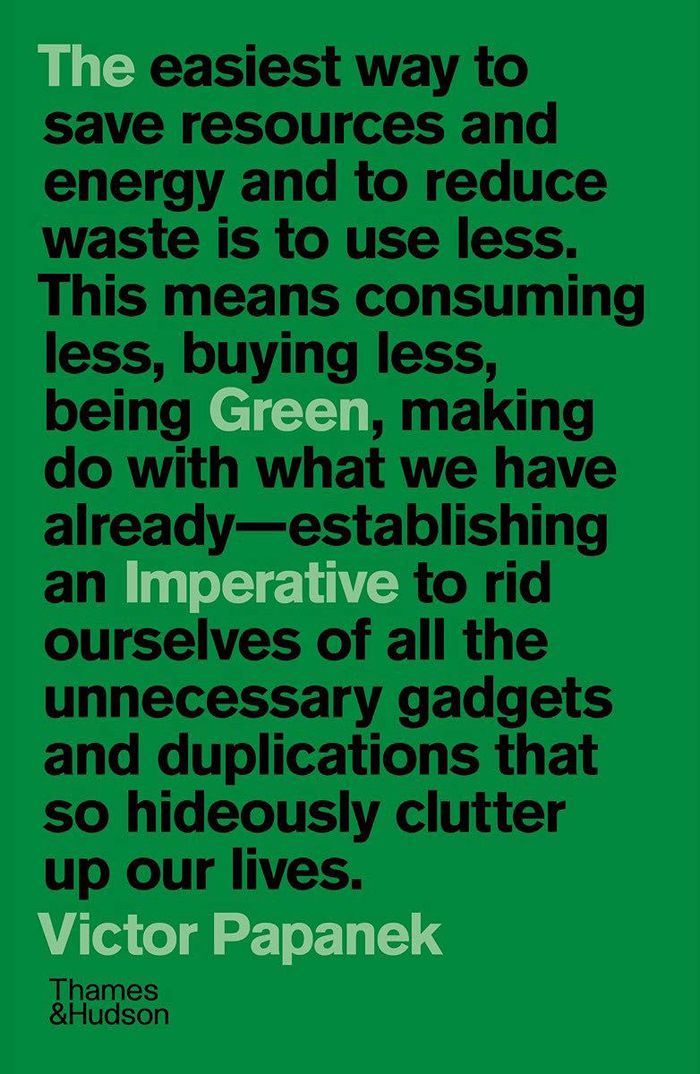
The green imperative: Ecology and ethics in design and architecture
Actions:
Price:
$22.95
(available to order)
Summary:
Whether it’s horror at the plastic littering the world’s beaches or despair at the melting polar ice caps, the world is gradually waking up to the impending climate disaster. In ''The green imperative,'' Papanek argues for design that addresses these issues head-on. This means using materials that can be recycled and reused, no more pointless packaging, thinking about how products make us feel and engage all our senses, putting nature at the heart of design, working at a smaller scale, rejecting aesthetics for their own sake, and thinking before we buy. First published at the end of the twentieth century, this book offered a plethora of honest advice, clear examples, and withering critiques, laying out the flaws of and opportunities for the design world at that time. A quarter of a century on, Papanek’s lucid prose has lost none of its verve, and the problems he highlights have only become more urgent, giving today’s reader both a fascinating historical perspective on the issues at hand and a blueprint for how they might be solved.
The green imperative: Ecology and ethics in design and architecture
Actions:
Price:
$22.95
(available to order)
Summary:
Whether it’s horror at the plastic littering the world’s beaches or despair at the melting polar ice caps, the world is gradually waking up to the impending climate disaster. In ''The green imperative,'' Papanek argues for design that addresses these issues head-on. This means using materials that can be recycled and reused, no more pointless packaging, thinking about how products make us feel and engage all our senses, putting nature at the heart of design, working at a smaller scale, rejecting aesthetics for their own sake, and thinking before we buy. First published at the end of the twentieth century, this book offered a plethora of honest advice, clear examples, and withering critiques, laying out the flaws of and opportunities for the design world at that time. A quarter of a century on, Papanek’s lucid prose has lost none of its verve, and the problems he highlights have only become more urgent, giving today’s reader both a fascinating historical perspective on the issues at hand and a blueprint for how they might be solved.
Form:
books
books
Publication:
February 2022
February 2022
Subject:
Environment and environmental theory
Environment and environmental theory
Form:
books
books
Actions:
Price:
$53.95
(available to order)
Summary:
This exploration of the history of Western civilization showcases the cathedral’s central role in the European imagination. Jenkins tells the stories behind these stone wonders: the architects that made them possible, the triumphs of engineering, the artists who enriched their décor, and the inevitable human follies of those who were involved in their building, from the(...)
$53.95
(available to order)
Summary:
This exploration of the history of Western civilization showcases the cathedral’s central role in the European imagination. Jenkins tells the stories behind these stone wonders: the architects that made them possible, the triumphs of engineering, the artists who enriched their décor, and the inevitable human follies of those who were involved in their building, from the(...)
Title:
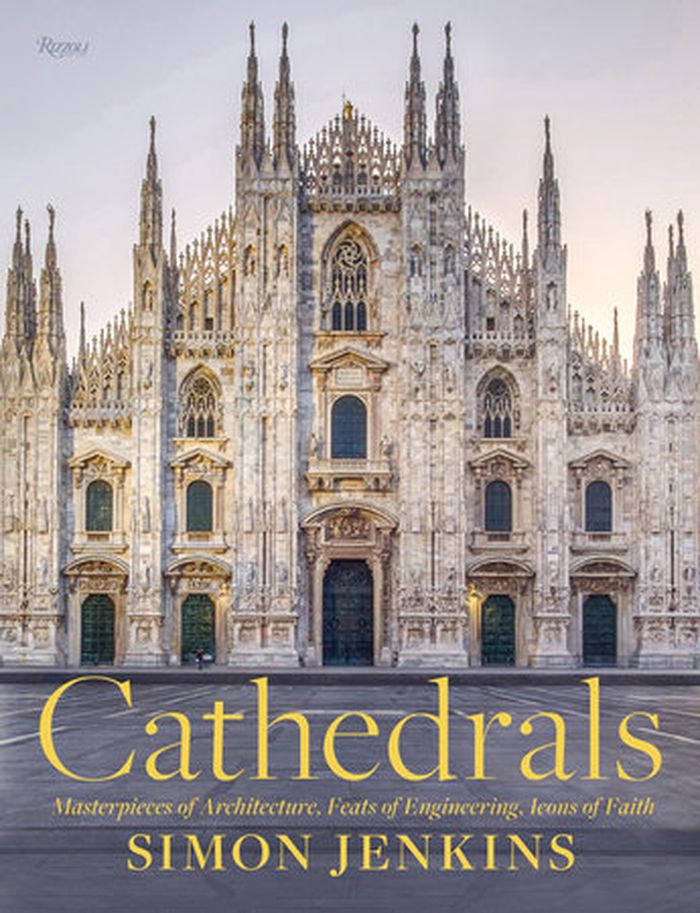
Cathedrals: Masterpieces of architecture, feats of engineering, icons of faith
Actions:
Price:
$53.95
(available to order)
Summary:
This exploration of the history of Western civilization showcases the cathedral’s central role in the European imagination. Jenkins tells the stories behind these stone wonders: the architects that made them possible, the triumphs of engineering, the artists who enriched their décor, and the inevitable human follies of those who were involved in their building, from the artisans and workers to the wealthy donors and the faithful who worshipped beneath their soaring spires and majestic domes.
Cathedrals: Masterpieces of architecture, feats of engineering, icons of faith
Actions:
Price:
$53.95
(available to order)
Summary:
This exploration of the history of Western civilization showcases the cathedral’s central role in the European imagination. Jenkins tells the stories behind these stone wonders: the architects that made them possible, the triumphs of engineering, the artists who enriched their décor, and the inevitable human follies of those who were involved in their building, from the artisans and workers to the wealthy donors and the faithful who worshipped beneath their soaring spires and majestic domes.
Form:
books
books
Publication:
March 2022
March 2022
Subject:
History until 1900
History until 1900
Form:
books
books
Actions:
Price:
$55.95
(available in store)
Summary:
If participation has been an ideal in politics since ancient democracy, in art it became central only with the avant-gardes emerging from WWI and the Russian Revolution. Politics and aesthetics are still catching up with each other. In the 21st century, since the revolutionary unrest of the 1960s, participation in art and architecture has lost its utopian glow and become(...)
$55.95
(available in store)
Summary:
If participation has been an ideal in politics since ancient democracy, in art it became central only with the avant-gardes emerging from WWI and the Russian Revolution. Politics and aesthetics are still catching up with each other. In the 21st century, since the revolutionary unrest of the 1960s, participation in art and architecture has lost its utopian glow and become(...)
Title:
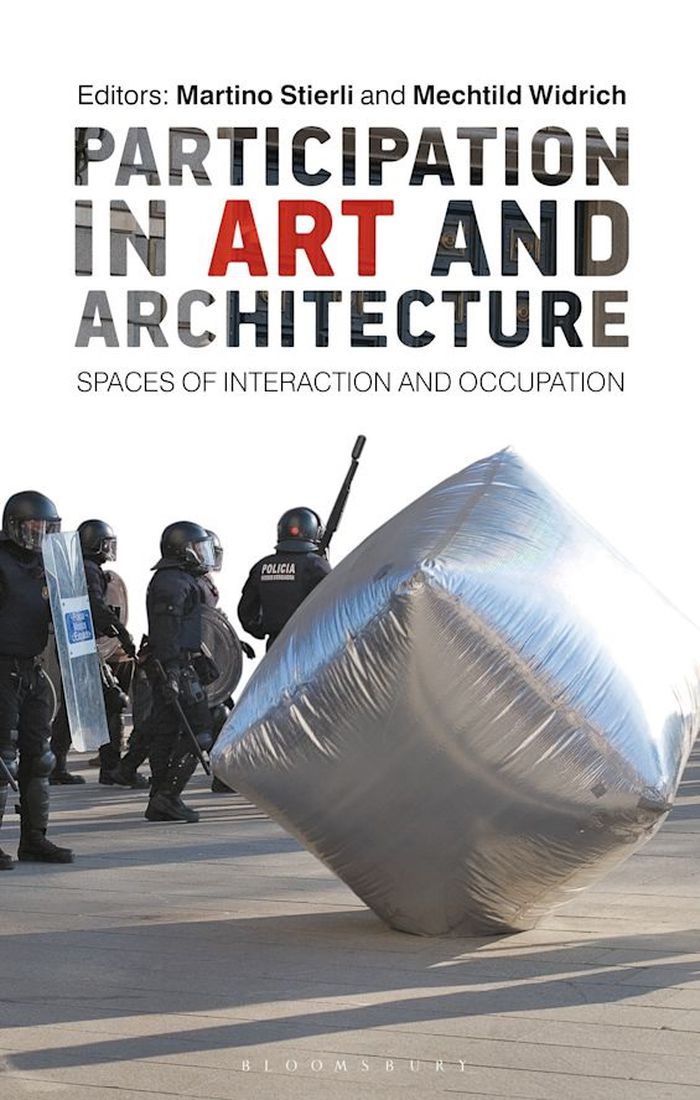
Participation in art and architecture: Spaces of interaction and occupation
Actions:
Price:
$55.95
(available in store)
Summary:
If participation has been an ideal in politics since ancient democracy, in art it became central only with the avant-gardes emerging from WWI and the Russian Revolution. Politics and aesthetics are still catching up with each other. In the 21st century, since the revolutionary unrest of the 1960s, participation in art and architecture has lost its utopian glow and become the focus of a fierce debate: does 'participatory' art and architecture shape social reality, or is it shaped by it? Contemporary critics see in participation only technocratic control, while others embrace it as a viable politics in an era of global capitalism. This innovative book breaks the impasse by looking at how participants themselves exert power, rather than being victimized or liberated from it. From artists hijacking Google Earth to protesters setting up a museum of the revolution in Cairo, art, architecture and daily life are explored in their participatory dimension.
Participation in art and architecture: Spaces of interaction and occupation
Actions:
Price:
$55.95
(available in store)
Summary:
If participation has been an ideal in politics since ancient democracy, in art it became central only with the avant-gardes emerging from WWI and the Russian Revolution. Politics and aesthetics are still catching up with each other. In the 21st century, since the revolutionary unrest of the 1960s, participation in art and architecture has lost its utopian glow and become the focus of a fierce debate: does 'participatory' art and architecture shape social reality, or is it shaped by it? Contemporary critics see in participation only technocratic control, while others embrace it as a viable politics in an era of global capitalism. This innovative book breaks the impasse by looking at how participants themselves exert power, rather than being victimized or liberated from it. From artists hijacking Google Earth to protesters setting up a museum of the revolution in Cairo, art, architecture and daily life are explored in their participatory dimension.
Form:
books
books
Publication:
July 2022
July 2022
Form:
books
books
Actions:
Price:
$64.00
(available to order)
Summary:
Trois décennies d’engagement au service de la collectivité: c’est en ces termes qu’on pourrait qualifier l’action publique de Jean-Pierre Dresco, envisagée comme le reflet d’une période où toute une génération d’architectes remet progressivement en cause les bienfaits du progrès et de la modernité et envisage son métier essentiellement sous un angle éthique, social et(...)
$64.00
(available to order)
Summary:
Trois décennies d’engagement au service de la collectivité: c’est en ces termes qu’on pourrait qualifier l’action publique de Jean-Pierre Dresco, envisagée comme le reflet d’une période où toute une génération d’architectes remet progressivement en cause les bienfaits du progrès et de la modernité et envisage son métier essentiellement sous un angle éthique, social et(...)
Title:
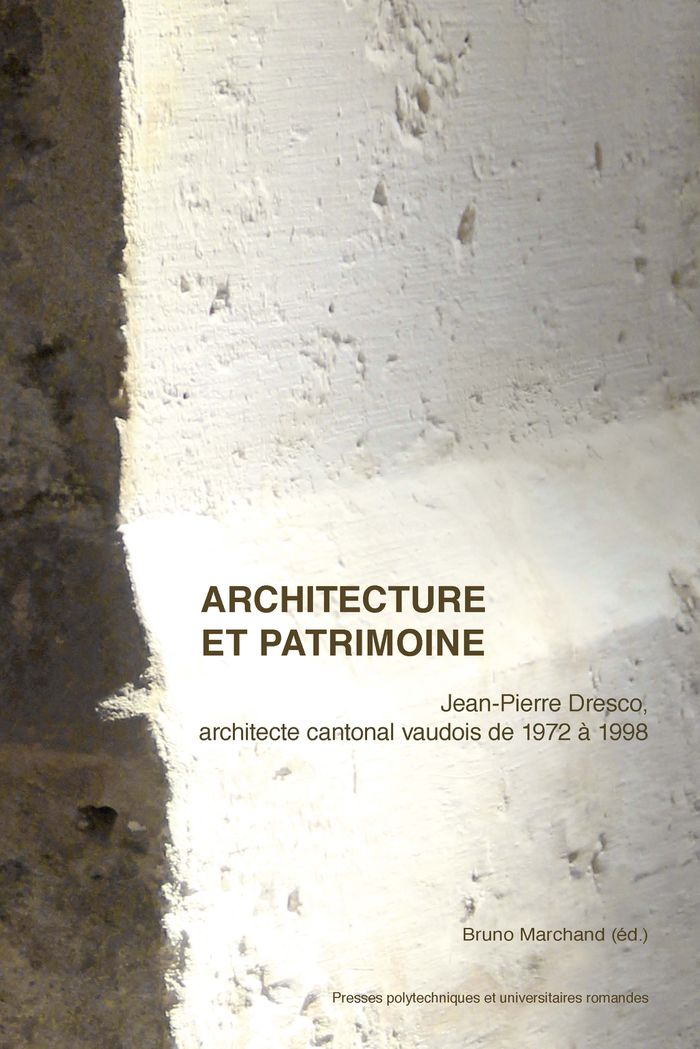
Architecture et patrimoine: Jean-Pierre Dresco, architecte cantonal vaudois de 1972 à 1998
Actions:
Price:
$64.00
(available to order)
Summary:
Trois décennies d’engagement au service de la collectivité: c’est en ces termes qu’on pourrait qualifier l’action publique de Jean-Pierre Dresco, envisagée comme le reflet d’une période où toute une génération d’architectes remet progressivement en cause les bienfaits du progrès et de la modernité et envisage son métier essentiellement sous un angle éthique, social et économique. Cet ouvrage collectif s’attache à retracer les principaux moments qui ont balisé sa longue carrière, tout en mettant l’accent sur la période comprise entre 1972 et 1998 où il est architecte cantonal du Canton de Vaud. On assiste alors à l’émergence «d’une ère nouvelle cadrée dans une perspective culturelle», en phase avec les multiples enjeux de l’époque, qui s’avère pourtant moins complexe que l’actuelle, comme il en ressort d’un dialogue entre l’ancien et le présent architecte cantonal. Adepte des vertus de la pluridisciplinarité, Jean-Pierre Dresco a, tout au long de son activité dans la fonction publique, porté un regard d’architecte sur les choses. En effet, intimement convaincu de la nécessité d’instaurer ce qui fait «lien» avec les autres, tant au niveau professionnel qu’avec le public, il n’a pas pour autant perdu l’intérêt pour l’art sous ses formes les plus exigeantes: l’art de bâtir, l’art de restaurer, l’art tout court.
Architecture et patrimoine: Jean-Pierre Dresco, architecte cantonal vaudois de 1972 à 1998
Actions:
Price:
$64.00
(available to order)
Summary:
Trois décennies d’engagement au service de la collectivité: c’est en ces termes qu’on pourrait qualifier l’action publique de Jean-Pierre Dresco, envisagée comme le reflet d’une période où toute une génération d’architectes remet progressivement en cause les bienfaits du progrès et de la modernité et envisage son métier essentiellement sous un angle éthique, social et économique. Cet ouvrage collectif s’attache à retracer les principaux moments qui ont balisé sa longue carrière, tout en mettant l’accent sur la période comprise entre 1972 et 1998 où il est architecte cantonal du Canton de Vaud. On assiste alors à l’émergence «d’une ère nouvelle cadrée dans une perspective culturelle», en phase avec les multiples enjeux de l’époque, qui s’avère pourtant moins complexe que l’actuelle, comme il en ressort d’un dialogue entre l’ancien et le présent architecte cantonal. Adepte des vertus de la pluridisciplinarité, Jean-Pierre Dresco a, tout au long de son activité dans la fonction publique, porté un regard d’architecte sur les choses. En effet, intimement convaincu de la nécessité d’instaurer ce qui fait «lien» avec les autres, tant au niveau professionnel qu’avec le public, il n’a pas pour autant perdu l’intérêt pour l’art sous ses formes les plus exigeantes: l’art de bâtir, l’art de restaurer, l’art tout court.
Form:
books
books
Publication:
September 2015
September 2015
Form:
books
books
Price:
$23.95
(available to order)
Summary:
Above the Pavement—the Farm! reveals the groundbreaking efforts of architecture firm WORKac and their team of more than 150 collaborators—farmers, politicians, horticulturists, technicians, soil scientists, engineers, architecture students, and artists—to create a working urban farm, hoisted 30 feet high, using industrial cardboard tubes filled with more than 50 varieties(...)
$23.95
(available to order)
Summary:
Above the Pavement—the Farm! reveals the groundbreaking efforts of architecture firm WORKac and their team of more than 150 collaborators—farmers, politicians, horticulturists, technicians, soil scientists, engineers, architecture students, and artists—to create a working urban farm, hoisted 30 feet high, using industrial cardboard tubes filled with more than 50 varieties(...)
Subject:
Urban Landscapes
Urban Landscapes
Publication:
March 2010
March 2010
Title:
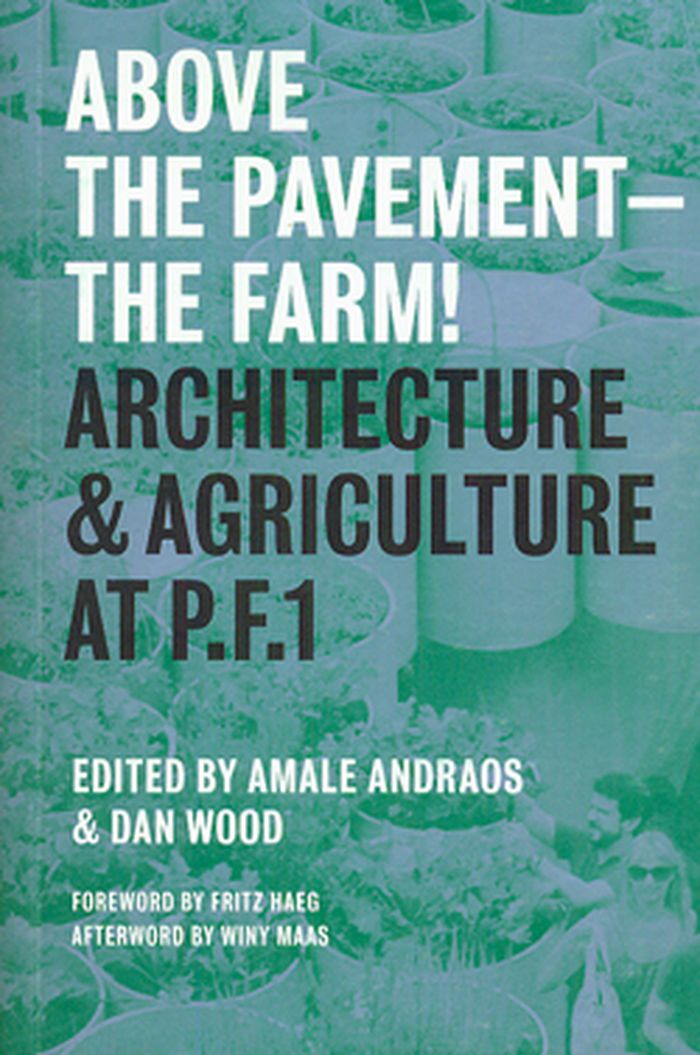
Above the pavement- The farm!: Architecture & agriculture at P.F.1
Actions:
Price:
$23.95
(available to order)
Summary:
Above the Pavement—the Farm! reveals the groundbreaking efforts of architecture firm WORKac and their team of more than 150 collaborators—farmers, politicians, horticulturists, technicians, soil scientists, engineers, architecture students, and artists—to create a working urban farm, hoisted 30 feet high, using industrial cardboard tubes filled with more than 50 varieties of locally grown fruits and vegetables. This book presents a range of ideas and issues situated at the intersection of architecture, urbanism, and food.
Above the pavement- The farm!: Architecture & agriculture at P.F.1
Actions:
Price:
$23.95
(available to order)
Summary:
Above the Pavement—the Farm! reveals the groundbreaking efforts of architecture firm WORKac and their team of more than 150 collaborators—farmers, politicians, horticulturists, technicians, soil scientists, engineers, architecture students, and artists—to create a working urban farm, hoisted 30 feet high, using industrial cardboard tubes filled with more than 50 varieties of locally grown fruits and vegetables. This book presents a range of ideas and issues situated at the intersection of architecture, urbanism, and food.
Form:
books
books
Publication:
March 2010
March 2010
Subject:
Urban Landscapes
Urban Landscapes
Form:
books
books
Actions:
Price:
$40.00
(available in store)
Summary:
In the digital information age, when the boundaries of content producer and content consumer are increasingly blurred, The Architecture of Knowledge questions the fate of the public library. The library has historically been a vital component of civic life, but many aspects of its traditional function have already become contentious. This publication asks: what form(...)
$40.00
(available in store)
Summary:
In the digital information age, when the boundaries of content producer and content consumer are increasingly blurred, The Architecture of Knowledge questions the fate of the public library. The library has historically been a vital component of civic life, but many aspects of its traditional function have already become contentious. This publication asks: what form(...)
Subject:
Commercial interiors, Building types
Commercial interiors, Building types
Publication:
September 2010
September 2010
Title:
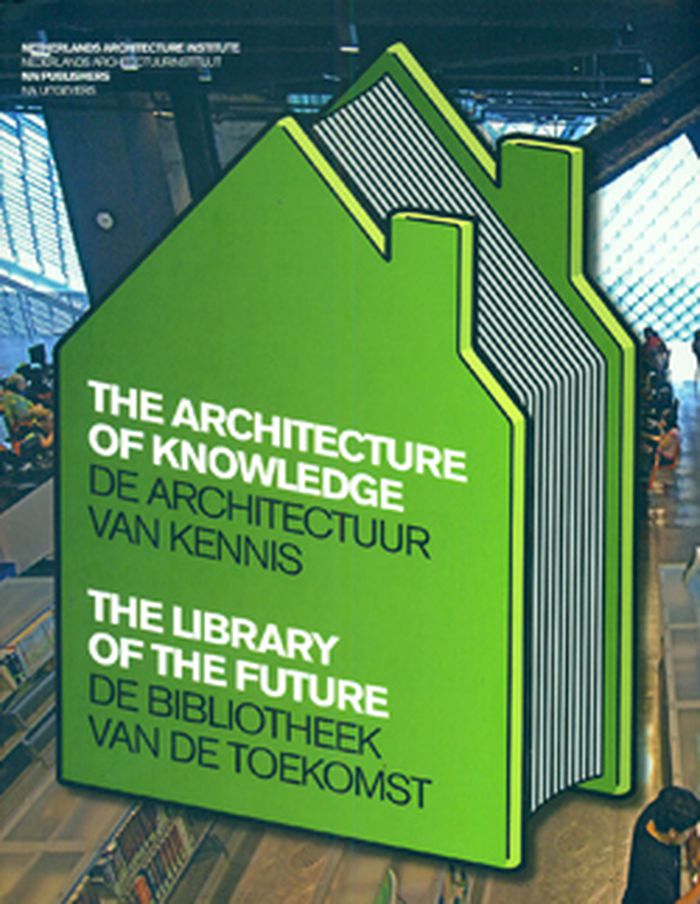
The architecture of knowledge: The library of the future
Actions:
Price:
$40.00
(available in store)
Summary:
In the digital information age, when the boundaries of content producer and content consumer are increasingly blurred, The Architecture of Knowledge questions the fate of the public library. The library has historically been a vital component of civic life, but many aspects of its traditional function have already become contentious. This publication asks: what form should the library's physical structure assume to survive this new data-saturated society? This fascinating journey into the future of an age-old institution is obligatory reading for architects, librarians and users alike.
The architecture of knowledge: The library of the future
Actions:
Price:
$40.00
(available in store)
Summary:
In the digital information age, when the boundaries of content producer and content consumer are increasingly blurred, The Architecture of Knowledge questions the fate of the public library. The library has historically been a vital component of civic life, but many aspects of its traditional function have already become contentious. This publication asks: what form should the library's physical structure assume to survive this new data-saturated society? This fascinating journey into the future of an age-old institution is obligatory reading for architects, librarians and users alike.
Form:
books
books
Publication:
September 2010
September 2010
Subject:
Commercial interiors, Building types
Commercial interiors, Building types
Form:
books
books
Price:
$47.50
(available to order)
Summary:
MGM Resorts International’s CityCenter is the largest privately financed building project in the United States to date. The design and concurrent construction of seven separate buildings and accompanying infrastructure are documented here from start to finish in photographs.
$47.50
(available to order)
Summary:
MGM Resorts International’s CityCenter is the largest privately financed building project in the United States to date. The design and concurrent construction of seven separate buildings and accompanying infrastructure are documented here from start to finish in photographs.
Subject:
Commercial interiors, Building types
Commercial interiors, Building types
Publication:
November 2013
November 2013
Title:
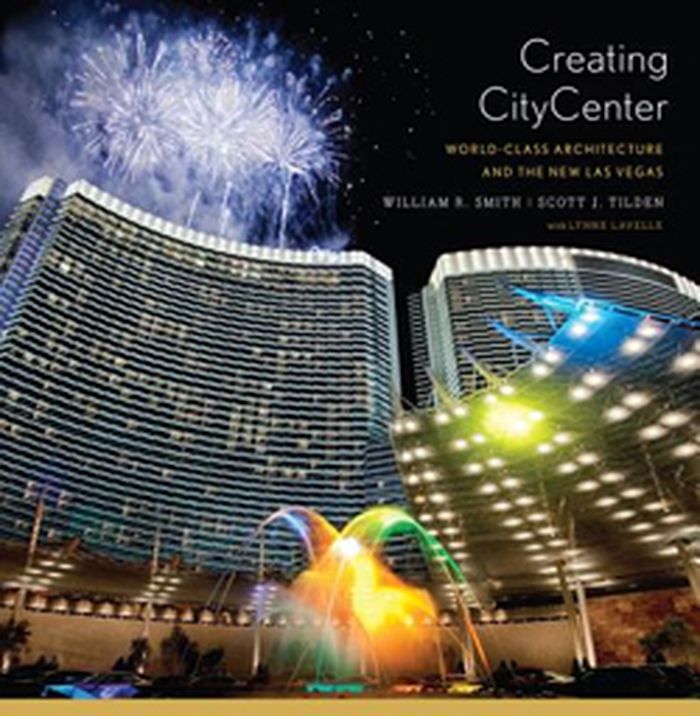
Creating Citycenter : world-class architecture and the new Las Vegas
Actions:
Price:
$47.50
(available to order)
Summary:
MGM Resorts International’s CityCenter is the largest privately financed building project in the United States to date. The design and concurrent construction of seven separate buildings and accompanying infrastructure are documented here from start to finish in photographs.
Creating Citycenter : world-class architecture and the new Las Vegas
Actions:
Price:
$47.50
(available to order)
Summary:
MGM Resorts International’s CityCenter is the largest privately financed building project in the United States to date. The design and concurrent construction of seven separate buildings and accompanying infrastructure are documented here from start to finish in photographs.
Form:
books
books
Publication:
November 2013
November 2013
Subject:
Commercial interiors, Building types
Commercial interiors, Building types
Form:
books
books
Actions:
Price:
$9.50
(available to order)
Summary:
L'objectif de cette collection est de réconcilier avec l'écriture tous ceux qui éprouvent des difficultés devant une feuille blanche : écoliers, collégiens, lycéens, élèves de FLE, mais aussi adultes tenus trop logtemps éloignés de l'écrit. Chaque ouvrage, conçu de façon progressive, fait se croiser l'écriture et une expression artistique : en apprivoisant l'écriture, on(...)
$9.50
(available to order)
Summary:
L'objectif de cette collection est de réconcilier avec l'écriture tous ceux qui éprouvent des difficultés devant une feuille blanche : écoliers, collégiens, lycéens, élèves de FLE, mais aussi adultes tenus trop logtemps éloignés de l'écrit. Chaque ouvrage, conçu de façon progressive, fait se croiser l'écriture et une expression artistique : en apprivoisant l'écriture, on(...)
Publication:
January 1900, Paris
January 1900, Paris
Title:
Chantier ouvert au public : écrire avec l'architecture, les petits carnets d'écriture 6
Actions:
Price:
$9.50
(available to order)
Summary:
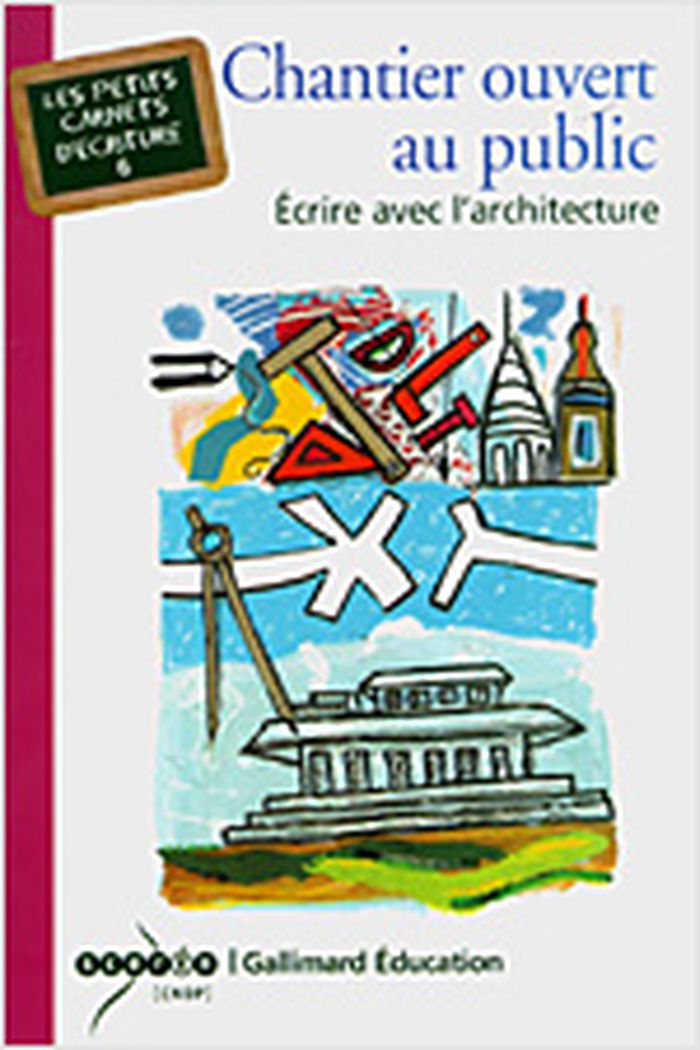
L'objectif de cette collection est de réconcilier avec l'écriture tous ceux qui éprouvent des difficultés devant une feuille blanche : écoliers, collégiens, lycéens, élèves de FLE, mais aussi adultes tenus trop logtemps éloignés de l'écrit. Chaque ouvrage, conçu de façon progressive, fait se croiser l'écriture et une expression artistique : en apprivoisant l'écriture, on va à la découverte d'un art. «Chantier ouvert au public : écrire avec l'architecture» associe l'écriture à l'univers de l'architecture.
Chantier ouvert au public : écrire avec l'architecture, les petits carnets d'écriture 6
Actions:
Price:
$9.50
(available to order)
Summary:
L'objectif de cette collection est de réconcilier avec l'écriture tous ceux qui éprouvent des difficultés devant une feuille blanche : écoliers, collégiens, lycéens, élèves de FLE, mais aussi adultes tenus trop logtemps éloignés de l'écrit. Chaque ouvrage, conçu de façon progressive, fait se croiser l'écriture et une expression artistique : en apprivoisant l'écriture, on va à la découverte d'un art. «Chantier ouvert au public : écrire avec l'architecture» associe l'écriture à l'univers de l'architecture.
Form:
books
books
Publication:
January 1900, Paris
January 1900, Paris
Form:
books
books
Actions:
Price:
$29.99
(available to order)
Summary:
This revised edition presents new photographs and line drawings, a concise, illustrated glossary, and accessible information on twenty-two major styles of American architecture from the past 300 years. Organized chronologically to put information at your fingertips, "What style is it?" presents succinct summaries of architectural styles, discusses their development and(...)
$29.99
(available to order)
Summary:
This revised edition presents new photographs and line drawings, a concise, illustrated glossary, and accessible information on twenty-two major styles of American architecture from the past 300 years. Organized chronologically to put information at your fingertips, "What style is it?" presents succinct summaries of architectural styles, discusses their development and(...)
Subject:
History until 1900
History until 1900
Publication:
October 2003, Hoboken
October 2003, Hoboken
Title:
What style is it ? A guide to American architecture
Actions:
Price:
$29.99
(available to order)
Summary:
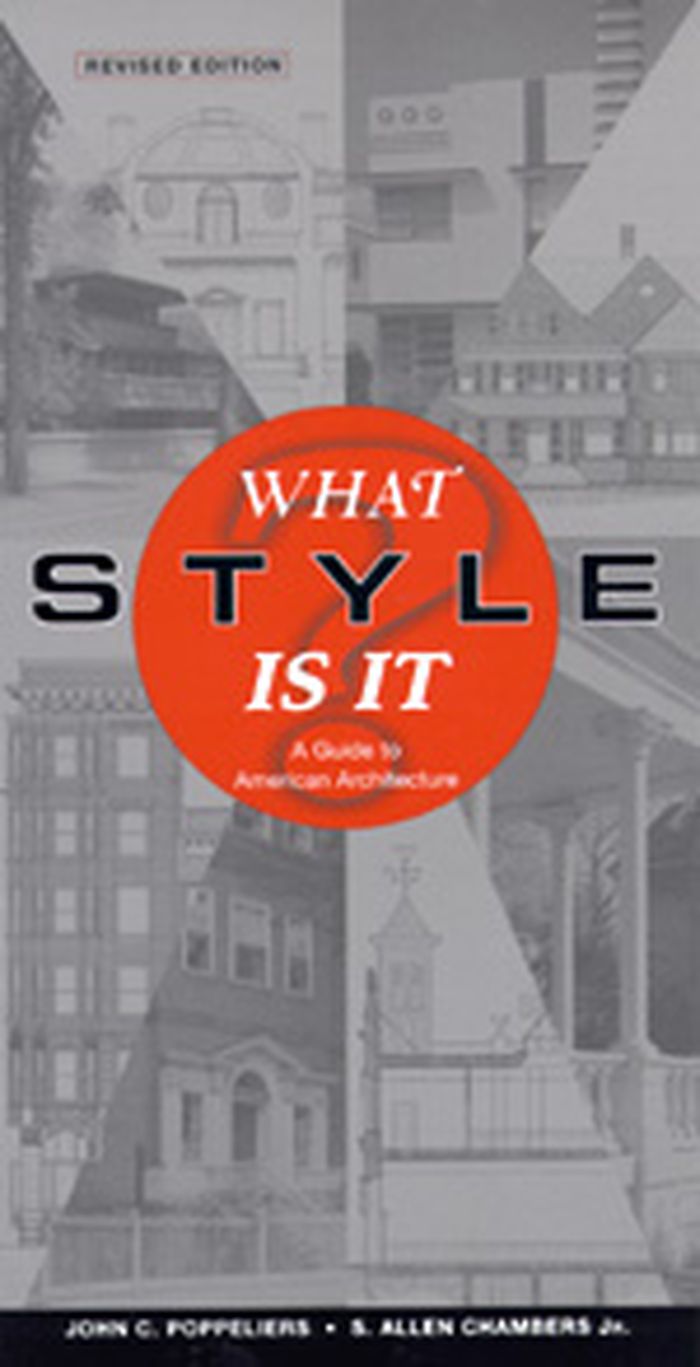
This revised edition presents new photographs and line drawings, a concise, illustrated glossary, and accessible information on twenty-two major styles of American architecture from the past 300 years. Organized chronologically to put information at your fingertips, "What style is it?" presents succinct summaries of architectural styles, discusses their development and notable characteristics, and mentions where real-world examples can be found. This guide is packed with more than 200 descriptive photographs and illustrations, accompanied by nontechnical explanations that help to identify the most significant styles of architecture--from Early Colonial, Federal, and Second Empire to Neoclassical, pre-Civil War Romanesque Revival, and late nineteenth- and early twentieth-century Rustic styles.
What style is it ? A guide to American architecture
Actions:
Price:
$29.99
(available to order)
Summary:
This revised edition presents new photographs and line drawings, a concise, illustrated glossary, and accessible information on twenty-two major styles of American architecture from the past 300 years. Organized chronologically to put information at your fingertips, "What style is it?" presents succinct summaries of architectural styles, discusses their development and notable characteristics, and mentions where real-world examples can be found. This guide is packed with more than 200 descriptive photographs and illustrations, accompanied by nontechnical explanations that help to identify the most significant styles of architecture--from Early Colonial, Federal, and Second Empire to Neoclassical, pre-Civil War Romanesque Revival, and late nineteenth- and early twentieth-century Rustic styles.
Form:
books
books
Publication:
October 2003, Hoboken
October 2003, Hoboken
Subject:
History until 1900
History until 1900


