


528 Results
Form:
books
books
Actions:
Price:
$44.95
(available in store)
Summary:
Designers, graphic artists, architects, and urban planners are now confronted with the tasks of signage, route management, and information and orientation systems. With this book they can profit from a broad view of phenomena related to disorientation-disorientation in scientific disciplines, in our environments, and in expressive presentations. On the one hand, this(...)
$44.95
(available in store)
Summary:
Designers, graphic artists, architects, and urban planners are now confronted with the tasks of signage, route management, and information and orientation systems. With this book they can profit from a broad view of phenomena related to disorientation-disorientation in scientific disciplines, in our environments, and in expressive presentations. On the one hand, this(...)
Title:
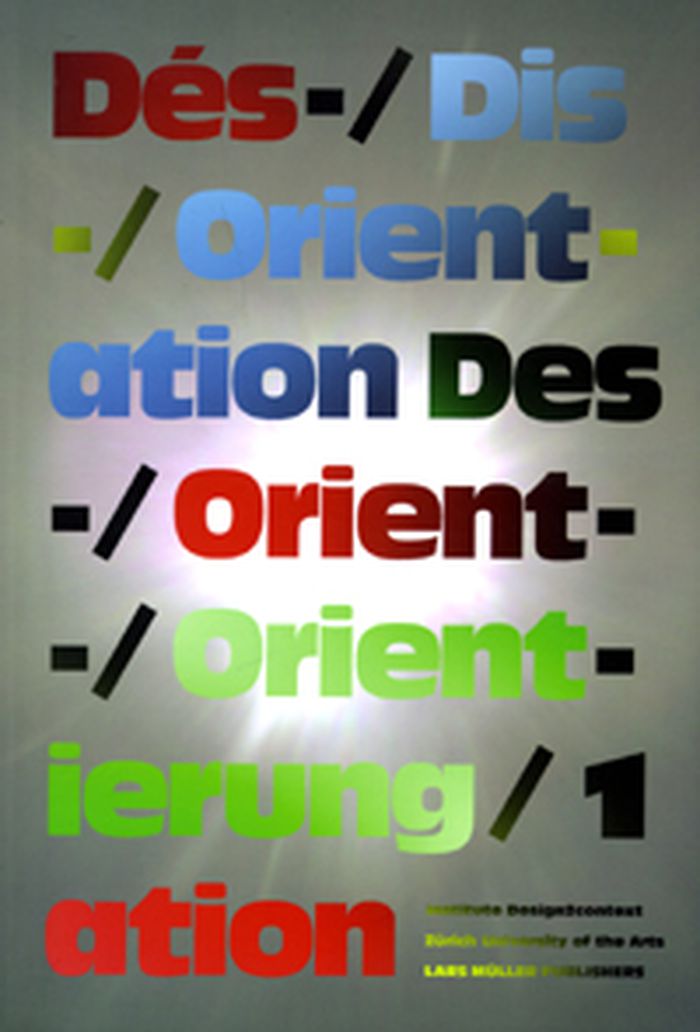
Dés-orientation, dis-orientation, des-orientierung
Actions:
Price:
$44.95
(available in store)
Summary:
Designers, graphic artists, architects, and urban planners are now confronted with the tasks of signage, route management, and information and orientation systems. With this book they can profit from a broad view of phenomena related to disorientation-disorientation in scientific disciplines, in our environments, and in expressive presentations. On the one hand, this should make it possible for designers to benefit from attitudes to the topic derived from experience and to move from confusion to visual reflection. On the other, it will enable scholarly disciplines to explore the formation of categories that can move things forward. This visual study is accompanied by heterogeneous brief texts. Images and texts are thus placed in a relationship of mutual reflections rather than confronted with one another in a commentary or illustration.
Dés-orientation, dis-orientation, des-orientierung
Actions:
Price:
$44.95
(available in store)
Summary:
Designers, graphic artists, architects, and urban planners are now confronted with the tasks of signage, route management, and information and orientation systems. With this book they can profit from a broad view of phenomena related to disorientation-disorientation in scientific disciplines, in our environments, and in expressive presentations. On the one hand, this should make it possible for designers to benefit from attitudes to the topic derived from experience and to move from confusion to visual reflection. On the other, it will enable scholarly disciplines to explore the formation of categories that can move things forward. This visual study is accompanied by heterogeneous brief texts. Images and texts are thus placed in a relationship of mutual reflections rather than confronted with one another in a commentary or illustration.
Form:
books
books
Publication:
October 2008, Baden
October 2008, Baden
Subject:
Signage
Signage
Form:
books
books
Actions:
Price:
$56.95
(available to order)
Summary:
In Outlaw Territories, Felicity Scott traces the relation of architecture and urbanism to human unsettlement and territorial insecurity during the 1960s and 1970s. Investigating a set of responses to the growing urban unrest in the developed and developing worlds, Scott revisits an era when the discipline of architecture staked out a role in global environmental(...)
$56.95
(available to order)
Summary:
In Outlaw Territories, Felicity Scott traces the relation of architecture and urbanism to human unsettlement and territorial insecurity during the 1960s and 1970s. Investigating a set of responses to the growing urban unrest in the developed and developing worlds, Scott revisits an era when the discipline of architecture staked out a role in global environmental(...)
Title:
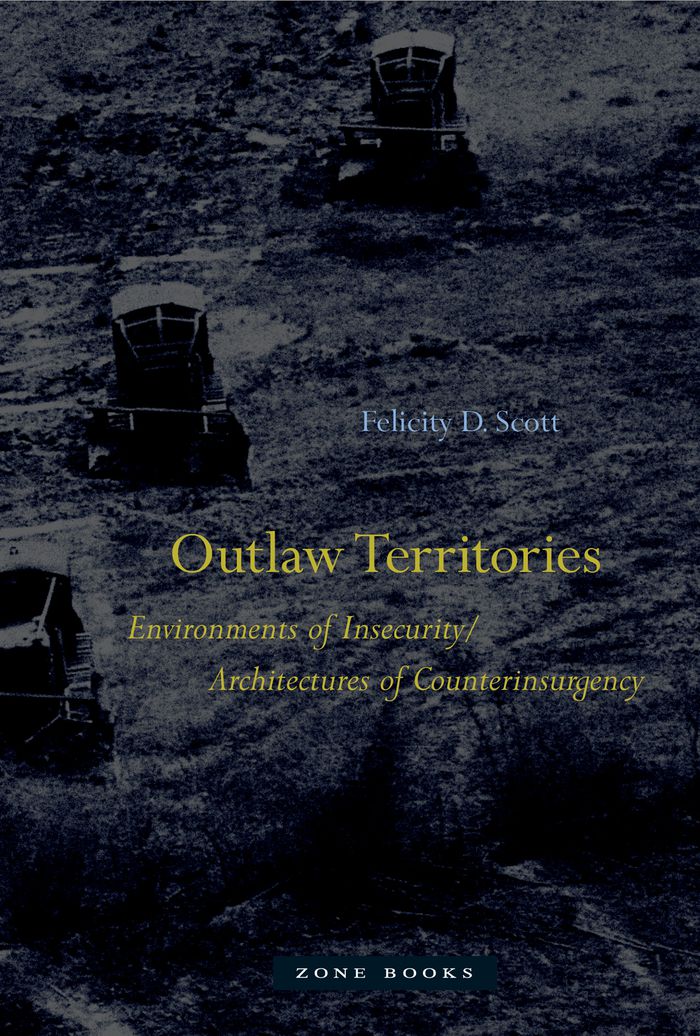
Outlaw Territories: Environments of Insecurity/ Architectures of Counterinsurgency
Actions:
Price:
$56.95
(available to order)
Summary:
In Outlaw Territories, Felicity Scott traces the relation of architecture and urbanism to human unsettlement and territorial insecurity during the 1960s and 1970s. Investigating a set of responses to the growing urban unrest in the developed and developing worlds, Scott revisits an era when the discipline of architecture staked out a role in global environmental governance and the biopolitical management of populations. She describes architecture’s response to the displacement of persons brought on by migration, urbanization, environmental catastrophe, and warfare, and she traces architecture’s relationship to the material, environmental, psychological, and geopolitical transformations brought on by postindustrial technologies and neoliberal capitalism after World War II. At the height of the U.S.-led war in Vietnam and Cambodia, with ongoing decolonization struggles in many parts of the world, architecture not only emerged as a target of political agitation because of its inherent normativity but also became heavily enmeshed with military, legal, and humanitarian apparatuses, participating in scientific and technological research dedicated to questions of international management and security. Once architecture became aligned with a global matrix of forces concerned with the environment, economic development, migration, genocide, and war, its role shifted at times toward providing strategic expertise for institutions born of neoliberal capitalism. Scott investigates this nexus and questions how and to what ends architecture and the environment came to be intimately connected to the expanded exercise of power within the shifting geopolitical frameworks at this time.
Outlaw Territories: Environments of Insecurity/ Architectures of Counterinsurgency
Actions:
Price:
$56.95
(available to order)
Summary:
In Outlaw Territories, Felicity Scott traces the relation of architecture and urbanism to human unsettlement and territorial insecurity during the 1960s and 1970s. Investigating a set of responses to the growing urban unrest in the developed and developing worlds, Scott revisits an era when the discipline of architecture staked out a role in global environmental governance and the biopolitical management of populations. She describes architecture’s response to the displacement of persons brought on by migration, urbanization, environmental catastrophe, and warfare, and she traces architecture’s relationship to the material, environmental, psychological, and geopolitical transformations brought on by postindustrial technologies and neoliberal capitalism after World War II. At the height of the U.S.-led war in Vietnam and Cambodia, with ongoing decolonization struggles in many parts of the world, architecture not only emerged as a target of political agitation because of its inherent normativity but also became heavily enmeshed with military, legal, and humanitarian apparatuses, participating in scientific and technological research dedicated to questions of international management and security. Once architecture became aligned with a global matrix of forces concerned with the environment, economic development, migration, genocide, and war, its role shifted at times toward providing strategic expertise for institutions born of neoliberal capitalism. Scott investigates this nexus and questions how and to what ends architecture and the environment came to be intimately connected to the expanded exercise of power within the shifting geopolitical frameworks at this time.
Form:
books
books
Publication:
February 2016
February 2016
Subject:
Architectural Theory
Architectural Theory
Form:
books
books

Actions:
Price:
$19.95
(available to order)
Summary:
Japan today protects one-seventh of its land surface in parks, which are visited by well over a billion people each year. Parkscapes analyzes the origins, development, and distinctive features of these public spaces. Green zones were created by the government beginning in the late nineteenth century for state purposes but eventually evolved into sites of negotiation(...)
$19.95
(available to order)
Summary:
Japan today protects one-seventh of its land surface in parks, which are visited by well over a billion people each year. Parkscapes analyzes the origins, development, and distinctive features of these public spaces. Green zones were created by the government beginning in the late nineteenth century for state purposes but eventually evolved into sites of negotiation(...)
Title:
Parkscapes: green spaces in modern Japan
Actions:
Price:
$19.95
(available to order)
Summary:
Japan today protects one-seventh of its land surface in parks, which are visited by well over a billion people each year. Parkscapes analyzes the origins, development, and distinctive features of these public spaces. Green zones were created by the government beginning in the late nineteenth century for state purposes but eventually evolved into sites of negotiation between bureaucrats and ordinary citizens who use them for demonstrations, riots, and shelters, as well as recreation. Thomas Havens shows how revolutionary officials in the 1870s seized private properties and converted them into public parks for educating and managing citizens in the new emperor-sanctioned state. Rebuilding Tokyo and Yokohama after the earthquake and fires of 1923 spurred the spread of urban parklands both in the capital and other cities. According to Havens, the growth of suburbs, the national mobilization of World War II, and the post-1945 American occupation helped speed the creation of more urban parks, setting the stage for vast increases in public green spaces during Japan’s golden age of affluence from the 1960s through the 1980s. Since the 1990s the Japanese public has embraced a heightened ecological consciousness and become deeply involved in the design and management of both city and natural parks—realms once monopolized by government bureaucrats.
Parkscapes: green spaces in modern Japan
Actions:
Price:
$19.95
(available to order)
Summary:
Japan today protects one-seventh of its land surface in parks, which are visited by well over a billion people each year. Parkscapes analyzes the origins, development, and distinctive features of these public spaces. Green zones were created by the government beginning in the late nineteenth century for state purposes but eventually evolved into sites of negotiation between bureaucrats and ordinary citizens who use them for demonstrations, riots, and shelters, as well as recreation. Thomas Havens shows how revolutionary officials in the 1870s seized private properties and converted them into public parks for educating and managing citizens in the new emperor-sanctioned state. Rebuilding Tokyo and Yokohama after the earthquake and fires of 1923 spurred the spread of urban parklands both in the capital and other cities. According to Havens, the growth of suburbs, the national mobilization of World War II, and the post-1945 American occupation helped speed the creation of more urban parks, setting the stage for vast increases in public green spaces during Japan’s golden age of affluence from the 1960s through the 1980s. Since the 1990s the Japanese public has embraced a heightened ecological consciousness and become deeply involved in the design and management of both city and natural parks—realms once monopolized by government bureaucrats.
Form:
books
books
Publication:
April 2011
April 2011
Subject:
Landscape Theory
Landscape Theory
Form:
books
books
Actions:
Price:
$38.95
(available to order)
Summary:
Beautiful Data is both a history of big data and interactivity, and a sophisticated meditation on ideas about vision and cognition in the second half of the twentieth century. Contending that our forms of attention, observation, and truth are contingent and contested, Orit Halpern historicizes the ways that we are trained, and train ourselves, to observe and analyze the(...)
$38.95
(available to order)
Summary:
Beautiful Data is both a history of big data and interactivity, and a sophisticated meditation on ideas about vision and cognition in the second half of the twentieth century. Contending that our forms of attention, observation, and truth are contingent and contested, Orit Halpern historicizes the ways that we are trained, and train ourselves, to observe and analyze the(...)
Title:
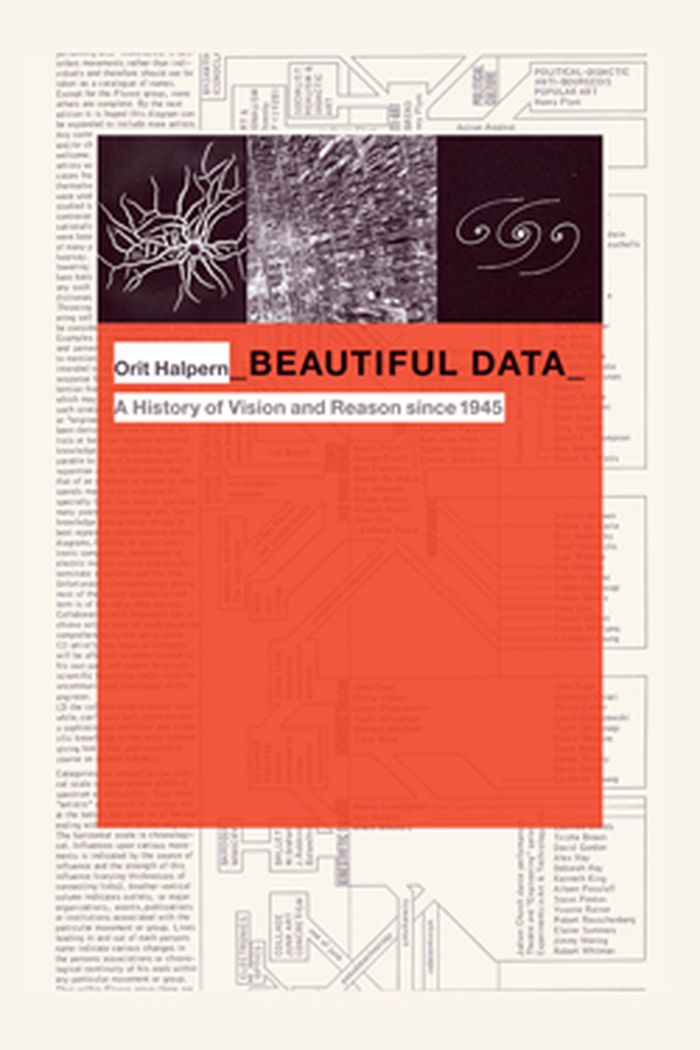
Beautiful data: a history of vision and reason since 1945
Actions:
Price:
$38.95
(available to order)
Summary:
Beautiful Data is both a history of big data and interactivity, and a sophisticated meditation on ideas about vision and cognition in the second half of the twentieth century. Contending that our forms of attention, observation, and truth are contingent and contested, Orit Halpern historicizes the ways that we are trained, and train ourselves, to observe and analyze the world. Tracing the postwar impact of cybernetics and the communication sciences on the social and human sciences, design, arts, and urban planning, she finds a radical shift in attitudes toward recording and displaying information. These changed attitudes produced what she calls communicative objectivity: new forms of observation, rationality, and economy based on the management and analysis of data. Halpern complicates assumptions about the value of data and visualization, arguing that changes in how we manage and train perception, and define reason and intelligence, are also transformations in governmentality. She also challenges the paradoxical belief that we are experiencing a crisis of attention caused by digital media, a crisis that can be resolved only through intensified media consumption.
Beautiful data: a history of vision and reason since 1945
Actions:
Price:
$38.95
(available to order)
Summary:
Beautiful Data is both a history of big data and interactivity, and a sophisticated meditation on ideas about vision and cognition in the second half of the twentieth century. Contending that our forms of attention, observation, and truth are contingent and contested, Orit Halpern historicizes the ways that we are trained, and train ourselves, to observe and analyze the world. Tracing the postwar impact of cybernetics and the communication sciences on the social and human sciences, design, arts, and urban planning, she finds a radical shift in attitudes toward recording and displaying information. These changed attitudes produced what she calls communicative objectivity: new forms of observation, rationality, and economy based on the management and analysis of data. Halpern complicates assumptions about the value of data and visualization, arguing that changes in how we manage and train perception, and define reason and intelligence, are also transformations in governmentality. She also challenges the paradoxical belief that we are experiencing a crisis of attention caused by digital media, a crisis that can be resolved only through intensified media consumption.
Form:
books
books
Publication:
August 2014
August 2014
Subject:
Architectural Theory
Architectural Theory
Form:
books
books
Price:
$23.95
(available to order)
Summary:
For some people, their lawn is a source of pride, and for others, caring for their lawn is a chore. Yet for an increasing number of people, turf care is a cause of ecological anxiety. In Lawn People, author Paul Robbins, asks, "How did the needs of the grass come to be my own?" In his goal to get a clearer picture of why people and grasses do what they do, Robbins(...)
$23.95
(available to order)
Summary:
For some people, their lawn is a source of pride, and for others, caring for their lawn is a chore. Yet for an increasing number of people, turf care is a cause of ecological anxiety. In Lawn People, author Paul Robbins, asks, "How did the needs of the grass come to be my own?" In his goal to get a clearer picture of why people and grasses do what they do, Robbins(...)
Title:
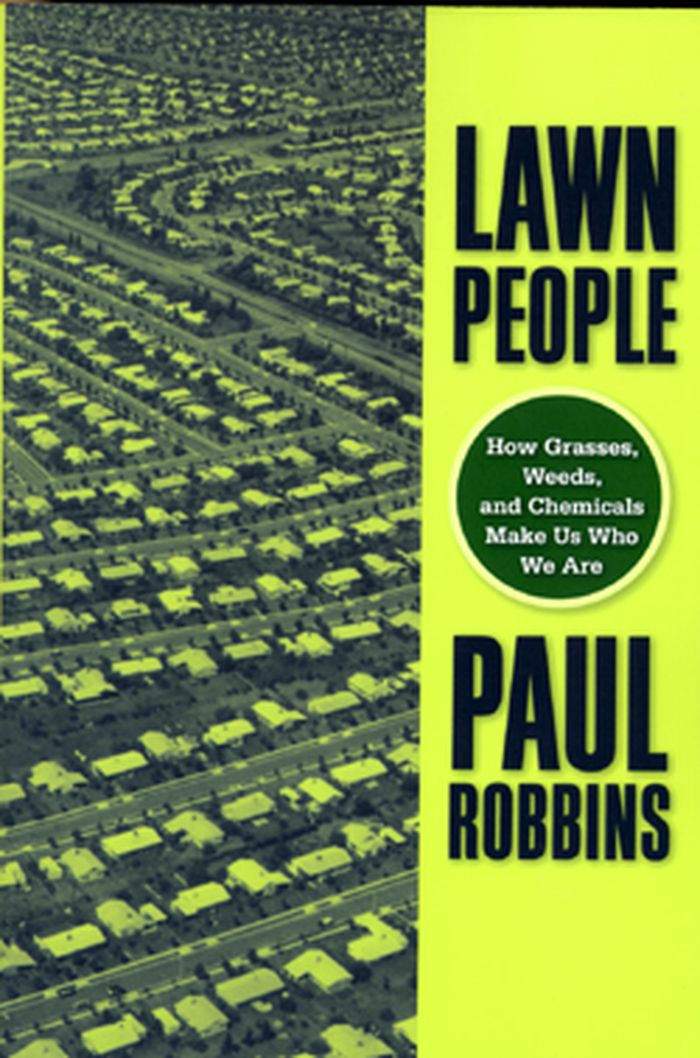
Lawn People: how grasses, weeds and chemicals make us who we are
Actions:
Price:
$23.95
(available to order)
Summary:
For some people, their lawn is a source of pride, and for others, caring for their lawn is a chore. Yet for an increasing number of people, turf care is a cause of ecological anxiety. In Lawn People, author Paul Robbins, asks, "How did the needs of the grass come to be my own?" In his goal to get a clearer picture of why people and grasses do what they do, Robbins interviews homeowners about their lawns, and uses national surveys, analysis from aerial photographs, and economic data to determine what people really feel about-and how they treat-their lawns. Lawn People places the lawn in its ecological, economic, and social context. Robbins considers the attention we pay our turfgrass-the chemicals we use to grow lawns, the hazards of turf care to our urban ecology, and its potential impact on water quality and household health. He also shows how the ecology of cities creates certain kinds of citizens, deftly contrasting man's control of the lawn with the lawn's control of man. Lawn People provides an intriguing examination of nature's influence on landscape management and on the ecosystem.
Lawn People: how grasses, weeds and chemicals make us who we are
Actions:
Price:
$23.95
(available to order)
Summary:
For some people, their lawn is a source of pride, and for others, caring for their lawn is a chore. Yet for an increasing number of people, turf care is a cause of ecological anxiety. In Lawn People, author Paul Robbins, asks, "How did the needs of the grass come to be my own?" In his goal to get a clearer picture of why people and grasses do what they do, Robbins interviews homeowners about their lawns, and uses national surveys, analysis from aerial photographs, and economic data to determine what people really feel about-and how they treat-their lawns. Lawn People places the lawn in its ecological, economic, and social context. Robbins considers the attention we pay our turfgrass-the chemicals we use to grow lawns, the hazards of turf care to our urban ecology, and its potential impact on water quality and household health. He also shows how the ecology of cities creates certain kinds of citizens, deftly contrasting man's control of the lawn with the lawn's control of man. Lawn People provides an intriguing examination of nature's influence on landscape management and on the ecosystem.
Form:
books
books
Publication:
June 2007, Philadelphie
June 2007, Philadelphie
Subject:
Green Architecture
Green Architecture
Form:
books
books

Actions:
Price:
$56.50
(available to order)
Summary:
Landscape ecology focuses on spatial heterogeneity, or the idea that where things are and where they are in relation to other things can have important consequences for a wide range of phenomena. Landscape ecology integrates humans with natural ecosystems and brings a spatial perspective to such fields as natural resource management, conservation, and urban planning.(...)
$56.50
(available to order)
Summary:
Landscape ecology focuses on spatial heterogeneity, or the idea that where things are and where they are in relation to other things can have important consequences for a wide range of phenomena. Landscape ecology integrates humans with natural ecosystems and brings a spatial perspective to such fields as natural resource management, conservation, and urban planning.(...)
Subject:
Landscape Theory
Landscape Theory
Publication:
September 2006, New York / Chichester
September 2006, New York / Chichester
Title:
Foundation papers in landscape ecology
Actions:
Price:
$56.50
(available to order)
Summary:
Landscape ecology focuses on spatial heterogeneity, or the idea that where things are and where they are in relation to other things can have important consequences for a wide range of phenomena. Landscape ecology integrates humans with natural ecosystems and brings a spatial perspective to such fields as natural resource management, conservation, and urban planning. The thirty-seven papers included in this volume present the origins and development of landscape ecology and encompass a variety of perspectives, approaches, and geographies. The editors begin with articles that illuminate the discipline's diverse scientific foundations, such as L. S. Berg's keystone paper outlining a geoecological analysis based on soil science, physical geography, and geology. Next they include selections exemplifying landscape ecologists' growing awareness of spatial pattern, the different ways they incorporated scale into their work, the progression of landscape ecology from a qualitative to a quantitative discipline, and how concepts from landscape ecology have come to permeate ecological research and influence land-use policy, conservation practices, landscape architecture, and geography. Together these articles provide a solid introduction to what is now widely recognized as an important area of research and application that encourages new ways of thinking about natural and human-dominated ecosystems.
Foundation papers in landscape ecology
Actions:
Price:
$56.50
(available to order)
Summary:
Landscape ecology focuses on spatial heterogeneity, or the idea that where things are and where they are in relation to other things can have important consequences for a wide range of phenomena. Landscape ecology integrates humans with natural ecosystems and brings a spatial perspective to such fields as natural resource management, conservation, and urban planning. The thirty-seven papers included in this volume present the origins and development of landscape ecology and encompass a variety of perspectives, approaches, and geographies. The editors begin with articles that illuminate the discipline's diverse scientific foundations, such as L. S. Berg's keystone paper outlining a geoecological analysis based on soil science, physical geography, and geology. Next they include selections exemplifying landscape ecologists' growing awareness of spatial pattern, the different ways they incorporated scale into their work, the progression of landscape ecology from a qualitative to a quantitative discipline, and how concepts from landscape ecology have come to permeate ecological research and influence land-use policy, conservation practices, landscape architecture, and geography. Together these articles provide a solid introduction to what is now widely recognized as an important area of research and application that encourages new ways of thinking about natural and human-dominated ecosystems.
Form:
books
books
Publication:
September 2006, New York / Chichester
September 2006, New York / Chichester
Subject:
Landscape Theory
Landscape Theory
Form:
books
books

Actions:
Price:
$27.95
(available to order)
Summary:
"Filth" is concerned with what waste reveals about the culture that creates it. From floating barges of urban refuse to dung-encrusted works of art, from toxic landfills to dirty movies, filth has become a major presence and a point of volatile contention in modern life. This book explores the question of what filth has to do with culture: what critical role the lost,(...)
$27.95
(available to order)
Summary:
"Filth" is concerned with what waste reveals about the culture that creates it. From floating barges of urban refuse to dung-encrusted works of art, from toxic landfills to dirty movies, filth has become a major presence and a point of volatile contention in modern life. This book explores the question of what filth has to do with culture: what critical role the lost,(...)
Subject:
Architectural Theory
Architectural Theory
Publication:
January 2005, Minneapolis
January 2005, Minneapolis
Title:
Filth : dirt, disgust, and modern life
Actions:
Price:
$27.95
(available to order)
Summary:
"Filth" is concerned with what waste reveals about the culture that creates it. From floating barges of urban refuse to dung-encrusted works of art, from toxic landfills to dirty movies, filth has become a major presence and a point of volatile contention in modern life. This book explores the question of what filth has to do with culture: what critical role the lost, the rejected, the abject, and the dirty play in social management and identity formation. It suggests the ongoing power of culturally mandated categories of exclusion and repression. Focusing on filth in literary and cultural materials from London, Paris, and their colonial outposts in the nineteenth and early twentieth centuries, the essays in "Filth" - all but one previously unpublished - range over topics as diverse as the building of sewers in nineteenth-century European metropolises, the link between interior design and bourgeois sanitary phobias, the fictional representation of labouring women and foreigners as polluting, and relations among disease, disorder, and sexual-racial disharmony. "Filth" provides the first sustained consideration, both theoretical and historical, of a subject whose power to horrify, fascinate, and repel is as old as civilization itself. Contributors: David S. Barnes, Neil Blackadder, Joseph Bristow, Joseph W. Childers, Eileen Cleere, Natalka Freeland, Pamela K. Gilbert, Christopher Hamlin, William Kupinse, Benjamin Lazier, David L. Pike, David Trotter.
Filth : dirt, disgust, and modern life
Actions:
Price:
$27.95
(available to order)
Summary:
"Filth" is concerned with what waste reveals about the culture that creates it. From floating barges of urban refuse to dung-encrusted works of art, from toxic landfills to dirty movies, filth has become a major presence and a point of volatile contention in modern life. This book explores the question of what filth has to do with culture: what critical role the lost, the rejected, the abject, and the dirty play in social management and identity formation. It suggests the ongoing power of culturally mandated categories of exclusion and repression. Focusing on filth in literary and cultural materials from London, Paris, and their colonial outposts in the nineteenth and early twentieth centuries, the essays in "Filth" - all but one previously unpublished - range over topics as diverse as the building of sewers in nineteenth-century European metropolises, the link between interior design and bourgeois sanitary phobias, the fictional representation of labouring women and foreigners as polluting, and relations among disease, disorder, and sexual-racial disharmony. "Filth" provides the first sustained consideration, both theoretical and historical, of a subject whose power to horrify, fascinate, and repel is as old as civilization itself. Contributors: David S. Barnes, Neil Blackadder, Joseph Bristow, Joseph W. Childers, Eileen Cleere, Natalka Freeland, Pamela K. Gilbert, Christopher Hamlin, William Kupinse, Benjamin Lazier, David L. Pike, David Trotter.
Form:
books
books
Publication:
January 2005, Minneapolis
January 2005, Minneapolis
Subject:
Architectural Theory
Architectural Theory
Form:
books
books
Actions:
Holdings:
Description:
289 pages : illustrations (some color) ; 29 cm
Description:
289 pages : illustrations (some color) ; 29 cm
Author:
Subject:
Publication:
Monterrey : CEMEX (Cementos de México) : Arquine : RM Editorial, 2013.
Monterrey : CEMEX (Cementos de México) : Arquine : RM Editorial, 2013.
Title:
XXI Premio Obras CEMEX / [dirección general = project manager Alicia Castro Lobo] = XXI CEMEX building award.
Actions:
Holdings:
Description:
289 pages : illustrations (some color) ; 29 cm
XXI Premio Obras CEMEX / [dirección general = project manager Alicia Castro Lobo] = XXI CEMEX building award.
Actions:
Holdings:
Description:
289 pages : illustrations (some color) ; 29 cm
Form:
books
books
Publication:
Monterrey : CEMEX (Cementos de México) : Arquine : RM Editorial, 2013.
Monterrey : CEMEX (Cementos de México) : Arquine : RM Editorial, 2013.
Author:
Subject:


