


12071 Results
Form:
books
books
Price:
$74.95
(available to order)
Summary:
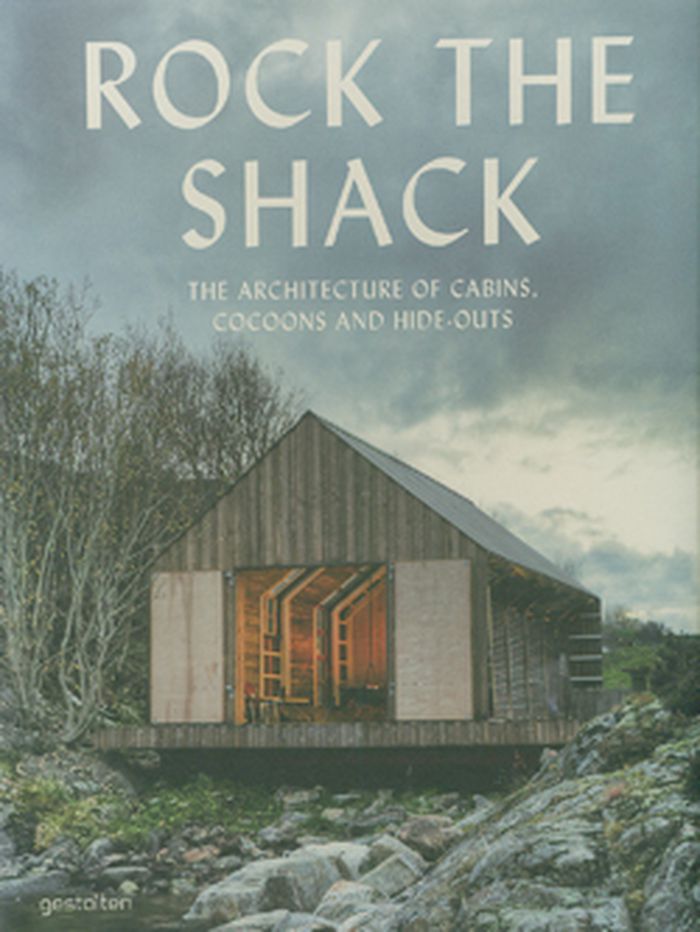
Rock the Shack is a survey of contemporary refuges from around the world — from basic to luxury. The book features a compelling range of sparingly to intricately furnished cabins, cottages, second homes, tree houses, transformations, shelters, and cocoons.
$74.95
(available to order)
Summary:
Rock the Shack is a survey of contemporary refuges from around the world — from basic to luxury. The book features a compelling range of sparingly to intricately furnished cabins, cottages, second homes, tree houses, transformations, shelters, and cocoons.
Subject:
Commercial interiors, Building types
Commercial interiors, Building types
Publication:
February 2013
February 2013
Title:
Rock the shack : the architecture of cabins, cocoons and hide-outs
Actions:
Price:
$74.95
(available to order)
Summary:
Rock the Shack is a survey of contemporary refuges from around the world — from basic to luxury. The book features a compelling range of sparingly to intricately furnished cabins, cottages, second homes, tree houses, transformations, shelters, and cocoons.
Rock the shack : the architecture of cabins, cocoons and hide-outs
Actions:
Price:
$74.95
(available to order)
Summary:
Rock the Shack is a survey of contemporary refuges from around the world — from basic to luxury. The book features a compelling range of sparingly to intricately furnished cabins, cottages, second homes, tree houses, transformations, shelters, and cocoons.
Form:
books
books
Publication:
February 2013
February 2013
Subject:
Commercial interiors, Building types
Commercial interiors, Building types
Form:
books
books
Actions:
Price:
$39.95
(available to order)
Summary:
By the year 1900, architect Andrew Taylor had designed Bank of Montreal branches across the continent and much of McGill University, helped found the McGill School of Architecture, and played a critical role in creating the first professional organization for Quebec architects. In The Architecture of Andrew Thomas Taylor, Susan Wagg presents a study of the life and work(...)
$39.95
(available to order)
Summary:
By the year 1900, architect Andrew Taylor had designed Bank of Montreal branches across the continent and much of McGill University, helped found the McGill School of Architecture, and played a critical role in creating the first professional organization for Quebec architects. In The Architecture of Andrew Thomas Taylor, Susan Wagg presents a study of the life and work(...)
Title:
The architecture of Andrew Thomas Taylor: Montreal's Square Mile and beyond
Actions:
Price:
$39.95
(available to order)
Summary:
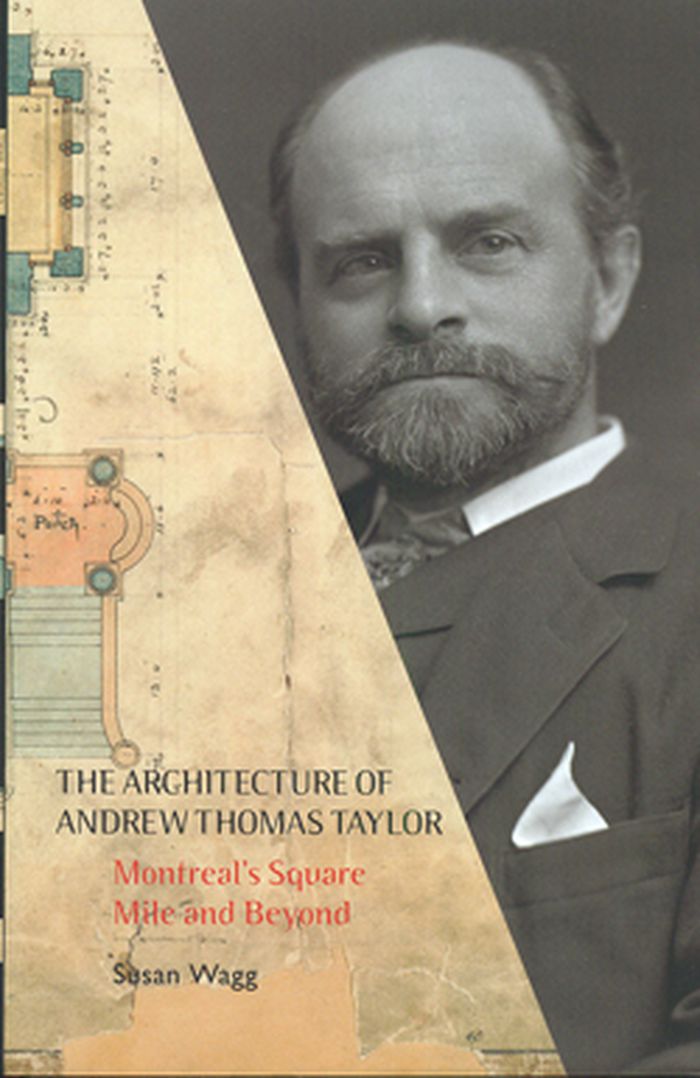
By the year 1900, architect Andrew Taylor had designed Bank of Montreal branches across the continent and much of McGill University, helped found the McGill School of Architecture, and played a critical role in creating the first professional organization for Quebec architects. In The Architecture of Andrew Thomas Taylor, Susan Wagg presents a study of the life and work of a major figure in nineteenth-century Canadian architecture.
The architecture of Andrew Thomas Taylor: Montreal's Square Mile and beyond
Actions:
Price:
$39.95
(available to order)
Summary:
By the year 1900, architect Andrew Taylor had designed Bank of Montreal branches across the continent and much of McGill University, helped found the McGill School of Architecture, and played a critical role in creating the first professional organization for Quebec architects. In The Architecture of Andrew Thomas Taylor, Susan Wagg presents a study of the life and work of a major figure in nineteenth-century Canadian architecture.
Form:
books
books
Publication:
April 2013
April 2013
Subject:
Canadian Architects
Canadian Architects
Form:
books
books
Price:
$65.95
(available to order)
Summary:
This book provides explicit and comprehensive coverage of the most important museums built in the first ten years of the 21st Century in the United States and Europe. By dissecting and analyzing each case, Ronnie Self allows the reader to get under the skin of each design and fully understand the process behind these remarkable buildings. Richly designed with full(...)
$65.95
(available to order)
Summary:
This book provides explicit and comprehensive coverage of the most important museums built in the first ten years of the 21st Century in the United States and Europe. By dissecting and analyzing each case, Ronnie Self allows the reader to get under the skin of each design and fully understand the process behind these remarkable buildings. Richly designed with full(...)
Title:
The architecture of art museums: a decade of design (2000-2010)
Actions:
Price:
$65.95
(available to order)
Summary:
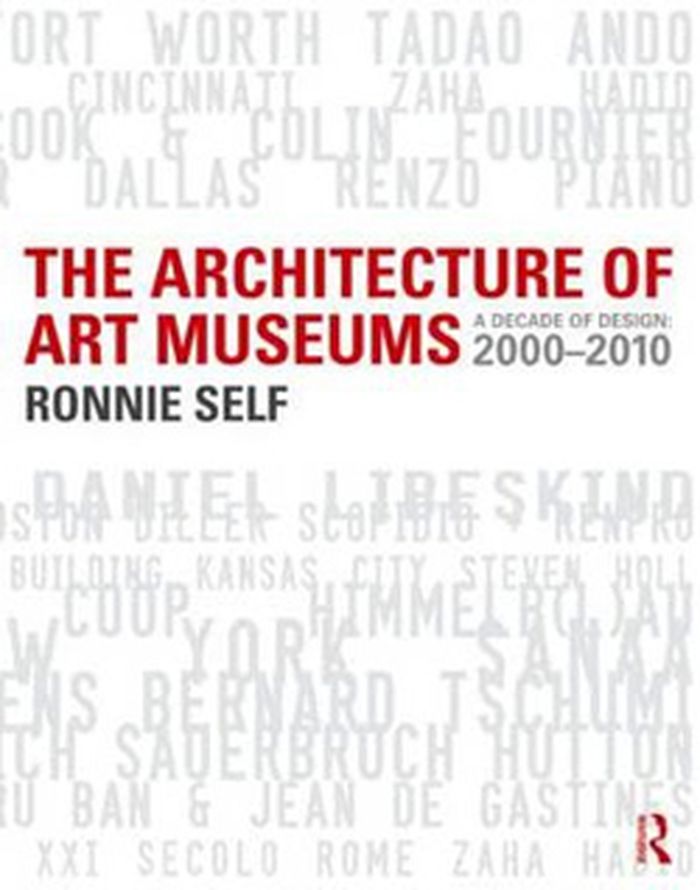
This book provides explicit and comprehensive coverage of the most important museums built in the first ten years of the 21st Century in the United States and Europe. By dissecting and analyzing each case, Ronnie Self allows the reader to get under the skin of each design and fully understand the process behind these remarkable buildings. Richly designed with full technical illustrations and sections the book includes the work of Tadao Ando, Zaha Hadid, Peter Cook & Colin Fournier, Renzo Piano, Yoshi Taniguchi, Herzog & de Meuron, Jean Nouvel, SANAA, Daniel Libeskind, Diller Scofidio & Renfro, Steven Holl, Coop Himmelb(l)au, Bernard Tschumi, Sauerbruch Hutton, and Shigeru Ban & Jean de Gastines.
The architecture of art museums: a decade of design (2000-2010)
Actions:
Price:
$65.95
(available to order)
Summary:
This book provides explicit and comprehensive coverage of the most important museums built in the first ten years of the 21st Century in the United States and Europe. By dissecting and analyzing each case, Ronnie Self allows the reader to get under the skin of each design and fully understand the process behind these remarkable buildings. Richly designed with full technical illustrations and sections the book includes the work of Tadao Ando, Zaha Hadid, Peter Cook & Colin Fournier, Renzo Piano, Yoshi Taniguchi, Herzog & de Meuron, Jean Nouvel, SANAA, Daniel Libeskind, Diller Scofidio & Renfro, Steven Holl, Coop Himmelb(l)au, Bernard Tschumi, Sauerbruch Hutton, and Shigeru Ban & Jean de Gastines.
Form:
books
books
Publication:
February 2014
February 2014
Subject:
Museology
Museology
Form:
books
books
Actions:
Price:
$50.00
(available to order)
Summary:
a+u’s March issue interrogates sacredness and how it manifests in architectural space. Taking examples from religious works of architecture in different parts of the globe, such as Saint Pius Church in Switzerland and Bait Ur Rouf mosque in Bangladesh, this issue endeavors to establish a language of light and shadow, materiality, and scale. The notion of "sacred space" is(...)
$50.00
(available to order)
Summary:
a+u’s March issue interrogates sacredness and how it manifests in architectural space. Taking examples from religious works of architecture in different parts of the globe, such as Saint Pius Church in Switzerland and Bait Ur Rouf mosque in Bangladesh, this issue endeavors to establish a language of light and shadow, materiality, and scale. The notion of "sacred space" is(...)
Title:
A+U 654 25:03 Reinterpretations of Sacredness Generative AI within Architecture
Actions:
Price:
$50.00
(available to order)
Summary:
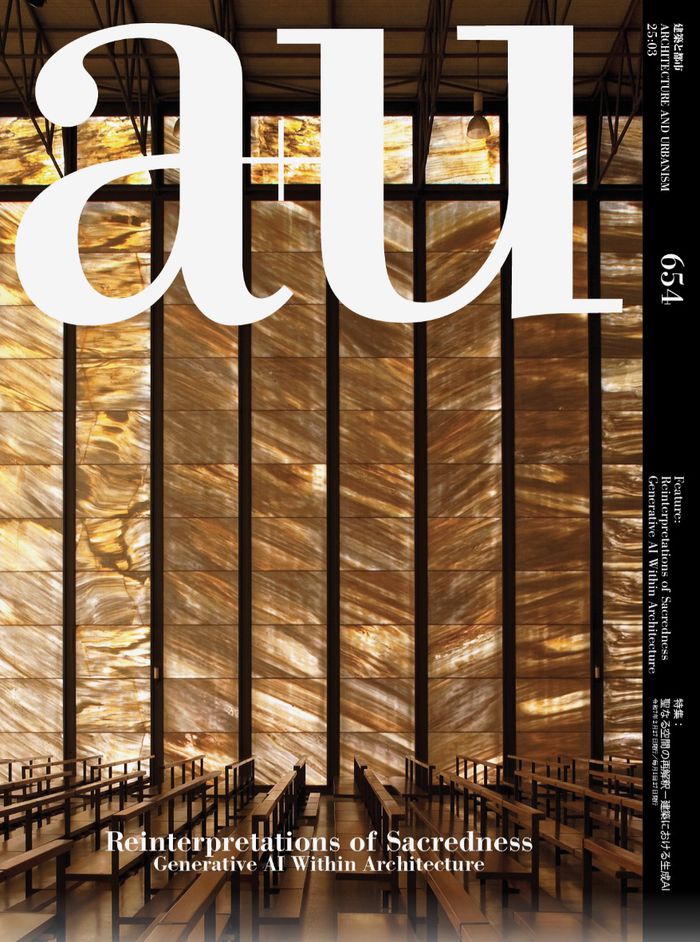
a+u’s March issue interrogates sacredness and how it manifests in architectural space. Taking examples from religious works of architecture in different parts of the globe, such as Saint Pius Church in Switzerland and Bait Ur Rouf mosque in Bangladesh, this issue endeavors to establish a language of light and shadow, materiality, and scale. The notion of "sacred space" is further complicated by the introduction of AI. Guest editor Erwin Viray, using the theme of "sacred space," introduces generative AI tools that not only illuminate the direction that architectural design may take, but also confront human sensibilities and shared ideas about architectural space. Continuing this exploration, 14 nonreligious projects, such as Luis Barragán’s Barragán House, Álvaro Siza’s Tidal Pools of Leça da Palmeira, and Anne Holtrop’s Pearl Museum, ponder how this sense of sacredness, feelings of awe and serenity, can be introduced into our everyday lives.
A+U 654 25:03 Reinterpretations of Sacredness Generative AI within Architecture
Actions:
Price:
$50.00
(available to order)
Summary:
a+u’s March issue interrogates sacredness and how it manifests in architectural space. Taking examples from religious works of architecture in different parts of the globe, such as Saint Pius Church in Switzerland and Bait Ur Rouf mosque in Bangladesh, this issue endeavors to establish a language of light and shadow, materiality, and scale. The notion of "sacred space" is further complicated by the introduction of AI. Guest editor Erwin Viray, using the theme of "sacred space," introduces generative AI tools that not only illuminate the direction that architectural design may take, but also confront human sensibilities and shared ideas about architectural space. Continuing this exploration, 14 nonreligious projects, such as Luis Barragán’s Barragán House, Álvaro Siza’s Tidal Pools of Leça da Palmeira, and Anne Holtrop’s Pearl Museum, ponder how this sense of sacredness, feelings of awe and serenity, can be introduced into our everyday lives.
Form:
books
books
Publication:
March 2025
March 2025
Subject:
Magazines
Magazines
Form:
books
books
Price:
$27.99
(available to order)
Summary:
The architecture of Britain is an art gallery all around us. From our streets to squares, through our cities, suburbs and villages, we are surrounded by magnificent buildings of eclectic styles. ''A Short History of British Architecture'' is story of why Britain looks the way it does, from prehistoric Stonehenge to the lofty towers of today. Historian Simon Jenkins(...)
$27.99
(available to order)
Summary:
The architecture of Britain is an art gallery all around us. From our streets to squares, through our cities, suburbs and villages, we are surrounded by magnificent buildings of eclectic styles. ''A Short History of British Architecture'' is story of why Britain looks the way it does, from prehistoric Stonehenge to the lofty towers of today. Historian Simon Jenkins(...)
Title:
A short history of British architecture: From Stonehenge to The Shard
Actions:
Price:
$27.99
(available to order)
Summary:
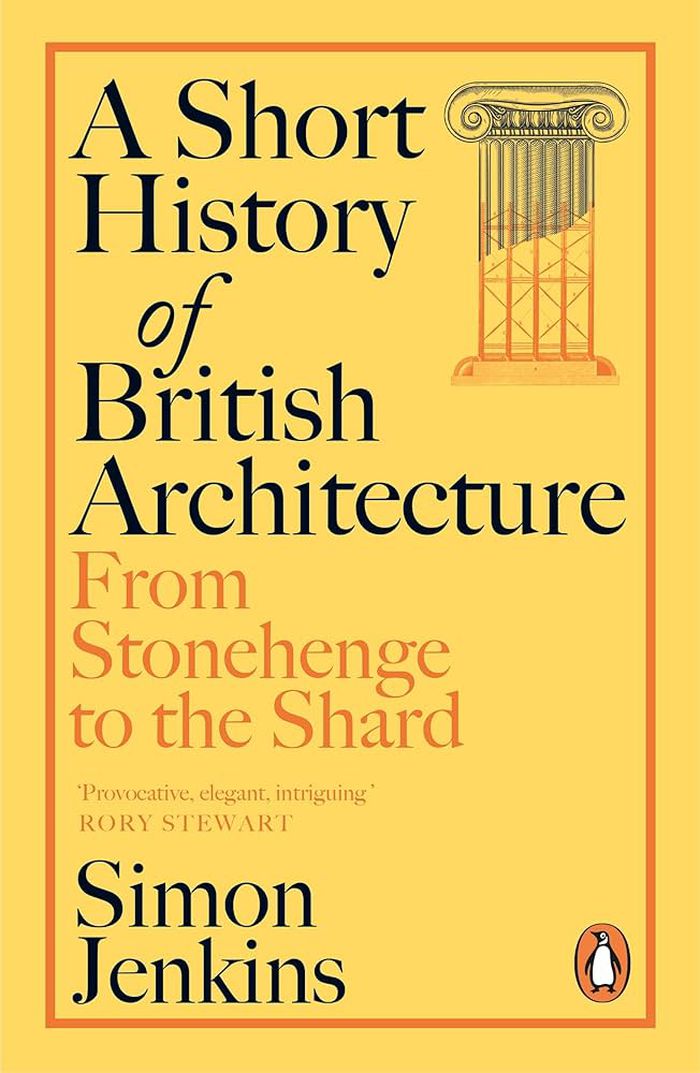
The architecture of Britain is an art gallery all around us. From our streets to squares, through our cities, suburbs and villages, we are surrounded by magnificent buildings of eclectic styles. ''A Short History of British Architecture'' is story of why Britain looks the way it does, from prehistoric Stonehenge to the lofty towers of today. Historian Simon Jenkins traces the relentless battles over the European traditions of classicism and gothic- from the gothic cathedrals of Lincoln, Ely and Wells to the ‘'prodigy'’ houses of the Tudor renaissance, and visits the great estates of Georgian London, the docks of Liverpool, the mills of Yorkshire and the chapels of south Wales. The arrival of modernism in the twentieth century politicised public taste, upheaved communities and sought to reconstruct entire cities. It produced Coventry Cathedral and Lloyd’s of London, but also the brutalist monoliths of Sheffield’s Park Hill, Glasgow’s Cumbernauld and London’s South Bank. Only in the 1970s did the public at last give voice to what became the conservation revolution – a movement in which Jenkins played a leading role, both as deputy chairman of English Heritage and chairman of the National Trust, and in the saving of iconic buildings such as St Pancras International and Covent Garden.
A short history of British architecture: From Stonehenge to The Shard
Actions:
Price:
$27.99
(available to order)
Summary:
The architecture of Britain is an art gallery all around us. From our streets to squares, through our cities, suburbs and villages, we are surrounded by magnificent buildings of eclectic styles. ''A Short History of British Architecture'' is story of why Britain looks the way it does, from prehistoric Stonehenge to the lofty towers of today. Historian Simon Jenkins traces the relentless battles over the European traditions of classicism and gothic- from the gothic cathedrals of Lincoln, Ely and Wells to the ‘'prodigy'’ houses of the Tudor renaissance, and visits the great estates of Georgian London, the docks of Liverpool, the mills of Yorkshire and the chapels of south Wales. The arrival of modernism in the twentieth century politicised public taste, upheaved communities and sought to reconstruct entire cities. It produced Coventry Cathedral and Lloyd’s of London, but also the brutalist monoliths of Sheffield’s Park Hill, Glasgow’s Cumbernauld and London’s South Bank. Only in the 1970s did the public at last give voice to what became the conservation revolution – a movement in which Jenkins played a leading role, both as deputy chairman of English Heritage and chairman of the National Trust, and in the saving of iconic buildings such as St Pancras International and Covent Garden.
Form:
books
books
Publication:
January 2026
January 2026
Subject:
History until 1900, Great Britain
History until 1900, Great Britain
Form:
books
books
Price:
$30.00
(available to order)
Summary:
Essay by Otto Kapfinger. Architects include: Carlo Baumschlager, Marianne Burkhalter, Dietmar Eberle, Ernst Giselbrecht, Roland Gnaiger, Hermann Kaufmann, Christian Lenz, Wolfgang Ritsch, Bruno Spagolla, Christian Sumi, Peter Zumthor.
$30.00
(available to order)
Summary:
Essay by Otto Kapfinger. Architects include: Carlo Baumschlager, Marianne Burkhalter, Dietmar Eberle, Ernst Giselbrecht, Roland Gnaiger, Hermann Kaufmann, Christian Lenz, Wolfgang Ritsch, Bruno Spagolla, Christian Sumi, Peter Zumthor.
Title:
Architecture in Vorarlberg since 1980: a guide to 260 noteworthy buildings
Actions:
Price:
$30.00
(available to order)
Summary:
Essay by Otto Kapfinger. Architects include: Carlo Baumschlager, Marianne Burkhalter, Dietmar Eberle, Ernst Giselbrecht, Roland Gnaiger, Hermann Kaufmann, Christian Lenz, Wolfgang Ritsch, Bruno Spagolla, Christian Sumi, Peter Zumthor.
Architecture in Vorarlberg since 1980: a guide to 260 noteworthy buildings
Actions:
Price:
$30.00
(available to order)
Summary:
Essay by Otto Kapfinger. Architects include: Carlo Baumschlager, Marianne Burkhalter, Dietmar Eberle, Ernst Giselbrecht, Roland Gnaiger, Hermann Kaufmann, Christian Lenz, Wolfgang Ritsch, Bruno Spagolla, Christian Sumi, Peter Zumthor.
Form:
books
books
Publication:
April 2002, Stuttgart
April 2002, Stuttgart
Form:
books
books
Actions:
Price:
$58.00
(available to order)
Summary:
The well-known artist Jean Pfaff has undertaken a series of fascinating colour interventions in buildings – documented and analysed here for the first time. Jean Pfaff’s colour interventions in architecture are not just a matter of art in buildings, rather they are an exciting dialogue between colour and space. The chromatic modifications allow materials to assume a(...)
$58.00
(available to order)
Summary:
The well-known artist Jean Pfaff has undertaken a series of fascinating colour interventions in buildings – documented and analysed here for the first time. Jean Pfaff’s colour interventions in architecture are not just a matter of art in buildings, rather they are an exciting dialogue between colour and space. The chromatic modifications allow materials to assume a(...)
Title:
Colours are like the wind : Jean Pfaff's colour interventions in architecture
Actions:
Price:
$58.00
(available to order)
Summary:
The well-known artist Jean Pfaff has undertaken a series of fascinating colour interventions in buildings – documented and analysed here for the first time. Jean Pfaff’s colour interventions in architecture are not just a matter of art in buildings, rather they are an exciting dialogue between colour and space. The chromatic modifications allow materials to assume a different appearance, to seem insubstantial, and they are a vital factor in the visual interplay between inside and outside spaces. Areas of dynamic colours alternate with indirect colour effects and reflections which enrich the ambiance of the building. With expressive photographs and enlightening texts, Heinrich Helfenstein reveals the quality and range of Jean Pfaff’s interventions, using examples including Peter Zumthor’s Kapelle Sogn Benedetg, Meili and Peter’s Timber Industry College, Biel, and Schrodt Architects' office building at Iserlohn.
Colours are like the wind : Jean Pfaff's colour interventions in architecture
Actions:
Price:
$58.00
(available to order)
Summary:
The well-known artist Jean Pfaff has undertaken a series of fascinating colour interventions in buildings – documented and analysed here for the first time. Jean Pfaff’s colour interventions in architecture are not just a matter of art in buildings, rather they are an exciting dialogue between colour and space. The chromatic modifications allow materials to assume a different appearance, to seem insubstantial, and they are a vital factor in the visual interplay between inside and outside spaces. Areas of dynamic colours alternate with indirect colour effects and reflections which enrich the ambiance of the building. With expressive photographs and enlightening texts, Heinrich Helfenstein reveals the quality and range of Jean Pfaff’s interventions, using examples including Peter Zumthor’s Kapelle Sogn Benedetg, Meili and Peter’s Timber Industry College, Biel, and Schrodt Architects' office building at Iserlohn.
Form:
books
books
Publication:
November 2001, Basel
November 2001, Basel
Subject:
Materials and Lighting
Materials and Lighting
Form:
books
books
Price:
$48.95
(available to order)
Summary:
Part 1 of this three volume, comprehensive guide to contemporary American architecture focuses on the West and features 247 buildings along with 17 access maps for 69 different cities. Each building is dedicated one page, accompanied with colour photographs and a brief outline. Buildings featured include: Seattle Central Library (Rem Koolhaas/Oma), San Francisco(...)
$48.95
(available to order)
Summary:
Part 1 of this three volume, comprehensive guide to contemporary American architecture focuses on the West and features 247 buildings along with 17 access maps for 69 different cities. Each building is dedicated one page, accompanied with colour photographs and a brief outline. Buildings featured include: Seattle Central Library (Rem Koolhaas/Oma), San Francisco(...)
Title:
A guide to contemporary architecture in America, volume 1 : Western U.S.A.
Actions:
Price:
$48.95
(available to order)
Summary:
Part 1 of this three volume, comprehensive guide to contemporary American architecture focuses on the West and features 247 buildings along with 17 access maps for 69 different cities. Each building is dedicated one page, accompanied with colour photographs and a brief outline. Buildings featured include: Seattle Central Library (Rem Koolhaas/Oma), San Francisco International Airport (SOM), Walt Disney Concert Hall (Frank O. Gehry) and the Denver Central Library (Michael Graves).
A guide to contemporary architecture in America, volume 1 : Western U.S.A.
Actions:
Price:
$48.95
(available to order)
Summary:
Part 1 of this three volume, comprehensive guide to contemporary American architecture focuses on the West and features 247 buildings along with 17 access maps for 69 different cities. Each building is dedicated one page, accompanied with colour photographs and a brief outline. Buildings featured include: Seattle Central Library (Rem Koolhaas/Oma), San Francisco International Airport (SOM), Walt Disney Concert Hall (Frank O. Gehry) and the Denver Central Library (Michael Graves).
Form:
books
books
Publication:
September 2005, Tokyo
September 2005, Tokyo
Subject:
City Guides
City Guides
Form:
books
books
Actions:
Price:
$51.85
(available to order)
Summary:
Paper is generally presumed to be the stock-in-trade of the graphic design profession. However, due to the diverse qualities of paper, and the constant desire of designers to push the boundaries of their profession, its potential is being explored more and more by all disciplines of design. "More Paperwork" follows on from "Paperwork", which looked at the use of paper(...)
$51.85
(available to order)
Summary:
Paper is generally presumed to be the stock-in-trade of the graphic design profession. However, due to the diverse qualities of paper, and the constant desire of designers to push the boundaries of their profession, its potential is being explored more and more by all disciplines of design. "More Paperwork" follows on from "Paperwork", which looked at the use of paper(...)
Title:
More paperwork : exploring the potential of paper in design and architecture
Actions:
Price:
$51.85
(available to order)
Summary:
Paper is generally presumed to be the stock-in-trade of the graphic design profession. However, due to the diverse qualities of paper, and the constant desire of designers to push the boundaries of their profession, its potential is being explored more and more by all disciplines of design. "More Paperwork" follows on from "Paperwork", which looked at the use of paper in graphic design, and reviews the amazing developments in its application across all areas of design in the last ten years, including product, furniture, fashion and architecture. The interactive features of the first book have also been extended in the second, to create a range of special effects designed to be completed by the reader. Through the selected work of leading designers around the world, from Amsterdam to Tokyo and New York to Zagreb, this book sets out to demonstrate how the astounding and diverse qualities of paper can be applied. From an inspirational church by Shigeru Ban and a humorous airmail dress by Hussein Chalayan, to an intricate range of packaging by Pentagram and the Honey Pop chair by Tokujin Yoshioka, "More Paperwork" shows that paper can be used to create functional, exciting and innovative designs. The book will also include items that are not necessarily chosen for the beauty of their design, but rather because they demonstrate some of the astounding things that paper is capable of: these items still display an intrinsic beauty that will be demonstrated with beautiful photographs.
More paperwork : exploring the potential of paper in design and architecture
Actions:
Price:
$51.85
(available to order)
Summary:
Paper is generally presumed to be the stock-in-trade of the graphic design profession. However, due to the diverse qualities of paper, and the constant desire of designers to push the boundaries of their profession, its potential is being explored more and more by all disciplines of design. "More Paperwork" follows on from "Paperwork", which looked at the use of paper in graphic design, and reviews the amazing developments in its application across all areas of design in the last ten years, including product, furniture, fashion and architecture. The interactive features of the first book have also been extended in the second, to create a range of special effects designed to be completed by the reader. Through the selected work of leading designers around the world, from Amsterdam to Tokyo and New York to Zagreb, this book sets out to demonstrate how the astounding and diverse qualities of paper can be applied. From an inspirational church by Shigeru Ban and a humorous airmail dress by Hussein Chalayan, to an intricate range of packaging by Pentagram and the Honey Pop chair by Tokujin Yoshioka, "More Paperwork" shows that paper can be used to create functional, exciting and innovative designs. The book will also include items that are not necessarily chosen for the beauty of their design, but rather because they demonstrate some of the astounding things that paper is capable of: these items still display an intrinsic beauty that will be demonstrated with beautiful photographs.
Form:
books
books
Publication:
May 2005, London
May 2005, London
Subject:
Graphic Design and Typography
Graphic Design and Typography
Form:
books
books
Actions:
Price:
$65.00
(available in store)
Summary:
In the 1960s the French colonial regime detonated four atmospheric atomic bombs, thirteen underground nuclear bombs, and conducted other nuclear experiments in the Algerian Sahara. This secret, still-classified programme occurred during and after the Algerian War (1954–1962). Meticulously culled together from numerous sources by architectural historian Samia Henni, this(...)
$65.00
(available in store)
Summary:
In the 1960s the French colonial regime detonated four atmospheric atomic bombs, thirteen underground nuclear bombs, and conducted other nuclear experiments in the Algerian Sahara. This secret, still-classified programme occurred during and after the Algerian War (1954–1962). Meticulously culled together from numerous sources by architectural historian Samia Henni, this(...)
Title:
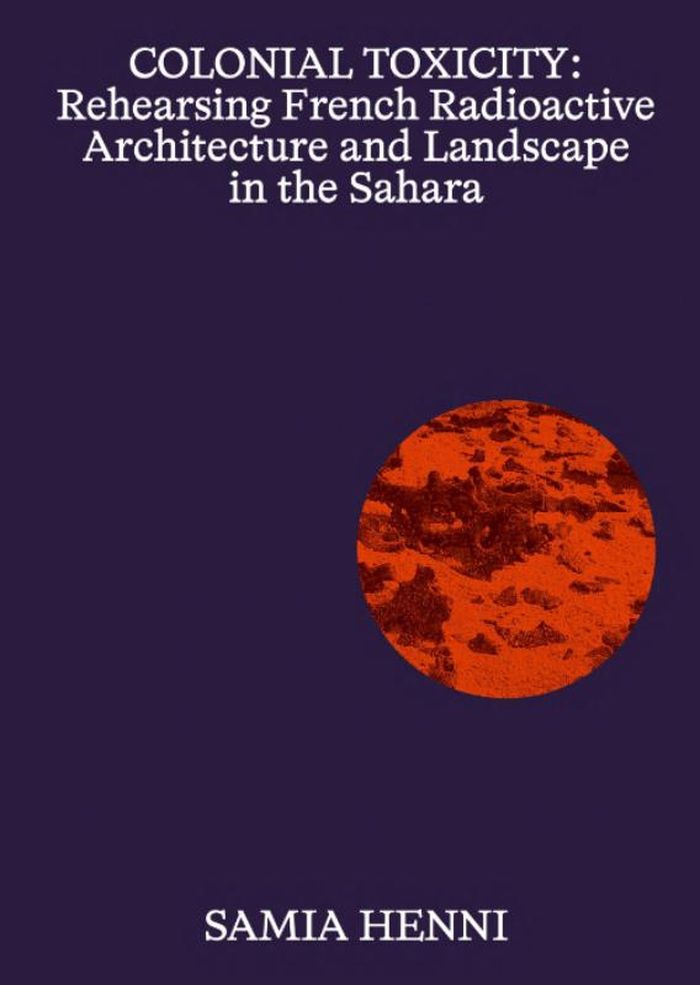
Colonial toxicity: Rehearsing French radioactive architecture and landscape in the Sahara
Actions:
Price:
$65.00
(available in store)
Summary:
In the 1960s the French colonial regime detonated four atmospheric atomic bombs, thirteen underground nuclear bombs, and conducted other nuclear experiments in the Algerian Sahara. This secret, still-classified programme occurred during and after the Algerian War (1954–1962). Meticulously culled together from numerous sources by architectural historian Samia Henni, this publication’s wealth of materials documenting the violent history of France’s activities in the Algerian desert offers a rich repository for all those concerned with histories of nuclear weapons and engaged at the intersections of spatial, social, and environmental justice, as well as anticolonial archival practices.
Colonial toxicity: Rehearsing French radioactive architecture and landscape in the Sahara
Actions:
Price:
$65.00
(available in store)
Summary:
In the 1960s the French colonial regime detonated four atmospheric atomic bombs, thirteen underground nuclear bombs, and conducted other nuclear experiments in the Algerian Sahara. This secret, still-classified programme occurred during and after the Algerian War (1954–1962). Meticulously culled together from numerous sources by architectural historian Samia Henni, this publication’s wealth of materials documenting the violent history of France’s activities in the Algerian desert offers a rich repository for all those concerned with histories of nuclear weapons and engaged at the intersections of spatial, social, and environmental justice, as well as anticolonial archival practices.
Form:
books
books
Publication:
December 2023
December 2023
Subject:
Architecture ecologies
Architecture ecologies


