


543 Results
Form:
books
books
Price:
$26.98
(available to order)
Summary:
Celebrating the ultimate masterpieces of modernist design, from the Arts and Crafts movement up to the twenty-first century, Total Design offers an intimate tour of houses conceived as complete works of art. Each of the spectacular houses making up Total Design demonstrates how an architect realized a unifying vision through all aspects of design—architecture, furniture,(...)
$26.98
(available to order)
Summary:
Celebrating the ultimate masterpieces of modernist design, from the Arts and Crafts movement up to the twenty-first century, Total Design offers an intimate tour of houses conceived as complete works of art. Each of the spectacular houses making up Total Design demonstrates how an architect realized a unifying vision through all aspects of design—architecture, furniture,(...)
Title:
Total design: architecture and interiors of iconic modern houses
Actions:
Price:
$26.98
(available to order)
Summary:
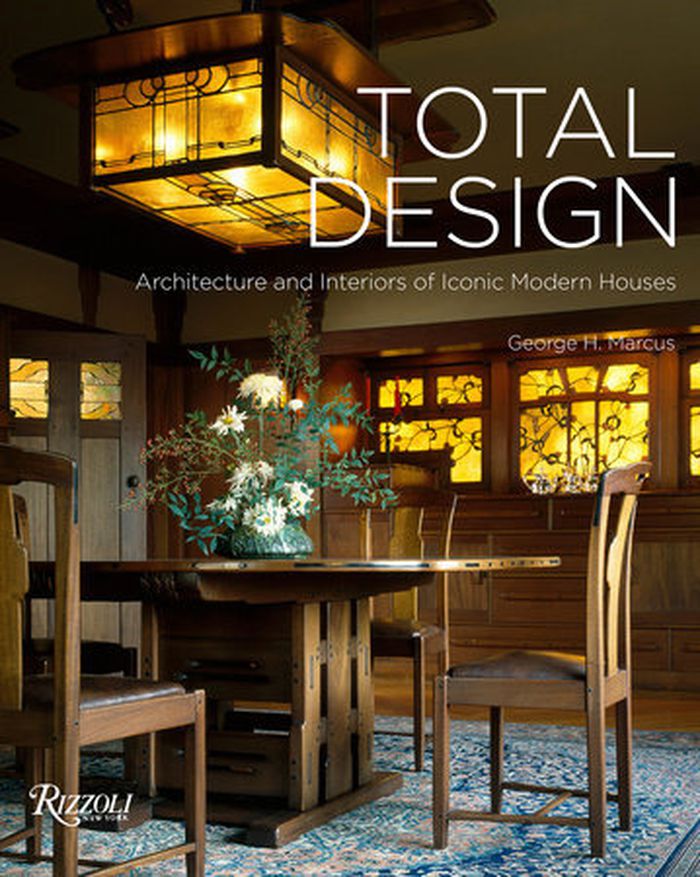
Celebrating the ultimate masterpieces of modernist design, from the Arts and Crafts movement up to the twenty-first century, Total Design offers an intimate tour of houses conceived as complete works of art. Each of the spectacular houses making up Total Design demonstrates how an architect realized a unifying vision through all aspects of design—architecture, furniture, fittings, decorative objects, color, and gardens. Presenting masterpieces of modern architecture conceived as complete works of art inside and out, author George H. Marcus, a veteran chronicler of modernist design, delivers a highly accessible tour of the creations of some of the twentieth century’s greatest architects and designers, including Frank Lloyd Wright, Mies van der Rohe, Alvar Aalto, Eero Saarinen, Charles Rennie Mackintosh, and Gio Ponti. Together these masterworks of design offer a stunning survey of the many modes of modernist design, from the inventive refinement of Pierre Chareau to the colorful Nordic forms of Finn Juhl to the twenty-first-century expressionism of Daniel Libeskind.
Total design: architecture and interiors of iconic modern houses
Actions:
Price:
$26.98
(available to order)
Summary:
Celebrating the ultimate masterpieces of modernist design, from the Arts and Crafts movement up to the twenty-first century, Total Design offers an intimate tour of houses conceived as complete works of art. Each of the spectacular houses making up Total Design demonstrates how an architect realized a unifying vision through all aspects of design—architecture, furniture, fittings, decorative objects, color, and gardens. Presenting masterpieces of modern architecture conceived as complete works of art inside and out, author George H. Marcus, a veteran chronicler of modernist design, delivers a highly accessible tour of the creations of some of the twentieth century’s greatest architects and designers, including Frank Lloyd Wright, Mies van der Rohe, Alvar Aalto, Eero Saarinen, Charles Rennie Mackintosh, and Gio Ponti. Together these masterworks of design offer a stunning survey of the many modes of modernist design, from the inventive refinement of Pierre Chareau to the colorful Nordic forms of Finn Juhl to the twenty-first-century expressionism of Daniel Libeskind.
Form:
books
books
Publication:
April 2020
April 2020
Subject:
Interior Design
Interior Design
Form:
books
books

Title:
Plywood: A Material Story
Plywood: A Material Story
Actions:
Price:
$60.00
(available to order)
Summary:
Plywood is an astonishingly versatile material, made by gluing together layers of cross-grained veneers, creating a pliable board that can be stronger than solid wood. Stylish and practical, plywood offers huge possibilities for experimental design, and it has been used to make a wide range of products, from aeroplanes, boats and automobiles to architecture and furniture.(...)
$60.00
(available to order)
Summary:
Plywood is an astonishingly versatile material, made by gluing together layers of cross-grained veneers, creating a pliable board that can be stronger than solid wood. Stylish and practical, plywood offers huge possibilities for experimental design, and it has been used to make a wide range of products, from aeroplanes, boats and automobiles to architecture and furniture.(...)
Title:
Plywood: A Material Story
Actions:
Price:
$60.00
(available to order)
Summary:
Plywood is an astonishingly versatile material, made by gluing together layers of cross-grained veneers, creating a pliable board that can be stronger than solid wood. Stylish and practical, plywood offers huge possibilities for experimental design, and it has been used to make a wide range of products, from aeroplanes, boats and automobiles to architecture and furniture. This book traces the history of plywood from its use in 18th-century furniture, through its emergence as an industrial product in the 19th century, to a material celebrated by 20th-century modernists such as Alvar Aalto and Charles and Ray Eames. An ideal material for the digital age, plywood has become popular again in recent years and is widely used in contemporary design and manufacture. Produced to accompany an exhibition at the V, this book is the first comprehensive study of the history of plywood and its myriad applications throughout the ages, unveiling the stories behind objects that surround us and that we often take for granted.
Plywood: A Material Story
Actions:
Price:
$60.00
(available to order)
Summary:
Plywood is an astonishingly versatile material, made by gluing together layers of cross-grained veneers, creating a pliable board that can be stronger than solid wood. Stylish and practical, plywood offers huge possibilities for experimental design, and it has been used to make a wide range of products, from aeroplanes, boats and automobiles to architecture and furniture. This book traces the history of plywood from its use in 18th-century furniture, through its emergence as an industrial product in the 19th century, to a material celebrated by 20th-century modernists such as Alvar Aalto and Charles and Ray Eames. An ideal material for the digital age, plywood has become popular again in recent years and is widely used in contemporary design and manufacture. Produced to accompany an exhibition at the V, this book is the first comprehensive study of the history of plywood and its myriad applications throughout the ages, unveiling the stories behind objects that surround us and that we often take for granted.
Form:
books
books
Publication:
September 2017
September 2017
Subject:
Timber Construction
Timber Construction
Form:
books
books
Price:
$102.95
(available to order)
Summary:
The Classroom shows how furniture designers from the late nineteenth century to the present have strived to enliven the classroom experience for children, telling for the first time the history of this neglected area of furniture design. The book is based on the collection of the VS school museum in Tauberbischofsheim, which houses a unique collection of school furniture(...)
$102.95
(available to order)
Summary:
The Classroom shows how furniture designers from the late nineteenth century to the present have strived to enliven the classroom experience for children, telling for the first time the history of this neglected area of furniture design. The book is based on the collection of the VS school museum in Tauberbischofsheim, which houses a unique collection of school furniture(...)
Subject:
Commercial interiors, Building types
Commercial interiors, Building types
Publication:
March 2011
March 2011
Title:
The classroom: From the late 19th Century until the present day
Actions:
Price:
$102.95
(available to order)
Summary:
The Classroom shows how furniture designers from the late nineteenth century to the present have strived to enliven the classroom experience for children, telling for the first time the history of this neglected area of furniture design. The book is based on the collection of the VS school museum in Tauberbischofsheim, which houses a unique collection of school furniture from Germany and abroad. Through this collection, it draws out the history of educational theory and school architecture over the past hundred years, tracing the ascent of a child-centered approach to education and attendant developments in design, as well as such topics as the use of propaganda in Soviet- and Nazi-era schools. Chairs, desks, classrooms and entire schools by Alvar Aalto, Arne Jacobsen, Charles Rennie Mackintosh, Jean-Baptiste Mathon, Jean Prouvé, Eero + Eliel Saarinen and Bruno Taut are abundantly illustrated and examined. The Classroom looks back over this history and looks forward to possible future developments.
The classroom: From the late 19th Century until the present day
Actions:
Price:
$102.95
(available to order)
Summary:
The Classroom shows how furniture designers from the late nineteenth century to the present have strived to enliven the classroom experience for children, telling for the first time the history of this neglected area of furniture design. The book is based on the collection of the VS school museum in Tauberbischofsheim, which houses a unique collection of school furniture from Germany and abroad. Through this collection, it draws out the history of educational theory and school architecture over the past hundred years, tracing the ascent of a child-centered approach to education and attendant developments in design, as well as such topics as the use of propaganda in Soviet- and Nazi-era schools. Chairs, desks, classrooms and entire schools by Alvar Aalto, Arne Jacobsen, Charles Rennie Mackintosh, Jean-Baptiste Mathon, Jean Prouvé, Eero + Eliel Saarinen and Bruno Taut are abundantly illustrated and examined. The Classroom looks back over this history and looks forward to possible future developments.
Form:
books
books
Publication:
March 2011
March 2011
Subject:
Commercial interiors, Building types
Commercial interiors, Building types
Form:
books
books
Title:
Ezra Stoller, photographer
Ezra Stoller, photographer
Actions:
Price:
$69.95
(available to order)
Summary:
Ezra Stoller's iconic photographs of 20th-century architectural masterpieces, such as Frank Lloyd Wright's Fallingwater and Mies van der Rohe's Seagram Building, are often cited in aiding the rise of modernism in America. Stoller (1915–2004) elevated architectural photography to an art form, capturing the mood of numerous buildings in their best light. Living and(...)
$69.95
(available to order)
Summary:
Ezra Stoller's iconic photographs of 20th-century architectural masterpieces, such as Frank Lloyd Wright's Fallingwater and Mies van der Rohe's Seagram Building, are often cited in aiding the rise of modernism in America. Stoller (1915–2004) elevated architectural photography to an art form, capturing the mood of numerous buildings in their best light. Living and(...)
Title:
Ezra Stoller, photographer
Actions:
Price:
$69.95
(available to order)
Summary:
Ezra Stoller's iconic photographs of 20th-century architectural masterpieces, such as Frank Lloyd Wright's Fallingwater and Mies van der Rohe's Seagram Building, are often cited in aiding the rise of modernism in America. Stoller (1915–2004) elevated architectural photography to an art form, capturing the mood of numerous buildings in their best light. Living and working in New York from the early 1940s to the mid-1970s, Stoller photographed buildings by such architects as Alvar Aalto, Eero Saarinen, Marcel Breuer, Paul Rudolph, and Louis I. Kahn. His striking images earned him the admiration of critics and contemporaries, but few people are aware of the stunning breadth of his oeuvre, which also included domestic and industrial spaces and important editorial depictions of American labor in the 1950s and 1960s. Ezra Stoller, Photographer, a survey of Stoller's artistic accomplishments, examines the photographer's full range with a fresh eye and unprecedented scope, offering a unique commentary on postwar America's changing landscape.
Ezra Stoller, photographer
Actions:
Price:
$69.95
(available to order)
Summary:
Ezra Stoller's iconic photographs of 20th-century architectural masterpieces, such as Frank Lloyd Wright's Fallingwater and Mies van der Rohe's Seagram Building, are often cited in aiding the rise of modernism in America. Stoller (1915–2004) elevated architectural photography to an art form, capturing the mood of numerous buildings in their best light. Living and working in New York from the early 1940s to the mid-1970s, Stoller photographed buildings by such architects as Alvar Aalto, Eero Saarinen, Marcel Breuer, Paul Rudolph, and Louis I. Kahn. His striking images earned him the admiration of critics and contemporaries, but few people are aware of the stunning breadth of his oeuvre, which also included domestic and industrial spaces and important editorial depictions of American labor in the 1950s and 1960s. Ezra Stoller, Photographer, a survey of Stoller's artistic accomplishments, examines the photographer's full range with a fresh eye and unprecedented scope, offering a unique commentary on postwar America's changing landscape.
Form:
books
books
Publication:
November 2012
November 2012
Subject:
Photography monographs
Photography monographs
Form:
books
books
Title:
1000 Chairs
1000 Chairs
Actions:
Price:
$17.95
(available to order)
Summary:
More than any other piece of furniture, the chair has been subjected to the wildest dreams of the designers. The particular curve of a back-rest, or the twist of a leg, the angle of a seat or the colour of the entire artefact all reflect the stylistic consciousness of each era. From Gerrit Rietveld and Alvar Aalto via Verner Panton to Eva Zeisel; from Art Nouveau to(...)
$17.95
(available to order)
Summary:
More than any other piece of furniture, the chair has been subjected to the wildest dreams of the designers. The particular curve of a back-rest, or the twist of a leg, the angle of a seat or the colour of the entire artefact all reflect the stylistic consciousness of each era. From Gerrit Rietveld and Alvar Aalto via Verner Panton to Eva Zeisel; from Art Nouveau to(...)
Title:
1000 Chairs
Actions:
Price:
$17.95
(available to order)
Summary:
More than any other piece of furniture, the chair has been subjected to the wildest dreams of the designers. The particular curve of a back-rest, or the twist of a leg, the angle of a seat or the colour of the entire artefact all reflect the stylistic consciousness of each era. From Gerrit Rietveld and Alvar Aalto via Verner Panton to Eva Zeisel; from Art Nouveau to International Style, from Pop Art to Postmodernism, the phenomenon of the chair is so complex that it requires a reference work as comprehensive as this to do it full justice. They are all here: Thonet's bentwood chairs and Hoffmann's sitting-machines, Marcel Breuer's Wassily chair and Ron Arad's avant-garde armchairs. The book, a slightly abbreviated version of our classic title "1000 Chairs", devotes one page to each chair, displayed on its own as pure form, with biographical and historical information about the chairs and their designers. A special treat for anyone who loves design and a must for collectors!
1000 Chairs
Actions:
Price:
$17.95
(available to order)
Summary:
More than any other piece of furniture, the chair has been subjected to the wildest dreams of the designers. The particular curve of a back-rest, or the twist of a leg, the angle of a seat or the colour of the entire artefact all reflect the stylistic consciousness of each era. From Gerrit Rietveld and Alvar Aalto via Verner Panton to Eva Zeisel; from Art Nouveau to International Style, from Pop Art to Postmodernism, the phenomenon of the chair is so complex that it requires a reference work as comprehensive as this to do it full justice. They are all here: Thonet's bentwood chairs and Hoffmann's sitting-machines, Marcel Breuer's Wassily chair and Ron Arad's avant-garde armchairs. The book, a slightly abbreviated version of our classic title "1000 Chairs", devotes one page to each chair, displayed on its own as pure form, with biographical and historical information about the chairs and their designers. A special treat for anyone who loves design and a must for collectors!
Form:
books
books
Publication:
May 2005, Cologne
May 2005, Cologne
Subject:
Interior Design
Interior Design
Form:
books
books
Actions:
Price:
$85.95
(available to order)
Summary:
Finnish modern church buildings appeal to the visitor with their minimalist character. The essential strength of their architecture lies in the presence of light and nature. The buildings and their interiors are attuned to the passing of each day and the change of seasons. "Sacral space" beckons the reader to step into twelve churches and chapels, each one of which(...)
$85.95
(available to order)
Summary:
Finnish modern church buildings appeal to the visitor with their minimalist character. The essential strength of their architecture lies in the presence of light and nature. The buildings and their interiors are attuned to the passing of each day and the change of seasons. "Sacral space" beckons the reader to step into twelve churches and chapels, each one of which(...)
Subject:
Commercial interiors, Building types
Commercial interiors, Building types
Publication:
January 1900, Helsinki
January 1900, Helsinki
Title:
Sacral space : modern Finnish churches
Actions:
Price:
$85.95
(available to order)
Summary:
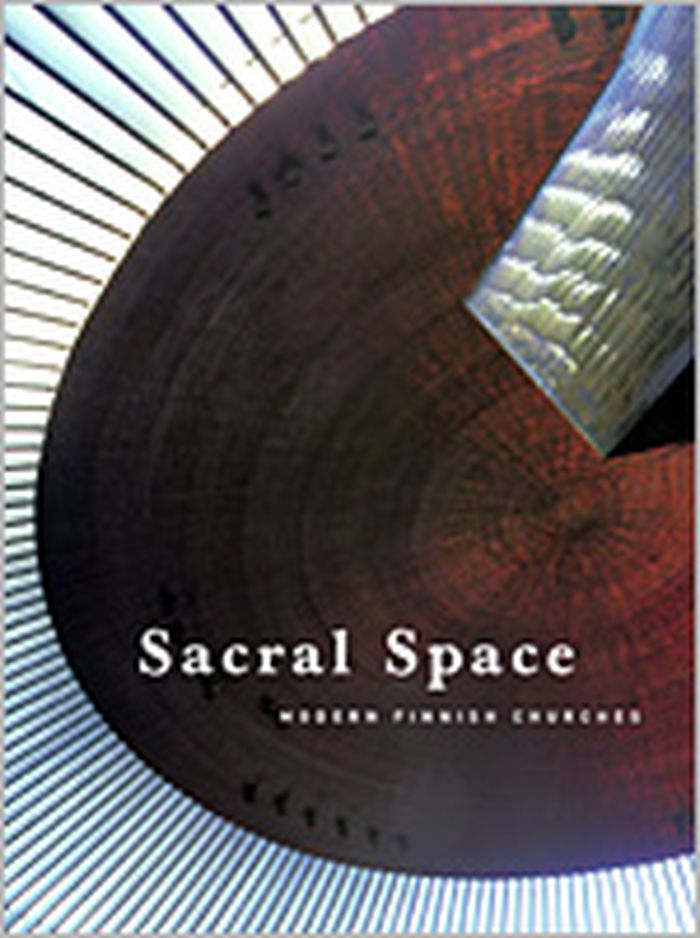
Finnish modern church buildings appeal to the visitor with their minimalist character. The essential strength of their architecture lies in the presence of light and nature. The buildings and their interiors are attuned to the passing of each day and the change of seasons. "Sacral space" beckons the reader to step into twelve churches and chapels, each one of which represents Finnish church architecture at its best: Resurrection Chapel by Erik Bryggman, Otaniemi Chapel by Kaija ja Heikki Siren, The Church of the Three Crosses by Alvar Aalto, Vatiala Chapel by Viljo Revell, Hyvinkää Church by Aarno Ruusuvuori, Kaleva Church by Raili and Reima Pietilä, Temppeliaukio Church by Timo and Tuomo Suomalainen, The Chapel of the Holy Cross by Pekka Pitkänen, Olari Church by Käpy and Simo Paavilainen, Kauniainen Church by Kristian Gullichsen, St. Johns’s Church Männistö by Juha Leiviskä and St. Henry’s Ecumenical Chapel by Matti Sanaksenaho. Jari Jetsonen’s photographs, the architects’ drawings, photographs taken during the construction, architect Sirkkaliisa Jetsonen’s texts and professor Fred Thompson’s accompanying article bring out the uniqueness and history of each church building.
Sacral space : modern Finnish churches
Actions:
Price:
$85.95
(available to order)
Summary:
Finnish modern church buildings appeal to the visitor with their minimalist character. The essential strength of their architecture lies in the presence of light and nature. The buildings and their interiors are attuned to the passing of each day and the change of seasons. "Sacral space" beckons the reader to step into twelve churches and chapels, each one of which represents Finnish church architecture at its best: Resurrection Chapel by Erik Bryggman, Otaniemi Chapel by Kaija ja Heikki Siren, The Church of the Three Crosses by Alvar Aalto, Vatiala Chapel by Viljo Revell, Hyvinkää Church by Aarno Ruusuvuori, Kaleva Church by Raili and Reima Pietilä, Temppeliaukio Church by Timo and Tuomo Suomalainen, The Chapel of the Holy Cross by Pekka Pitkänen, Olari Church by Käpy and Simo Paavilainen, Kauniainen Church by Kristian Gullichsen, St. Johns’s Church Männistö by Juha Leiviskä and St. Henry’s Ecumenical Chapel by Matti Sanaksenaho. Jari Jetsonen’s photographs, the architects’ drawings, photographs taken during the construction, architect Sirkkaliisa Jetsonen’s texts and professor Fred Thompson’s accompanying article bring out the uniqueness and history of each church building.
Form:
books
books
Publication:
January 1900, Helsinki
January 1900, Helsinki
Subject:
Commercial interiors, Building types
Commercial interiors, Building types
Form:
books
books
Actions:
Price:
$78.00
(available to order)
Summary:
Alberto Ponis "Costruire nella Natura" ("Building in Nature") analyses 22 buildings, highlighting the importance of drawing and photography as the first act of design, as in the Genius Loci series in which he photographed Sardinian vernacular architecture. This publication aims primarily to analyse of Alberto Ponis's work as a whole, including single-family houses and(...)
$78.00
(available to order)
Summary:
Alberto Ponis "Costruire nella Natura" ("Building in Nature") analyses 22 buildings, highlighting the importance of drawing and photography as the first act of design, as in the Genius Loci series in which he photographed Sardinian vernacular architecture. This publication aims primarily to analyse of Alberto Ponis's work as a whole, including single-family houses and(...)
Title:
Alberto Ponis: Costruire nella Natura
Actions:
Price:
$78.00
(available to order)
Summary:
Alberto Ponis "Costruire nella Natura" ("Building in Nature") analyses 22 buildings, highlighting the importance of drawing and photography as the first act of design, as in the Genius Loci series in which he photographed Sardinian vernacular architecture. This publication aims primarily to analyse of Alberto Ponis's work as a whole, including single-family houses and collective houses built in Palau and Costa Paradiso, investigating the relationship with the natural site formed by granite rocks, strawberry trees and holm oaks. These elements become part of the architecture, generating its form. Meticulous work in the Ponis Archive has revealed little-known materials, such as slides of trips to America to visit the Sea Ranch and the architecture of Louis Kahn; visits to Ronchamp and La Tourette and the architecture of Arno Jacobsen and Alvar Aalto. But above all, his letters with clients, the photographs Ponis took of his houses, the sketchbooks during site inspections, the Thought notes, his design vocabulary that he continually defined over time, right down to his "pictorial obsessions" for the Nervi marina and Bonifacio.
Alberto Ponis: Costruire nella Natura
Actions:
Price:
$78.00
(available to order)
Summary:
Alberto Ponis "Costruire nella Natura" ("Building in Nature") analyses 22 buildings, highlighting the importance of drawing and photography as the first act of design, as in the Genius Loci series in which he photographed Sardinian vernacular architecture. This publication aims primarily to analyse of Alberto Ponis's work as a whole, including single-family houses and collective houses built in Palau and Costa Paradiso, investigating the relationship with the natural site formed by granite rocks, strawberry trees and holm oaks. These elements become part of the architecture, generating its form. Meticulous work in the Ponis Archive has revealed little-known materials, such as slides of trips to America to visit the Sea Ranch and the architecture of Louis Kahn; visits to Ronchamp and La Tourette and the architecture of Arno Jacobsen and Alvar Aalto. But above all, his letters with clients, the photographs Ponis took of his houses, the sketchbooks during site inspections, the Thought notes, his design vocabulary that he continually defined over time, right down to his "pictorial obsessions" for the Nervi marina and Bonifacio.
Form:
books
books
Publication:
December 2024
December 2024
Subject:
Architecture Monographs
Architecture Monographs
Form:
books
books
Actions:
Price:
$99.99
(available to order)
Summary:
This second volume of "The Details of Modern Architecture" continues the study of the relationships of the ideals of design and the realities of construction in modern architecture, beginning in the late 1920s and extending to the present day. It contains a wealth of new (...)
$99.99
(available to order)
Summary:
This second volume of "The Details of Modern Architecture" continues the study of the relationships of the ideals of design and the realities of construction in modern architecture, beginning in the late 1920s and extending to the present day. It contains a wealth of new (...)
Publication:
June 1996, Cambridge, Mass.
June 1996, Cambridge, Mass.
Title:
Details of modern architecture - volume 2 : 1928-1988
Actions:
Price:
$99.99
(available to order)
Summary:
This second volume of "The Details of Modern Architecture" continues the study of the relationships of the ideals of design and the realities of construction in modern architecture, beginning in the late 1920s and extending to the present day. It contains a wealth of new information on the construction of modern architecture at a variety of scales from minute details to general principles. There are over 500 illustrations, including 130 original photographs and 230 original axonometric drawings, arranged to explain the technical, aesthetic, and historical aspects of the building form. Individual chapters treat the work of Eliel and Eero Saarinen, Eric Gunnar Asplund, Richard Neutra, Alvar Aalto, Le Corbusier, and Louis Kahn, as well as the Case Study, High Tech, Postmodern, and Deconstructivist architects. Among the individual buildings documented are Eliel Saarinen's Cranbrook School, Asplund's Woodland Cemetery, Fuller's Dymaxion house, the Venturi house, the Eames and other Case Study houses, the concrete buildings of Le Corbusier, Aalto's Säynätsalo Town Hall, and Kahn's Exeter Library and Salk Institute -- with many details published for the first time.
Details of modern architecture - volume 2 : 1928-1988
Actions:
Price:
$99.99
(available to order)
Summary:
This second volume of "The Details of Modern Architecture" continues the study of the relationships of the ideals of design and the realities of construction in modern architecture, beginning in the late 1920s and extending to the present day. It contains a wealth of new information on the construction of modern architecture at a variety of scales from minute details to general principles. There are over 500 illustrations, including 130 original photographs and 230 original axonometric drawings, arranged to explain the technical, aesthetic, and historical aspects of the building form. Individual chapters treat the work of Eliel and Eero Saarinen, Eric Gunnar Asplund, Richard Neutra, Alvar Aalto, Le Corbusier, and Louis Kahn, as well as the Case Study, High Tech, Postmodern, and Deconstructivist architects. Among the individual buildings documented are Eliel Saarinen's Cranbrook School, Asplund's Woodland Cemetery, Fuller's Dymaxion house, the Venturi house, the Eames and other Case Study houses, the concrete buildings of Le Corbusier, Aalto's Säynätsalo Town Hall, and Kahn's Exeter Library and Salk Institute -- with many details published for the first time.
Form:
books
books
Publication:
June 1996, Cambridge, Mass.
June 1996, Cambridge, Mass.
Form:
books
books
Title:
Hansaviertel portraits
Hansaviertel portraits
Actions:
Price:
$65.00
(available to order)
Summary:
A former debris-strewn wasteland in the inner city—some 300 out of 343 residential buildings were destroyed during the Second World War—the Hansaviertel is one of the most defining architecture projects of the postwar period in Berlin. In 1952, an international ideas competition was held under the title die stadt von morgen (the city of tomorrow); more than fifty(...)
$65.00
(available to order)
Summary:
A former debris-strewn wasteland in the inner city—some 300 out of 343 residential buildings were destroyed during the Second World War—the Hansaviertel is one of the most defining architecture projects of the postwar period in Berlin. In 1952, an international ideas competition was held under the title die stadt von morgen (the city of tomorrow); more than fifty(...)
Subject:
Architecture since 1900, Europe
Architecture since 1900, Europe
Publication:
October 2024
October 2024
Title:
Hansaviertel portraits
Actions:
Price:
$65.00
(available to order)
Summary:
A former debris-strewn wasteland in the inner city—some 300 out of 343 residential buildings were destroyed during the Second World War—the Hansaviertel is one of the most defining architecture projects of the postwar period in Berlin. In 1952, an international ideas competition was held under the title die stadt von morgen (the city of tomorrow); more than fifty architects presented plans for the rebuilding of West Berlin, including leading practitioners of Western modernist architecture like Alvar Aalto, Werner Düttmann, Egon Eiermann, Walter Gropius, Arne Jacobsen, Oscar Niemeyer, and Max Taut. Construction based on their designs in the redevelopment area began in 1956. The result was a neighborhood designed for people and their needs—largely without predetermined paths, with lots of greenery, flexible floor plans, space for small businesses, and facilities for everyday needs. Visiting the area and its people today, one can still feel the designers’ visionary resolve to establish new ways of residential living. Locals are united by their fascination with architecture and design and their love for their neighborhood, which over the decades has developed an authentic patina and now stands as witness to a key chapter in the city’s more recent history.
Hansaviertel portraits
Actions:
Price:
$65.00
(available to order)
Summary:
A former debris-strewn wasteland in the inner city—some 300 out of 343 residential buildings were destroyed during the Second World War—the Hansaviertel is one of the most defining architecture projects of the postwar period in Berlin. In 1952, an international ideas competition was held under the title die stadt von morgen (the city of tomorrow); more than fifty architects presented plans for the rebuilding of West Berlin, including leading practitioners of Western modernist architecture like Alvar Aalto, Werner Düttmann, Egon Eiermann, Walter Gropius, Arne Jacobsen, Oscar Niemeyer, and Max Taut. Construction based on their designs in the redevelopment area began in 1956. The result was a neighborhood designed for people and their needs—largely without predetermined paths, with lots of greenery, flexible floor plans, space for small businesses, and facilities for everyday needs. Visiting the area and its people today, one can still feel the designers’ visionary resolve to establish new ways of residential living. Locals are united by their fascination with architecture and design and their love for their neighborhood, which over the decades has developed an authentic patina and now stands as witness to a key chapter in the city’s more recent history.
Form:
books
books
Publication:
October 2024
October 2024
Subject:
Architecture since 1900, Europe
Architecture since 1900, Europe
Form:
books
books
Actions:
Price:
$97.90
(available in store)
Summary:
The sketch is a window into the architects mind. As creative designers, architects are interested in how other architects, particularly successful ones, think through the use of drawings to approach their work. Historically designers have sought inspiration for their own work through an insight into the minds and workings of people they often regard as geniuses. This(...)
$97.90
(available in store)
Summary:
The sketch is a window into the architects mind. As creative designers, architects are interested in how other architects, particularly successful ones, think through the use of drawings to approach their work. Historically designers have sought inspiration for their own work through an insight into the minds and workings of people they often regard as geniuses. This(...)
Title:
Architects' drawings: a selection of sketches by world famous archittects through history
Actions:
Price:
$97.90
(available in store)
Summary:
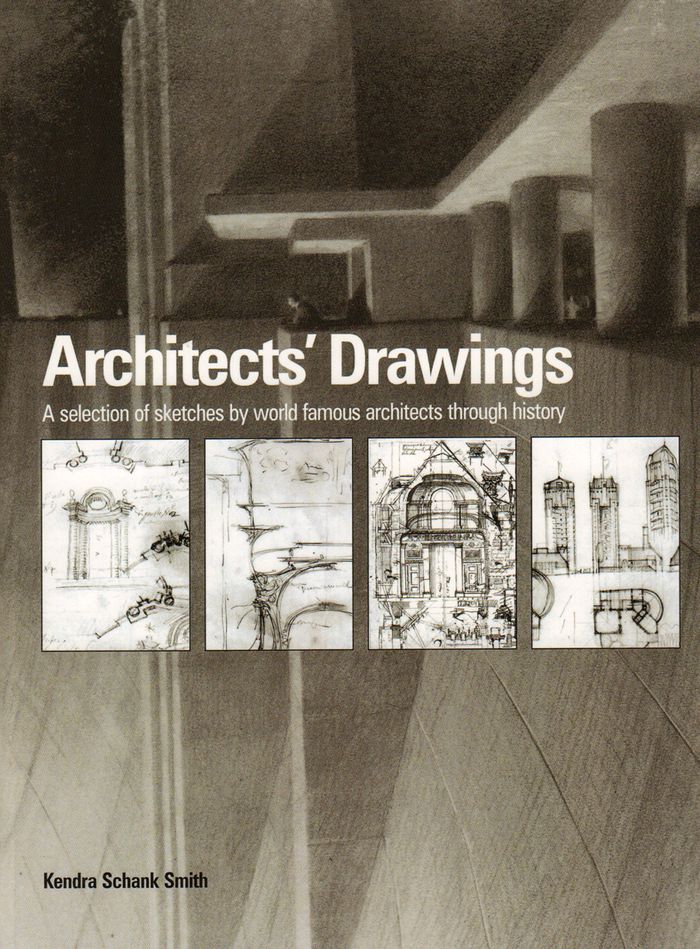
The sketch is a window into the architects mind. As creative designers, architects are interested in how other architects, particularly successful ones, think through the use of drawings to approach their work. Historically designers have sought inspiration for their own work through an insight into the minds and workings of people they often regard as geniuses. This collection of sketches aims to provide this insight. Here for the first time, a wide range of world famous architects' sketches from the Renaissance to the present day can be seen in a single volume. The sketches have been selected to represent the concepts or philosophies of the key movements in architecture in order to develop an overall picture of the role of the sketch in the development of architecture. The book illustrates the work of designers as diverse as Andrea Palladio, Erich Mendelsohn, Sir Edwin Lutyens, Gianlorenzo Bernini, Le Corbusier, Michelangelo, Alvar Aalto, Sir John Soane, Francesco Borromini, Walter Gropius, and contemporary architects Tadao Ando, Zaha Hadid and Frank Gehry to name but a few. Each chronologically placed sketch is accompanied by text providing details about the architect’s life, a look at the sketch in context, and the connection to specific buildings where appropriate. Style, media and meaning are also discussed, developing an explanation of the architect’s thinking and intentions.
Architects' drawings: a selection of sketches by world famous archittects through history
Actions:
Price:
$97.90
(available in store)
Summary:
The sketch is a window into the architects mind. As creative designers, architects are interested in how other architects, particularly successful ones, think through the use of drawings to approach their work. Historically designers have sought inspiration for their own work through an insight into the minds and workings of people they often regard as geniuses. This collection of sketches aims to provide this insight. Here for the first time, a wide range of world famous architects' sketches from the Renaissance to the present day can be seen in a single volume. The sketches have been selected to represent the concepts or philosophies of the key movements in architecture in order to develop an overall picture of the role of the sketch in the development of architecture. The book illustrates the work of designers as diverse as Andrea Palladio, Erich Mendelsohn, Sir Edwin Lutyens, Gianlorenzo Bernini, Le Corbusier, Michelangelo, Alvar Aalto, Sir John Soane, Francesco Borromini, Walter Gropius, and contemporary architects Tadao Ando, Zaha Hadid and Frank Gehry to name but a few. Each chronologically placed sketch is accompanied by text providing details about the architect’s life, a look at the sketch in context, and the connection to specific buildings where appropriate. Style, media and meaning are also discussed, developing an explanation of the architect’s thinking and intentions.
Form:
books
books
Publication:
February 2016
February 2016
Subject:
Architectural Drawing
Architectural Drawing


