


12071 Results
Form:
books
books
Title:
Carlos Bunga: the architecture of life: environments, sculptures, paintings, drawings and films
Carlos Bunga: the architecture of life: environments, sculptures, paintings, drawings and films
Actions:
Price:
$60.00
(available to order)
Summary:
The first monograph on Portugese artist Carlos Bunga (born 1976) presents over a decade of his fantastical sculptural and painterly structures. Bunga uses only cardboard and paint to create immersive installations, furniture-like sculptures and paintings. “The Architecture of Life” surveys the artist’s sculptures, paintings, films, performances and installations from(...)
$60.00
(available to order)
Summary:
The first monograph on Portugese artist Carlos Bunga (born 1976) presents over a decade of his fantastical sculptural and painterly structures. Bunga uses only cardboard and paint to create immersive installations, furniture-like sculptures and paintings. “The Architecture of Life” surveys the artist’s sculptures, paintings, films, performances and installations from(...)
Title:
Carlos Bunga: the architecture of life: environments, sculptures, paintings, drawings and films
Actions:
Price:
$60.00
(available to order)
Summary:
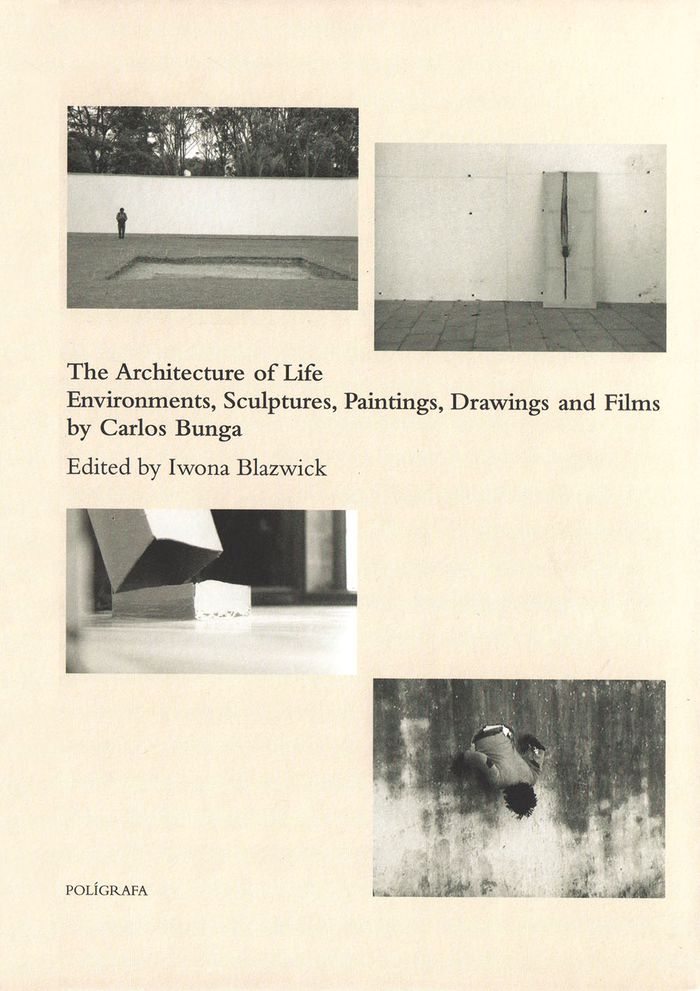
The first monograph on Portugese artist Carlos Bunga (born 1976) presents over a decade of his fantastical sculptural and painterly structures. Bunga uses only cardboard and paint to create immersive installations, furniture-like sculptures and paintings. “The Architecture of Life” surveys the artist’s sculptures, paintings, films, performances and installations from throughout his career, including the major new works created for his exhibition at the Museum of Art, Architecture, And Technology (MAAT) and Fundação Carmona e Costa in Lisbon. Whether he is using recycled materials or demolishing his own works, Bunga consistently pursues cycles of construction and destruction, and as a result explores the relationship of a space to its history and the inherent contradiction of the simultaneous impermanence and permanence of art. This volume features some of the artist’s own reflections on his work and writing from various art critics, writers and curators.
Carlos Bunga: the architecture of life: environments, sculptures, paintings, drawings and films
Actions:
Price:
$60.00
(available to order)
Summary:
The first monograph on Portugese artist Carlos Bunga (born 1976) presents over a decade of his fantastical sculptural and painterly structures. Bunga uses only cardboard and paint to create immersive installations, furniture-like sculptures and paintings. “The Architecture of Life” surveys the artist’s sculptures, paintings, films, performances and installations from throughout his career, including the major new works created for his exhibition at the Museum of Art, Architecture, And Technology (MAAT) and Fundação Carmona e Costa in Lisbon. Whether he is using recycled materials or demolishing his own works, Bunga consistently pursues cycles of construction and destruction, and as a result explores the relationship of a space to its history and the inherent contradiction of the simultaneous impermanence and permanence of art. This volume features some of the artist’s own reflections on his work and writing from various art critics, writers and curators.
Form:
books
books
Publication:
March 2020
March 2020
Subject:
Contemporary Art Monographs
Contemporary Art Monographs
Form:
books
books
Actions:
Price:
$94.95
(available to order)
Summary:
Following the liberation and subsequent occupation of Austria at the end of World War II in spring 1945 by the victorious powers Britain, France, the United States, and the Soviet Union, Vienna soon became a central stage for the quickly emerging Cold War. The struggle of differing political systems was also carried out in the field of architecture. Cold War and(...)
$94.95
(available to order)
Summary:
Following the liberation and subsequent occupation of Austria at the end of World War II in spring 1945 by the victorious powers Britain, France, the United States, and the Soviet Union, Vienna soon became a central stage for the quickly emerging Cold War. The struggle of differing political systems was also carried out in the field of architecture. Cold War and(...)
Title:
Cold war and architecture: the competing forces that reshaped Austria after 1945
Actions:
Price:
$94.95
(available to order)
Summary:
Following the liberation and subsequent occupation of Austria at the end of World War II in spring 1945 by the victorious powers Britain, France, the United States, and the Soviet Union, Vienna soon became a central stage for the quickly emerging Cold War. The struggle of differing political systems was also carried out in the field of architecture. Cold War and Architecture sheds new light on the building activity in postwar Austria and its main protagonists. For the first time, this book explores the lines of architectural debates of the time in the context of the global political and cultural conflict of East vs. West. With its transnational perspective, it changes our view of architectural history and postwar society. During the ten-year occupation period, Austria experienced a transition from authoritarian government to democratic consumer society. Each of the four Allied powers established its own extensive cultural program. Architectural exhibitions became important instruments of such educational schemes with the objective of a new social order. British, American, French, and Soviet cultural policies served as catalysts for ideological convictions.
Cold war and architecture: the competing forces that reshaped Austria after 1945
Actions:
Price:
$94.95
(available to order)
Summary:
Following the liberation and subsequent occupation of Austria at the end of World War II in spring 1945 by the victorious powers Britain, France, the United States, and the Soviet Union, Vienna soon became a central stage for the quickly emerging Cold War. The struggle of differing political systems was also carried out in the field of architecture. Cold War and Architecture sheds new light on the building activity in postwar Austria and its main protagonists. For the first time, this book explores the lines of architectural debates of the time in the context of the global political and cultural conflict of East vs. West. With its transnational perspective, it changes our view of architectural history and postwar society. During the ten-year occupation period, Austria experienced a transition from authoritarian government to democratic consumer society. Each of the four Allied powers established its own extensive cultural program. Architectural exhibitions became important instruments of such educational schemes with the objective of a new social order. British, American, French, and Soviet cultural policies served as catalysts for ideological convictions.
Form:
books
books
Publication:
April 2020
April 2020
Subject:
Modernism
Modernism
Form:
books
books
Price:
$61.00
(available in store)
Summary:
This instalment examines the past decade of architectural discourse in the Netherlands. Following the global financial crisis in 2008, the construction industry faced a slowdown; what was then considered “typically” Dutch has since faded, replaced with a new, more modest attitude in the Dutch architecture scene. Across three themes, guest editor Kirsten Hannema introduces(...)
$61.00
(available in store)
Summary:
This instalment examines the past decade of architectural discourse in the Netherlands. Following the global financial crisis in 2008, the construction industry faced a slowdown; what was then considered “typically” Dutch has since faded, replaced with a new, more modest attitude in the Dutch architecture scene. Across three themes, guest editor Kirsten Hannema introduces(...)
Title:
A+U 592 20:01 Supernormal Architecture In The Netherlands 2010-2020
Actions:
Price:
$61.00
(available in store)
Summary:
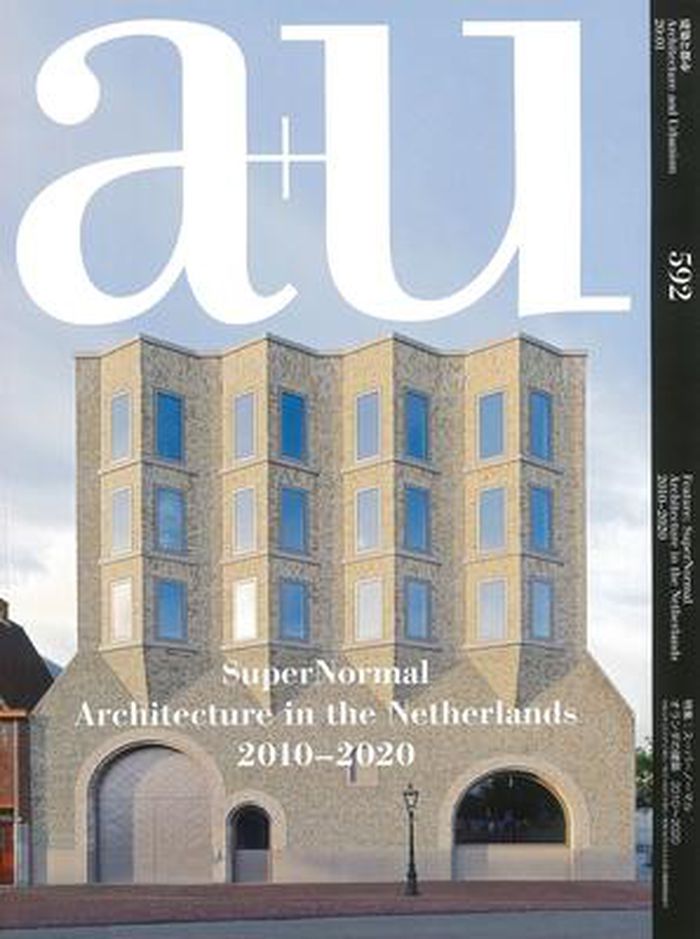
This instalment examines the past decade of architectural discourse in the Netherlands. Following the global financial crisis in 2008, the construction industry faced a slowdown; what was then considered “typically” Dutch has since faded, replaced with a new, more modest attitude in the Dutch architecture scene. Across three themes, guest editor Kirsten Hannema introduces nineteen projects that are perceived as combining broader social issues, and which in turn have taken on a new form of cultural momentum, despite going relatively unnoticed in comparison with the “SuperDutch” generation. With work by NL Architects, Superuse Studios, Mecanoo, more.
A+U 592 20:01 Supernormal Architecture In The Netherlands 2010-2020
Actions:
Price:
$61.00
(available in store)
Summary:
This instalment examines the past decade of architectural discourse in the Netherlands. Following the global financial crisis in 2008, the construction industry faced a slowdown; what was then considered “typically” Dutch has since faded, replaced with a new, more modest attitude in the Dutch architecture scene. Across three themes, guest editor Kirsten Hannema introduces nineteen projects that are perceived as combining broader social issues, and which in turn have taken on a new form of cultural momentum, despite going relatively unnoticed in comparison with the “SuperDutch” generation. With work by NL Architects, Superuse Studios, Mecanoo, more.
Form:
books
books
Publication:
June 2020
June 2020
Subject:
Magazines
Magazines
Form:
books
books
Actions:
Price:
$66.00
(available to order)
Summary:
In the 1950s and ’60s an ambitious program of urban revitalization transformed Pittsburgh and became a model for other American cities. Leaders, civic groups, and architects worked together to reconceive the city through local and federal initiatives that aimed to address the problems that confronted Pittsburgh’s postwar development. 'Imagining the Modern' untangles this(...)
$66.00
(available to order)
Summary:
In the 1950s and ’60s an ambitious program of urban revitalization transformed Pittsburgh and became a model for other American cities. Leaders, civic groups, and architects worked together to reconceive the city through local and federal initiatives that aimed to address the problems that confronted Pittsburgh’s postwar development. 'Imagining the Modern' untangles this(...)
Title:
Imagining the modern: architecture and urbanism of the Pittsburgh Renaissance
Actions:
Price:
$66.00
(available to order)
Summary:
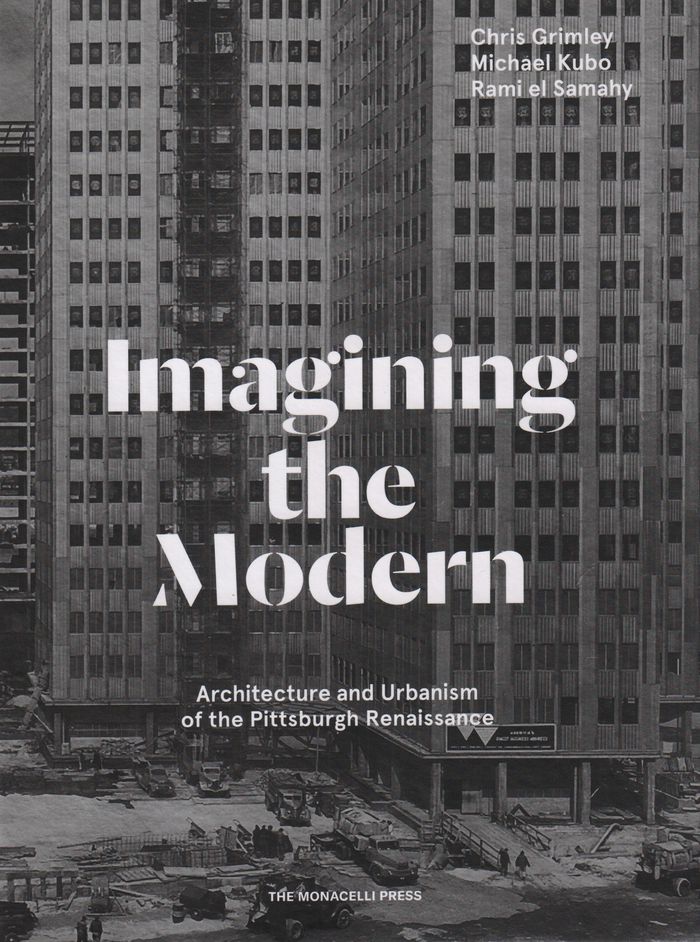
In the 1950s and ’60s an ambitious program of urban revitalization transformed Pittsburgh and became a model for other American cities. Leaders, civic groups, and architects worked together to reconceive the city through local and federal initiatives that aimed to address the problems that confronted Pittsburgh’s postwar development. 'Imagining the Modern' untangles this complicated relationship with modern architecture and planning through a history of Pittsburgh’s major sites, protagonists, and voices of intervention.
Imagining the modern: architecture and urbanism of the Pittsburgh Renaissance
Actions:
Price:
$66.00
(available to order)
Summary:
In the 1950s and ’60s an ambitious program of urban revitalization transformed Pittsburgh and became a model for other American cities. Leaders, civic groups, and architects worked together to reconceive the city through local and federal initiatives that aimed to address the problems that confronted Pittsburgh’s postwar development. 'Imagining the Modern' untangles this complicated relationship with modern architecture and planning through a history of Pittsburgh’s major sites, protagonists, and voices of intervention.
Form:
books
books
Publication:
June 2019
June 2019
Subject:
Modernism
Modernism
Form:
books
books
Price:
$37.00
(available to order)
Summary:
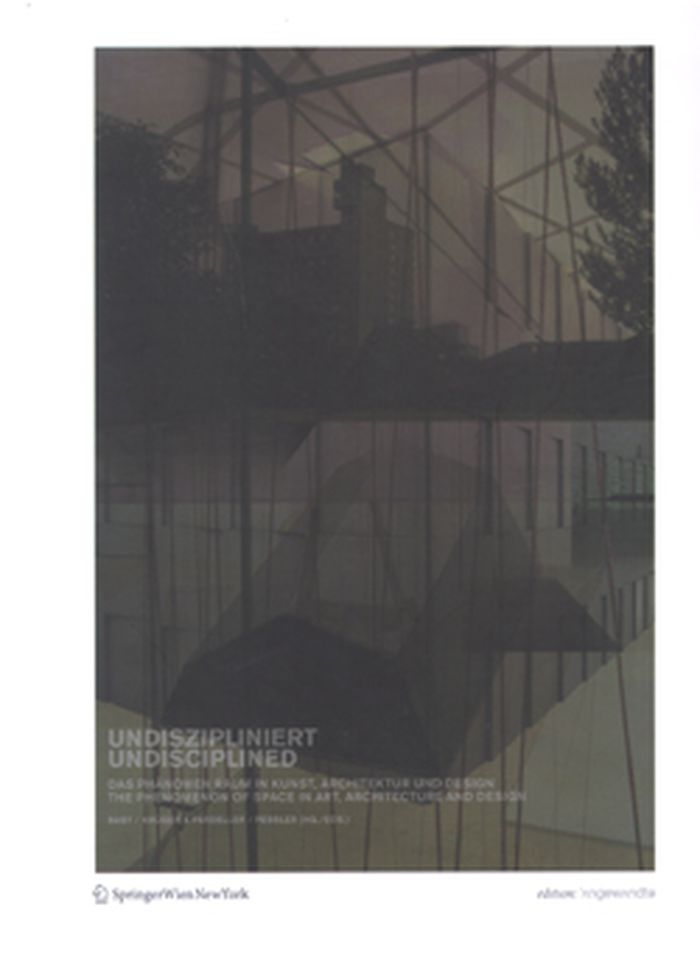
Artists, architects and designers have worked on the subject of "space" for a long time. Borders between socially assigned disciplines are increasingly in doubt, this calls for alternative work models. The authors explore the intersection of these disciplines in the work of selected contemporary positions.
$37.00
(available to order)
Summary:
Artists, architects and designers have worked on the subject of "space" for a long time. Borders between socially assigned disciplines are increasingly in doubt, this calls for alternative work models. The authors explore the intersection of these disciplines in the work of selected contemporary positions.
Title:
Undisciplined: the phenomenon of space in art, architecture and design
Actions:
Price:
$37.00
(available to order)
Summary:
Artists, architects and designers have worked on the subject of "space" for a long time. Borders between socially assigned disciplines are increasingly in doubt, this calls for alternative work models. The authors explore the intersection of these disciplines in the work of selected contemporary positions.
Undisciplined: the phenomenon of space in art, architecture and design
Actions:
Price:
$37.00
(available to order)
Summary:
Artists, architects and designers have worked on the subject of "space" for a long time. Borders between socially assigned disciplines are increasingly in doubt, this calls for alternative work models. The authors explore the intersection of these disciplines in the work of selected contemporary positions.
Form:
books
books
Publication:
November 2008, Wien, New York
November 2008, Wien, New York
Subject:
Display
Display
Form:
books
books
Actions:
Price:
$24.95
(available to order)
Summary:
In the first half of the 20th century, when architecture and literature dreamed of transparency, glass was the material these dreams were made of. However, the historiography of both fields usually focuses on a few canonical works by male authors to tell the story of this shared fascination. Departing from this imbalance, this essay takes the opportunity to explore the(...)
$24.95
(available to order)
Summary:
In the first half of the 20th century, when architecture and literature dreamed of transparency, glass was the material these dreams were made of. However, the historiography of both fields usually focuses on a few canonical works by male authors to tell the story of this shared fascination. Departing from this imbalance, this essay takes the opportunity to explore the(...)
Subject:
Architectural Theory
Architectural Theory
Publication:
December 2023
December 2023
Title:
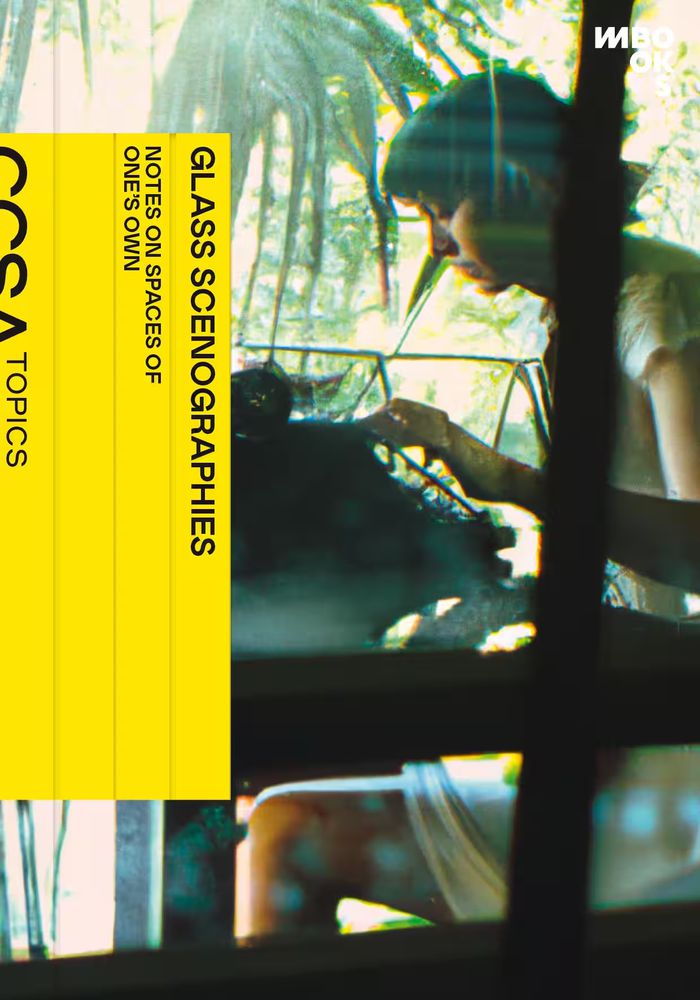
Glass scenographies. Notes on spaces of one’s own
Actions:
Price:
$24.95
(available to order)
Summary:
In the first half of the 20th century, when architecture and literature dreamed of transparency, glass was the material these dreams were made of. However, the historiography of both fields usually focuses on a few canonical works by male authors to tell the story of this shared fascination. Departing from this imbalance, this essay takes the opportunity to explore the glass culture of modernity through the lens of female projects whose stories often take place simultaneously on different continents. While the former silent film actress Evelyn Word Leigh builds a glass house for herself in Nyack, New York, artists and writers based in Europe – like Claude Cahun, Anaïs Nin, and Hilda ‘H.D.’ Doolittle – flesh out imaginary glass domes as construction sites of artistic subjectivities. Whether homes or domes, these creative women used glass environments to question and renegotiate their assigned places in Western societies, challenging the boundaries of female agency.
Glass scenographies. Notes on spaces of one’s own
Actions:
Price:
$24.95
(available to order)
Summary:
In the first half of the 20th century, when architecture and literature dreamed of transparency, glass was the material these dreams were made of. However, the historiography of both fields usually focuses on a few canonical works by male authors to tell the story of this shared fascination. Departing from this imbalance, this essay takes the opportunity to explore the glass culture of modernity through the lens of female projects whose stories often take place simultaneously on different continents. While the former silent film actress Evelyn Word Leigh builds a glass house for herself in Nyack, New York, artists and writers based in Europe – like Claude Cahun, Anaïs Nin, and Hilda ‘H.D.’ Doolittle – flesh out imaginary glass domes as construction sites of artistic subjectivities. Whether homes or domes, these creative women used glass environments to question and renegotiate their assigned places in Western societies, challenging the boundaries of female agency.
Form:
books
books
Publication:
December 2023
December 2023
Subject:
Architectural Theory
Architectural Theory
Form:
books
books
Price:
$39.95
(available to order)
Summary:
This book is published to coincide with the exhibition "A Civic Utopia" at The Courtauld Gallery of Art, 2016. In addition to the ‘Introduction’ by the authors, it contains an essay entitled ‘Law, Order and the Beautiful’ by Nicholas Olsberg and ‘Case Studies’ by Basile Baudez. The essay explores the Enlightenment themes: A New Rome, Porta, Ratio, Lex, Sanitas,(...)
$39.95
(available to order)
Summary:
This book is published to coincide with the exhibition "A Civic Utopia" at The Courtauld Gallery of Art, 2016. In addition to the ‘Introduction’ by the authors, it contains an essay entitled ‘Law, Order and the Beautiful’ by Nicholas Olsberg and ‘Case Studies’ by Basile Baudez. The essay explores the Enlightenment themes: A New Rome, Porta, Ratio, Lex, Sanitas,(...)
Subject:
History until 1900, France
History until 1900, France
Publication:
July 2016
July 2016
Title:
A civic utopia : architecture and the city in France, 1765-1837
Actions:
Price:
$39.95
(available to order)
Summary:
This book is published to coincide with the exhibition "A Civic Utopia" at The Courtauld Gallery of Art, 2016. In addition to the ‘Introduction’ by the authors, it contains an essay entitled ‘Law, Order and the Beautiful’ by Nicholas Olsberg and ‘Case Studies’ by Basile Baudez. The essay explores the Enlightenment themes: A New Rome, Porta, Ratio, Lex, Sanitas, Spectaculum, Lexicon and Exemplum. The case studies examine the work of Louis Combes, Pierre-François-Léonard Fontaine, André Sainte-Marie Châtillon, Paul Piot, François-Joseph Bélanger and Louis-Pierre Baltard.
A civic utopia : architecture and the city in France, 1765-1837
Actions:
Price:
$39.95
(available to order)
Summary:
This book is published to coincide with the exhibition "A Civic Utopia" at The Courtauld Gallery of Art, 2016. In addition to the ‘Introduction’ by the authors, it contains an essay entitled ‘Law, Order and the Beautiful’ by Nicholas Olsberg and ‘Case Studies’ by Basile Baudez. The essay explores the Enlightenment themes: A New Rome, Porta, Ratio, Lex, Sanitas, Spectaculum, Lexicon and Exemplum. The case studies examine the work of Louis Combes, Pierre-François-Léonard Fontaine, André Sainte-Marie Châtillon, Paul Piot, François-Joseph Bélanger and Louis-Pierre Baltard.
Form:
books
books
Publication:
July 2016
July 2016
Subject:
History until 1900, France
History until 1900, France
Form:
books
books
Price:
$44.00
(available to order)
Summary:
First published in 1923, the journal G: Material zur Elementaren Gestaltung helped shape a new phase in the history of the European avant-garde. Founded by Hans Richter, a pioneer of abstract animated film, G featured works by some of the important names in the advanced cultures of Europe: Hans Arp, Walter Benjamin, Theo van Doesburg, Viking Eggeling, Naum Gabo, Werner(...)
$44.00
(available to order)
Summary:
First published in 1923, the journal G: Material zur Elementaren Gestaltung helped shape a new phase in the history of the European avant-garde. Founded by Hans Richter, a pioneer of abstract animated film, G featured works by some of the important names in the advanced cultures of Europe: Hans Arp, Walter Benjamin, Theo van Doesburg, Viking Eggeling, Naum Gabo, Werner(...)
Title:
G: An avant-garde journal of art, architecture, design, and film
Actions:
Price:
$44.00
(available to order)
Summary:
First published in 1923, the journal G: Material zur Elementaren Gestaltung helped shape a new phase in the history of the European avant-garde. Founded by Hans Richter, a pioneer of abstract animated film, G featured works by some of the important names in the advanced cultures of Europe: Hans Arp, Walter Benjamin, Theo van Doesburg, Viking Eggeling, Naum Gabo, Werner Graeff, George Grosz, Hugo Häring, Raoul Hausmann, Ludwig Hilberseimer, Frederick Kiesler, El Lissitzky, Ludwig Mies van der Rohe, Antoine Pevsner, Man Ray, and Tristan Tzara. This edition, the first in English translation, preserves the original design by Lissitzky, Richter, and Graeff, and includes essays that explore the role of the journal in its time and in relation to contemporary culture.
G: An avant-garde journal of art, architecture, design, and film
Actions:
Price:
$44.00
(available to order)
Summary:
First published in 1923, the journal G: Material zur Elementaren Gestaltung helped shape a new phase in the history of the European avant-garde. Founded by Hans Richter, a pioneer of abstract animated film, G featured works by some of the important names in the advanced cultures of Europe: Hans Arp, Walter Benjamin, Theo van Doesburg, Viking Eggeling, Naum Gabo, Werner Graeff, George Grosz, Hugo Häring, Raoul Hausmann, Ludwig Hilberseimer, Frederick Kiesler, El Lissitzky, Ludwig Mies van der Rohe, Antoine Pevsner, Man Ray, and Tristan Tzara. This edition, the first in English translation, preserves the original design by Lissitzky, Richter, and Graeff, and includes essays that explore the role of the journal in its time and in relation to contemporary culture.
Form:
books
books
Publication:
December 2010
December 2010
Subject:
Critical Theory
Critical Theory
Form:
books
books
Actions:
Price:
$38.50
(available to order)
Summary:
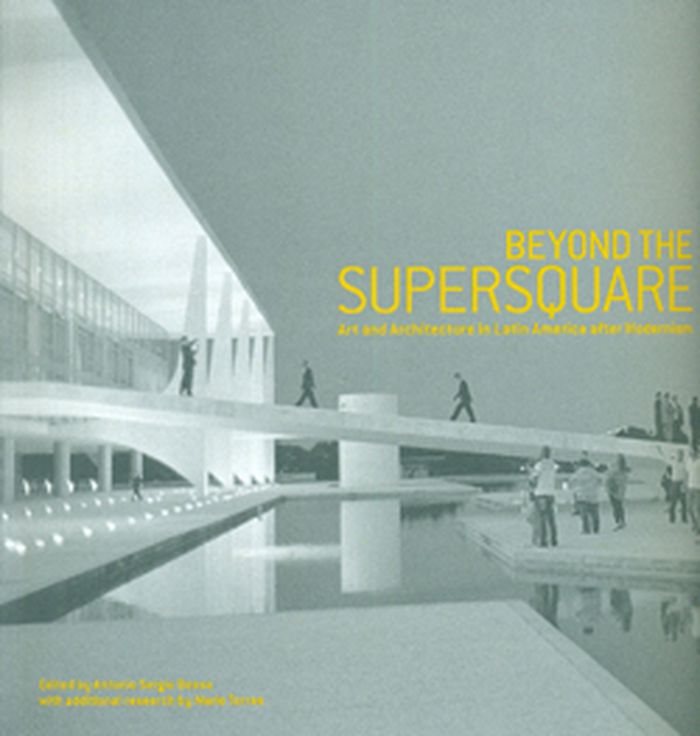
Beyond the Super-Square: Art and Architecture in Latin America After Modernism, which developed from a symposium presented by The Bronx Museum of the Arts in 2011, showcases original essays by distinguished Latin American architects, historians, and curators, whose research examines architecture and urban design practices in the region during a significant period of the(...)
$38.50
(available to order)
Summary:
Beyond the Super-Square: Art and Architecture in Latin America After Modernism, which developed from a symposium presented by The Bronx Museum of the Arts in 2011, showcases original essays by distinguished Latin American architects, historians, and curators, whose research examines architecture and urban design practices in the region during a significant period of the(...)
Subject:
Arch Southwest Asia & North Africa
Arch Southwest Asia & North Africa
Publication:
May 2014
May 2014
Title:
Beyond the supersquare: art and architecture in Latin America after Modernisme
Actions:
Price:
$38.50
(available to order)
Summary:
Beyond the Super-Square: Art and Architecture in Latin America After Modernism, which developed from a symposium presented by The Bronx Museum of the Arts in 2011, showcases original essays by distinguished Latin American architects, historians, and curators, whose research examines architecture and urban design practices in the region during a significant period of the twentieth century. Drawing from the exuberant architectural projects of the 1940s to the 1960s, as well as from socially engaged artistic practices of the present day, the essays in this collection reveal how the heroic visions and utopian ideals popular in architectural discourse during the modernist era bore complicated legacies for Latin America - the consequences of which are evident in such vastly uneven economic conditions and socially disparate societies found throughout the region today.
Beyond the supersquare: art and architecture in Latin America after Modernisme
Actions:
Price:
$38.50
(available to order)
Summary:
Beyond the Super-Square: Art and Architecture in Latin America After Modernism, which developed from a symposium presented by The Bronx Museum of the Arts in 2011, showcases original essays by distinguished Latin American architects, historians, and curators, whose research examines architecture and urban design practices in the region during a significant period of the twentieth century. Drawing from the exuberant architectural projects of the 1940s to the 1960s, as well as from socially engaged artistic practices of the present day, the essays in this collection reveal how the heroic visions and utopian ideals popular in architectural discourse during the modernist era bore complicated legacies for Latin America - the consequences of which are evident in such vastly uneven economic conditions and socially disparate societies found throughout the region today.
Form:
books
books
Publication:
May 2014
May 2014
Subject:
Arch Southwest Asia & North Africa
Arch Southwest Asia & North Africa
Form:
books
books
Title:
Saint-Pierre-des-Corps : Cité des temps industriels : architecture et urbanisme, XIXe-XXI siècle
Saint-Pierre-des-Corps : Cité des temps industriels : architecture et urbanisme, XIXe-XXI siècle
Actions:
Price:
$90.00
(available to order)
Summary:
Saint-Pierre-des-Corps apparaît comme une ville de passage, tapie entre la Loire et le Cher, irriguée par le chemin de fer, démarquée de Tours par une autoroute. Née avec l’industrie, la cité ne compte qu’un monument historique: une locomotive à vapeur, la Pacific Chapelon 231 E 41. La ville des ouvriers et des cheminots recèle pourtant bien d’autres trésors industriels,(...)
$90.00
(available to order)
Summary:
Saint-Pierre-des-Corps apparaît comme une ville de passage, tapie entre la Loire et le Cher, irriguée par le chemin de fer, démarquée de Tours par une autoroute. Née avec l’industrie, la cité ne compte qu’un monument historique: une locomotive à vapeur, la Pacific Chapelon 231 E 41. La ville des ouvriers et des cheminots recèle pourtant bien d’autres trésors industriels,(...)
Title:
Saint-Pierre-des-Corps : Cité des temps industriels : architecture et urbanisme, XIXe-XXI siècle
Actions:
Price:
$90.00
(available to order)
Summary:
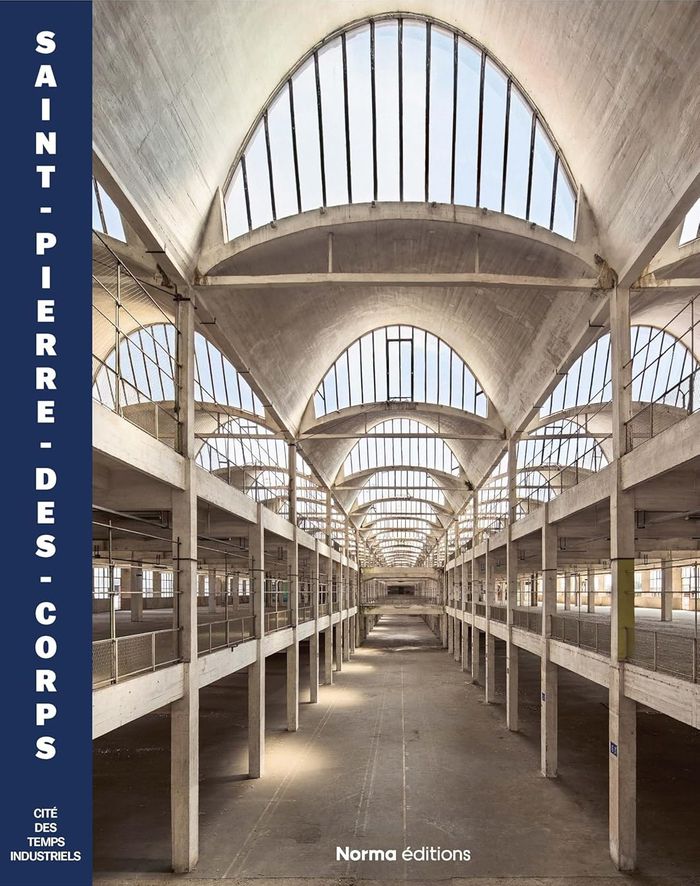
Saint-Pierre-des-Corps apparaît comme une ville de passage, tapie entre la Loire et le Cher, irriguée par le chemin de fer, démarquée de Tours par une autoroute. Née avec l’industrie, la cité ne compte qu’un monument historique: une locomotive à vapeur, la Pacific Chapelon 231 E 41. La ville des ouvriers et des cheminots recèle pourtant bien d’autres trésors industriels, comme l’usine Doubinski ou l’immense nef de béton armé de l’ancien Magasin général de la SNCF. C’est aussi une ville de mémoire. Détruite lors des deux guerres, elle a été reconstruite par des architectes sensibles et cultivés comme Jean-Marie Hardion, Emile Labadie, puis Jean Dorian qui ont recréé un habitat peu dense, semé de squares et de jardins. Derrière la ville moderne perdurent les puits, les maraîchages de jadis et les rottes, ces chemins furtifs mènent à des jardins cachés. Saint-Pierre-des-Corps est aussi un espace de création.
Saint-Pierre-des-Corps : Cité des temps industriels : architecture et urbanisme, XIXe-XXI siècle
Actions:
Price:
$90.00
(available to order)
Summary:
Saint-Pierre-des-Corps apparaît comme une ville de passage, tapie entre la Loire et le Cher, irriguée par le chemin de fer, démarquée de Tours par une autoroute. Née avec l’industrie, la cité ne compte qu’un monument historique: une locomotive à vapeur, la Pacific Chapelon 231 E 41. La ville des ouvriers et des cheminots recèle pourtant bien d’autres trésors industriels, comme l’usine Doubinski ou l’immense nef de béton armé de l’ancien Magasin général de la SNCF. C’est aussi une ville de mémoire. Détruite lors des deux guerres, elle a été reconstruite par des architectes sensibles et cultivés comme Jean-Marie Hardion, Emile Labadie, puis Jean Dorian qui ont recréé un habitat peu dense, semé de squares et de jardins. Derrière la ville moderne perdurent les puits, les maraîchages de jadis et les rottes, ces chemins furtifs mènent à des jardins cachés. Saint-Pierre-des-Corps est aussi un espace de création.
Form:
books
books
Publication:
March 2025
March 2025
Subject:
Urban Theory
Urban Theory


