


5473 Results
Form:
books
books
Actions:
Price:
$67.95
(available to order)
Summary:
Ces albums thématiques sont le résultat du travail mené par le Centre de recherches sur les monuments historiques (CRMH) de la direction générale du Patrimoine. Ils fournissent une documentation photographique et dessinée (plans, coupes, élévations, détails d’assemblage) sur les divers aspects techniques de la construction ancienne et plus particulièrement du second œuvre(...)
$67.95
(available to order)
Summary:
Ces albums thématiques sont le résultat du travail mené par le Centre de recherches sur les monuments historiques (CRMH) de la direction générale du Patrimoine. Ils fournissent une documentation photographique et dessinée (plans, coupes, élévations, détails d’assemblage) sur les divers aspects techniques de la construction ancienne et plus particulièrement du second œuvre(...)
Publication:
August 2015
August 2015
Title:
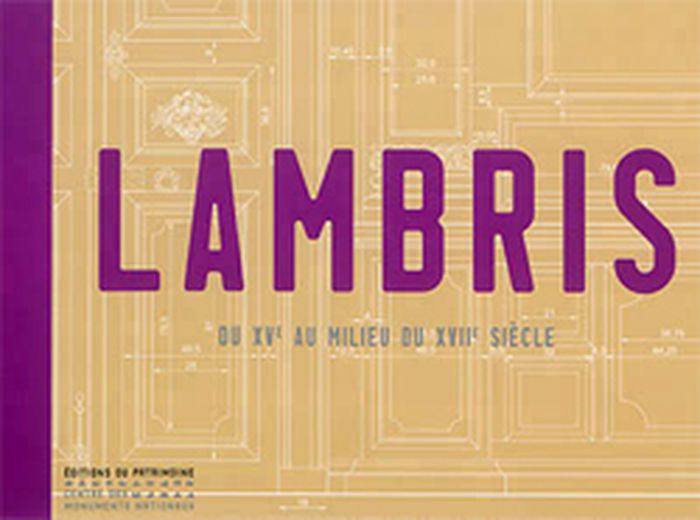
Lambris: du XVe siècle au XVIIe siècle
Actions:
Price:
$67.95
(available to order)
Summary:
Ces albums thématiques sont le résultat du travail mené par le Centre de recherches sur les monuments historiques (CRMH) de la direction générale du Patrimoine. Ils fournissent une documentation photographique et dessinée (plans, coupes, élévations, détails d’assemblage) sur les divers aspects techniques de la construction ancienne et plus particulièrement du second œuvre (maçonnerie, charpenterie, menuiserie, serrurerie). Ils s’adressent principalement aux architectes, artisans et décorateurs dans le cadre de restaurations, mais aussi aux historiens des savoirs-faire traditionnels et aux amateurs soucieux de conservation.
Lambris: du XVe siècle au XVIIe siècle
Actions:
Price:
$67.95
(available to order)
Summary:
Ces albums thématiques sont le résultat du travail mené par le Centre de recherches sur les monuments historiques (CRMH) de la direction générale du Patrimoine. Ils fournissent une documentation photographique et dessinée (plans, coupes, élévations, détails d’assemblage) sur les divers aspects techniques de la construction ancienne et plus particulièrement du second œuvre (maçonnerie, charpenterie, menuiserie, serrurerie). Ils s’adressent principalement aux architectes, artisans et décorateurs dans le cadre de restaurations, mais aussi aux historiens des savoirs-faire traditionnels et aux amateurs soucieux de conservation.
Form:
books
books
Publication:
August 2015
August 2015
Form:
books
books
Title:
Prisons must fall
Prisons must fall
Actions:
Price:
$29.50
(available to order)
Summary:
From Mariame Kaba, New York Times-bestselling author of "We do this ‘til we free us," and social worker Jane Ball comes a powerful book showing the harm that prisons cause and exploring alternatives, illustrated by Olly Costello. On a moonlit road, tucked away from prying eyes, a child sees a prison complex-- cinder blocks, watch towers, barbed wire. Page by page, we come(...)
$29.50
(available to order)
Summary:
From Mariame Kaba, New York Times-bestselling author of "We do this ‘til we free us," and social worker Jane Ball comes a powerful book showing the harm that prisons cause and exploring alternatives, illustrated by Olly Costello. On a moonlit road, tucked away from prying eyes, a child sees a prison complex-- cinder blocks, watch towers, barbed wire. Page by page, we come(...)
Title:
Prisons must fall
Actions:
Price:
$29.50
(available to order)
Summary:
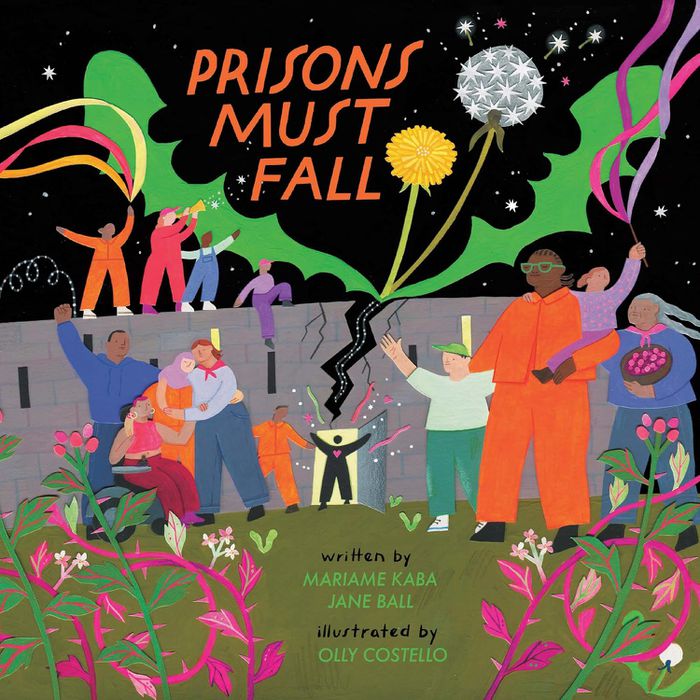
From Mariame Kaba, New York Times-bestselling author of "We do this ‘til we free us," and social worker Jane Ball comes a powerful book showing the harm that prisons cause and exploring alternatives, illustrated by Olly Costello. On a moonlit road, tucked away from prying eyes, a child sees a prison complex-- cinder blocks, watch towers, barbed wire. Page by page, we come to see the prison as a child sees it. Prisons hurt people and leave them lonely, without loved ones to comfort them or lend a listening ear. As dandelion stars float up in the air, this dreamscape becomes a hope-scape, where love transcends the prison walls. All the families and friends of the people in the prison march and protest in beautiful song, march together to a new way and a new dawn-- in this case a cooperative housing and community center, next to a neighborhood greenhouse for restoration and healing. A new world, where connection and repair are fundamental, and even tangible, as people around a table quilt messages, “I hear you. I’m sorry for what I did. How can I make it better?” In "Prisons must fall," Mariame Kaba, a longtime activist, together with co-author Jane Ball, present solutions that do not involve incarceration, such as meeting people’s basic needs, restorative justice, and community support-- seeds for a safe world.
Prisons must fall
Actions:
Price:
$29.50
(available to order)
Summary:
From Mariame Kaba, New York Times-bestselling author of "We do this ‘til we free us," and social worker Jane Ball comes a powerful book showing the harm that prisons cause and exploring alternatives, illustrated by Olly Costello. On a moonlit road, tucked away from prying eyes, a child sees a prison complex-- cinder blocks, watch towers, barbed wire. Page by page, we come to see the prison as a child sees it. Prisons hurt people and leave them lonely, without loved ones to comfort them or lend a listening ear. As dandelion stars float up in the air, this dreamscape becomes a hope-scape, where love transcends the prison walls. All the families and friends of the people in the prison march and protest in beautiful song, march together to a new way and a new dawn-- in this case a cooperative housing and community center, next to a neighborhood greenhouse for restoration and healing. A new world, where connection and repair are fundamental, and even tangible, as people around a table quilt messages, “I hear you. I’m sorry for what I did. How can I make it better?” In "Prisons must fall," Mariame Kaba, a longtime activist, together with co-author Jane Ball, present solutions that do not involve incarceration, such as meeting people’s basic needs, restorative justice, and community support-- seeds for a safe world.
Form:
books
books
Publication:
April 2025
April 2025
Subject:
Children's Books
Children's Books
Form:
books
books
Title:
The Dolder Grand
The Dolder Grand
Actions:
Price:
$199.99
(available to order)
Summary:
In 2009, the Dolder Grand celebrates its first birthday following a four-year remodelling by Foster+Partners. To mark the occasion, this publication outlines the history of an iconic institution, steeped in tradition, from its beginnings as a Kurhaus in 1899 to its present-day reincarnation. Photographers from the Zurich studio nave have documented the entire project(...)
$199.99
(available to order)
Summary:
In 2009, the Dolder Grand celebrates its first birthday following a four-year remodelling by Foster+Partners. To mark the occasion, this publication outlines the history of an iconic institution, steeped in tradition, from its beginnings as a Kurhaus in 1899 to its present-day reincarnation. Photographers from the Zurich studio nave have documented the entire project(...)
Title:
The Dolder Grand
Actions:
Price:
$199.99
(available to order)
Summary:
In 2009, the Dolder Grand celebrates its first birthday following a four-year remodelling by Foster+Partners. To mark the occasion, this publication outlines the history of an iconic institution, steeped in tradition, from its beginnings as a Kurhaus in 1899 to its present-day reincarnation. Photographers from the Zurich studio nave have documented the entire project throughout every stage of the refurbishment, charting the scope of the hotel’s metamorphosis. They portray the people who made it all possible and also allow them to speak for themselves. The resulting narrative in pictures and words is not simply a linear documentation, but a rich and complex tapestry in which text and image are interwoven with a lyricism that brings the architecture to life on the pages of the book. Journalist Judith Wyder complements the photographs with anecdotes that give a many-facetted insight into the operational logistics behind the scenes in the day-to-day running of the hotel. In addition, she details the painstaking restoration work, the history of the hotel itself and the names of some of its most famous guests. Dutch novelist Cees Nooteboom has contributed an essay in which he describes the hotel as a microcosm and a home away from home, musing on how guests tend to take possession of the hotels they stay in.
The Dolder Grand
Actions:
Price:
$199.99
(available to order)
Summary:
In 2009, the Dolder Grand celebrates its first birthday following a four-year remodelling by Foster+Partners. To mark the occasion, this publication outlines the history of an iconic institution, steeped in tradition, from its beginnings as a Kurhaus in 1899 to its present-day reincarnation. Photographers from the Zurich studio nave have documented the entire project throughout every stage of the refurbishment, charting the scope of the hotel’s metamorphosis. They portray the people who made it all possible and also allow them to speak for themselves. The resulting narrative in pictures and words is not simply a linear documentation, but a rich and complex tapestry in which text and image are interwoven with a lyricism that brings the architecture to life on the pages of the book. Journalist Judith Wyder complements the photographs with anecdotes that give a many-facetted insight into the operational logistics behind the scenes in the day-to-day running of the hotel. In addition, she details the painstaking restoration work, the history of the hotel itself and the names of some of its most famous guests. Dutch novelist Cees Nooteboom has contributed an essay in which he describes the hotel as a microcosm and a home away from home, musing on how guests tend to take possession of the hotels they stay in.
Form:
books
books
Publication:
July 2009
July 2009
Subject:
Architecture Monographs
Architecture Monographs
Form:
books
books
Actions:
Price:
$33.95
(available to order)
Summary:
American cities, once economic and social launch pads for their residents, are all too often plagued by poverty and decay. One need only to look at the ruins of Detroit to see how far some once-great cities have fallen, or to Boston and San Francisco for evidence that such decline is reversible. In Boom Towns, Stephen J.K. Walters diagnoses the root causes of urban(...)
$33.95
(available to order)
Summary:
American cities, once economic and social launch pads for their residents, are all too often plagued by poverty and decay. One need only to look at the ruins of Detroit to see how far some once-great cities have fallen, or to Boston and San Francisco for evidence that such decline is reversible. In Boom Towns, Stephen J.K. Walters diagnoses the root causes of urban(...)
Title:
Boom towns: restoring the urban american dream
Actions:
Price:
$33.95
(available to order)
Summary:
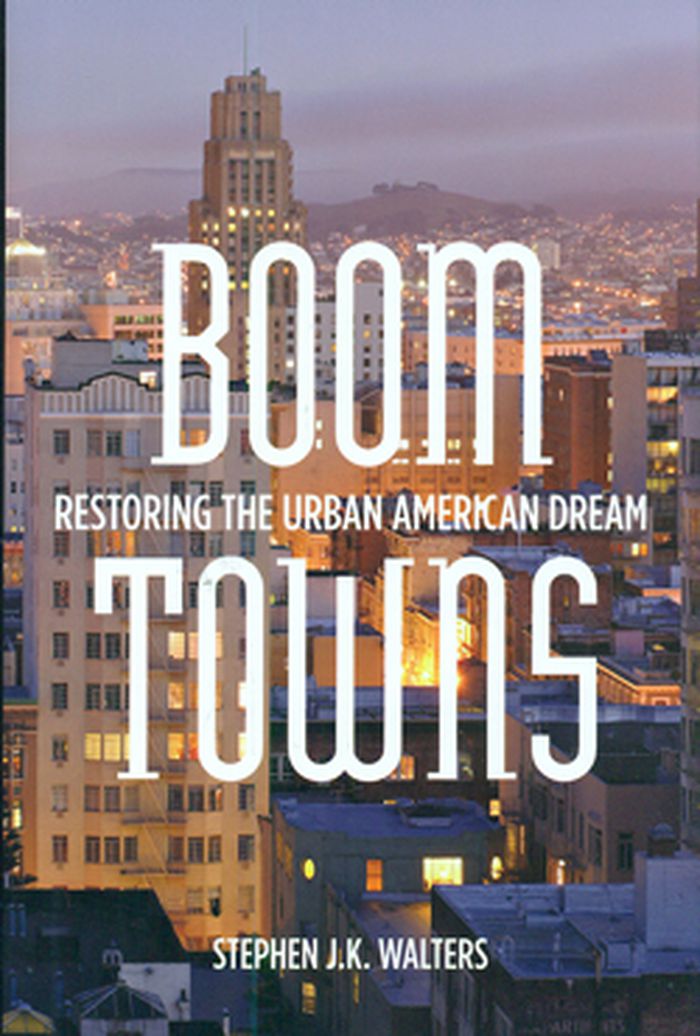
American cities, once economic and social launch pads for their residents, are all too often plagued by poverty and decay. One need only to look at the ruins of Detroit to see how far some once-great cities have fallen, or to Boston and San Francisco for evidence that such decline is reversible. In Boom Towns, Stephen J.K. Walters diagnoses the root causes of urban decline in order to prescribe remedies that will enable cities to thrive once again. Arguing that commonplace explanations for urban decay misunderstand the nature our towns, Walters reconceives of cities as dense accumulations of capital in all of its forms — places that attract people by making their labor more productive and their leisure more pleasurable. Policymakers, therefore, must properly define and enforce property rights in order to prevent the flight of capital and the resulting demise of urban centers. Using vivid evocations of iconic towns and the people who crucially affected their destinies, Walters shows how public policy measures which aim to revitalize often do more harm than good. He then outlines a more promising set of policies to remedy the capital shortage that continues to afflict many cities and needlessly limit their residents' opportunities. With its fresh interpretation of one of the American quandaries of our day, Boom Towns offers a novel contribution to the debate about American cities and a program for their restoration.
Boom towns: restoring the urban american dream
Actions:
Price:
$33.95
(available to order)
Summary:
American cities, once economic and social launch pads for their residents, are all too often plagued by poverty and decay. One need only to look at the ruins of Detroit to see how far some once-great cities have fallen, or to Boston and San Francisco for evidence that such decline is reversible. In Boom Towns, Stephen J.K. Walters diagnoses the root causes of urban decline in order to prescribe remedies that will enable cities to thrive once again. Arguing that commonplace explanations for urban decay misunderstand the nature our towns, Walters reconceives of cities as dense accumulations of capital in all of its forms — places that attract people by making their labor more productive and their leisure more pleasurable. Policymakers, therefore, must properly define and enforce property rights in order to prevent the flight of capital and the resulting demise of urban centers. Using vivid evocations of iconic towns and the people who crucially affected their destinies, Walters shows how public policy measures which aim to revitalize often do more harm than good. He then outlines a more promising set of policies to remedy the capital shortage that continues to afflict many cities and needlessly limit their residents' opportunities. With its fresh interpretation of one of the American quandaries of our day, Boom Towns offers a novel contribution to the debate about American cities and a program for their restoration.
Form:
books
books
Publication:
September 2014
September 2014
Subject:
Urban Theory
Urban Theory
Form:
books
books
Price:
$60.00
(available in store)
Summary:
The new volume in the series “from the Collection”, by André Tavares and Susanne Cotter, presents the documentary spectrum that makes up the Álvaro Siza Archive, recently integrated into the Serralves Collection. Taken as raw material to build knowledge and generate a new understanding of Siza's work, the Archive reveals the incessant use of drawing as a working tool,(...)
$60.00
(available in store)
Summary:
The new volume in the series “from the Collection”, by André Tavares and Susanne Cotter, presents the documentary spectrum that makes up the Álvaro Siza Archive, recently integrated into the Serralves Collection. Taken as raw material to build knowledge and generate a new understanding of Siza's work, the Archive reveals the incessant use of drawing as a working tool,(...)
Publication:
January 2018
January 2018
Title:
Materia-prima / Raw material : a view of Álvaro Siza's archive
Actions:
Price:
$60.00
(available in store)
Summary:
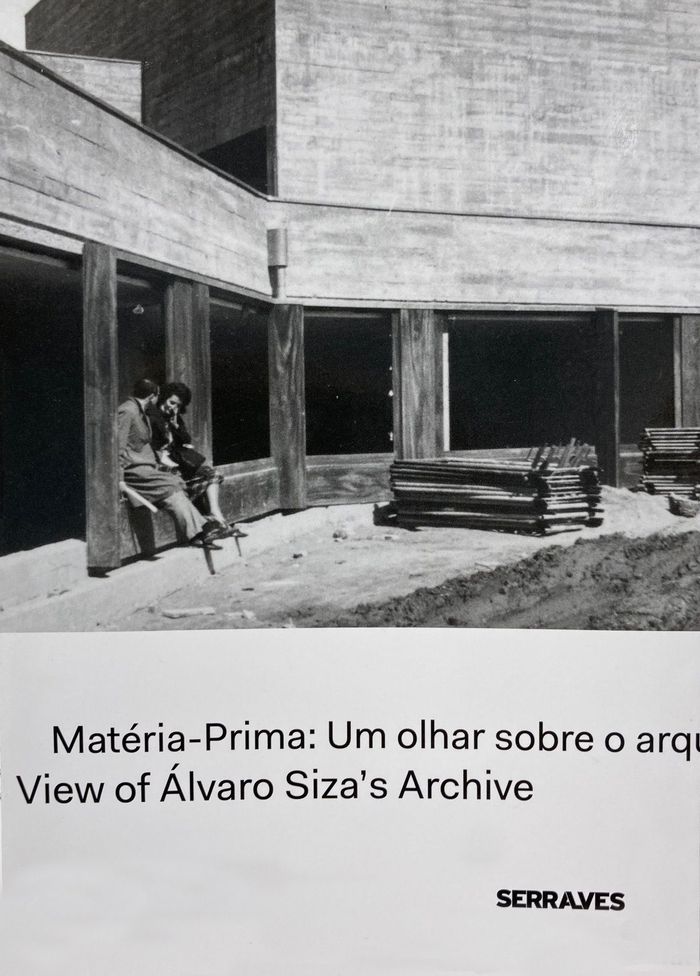
The new volume in the series “from the Collection”, by André Tavares and Susanne Cotter, presents the documentary spectrum that makes up the Álvaro Siza Archive, recently integrated into the Serralves Collection. Taken as raw material to build knowledge and generate a new understanding of Siza's work, the Archive reveals the incessant use of drawing as a working tool, the prefiguration of forms and spaces through sketch and technical drawing in a process of successive approximation to the desired result. But it also reveals various documentation — correspondence with clients, photographic records of places waiting for the works, opinions of the multiple actors involved in the construction processes, minutes of meetings and reports of tensions in the construction sites — which testify to an infinity of episodes that, despite invisible in the constructed work, contribute to the definition of a unique practice. Álvaro Siza is one of the most emblematic architects of the 20th century, and one of the names with which Portugal is associated in any part of the world, winner of the Pritzker Prize in 1992. It was in 1991 that Álvaro Siza was invited to design the Museum of Art Contemporary by Serralves, which opened in 1999. In 2019, he completed the architectural project for the Casa do Cinema Manoel de Oliveira and in 2021 the restoration and adaptation of the Casa de Serralves. Maintaining, until today, a collaborative relationship with the institution and its programming.
Materia-prima / Raw material : a view of Álvaro Siza's archive
Actions:
Price:
$60.00
(available in store)
Summary:
The new volume in the series “from the Collection”, by André Tavares and Susanne Cotter, presents the documentary spectrum that makes up the Álvaro Siza Archive, recently integrated into the Serralves Collection. Taken as raw material to build knowledge and generate a new understanding of Siza's work, the Archive reveals the incessant use of drawing as a working tool, the prefiguration of forms and spaces through sketch and technical drawing in a process of successive approximation to the desired result. But it also reveals various documentation — correspondence with clients, photographic records of places waiting for the works, opinions of the multiple actors involved in the construction processes, minutes of meetings and reports of tensions in the construction sites — which testify to an infinity of episodes that, despite invisible in the constructed work, contribute to the definition of a unique practice. Álvaro Siza is one of the most emblematic architects of the 20th century, and one of the names with which Portugal is associated in any part of the world, winner of the Pritzker Prize in 1992. It was in 1991 that Álvaro Siza was invited to design the Museum of Art Contemporary by Serralves, which opened in 1999. In 2019, he completed the architectural project for the Casa do Cinema Manoel de Oliveira and in 2021 the restoration and adaptation of the Casa de Serralves. Maintaining, until today, a collaborative relationship with the institution and its programming.
Form:
books
books
Publication:
January 2018
January 2018
Form:
books
books
Actions:
Price:
$30.00
(available to order)
Summary:
Amidst city concrete and suburban sprawl, Americans are discovering new ways to reconnect with the natural world. From community gardens in New York's Lower East Side to homeless shelters in California, the search for a more sustainable future has led grassroots groups to a profound reconnection to place and to the natural world. Studies of the health consequences of(...)
$30.00
(available to order)
Summary:
Amidst city concrete and suburban sprawl, Americans are discovering new ways to reconnect with the natural world. From community gardens in New York's Lower East Side to homeless shelters in California, the search for a more sustainable future has led grassroots groups to a profound reconnection to place and to the natural world. Studies of the health consequences of(...)
Title:
Urban place : reconnecting with the natural world
Actions:
Price:
$30.00
(available to order)
Summary:
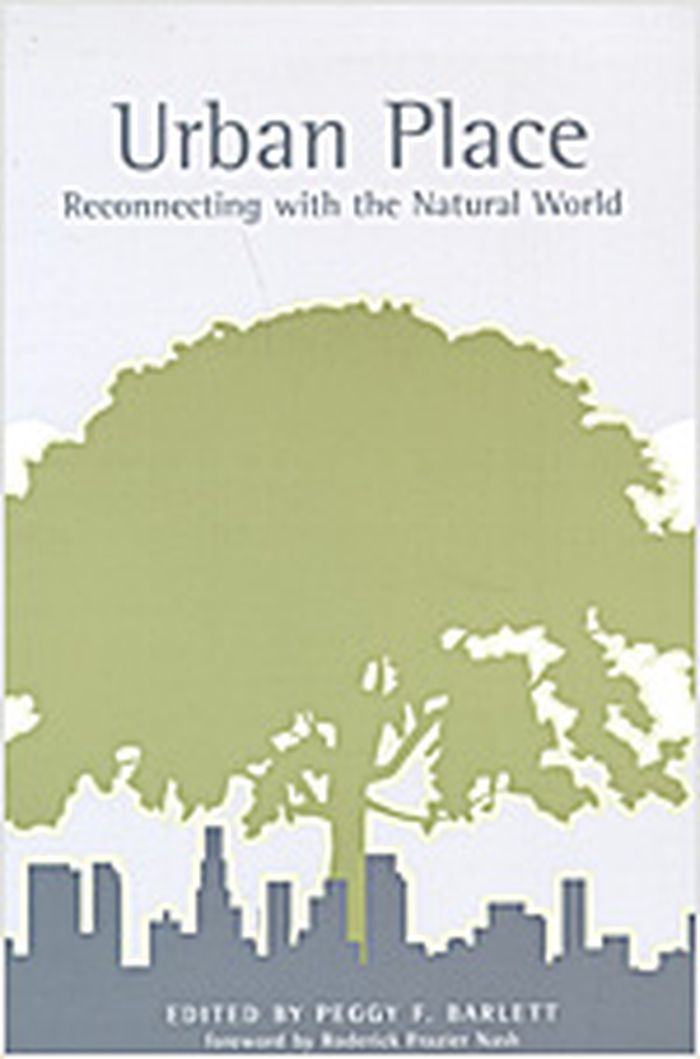
Amidst city concrete and suburban sprawl, Americans are discovering new ways to reconnect with the natural world. From community gardens in New York's Lower East Side to homeless shelters in California, the search for a more sustainable future has led grassroots groups to a profound reconnection to place and to the natural world. Studies of the health consequences of renewing a connection with nature support the urgency of providing green surroundings as cities expand and the majority of the earth's population lives in urban areas. Medical research results, from groups as diverse as healthy volunteers, surgery patients, and heart attack survivors, suggest that contact with nature may improve health and well-being. Engagement with nearby natural places also provides restoration from mental fatigue and support for more resilient and cooperative behavior. Aspects of stronger community life are fostered by access to nature, suggesting that there are significant social as well as physical and psychological benefits from connection with the natural world. This volume brings together research from anthropology, sociology, public health, psychology, and landscape architecture to highlight how awareness of locale and a meaningful renewal of attachment with the earth are connected to delight in learning about nature as well as to civic action and new forms of community. Community garden coalitions, organic market advocates, and greenspace preservationists resist the power of global forces, enacting visions of a different future. Their creative efforts tell a story of a constructive and dynamic middle ground between private plots and public action, between human health and ecosystem health, between individual attachment and urban sustainability.
Urban place : reconnecting with the natural world
Actions:
Price:
$30.00
(available to order)
Summary:
Amidst city concrete and suburban sprawl, Americans are discovering new ways to reconnect with the natural world. From community gardens in New York's Lower East Side to homeless shelters in California, the search for a more sustainable future has led grassroots groups to a profound reconnection to place and to the natural world. Studies of the health consequences of renewing a connection with nature support the urgency of providing green surroundings as cities expand and the majority of the earth's population lives in urban areas. Medical research results, from groups as diverse as healthy volunteers, surgery patients, and heart attack survivors, suggest that contact with nature may improve health and well-being. Engagement with nearby natural places also provides restoration from mental fatigue and support for more resilient and cooperative behavior. Aspects of stronger community life are fostered by access to nature, suggesting that there are significant social as well as physical and psychological benefits from connection with the natural world. This volume brings together research from anthropology, sociology, public health, psychology, and landscape architecture to highlight how awareness of locale and a meaningful renewal of attachment with the earth are connected to delight in learning about nature as well as to civic action and new forms of community. Community garden coalitions, organic market advocates, and greenspace preservationists resist the power of global forces, enacting visions of a different future. Their creative efforts tell a story of a constructive and dynamic middle ground between private plots and public action, between human health and ecosystem health, between individual attachment and urban sustainability.
Form:
books
books
Publication:
January 1900, Cambridge, London
January 1900, Cambridge, London
Subject:
Urban Theory
Urban Theory
Form:
books
books
Actions:
Price:
$29.95
(available to order)
Summary:
In this publication, the Indonesian architectural and urban historian Abidin Kusno explores the connections between the built environment and political consciousness in Indonesia during the colonial and postcolonial eras. Focusing primarily on Jakarta, he describes how perceptions of the past, anxieties about the rapid pace of change in the present, and hopes for the(...)
$29.95
(available to order)
Summary:
In this publication, the Indonesian architectural and urban historian Abidin Kusno explores the connections between the built environment and political consciousness in Indonesia during the colonial and postcolonial eras. Focusing primarily on Jakarta, he describes how perceptions of the past, anxieties about the rapid pace of change in the present, and hopes for the(...)
Title:
The appearances of memory : mnemonic practices of architecture and urban form in Indonesia
Actions:
Price:
$29.95
(available to order)
Summary:
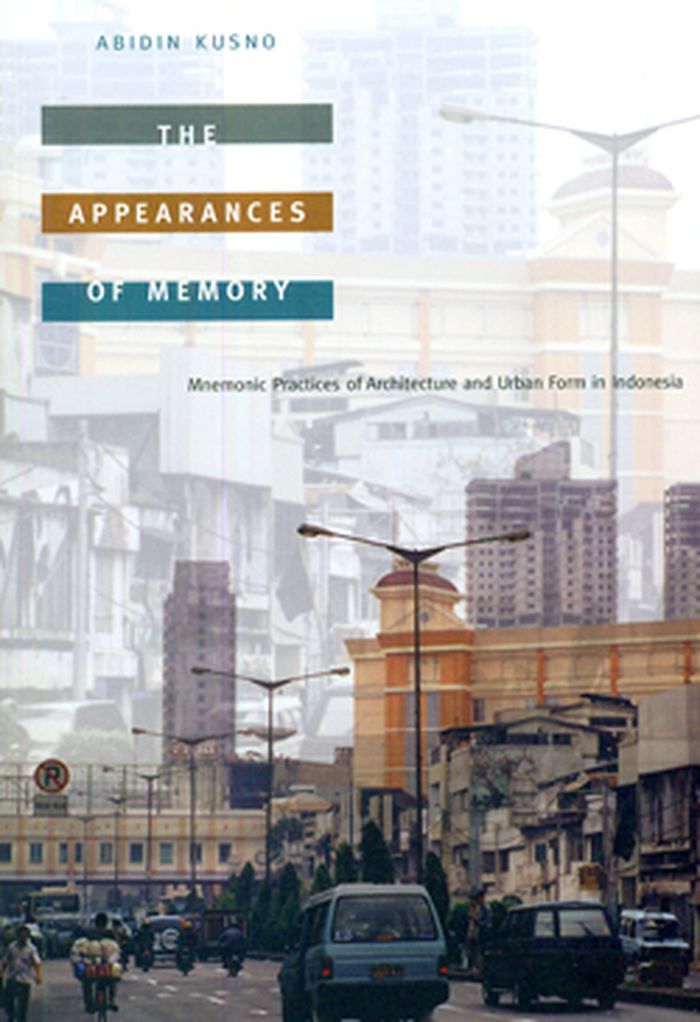
In this publication, the Indonesian architectural and urban historian Abidin Kusno explores the connections between the built environment and political consciousness in Indonesia during the colonial and postcolonial eras. Focusing primarily on Jakarta, he describes how perceptions of the past, anxieties about the rapid pace of change in the present, and hopes for the future have been embodied in architecture and urban space at different historical moments. He argues that the built environment serves as a reminder of the practices of the past and an instantiation of the desire to remake oneself within, as well as beyond, one’s particular time and place. Addressing developments in Indonesia since the fall of President Suharto’s regime in 1998, Kusno delves into such topics as the domestication of traumatic violence and the restoration of order in the urban space, the intense interest in urban history in contemporary Indonesia, and the implications of "superblocks", large urban complexes consisting of residences, offices, shops, and entertainment venues. Moving farther back in time, he examines how Indonesian architects reinvented colonial architectural styles to challenge the political culture of the state, how colonial structures such as railway and commercial buildings created a new, politically charged cognitive map of cities in Java in the early twentieth century, and how the Dutch, in attempting to quell dissent, imposed a distinctive urban visual order in the 1930s. Finally, the present and the past meet in his long-term considerations of how Java has responded to the global flow of Islamic architecture, and how the meanings of Indonesian gatehouses have changed and persisted over time.
The appearances of memory : mnemonic practices of architecture and urban form in Indonesia
Actions:
Price:
$29.95
(available to order)
Summary:
In this publication, the Indonesian architectural and urban historian Abidin Kusno explores the connections between the built environment and political consciousness in Indonesia during the colonial and postcolonial eras. Focusing primarily on Jakarta, he describes how perceptions of the past, anxieties about the rapid pace of change in the present, and hopes for the future have been embodied in architecture and urban space at different historical moments. He argues that the built environment serves as a reminder of the practices of the past and an instantiation of the desire to remake oneself within, as well as beyond, one’s particular time and place. Addressing developments in Indonesia since the fall of President Suharto’s regime in 1998, Kusno delves into such topics as the domestication of traumatic violence and the restoration of order in the urban space, the intense interest in urban history in contemporary Indonesia, and the implications of "superblocks", large urban complexes consisting of residences, offices, shops, and entertainment venues. Moving farther back in time, he examines how Indonesian architects reinvented colonial architectural styles to challenge the political culture of the state, how colonial structures such as railway and commercial buildings created a new, politically charged cognitive map of cities in Java in the early twentieth century, and how the Dutch, in attempting to quell dissent, imposed a distinctive urban visual order in the 1930s. Finally, the present and the past meet in his long-term considerations of how Java has responded to the global flow of Islamic architecture, and how the meanings of Indonesian gatehouses have changed and persisted over time.
Form:
books
books
Publication:
April 2010
April 2010
Subject:
History until 1900, Asia
History until 1900, Asia
Form:
books
books
Actions:
Price:
$109.00
(available in store)
Summary:
The book describes the history of the construction of the original factory, on the other, its architectural restoration and transformation. Attention is paid to the history of the Van Nelle Company and its relation to the dynamic development of the harbour of Rotterdam. The inspirations and the life of director and patron Kees van der Leeuw are dealt with in some detail,(...)
$109.00
(available in store)
Summary:
The book describes the history of the construction of the original factory, on the other, its architectural restoration and transformation. Attention is paid to the history of the Van Nelle Company and its relation to the dynamic development of the harbour of Rotterdam. The inspirations and the life of director and patron Kees van der Leeuw are dealt with in some detail,(...)
Title:
Van Nelle : monument in progress
Actions:
Price:
$109.00
(available in store)
Summary:
The book describes the history of the construction of the original factory, on the other, its architectural restoration and transformation. Attention is paid to the history of the Van Nelle Company and its relation to the dynamic development of the harbour of Rotterdam. The inspirations and the life of director and patron Kees van der Leeuw are dealt with in some detail, and for the first time, the architecture, in which Van der Leeuw was involved, is positioned in a broader spiritual context. The design of the factory was not purely functional, but forms and colours seem to reflect a theosophical search for a higher level, which comes out, for one, in the analysis of the interiors. In addition to the illuminating descriptions of the construction process, shown in many contemporary photographs, the book examines the evolving social aspects of the time, the working conditions of the factory personnel and the well thought out logistics of the production process. The entire production process is reconstructed in a large fold-out drawing. The book also gives a great deal of consideration to influence of photography on the conceptualization of the complex and the questions that architectural historians have been posing for years. For example, the question of whether or not Mart Stam was the actual author of Van Nelle is answered in substantial detail. The problems of the modern day monument and the role of building conservation, the developer and the modern day architect are given considerable thought. In addition, the book describes the design of the old and new outdoor spaces in the complex.
Van Nelle : monument in progress
Actions:
Price:
$109.00
(available in store)
Summary:
The book describes the history of the construction of the original factory, on the other, its architectural restoration and transformation. Attention is paid to the history of the Van Nelle Company and its relation to the dynamic development of the harbour of Rotterdam. The inspirations and the life of director and patron Kees van der Leeuw are dealt with in some detail, and for the first time, the architecture, in which Van der Leeuw was involved, is positioned in a broader spiritual context. The design of the factory was not purely functional, but forms and colours seem to reflect a theosophical search for a higher level, which comes out, for one, in the analysis of the interiors. In addition to the illuminating descriptions of the construction process, shown in many contemporary photographs, the book examines the evolving social aspects of the time, the working conditions of the factory personnel and the well thought out logistics of the production process. The entire production process is reconstructed in a large fold-out drawing. The book also gives a great deal of consideration to influence of photography on the conceptualization of the complex and the questions that architectural historians have been posing for years. For example, the question of whether or not Mart Stam was the actual author of Van Nelle is answered in substantial detail. The problems of the modern day monument and the role of building conservation, the developer and the modern day architect are given considerable thought. In addition, the book describes the design of the old and new outdoor spaces in the complex.
Form:
books
books
Publication:
January 2005, Rotterdam
January 2005, Rotterdam
Subject:
Architecture Monographs
Architecture Monographs
Form:
books
books
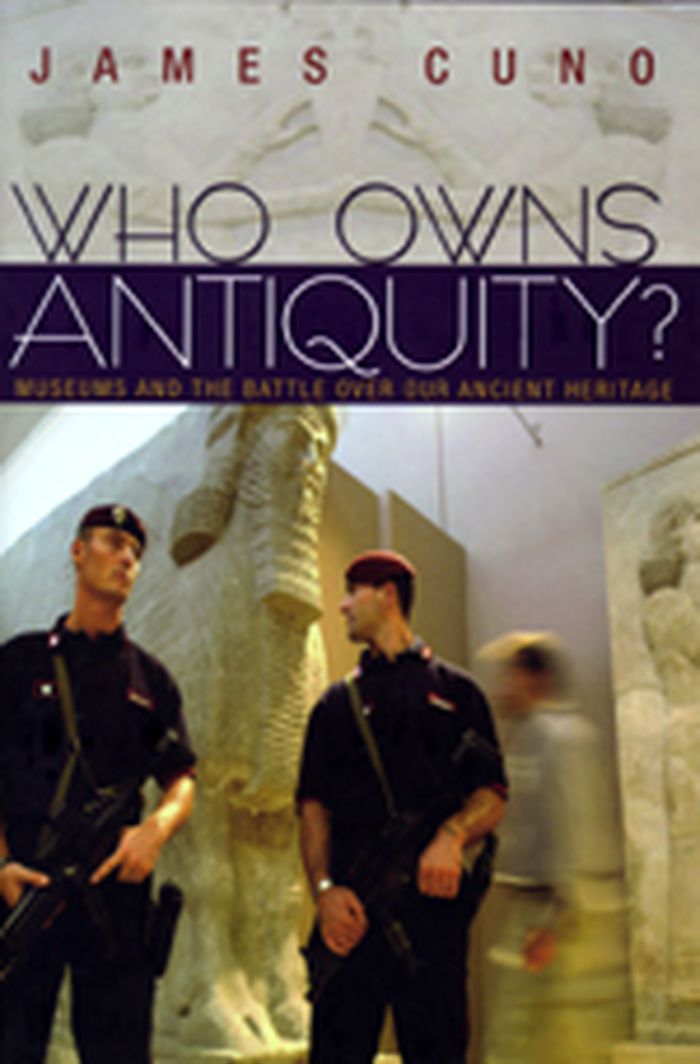
Title:
Who owns antiquity?
Who owns antiquity?
Actions:
Price:
$24.95
(available to order)
Summary:
Whether antiquities should be returned to the countries where they were found is one of the most urgent and controversial issues in the art world today, and it has pitted museums, private collectors, and dealers against source countries, archaeologists, and academics. Maintaining that the acquisition of undocumented antiquities by museums encourages the looting of(...)
$24.95
(available to order)
Summary:
Whether antiquities should be returned to the countries where they were found is one of the most urgent and controversial issues in the art world today, and it has pitted museums, private collectors, and dealers against source countries, archaeologists, and academics. Maintaining that the acquisition of undocumented antiquities by museums encourages the looting of(...)
Title:
Who owns antiquity?
Actions:
Price:
$24.95
(available to order)
Summary:
Whether antiquities should be returned to the countries where they were found is one of the most urgent and controversial issues in the art world today, and it has pitted museums, private collectors, and dealers against source countries, archaeologists, and academics. Maintaining that the acquisition of undocumented antiquities by museums encourages the looting of archaeological sites, countries such as Italy, Greece, Egypt, Turkey, and China have claimed ancient artifacts as state property, called for their return from museums around the world, and passed laws against their future export. But in Who Owns Antiquity?, one of the world's leading museum directors vigorously challenges this nationalistic position, arguing that it is damaging and often disingenuous. "Antiquities," James Cuno argues, "are the cultural property of all humankind," "evidence of the world's ancient past and not that of a particular modern nation. They comprise antiquity, and antiquity knows no borders." Cuno argues that nationalistic retention and reclamation policies impede common access to this common heritage and encourage a dubious and dangerous politicization of antiquities--and of culture itself. Antiquities need to be protected from looting but also from nationalistic identity politics. To do this, Cuno calls for measures to broaden rather than restrict international access to antiquities. He advocates restoration of the system under which source countries would share newly discovered artifacts in exchange for archaeological help, and he argues that museums should again be allowed reasonable ways to acquire undocumented antiquities. The first extended defense of the side of museums in the struggle over antiquities, Who Owns Antiquity? is sure to be as important as it is controversial.
Who owns antiquity?
Actions:
Price:
$24.95
(available to order)
Summary:
Whether antiquities should be returned to the countries where they were found is one of the most urgent and controversial issues in the art world today, and it has pitted museums, private collectors, and dealers against source countries, archaeologists, and academics. Maintaining that the acquisition of undocumented antiquities by museums encourages the looting of archaeological sites, countries such as Italy, Greece, Egypt, Turkey, and China have claimed ancient artifacts as state property, called for their return from museums around the world, and passed laws against their future export. But in Who Owns Antiquity?, one of the world's leading museum directors vigorously challenges this nationalistic position, arguing that it is damaging and often disingenuous. "Antiquities," James Cuno argues, "are the cultural property of all humankind," "evidence of the world's ancient past and not that of a particular modern nation. They comprise antiquity, and antiquity knows no borders." Cuno argues that nationalistic retention and reclamation policies impede common access to this common heritage and encourage a dubious and dangerous politicization of antiquities--and of culture itself. Antiquities need to be protected from looting but also from nationalistic identity politics. To do this, Cuno calls for measures to broaden rather than restrict international access to antiquities. He advocates restoration of the system under which source countries would share newly discovered artifacts in exchange for archaeological help, and he argues that museums should again be allowed reasonable ways to acquire undocumented antiquities. The first extended defense of the side of museums in the struggle over antiquities, Who Owns Antiquity? is sure to be as important as it is controversial.
Form:
books
books
Publication:
May 2008, Princeton, Oxford
May 2008, Princeton, Oxford
Subject:
Museology
Museology
Form:
books
books
Actions:
Holdings:
Description:
150 p. : il. ; 24 cm.
Description:
150 p. : il. ; 24 cm.
Author:
Subject:
Publication:
Córdoba: Universidad de Córdoba : Diputación Provincial de Córdoba, 2002.
Córdoba: Universidad de Córdoba : Diputación Provincial de Córdoba, 2002.
Title:
La decoración pictórica de la "Villa" de El Ruedo (Almedinilla, Córdoba): las pinturas de la estancia LXII / Álvaro Cánovas.
Actions:
Holdings:
Description:
150 p. : il. ; 24 cm.
La decoración pictórica de la "Villa" de El Ruedo (Almedinilla, Córdoba): las pinturas de la estancia LXII / Álvaro Cánovas.
Actions:
Holdings:
Description:
150 p. : il. ; 24 cm.
Form:
books
books
Publication:
Córdoba: Universidad de Córdoba : Diputación Provincial de Córdoba, 2002.
Córdoba: Universidad de Córdoba : Diputación Provincial de Córdoba, 2002.
Author:
Subject:


