


611 Results
Form:
books
books
Title:
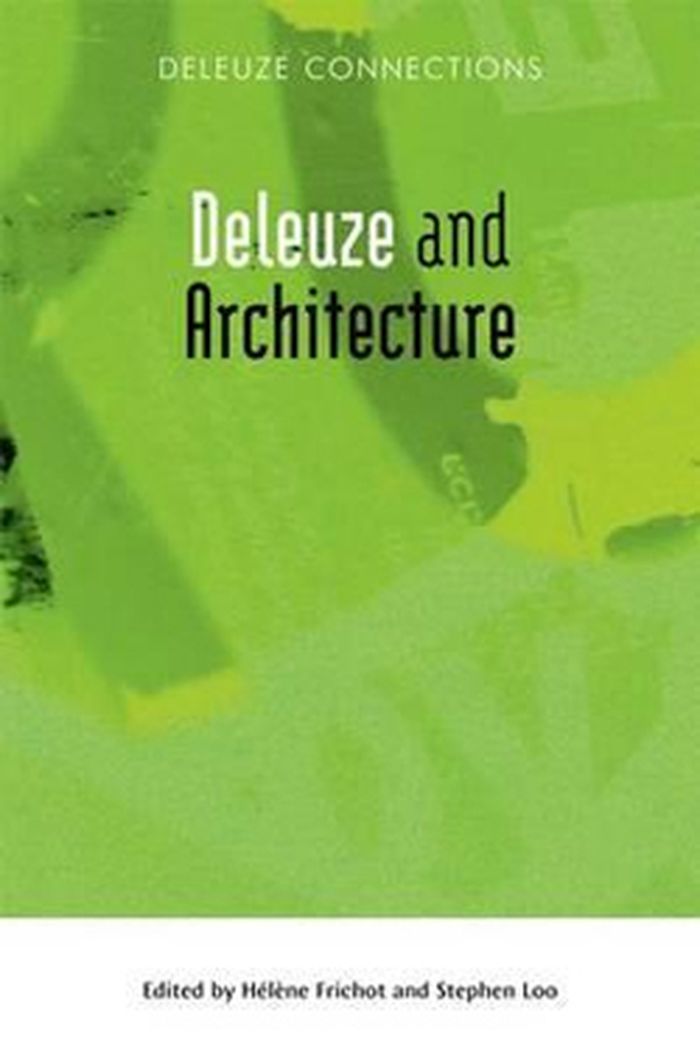
Deleuze and architecture
Deleuze and architecture
Actions:
Price:
$43.95
(available to order)
Summary:
Fifteen essays by interdisciplinary scholars, including John Rajchman (Columbia University), Elizabeth Grosz (Rutgers University), and Brian Massumi (European Graduate School) trace, among other concerns, Deleuze's influence on the emerging biotechnological paradigm and new practices of participatory design. They engage with contemporary approaches to the theory and(...)
$43.95
(available to order)
Summary:
Fifteen essays by interdisciplinary scholars, including John Rajchman (Columbia University), Elizabeth Grosz (Rutgers University), and Brian Massumi (European Graduate School) trace, among other concerns, Deleuze's influence on the emerging biotechnological paradigm and new practices of participatory design. They engage with contemporary approaches to the theory and(...)
Title:
Deleuze and architecture
Actions:
Price:
$43.95
(available to order)
Summary:
Fifteen essays by interdisciplinary scholars, including John Rajchman (Columbia University), Elizabeth Grosz (Rutgers University), and Brian Massumi (European Graduate School) trace, among other concerns, Deleuze's influence on the emerging biotechnological paradigm and new practices of participatory design. They engage with contemporary approaches to the theory and practice of architecture and outline radical agendas for the future practice of Deleuzian thought.
Deleuze and architecture
Actions:
Price:
$43.95
(available to order)
Summary:
Fifteen essays by interdisciplinary scholars, including John Rajchman (Columbia University), Elizabeth Grosz (Rutgers University), and Brian Massumi (European Graduate School) trace, among other concerns, Deleuze's influence on the emerging biotechnological paradigm and new practices of participatory design. They engage with contemporary approaches to the theory and practice of architecture and outline radical agendas for the future practice of Deleuzian thought.
Form:
books
books
Publication:
June 2013
June 2013
Subject:
Architectural Theory
Architectural Theory
Form:
books
books
Actions:
Price:
$55.00
(available to order)
Summary:
Since the early eighties, many architects have used the term "narrative" to describe their work. To architects the enduring attraction of narrative is that it offers a way of engaging with the way a city feels and works. Rather than reducing architecture to mere style or an overt emphasis on technology, it foregrounds the experiential dimension of architecture. Narrative(...)
$55.00
(available to order)
Summary:
Since the early eighties, many architects have used the term "narrative" to describe their work. To architects the enduring attraction of narrative is that it offers a way of engaging with the way a city feels and works. Rather than reducing architecture to mere style or an overt emphasis on technology, it foregrounds the experiential dimension of architecture. Narrative(...)
Title:
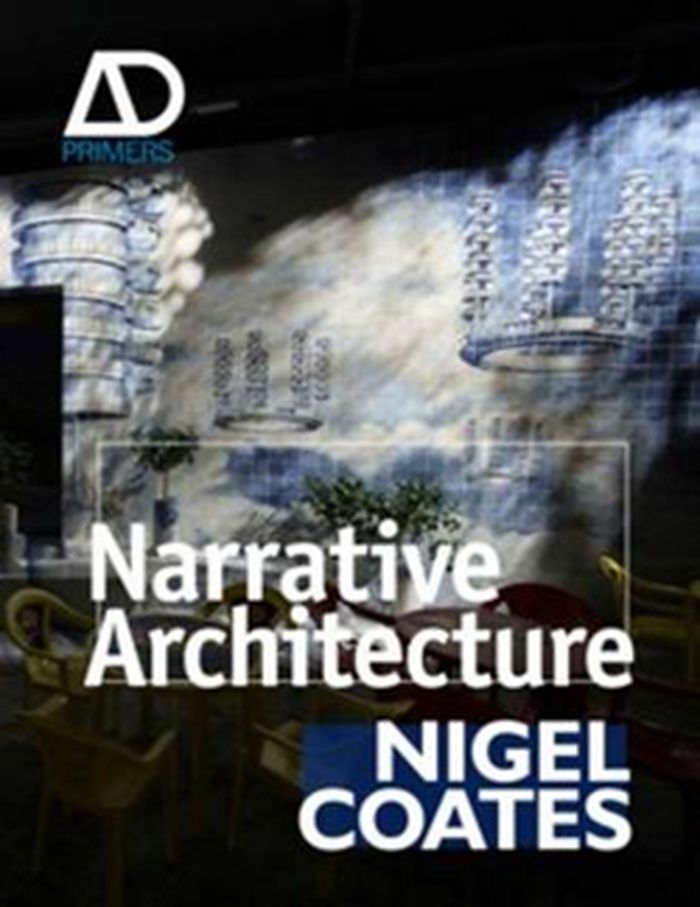
AD Primers: Narrative architecture
Actions:
Price:
$55.00
(available to order)
Summary:
Since the early eighties, many architects have used the term "narrative" to describe their work. To architects the enduring attraction of narrative is that it offers a way of engaging with the way a city feels and works. Rather than reducing architecture to mere style or an overt emphasis on technology, it foregrounds the experiential dimension of architecture. Narrative Architecture explores the potential for narrative as a way of interpreting buildings from ancient history through to the present, deals with architectural background, analysis and practice as well as its future development.
AD Primers: Narrative architecture
Actions:
Price:
$55.00
(available to order)
Summary:
Since the early eighties, many architects have used the term "narrative" to describe their work. To architects the enduring attraction of narrative is that it offers a way of engaging with the way a city feels and works. Rather than reducing architecture to mere style or an overt emphasis on technology, it foregrounds the experiential dimension of architecture. Narrative Architecture explores the potential for narrative as a way of interpreting buildings from ancient history through to the present, deals with architectural background, analysis and practice as well as its future development.
Form:
books
books
Publication:
June 2012
June 2012
Form:
journals and magazines
journals and magazines
Actions:
Price:
$38.00
(available to order)
Summary:
At a moment when the word “design” has come to refer to everything and thus nothing, this issue examines the hidden mechanics and visible output of design practice in order to track the shifting role of designers in society and to gauge the capacity of designers to effect change in a world of mounting crises. The issue’s title, ''Instruments of Service'', carries a(...)
$38.00
(available to order)
Summary:
At a moment when the word “design” has come to refer to everything and thus nothing, this issue examines the hidden mechanics and visible output of design practice in order to track the shifting role of designers in society and to gauge the capacity of designers to effect change in a world of mounting crises. The issue’s title, ''Instruments of Service'', carries a(...)
Title:
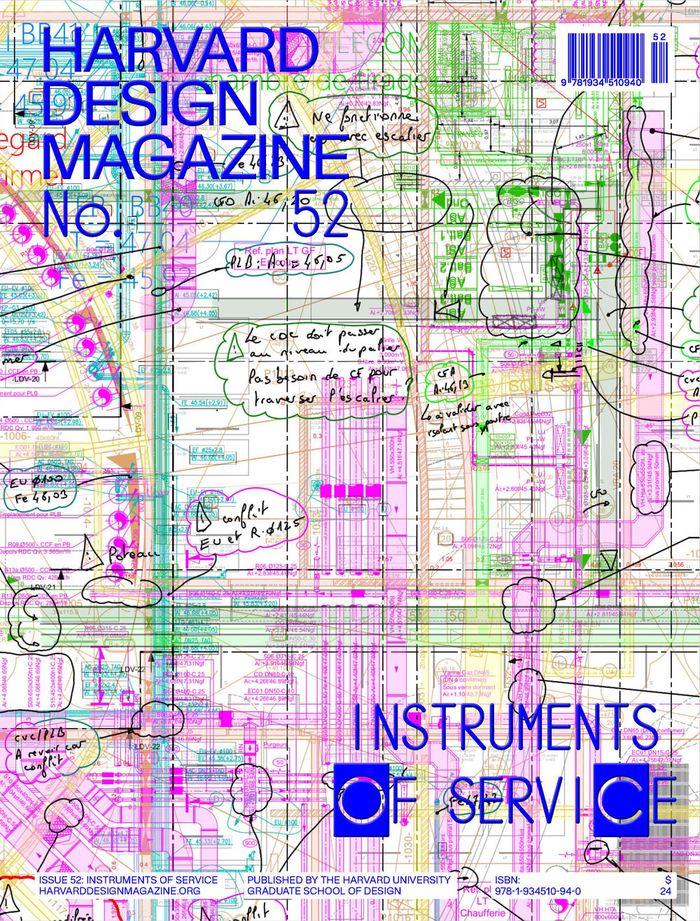
Harvard Design Magazine no. 52 : Instruments of service
Actions:
Price:
$38.00
(available to order)
Summary:
At a moment when the word “design” has come to refer to everything and thus nothing, this issue examines the hidden mechanics and visible output of design practice in order to track the shifting role of designers in society and to gauge the capacity of designers to effect change in a world of mounting crises. The issue’s title, ''Instruments of Service'', carries a double meaning. As defined in standard American Institute of Architects contracts, “Instruments of Service are representations, in any medium of expression now known or later developed, of the tangible and intangible creative work performed by the Architect and the Architect’s consultants under their respective professional services agreements. Instruments of Service may include, without limitation, studies, surveys, models, sketches, drawings, specifications, and other similar materials.” Instruments of service are the instruction manuals that architects—and other designers—make so that others can make something. They define the architect’s relationships with labor, construction, clients, and society. And these relationships—along with the agency of architectural practice—are changing as a growing number of external pressures force instruments of service to change. Architects and designers can also be seen as instruments of service to society, responsible to a continually shifting set of values. At a fundamental level, the designer’s job is to imagine and articulate a better future. In a time of crisis and competing value systems—market returns, cultural relevance, environmental response, social equity, automation—the role of the designer in society is ever more important and increasingly accountable to divergent interests that call into question the raison d’être of design practice itself.
Harvard Design Magazine no. 52 : Instruments of service
Actions:
Price:
$38.00
(available to order)
Summary:
At a moment when the word “design” has come to refer to everything and thus nothing, this issue examines the hidden mechanics and visible output of design practice in order to track the shifting role of designers in society and to gauge the capacity of designers to effect change in a world of mounting crises. The issue’s title, ''Instruments of Service'', carries a double meaning. As defined in standard American Institute of Architects contracts, “Instruments of Service are representations, in any medium of expression now known or later developed, of the tangible and intangible creative work performed by the Architect and the Architect’s consultants under their respective professional services agreements. Instruments of Service may include, without limitation, studies, surveys, models, sketches, drawings, specifications, and other similar materials.” Instruments of service are the instruction manuals that architects—and other designers—make so that others can make something. They define the architect’s relationships with labor, construction, clients, and society. And these relationships—along with the agency of architectural practice—are changing as a growing number of external pressures force instruments of service to change. Architects and designers can also be seen as instruments of service to society, responsible to a continually shifting set of values. At a fundamental level, the designer’s job is to imagine and articulate a better future. In a time of crisis and competing value systems—market returns, cultural relevance, environmental response, social equity, automation—the role of the designer in society is ever more important and increasingly accountable to divergent interests that call into question the raison d’être of design practice itself.
Form:
journals and magazines
journals and magazines
Publication:
February 2025
February 2025
Subject:
Magazines
Magazines
Form:
books
books
Price:
$75.00
(available to order)
Summary:
What role does drawing play in architectural education? How is drawing used as an instrument for communication, investigation, and representation in architecture and the construction industry? This book assembles contributions to the 2021 edition of the Lucerne Talks, the bi-annual Symposium on Pedagogy in Architecture at the Lucerne School of Engineering and(...)
$75.00
(available to order)
Summary:
What role does drawing play in architectural education? How is drawing used as an instrument for communication, investigation, and representation in architecture and the construction industry? This book assembles contributions to the 2021 edition of the Lucerne Talks, the bi-annual Symposium on Pedagogy in Architecture at the Lucerne School of Engineering and(...)
Subject:
Architectural Drawing
Architectural Drawing
Publication:
October 2023
October 2023
Title:
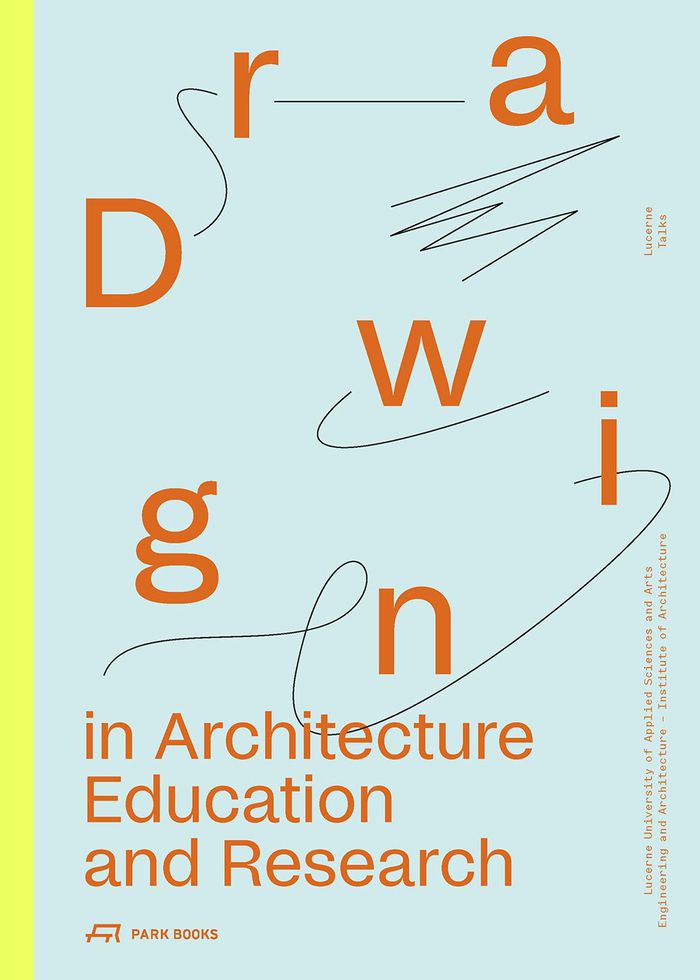
Drawing in architecture, education and research: Lucerne talks
Actions:
Price:
$75.00
(available to order)
Summary:
What role does drawing play in architectural education? How is drawing used as an instrument for communication, investigation, and representation in architecture and the construction industry? This book assembles contributions to the 2021 edition of the Lucerne Talks, the bi-annual Symposium on Pedagogy in Architecture at the Lucerne School of Engineering and Architecture. ''Drawing in architecture education and research'' offers a closer look at the importance of drawing culture in the curricula of Swiss schools of architecture and in the practice of architecture firms. Conceived as a compendium and reference book for students, teachers, and practitioners alike, this book explores the potential of drawing as a universal tool for communication and understanding among different societies, language groups, and professional communities. It considers drawing in its dual function as an object and a method for theory and practice in architecture and features strategies for a future transdisciplinary language of drawing that enables narrations and representations of new spatial concepts.
Drawing in architecture, education and research: Lucerne talks
Actions:
Price:
$75.00
(available to order)
Summary:
What role does drawing play in architectural education? How is drawing used as an instrument for communication, investigation, and representation in architecture and the construction industry? This book assembles contributions to the 2021 edition of the Lucerne Talks, the bi-annual Symposium on Pedagogy in Architecture at the Lucerne School of Engineering and Architecture. ''Drawing in architecture education and research'' offers a closer look at the importance of drawing culture in the curricula of Swiss schools of architecture and in the practice of architecture firms. Conceived as a compendium and reference book for students, teachers, and practitioners alike, this book explores the potential of drawing as a universal tool for communication and understanding among different societies, language groups, and professional communities. It considers drawing in its dual function as an object and a method for theory and practice in architecture and features strategies for a future transdisciplinary language of drawing that enables narrations and representations of new spatial concepts.
Form:
books
books
Publication:
October 2023
October 2023
Subject:
Architectural Drawing
Architectural Drawing
Form:
books
books
Actions:
Price:
$44.50
(available to order)
Summary:
In "Archiveology" Catherine Russell uses the work of Walter Benjamin to explore how the practice of archiveology-the reuse, recycling, appropriation, and borrowing of archival sounds and images by filmmakers-provides ways to imagine the past and the future. Noting how the film archive does not function simply as a place where moving images are preserved, Russell examines(...)
$44.50
(available to order)
Summary:
In "Archiveology" Catherine Russell uses the work of Walter Benjamin to explore how the practice of archiveology-the reuse, recycling, appropriation, and borrowing of archival sounds and images by filmmakers-provides ways to imagine the past and the future. Noting how the film archive does not function simply as a place where moving images are preserved, Russell examines(...)
Title:
Archiveology: Walter Benjamin and archival film practices
Actions:
Price:
$44.50
(available to order)
Summary:
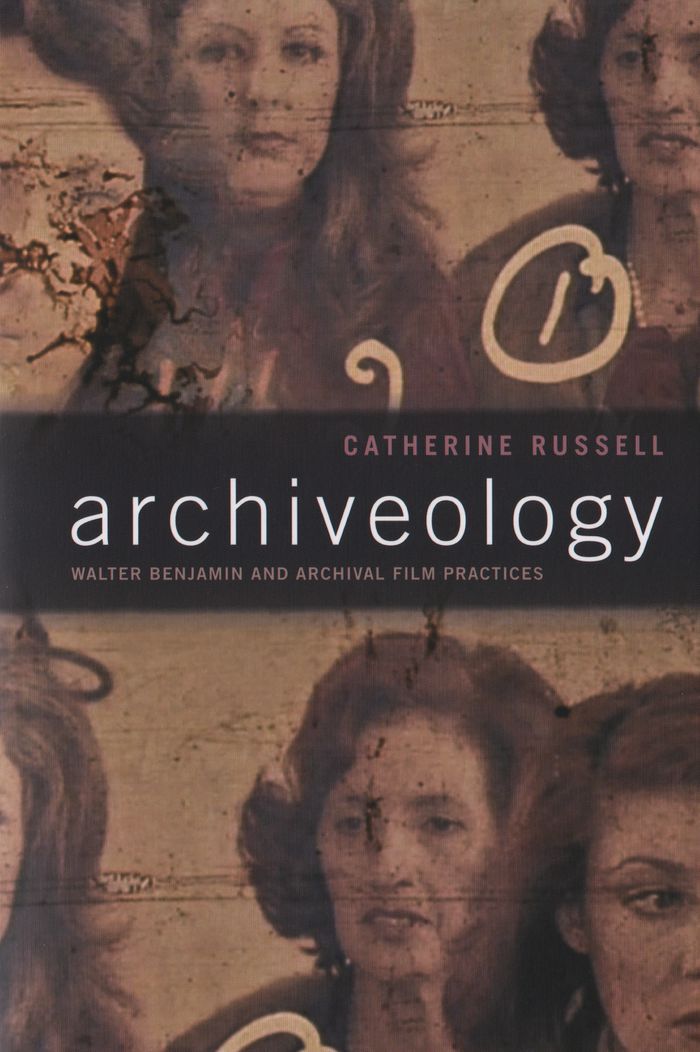
In "Archiveology" Catherine Russell uses the work of Walter Benjamin to explore how the practice of archiveology-the reuse, recycling, appropriation, and borrowing of archival sounds and images by filmmakers-provides ways to imagine the past and the future. Noting how the film archive does not function simply as a place where moving images are preserved, Russell examines a range of films alongside Benjamin's conceptions of memory, document, excavation, and historiography. She shows how city films such as Nicole Vedres's Paris 1900 (1947) and Thom Andersen's Los Angeles Plays Itself (2003) reconstruct notions of urban life and uses Christian Marclay's The Clock (2010) to draw parallels between critical cinephilia and Benjamin's theory of the phantasmagoria. Russell also discusses practices of collecting in archiveological film and rereads films by Joseph Cornell and Rania Stephan to explore an archival practice that dislocates and relocates the female image in film. In so doing, she not only shows how Benjamin's work is as relevant to film theory as ever; she shows how archiveology can awaken artists and audiences to critical forms of history and memory.
Archiveology: Walter Benjamin and archival film practices
Actions:
Price:
$44.50
(available to order)
Summary:
In "Archiveology" Catherine Russell uses the work of Walter Benjamin to explore how the practice of archiveology-the reuse, recycling, appropriation, and borrowing of archival sounds and images by filmmakers-provides ways to imagine the past and the future. Noting how the film archive does not function simply as a place where moving images are preserved, Russell examines a range of films alongside Benjamin's conceptions of memory, document, excavation, and historiography. She shows how city films such as Nicole Vedres's Paris 1900 (1947) and Thom Andersen's Los Angeles Plays Itself (2003) reconstruct notions of urban life and uses Christian Marclay's The Clock (2010) to draw parallels between critical cinephilia and Benjamin's theory of the phantasmagoria. Russell also discusses practices of collecting in archiveological film and rereads films by Joseph Cornell and Rania Stephan to explore an archival practice that dislocates and relocates the female image in film. In so doing, she not only shows how Benjamin's work is as relevant to film theory as ever; she shows how archiveology can awaken artists and audiences to critical forms of history and memory.
Form:
books
books
Publication:
March 2018
March 2018
Subject:
Architecture and Film, Set Design
Architecture and Film, Set Design
Form:
books
books
Title:
Mind in architecture
Mind in architecture
Actions:
Price:
$49.00
(available to order)
Summary:
Although we spend more than ninety percent of our lives inside buildings, we understand very little about how the built environment affects our behavior, thoughts, emotions, and well-being. We are biological beings whose senses and neural systems have developed over millions of years; it stands to reason that research in the life sciences, particularly neuroscience, can(...)
$49.00
(available to order)
Summary:
Although we spend more than ninety percent of our lives inside buildings, we understand very little about how the built environment affects our behavior, thoughts, emotions, and well-being. We are biological beings whose senses and neural systems have developed over millions of years; it stands to reason that research in the life sciences, particularly neuroscience, can(...)
Title:
Mind in architecture
Actions:
Price:
$49.00
(available to order)
Summary:
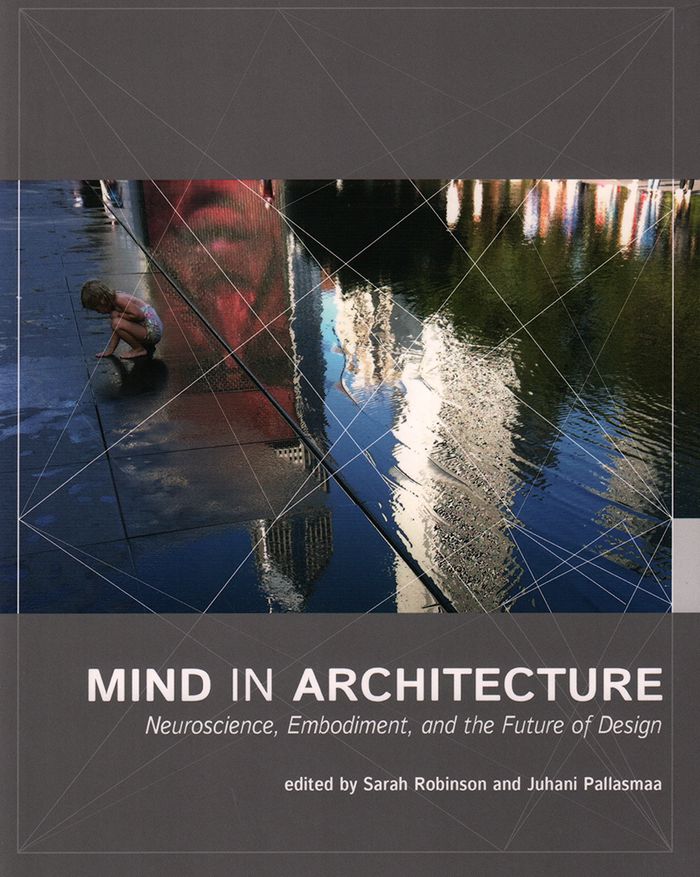
Although we spend more than ninety percent of our lives inside buildings, we understand very little about how the built environment affects our behavior, thoughts, emotions, and well-being. We are biological beings whose senses and neural systems have developed over millions of years; it stands to reason that research in the life sciences, particularly neuroscience, can offer compelling insights into the ways our buildings shape our interactions with the world. This expanded understanding can help architects design buildings that support both mind and body. In Mind in Architecture, leading thinkers from architecture and other disciplines, including neuroscience, cognitive science, psychiatry, and philosophy, explore what architecture and neuroscience can learn from each other. They offer historical context, examine the implications for current architectural practice and education, and imagine a neuroscientifically informed architecture of the future.
Mind in architecture
Actions:
Price:
$49.00
(available to order)
Summary:
Although we spend more than ninety percent of our lives inside buildings, we understand very little about how the built environment affects our behavior, thoughts, emotions, and well-being. We are biological beings whose senses and neural systems have developed over millions of years; it stands to reason that research in the life sciences, particularly neuroscience, can offer compelling insights into the ways our buildings shape our interactions with the world. This expanded understanding can help architects design buildings that support both mind and body. In Mind in Architecture, leading thinkers from architecture and other disciplines, including neuroscience, cognitive science, psychiatry, and philosophy, explore what architecture and neuroscience can learn from each other. They offer historical context, examine the implications for current architectural practice and education, and imagine a neuroscientifically informed architecture of the future.
Form:
books
books
Publication:
March 2017
March 2017
Subject:
Architectural Theory
Architectural Theory
Form:
books
books
Actions:
Price:
$31.95
(available in store)
Summary:
The Mikmak Foundation invited German architect Jürgen Mayer H. for the Designers of the Future lecture, because of the particular relationship in his work between research and architectural practice, combined with a strong interest in articulating the contemporary public realm, including the use and meaning of new media. The contemporary public realm faces enormous(...)
$31.95
(available in store)
Summary:
The Mikmak Foundation invited German architect Jürgen Mayer H. for the Designers of the Future lecture, because of the particular relationship in his work between research and architectural practice, combined with a strong interest in articulating the contemporary public realm, including the use and meaning of new media. The contemporary public realm faces enormous(...)
Title:
Jürgen Mayer: Could would should
Actions:
Price:
$31.95
(available in store)
Summary:
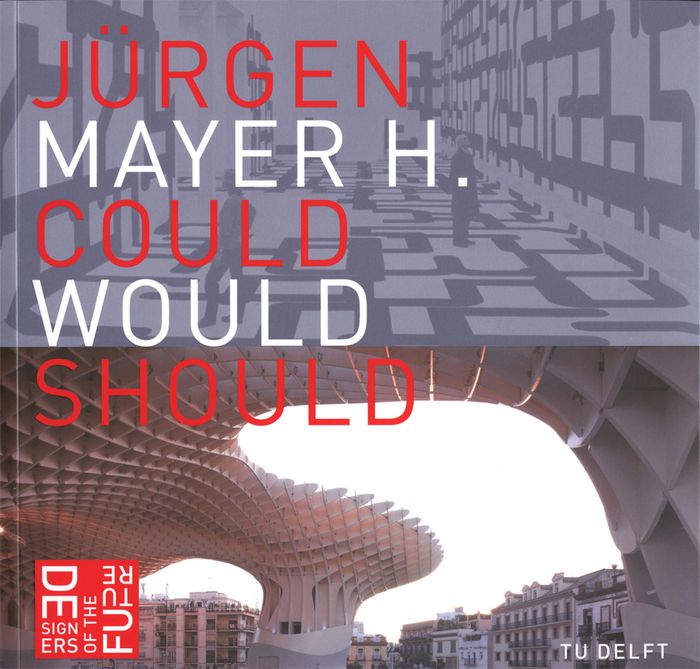
The Mikmak Foundation invited German architect Jürgen Mayer H. for the Designers of the Future lecture, because of the particular relationship in his work between research and architectural practice, combined with a strong interest in articulating the contemporary public realm, including the use and meaning of new media. The contemporary public realm faces enormous challenges, amongst others the introduction of a parallel digital public sphere. How should we envisage the role of the architect in an augmented reality of physical and virtual worlds? In this transcript of the lecture, Mayer H. discusses his viewpoints, research and architectural practice in four parts: ‘A-Way’, ‘Built Work’, ‘A Country’, and ‘Metropol Parasol’.
Jürgen Mayer: Could would should
Actions:
Price:
$31.95
(available in store)
Summary:
The Mikmak Foundation invited German architect Jürgen Mayer H. for the Designers of the Future lecture, because of the particular relationship in his work between research and architectural practice, combined with a strong interest in articulating the contemporary public realm, including the use and meaning of new media. The contemporary public realm faces enormous challenges, amongst others the introduction of a parallel digital public sphere. How should we envisage the role of the architect in an augmented reality of physical and virtual worlds? In this transcript of the lecture, Mayer H. discusses his viewpoints, research and architectural practice in four parts: ‘A-Way’, ‘Built Work’, ‘A Country’, and ‘Metropol Parasol’.
Form:
books
books
Publication:
June 2016
June 2016
Subject:
Architecture Monographs
Architecture Monographs
Form:
books
books
Price:
$35.95
(available to order)
Summary:
"Worldmaking as Techné: Participatory Art, Music, and Architecture" outlines a practice that challenges the World and how it could be through a kind of future-making, and/or other world making, by creating alternate realties as artworks that are simultaneously ontological propositions. In simplified terms the concept of techné is concerned with the art and craft of(...)
$35.95
(available to order)
Summary:
"Worldmaking as Techné: Participatory Art, Music, and Architecture" outlines a practice that challenges the World and how it could be through a kind of future-making, and/or other world making, by creating alternate realties as artworks that are simultaneously ontological propositions. In simplified terms the concept of techné is concerned with the art and craft of(...)
Subject:
Architectural Theory
Architectural Theory
Publication:
June 2018
June 2018
Title:
Worldmaking as techné: participatory art, music and architecture
Actions:
Price:
$35.95
(available to order)
Summary:
"Worldmaking as Techné: Participatory Art, Music, and Architecture" outlines a practice that challenges the World and how it could be through a kind of future-making, and/or other world making, by creating alternate realties as artworks that are simultaneously ontological propositions. In simplified terms the concept of techné is concerned with the art and craft of making. In particular a kind of practice that embodies the enactment of theoretical approach that helps determine the significance of the work, how it was made, and why. By positioning worldmaking as a kind of techné, we seek to create a discourse of art making as an enframing of the world that results in the expression of ontological propositions through the creation of art-worlds.
Worldmaking as techné: participatory art, music and architecture
Actions:
Price:
$35.95
(available to order)
Summary:
"Worldmaking as Techné: Participatory Art, Music, and Architecture" outlines a practice that challenges the World and how it could be through a kind of future-making, and/or other world making, by creating alternate realties as artworks that are simultaneously ontological propositions. In simplified terms the concept of techné is concerned with the art and craft of making. In particular a kind of practice that embodies the enactment of theoretical approach that helps determine the significance of the work, how it was made, and why. By positioning worldmaking as a kind of techné, we seek to create a discourse of art making as an enframing of the world that results in the expression of ontological propositions through the creation of art-worlds.
Form:
books
books
Publication:
June 2018
June 2018
Subject:
Architectural Theory
Architectural Theory
Form:
books
books

Actions:
Price:
$5.99
(available to order)
Summary:
"306090 05" focuses on the work of young educators throughout the world, with essays on the effects of practice on education and education on practice. It features the built work of design instructors alongside the studio projects of their students, among other revealing juxtapositions. Students and professors profiled are from Michigan, California, New York, and(...)
$5.99
(available to order)
Summary:
"306090 05" focuses on the work of young educators throughout the world, with essays on the effects of practice on education and education on practice. It features the built work of design instructors alongside the studio projects of their students, among other revealing juxtapositions. Students and professors profiled are from Michigan, California, New York, and(...)
Subject:
Magazines
Magazines
Publication:
September 2003, New York
September 2003, New York
Title:
306090 05 : teaching + building : beyond the imagining
Actions:
Price:
$5.99
(available to order)
Summary:
"306090 05" focuses on the work of young educators throughout the world, with essays on the effects of practice on education and education on practice. It features the built work of design instructors alongside the studio projects of their students, among other revealing juxtapositions. Students and professors profiled are from Michigan, California, New York, and London. This new journal, now in its fifth volume, has reinvigorated the architectural world by introducing and recognizing the work of emerging students, young designers, and innovative educational institutions whose cross-disciplinary projects, ideas, and buildings will inform the future of architectural practice. Alexander F. Brisano and Jonathan D. Solomon edit "306090" from their offices in Brooklyn, New York and Princetion, New Jersey. Previously priced at $18.95.
306090 05 : teaching + building : beyond the imagining
Actions:
Price:
$5.99
(available to order)
Summary:
"306090 05" focuses on the work of young educators throughout the world, with essays on the effects of practice on education and education on practice. It features the built work of design instructors alongside the studio projects of their students, among other revealing juxtapositions. Students and professors profiled are from Michigan, California, New York, and London. This new journal, now in its fifth volume, has reinvigorated the architectural world by introducing and recognizing the work of emerging students, young designers, and innovative educational institutions whose cross-disciplinary projects, ideas, and buildings will inform the future of architectural practice. Alexander F. Brisano and Jonathan D. Solomon edit "306090" from their offices in Brooklyn, New York and Princetion, New Jersey. Previously priced at $18.95.
Form:
books
books
Publication:
September 2003, New York
September 2003, New York
Subject:
Magazines
Magazines
Form:
books
books
Price:
$66.95
(available in store)
Summary:
Bringing together real-world examples, "Architecture and energy" offers starting points for how to approach construction today and into the future. The energy requirements of buildings are enormous, resulting in a significant proportion of global carbon dioxide emissions, both in the construction phase and during the building’s use and eventual demolition. In an era of(...)
$66.95
(available in store)
Summary:
Bringing together real-world examples, "Architecture and energy" offers starting points for how to approach construction today and into the future. The energy requirements of buildings are enormous, resulting in a significant proportion of global carbon dioxide emissions, both in the construction phase and during the building’s use and eventual demolition. In an era of(...)
Title:
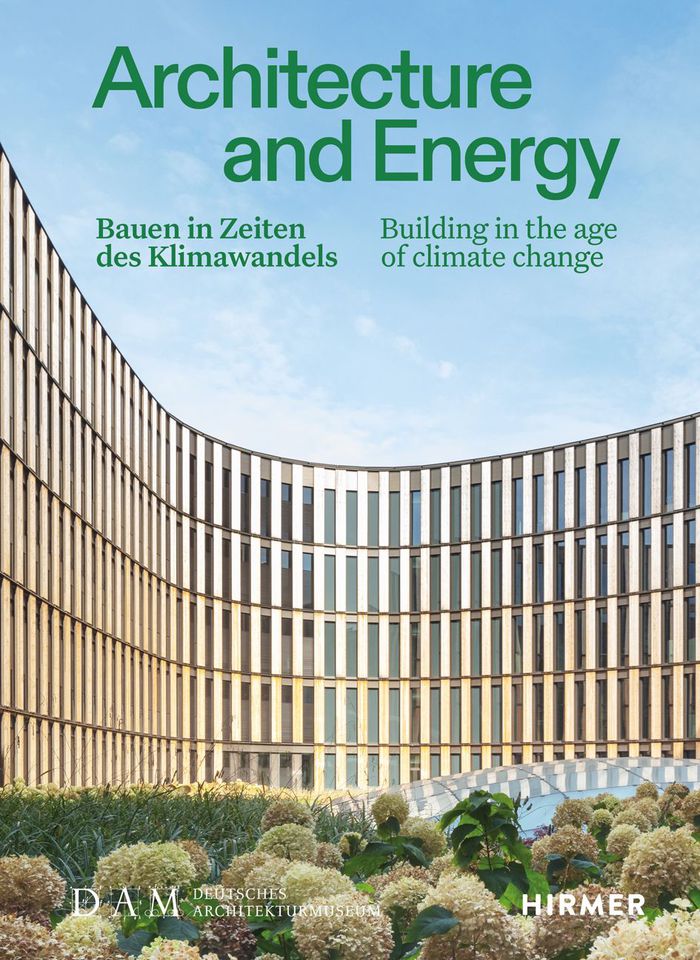
Architecture and energy: Building in the age of climate change
Actions:
Price:
$66.95
(available in store)
Summary:
Bringing together real-world examples, "Architecture and energy" offers starting points for how to approach construction today and into the future. The energy requirements of buildings are enormous, resulting in a significant proportion of global carbon dioxide emissions, both in the construction phase and during the building’s use and eventual demolition. In an era of energy transition and extreme weather phenomena, the question of how we build in a time of climate change becomes all the more urgent. A sustainably-built wood and concrete supermarket that includes a roof farm, a kindergarten constructed from locally sourced recycled materials, renovating an office building so that it can remove its air conditioning and ventilation systems: in addition to the choice of materials and innovative operating concepts, the possibilities for reducing emissions and energy requirements lie above all in thinking about the entire life cycle of a building, including refurbishing rather than new construction when possible. This volume presents international best-practice projects characterized by sustainable design and provides forward-looking answers.
Architecture and energy: Building in the age of climate change
Actions:
Price:
$66.95
(available in store)
Summary:
Bringing together real-world examples, "Architecture and energy" offers starting points for how to approach construction today and into the future. The energy requirements of buildings are enormous, resulting in a significant proportion of global carbon dioxide emissions, both in the construction phase and during the building’s use and eventual demolition. In an era of energy transition and extreme weather phenomena, the question of how we build in a time of climate change becomes all the more urgent. A sustainably-built wood and concrete supermarket that includes a roof farm, a kindergarten constructed from locally sourced recycled materials, renovating an office building so that it can remove its air conditioning and ventilation systems: in addition to the choice of materials and innovative operating concepts, the possibilities for reducing emissions and energy requirements lie above all in thinking about the entire life cycle of a building, including refurbishing rather than new construction when possible. This volume presents international best-practice projects characterized by sustainable design and provides forward-looking answers.
Form:
books
books
Publication:
July 2025
July 2025
Subject:
Green Architecture
Green Architecture


