


711 Results
Form:
books
books
Actions:
Price:
$48.95
(available in store)
Summary:
Marnes se situe entre la revue de fond et le recueil d'écrits de référence, inédits ou épuisés, dans les champs de l'architecture, de l'urbanisme, de l'écologie et du paysage. Ce volume contient un texte majeur de la théorie architecturale : 'La Forme du territoire' de Vittorio Gregotti (1966), une série d'écrits d'architectes contemporains – St John Wilson, Caruso,(...)
$48.95
(available in store)
Summary:
Marnes se situe entre la revue de fond et le recueil d'écrits de référence, inédits ou épuisés, dans les champs de l'architecture, de l'urbanisme, de l'écologie et du paysage. Ce volume contient un texte majeur de la théorie architecturale : 'La Forme du territoire' de Vittorio Gregotti (1966), une série d'écrits d'architectes contemporains – St John Wilson, Caruso,(...)
Title:
Marnes, documents d'architecture N° 5
Actions:
Price:
$48.95
(available in store)
Summary:
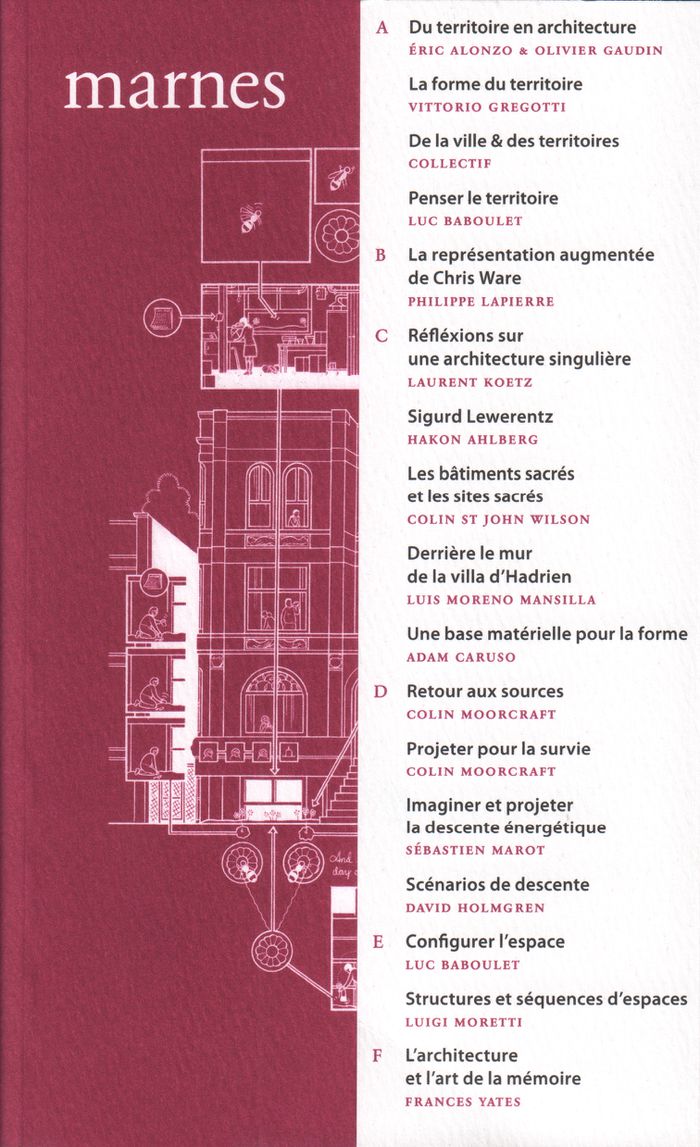
Marnes se situe entre la revue de fond et le recueil d'écrits de référence, inédits ou épuisés, dans les champs de l'architecture, de l'urbanisme, de l'écologie et du paysage. Ce volume contient un texte majeur de la théorie architecturale : 'La Forme du territoire' de Vittorio Gregotti (1966), une série d'écrits d'architectes contemporains – St John Wilson, Caruso, Mansilla – sur Sigurd Lewerentz, un architecte suédois dont la production est l'une des plus intrigantes du XXe siècle, un article de référence de Lugi Morreti sur les 'Structures et séquences d'espace' (1953) ainsi qu'une conférence de l'historienne Frances Yates sur l'art de la mémoire. 'Projeter pour la survie', qui dresse en 1972 un état des enjeux écologiques dans la revue Architectural Design, est mis en parallèle avec un texte récent de David Holmgren, cofondateur de la permaculture, qui trace quatre scénarios pour le futur. Enfin, Philippe Lapierre explore l'univers urbain et architectural de l'auteur de bande-dessinées Chris Ware. Ces textes s'accompagnent de contributions d'Eric Alonzo, Luc Baboulet, Olivier Gaudin, Laurent Koetz et Sébastien Marot. Marnes, documents d'architecture est une production de l'Ecole d'architecture de la ville & des territoires.
Marnes, documents d'architecture N° 5
Actions:
Price:
$48.95
(available in store)
Summary:
Marnes se situe entre la revue de fond et le recueil d'écrits de référence, inédits ou épuisés, dans les champs de l'architecture, de l'urbanisme, de l'écologie et du paysage. Ce volume contient un texte majeur de la théorie architecturale : 'La Forme du territoire' de Vittorio Gregotti (1966), une série d'écrits d'architectes contemporains – St John Wilson, Caruso, Mansilla – sur Sigurd Lewerentz, un architecte suédois dont la production est l'une des plus intrigantes du XXe siècle, un article de référence de Lugi Morreti sur les 'Structures et séquences d'espace' (1953) ainsi qu'une conférence de l'historienne Frances Yates sur l'art de la mémoire. 'Projeter pour la survie', qui dresse en 1972 un état des enjeux écologiques dans la revue Architectural Design, est mis en parallèle avec un texte récent de David Holmgren, cofondateur de la permaculture, qui trace quatre scénarios pour le futur. Enfin, Philippe Lapierre explore l'univers urbain et architectural de l'auteur de bande-dessinées Chris Ware. Ces textes s'accompagnent de contributions d'Eric Alonzo, Luc Baboulet, Olivier Gaudin, Laurent Koetz et Sébastien Marot. Marnes, documents d'architecture est une production de l'Ecole d'architecture de la ville & des territoires.
Form:
books
books
Publication:
August 2020
August 2020
Subject:
Architectural Theory
Architectural Theory
Form:
books
books
Actions:
Price:
$55.00
(available in store)
Summary:
À l'instar de nombreuses grandes villes, dont Paris, Philadelphie ou Rio, Montréal se lance, dans les années 1960, dans un programme de transformation d'une échelle démesurée. Pourtant, avec son métro, ses galeries commerciales souterraines, son Exposition universelle (l'Expo 67), ce projet se distingue dans le choeur des métropoles : ici, gratte-ciel et autoroutes ont(...)
$55.00
(available in store)
Summary:
À l'instar de nombreuses grandes villes, dont Paris, Philadelphie ou Rio, Montréal se lance, dans les années 1960, dans un programme de transformation d'une échelle démesurée. Pourtant, avec son métro, ses galeries commerciales souterraines, son Exposition universelle (l'Expo 67), ce projet se distingue dans le choeur des métropoles : ici, gratte-ciel et autoroutes ont(...)
Title:
Les années 60 : Montréal voit grand
Actions:
Price:
$55.00
(available in store)
Summary:
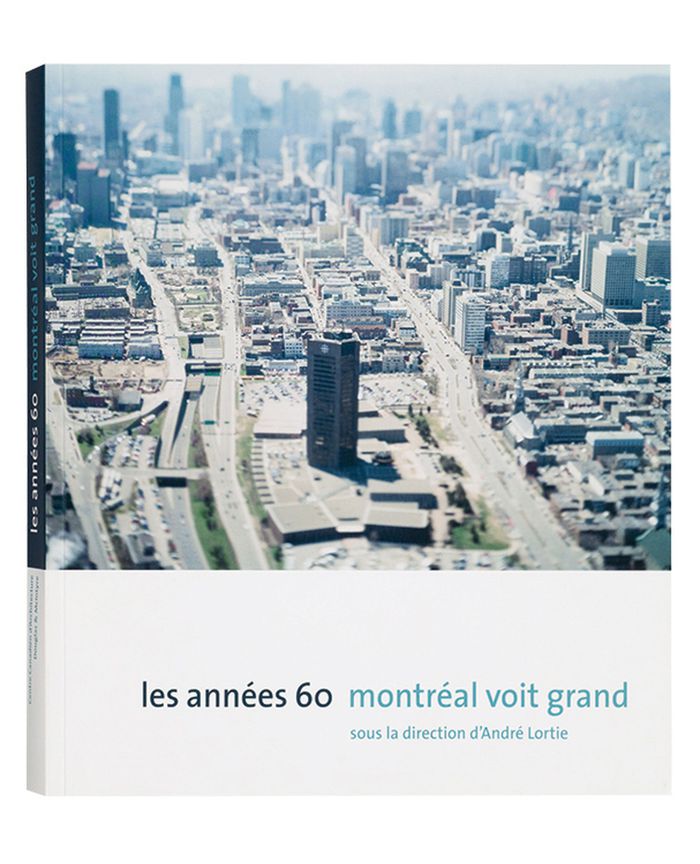
À l'instar de nombreuses grandes villes, dont Paris, Philadelphie ou Rio, Montréal se lance, dans les années 1960, dans un programme de transformation d'une échelle démesurée. Pourtant, avec son métro, ses galeries commerciales souterraines, son Exposition universelle (l'Expo 67), ce projet se distingue dans le choeur des métropoles : ici, gratte-ciel et autoroutes ont transformé fondamentalement le paysage architectural et urbain, sans compromettre durablement la vitalité du centre. Archétypique parmi les villes américaines et européennes touchées par ce phénomène, Montréal est en même temps unique par la vision qui sous-tend ce projet. Cet ouvrage richement illustré comprend des essais de spécialistes de différentes disciplines, des vignettes faites de courts textes et d'images nombreuses, et un saisissant essai photographique. Les auteurs y explorent les fondements qui on défini le devenir de Montréal - et dont nous n'avons cessé de vivre les effets depuis - et introduisent le lecteur à la vision qu'avaient alors architectes, urbanistes, écrivains, et artistes. Ce catalogue accompagne l'exposition "Les années 60 : Montréal voit grand" organisée par le Centre Canadien d'Architecture. Il propose un regard neuf sur l'héritage social, urbanistique, et architectural que cette décennie nous a légué.
Les années 60 : Montréal voit grand
Actions:
Price:
$55.00
(available in store)
Summary:
À l'instar de nombreuses grandes villes, dont Paris, Philadelphie ou Rio, Montréal se lance, dans les années 1960, dans un programme de transformation d'une échelle démesurée. Pourtant, avec son métro, ses galeries commerciales souterraines, son Exposition universelle (l'Expo 67), ce projet se distingue dans le choeur des métropoles : ici, gratte-ciel et autoroutes ont transformé fondamentalement le paysage architectural et urbain, sans compromettre durablement la vitalité du centre. Archétypique parmi les villes américaines et européennes touchées par ce phénomène, Montréal est en même temps unique par la vision qui sous-tend ce projet. Cet ouvrage richement illustré comprend des essais de spécialistes de différentes disciplines, des vignettes faites de courts textes et d'images nombreuses, et un saisissant essai photographique. Les auteurs y explorent les fondements qui on défini le devenir de Montréal - et dont nous n'avons cessé de vivre les effets depuis - et introduisent le lecteur à la vision qu'avaient alors architectes, urbanistes, écrivains, et artistes. Ce catalogue accompagne l'exposition "Les années 60 : Montréal voit grand" organisée par le Centre Canadien d'Architecture. Il propose un regard neuf sur l'héritage social, urbanistique, et architectural que cette décennie nous a légué.
Form:
books
books
Publication:
October 2004, Montréal
October 2004, Montréal
Subject:
CCA Publications
CCA Publications
Form:
books
books
Actions:
Price:
$47.95
(available to order)
Summary:
Dans le Paris des années 1950, les façades géométriques et bariolées des marchands de couleurs attirent l’oeil du jeune Bâlois Gérard Ifert. Alors au tout début d’une carrière au croisement du design, du design graphique et de la scénographie, Ifert pratique aussi, en flâneur, la photographie. Il enregistre ainsi ces compositions chromatiques qu’il rapproche des oeuvres(...)
$47.95
(available to order)
Summary:
Dans le Paris des années 1950, les façades géométriques et bariolées des marchands de couleurs attirent l’oeil du jeune Bâlois Gérard Ifert. Alors au tout début d’une carrière au croisement du design, du design graphique et de la scénographie, Ifert pratique aussi, en flâneur, la photographie. Il enregistre ainsi ces compositions chromatiques qu’il rapproche des oeuvres(...)
Title:
Paris couleurs : Gerard Ifert, Ektachromes, 1953-1954
Actions:
Price:
$47.95
(available to order)
Summary:
Dans le Paris des années 1950, les façades géométriques et bariolées des marchands de couleurs attirent l’oeil du jeune Bâlois Gérard Ifert. Alors au tout début d’une carrière au croisement du design, du design graphique et de la scénographie, Ifert pratique aussi, en flâneur, la photographie. Il enregistre ainsi ces compositions chromatiques qu’il rapproche des oeuvres de l’art concret suisse. Cette étonnante collection d’images révèle un art anonyme de la rue aujourd’hui disparu et fournit matière à réflexion sur les liens entre l’art et le design, sur les transformations du paysage urbain et l’esthétique du quotidien. Documentation exceptionnelle sur un art de rue aujourd’hui disparu, la série d’ektachromes qui en résulte est l’occasion de revenir sur un pan de la carrière d’un designer dont on découvre depuis peu le travail. Après l’exposition « Photographismes » du Centre Pompidou qui a révélé un aspect expérimental de la production d’Ifert, le présent livre dévoile une autre facette, celle d’un arpenteur de la ville, attentif aux manifestations d’une culture urbaine vernaculaire. Sur les pas d’Ifert, le texte de Catherine de Smet, où se croisent entre autres Valentine et Ripolin, Picasso et Duchamp, Karl Gerstner et Richard-Paul Lohse, Sophie Taeuber et Victor Vasarely, Verena Loewensberg et Bernard Frize, revient sur ce que nous dit l’éclat bigarré de ces magasins parisiens.
Paris couleurs : Gerard Ifert, Ektachromes, 1953-1954
Actions:
Price:
$47.95
(available to order)
Summary:
Dans le Paris des années 1950, les façades géométriques et bariolées des marchands de couleurs attirent l’oeil du jeune Bâlois Gérard Ifert. Alors au tout début d’une carrière au croisement du design, du design graphique et de la scénographie, Ifert pratique aussi, en flâneur, la photographie. Il enregistre ainsi ces compositions chromatiques qu’il rapproche des oeuvres de l’art concret suisse. Cette étonnante collection d’images révèle un art anonyme de la rue aujourd’hui disparu et fournit matière à réflexion sur les liens entre l’art et le design, sur les transformations du paysage urbain et l’esthétique du quotidien. Documentation exceptionnelle sur un art de rue aujourd’hui disparu, la série d’ektachromes qui en résulte est l’occasion de revenir sur un pan de la carrière d’un designer dont on découvre depuis peu le travail. Après l’exposition « Photographismes » du Centre Pompidou qui a révélé un aspect expérimental de la production d’Ifert, le présent livre dévoile une autre facette, celle d’un arpenteur de la ville, attentif aux manifestations d’une culture urbaine vernaculaire. Sur les pas d’Ifert, le texte de Catherine de Smet, où se croisent entre autres Valentine et Ripolin, Picasso et Duchamp, Karl Gerstner et Richard-Paul Lohse, Sophie Taeuber et Victor Vasarely, Verena Loewensberg et Bernard Frize, revient sur ce que nous dit l’éclat bigarré de ces magasins parisiens.
Form:
books
books
Publication:
January 2020
January 2020
Subject:
Photography monographs
Photography monographs
Form:
books
books

Actions:
Price:
$12.95
(available in store)
Summary:
Tout nouveau moyen de transport ou toute modification apportée à un système existant de mobilité urbaine – l’élargissement des tranchées permettant aux voies ferrées de se relier à un terminus ou à une jonction, l’extension des gares de triage desservant les systèmes de transport métropolitains et de banlieue, la multiplication des(...)
$12.95
(available in store)
Summary:
Tout nouveau moyen de transport ou toute modification apportée à un système existant de mobilité urbaine – l’élargissement des tranchées permettant aux voies ferrées de se relier à un terminus ou à une jonction, l’extension des gares de triage desservant les systèmes de transport métropolitains et de banlieue, la multiplication des(...)
Subject:
CCA Publications
CCA Publications
Publication:
November 2000, Montréal
November 2000, Montréal
Title:
Villes en mouvement : jouets et transports / Cities in motion : toys and transport
Actions:
Price:
$12.95
(available in store)
Summary:
Tout nouveau moyen de transport ou toute modification apportée à un système existant de mobilité urbaine – l’élargissement des tranchées permettant aux voies ferrées de se relier à un terminus ou à une jonction, l’extension des gares de triage desservant les systèmes de transport métropolitains et de banlieue, la multiplication des bretelles des ponts, des autoroutes surélevées, des rampes d’accès, des parcs de stationnement et même des petites stations-services disséminées sur le territoire – entraîne des mutations dans le paysage urbain. "Jouets et transports" puise, à même la collection du CCA, plus de 75 jouets anciens, livres illustrés, photographies anciennes et brochures pour illustrer deux siècles de transformations urbaines étroitement liées au développement des moyens de transport. // Every new transportation link and every change in systems of urban mobility introduces new infrastructure to the urban landscape: massive cuts enabling railway tracks to converge at a terminal or junction; wide railyards that service suburban and metropolitan transit systems; the proliferation of bridges, ramps, elevated highways, freeway cuts, parking lots, and even service stations. "Toys and Transport" draws from the CCA collection, presenting over 75 objects, among them historic toys, architectural photographs, illustrated books and pamphlets. It covers nearly 200 years of urban transformation brought about by the development of transportation systems.
Villes en mouvement : jouets et transports / Cities in motion : toys and transport
Actions:
Price:
$12.95
(available in store)
Summary:
Tout nouveau moyen de transport ou toute modification apportée à un système existant de mobilité urbaine – l’élargissement des tranchées permettant aux voies ferrées de se relier à un terminus ou à une jonction, l’extension des gares de triage desservant les systèmes de transport métropolitains et de banlieue, la multiplication des bretelles des ponts, des autoroutes surélevées, des rampes d’accès, des parcs de stationnement et même des petites stations-services disséminées sur le territoire – entraîne des mutations dans le paysage urbain. "Jouets et transports" puise, à même la collection du CCA, plus de 75 jouets anciens, livres illustrés, photographies anciennes et brochures pour illustrer deux siècles de transformations urbaines étroitement liées au développement des moyens de transport. // Every new transportation link and every change in systems of urban mobility introduces new infrastructure to the urban landscape: massive cuts enabling railway tracks to converge at a terminal or junction; wide railyards that service suburban and metropolitan transit systems; the proliferation of bridges, ramps, elevated highways, freeway cuts, parking lots, and even service stations. "Toys and Transport" draws from the CCA collection, presenting over 75 objects, among them historic toys, architectural photographs, illustrated books and pamphlets. It covers nearly 200 years of urban transformation brought about by the development of transportation systems.
Form:
books
books
Publication:
November 2000, Montréal
November 2000, Montréal
Subject:
CCA Publications
CCA Publications
Form:
books
books
Actions:
Holdings:
Description:
272 pages : illustrations (chiefly color), plans ; 20 cm
Description:
272 pages : illustrations (chiefly color), plans ; 20 cm
Author:
Subject:
Publication:
Basel : Birkhäuser, ©2006.
Basel : Birkhäuser, ©2006.
Title:
Temporary urban spaces : concepts for the use of city spaces / Florian Haydn, Robert Temel, editors ; [translation: DavidSkogley, Steven Lindberg].
Actions:
Holdings:
Description:
272 pages : illustrations (chiefly color), plans ; 20 cm
Temporary urban spaces : concepts for the use of city spaces / Florian Haydn, Robert Temel, editors ; [translation: DavidSkogley, Steven Lindberg].
Actions:
Holdings:
Description:
272 pages : illustrations (chiefly color), plans ; 20 cm
Form:
books
books
Publication:
Basel : Birkhäuser, ©2006.
Basel : Birkhäuser, ©2006.
Author:
Subject:
Form:
books
books
Price:
$126.00
(available to order)
Summary:
Née en Perse, puis transmise de l'Orient à l'Occident, la tradition du jardin islamique s'est implantée au Maroc, en Espagne et au Portugal, où aujourd'hui encore, comme le montre cet ouvrage, nous pouvons en voir de merveilleux exemples. Car si ces trois pays sont désormais séparés par dès frontières politiques et culturelles, ils ont partagé une longue histoire du ville(...)
$126.00
(available to order)
Summary:
Née en Perse, puis transmise de l'Orient à l'Occident, la tradition du jardin islamique s'est implantée au Maroc, en Espagne et au Portugal, où aujourd'hui encore, comme le montre cet ouvrage, nous pouvons en voir de merveilleux exemples. Car si ces trois pays sont désormais séparés par dès frontières politiques et culturelles, ils ont partagé une longue histoire du ville(...)
Subject:
Gardens
Gardens
Publication:
January 1900, Paris / Madrid
January 1900, Paris / Madrid
Title:
Jardins du Maroc, d'Espagne et du Portugal : un art de vivre partagé
Actions:
Price:
$126.00
(available to order)
Summary:
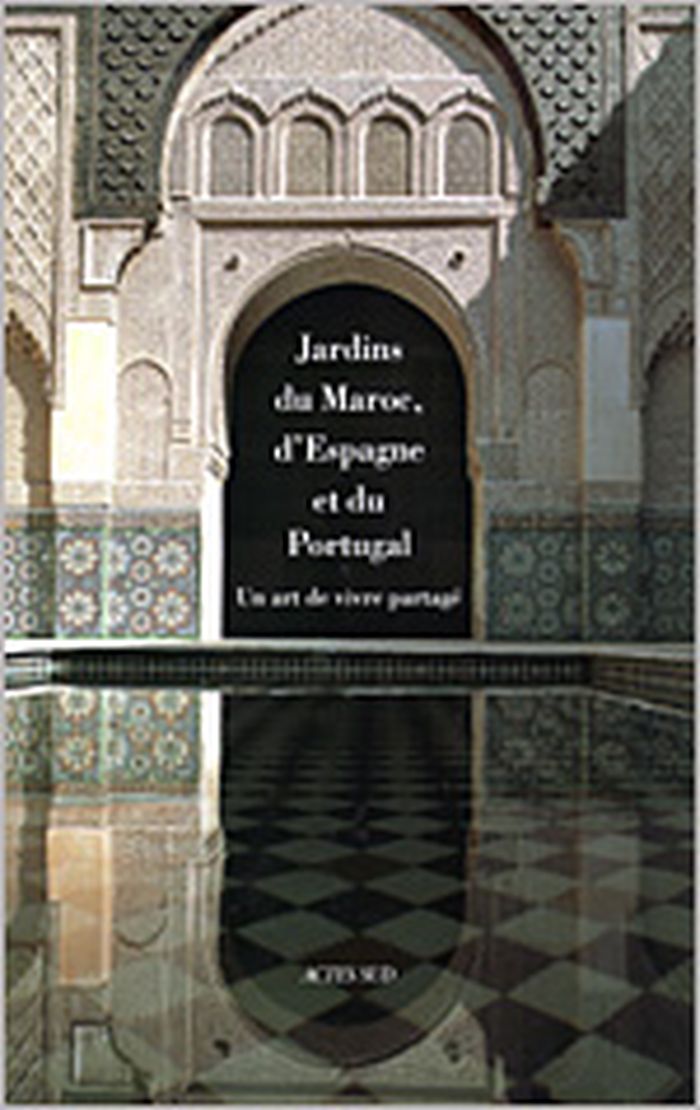
Née en Perse, puis transmise de l'Orient à l'Occident, la tradition du jardin islamique s'est implantée au Maroc, en Espagne et au Portugal, où aujourd'hui encore, comme le montre cet ouvrage, nous pouvons en voir de merveilleux exemples. Car si ces trois pays sont désormais séparés par dès frontières politiques et culturelles, ils ont partagé une longue histoire du ville au XVe siècle, celle d'al-Andalus, fondement d'un patrimoine commun dont les traces sont ,encore présentes dans le paysage rural et urbain contemporain. U art des jardins occupe en effet une place privilégiée dans cette mémoire partagée puisque, de Marrakech à Grenade, de Fès à Sintra, nous retrouvons les mêmes patios secrets cernés de murailles, les mêmes élégants pavillons élevés au-dessus de parterres fleuris, les mêmes bassins paisibles où se reflète le ciel. Trois auteurs issus de chacun de ces pays, spécialistes de l'histoire des jardins; retracent ici la géographie de ces lieux enchanteurs hérités du passé, analysent leur structure, évaluent lés modifications apportées au cours du temps. Si le Maroc a su conserver de façon vivante des jardins créés au XIIe siècle, l'Espagne a réussi à développer depuis lé Califat son héritage arabe et à l'enrichir sans lui faire perdre son âme, tandis que le Portugal prolongeait jusqu'au XVIe siècle ses échanges fructueux par-delà le détroit.
Jardins du Maroc, d'Espagne et du Portugal : un art de vivre partagé
Actions:
Price:
$126.00
(available to order)
Summary:
Née en Perse, puis transmise de l'Orient à l'Occident, la tradition du jardin islamique s'est implantée au Maroc, en Espagne et au Portugal, où aujourd'hui encore, comme le montre cet ouvrage, nous pouvons en voir de merveilleux exemples. Car si ces trois pays sont désormais séparés par dès frontières politiques et culturelles, ils ont partagé une longue histoire du ville au XVe siècle, celle d'al-Andalus, fondement d'un patrimoine commun dont les traces sont ,encore présentes dans le paysage rural et urbain contemporain. U art des jardins occupe en effet une place privilégiée dans cette mémoire partagée puisque, de Marrakech à Grenade, de Fès à Sintra, nous retrouvons les mêmes patios secrets cernés de murailles, les mêmes élégants pavillons élevés au-dessus de parterres fleuris, les mêmes bassins paisibles où se reflète le ciel. Trois auteurs issus de chacun de ces pays, spécialistes de l'histoire des jardins; retracent ici la géographie de ces lieux enchanteurs hérités du passé, analysent leur structure, évaluent lés modifications apportées au cours du temps. Si le Maroc a su conserver de façon vivante des jardins créés au XIIe siècle, l'Espagne a réussi à développer depuis lé Califat son héritage arabe et à l'enrichir sans lui faire perdre son âme, tandis que le Portugal prolongeait jusqu'au XVIe siècle ses échanges fructueux par-delà le détroit.
Form:
books
books
Publication:
January 1900, Paris / Madrid
January 1900, Paris / Madrid
Subject:
Gardens
Gardens
Form:
books
books
Actions:
Holdings:
Description:
216 pages : illustrations (chiefly color), maps (some color) ; 21 cm.
Description:
216 pages : illustrations (chiefly color), maps (some color) ; 21 cm.
Author:
Subject:
Publication:
Paris : Éditions du Patrimoine, Centre des monuments nationaux, [2024]
Paris : Éditions du Patrimoine, Centre des monuments nationaux, [2024]
Title:
Roland Schweitzer : modernité et longue durée / Amandine Diener, Daniel Le Couédic.
Actions:
Holdings:
Description:
216 pages : illustrations (chiefly color), maps (some color) ; 21 cm.
Roland Schweitzer : modernité et longue durée / Amandine Diener, Daniel Le Couédic.
Actions:
Holdings:
Description:
216 pages : illustrations (chiefly color), maps (some color) ; 21 cm.
Form:
books
books
Publication:
Paris : Éditions du Patrimoine, Centre des monuments nationaux, [2024]
Paris : Éditions du Patrimoine, Centre des monuments nationaux, [2024]
Author:
Subject:
Form:
books
books
Title:
New York geologics : representations of Manhattan from the anthropocene / Tiago Torres-Campos.
New York geologics : representations of Manhattan from the anthropocene / Tiago Torres-Campos.
Actions:
Holdings:
Description:
353 pages : illustrations (chiefly color), maps, plans ; 23 cm
Description:
353 pages : illustrations (chiefly color), maps, plans ; 23 cm
Author:
Subject:
Publication:
[Novato, California] : ORO Editions, [2025], ©2025
[Novato, California] : ORO Editions, [2025], ©2025
Title:
New York geologics : representations of Manhattan from the anthropocene / Tiago Torres-Campos.
Actions:
Holdings:
Description:
353 pages : illustrations (chiefly color), maps, plans ; 23 cm
New York geologics : representations of Manhattan from the anthropocene / Tiago Torres-Campos.
Actions:
Holdings:
Description:
353 pages : illustrations (chiefly color), maps, plans ; 23 cm
Form:
books
books
Publication:
[Novato, California] : ORO Editions, [2025], ©2025
[Novato, California] : ORO Editions, [2025], ©2025
Author:
Subject:
Form:
books
books
Price:
$82.95
(available to order)
Summary:
Après deux volumes consacrés l'un au lointain passé, l'autre à cette période du XXe siècle, 1940-1975, qui a vu se construire le paysage de la modernité, les Éditions du Moniteur publient aujourd'hui, avec le concours de l'AMO, le troisième volet d'une autre histoire de l'architecture, celle de sa maîtrise d'ouvrage. Les Bâtisseurs du présent traitent des vingt-cinq(...)
$82.95
(available to order)
Summary:
Après deux volumes consacrés l'un au lointain passé, l'autre à cette période du XXe siècle, 1940-1975, qui a vu se construire le paysage de la modernité, les Éditions du Moniteur publient aujourd'hui, avec le concours de l'AMO, le troisième volet d'une autre histoire de l'architecture, celle de sa maîtrise d'ouvrage. Les Bâtisseurs du présent traitent des vingt-cinq(...)
Title:
Les bâtisseurs du présent : histoire de la maîtrise d'ouvrage 1975-2000
Actions:
Price:
$82.95
(available to order)
Summary:
Après deux volumes consacrés l'un au lointain passé, l'autre à cette période du XXe siècle, 1940-1975, qui a vu se construire le paysage de la modernité, les Éditions du Moniteur publient aujourd'hui, avec le concours de l'AMO, le troisième volet d'une autre histoire de l'architecture, celle de sa maîtrise d'ouvrage. Les Bâtisseurs du présent traitent des vingt-cinq dernières années, 1975-2000, une période qui nous est si contemporaine qu'elle interdit toute approche proprement historique, par manque de distance suffisante. C'est pourquoi ce livre est une série de regards, appuyés sur des enquêtes: six essais suivis chacun de reportages sur les exemples ayant marqué notre époque. Le choix de ces exemples n'est pas tant celui de la simple qualité architecturale, bien sûr requise, que celui d'une réussite dans le déroulé de l'édification, dans l'accomplissement de la relation entre architectes et maîtres d'ouvrage. Quant aux essais, ils suivent le temps passé selon les fils des différents domaines de la construction, chacun d'entre eux ayant eu sa logique propre et ses acteurs particuliers : le grand territoire, l'espace urbain, le logement, les équipements publics, le monde du travail. Le tout constitue un panorama du présent, à la fois de l'architecture et des réflexions qu'elle suscite quand on examine les manières de conduire un projet. Que se passe-t-il aujourd'hui de l'idée à sa réalisation ? Quel est le juste rôle de chacun dans le processus ? Telles sont les questions auxquelles ce livre a tenté de répondre, à l'aube du XXIe siècle.
Les bâtisseurs du présent : histoire de la maîtrise d'ouvrage 1975-2000
Actions:
Price:
$82.95
(available to order)
Summary:
Après deux volumes consacrés l'un au lointain passé, l'autre à cette période du XXe siècle, 1940-1975, qui a vu se construire le paysage de la modernité, les Éditions du Moniteur publient aujourd'hui, avec le concours de l'AMO, le troisième volet d'une autre histoire de l'architecture, celle de sa maîtrise d'ouvrage. Les Bâtisseurs du présent traitent des vingt-cinq dernières années, 1975-2000, une période qui nous est si contemporaine qu'elle interdit toute approche proprement historique, par manque de distance suffisante. C'est pourquoi ce livre est une série de regards, appuyés sur des enquêtes: six essais suivis chacun de reportages sur les exemples ayant marqué notre époque. Le choix de ces exemples n'est pas tant celui de la simple qualité architecturale, bien sûr requise, que celui d'une réussite dans le déroulé de l'édification, dans l'accomplissement de la relation entre architectes et maîtres d'ouvrage. Quant aux essais, ils suivent le temps passé selon les fils des différents domaines de la construction, chacun d'entre eux ayant eu sa logique propre et ses acteurs particuliers : le grand territoire, l'espace urbain, le logement, les équipements publics, le monde du travail. Le tout constitue un panorama du présent, à la fois de l'architecture et des réflexions qu'elle suscite quand on examine les manières de conduire un projet. Que se passe-t-il aujourd'hui de l'idée à sa réalisation ? Quel est le juste rôle de chacun dans le processus ? Telles sont les questions auxquelles ce livre a tenté de répondre, à l'aube du XXIe siècle.
Form:
books
books
Publication:
October 2003, Paris
October 2003, Paris
Subject:
Architecture since 1900, Europe
Architecture since 1900, Europe
Form:
journals and magazines
journals and magazines
Actions:
Price:
$7.50
(available to order)
Summary:
Alors que les célébrations du 400e anniversaire de la ville de Québec vont bon train, Continuité s’intéresse au patrimoine maritime qui porte fièrement autant de bougies. Depuis la découverte des rives du fleuve, une ville a traversé le temps, cumulé des victoires, perdu des batailles, poursuivi son évolution avec son passé pour bagage. Au cœur des festivités, cette(...)
$7.50
(available to order)
Summary:
Alors que les célébrations du 400e anniversaire de la ville de Québec vont bon train, Continuité s’intéresse au patrimoine maritime qui porte fièrement autant de bougies. Depuis la découverte des rives du fleuve, une ville a traversé le temps, cumulé des victoires, perdu des batailles, poursuivi son évolution avec son passé pour bagage. Au cœur des festivités, cette(...)
Title:
Continuité 116: Québec ville maritime
Actions:
Price:
$7.50
(available to order)
Summary:
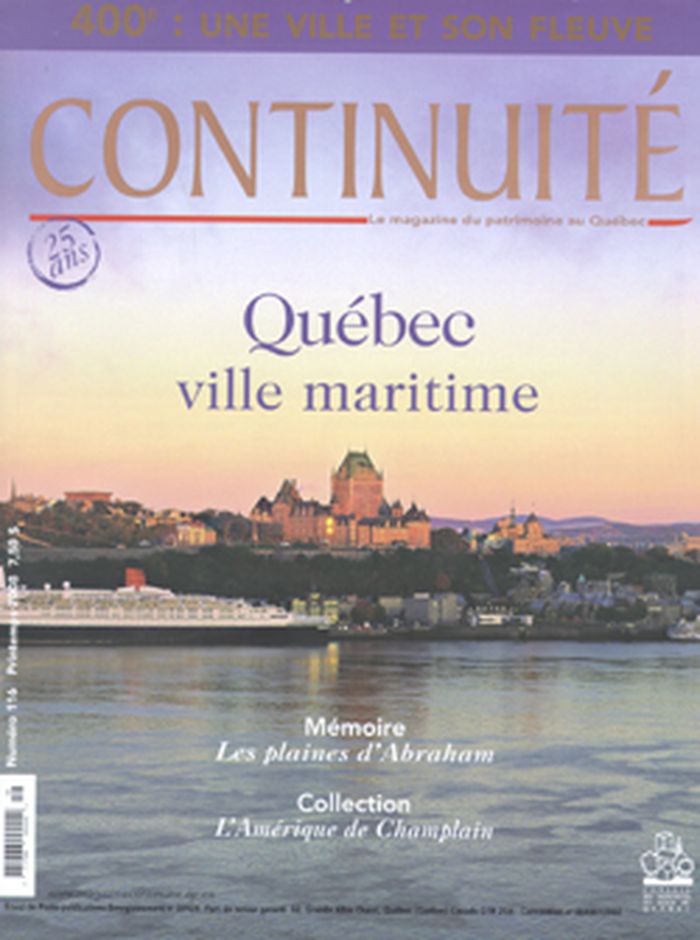
Alors que les célébrations du 400e anniversaire de la ville de Québec vont bon train, Continuité s’intéresse au patrimoine maritime qui porte fièrement autant de bougies. Depuis la découverte des rives du fleuve, une ville a traversé le temps, cumulé des victoires, perdu des batailles, poursuivi son évolution avec son passé pour bagage. Au cœur des festivités, cette histoire devrait être acclamée. Chaque chandelle qui s’allume sur Québec aujourd’hui devrait se souvenir d’une vie sociale et économique qui s’est tissée aux abords du Saint-Laurent, le fleuve pour trame de son histoire et de ses conquêtes. Des gens qui se passionnent pour les traces de vie passée qui résistent encore aux marées se sont tournés vers nous pour nous raconter l’histoire de la ville et de son fleuve. Célébrer ce 400e anniversaire, c’est rendre hommage aux années qui ont battu la mesure pour donner son rythme à la ville d’aujourd’hui. Les auteurs qui ont collaboré au présent numéro partagent avec nous ce qu’ils savent de ce chemin qu’a parcouru Québec depuis ses premiers pas. Et comme c’est fête aujourd’hui, ils offrent pour présent à la ville leurs meilleurs vœux : sauvegarder son lien au fleuve dans la mémoire collective et préserver ce qui subsiste encore de son riche patrimoine maritime. Que reste-t-il de son activité maritime passée, que nous raconte son patrimoine et quelle place occupent ses témoins riverains dans le paysage urbain contemporain ? Nous voilà prêts à souffler les bougies avec la tête pleine de souvenirs ! Caroline Marois Rédactrice en chef
Continuité 116: Québec ville maritime
Actions:
Price:
$7.50
(available to order)
Summary:
Alors que les célébrations du 400e anniversaire de la ville de Québec vont bon train, Continuité s’intéresse au patrimoine maritime qui porte fièrement autant de bougies. Depuis la découverte des rives du fleuve, une ville a traversé le temps, cumulé des victoires, perdu des batailles, poursuivi son évolution avec son passé pour bagage. Au cœur des festivités, cette histoire devrait être acclamée. Chaque chandelle qui s’allume sur Québec aujourd’hui devrait se souvenir d’une vie sociale et économique qui s’est tissée aux abords du Saint-Laurent, le fleuve pour trame de son histoire et de ses conquêtes. Des gens qui se passionnent pour les traces de vie passée qui résistent encore aux marées se sont tournés vers nous pour nous raconter l’histoire de la ville et de son fleuve. Célébrer ce 400e anniversaire, c’est rendre hommage aux années qui ont battu la mesure pour donner son rythme à la ville d’aujourd’hui. Les auteurs qui ont collaboré au présent numéro partagent avec nous ce qu’ils savent de ce chemin qu’a parcouru Québec depuis ses premiers pas. Et comme c’est fête aujourd’hui, ils offrent pour présent à la ville leurs meilleurs vœux : sauvegarder son lien au fleuve dans la mémoire collective et préserver ce qui subsiste encore de son riche patrimoine maritime. Que reste-t-il de son activité maritime passée, que nous raconte son patrimoine et quelle place occupent ses témoins riverains dans le paysage urbain contemporain ? Nous voilà prêts à souffler les bougies avec la tête pleine de souvenirs ! Caroline Marois Rédactrice en chef
Form:
journals and magazines
journals and magazines
Publication:
April 2008, Québec
April 2008, Québec
Subject:
Magazines
Magazines


