


588 Results
Form:
books
books
Title:
World brain
World brain
Actions:
Price:
$33.95
(available to order)
Summary:
In a series of talks and essays in 1937, H. G. Wells proselytized for what he called a "World Brain," as manifested in a World Encyclopedia--a repository of scientifically established knowledge--that would spread enlightenment around the world and lead to world peace. Wells, known to readers today as the author of "The War of the Worlds" and other science fiction(...)
$33.95
(available to order)
Summary:
In a series of talks and essays in 1937, H. G. Wells proselytized for what he called a "World Brain," as manifested in a World Encyclopedia--a repository of scientifically established knowledge--that would spread enlightenment around the world and lead to world peace. Wells, known to readers today as the author of "The War of the Worlds" and other science fiction(...)
Title:
World brain
Actions:
Price:
$33.95
(available to order)
Summary:
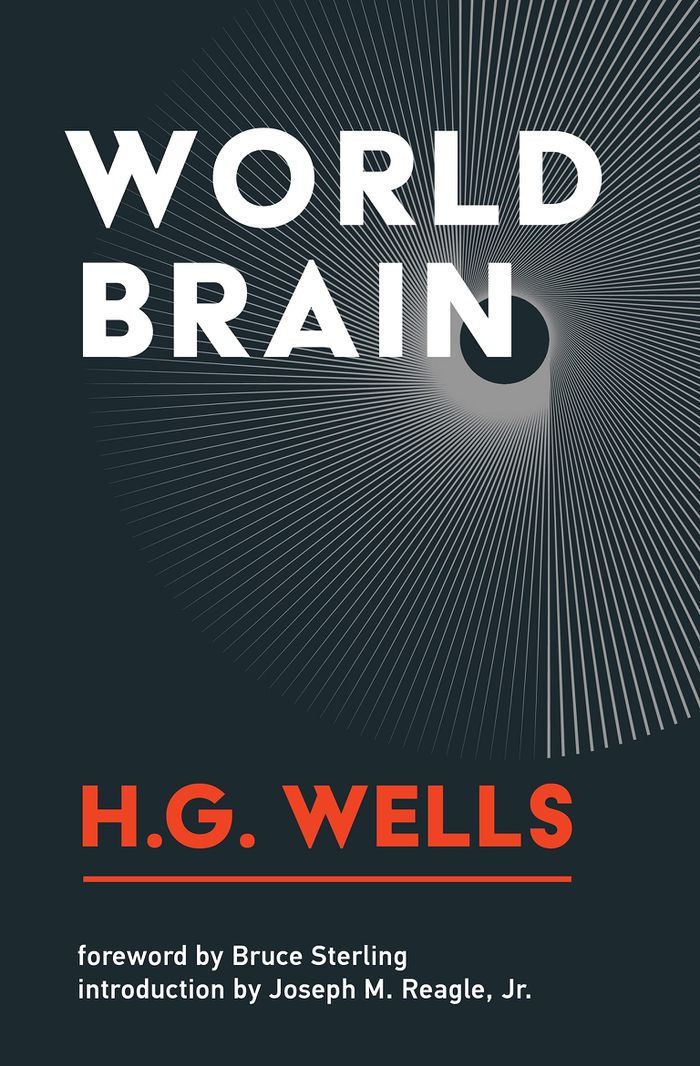
In a series of talks and essays in 1937, H. G. Wells proselytized for what he called a "World Brain," as manifested in a World Encyclopedia--a repository of scientifically established knowledge--that would spread enlightenment around the world and lead to world peace. Wells, known to readers today as the author of "The War of the Worlds" and other science fiction classics, was imagining something like a predigital Wikipedia. The World Encyclopedia would provide a summary of verified reality (in about forty volumes); it would be widely available, free of copyright, and utilize the latest technology. Of course, as Bruce Sterling points out in the foreword to this edition of Wells's work, the World Brain didn't happen; the internet did. And yet, Wells anticipated aspects of the internet, envisioning the World Brain as a technical system of networked knowledge (in Sterling's words, a "hypothetical super-gadget"). Wells's optimism about the power of information might strike readers today as naïvely utopian, but possibly also inspirational.
World brain
Actions:
Price:
$33.95
(available to order)
Summary:
In a series of talks and essays in 1937, H. G. Wells proselytized for what he called a "World Brain," as manifested in a World Encyclopedia--a repository of scientifically established knowledge--that would spread enlightenment around the world and lead to world peace. Wells, known to readers today as the author of "The War of the Worlds" and other science fiction classics, was imagining something like a predigital Wikipedia. The World Encyclopedia would provide a summary of verified reality (in about forty volumes); it would be widely available, free of copyright, and utilize the latest technology. Of course, as Bruce Sterling points out in the foreword to this edition of Wells's work, the World Brain didn't happen; the internet did. And yet, Wells anticipated aspects of the internet, envisioning the World Brain as a technical system of networked knowledge (in Sterling's words, a "hypothetical super-gadget"). Wells's optimism about the power of information might strike readers today as naïvely utopian, but possibly also inspirational.
Form:
books
books
Publication:
August 2021
August 2021
Subject:
Archive, library and the digital
Archive, library and the digital
Form:
books
books
Actions:
Price:
$55.00
(available to order)
Summary:
Bruce Davidson describes the genesis of this project thus: "Esquire's editors sent me to Los Angeles, and when I landed at LA International Airport I noticed giant palm trees growing in the parking lot. I ordered a hamburger through a microphone speaker in a drive-in called Tiny Naylor's. The freeways were blank and brilliant, chromium-plated bumpers reflected the Pacific(...)
$55.00
(available to order)
Summary:
Bruce Davidson describes the genesis of this project thus: "Esquire's editors sent me to Los Angeles, and when I landed at LA International Airport I noticed giant palm trees growing in the parking lot. I ordered a hamburger through a microphone speaker in a drive-in called Tiny Naylor's. The freeways were blank and brilliant, chromium-plated bumpers reflected the Pacific(...)
Title:
Bruce Davidson: Los Angeles 1964
Actions:
Price:
$55.00
(available to order)
Summary:
Bruce Davidson describes the genesis of this project thus: "Esquire's editors sent me to Los Angeles, and when I landed at LA International Airport I noticed giant palm trees growing in the parking lot. I ordered a hamburger through a microphone speaker in a drive-in called Tiny Naylor's. The freeways were blank and brilliant, chromium-plated bumpers reflected the Pacific Ocean, but the air quality was said to be bad. People looking like mannequins seemed at peace on the Sunset Strip while others were euphoric as they watered the desert. I stood there ready with my Leica, aware of my shadow on the pavement. I walked up to strangers, framed, focused and in a split second of alienations and cynicism, pressed the shutter button. Suddenly I had an awakening that led me to another level of visual understanding. But in the end, for some unknown reasons, the editors rejected the pictures, and I had to return home with a big box of prints, put them in a drawer, and forgot all about the trip."
Bruce Davidson: Los Angeles 1964
Actions:
Price:
$55.00
(available to order)
Summary:
Bruce Davidson describes the genesis of this project thus: "Esquire's editors sent me to Los Angeles, and when I landed at LA International Airport I noticed giant palm trees growing in the parking lot. I ordered a hamburger through a microphone speaker in a drive-in called Tiny Naylor's. The freeways were blank and brilliant, chromium-plated bumpers reflected the Pacific Ocean, but the air quality was said to be bad. People looking like mannequins seemed at peace on the Sunset Strip while others were euphoric as they watered the desert. I stood there ready with my Leica, aware of my shadow on the pavement. I walked up to strangers, framed, focused and in a split second of alienations and cynicism, pressed the shutter button. Suddenly I had an awakening that led me to another level of visual understanding. But in the end, for some unknown reasons, the editors rejected the pictures, and I had to return home with a big box of prints, put them in a drawer, and forgot all about the trip."
Form:
books
books
Publication:
March 2015
March 2015
Subject:
Photography monographs
Photography monographs
Form:
books
books
Actions:
Price:
$59.50
(available to order)
Summary:
From the targeted demolition of Mostar's Stari-Most Bridge in 1993 to the physical and social havoc caused by the 2004 Boxing Day Tsunami, the history of cities is often a history of destruction and reconstruction. But what political and aesthetic criteria should guide us in the rebuilding of cities devastated by war and natural calamities? This publication points to(...)
$59.50
(available to order)
Summary:
From the targeted demolition of Mostar's Stari-Most Bridge in 1993 to the physical and social havoc caused by the 2004 Boxing Day Tsunami, the history of cities is often a history of destruction and reconstruction. But what political and aesthetic criteria should guide us in the rebuilding of cities devastated by war and natural calamities? This publication points to(...)
Title:
Architects without frontiers: war, reconstruction and design responsibility
Actions:
Price:
$59.50
(available to order)
Summary:
From the targeted demolition of Mostar's Stari-Most Bridge in 1993 to the physical and social havoc caused by the 2004 Boxing Day Tsunami, the history of cities is often a history of destruction and reconstruction. But what political and aesthetic criteria should guide us in the rebuilding of cities devastated by war and natural calamities? This publication points to the potential for architects to play important roles in post-war relief and reconstruction. Charlesworth suggests that architects and design professionals have a significant opportunity to assist peace-making and reconstruction efforts in the period immediately after conflict or disaster, when much of the housing, hospital, educational, transport, civic and business infrastructure has been destroyed or badly damaged. Through selected case studies, Charlesworth examines the role of architects, planners, urban designers and landscape architects in three cities following conflict - Beirut, Nicosia and Mostar - three cities where the mental and physical scars of violent conflict still remain. This book expands the traditional role of the architect from 'hero' to 'peacemaker' and discusses how design educators can stretch their wings to encompass the proliferating agendas and sites of civil unrest.
Architects without frontiers: war, reconstruction and design responsibility
Actions:
Price:
$59.50
(available to order)
Summary:
From the targeted demolition of Mostar's Stari-Most Bridge in 1993 to the physical and social havoc caused by the 2004 Boxing Day Tsunami, the history of cities is often a history of destruction and reconstruction. But what political and aesthetic criteria should guide us in the rebuilding of cities devastated by war and natural calamities? This publication points to the potential for architects to play important roles in post-war relief and reconstruction. Charlesworth suggests that architects and design professionals have a significant opportunity to assist peace-making and reconstruction efforts in the period immediately after conflict or disaster, when much of the housing, hospital, educational, transport, civic and business infrastructure has been destroyed or badly damaged. Through selected case studies, Charlesworth examines the role of architects, planners, urban designers and landscape architects in three cities following conflict - Beirut, Nicosia and Mostar - three cities where the mental and physical scars of violent conflict still remain. This book expands the traditional role of the architect from 'hero' to 'peacemaker' and discusses how design educators can stretch their wings to encompass the proliferating agendas and sites of civil unrest.
Form:
books
books
Publication:
April 2006
April 2006
Subject:
Architectural Theory
Architectural Theory
Form:
books
books
Title:
Natural history of silence
Natural history of silence
Actions:
Price:
$30.95
(available to order)
Summary:
In our busy, noisy world, we may find ourselves longing for silence. But what is silence exactly? Is it the total absence of sound? Or is it the absence of the sound created by humans – the kind of deep stillness you might experience in a remote mountain landscape covered in snow, far away from the bustle of human life? When we listen closely, silence reveals a neglected(...)
$30.95
(available to order)
Summary:
In our busy, noisy world, we may find ourselves longing for silence. But what is silence exactly? Is it the total absence of sound? Or is it the absence of the sound created by humans – the kind of deep stillness you might experience in a remote mountain landscape covered in snow, far away from the bustle of human life? When we listen closely, silence reveals a neglected(...)
Title:
Natural history of silence
Actions:
Price:
$30.95
(available to order)
Summary:
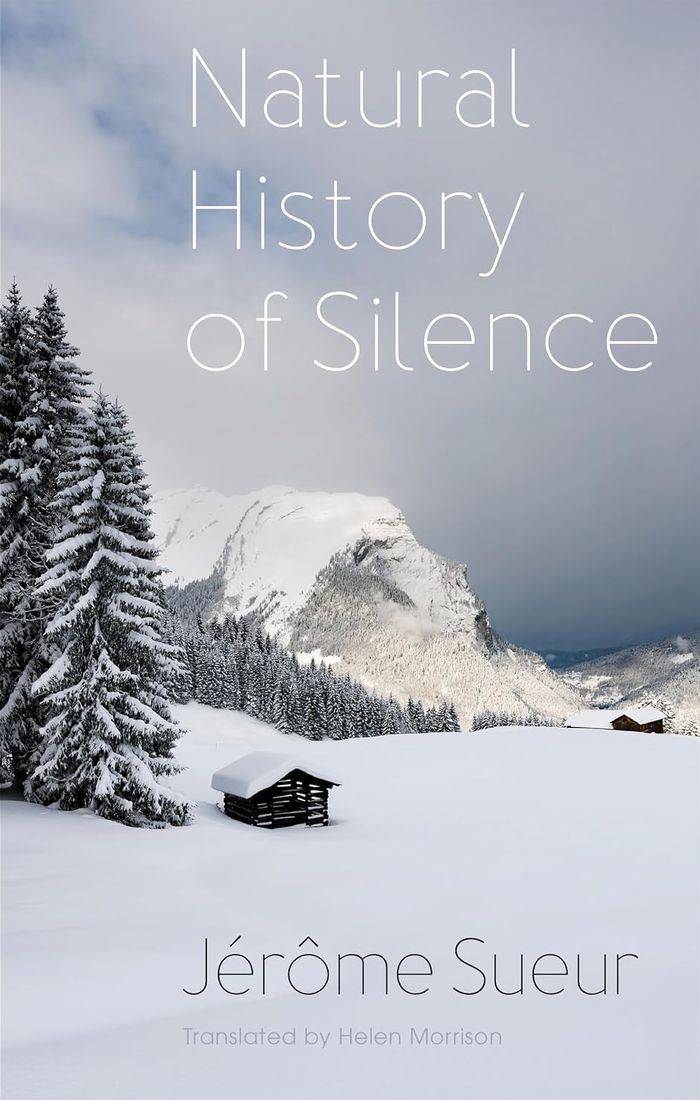
In our busy, noisy world, we may find ourselves longing for silence. But what is silence exactly? Is it the total absence of sound? Or is it the absence of the sound created by humans – the kind of deep stillness you might experience in a remote mountain landscape covered in snow, far away from the bustle of human life? When we listen closely, silence reveals a neglected reality. Neither empty nor singular, silence is instead plentiful and multiple. In this book, eco-acoustic historian Jérôme Sueur allows us to discover a vast landscape of silences which trigger the full gamut of our emotions: anxiety, awe and peace. He takes us from vistas resplendent with full and rich natural silences to the everyday silence of predators as they stalk their prey. To explore silences in animal behaviour and ecology is to discover a counterpoint to the acoustic diversity of the natural world, throwing into sharp relief the grating reverberations of the human activity which threatens it. It is to attune ourselves to a world that our human insensitivities have closed off to us, to take a moment simply to breathe and listen to the place of silence in nature.
Natural history of silence
Actions:
Price:
$30.95
(available to order)
Summary:
In our busy, noisy world, we may find ourselves longing for silence. But what is silence exactly? Is it the total absence of sound? Or is it the absence of the sound created by humans – the kind of deep stillness you might experience in a remote mountain landscape covered in snow, far away from the bustle of human life? When we listen closely, silence reveals a neglected reality. Neither empty nor singular, silence is instead plentiful and multiple. In this book, eco-acoustic historian Jérôme Sueur allows us to discover a vast landscape of silences which trigger the full gamut of our emotions: anxiety, awe and peace. He takes us from vistas resplendent with full and rich natural silences to the everyday silence of predators as they stalk their prey. To explore silences in animal behaviour and ecology is to discover a counterpoint to the acoustic diversity of the natural world, throwing into sharp relief the grating reverberations of the human activity which threatens it. It is to attune ourselves to a world that our human insensitivities have closed off to us, to take a moment simply to breathe and listen to the place of silence in nature.
Form:
books
books
Publication:
January 2025
January 2025
Subject:
Acoustics
Acoustics
Form:
books
books

Actions:
Price:
$80.00
(available to order)
Summary:
This book offers a portrait of the lives and struggles of Palestinians living in the occupied Palestinian territories on the West Bank, in particular the South Hebron Hills and the Jordan Valley. Among the topics highlighted are house demolitions; confrontations between Palestinian shepherds or farmers and Israeli settlers, soldiers, and police; the daily challenges of(...)
$80.00
(available to order)
Summary:
This book offers a portrait of the lives and struggles of Palestinians living in the occupied Palestinian territories on the West Bank, in particular the South Hebron Hills and the Jordan Valley. Among the topics highlighted are house demolitions; confrontations between Palestinian shepherds or farmers and Israeli settlers, soldiers, and police; the daily challenges of(...)
Title:
The bitter landscapes of Palestine
Actions:
Price:
$80.00
(available to order)
Summary:
This book offers a portrait of the lives and struggles of Palestinians living in the occupied Palestinian territories on the West Bank, in particular the South Hebron Hills and the Jordan Valley. Among the topics highlighted are house demolitions; confrontations between Palestinian shepherds or farmers and Israeli settlers, soldiers, and police; the daily challenges of sheer existence posed by the occupation system, intent on pushing Palestinians off their land; and the tenacity and courage that these conditions require. The book endeavors to impart to the reader a sense of the beauty of the landscape, the sound of the language, the taste of friendships, and the richness of a way of life that is threatened with extinction. Voices of activists, both Palestinian and Jewish, are also present. The introduction sets forth, in brief, the historical context that generated present realities in Palestine as well as the history of the authors’ partnership. The book’s viewpoint reflects many years of activism on the peace and human rights front in Palestine as well as an ongoing conversation between two authors who have experienced together the continually renewed astonishment that comes with such encounters.
The bitter landscapes of Palestine
Actions:
Price:
$80.00
(available to order)
Summary:
This book offers a portrait of the lives and struggles of Palestinians living in the occupied Palestinian territories on the West Bank, in particular the South Hebron Hills and the Jordan Valley. Among the topics highlighted are house demolitions; confrontations between Palestinian shepherds or farmers and Israeli settlers, soldiers, and police; the daily challenges of sheer existence posed by the occupation system, intent on pushing Palestinians off their land; and the tenacity and courage that these conditions require. The book endeavors to impart to the reader a sense of the beauty of the landscape, the sound of the language, the taste of friendships, and the richness of a way of life that is threatened with extinction. Voices of activists, both Palestinian and Jewish, are also present. The introduction sets forth, in brief, the historical context that generated present realities in Palestine as well as the history of the authors’ partnership. The book’s viewpoint reflects many years of activism on the peace and human rights front in Palestine as well as an ongoing conversation between two authors who have experienced together the continually renewed astonishment that comes with such encounters.
Form:
books
books
Publication:
July 2024
July 2024
Subject:
Theory of Photography
Theory of Photography
Form:
books
books
Title:
The world : who wants it?
The world : who wants it?
Actions:
Price:
$24.50
(available to order)
Summary:
"The World: Who Wants It?" proposes a concrete plan, albeit satirical, for re-establishing world peace. Set in the near present, the $100 billion that has been pledged by the United States to address the world's wrongs is used to advocate consumptive restraint and to seek new American Values, thus lessening the fury of the Third World against America's apparent wastage,(...)
$24.50
(available to order)
Summary:
"The World: Who Wants It?" proposes a concrete plan, albeit satirical, for re-establishing world peace. Set in the near present, the $100 billion that has been pledged by the United States to address the world's wrongs is used to advocate consumptive restraint and to seek new American Values, thus lessening the fury of the Third World against America's apparent wastage,(...)
Title:
The world : who wants it?
Actions:
Price:
$24.50
(available to order)
Summary:
"The World: Who Wants It?" proposes a concrete plan, albeit satirical, for re-establishing world peace. Set in the near present, the $100 billion that has been pledged by the United States to address the world's wrongs is used to advocate consumptive restraint and to seek new American Values, thus lessening the fury of the Third World against America's apparent wastage, misuse of resources, vice, and militaristic bombast. In this vision of a new world order, International policy largely focuses on the rebuilding of the city of Jerusalem so as to accommodate all the hope and aspirations of the three Abrahamic faiths, Christianity, Islam, and Judaism. The starting point for Ben Nicholson's restructuring of the world is that what was remarkable about the World Trade Center is that its given name purported to suggest that the building was the center of world trade. When the towers were removed they took along with them a myriad of links and responsibilities that course throughout the globe, touching every aspect of life. It is ultimately immaterial what the shape and size of the rebuilt World Trade Center will be, unless the whole world is simultaneously rethought and restructured along with the reconstruction. What would the new world order be?
The world : who wants it?
Actions:
Price:
$24.50
(available to order)
Summary:
"The World: Who Wants It?" proposes a concrete plan, albeit satirical, for re-establishing world peace. Set in the near present, the $100 billion that has been pledged by the United States to address the world's wrongs is used to advocate consumptive restraint and to seek new American Values, thus lessening the fury of the Third World against America's apparent wastage, misuse of resources, vice, and militaristic bombast. In this vision of a new world order, International policy largely focuses on the rebuilding of the city of Jerusalem so as to accommodate all the hope and aspirations of the three Abrahamic faiths, Christianity, Islam, and Judaism. The starting point for Ben Nicholson's restructuring of the world is that what was remarkable about the World Trade Center is that its given name purported to suggest that the building was the center of world trade. When the towers were removed they took along with them a myriad of links and responsibilities that course throughout the globe, touching every aspect of life. It is ultimately immaterial what the shape and size of the rebuilt World Trade Center will be, unless the whole world is simultaneously rethought and restructured along with the reconstruction. What would the new world order be?
Form:
books
books
Publication:
March 2004, London
March 2004, London
Subject:
Architectural Theory
Architectural Theory
Form:
books
books
Price:
$34.95
(available to order)
Summary:
This anthology by members of the Mohawk Warrior Society uncovers a hidden history and paints a bold portrait of the spectacular experience of Kanien'kehá:ka survival and self-defense. Providing extensive documentation, context, and analysis, the book features foundational writings by prolific visual artist and polemicist Louis Karoniaktajeh Hall (1918–1993)—such as his(...)
$34.95
(available to order)
Summary:
This anthology by members of the Mohawk Warrior Society uncovers a hidden history and paints a bold portrait of the spectacular experience of Kanien'kehá:ka survival and self-defense. Providing extensive documentation, context, and analysis, the book features foundational writings by prolific visual artist and polemicist Louis Karoniaktajeh Hall (1918–1993)—such as his(...)
Title:
The Mohawk Warrior Society: auto-history of the Rotisken'rhakéhte
Actions:
Price:
$34.95
(available to order)
Summary:
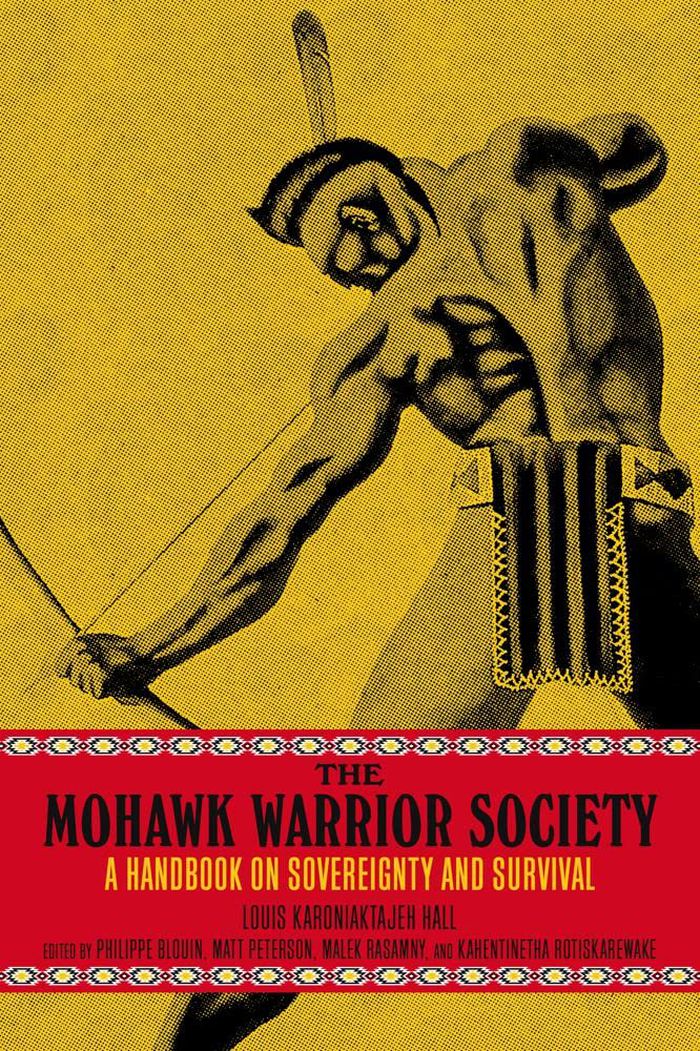
This anthology by members of the Mohawk Warrior Society uncovers a hidden history and paints a bold portrait of the spectacular experience of Kanien'kehá:ka survival and self-defense. Providing extensive documentation, context, and analysis, the book features foundational writings by prolific visual artist and polemicist Louis Karoniaktajeh Hall (1918–1993)—such as his landmark 1979 pamphlet, The Warrior’s Handbook, as well as selections of his pioneering artwork. This book contains new oral history by key figures of the Rotisken'rhakéhte's revival in the 1970s, and tells the story of the Warriors’ famous flag, their armed occupation of Ganienkeh in 1974, and the role of their constitution, the Great Peace, in guiding their commitment to freedom and independence. We hear directly the story of how the Kanien'kehá:ka Longhouse became one the most militant resistance groups in North America, gaining international attention with the Oka Crisis of 1990. This auto-history of the Rotisken'rhakéhte is complemented by a Mohawk history timeline from colonization to the present, a glossary of Mohawk political philosophy, and a new map of Iroquoia in Mohawk language. At last, the Mohawk Warriors can tell their own story with their own voices, and to serve as an example and inspiration for future generations struggling against the environmental, cultural, and social devastation cast upon the modern world.
The Mohawk Warrior Society: auto-history of the Rotisken'rhakéhte
Actions:
Price:
$34.95
(available to order)
Summary:
This anthology by members of the Mohawk Warrior Society uncovers a hidden history and paints a bold portrait of the spectacular experience of Kanien'kehá:ka survival and self-defense. Providing extensive documentation, context, and analysis, the book features foundational writings by prolific visual artist and polemicist Louis Karoniaktajeh Hall (1918–1993)—such as his landmark 1979 pamphlet, The Warrior’s Handbook, as well as selections of his pioneering artwork. This book contains new oral history by key figures of the Rotisken'rhakéhte's revival in the 1970s, and tells the story of the Warriors’ famous flag, their armed occupation of Ganienkeh in 1974, and the role of their constitution, the Great Peace, in guiding their commitment to freedom and independence. We hear directly the story of how the Kanien'kehá:ka Longhouse became one the most militant resistance groups in North America, gaining international attention with the Oka Crisis of 1990. This auto-history of the Rotisken'rhakéhte is complemented by a Mohawk history timeline from colonization to the present, a glossary of Mohawk political philosophy, and a new map of Iroquoia in Mohawk language. At last, the Mohawk Warriors can tell their own story with their own voices, and to serve as an example and inspiration for future generations struggling against the environmental, cultural, and social devastation cast upon the modern world.
Form:
books
books
Publication:
January 2023
January 2023
Form:
books
books
Actions:
Price:
$39.95
(available in store)
Summary:
How do you experience a public space? Do you feel safe? Seen? Represented? The response to these questions may differ based on factors including your race, age, ethnicity, or gender identity. In the architecture and design professions, decisions about the articulation of public spaces and who may be honored in them have often been made by white men. How do designers(...)
$39.95
(available in store)
Summary:
How do you experience a public space? Do you feel safe? Seen? Represented? The response to these questions may differ based on factors including your race, age, ethnicity, or gender identity. In the architecture and design professions, decisions about the articulation of public spaces and who may be honored in them have often been made by white men. How do designers(...)
Title:
Empathic design: perspectives on creating inclusive spaces
Actions:
Price:
$39.95
(available in store)
Summary:
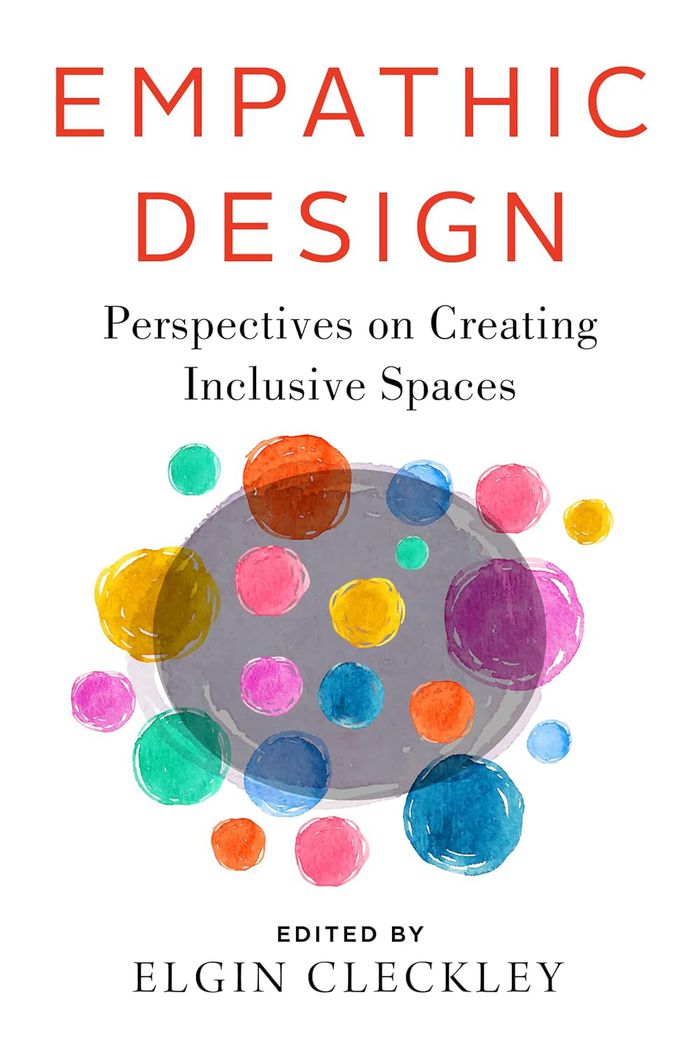
How do you experience a public space? Do you feel safe? Seen? Represented? The response to these questions may differ based on factors including your race, age, ethnicity, or gender identity. In the architecture and design professions, decisions about the articulation of public spaces and who may be honored in them have often been made by white men. How do designers rethink design processes to produce works that hold space for the diversity of people using them? In "Empathic design," designer and architecture professor Elgin Cleckley brings together leaders and visionary practitioners in architecture, urban design, planning, and design activism to help explore these questions. Cleckley explains that empathic designers need to approach design as iterative, changing, and shifting to say, "we see you", "we hear you". Part of an emerging design framework, empathic designers work with and in the communities affected. They acknowledge the full history of a place and approach the lived experience and memories of those in the community with respect. Early chapters explore broader conceptual approaches, proposing definitions of empathy in the context of design, disrupting colonial narratives, and making space for grief. Other chapters highlight specific design projects, including the Harriet Tubman Memorial in Newark, The Camp Barker Memorial in Washington, D.C., the Freedom Center in Oklahoma City, and the Charlottesville Memorial for Peace and Justice.
Empathic design: perspectives on creating inclusive spaces
Actions:
Price:
$39.95
(available in store)
Summary:
How do you experience a public space? Do you feel safe? Seen? Represented? The response to these questions may differ based on factors including your race, age, ethnicity, or gender identity. In the architecture and design professions, decisions about the articulation of public spaces and who may be honored in them have often been made by white men. How do designers rethink design processes to produce works that hold space for the diversity of people using them? In "Empathic design," designer and architecture professor Elgin Cleckley brings together leaders and visionary practitioners in architecture, urban design, planning, and design activism to help explore these questions. Cleckley explains that empathic designers need to approach design as iterative, changing, and shifting to say, "we see you", "we hear you". Part of an emerging design framework, empathic designers work with and in the communities affected. They acknowledge the full history of a place and approach the lived experience and memories of those in the community with respect. Early chapters explore broader conceptual approaches, proposing definitions of empathy in the context of design, disrupting colonial narratives, and making space for grief. Other chapters highlight specific design projects, including the Harriet Tubman Memorial in Newark, The Camp Barker Memorial in Washington, D.C., the Freedom Center in Oklahoma City, and the Charlottesville Memorial for Peace and Justice.
Form:
books
books
Publication:
January 2024
January 2024
Subject:
Design Theory
Design Theory
Form:
books
books
Actions:
Price:
$34.95
(available to order)
Summary:
From April to October in 1964 and 1965, some 52 million people from around the world flocked to the New York World's Fair, an experience that lives on in the memory of many individuals and in America's collective consciousness. Lawrence R. Samuel offers a thought-provoking portrait of this seminal event and of the cultural climate that surrounded it, countering critics'(...)
$34.95
(available to order)
Summary:
From April to October in 1964 and 1965, some 52 million people from around the world flocked to the New York World's Fair, an experience that lives on in the memory of many individuals and in America's collective consciousness. Lawrence R. Samuel offers a thought-provoking portrait of this seminal event and of the cultural climate that surrounded it, countering critics'(...)
Publication:
October 2007, Syracuse
October 2007, Syracuse
Title:
The end of innocence : The 1964-1965 New York world's fair
Actions:
Price:
$34.95
(available to order)
Summary:
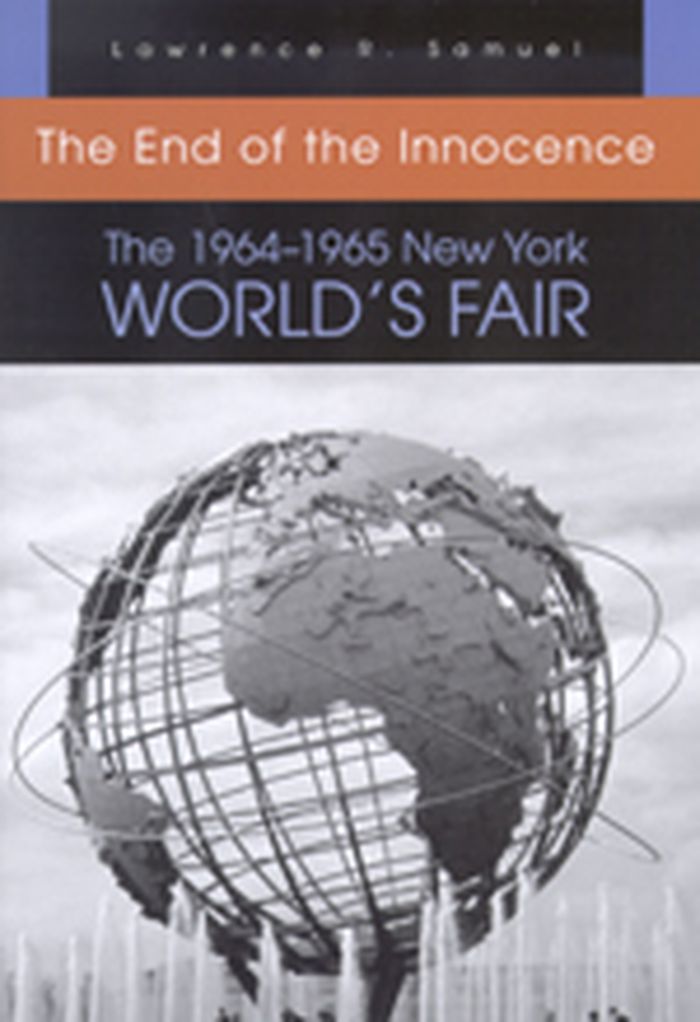
From April to October in 1964 and 1965, some 52 million people from around the world flocked to the New York World's Fair, an experience that lives on in the memory of many individuals and in America's collective consciousness. Lawrence R. Samuel offers a thought-provoking portrait of this seminal event and of the cultural climate that surrounded it, countering critics' assessment of the Fair as the "ugly duckling" of global expositions. Although much attention has been paid to the controversial role of Fair president Robert Moses, who tried to use the event to ensure his personal legacy, the Fair itself was for the great majority of visitors an overwhelmingly positive, often inspirational, and sometimes transcendent experience that truly delivered on its theme of "peace through understanding." Much of the Fair's popularity, Samuel suggests, stemmed from its looking backward as much as forward, offering visitors sanctuary from the cultural storm that was rapidly approaching in the mid-1960s. Opening just five months after President Kennedy's assassination, the Fair allowed millions to celebrate international brotherhood while the conflict in Vietnam came to a boil. The Fair glorified the postwar American dream of limitless optimism just as a counterculture of sex, drugs, and rock 'n' roll was coming into being. It was, in short, the last gasp of the American Dream: The End of the Innocence.
The end of innocence : The 1964-1965 New York world's fair
Actions:
Price:
$34.95
(available to order)
Summary:
From April to October in 1964 and 1965, some 52 million people from around the world flocked to the New York World's Fair, an experience that lives on in the memory of many individuals and in America's collective consciousness. Lawrence R. Samuel offers a thought-provoking portrait of this seminal event and of the cultural climate that surrounded it, countering critics' assessment of the Fair as the "ugly duckling" of global expositions. Although much attention has been paid to the controversial role of Fair president Robert Moses, who tried to use the event to ensure his personal legacy, the Fair itself was for the great majority of visitors an overwhelmingly positive, often inspirational, and sometimes transcendent experience that truly delivered on its theme of "peace through understanding." Much of the Fair's popularity, Samuel suggests, stemmed from its looking backward as much as forward, offering visitors sanctuary from the cultural storm that was rapidly approaching in the mid-1960s. Opening just five months after President Kennedy's assassination, the Fair allowed millions to celebrate international brotherhood while the conflict in Vietnam came to a boil. The Fair glorified the postwar American dream of limitless optimism just as a counterculture of sex, drugs, and rock 'n' roll was coming into being. It was, in short, the last gasp of the American Dream: The End of the Innocence.
Form:
books
books
Publication:
October 2007, Syracuse
October 2007, Syracuse
Form:
books
books
Actions:
Price:
$45.95
(available to order)
Summary:
In his new book, critical theorist Mark Neocleous engages in a sustained critique of the theory and practice of pacification. Combining philosophical analysis with historical detail, Neocleous analyses the development of pacification as a key concept through which capitalist modernity has been organised, offering readers the first book that treats pacification as an(...)
$45.95
(available to order)
Summary:
In his new book, critical theorist Mark Neocleous engages in a sustained critique of the theory and practice of pacification. Combining philosophical analysis with historical detail, Neocleous analyses the development of pacification as a key concept through which capitalist modernity has been organised, offering readers the first book that treats pacification as an(...)
Title:
Pacification: Social war and the power of police
Actions:
Price:
$45.95
(available to order)
Summary:
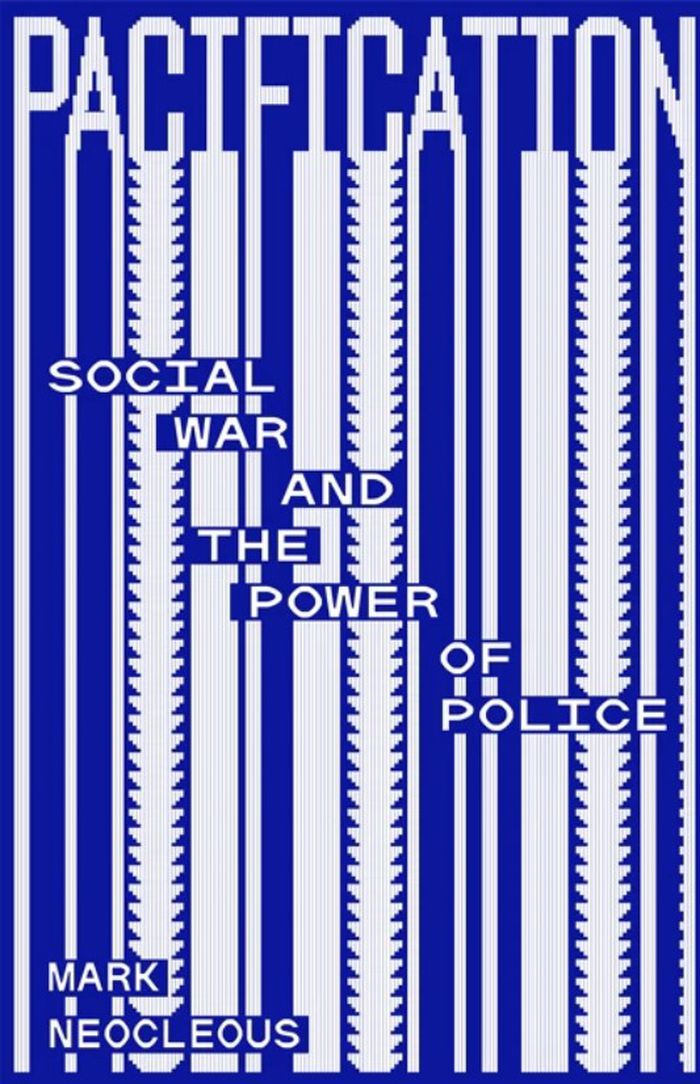
In his new book, critical theorist Mark Neocleous engages in a sustained critique of the theory and practice of pacification. Combining philosophical analysis with historical detail, Neocleous analyses the development of pacification as a key concept through which capitalist modernity has been organised, offering readers the first book that treats pacification as an important concept in the history of state power and capitalism. Neocleous’s approach is fourfold, examining pacification as social warfare carried out through the ideology of peace; as a form of social police carried out through mechanisms of security; as law and order exercised through the permanent wars of class society; and as the myriad practices of power designed to counter insurgency. Making use of official documents of state, the writings of counterinsurgency thinkers and the ideas perpetuated by practitioners of counterrevolution, the book unravels the complex ways through which pacification generates new forms of social war and new modes of policing that reproduce capitalist order and fabricate obedient subjects. Through expansive accounts of war and police, and engaging with a range of topics from debt to death, from stasis to civil war, and from the police kettle to the politics of fear, the book offers a provocative analysis of the ways in which state and capital combine to build a pacified social order.
Pacification: Social war and the power of police
Actions:
Price:
$45.95
(available to order)
Summary:
In his new book, critical theorist Mark Neocleous engages in a sustained critique of the theory and practice of pacification. Combining philosophical analysis with historical detail, Neocleous analyses the development of pacification as a key concept through which capitalist modernity has been organised, offering readers the first book that treats pacification as an important concept in the history of state power and capitalism. Neocleous’s approach is fourfold, examining pacification as social warfare carried out through the ideology of peace; as a form of social police carried out through mechanisms of security; as law and order exercised through the permanent wars of class society; and as the myriad practices of power designed to counter insurgency. Making use of official documents of state, the writings of counterinsurgency thinkers and the ideas perpetuated by practitioners of counterrevolution, the book unravels the complex ways through which pacification generates new forms of social war and new modes of policing that reproduce capitalist order and fabricate obedient subjects. Through expansive accounts of war and police, and engaging with a range of topics from debt to death, from stasis to civil war, and from the police kettle to the politics of fear, the book offers a provocative analysis of the ways in which state and capital combine to build a pacified social order.
Form:
books
books
Publication:
February 2025
February 2025
Subject:
Social
Social


