


36154 Results
Form:
books
books

Title:
Cairo : histories of a city
Cairo : histories of a city
Actions:
Price:
$31.00
(available to order)
Summary:
From its earliest days as a royal settlement fronting the pyramids of Giza to its current manifestation as the largest metropolis in Africa, Cairo has forever captured the urban pulse of the Middle East. In this publication, Nezar AlSayyad narrates the many Cairos that have existed throughout time, offering a panoramic view of the city’s history unmatched in temporal and(...)
$31.00
(available to order)
Summary:
From its earliest days as a royal settlement fronting the pyramids of Giza to its current manifestation as the largest metropolis in Africa, Cairo has forever captured the urban pulse of the Middle East. In this publication, Nezar AlSayyad narrates the many Cairos that have existed throughout time, offering a panoramic view of the city’s history unmatched in temporal and(...)
Publication:
May 2011
May 2011
Title:
Cairo : histories of a city
Actions:
Price:
$31.00
(available to order)
Summary:
From its earliest days as a royal settlement fronting the pyramids of Giza to its current manifestation as the largest metropolis in Africa, Cairo has forever captured the urban pulse of the Middle East. In this publication, Nezar AlSayyad narrates the many Cairos that have existed throughout time, offering a panoramic view of the city’s history unmatched in temporal and geographic scope, through an in-depth examination of its architecture and urban form. In twelve vignettes, accompanied by drawings, photographs, and maps, AlSayyad details the shifts in Cairo’s built environment through stories of important figures who marked the cityscape with their personal ambitions and their political ideologies. The city is visually reconstructed and brought to life not only as a physical fabric but also as a social and political order—a city built within, upon, and over, resulting in a present-day richly layered urban environment. Each chapter attempts to capture a defining moment in the life trajectory of a city loved for all of its evocations and contradictions. Throughout, AlSayyad illuminates not only the spaces that make up Cairo but also the figures that shaped them, including its chroniclers, from Herodotus to Mahfouz, who recorded the deeds of great and ordinary Cairenes alike. He pays particular attention to how the imperatives of Egypt's various rulers and regimes—from the pharaohs to Sadat and beyond—have inscribed themselves in the city that residents navigate today.
Cairo : histories of a city
Actions:
Price:
$31.00
(available to order)
Summary:
From its earliest days as a royal settlement fronting the pyramids of Giza to its current manifestation as the largest metropolis in Africa, Cairo has forever captured the urban pulse of the Middle East. In this publication, Nezar AlSayyad narrates the many Cairos that have existed throughout time, offering a panoramic view of the city’s history unmatched in temporal and geographic scope, through an in-depth examination of its architecture and urban form. In twelve vignettes, accompanied by drawings, photographs, and maps, AlSayyad details the shifts in Cairo’s built environment through stories of important figures who marked the cityscape with their personal ambitions and their political ideologies. The city is visually reconstructed and brought to life not only as a physical fabric but also as a social and political order—a city built within, upon, and over, resulting in a present-day richly layered urban environment. Each chapter attempts to capture a defining moment in the life trajectory of a city loved for all of its evocations and contradictions. Throughout, AlSayyad illuminates not only the spaces that make up Cairo but also the figures that shaped them, including its chroniclers, from Herodotus to Mahfouz, who recorded the deeds of great and ordinary Cairenes alike. He pays particular attention to how the imperatives of Egypt's various rulers and regimes—from the pharaohs to Sadat and beyond—have inscribed themselves in the city that residents navigate today.
Form:
books
books
Publication:
May 2011
May 2011
Form:
books
books
Title:
Digital cultures
Digital cultures
Actions:
Price:
$26.00
(available to order)
Summary:
Writing accessibly about the underlying technology, Doueihi explores the multidimensional question of what it means to participate in online culture—from literacy and citizenship to texts, archiving, and storage. By bringing together topics explored separately elsewhere—such as copyright, digital subjectivity, and social networks—Digital Cultures offers a comprehensive(...)
$26.00
(available to order)
Summary:
Writing accessibly about the underlying technology, Doueihi explores the multidimensional question of what it means to participate in online culture—from literacy and citizenship to texts, archiving, and storage. By bringing together topics explored separately elsewhere—such as copyright, digital subjectivity, and social networks—Digital Cultures offers a comprehensive(...)
Title:
Digital cultures
Actions:
Price:
$26.00
(available to order)
Summary:
Writing accessibly about the underlying technology, Doueihi explores the multidimensional question of what it means to participate in online culture—from literacy and citizenship to texts, archiving, and storage. By bringing together topics explored separately elsewhere—such as copyright, digital subjectivity, and social networks—Digital Cultures offers a comprehensive view of the emerging digital space.
Digital cultures
Actions:
Price:
$26.00
(available to order)
Summary:
Writing accessibly about the underlying technology, Doueihi explores the multidimensional question of what it means to participate in online culture—from literacy and citizenship to texts, archiving, and storage. By bringing together topics explored separately elsewhere—such as copyright, digital subjectivity, and social networks—Digital Cultures offers a comprehensive view of the emerging digital space.
Form:
books
books
Publication:
March 2011
March 2011
Subject:
Archive, library and the digital
Archive, library and the digital
Form:
books
books
Actions:
Price:
$42.00
(available to order)
Summary:
Italian gardens have received more attention from historians than perhaps any other garden tradition. This volume presents eight richly illustrated essays by established and emerging scholars that suggest striking new directions for future research. It exemplifies the broad transformations, both quantitative and methodological, taking place in the study and practice of(...)
$42.00
(available to order)
Summary:
Italian gardens have received more attention from historians than perhaps any other garden tradition. This volume presents eight richly illustrated essays by established and emerging scholars that suggest striking new directions for future research. It exemplifies the broad transformations, both quantitative and methodological, taking place in the study and practice of(...)
Title:
Clio in the italian garden: Twenty First Century studies in historical methods and theoretical perspectives
Actions:
Price:
$42.00
(available to order)
Summary:
Italian gardens have received more attention from historians than perhaps any other garden tradition. This volume presents eight richly illustrated essays by established and emerging scholars that suggest striking new directions for future research. It exemplifies the broad transformations, both quantitative and methodological, taking place in the study and practice of garden design, and offers a reflective meditation on the vitality of one of the oldest branches of garden and landscape history.
Clio in the italian garden: Twenty First Century studies in historical methods and theoretical perspectives
Actions:
Price:
$42.00
(available to order)
Summary:
Italian gardens have received more attention from historians than perhaps any other garden tradition. This volume presents eight richly illustrated essays by established and emerging scholars that suggest striking new directions for future research. It exemplifies the broad transformations, both quantitative and methodological, taking place in the study and practice of garden design, and offers a reflective meditation on the vitality of one of the oldest branches of garden and landscape history.
Form:
books
books
Publication:
February 2011
February 2011
Subject:
Gardens
Gardens
Form:
books
books
Title:
The Colosseum
The Colosseum
Actions:
Price:
$17.95
(available to order)
Summary:
The Colosseum describes how the arena was built and at what cost; we are introduced to the emperors who sometimes fought in gladiatorial games staged at the Colosseum; and we take measure of the audience who reveled in, or opposed, these games. The authors also trace the strange afterlife of the monument—as fortress, shrine of martyrs, church, and glue factory.
$17.95
(available to order)
Summary:
The Colosseum describes how the arena was built and at what cost; we are introduced to the emperors who sometimes fought in gladiatorial games staged at the Colosseum; and we take measure of the audience who reveled in, or opposed, these games. The authors also trace the strange afterlife of the monument—as fortress, shrine of martyrs, church, and glue factory.
Title:
The Colosseum
Actions:
Price:
$17.95
(available to order)
Summary:
The Colosseum describes how the arena was built and at what cost; we are introduced to the emperors who sometimes fought in gladiatorial games staged at the Colosseum; and we take measure of the audience who reveled in, or opposed, these games. The authors also trace the strange afterlife of the monument—as fortress, shrine of martyrs, church, and glue factory.
The Colosseum
Actions:
Price:
$17.95
(available to order)
Summary:
The Colosseum describes how the arena was built and at what cost; we are introduced to the emperors who sometimes fought in gladiatorial games staged at the Colosseum; and we take measure of the audience who reveled in, or opposed, these games. The authors also trace the strange afterlife of the monument—as fortress, shrine of martyrs, church, and glue factory.
Form:
books
books
Publication:
March 2011
March 2011
Subject:
History until 1900, Italy
History until 1900, Italy
Form:
books
books

Title:
The Alhambra
The Alhambra
Actions:
Price:
$17.95
(available to order)
Summary:
The Alhambra has long been a byword for exotic and melancholy beauty. In his new book, Robert Irwin, Arabist and novelist, examines its history and allure. As guide to this architectural masterpiece, Irwin allows us to fully understand the impact of the Alhambra.
$17.95
(available to order)
Summary:
The Alhambra has long been a byword for exotic and melancholy beauty. In his new book, Robert Irwin, Arabist and novelist, examines its history and allure. As guide to this architectural masterpiece, Irwin allows us to fully understand the impact of the Alhambra.
Title:
The Alhambra
Actions:
Price:
$17.95
(available to order)
Summary:
The Alhambra has long been a byword for exotic and melancholy beauty. In his new book, Robert Irwin, Arabist and novelist, examines its history and allure. As guide to this architectural masterpiece, Irwin allows us to fully understand the impact of the Alhambra.
The Alhambra
Actions:
Price:
$17.95
(available to order)
Summary:
The Alhambra has long been a byword for exotic and melancholy beauty. In his new book, Robert Irwin, Arabist and novelist, examines its history and allure. As guide to this architectural masterpiece, Irwin allows us to fully understand the impact of the Alhambra.
Form:
books
books
Publication:
May 2011
May 2011
Subject:
History until 1900, Middle Ages
History until 1900, Middle Ages
Form:
books
books
Actions:
Price:
$22.95
(available to order)
Summary:
Some central questions in the natural and social sciences can’t be answered by controlled laboratory experiments, often considered to be the hallmark of the scientific method. This impossibility holds for any science concerned with the past. In addition, many manipulative experiments, while possible, would be considered immoral or illegal. One has to devise other methods(...)
$22.95
(available to order)
Summary:
Some central questions in the natural and social sciences can’t be answered by controlled laboratory experiments, often considered to be the hallmark of the scientific method. This impossibility holds for any science concerned with the past. In addition, many manipulative experiments, while possible, would be considered immoral or illegal. One has to devise other methods(...)
Title:
Natural experiments of history
Actions:
Price:
$22.95
(available to order)
Summary:
Some central questions in the natural and social sciences can’t be answered by controlled laboratory experiments, often considered to be the hallmark of the scientific method. This impossibility holds for any science concerned with the past. In addition, many manipulative experiments, while possible, would be considered immoral or illegal. One has to devise other methods of observing, describing, and explaining the world. In the historical disciplines, a fruitful approach has been to use natural experiments or the comparative method. This book consists of eight comparative studies drawn from history, archeology, economics, economic history, geography, and political science. The studies cover a spectrum of approaches, ranging from a non-quantitative narrative style in the early chapters to quantitative statistical analyses in the later chapters. The studies range from a simple two-way comparison of Haiti and the Dominican Republic, which share the island of Hispaniola, to comparisons of 81 Pacific islands and 233 areas of India. The societies discussed are contemporary ones, literate societies of recent centuries, and non-literate past societies. Geographically, they include the United States, Mexico, Brazil, western Europe, tropical Africa, India, Siberia, Australia, New Zealand, and other Pacific islands. In an Afterword, the editors discuss how to cope with methodological problems common to these and other natural experiments of history.
Natural experiments of history
Actions:
Price:
$22.95
(available to order)
Summary:
Some central questions in the natural and social sciences can’t be answered by controlled laboratory experiments, often considered to be the hallmark of the scientific method. This impossibility holds for any science concerned with the past. In addition, many manipulative experiments, while possible, would be considered immoral or illegal. One has to devise other methods of observing, describing, and explaining the world. In the historical disciplines, a fruitful approach has been to use natural experiments or the comparative method. This book consists of eight comparative studies drawn from history, archeology, economics, economic history, geography, and political science. The studies cover a spectrum of approaches, ranging from a non-quantitative narrative style in the early chapters to quantitative statistical analyses in the later chapters. The studies range from a simple two-way comparison of Haiti and the Dominican Republic, which share the island of Hispaniola, to comparisons of 81 Pacific islands and 233 areas of India. The societies discussed are contemporary ones, literate societies of recent centuries, and non-literate past societies. Geographically, they include the United States, Mexico, Brazil, western Europe, tropical Africa, India, Siberia, Australia, New Zealand, and other Pacific islands. In an Afterword, the editors discuss how to cope with methodological problems common to these and other natural experiments of history.
Form:
books
books
Publication:
April 2011
April 2011
Subject:
Urban Theory
Urban Theory
Form:
books
books
Actions:
Price:
$30.00
(available to order)
Summary:
Trash, garbage, rubbish, dross, detritus - in this enjoyably radical exploration of junk, Gillian Whiteley re-thinks art's historical and present appropriation of junk within our eco-conscious and globalized culture. She does this through an illustrated exploration of particular materials, key moments and locations and the telling of a panoply of trash narratives. Found(...)
$30.00
(available to order)
Summary:
Trash, garbage, rubbish, dross, detritus - in this enjoyably radical exploration of junk, Gillian Whiteley re-thinks art's historical and present appropriation of junk within our eco-conscious and globalized culture. She does this through an illustrated exploration of particular materials, key moments and locations and the telling of a panoply of trash narratives. Found(...)
Title:
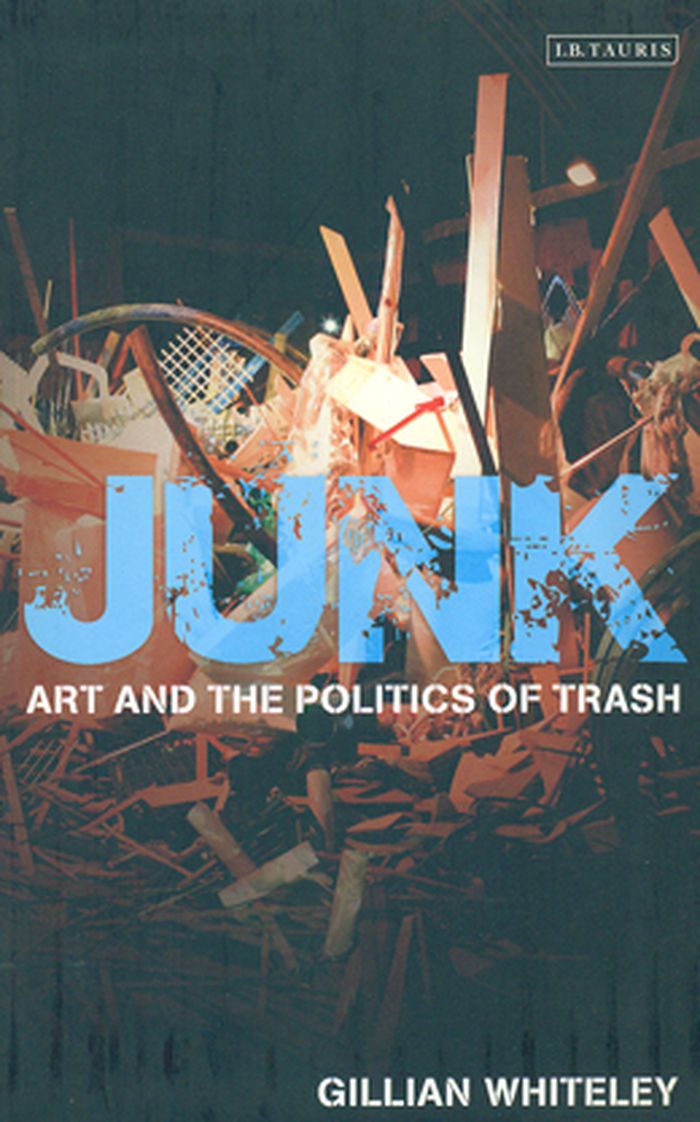
Junk : art and the politics of trash
Actions:
Price:
$30.00
(available to order)
Summary:
Trash, garbage, rubbish, dross, detritus - in this enjoyably radical exploration of junk, Gillian Whiteley re-thinks art's historical and present appropriation of junk within our eco-conscious and globalized culture. She does this through an illustrated exploration of particular materials, key moments and locations and the telling of a panoply of trash narratives. Found and ephemeral materials are primarily associated with assemblage - object-based practices which emerged in the mid-1950s and culminated in the seminal exhibition "The Art of Assemblage" in New York in 1961. With its deployment of the discarded and the filthy, Whiteley argues, assemblage has been viewed as a disruptive, transgressive artform that engaged with narratives of social and political dissent, often in the face of modernist condemnation as worthless kitsch. In the Sixties, parallel techniques flourished in Western Europe, the US and Australia but the idiom of assemblage and the re-use of found materials and objects - with artist as bricoleur - is just as prevalent now. This is a timely book that uncovers the etymology of waste and the cultures of disposability within these economies of wealth.
Junk : art and the politics of trash
Actions:
Price:
$30.00
(available to order)
Summary:
Trash, garbage, rubbish, dross, detritus - in this enjoyably radical exploration of junk, Gillian Whiteley re-thinks art's historical and present appropriation of junk within our eco-conscious and globalized culture. She does this through an illustrated exploration of particular materials, key moments and locations and the telling of a panoply of trash narratives. Found and ephemeral materials are primarily associated with assemblage - object-based practices which emerged in the mid-1950s and culminated in the seminal exhibition "The Art of Assemblage" in New York in 1961. With its deployment of the discarded and the filthy, Whiteley argues, assemblage has been viewed as a disruptive, transgressive artform that engaged with narratives of social and political dissent, often in the face of modernist condemnation as worthless kitsch. In the Sixties, parallel techniques flourished in Western Europe, the US and Australia but the idiom of assemblage and the re-use of found materials and objects - with artist as bricoleur - is just as prevalent now. This is a timely book that uncovers the etymology of waste and the cultures of disposability within these economies of wealth.
Form:
books
books
Publication:
January 2011
January 2011
Form:
books
books
Title:
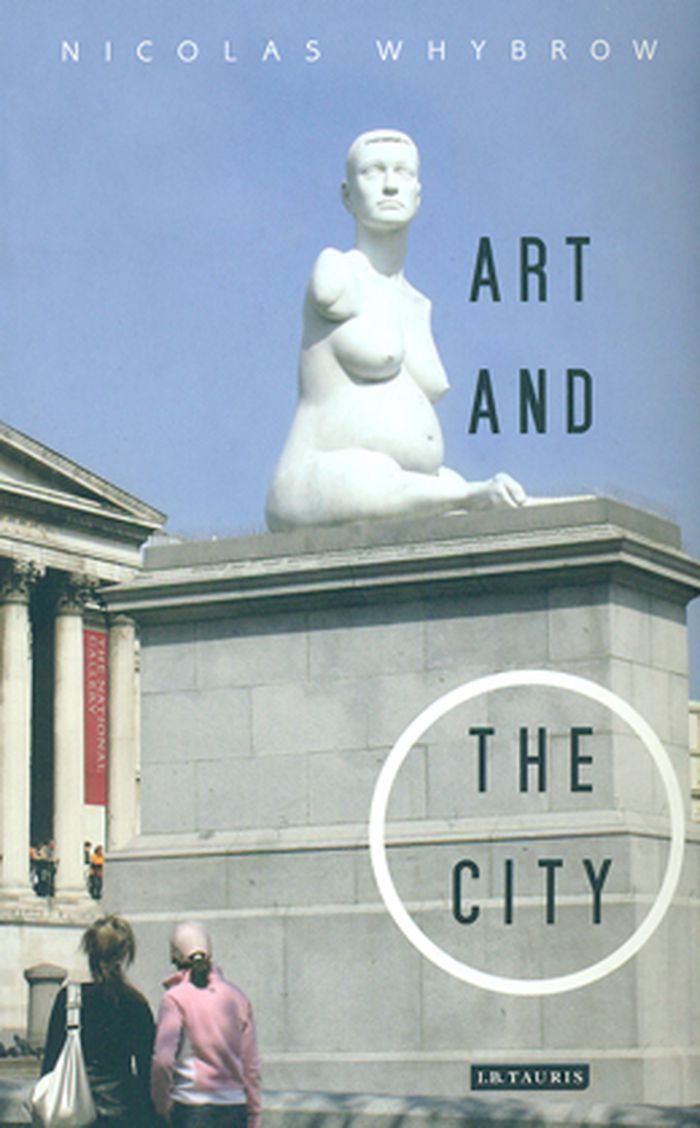
Art and the city
Art and the city
Actions:
Price:
$34.50
(available to order)
Summary:
To Henri Lefebvre, the space and 'lived everydayness' of the inter-dependent, multi-faceted city produces manifold possibilities of identifiction and realisation through often imperceptible interactions and practices. Art and the City takes this observation as its cue to examine the role of art against a backdrop of globally rising urban populations, taking into(...)
$34.50
(available to order)
Summary:
To Henri Lefebvre, the space and 'lived everydayness' of the inter-dependent, multi-faceted city produces manifold possibilities of identifiction and realisation through often imperceptible interactions and practices. Art and the City takes this observation as its cue to examine the role of art against a backdrop of globally rising urban populations, taking into(...)
Title:
Art and the city
Actions:
Price:
$34.50
(available to order)
Summary:
To Henri Lefebvre, the space and 'lived everydayness' of the inter-dependent, multi-faceted city produces manifold possibilities of identifiction and realisation through often imperceptible interactions and practices. Art and the City takes this observation as its cue to examine the role of art against a backdrop of globally rising urban populations, taking into account the more recent performative and relational 'turns' of art that have sought in their city settings to identify a participating spectator - an implicated citizen.
Art and the city
Actions:
Price:
$34.50
(available to order)
Summary:
To Henri Lefebvre, the space and 'lived everydayness' of the inter-dependent, multi-faceted city produces manifold possibilities of identifiction and realisation through often imperceptible interactions and practices. Art and the City takes this observation as its cue to examine the role of art against a backdrop of globally rising urban populations, taking into account the more recent performative and relational 'turns' of art that have sought in their city settings to identify a participating spectator - an implicated citizen.
Form:
books
books
Publication:
December 2010
December 2010
Form:
books
books
Actions:
Price:
$34.95
(available to order)
Summary:
The intriguing images assembled here by collector and curator Robert Flynn Johnson are all mysterious. By turns poignant, humorous, erotic, and disturbing, their subject is the human condition. Every aspect of human experience—both public and private—is explored. Over 220 photographs showcase the work of photographers whose identities have been lost in time.
$34.95
(available to order)
Summary:
The intriguing images assembled here by collector and curator Robert Flynn Johnson are all mysterious. By turns poignant, humorous, erotic, and disturbing, their subject is the human condition. Every aspect of human experience—both public and private—is explored. Over 220 photographs showcase the work of photographers whose identities have been lost in time.
Title:
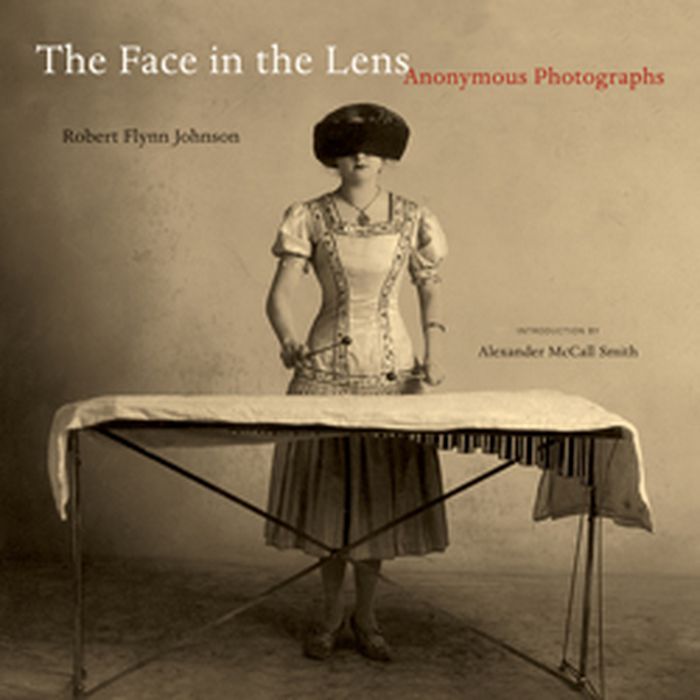
The face of the lens: Anonymous photographs
Actions:
Price:
$34.95
(available to order)
Summary:
The intriguing images assembled here by collector and curator Robert Flynn Johnson are all mysterious. By turns poignant, humorous, erotic, and disturbing, their subject is the human condition. Every aspect of human experience—both public and private—is explored. Over 220 photographs showcase the work of photographers whose identities have been lost in time.
The face of the lens: Anonymous photographs
Actions:
Price:
$34.95
(available to order)
Summary:
The intriguing images assembled here by collector and curator Robert Flynn Johnson are all mysterious. By turns poignant, humorous, erotic, and disturbing, their subject is the human condition. Every aspect of human experience—both public and private—is explored. Over 220 photographs showcase the work of photographers whose identities have been lost in time.
Form:
books
books
Publication:
April 2011
April 2011
Subject:
Theory of Photography
Theory of Photography
Form:
books
books
Title:
Team 10: an archival history
Team 10: an archival history
Actions:
Price:
$87.50
(available to order)
Summary:
This account recuperates the lost history of the emergence of the Team 10 from CIAM in the period between 1947 and 1959, how it was represented in the early 1960s, and echoed in one way or another ever since. Telling the story of the early Team 10 thinking shifts the importance of the group from its better known projects of the 1960s and 70s to the theoretically vigorous(...)
$87.50
(available to order)
Summary:
This account recuperates the lost history of the emergence of the Team 10 from CIAM in the period between 1947 and 1959, how it was represented in the early 1960s, and echoed in one way or another ever since. Telling the story of the early Team 10 thinking shifts the importance of the group from its better known projects of the 1960s and 70s to the theoretically vigorous(...)
Title:
Team 10: an archival history
Actions:
Price:
$87.50
(available to order)
Summary:
This account recuperates the lost history of the emergence of the Team 10 from CIAM in the period between 1947 and 1959, how it was represented in the early 1960s, and echoed in one way or another ever since. Telling the story of the early Team 10 thinking shifts the importance of the group from its better known projects of the 1960s and 70s to the theoretically vigorous period of the 1940s and 50s. This “other” story of the debates about the future of town planning reveals the ruptures and continuities between the CIAM generations and Team 10 members themselves, and reveals a more extensive critique of developing modern architecture at mid-century than has hitherto been recognized.
Team 10: an archival history
Actions:
Price:
$87.50
(available to order)
Summary:
This account recuperates the lost history of the emergence of the Team 10 from CIAM in the period between 1947 and 1959, how it was represented in the early 1960s, and echoed in one way or another ever since. Telling the story of the early Team 10 thinking shifts the importance of the group from its better known projects of the 1960s and 70s to the theoretically vigorous period of the 1940s and 50s. This “other” story of the debates about the future of town planning reveals the ruptures and continuities between the CIAM generations and Team 10 members themselves, and reveals a more extensive critique of developing modern architecture at mid-century than has hitherto been recognized.
Form:
books
books
Publication:
May 2013
May 2013
Subject:
Architecture Monographs
Architecture Monographs


