


6004 Results
Form:
books
books
Actions:
Holdings:
Description:
xxii, 274 pages, 8 unumbered leaves of plates : illustrations, maps ; 24 cm
Description:
xxii, 274 pages, 8 unumbered leaves of plates : illustrations, maps ; 24 cm
Author:
Subject:
Publication:
Chicago ; London : University of Chicago Press, [1994]
Chicago ; London : University of Chicago Press, [1994]
Title:
The assassination of Paris / Louis Chevalier ; translated by David P. Jordan ; with a foreword by John Merriman.
Actions:
Holdings:
Description:
xxii, 274 pages, 8 unumbered leaves of plates : illustrations, maps ; 24 cm
The assassination of Paris / Louis Chevalier ; translated by David P. Jordan ; with a foreword by John Merriman.
Actions:
Holdings:
Description:
xxii, 274 pages, 8 unumbered leaves of plates : illustrations, maps ; 24 cm
Form:
books
books
Publication:
Chicago ; London : University of Chicago Press, [1994]
Chicago ; London : University of Chicago Press, [1994]
Author:
Subject:
Form:
books
books
Actions:
Price:
$36.95
(available to order)
Summary:
The world is marked by deepening conflicts—between democracies and autocracies, woke and populist identity politics, rich and poor, continued environmental exploitation and harsh complications like climate change. In "The monadic age," Ingo Niermann argues that, stirred by rapid developments in automation and AI, these manifold crises are about to culminate in a new(...)
Title:
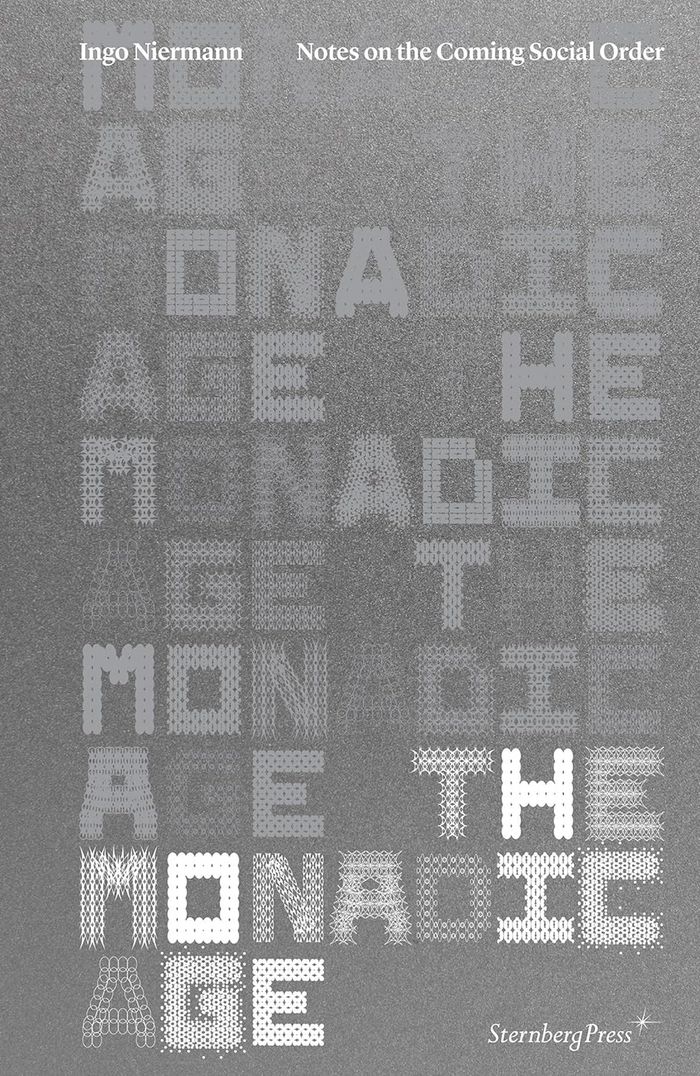
The monadic age: Notes on the coming social order
Actions:
Price:
$36.95
(available to order)
Summary:
The world is marked by deepening conflicts—between democracies and autocracies, woke and populist identity politics, rich and poor, continued environmental exploitation and harsh complications like climate change. In "The monadic age," Ingo Niermann argues that, stirred by rapid developments in automation and AI, these manifold crises are about to culminate in a new paradigm of self-sufficiency—monadism—that overturns the liberal era and forces a reinvention of all social parameters. Today, two major post-liberal dispositions are unfolding. On the one side, people envision a harmonious community of all human and nonhuman beings (multi-species kinship, a rainbow of identities). On the other side, people isolate themselves within their own identities and belongings (filter bubbles, safe spaces, gated communities, charter cities, prepping). Monadism recognizes that these two seemingly contradictory dispositions stem from a similar understanding of the world: one is more optimistic, the other more pessimistic, but ultimately they’re interdependent. Before seeking harmony, we humans, a highly dominant species, must first of all restrain ourselves from coercive interactions with our environment. And to protect ourselves sufficiently from our environment, we must minimize its abuse.
Form:
books
books
Publication:
April 2024
April 2024
Subject:
Critical Theory
Critical Theory
Form:
books
books
Price:
$49.95
(available in store)
Summary:
In the final days before the fall of Saigon in 1975, 125,000 Vietnamese who were evacuated or who made their own way out of the country resettled in the United States. Finding themselves in unfamiliar places yet still connected in exile, these refugees began building their own communities as memorials to a lost homeland. Known both officially and unofficially as Little(...)
Title:
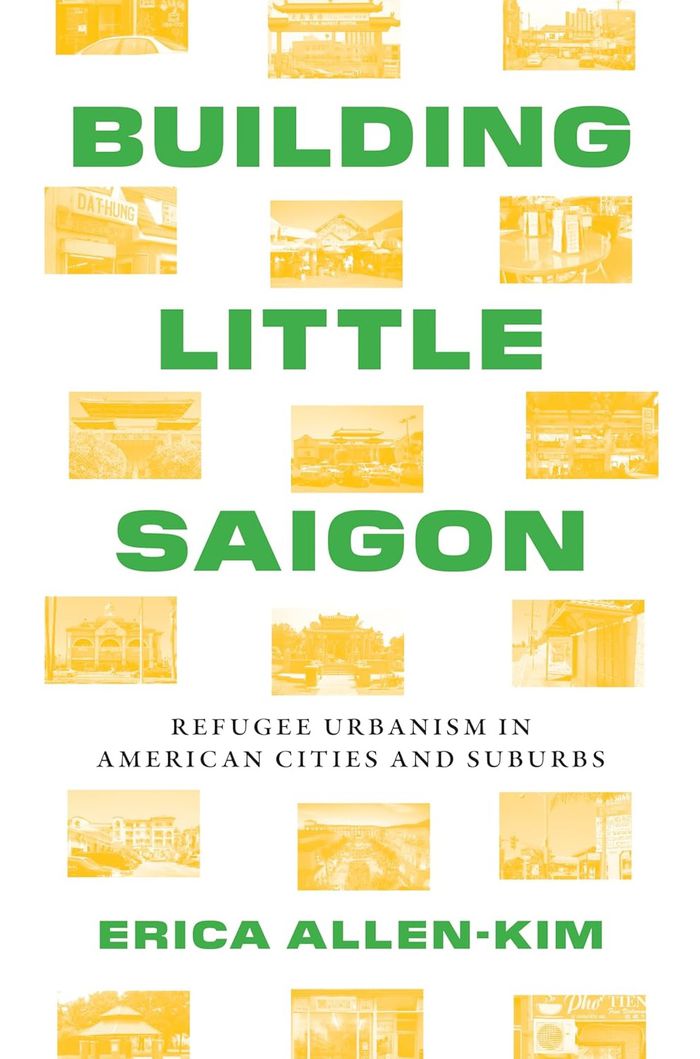
Building Little Saigon: Refugee urbanism in American cities and suburbs
Actions:
Price:
$49.95
(available in store)
Summary:
In the final days before the fall of Saigon in 1975, 125,000 Vietnamese who were evacuated or who made their own way out of the country resettled in the United States. Finding themselves in unfamiliar places yet still connected in exile, these refugees began building their own communities as memorials to a lost homeland. Known both officially and unofficially as Little Saigons, these built landscapes offer space for everyday activities as well as the staging of cultural heritage and political events. "Building Little Saigon" examines nearly fifty years of city building by Vietnamese Americans-who number over 2.2 million today. Author Erica Allen-Kim highlights architecture and planning ideas adapted by the Vietnamese communities who, in turn, have influenced planning policies and mainstream practices. Allen-Kim traveled to ten Little Saigons in the United States to visit archives, buildings, and public art and to converse with developers, community planners, artists, business owners, and Vietnam veterans. By examining everyday buildings-who made them and what they mean for those who know them-"Building Little Saigon" shows us the complexities of migration unfolding across lifetimes and generations.
Form:
books
books
Publication:
July 2024
July 2024
Subject:
Urban Theory
Urban Theory
Form:
books
books
Price:
$87.95
(available to order)
Summary:
How exactly do small towns become suburbs? How do country roads turn into commercial strips? And what can planners do to prevent these changes in the future? Using the state of Vermont as the rural ideal, the authors compare contemporary vs. traditional development to demonstrate how today's primary way of developing land - suburban sprawl - is forever changing the look(...)
Subject:
Suburbs
Suburbs
Publication:
February 2002, Chicago
February 2002, Chicago
Title:
Above and beyond : visualizing change in small towns and rural areas
Actions:
Price:
$87.95
(available to order)
Summary:
How exactly do small towns become suburbs? How do country roads turn into commercial strips? And what can planners do to prevent these changes in the future? Using the state of Vermont as the rural ideal, the authors compare contemporary vs. traditional development to demonstrate how today's primary way of developing land - suburban sprawl - is forever changing the look of rural American. Using a host of aerial photographs - many altered through computer simulation to illustrate how landscapes are transformed over time - "Above and beyond" argues for a return to traditional development patterns that produce more compact cities and towns. Highlighting widespread trends in contemporary land development - from fragmentation (our tendency to spread out) to separation (our tendencey to allocate separate areas of town for living, working, shopping and playing) - the authors offer case examples of coummunities that have succeeded in curbing those trends. They show how these communities have invigorated their town centers; lured home buyers back to town; integrated working, shopping and recreation areas; nurtured a sense of identity and community; rewritten land-use regulations to allow for more compact developing; and overcome the "cars rule" mentality of suburban development.
Form:
books
books
Publication:
February 2002, Chicago
February 2002, Chicago
Subject:
Suburbs
Suburbs
Form:
books
books
Title:
After the city
After the city
Actions:
Price:
$20.00
(available to order)
Summary:
The city's reign over our senses, our moods, our very ways of being is outmoded. The suburban metropolis has superseded the city. The new building materials are non-material: electricity, telephony, weather, time, and so forth. Consequently, according to Lars Lerup, architecture and architects must be rethought. Until now, architects have been trained to serve the(...)
Title:
After the city
Actions:
Price:
$20.00
(available to order)
Summary:
The city's reign over our senses, our moods, our very ways of being is outmoded. The suburban metropolis has superseded the city. The new building materials are non-material: electricity, telephony, weather, time, and so forth. Consequently, according to Lars Lerup, architecture and architects must be rethought. Until now, architects have been trained to serve the elite few, as reflected in a belief in customization and the uniqueness of each project. Instead, Lerup holds, architectural educators should promote teamwork and the design of authorless objects, combined with an integration of design and practice. Before we can rethink the architectural curriculum, however, we must rethink the metropolis. And rethink the metropolis is just what Lerup does. In an intellectually far-ranging yet intensely personal manner, he moves from contemplation of the form and philosophical implications of the Pantheon to a discussion of how Levittown residents seek and create community. The result is an exhilarating work with profound practical implications. Unlike the many who view suburbia with paranoid dismay, Lerup takes an optimistic view of the new, open metropolis--for him not the site of unavoidable uniformity and mediocrity, but an exciting new frontier.
Form:
books
books
Publication:
October 2001, Cambridge, Mass.
October 2001, Cambridge, Mass.
Subject:
Urban Theory
Urban Theory
Form:
books
books
Actions:
Price:
$49.95
(available to order)
Summary:
For almost ten years, Samuel Mockbee, a recent McArthur "genius grant" recipient, and his architecture students at Auburn University have been designing and building striking houses and community buildings for impoverished residents of Alabama's Hale County. Using salvaged lumber and bricks, discarded tires, hay and waste cardboard bales, concrete rubble, coloured(...)
Subject:
Architecture Monographs
Architecture Monographs
Publication:
February 2002, New York
February 2002, New York
Title:
Rural Studio : Samuel Mockbee and an architecture of decency
Actions:
Price:
$49.95
(available to order)
Summary:
For almost ten years, Samuel Mockbee, a recent McArthur "genius grant" recipient, and his architecture students at Auburn University have been designing and building striking houses and community buildings for impoverished residents of Alabama's Hale County. Using salvaged lumber and bricks, discarded tires, hay and waste cardboard bales, concrete rubble, coloured bottles, and old license plates, they create inexpensive buildings in a style Mockbee describes as "contemporary modernism grounded in Southern culture." In a time when architectural attention focuses on large, glossy urban projects and palatial homes, the Rural Studio provides an alternative of substance. In addition to being a social welfare venture, the Rural Studio is also and educational experiment and a prod to the architectural profession to act on its best instincts. By giving students hands-on experience in designing and building something real, it extends their education beyond paper architecture. And in scavenging and reusing a variety of unusual materials, it is a model of sustainable architecture. The work of the Rural Studio has struck such a chord--both architecturally and socially--that it has been featured on "Oprah," "Nightline," and "CBS News," as well as "Time" and "People" magazines.
Form:
books
books
Publication:
February 2002, New York
February 2002, New York
Subject:
Architecture Monographs
Architecture Monographs
Form:
books
books
Actions:
Price:
$34.95
(available to order)
Summary:
The newest title in the Princeton Architectural Press Campus Guide series takes readers on a tour of Illinois Institute of Technology, one of the landmarks of modern American architecture. With a master plan and twenty renowned buildings by Mies van der Rohe, IIT has long been a pilgrimage site for architects and students of design. Thousands of visitors arrive each year(...)
Subject:
Commercial interiors, Building types
Commercial interiors, Building types
Publication:
January 2005, New York
January 2005, New York
Title:
Illinois Institute of Technology : the campus guide - an architectural tour
Actions:
Price:
$34.95
(available to order)
Summary:
The newest title in the Princeton Architectural Press Campus Guide series takes readers on a tour of Illinois Institute of Technology, one of the landmarks of modern American architecture. With a master plan and twenty renowned buildings by Mies van der Rohe, IIT has long been a pilgrimage site for architects and students of design. Thousands of visitors arrive each year to see International Style masterpieces such as S. R. Crown Hall, home of IIT's College of Architecture and one of Mies's greatest works. Today, IIT is in the midst of an exciting new chapter in its design history. A new student centre designed by Rem Koolhaas and his Office for Metropolitan Architecture has once again put IIT at the forefront of the design world. Meanwhile, a new master plan for the campus, new landscaping, and a residence-hall complex by Helmut Jahn have reinvigorated student life and revitalized the surrounding community of Chicago's South Side. Featuring archival images of the Mies buildings as well as newly commissioned photographs of IIT's latest additions, this beautifully produced guide presents a comprehensive architectural walk through America's most distinguished modern campus.
Form:
books
books
Publication:
January 2005, New York
January 2005, New York
Subject:
Commercial interiors, Building types
Commercial interiors, Building types
Form:
books
books
Actions:
Price:
$15.95
(available to order)
Summary:
Many of the projects described in the "Handbook" have combined innovative architectural training with cross-cultural immersion, social activism, and environmental science, using design skills (and where appropriate) hands-on construction projects to confront poverty and urgent social problems. Often involving community members and students, these case studies promote(...)
Subject:
Architecture since 1900, Europe
Architecture since 1900, Europe
Publication:
July 2005, Los Angeles
July 2005, Los Angeles
Title:
Cityworks Los Angeles : handbook
Actions:
Price:
$15.95
(available to order)
Summary:
Many of the projects described in the "Handbook" have combined innovative architectural training with cross-cultural immersion, social activism, and environmental science, using design skills (and where appropriate) hands-on construction projects to confront poverty and urgent social problems. Often involving community members and students, these case studies promote maximum use of recycled or inexpensive, locally available materials, as well as lighting and energy systems that reduce utility costs and promote resource conservation. Not all the projects are specific to the City of Los Angeles, but they are examples of the types of projects CITYWORKSLA hopes to develop. Our aim is that the case studies assembled within the "Handbook" will serve as models for making architectural education relevant to urgent social problems, helping communities mobilize indigenous resources and social capital to develop long-term sustainable practices that protect, rather than erode, cultural identity, dignity, and stability. Edited by Elizabeth Martin with articles by : Peter Aesbacher, Chantal Aquin, Monique Birault, John Cary, Jeanine Centuori, Joaquin Herranz, Jr., Maria-Rosario Jackson, Florence Kabwasa-Green, Bruce Lindsey, Vic Liptak, Elizabeth Martin, Ken McCown, William McDonough, Russell Rock, Leslie Thomas, John Quale.
Form:
books
books
Publication:
July 2005, Los Angeles
July 2005, Los Angeles
Subject:
Architecture since 1900, Europe
Architecture since 1900, Europe
Form:
books
books
Actions:
Price:
$39.95
(available to order)
Summary:
What do you do if your alley is strewn with garbage after the sanitation truck comes through? Or if you’re tired of the rowdy teenagers next door keeping you up all night? Is there a vacant lot on your block accumulating weeds, needles, and litter? For a century, Chicagoans have joined block clubs to address problems like these that make daily life in the city a(...)
Title:
Chicago's block clubs: how neighbors shape the city
Actions:
Price:
$39.95
(available to order)
Summary:
What do you do if your alley is strewn with garbage after the sanitation truck comes through? Or if you’re tired of the rowdy teenagers next door keeping you up all night? Is there a vacant lot on your block accumulating weeds, needles, and litter? For a century, Chicagoans have joined block clubs to address problems like these that make daily life in the city a nuisance. When neighbors work together in block clubs, playgrounds get built, local crime is monitored, streets are cleaned up, and every summer is marked by the festivities of day-long block parties. In Chicago’s Block Clubs, Amanda I. Seligman uncovers the history of the block club in Chicago—from its origins in the Urban League in the early 1900s through to the Chicago Police Department’s twenty-first-century community policing program. Recognizing that many neighborhood problems are too big for one resident to handle—but too small for the city to keep up with—city residents have for more than a century created clubs to establish and maintain their neighborhood’s particular social dynamics, quality of life, and appearance.
Form:
books
books
Publication:
September 2016
September 2016
Subject:
Urban Theory
Urban Theory
Form:
books
books
Title:
Open Space: people space
Open Space: people space
Actions:
Price:
$86.50
(available to order)
Summary:
Highly visual and containing contributions from leading names in landscape, architecture and design, this volume provides a rare insight into people’s engagement with the outdoor environment; looking at the ways in which the design of spaces and places meets people’s needs and desires in the twenty-first century. Embracing issues of social inclusion, recreation, and(...)
Subject:
Landscape Theory
Landscape Theory
Publication:
September 2007, London, New York
September 2007, London, New York
Title:
Open Space: people space
Actions:
Price:
$86.50
(available to order)
Summary:
Highly visual and containing contributions from leading names in landscape, architecture and design, this volume provides a rare insight into people’s engagement with the outdoor environment; looking at the ways in which the design of spaces and places meets people’s needs and desires in the twenty-first century. Embracing issues of social inclusion, recreation, and environmental quality, the editors explore innovative ways to develop an understanding of how the landscape, urban or rural, can contribute to health and quality of life. Open Space: People Space examines the nature and value of people’s access to outdoor environments. Led by Edinburgh’s OPENspace research centre, the debate focuses on current research to support good design for open space and brings expertise from a range of disciplines to look at: - an analysis of policy and planning issues and challenges - understanding the nature and experience of exclusion - the development of evidence-based inclusive design -innovative research approaches which focus on people’s access to open space and the implications of that experience. Invaluable to policy makers, researchers, urban designers, landscape architects, planners, managers and students, it is also essential reading for those working in child development, health care and community development.
Form:
books
books
Publication:
September 2007, London, New York
September 2007, London, New York
Subject:
Landscape Theory
Landscape Theory


