


6004 Results
Form:
books
books
Price:
$38.99
(available to order)
Summary:
In 1982, the protests of antiporn feminists sparked the censorship of the ''Diary of a Conference on Sexuality'', a radical and sexually evocative image-text volume whose silencing became a symbol for the irresolvable feminist sex wars. ''In Visible archives'' documents the community networks that produced this resonant artifact and others, analyzing how visual culture(...)
Title:
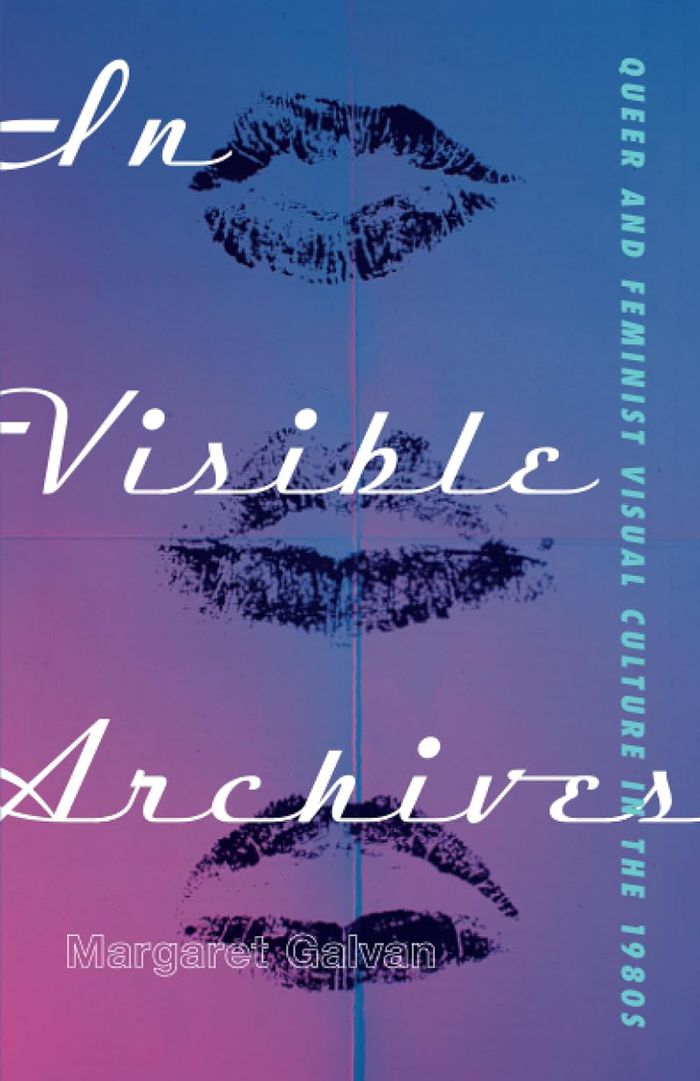
In Visible archives: Queer and feminist visual culture in the 1980s
Actions:
Price:
$38.99
(available to order)
Summary:
In 1982, the protests of antiporn feminists sparked the censorship of the ''Diary of a Conference on Sexuality'', a radical and sexually evocative image-text volume whose silencing became a symbol for the irresolvable feminist sex wars. ''In Visible archives'' documents the community networks that produced this resonant artifact and others, analyzing how visual culture provided a vital space for women artists to theorize and visualize their own bodies and sexualities. Margaret Galvan explores a number of feminist and cultural touchstones—the feminist sex wars, the HIV/AIDS crisis, the women in print movement, and countercultural grassroots periodical networks—and examines how visual culture interacts with these pivotal moments. She goes deep into the records to bring together a decade’s worth of research in grassroots and university archives that include comics, collages, photographs, drawings, and other image-text media produced by women, including Hannah Alderfer, Beth Jaker, Marybeth Nelson, Roberta Gregory, Lee Marrs, Alison Bechdel, Gloria Anzaldúa, and Nan Goldin. The art highlighted in ''In Visible archives'' demonstrates how women represented their bodies and sexualities on their own terms and created visibility for new, diverse identities, thus serving as blueprints for future activism and advocacy—work that is urgent now more than ever as LGBTQ+ and women’s rights face challenges and restrictions across the nation.
Form:
books
books
Publication:
September 2023
September 2023
Subject:
Social
Social
Form:
books
books
Actions:
Price:
$49.95
(available in store)
Summary:
If you were asked to close your eyes and envision where you are happiest, would you picture somewhere inside a building? North Americans are inside buildings for more than 90% of the day. Meanwhile, the indoors are stifling us, sometimes even killing us. Buildings, and the materials that make them up, expose us to materials linked to negative health impacts. The(...)
Title:
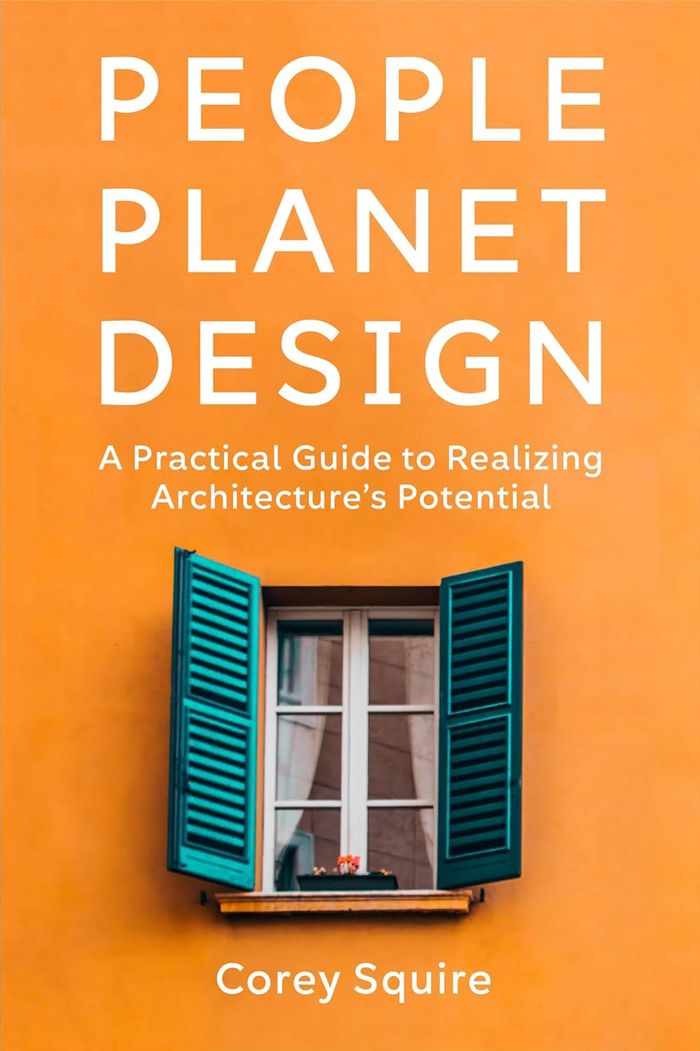
People, planet, design: A practical guide to realizing architecture's potential
Actions:
Price:
$49.95
(available in store)
Summary:
If you were asked to close your eyes and envision where you are happiest, would you picture somewhere inside a building? North Americans are inside buildings for more than 90% of the day. Meanwhile, the indoors are stifling us, sometimes even killing us. Buildings, and the materials that make them up, expose us to materials linked to negative health impacts. The construction and operation of buildings is responsible for 40% of climate-changing carbon emissions. In the US, the design choices made by the typical architecture firm employee each year can reduce emissions by about 300 times that of an average American. But the promise of sustainable architecture will not be realized if sustainability remains a secondary consideration for architects. What if great design were defined by its ability to cool the planet, heal communities, enhance ecological functioning, and advance justice? In "People, planet, design," architect Corey Squire builds the case, provides the data, and lays out the practical tools for a transformative human-centered architecture. This approach integrates beauty and delight with an awareness of how every design choice impacts the community, the planet, and the people who will use the building. Outcome-focused with a deep dive into practical design strategies, the book showcases ten building systems that embody design excellence.
Form:
books
books
Publication:
November 2023
November 2023
Subject:
Green Architecture
Green Architecture
Form:
books
books
Actions:
Price:
$32.50
(available to order)
Summary:
"Museum frictions" is the third volume in a series on culture, society, and museums. "Museum frictions" is an illustrated examination of the significant and varied effects of the increasingly globalized world on contemporary museum, heritage, and exhibition practice. The contributors — scholars, artists, and curators —present case studies drawn from Africa, Australia,(...)
Subject:
Museology
Museology
Publication:
January 2007, Durham, London
January 2007, Durham, London
Title:
Museum frictions : public cultures / global transformations
Actions:
Price:
$32.50
(available to order)
Summary:
"Museum frictions" is the third volume in a series on culture, society, and museums. "Museum frictions" is an illustrated examination of the significant and varied effects of the increasingly globalized world on contemporary museum, heritage, and exhibition practice. The contributors — scholars, artists, and curators —present case studies drawn from Africa, Australia, North and South America, Europe, and Asia. Together they offer a multifaceted analysis of the complex roles that national and community museums, museums of art and history, monuments, heritage sites, and theme parks play in creating public cultures. Whether contrasting the transformation of Africa’s oldest museum, the South Africa Museum, with one of its newest, the Lwandle Migrant Labor Museum; offering an interpretation of the audio guide at the Guggenheim Bilbao; reflecting on the relative paucity of art museums in Peru and Cambodia; considering representations of slavery in the United States and Ghana; or meditating on the ramifications of an exhibition of Australian aboriginal art at the Asia Society in New York City, the contributors highlight the frictions, contradictions, and collaborations emerging in museums and heritage sites around the world. The volume opens with an extensive introductory essay by Ivan Karp and Corinne A. Kratz, leading scholars in museum and heritage studies.
Form:
books
books
Publication:
January 2007, Durham, London
January 2007, Durham, London
Subject:
Museology
Museology
Form:
books
books
Actions:
Price:
$27.50
(available to order)
Summary:
Los Angeles's history is a story of conflicting visions. Most historians, journalists, and filmmakers have focused on L.A. as a bastion of corporate greed, business boosterism, political corruption, cheap labor, exploited immigrants, and unregulated sprawl. "The next Los Angeles" tells a different story: that of the reformers and radicals who have struggled for(...)
Subject:
Urban Theory
Urban Theory
Publication:
August 2006, Berkeley, Los Angeles, London
August 2006, Berkeley, Los Angeles, London
Title:
The next Los Angeles : the struggle for a livable city, updated with a new preface
Actions:
Price:
$27.50
(available to order)
Summary:
Los Angeles's history is a story of conflicting visions. Most historians, journalists, and filmmakers have focused on L.A. as a bastion of corporate greed, business boosterism, political corruption, cheap labor, exploited immigrants, and unregulated sprawl. "The next Los Angeles" tells a different story: that of the reformers and radicals who have struggled for alternative visions of social and economic justice. The authors chronicle efforts of progressive social movements that worked throughout the twentieth century to create a more livable, just, and democratic Los Angeles. These movements-what the authors call Progressive L.A.-have produced a new kind of labor movement, community-oriented environmentalism, and multi-ethnic coalition politics. This book shows how reformers have fought to transform a city characterized by huge economic disparities, concrete-encased rivers, and an endless landscape of subdivisions, freeways, and malls into a progressive model for regions around the country. "The next Los Angeles" includes a decade-by-decade historical snapshot of the city's progressive social movements and an in-depth exploration of key trends that are remaking L.A. at the beginning of the twenty-first century. It examines L.A.'s changing political landscape, including grassroots initiatives to construct a new agenda for social transformation.
Form:
books
books
Publication:
August 2006, Berkeley, Los Angeles, London
August 2006, Berkeley, Los Angeles, London
Subject:
Urban Theory
Urban Theory
Form:
books
books
Actions:
Price:
$16.95
(available in store)
Summary:
In the summer of 2025, nine Western States formally recognized the State of Palestine. This State recognition and the resurrection of the moribund so-called “two-State solution” is combined with a criminalization of calls to liberate Palestine “from the river to the sea.” This issue asks: can liberation ever take the form of a state? Borrowing a phrase Sophia Azeb used(...)
Title:
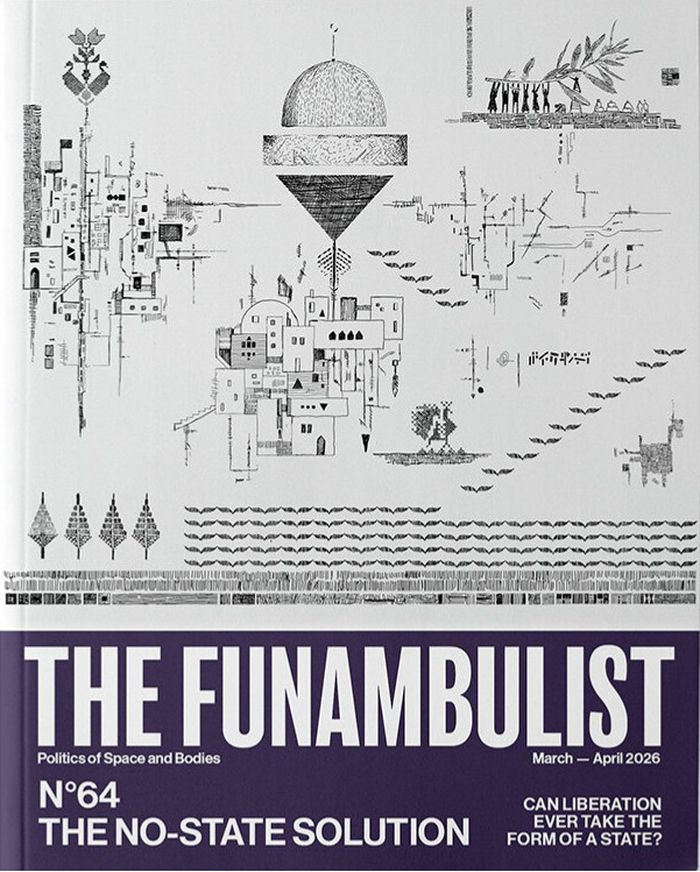
The Funambulist 64: The no-state solution
Actions:
Price:
$16.95
(available in store)
Summary:
In the summer of 2025, nine Western States formally recognized the State of Palestine. This State recognition and the resurrection of the moribund so-called “two-State solution” is combined with a criminalization of calls to liberate Palestine “from the river to the sea.” This issue asks: can liberation ever take the form of a state? Borrowing a phrase Sophia Azeb used multiple times in the history of The Funambulist (since our first conversation in 2014), The No-State Solution intends to revisit this concept in the context of Palestine in challenging the very idea of “solution” (Sophia Azeb & Rebecca Gross), but also in other liberation struggles such as the Kurdish (Havin Guneser) and Zapatista (Linda Quiquivix) ones. It warns us against state dreams, such as the ones implemented in Sierra Leone and Liberia (what William C. Anderson calls “Black Zionism” in his contribution), and questions the differences between State and community forms of governance, in particular when it comes to healthcare, as made evident in Cuba and Venezuela (Lisbeth Moya González). Finally, it envisions borderless, stateless futures in Aotearoa (Kai-rui Cheng) and Kanaky (Florenda Nirikani). As for the artwork on the cover, it is an original creation by Samir Harb.
Form:
books
books
Publication:
March 2026
March 2026
Subject:
Magazines
Magazines
Form:
books
books
Title:
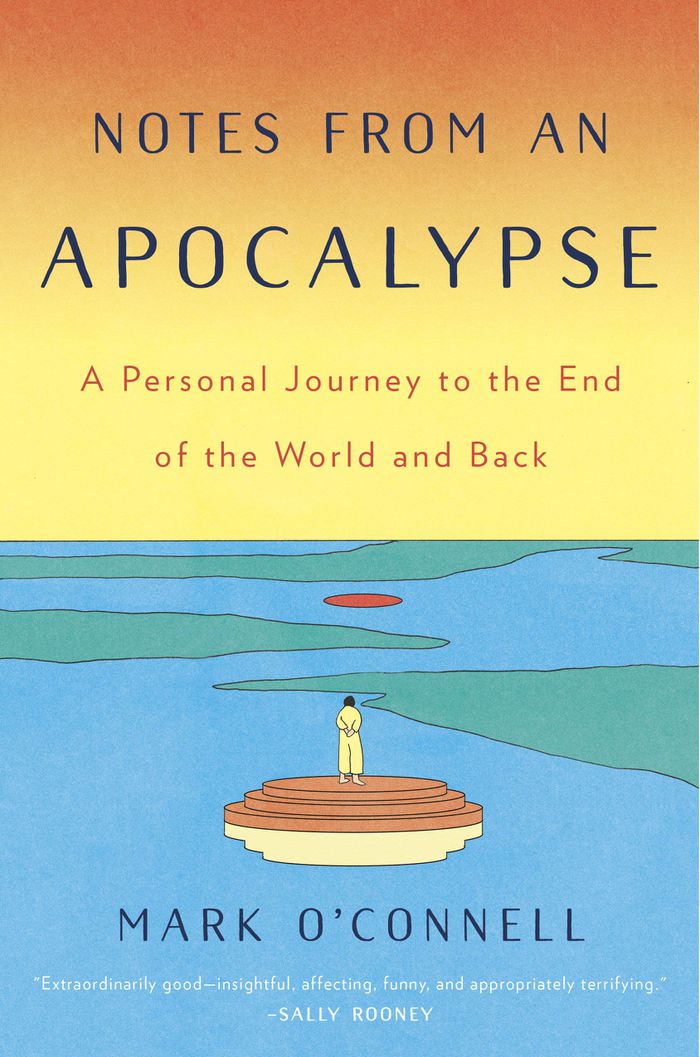
Notes from an apocalypse
Notes from an apocalypse
Actions:
Price:
$36.95
(available to order)
Summary:
We’re alive in a time of worst-case scenarios: The weather has gone uncanny. Old postwar alliances are crumbling. A pandemic draws our global community to a halt. Everywhere you look there’s an omen, a joke whose punchline is the end of the world. How is a person supposed to live in the shadow of such a grim future? What does it mean to have children—nothing if not an(...)
Title:
Notes from an apocalypse
Actions:
Price:
$36.95
(available to order)
Summary:
We’re alive in a time of worst-case scenarios: The weather has gone uncanny. Old postwar alliances are crumbling. A pandemic draws our global community to a halt. Everywhere you look there’s an omen, a joke whose punchline is the end of the world. How is a person supposed to live in the shadow of such a grim future? What does it mean to have children—nothing if not an act of hope—in such unsettled times? What might it be like to live through the worst? And what on Earth is anybody doing about it? Dublin-based writer Mark O’Connell is consumed by these questions—and, as the father of two young children himself, he finds them increasingly urgent. In 'Notes from an Apocalypse', he crosses the globe in pursuit of answers. He tours survival bunkers in South Dakota. He ventures to New Zealand, a favored retreat of billionaires banking on civilization’s collapse. He engages with would-be Mars colonists, preppers, right-wing conspiracists. And he bears witness to those places, like Chernobyl, that the future has already visited—real-life portraits of the end of the world as we know it. In doing so, he comes to a resolution, while offering readers a unique window into our contemporary imagination.
Form:
books
books
Publication:
April 2020
April 2020
Subject:
Environment and environmental theory
Environment and environmental theory
Form:
books
books
Actions:
Price:
$31.95
(available to order)
Summary:
On the premise that words have the power to make worlds, each essay in this book follows a word as it travels around the globe and across time. Scholars from five disciplines address thirteen societies to highlight the social and political life of words in Asia, Europe, and the Middle East, from the mid-nineteenth century to the present. The approach is consciously(...)
Subject:
Architectural Theory
Architectural Theory
Publication:
December 2009
December 2009
Title:
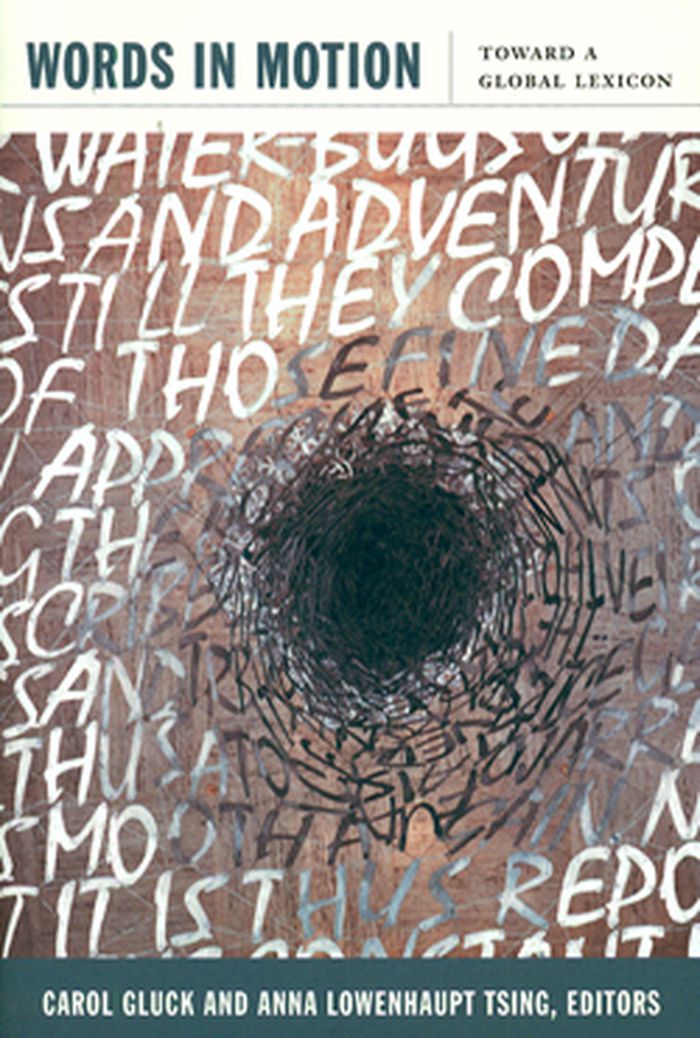
Words in motion: toward a global lexicon
Actions:
Price:
$31.95
(available to order)
Summary:
On the premise that words have the power to make worlds, each essay in this book follows a word as it travels around the globe and across time. Scholars from five disciplines address thirteen societies to highlight the social and political life of words in Asia, Europe, and the Middle East, from the mid-nineteenth century to the present. The approach is consciously experimental, in that rigorously tracking a specific word in specific settings frequently leads in unexpected directions and alters conventional depictions of global modernity. Such words as security in Brazil, responsibility in Japan, community in Thailand, and hijb in France changed the societies in which they moved even as they were changed by them. Some words threatened to launch wars, as injury did in imperial Britain's relations with China in the nineteenth century. Others, such as secularism, worked in silence to agitate for political change in twentieth-century Morocco. Words imposed or imported from outside could be transformed by those who wielded them to oppose the very powers that introduced them, as happened in Turkey, Indonesia, and the Philippines. Taken together, this selection of fourteen words reveals commonality as well as distinctiveness in modern societies, making the world look different from the interdisciplinary and transnational perspective of "words in motion."
Form:
books
books
Publication:
December 2009
December 2009
Subject:
Architectural Theory
Architectural Theory
Form:
books
books
Actions:
Price:
$35.00
(available to order)
Summary:
La découverte scientifique et la maîtrise de l'électricité ont bouleversé notre société au même titre que l'invention de l'écriture alphabétique durant l'Antiquité et de l'imprimerie à caractères mobiles au XVe siècle. Il ne s'agit pas seulement d'un phénomène naturel mis au service de l'homme par la science, mais d'un élément central de l'épistémè moderne : l'électricité(...)
Subject:
Critical Theory
Critical Theory
Publication:
September 2011
September 2011
Title:
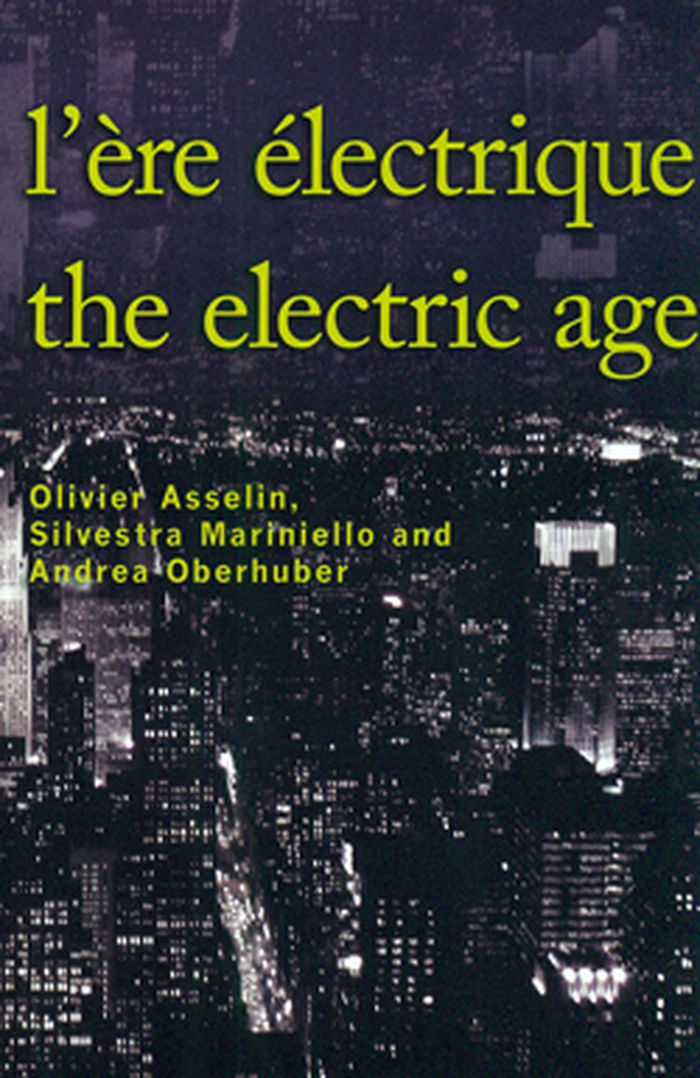
L'ère électrique / The electric age
Actions:
Price:
$35.00
(available to order)
Summary:
La découverte scientifique et la maîtrise de l'électricité ont bouleversé notre société au même titre que l'invention de l'écriture alphabétique durant l'Antiquité et de l'imprimerie à caractères mobiles au XVe siècle. Il ne s'agit pas seulement d'un phénomène naturel mis au service de l'homme par la science, mais d'un élément central de l'épistémè moderne : l'électricité a inspiré des écrivains et des artistes, a servi de force d'impulsion au monde de l'industrie et de l'innovation et a redéfini les comportements sociaux. En explorant l'incidence de l'électricité sur le savoir, les pratiques sociales, les médias, la vie sociale et les expériences personnelles, cet ouvrage tente d'en saisir les aspects techniques et culturels dans toute leur complexité. -- The scientific discovery and mastery of electricity created as many important changes in modern society as did the invention of alphabetical writing in antiquity and movable type in the fifteenth century. It is more than a natural phenomenon that science has harnessed for human use; it is a central feature of the modern episteme. It has inspired writers and artists, propelled industry and innovation, and reshaped human social behaviour. Looking at a variety of topics including film, politics, and contemporary art, this volume explores the impact of electricity on knowledge, social practices, media, community life, and subjective experience.
Form:
books
books
Publication:
September 2011
September 2011
Subject:
Critical Theory
Critical Theory
Form:
books
books

Actions:
Price:
$43.95
(available to order)
Summary:
Over the past twenty years, an abundance of art forms have emerged that use aesthetics to affect social dynamics. These works are often produced by collectives or come out of a community context; they emphasize participation, dialogue, and action, and appear in situations ranging from theater to activism to urban planning to visual art to health care. Engaged with the(...)
Title:
Living as form : socially engaged art from 1991-2011
Actions:
Price:
$43.95
(available to order)
Summary:
Over the past twenty years, an abundance of art forms have emerged that use aesthetics to affect social dynamics. These works are often produced by collectives or come out of a community context; they emphasize participation, dialogue, and action, and appear in situations ranging from theater to activism to urban planning to visual art to health care. Engaged with the texture of living, these art works often blur the line between art and life. This book offers the first global portrait of a complex and exciting mode of cultural production — one that has virtually redefined contemporary art practice. This publication grew out of a major exhibition at Creative Time in New York City. Like the exhibition, the book is a landmark survey of more than 100 projects selected by a thirty-person curatorial advisory team; each project is documented by a selection of color images. The artists include the Danish collective Superflex, who empower communities to challenge corporate interest; Turner Prize nominee Jeremy Deller, creator of socially and politically charged performance works; Women on Waves, who provide abortion services and information to women in regions where the procedure is illegal; and Santiágo Cirugeda, an architect who builds temporary structures to solve housing problems.
Form:
books
books
Publication:
March 2012
March 2012
Form:
books
books
Price:
$27.95
(available to order)
Summary:
This book will be a resource for all who believe in the importance of art in the wider educational realm. Framing the recent "educational turn" in the arts within a broad historical and social context, this anthology raises fundamental questions about how and what should be taught in an era of distributive rather than media-based practices. Among the many sources and(...)
Title:
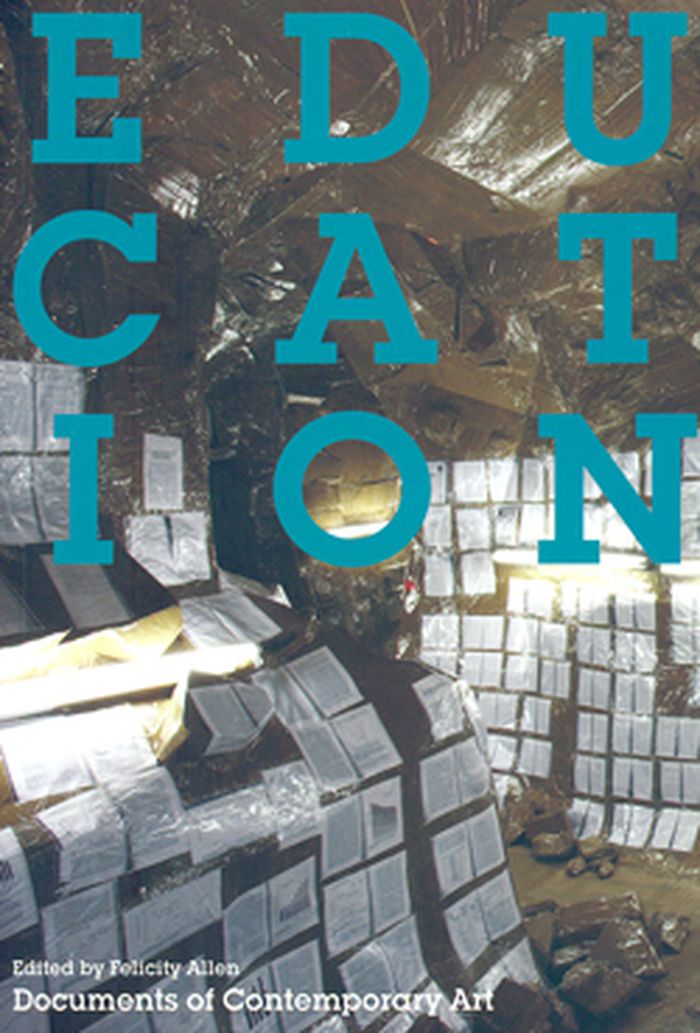
Education
Actions:
Price:
$27.95
(available to order)
Summary:
This book will be a resource for all who believe in the importance of art in the wider educational realm. Framing the recent "educational turn" in the arts within a broad historical and social context, this anthology raises fundamental questions about how and what should be taught in an era of distributive rather than media-based practices. Among the many sources and arguments traced here is second-wave feminism, which questioned dominant notions of personal and institutional freedom as enacted through art teaching and practice. Similarly, education-based responses by the art community to the catastrophes of World War II and postcolonial conflict critically inform contemporary art confronting the interrelationships of education, power, market capitalism, and--as Michael Hardt and Antonio Negri describe it--the global condition of war. These writings by artists, philosophers, educators, poets, and activists center on three recurring and interrelated themes: the notion of "indiscipline" in theories and practices that challenge boundaries of all kinds; the present and future role of the art school; and the turn to pedagogy as medium in a diverse range of recent projects. Other writings address such issues as instrumentalism and control, liberation and equality, the production and the politics of culture, and the roots of research-based practice and experimental participatory works.
Form:
books
books
Publication:
September 2011
September 2011
Subject:
Art Theory
Art Theory


