


5084 Results
Form:
events
events

Description:
Join us for three screenings of Brazilian documentary films selected by Ana Alice De Morais, artistic co-director of RIDM.
Join us for three screenings of Brazilian documentary films selected by Ana Alice De Morais, artistic co-director of RIDM.
Date:
21 August 2025, and 28 August
21 August 2025, and 28 August
Title:
Cinéfaçade: Sowing and Resisting in Brazilian Topography
Actions:
Description:
Join us for three screenings of Brazilian documentary films selected by Ana Alice De Morais, artistic co-director of RIDM.
Cinéfaçade: Sowing and Resisting in Brazilian Topography
Actions:
Description:
Join us for three screenings of Brazilian documentary films selected by Ana Alice De Morais, artistic co-director of RIDM.
Form:
events
events
Date:
21 August 2025
and 28 August
21 August 2025
and 28 August
Form:
events
events
Actions:
Description:
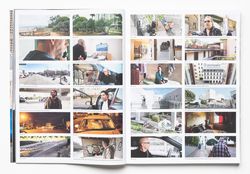
Please join us on 30 September for a conversation around the The Museum Is Not Enough, No.10–14 with the publication’s editors and graphic designer, Jonathan Hares.
Please join us on 30 September for a conversation around the The Museum Is Not Enough, No.10–14 with the publication’s editors and graphic designer, Jonathan Hares.
Date:
30 September 2025, 6pm
30 September 2025, 6pm
Title:
Book Presentation: The Museum Is Not Enough, No. 10–14
Actions:
Description:
Please join us on 30 September for a conversation around the The Museum Is Not Enough, No.10–14 with the publication’s editors and graphic designer, Jonathan Hares.
Book Presentation: The Museum Is Not Enough, No. 10–14
Actions:
Description:
Please join us on 30 September for a conversation around the The Museum Is Not Enough, No.10–14 with the publication’s editors and graphic designer, Jonathan Hares.
Form:
events
events
Date:
30 September 2025
6pm
30 September 2025
6pm
Form:
events
events

Description:
Join us for a conversation with Jean-Louis Cohen about his new work on how the world is shaped by the flow of ideas across countries and cultures.
Join us for a conversation with Jean-Louis Cohen about his new work on how the world is shaped by the flow of ideas across countries and cultures.
Date:
20 April 2021, 12pm to 1pm
20 April 2021, 12pm to 1pm
Title:
Building a new New World with Jean-Louis Cohen
Actions:
Description:
Join us for a conversation with Jean-Louis Cohen about his new work on how the world is shaped by the flow of ideas across countries and cultures.
Building a new New World with Jean-Louis Cohen
Actions:
Description:
Join us for a conversation with Jean-Louis Cohen about his new work on how the world is shaped by the flow of ideas across countries and cultures.
Form:
events
events
Date:
20 April 2021
12pm to 1pm
20 April 2021
12pm to 1pm
Form:
events
events
Actions:
Description:
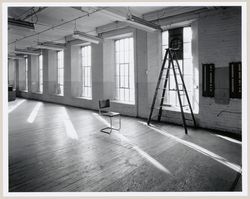
Come and help us foreground women photographers in our Collection, with special guest Clara Gutsche. Come edit, meet others, snack and tour our galleries.
Come and help us foreground women photographers in our Collection, with special guest Clara Gutsche. Come edit, meet others, snack and tour our galleries.
Date:
22 May 2024, 3 to 6pm
22 May 2024, 3 to 6pm
Title:
Foregrounding Women Photographers
Actions:
Description:
Come and help us foreground women photographers in our Collection, with special guest Clara Gutsche. Come edit, meet others, snack and tour our galleries.
Foregrounding Women Photographers
Actions:
Description:
Come and help us foreground women photographers in our Collection, with special guest Clara Gutsche. Come edit, meet others, snack and tour our galleries.
Form:
events
events
Date:
22 May 2024
3 to 6pm
22 May 2024
3 to 6pm
Form:
photographs
photographs

Actions:
Reference number:
PH1997:0053
Description:
- The series "Running Fence 1997" focuses "on the first 14 miles of the border fence that separates the United States and Mexico, beginning at the Pacific Ocean and ending in the Otay Mountains.... [It] analyzes the "idea" of the border and explores its iconography, the border being a subject that is of extreme importance to the public as the world proceeds towards greater globalization. [Geoffrey] James has written of the project: "[The border fence] was built by the US Army Corps of Engineers in 1994, out of recycled metal landing strip - the most visible symbol of what is known as Operation Gatekeeper. Because the steel sheets are placed in the ground so that their ridges run horizontally, a man can hop over the fence with ease; and no Mexican child ever seems to be impeded from retrieving a soccer ball from US territory. The real barrier to illegal immigration from Mexico into the USA is less visible: hundreds of buried sensors linked to a central computer, nightscopes, helicopters and Border Patrol Agents in white Broncos."" (Evans).
People:
Subject:
architecture, engineering
architecture, engineering
Date:
1997
1997
Title:
View of 24-hour border crossing supplies tent showing partial view of United States-Mexico border fence, San Diego County, California, United States, and Avenida Internacional, Tijuana, Baja California, Mexico
Actions:
PH1997:0053
Description:
- The series "Running Fence 1997" focuses "on the first 14 miles of the border fence that separates the United States and Mexico, beginning at the Pacific Ocean and ending in the Otay Mountains.... [It] analyzes the "idea" of the border and explores its iconography, the border being a subject that is of extreme importance to the public as the world proceeds towards greater globalization. [Geoffrey] James has written of the project: "[The border fence] was built by the US Army Corps of Engineers in 1994, out of recycled metal landing strip - the most visible symbol of what is known as Operation Gatekeeper. Because the steel sheets are placed in the ground so that their ridges run horizontally, a man can hop over the fence with ease; and no Mexican child ever seems to be impeded from retrieving a soccer ball from US territory. The real barrier to illegal immigration from Mexico into the USA is less visible: hundreds of buried sensors linked to a central computer, nightscopes, helicopters and Border Patrol Agents in white Broncos."" (Evans).
Form:
photographs
photographs
Date:
1997
1997
People:
Subject:
architecture, engineering
architecture, engineering
Form:
photographs
photographs

Actions:
Reference number:
PH1997:0054
Description:
The series "Running Fence 1997" focuses "on the first 14 miles of the border fence that separates the United States and Mexico, beginning at the Pacific Ocean and ending in the Otay Mountains.... [It] analyzes the "idea" of the border and explores its iconography, the border being a subject that is of extreme importance to the public as the world proceeds towards greater globalization. [Geoffrey] James has written of the project: "[The border fence] was built by the US Army Corps of Engineers in 1994, out of recycled metal landing strip - the most visible symbol of what is known as Operation Gatekeeper. Because the steel sheets are placed in the ground so that their ridges run horizontally, a man can hop over the fence with ease; and no Mexican child ever seems to be impeded from retrieving a soccer ball from US territory. The real barrier to illegal immigration from Mexico into the USA is less visible: hundreds of buried sensors linked to a central computer, nightscopes, helicopters and Border Patrol Agents in white Broncos."" (Evans).
People:
Subject:
architecture, engineering
architecture, engineering
Date:
1997
1997
Title:
View of dirt road and dwelling showing a partial view of United States-Mexico border fence, San Diego County, California, United States and Colonia Libertad, Tijuana, Baja California, Mexico
Actions:
PH1997:0054
Description:
The series "Running Fence 1997" focuses "on the first 14 miles of the border fence that separates the United States and Mexico, beginning at the Pacific Ocean and ending in the Otay Mountains.... [It] analyzes the "idea" of the border and explores its iconography, the border being a subject that is of extreme importance to the public as the world proceeds towards greater globalization. [Geoffrey] James has written of the project: "[The border fence] was built by the US Army Corps of Engineers in 1994, out of recycled metal landing strip - the most visible symbol of what is known as Operation Gatekeeper. Because the steel sheets are placed in the ground so that their ridges run horizontally, a man can hop over the fence with ease; and no Mexican child ever seems to be impeded from retrieving a soccer ball from US territory. The real barrier to illegal immigration from Mexico into the USA is less visible: hundreds of buried sensors linked to a central computer, nightscopes, helicopters and Border Patrol Agents in white Broncos."" (Evans).
Form:
photographs
photographs
Date:
1997
1997
People:
Subject:
architecture, engineering
architecture, engineering
Form:
photographs
photographs

Actions:
Reference number:
PH1997:0055
Description:
- The series "Running Fence 1997" focuses "on the first 14 miles of the border fence that separates the United States and Mexico, beginning at the Pacific Ocean and ending in the Otay Mountains.... [It] analyzes the "idea" of the border and explores its iconography, the border being a subject that is of extreme importance to the public as the world proceeds towards greater globalization. [Geoffrey] James has written of the project: "[The border fence] was built by the US Army Corps of Engineers in 1994, out of recycled metal landing strip - the most visible symbol of what is known as Operation Gatekeeper. Because the steel sheets are placed in the ground so that their ridges run horizontally, a man can hop over the fence with ease; and no Mexican child ever seems to be impeded from retrieving a soccer ball from US territory. The real barrier to illegal immigration from Mexico into the USA is less visible: hundreds of buried sensors linked to a central computer, nightscopes, helicopters and Border Patrol Agents in white Broncos."" (Evans).
People:
Subject:
architecture, engineering, topographic
architecture, engineering, topographic
Date:
1997
1997
Title:
Partial view of the United States-Mexico border fence with plants in the foreground, San Diego County, California, United States, and Colonia Libertad, Tijuana, Baja California, Mexico
Actions:
PH1997:0055
Description:
- The series "Running Fence 1997" focuses "on the first 14 miles of the border fence that separates the United States and Mexico, beginning at the Pacific Ocean and ending in the Otay Mountains.... [It] analyzes the "idea" of the border and explores its iconography, the border being a subject that is of extreme importance to the public as the world proceeds towards greater globalization. [Geoffrey] James has written of the project: "[The border fence] was built by the US Army Corps of Engineers in 1994, out of recycled metal landing strip - the most visible symbol of what is known as Operation Gatekeeper. Because the steel sheets are placed in the ground so that their ridges run horizontally, a man can hop over the fence with ease; and no Mexican child ever seems to be impeded from retrieving a soccer ball from US territory. The real barrier to illegal immigration from Mexico into the USA is less visible: hundreds of buried sensors linked to a central computer, nightscopes, helicopters and Border Patrol Agents in white Broncos."" (Evans).
Form:
photographs
photographs
Date:
1997
1997
People:
Subject:
architecture, engineering, topographic
architecture, engineering, topographic
Form:
photographs
photographs

Actions:
Reference number:
PH1997:0056
Description:
- The series "Running Fence 1997" focuses "on the first 14 miles of the border fence that separates the United States and Mexico, beginning at the Pacific Ocean and ending in the Otay Mountains.... [It] analyzes the "idea" of the border and explores its iconography, the border being a subject that is of extreme importance to the public as the world proceeds towards greater globalization. [Geoffrey] James has written of the project: "[The border fence] was built by the US Army Corps of Engineers in 1994, out of recycled metal landing strip - the most visible symbol of what is known as Operation Gatekeeper. Because the steel sheets are placed in the ground so that their ridges run horizontally, a man can hop over the fence with ease; and no Mexican child ever seems to be impeded from retrieving a soccer ball from US territory. The real barrier to illegal immigration from Mexico into the USA is less visible: hundreds of buried sensors linked to a central computer, nightscopes, helicopters and Border Patrol Agents in white Broncos."" (Evans).
People:
Subject:
architecture, engineering
architecture, engineering
Date:
1997
1997
Title:
View of a restaurant with the Mexico-United States border fence on the left, Colonia Libertad, Tijuana, Mexico
Actions:
PH1997:0056
Description:
- The series "Running Fence 1997" focuses "on the first 14 miles of the border fence that separates the United States and Mexico, beginning at the Pacific Ocean and ending in the Otay Mountains.... [It] analyzes the "idea" of the border and explores its iconography, the border being a subject that is of extreme importance to the public as the world proceeds towards greater globalization. [Geoffrey] James has written of the project: "[The border fence] was built by the US Army Corps of Engineers in 1994, out of recycled metal landing strip - the most visible symbol of what is known as Operation Gatekeeper. Because the steel sheets are placed in the ground so that their ridges run horizontally, a man can hop over the fence with ease; and no Mexican child ever seems to be impeded from retrieving a soccer ball from US territory. The real barrier to illegal immigration from Mexico into the USA is less visible: hundreds of buried sensors linked to a central computer, nightscopes, helicopters and Border Patrol Agents in white Broncos."" (Evans).
Form:
photographs
photographs
Date:
1997
1997
People:
Subject:
architecture, engineering
architecture, engineering
Form:
photographs
photographs
Actions:
Reference number:
PH1997:0057
Description:
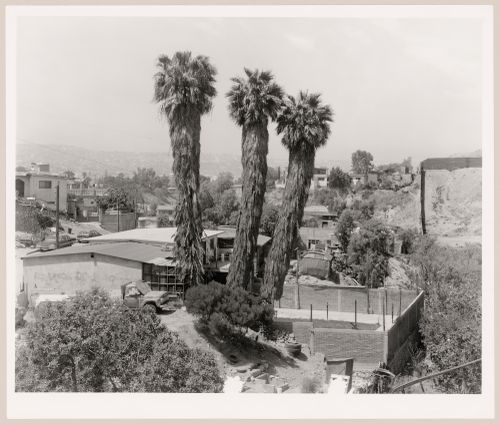
- The series "Running Fence 1997" focuses "on the first 14 miles of the border fence that separates the United States and Mexico, beginning at the Pacific Ocean and ending in the Otay Mountains.... [It] analyzes the "idea" of the border and explores its iconography, the border being a subject that is of extreme importance to the public as the world proceeds towards greater globalization. [Geoffrey] James has written of the project: "[The border fence] was built by the US Army Corps of Engineers in 1994, out of recycled metal landing strip - the most visible symbol of what is known as Operation Gatekeeper. Because the steel sheets are placed in the ground so that their ridges run horizontally, a man can hop over the fence with ease; and no Mexican child ever seems to be impeded from retrieving a soccer ball from US territory. The real barrier to illegal immigration from Mexico into the USA is less visible: hundreds of buried sensors linked to a central computer, nightscopes, helicopters and Border Patrol Agents in white Broncos."" (Evans).
People:
Subject:
architecture, engineering
architecture, engineering
Date:
1997
1997
Title:
View of Colonia Libertad with trees and houses in the foreground and showing a partial view of the United States-Mexico border fence in the centre right, San Diego County, California, United States, and Colonia Libertad, Tijuana, Baja California, Mexico
Actions:
PH1997:0057
Description:
- The series "Running Fence 1997" focuses "on the first 14 miles of the border fence that separates the United States and Mexico, beginning at the Pacific Ocean and ending in the Otay Mountains.... [It] analyzes the "idea" of the border and explores its iconography, the border being a subject that is of extreme importance to the public as the world proceeds towards greater globalization. [Geoffrey] James has written of the project: "[The border fence] was built by the US Army Corps of Engineers in 1994, out of recycled metal landing strip - the most visible symbol of what is known as Operation Gatekeeper. Because the steel sheets are placed in the ground so that their ridges run horizontally, a man can hop over the fence with ease; and no Mexican child ever seems to be impeded from retrieving a soccer ball from US territory. The real barrier to illegal immigration from Mexico into the USA is less visible: hundreds of buried sensors linked to a central computer, nightscopes, helicopters and Border Patrol Agents in white Broncos."" (Evans).
Form:
photographs
photographs
Date:
1997
1997
People:
Subject:
architecture, engineering
architecture, engineering
Form:
photographs
photographs
Actions:
Reference number:
PH1997:0058
Description:
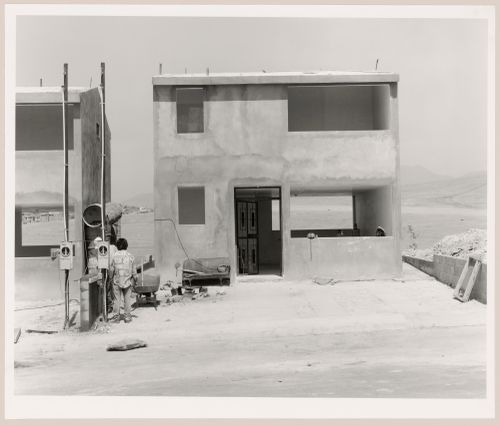
- The series "Running Fence 1997" focuses "on the first 14 miles of the border fence that separates the United States and Mexico, beginning at the Pacific Ocean and ending in the Otay Mountains.... [It] analyzes the "idea" of the border and explores its iconography, the border being a subject that is of extreme importance to the public as the world proceeds towards greater globalization. [Geoffrey] James has written of the project: "[The border fence] was built by the US Army Corps of Engineers in 1994, out of recycled metal landing strip - the most visible symbol of what is known as Operation Gatekeeper. Because the steel sheets are placed in the ground so that their ridges run horizontally, a man can hop over the fence with ease; and no Mexican child ever seems to be impeded from retrieving a soccer ball from US territory. The real barrier to illegal immigration from Mexico into the USA is less visible: hundreds of buried sensors linked to a central computer, nightscopes, helicopters and Border Patrol Agents in white Broncos."" (Evans).
People:
Subject:
architecture, engineering
architecture, engineering
Date:
1997
1997
Title:
View of houses under construction, Mesa de Otay, Tijuana, Baja California, Mexico
Actions:
PH1997:0058
Description:
- The series "Running Fence 1997" focuses "on the first 14 miles of the border fence that separates the United States and Mexico, beginning at the Pacific Ocean and ending in the Otay Mountains.... [It] analyzes the "idea" of the border and explores its iconography, the border being a subject that is of extreme importance to the public as the world proceeds towards greater globalization. [Geoffrey] James has written of the project: "[The border fence] was built by the US Army Corps of Engineers in 1994, out of recycled metal landing strip - the most visible symbol of what is known as Operation Gatekeeper. Because the steel sheets are placed in the ground so that their ridges run horizontally, a man can hop over the fence with ease; and no Mexican child ever seems to be impeded from retrieving a soccer ball from US territory. The real barrier to illegal immigration from Mexico into the USA is less visible: hundreds of buried sensors linked to a central computer, nightscopes, helicopters and Border Patrol Agents in white Broncos."" (Evans).
Form:
photographs
photographs
Date:
1997
1997
People:
Subject:
architecture, engineering
architecture, engineering


