


606 Results
Form:
books
books
Actions:
Price:
$56.95
(available to order)
Summary:
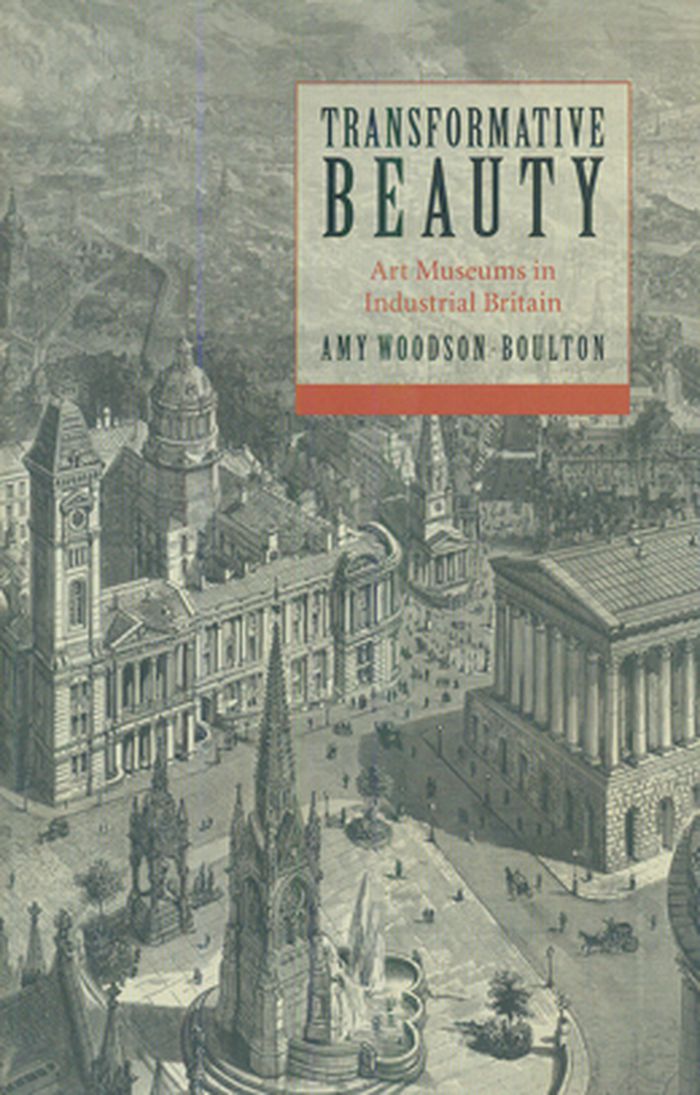
Why did British industrial cities build art museums? By exploring the histories of the municipal art museums in Birmingham, Liverpool, and Manchester, Transformative Beauty examines the underlying logic of the Victorian art museum movement. These museums attempted to create a space free from the moral and physical ugliness of industrial capitalism. Deeply engaged with(...)
Title:
Transformative beauty: art museums in industrial Britain
Actions:
Price:
$56.95
(available to order)
Summary:
Why did British industrial cities build art museums? By exploring the histories of the municipal art museums in Birmingham, Liverpool, and Manchester, Transformative Beauty examines the underlying logic of the Victorian art museum movement. These museums attempted to create a space free from the moral and physical ugliness of industrial capitalism. Deeply engaged with the social criticism of John Ruskin, reformers created a new, prominent urban institution, a domesticated public space that not only aimed to provide refuge from the corrosive effects of industrial society but also provided a remarkably unified secular alternative to traditional religion. Woodson-Boulton raises provocative questions about the meaning and use of art in relation to artistic practice, urban development, social justice, education, and class. In today's context of global austerity and shrinking government support of public cultural institutions, this book is a timely consideration of arts policy and purposes in modern society.
Form:
books
books
Publication:
March 2012
March 2012
Subject:
Museology
Museology
Form:
books
books
Actions:
Price:
$36.95
(available to order)
Summary:
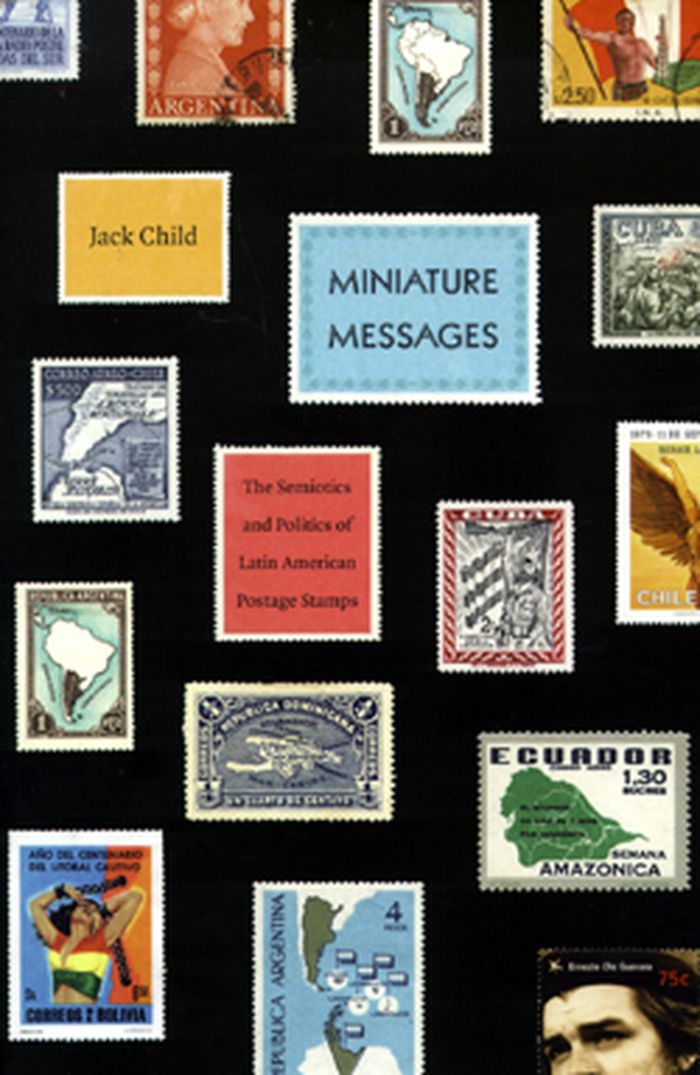
In Miniature Messages, Jack Child analyzes Latin American postage stamps, revealing the messages about history, culture, and politics encoded in their design and disseminated throughout the world. While postage stamps are a sanctioned product of official government agencies, Child argues that they accumulate popular cultural value and take on new meanings as they(...)
Title:
Miniature messages: the semiotics and politics of latin american postage stamps
Actions:
Price:
$36.95
(available to order)
Summary:
In Miniature Messages, Jack Child analyzes Latin American postage stamps, revealing the messages about history, culture, and politics encoded in their design and disseminated throughout the world. While postage stamps are a sanctioned product of official government agencies, Child argues that they accumulate popular cultural value and take on new meanings as they circulate in the public sphere. As he demonstrates in this richly illustrated study, the postage stamp conveys many of the contestations and triumphs of Latin American history. Child combines history and political science with philatelic research of nearly forty thousand Latin American stamps. He focuses on Argentina and the Southern Cone, highlighting stamps representing the consolidation of the Argentine republic and those produced under its Peronist regime. He compares Chilean stamps issued by the leftist government of Salvador Allende and by Augusto Pinochet’s dictatorship. Considering postage stamps produced under other dictatorial regimes, he examines stamps from the Dominican Republic, Guatemala, Nicaragua, and Paraguay. Child studies how international conflicts have been depicted on the stamps of Argentina, Chile, and Peru, and he pays particular attention to the role of South American and British stamps in establishing claims to the Malvinas/Falkland Islands and to Antarctica. He also covers the cultural and political history of stamps in Bolivia, Brazil, Colombia, Cuba, Grenada, Mexico, Uruguay, Venezuela and elsewhere. In Miniature Messages, Child finds the political history of modern Latin America in its “tiny posters.” Jack Child is a professor in the Department of Language and Foreign Studies at American University in Washington. He is the author of many books and articles on Latin American culture, translation, and geopolitics.
Form:
books
books
Publication:
June 2008, Durham
June 2008, Durham
Subject:
Printed Matter
Printed Matter
Form:
books
books

Actions:
Price:
$37.95
(available to order)
Summary:
In "The ends of research" Tom Özden-Schilling explores the afterlives of several research initiatives that emerged in the wake of the "War in the woods," a period of anti-logging blockades in Canada in the late twentieth century. Drawing on ethnographic fieldwork among neighboring communities of White environmental scientists and First Nations mapmakers in northwest(...)
Subject:
Environment and environmental theory
Environment and environmental theory
Publication:
December 2023
December 2023
Title:
The ends of research: Indigenous and settler science after the War in the Woods
Actions:
Price:
$37.95
(available to order)
Summary:
In "The ends of research" Tom Özden-Schilling explores the afterlives of several research initiatives that emerged in the wake of the "War in the woods," a period of anti-logging blockades in Canada in the late twentieth century. Drawing on ethnographic fieldwork among neighboring communities of White environmental scientists and First Nations mapmakers in northwest British Columbia, Özden-Schilling examines these researchers' lasting investments and the ways they struggle to continue their work long after the loss of government funding. He charts their use of planning documents, Indigenous territory maps, land use plots, reports, and other documents that help them not only to survive institutional restructuring but to hold on to the practices that they hope will enable future researchers to continue their work. He also shows how their lives and aspirations shape and are shaped by decades-long battles over resource extraction and Indigenous land claims. By focusing on researchers' experiences and personal attachments, Özden-Schilling illustrates the complex relationships between researchers and rural histories of conservation, environmental conflict, resource extraction, and the long-term legacies of scientific research.
Form:
books
books
Publication:
December 2023
December 2023
Subject:
Environment and environmental theory
Environment and environmental theory
Form:
books
books
Actions:
Price:
$94.95
(available to order)
Summary:
Following the liberation and subsequent occupation of Austria at the end of World War II in spring 1945 by the victorious powers Britain, France, the United States, and the Soviet Union, Vienna soon became a central stage for the quickly emerging Cold War. The struggle of differing political systems was also carried out in the field of architecture. Cold War and(...)
Title:
Cold war and architecture: the competing forces that reshaped Austria after 1945
Actions:
Price:
$94.95
(available to order)
Summary:
Following the liberation and subsequent occupation of Austria at the end of World War II in spring 1945 by the victorious powers Britain, France, the United States, and the Soviet Union, Vienna soon became a central stage for the quickly emerging Cold War. The struggle of differing political systems was also carried out in the field of architecture. Cold War and Architecture sheds new light on the building activity in postwar Austria and its main protagonists. For the first time, this book explores the lines of architectural debates of the time in the context of the global political and cultural conflict of East vs. West. With its transnational perspective, it changes our view of architectural history and postwar society. During the ten-year occupation period, Austria experienced a transition from authoritarian government to democratic consumer society. Each of the four Allied powers established its own extensive cultural program. Architectural exhibitions became important instruments of such educational schemes with the objective of a new social order. British, American, French, and Soviet cultural policies served as catalysts for ideological convictions.
Form:
books
books
Publication:
April 2020
April 2020
Subject:
Modernism
Modernism
Form:
books
books
Actions:
Price:
$60.00
(available to order)
Summary:
In 1892 seventeen Haida artists were commissioned to carve a model of HlGaagilda Llnagaay (the village of Skidegate on Haida Gwaii, British Columbia) for the 1893 World’s Fair in Chicago. The Skidegate model, featuring twenty-nine large houses and forty-two poles, is the only known model village in North America carved by nineteenth-century Indigenous residents of the(...)
Title:
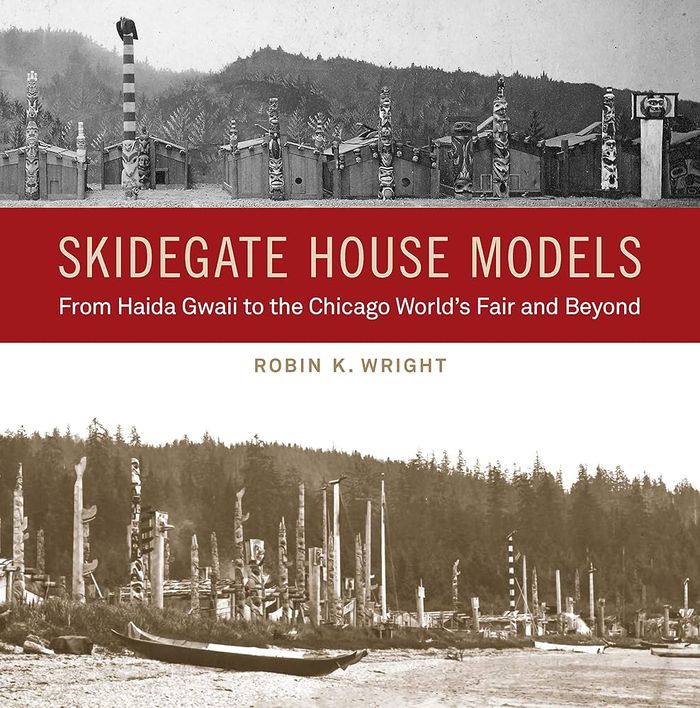
Skidegate House Models: From Haida Gwaii to the Chicago World's Fair and Beyond
Actions:
Price:
$60.00
(available to order)
Summary:
In 1892 seventeen Haida artists were commissioned to carve a model of HlGaagilda Llnagaay (the village of Skidegate on Haida Gwaii, British Columbia) for the 1893 World’s Fair in Chicago. The Skidegate model, featuring twenty-nine large houses and forty-two poles, is the only known model village in North America carved by nineteenth-century Indigenous residents of the village it portrayed. Based on over twenty years of collaborative research with the Skidegate Haida community, the book features vital cultural context. Robin K. Wright explores how Haida people represented their culture to the outside world at a time when they were suffering from devastating population loss due to introduced diseases and from ongoing attempts by the settler government to suppress their culture by making the potlatch illegal. While promoters of the Chicago World’s Fair used the village to celebrate the perceived “progress” of the dominant society, for Skidegate residents it provided a means to preserve their history and culture. After the exposition, many models were dispersed to the Field Museum of Natural History and other collections, but fourteen of the model houses have not yet been located. The book provides extensive archival information and photographs that contextualize the model village and might help locate the missing houses. Wright’s community-engaged research offers valuable insights into Northwest Coast art history.
Form:
books
books
Publication:
April 2024
April 2024
Subject:
Indigenous architecture
Indigenous architecture
Form:
books
books
Actions:
Price:
$41.95
(available to order)
Summary:
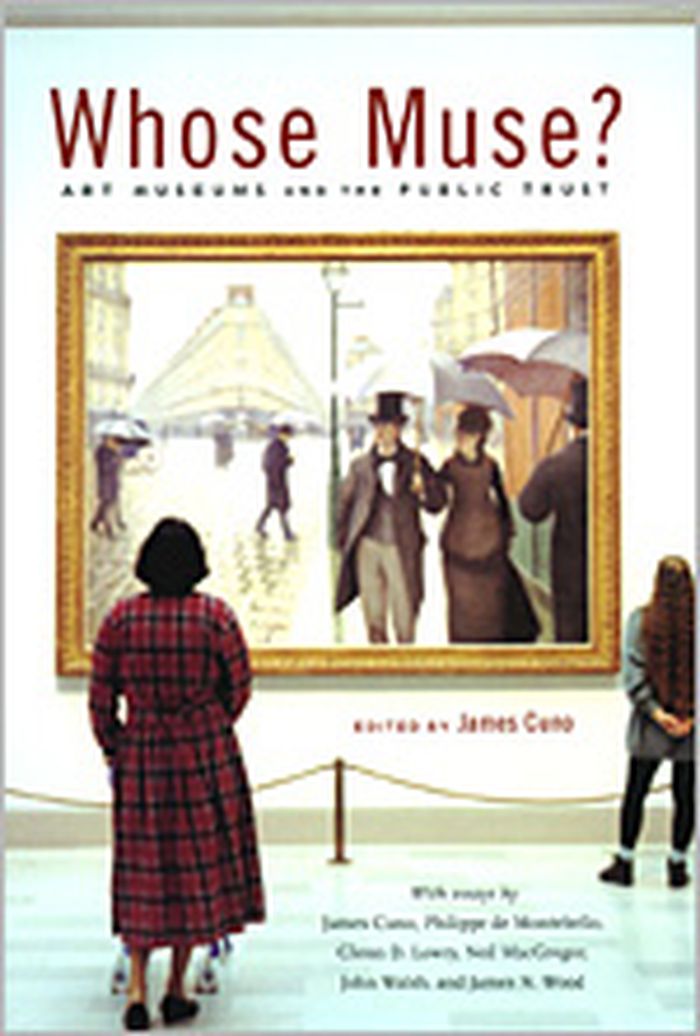
During the economic boom of the 1990's, art museums expanded dramatically in size, scope, and ambition. They came to be seen as new civic centers : on the one hand as places of entertainment, leisure, and commerce, on the other as socially therapeutic institutions. But museums were also criticized for everything from elitism to looting or illegally exporting works from(...)
Subject:
Museums and Universal Exhibitions
Museums and Universal Exhibitions
Publication:
January 2004, Princeton / Cambridge, Mass.
January 2004, Princeton / Cambridge, Mass.
Title:
Whose muse? : art museums and the public trust
Actions:
Price:
$41.95
(available to order)
Summary:
During the economic boom of the 1990's, art museums expanded dramatically in size, scope, and ambition. They came to be seen as new civic centers : on the one hand as places of entertainment, leisure, and commerce, on the other as socially therapeutic institutions. But museums were also criticized for everything from elitism to looting or illegally exporting works from other countries, to exhibiting works offensive to the public taste. "Whose Muse?" brings together five directors of leading American and British art museums who together offer a forward-looking alternative to such prevailing views. While their approaches differ, certain themes recur : as museums have become increasingly complex and costly to manage, and as government support has waned, the temptation is great to follow policies driven not by a mission but by the market. However, the directors concur that public trust can be upheld only if museums continue to see their core mission as building collections that reflect a nation's artistic legacy and providing informed and unfettered access to them. The book, based on a lecture series of the same title held in 2000-2001 by the Harvard Program for Art Museum Directors, also includes an introduction by Cuno and a fascinating - and surprisingly frank - roundtable discussion among the participating directors. A rare collection of sustained reflections by prominent museum directors on the current state of affairs in their profession, this book is without equal. It will be read widely not only by museum professionals, trustees, critics, and scholars, but also by the art-loving public itself.
Form:
books
books
Publication:
January 2004, Princeton / Cambridge, Mass.
January 2004, Princeton / Cambridge, Mass.
Subject:
Museums and Universal Exhibitions
Museums and Universal Exhibitions


