


657 Results
Form:
books
books
Title:
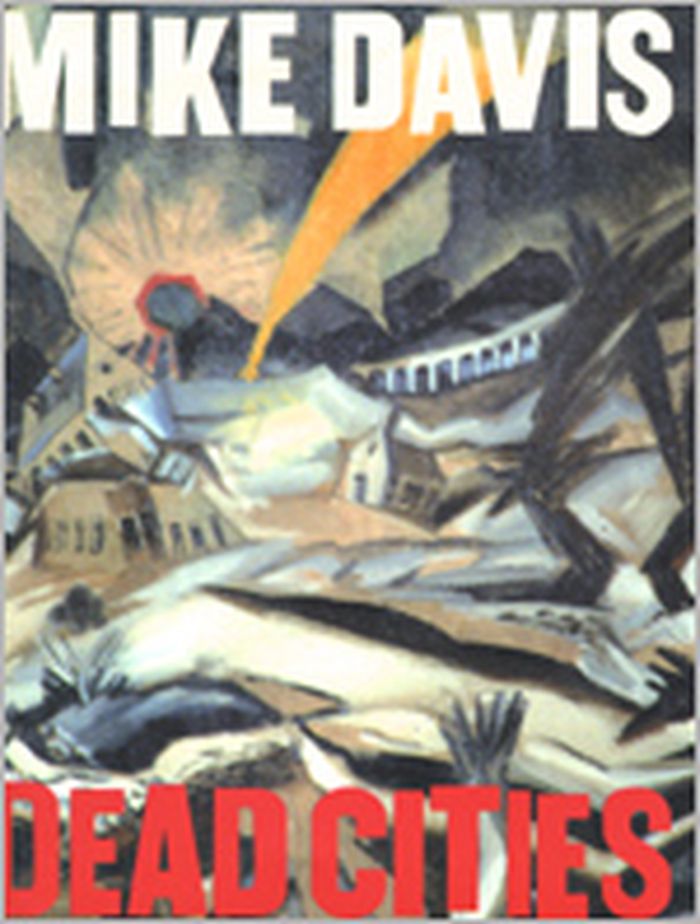
Dead cities and other tales
Dead cities and other tales
Actions:
Price:
$44.95
(available to order)
Summary:
In his most syncretic writing yet, radical urban theorist Mike Davis explores the combat zone that is contemporary urban America, a ceaseless battle waged both within cities and against nature. Using environmental science as his frame of understanding, Davis examines themes of urban life today—white flight, deindustrialization, housing and job segregation and(...)
Title:
Dead cities and other tales
Actions:
Price:
$44.95
(available to order)
Summary:
In his most syncretic writing yet, radical urban theorist Mike Davis explores the combat zone that is contemporary urban America, a ceaseless battle waged both within cities and against nature. Using environmental science as his frame of understanding, Davis examines themes of urban life today—white flight, deindustrialization, housing and job segregation and discrimination, and federal policy—and looks at areas he calls "national sacrifice zones," military landscapes that simulated warfare and arms production have rendered uninhabitable. Davis begins our apocalyptically inflected tour with a trip to New York’s Ground Zero. He then takes us to "German Village," a Utah wasteland that was once a test site for Allied science advisors to rehearse the perfect plan for destroying Berlin, and to the diabolic miracle of Las Vegas, where environmental terrorism is practiced in the name of urban development. Davis also hits Los Angeles, the frontline of the "Second Civil War" sparked by American apartheid, and which lies waiting to be ignited in cities across the country.
Form:
books
books
Publication:
September 2002, New York
September 2002, New York
Subject:
Urban Theory
Urban Theory
Form:
books
books
Actions:
Price:
$49.95
(available to order)
Summary:
''Ulaanbaatar: beyond water and grass'' is the first book in the English language that takes the visitors to an in-depth exploration of the capital of Mongolia. In the first section of the book, M. A. Aldrich paints a detailed portrait of the history, religion, and architecture of Ulaanbaatar with reference to how the city evolved from a monastic settlement to a(...)
Title:
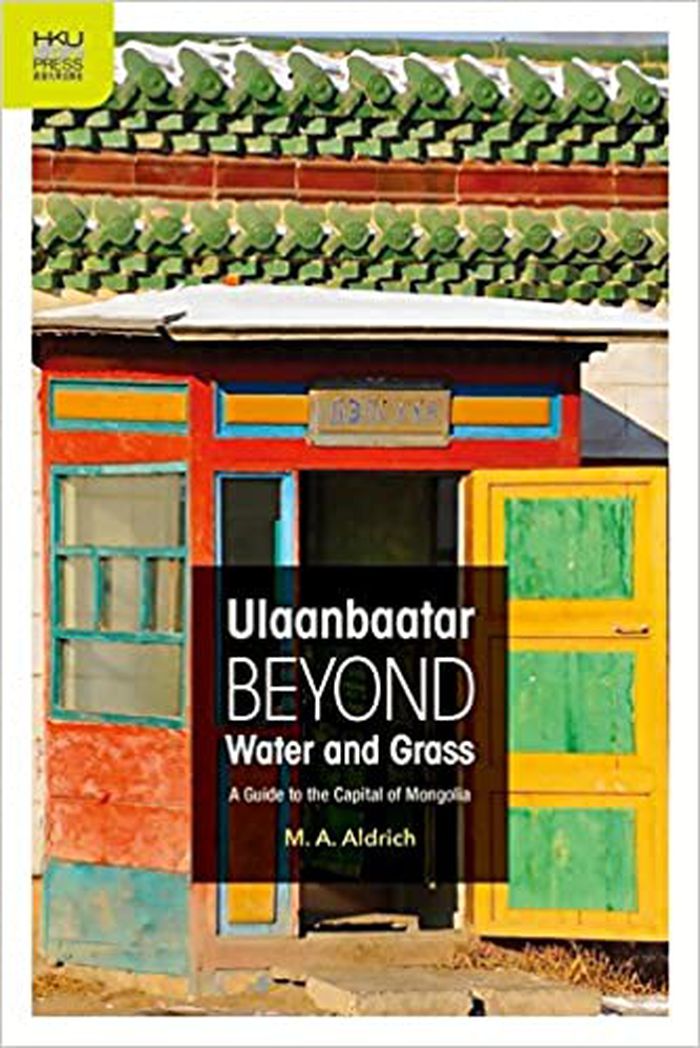
Ulaanbaatar: beyond Water and Grass
Actions:
Price:
$49.95
(available to order)
Summary:
''Ulaanbaatar: beyond water and grass'' is the first book in the English language that takes the visitors to an in-depth exploration of the capital of Mongolia. In the first section of the book, M. A. Aldrich paints a detailed portrait of the history, religion, and architecture of Ulaanbaatar with reference to how the city evolved from a monastic settlement to a communist-inspired capital and finally to a major city of free-wheeling capitalism and Tammany Hall politics. The second section of the book offers the reader a tour of different sites within the city and beyond, bringing back to life the human dramas that have played themselves out on the stage of Ulaanbaatar. Where most guide books often lightly discuss the capital, this book reveals much that remains hidden from the temporary visitor and even from the long-term resident. Writing in a quirky, idiosyncratic style, the author shares his appreciation and delight in this unique urban setting- indeed, in all things Mongolian.
Form:
books
books
Publication:
March 2018
March 2018
Subject:
Current Exhibitions
Current Exhibitions
Form:
books
books
Title:
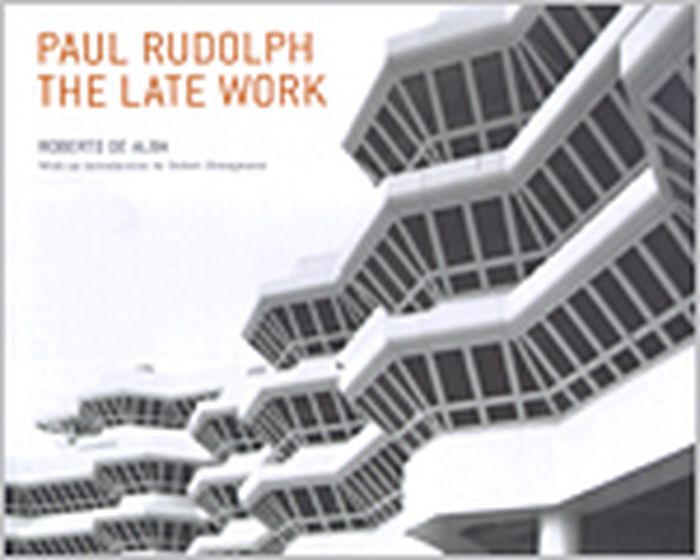
Paul Rudolph : the late work
Paul Rudolph : the late work
Actions:
Price:
$62.00
(available to order)
Summary:
The light- and breeze-filled modern houses in Florida of the 1950s -- featured in Paul Rudolph: The Florida Houses -- and the hard-lined silhouette of Yale's Art and Architecture Building (1962) are the two images that come to mind when one thinks of Paul Rudolph. Yet few people know the work of the last decades of his life, from the 1970s through the 90s. Published here(...)
Title:
Paul Rudolph : the late work
Actions:
Price:
$62.00
(available to order)
Summary:
The light- and breeze-filled modern houses in Florida of the 1950s -- featured in Paul Rudolph: The Florida Houses -- and the hard-lined silhouette of Yale's Art and Architecture Building (1962) are the two images that come to mind when one thinks of Paul Rudolph. Yet few people know the work of the last decades of his life, from the 1970s through the 90s. Published here for the first time, Rudolph's final works are explored through his masterful pencil drawings, models, and photographs, as well as the last interview of his life with architect Peter Blake. In a book that considers these projects in the context of his early success, Roberto de Alba explores the architect's buildings designed from 1969 to 1996 and includes an astonishing variety of projects, many built, such as houses, towers, bungalows, chapels, corporate buildings, and urban plans of a monumental scale. All show the complicated interplay of space, light, and mass that are the trademarks of Rudolph's genius. Through de Alba's close contact with the architect before his death, Rudolph's own vision is conveyed in descriptive texts and accompanying images. Paul Rudolph: The Late Work is designed as a companion volume to The Florida Houses, and is the second in a planned three-volume set of the complete works of this legendary architect.
Form:
books
books
Publication:
February 2003, New York
February 2003, New York
Subject:
Architecture Monographs
Architecture Monographs
Form:
audio
audio
Description:
1 online resource.
Author:
Subject:
Publication:
[Place of publication not identified] : Lateral Addition, 2018.
[Place of publication not identified] : Lateral Addition, 2018.
Title:
June 21, 2018 : Listening for Southwest Key in San Diego.
Actions:
Description:
1 online resource.
June 21, 2018 : Listening for Southwest Key in San Diego.
Actions:
Description:
1 online resource.
Form:
audio
audio
Publication:
[Place of publication not identified] : Lateral Addition, 2018.
[Place of publication not identified] : Lateral Addition, 2018.
Author:
Subject:
Form:
books
books
Actions:
Price:
$22.95
(available to order)
Summary:
For Siegfried Kracauer, the urban ornament was not just an aspect of design; it was the medium through which city dwellers interpreted the metropolis itself. In "Ornaments of the metropolis", Henrik Reeh traces variations on the theme of the ornament in Kracauer's writings on urbanism, from his early journalism in Germany between the wars to his "sociobiography" of(...)
Title:
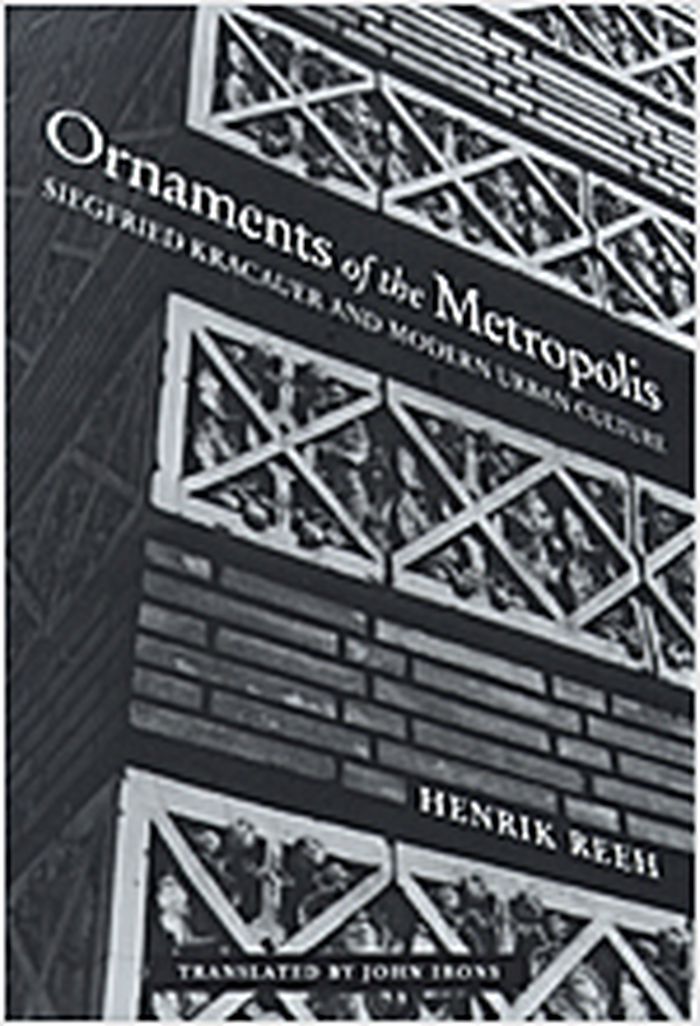
Ornaments of the metropolis : Siegfried Kracuaer and the Modern urban culture
Actions:
Price:
$22.95
(available to order)
Summary:
For Siegfried Kracauer, the urban ornament was not just an aspect of design; it was the medium through which city dwellers interpreted the metropolis itself. In "Ornaments of the metropolis", Henrik Reeh traces variations on the theme of the ornament in Kracauer's writings on urbanism, from his early journalism in Germany between the wars to his "sociobiography" of Jacques Offenbach in Paris. Kracauer (1889-1966), often associated with the Frankfurt School and the intellectual milieu of Walter Benjamin, is best known for his writings on cinema and the philosophy of history. Reeh examines Kracauer's lesser-known early work, much of it written for the trendsetting newspaper Frankfurter Zeitung in the 1920s and early 1930s, and analyzes Kracauer's continuing reflections on modern urban life, through the pivotal idea of ornament. Kracauer deciphers the subjective experience of the city by viewing fragments of the city as dynamic ornaments; an employment exchange, a day shelter for the homeless, a movie theater, and an amusement park become urban microcosms. Reeh focuses on three substantial works written by Kracauer before his emigration to the United States in 1940. In the early autobiographical novel "Ginster, written by himself", a young architect finds aesthetic pleasure in the ornamental forms that are largely unused in the profession of the time. The collection "Streets of Berlin and elsewhere", with many essays from Kracauer's years in Berlin, documents the subjectiveness of urban life. Finally, "Jacques Offenbach and the Paris of his time" shows how the superficial - in a sense, ornamental - milieu of the operetta evolved into a critical force during the Second Empire. Reeh argues that Kracauer's novel, essays, and historiography all suggest ways in which the subjective can reappropriate urban life. The book also includes a series of photographs by the author that reflect the ornamental experience of the metropolis in Paris, Frankfurt, and other cities.
Form:
books
books
Publication:
October 2006, Cambridge (MA), London
October 2006, Cambridge (MA), London
Subject:
Urban Theory
Urban Theory
Form:
books
books
Price:
$52.00
(available in store)
Summary:
For Siegfried Kracauer, the urban ornament was not just an aspect of design; it was the medium through which city dwellers interpreted the metropolis itself. In “Ornaments of the Metropolis”, Henrik Reeh traces variations on the theme of the ornament in Kracauer's writings on urbanism, from his early journalism in Germany between the wars to his "sociobiography" of(...)
Title:
Ornaments of the metropolis : Siegfried Kracauer and modern urban culture
Actions:
Price:
$52.00
(available in store)
Summary:
For Siegfried Kracauer, the urban ornament was not just an aspect of design; it was the medium through which city dwellers interpreted the metropolis itself. In “Ornaments of the Metropolis”, Henrik Reeh traces variations on the theme of the ornament in Kracauer's writings on urbanism, from his early journalism in Germany between the wars to his "sociobiography" of Jacques Offenbach in Paris. Kracauer (1889-1966), often associated with the Frankfurt School and the intellectual milieu of Walter Benjamin, is best known for his writings on cinema and the philosophy of history. Reeh examines Kracauer's lesser-known early work, much of it written for the trendsetting newspaper Frankfurter Zeitung in the 1920s and early 1930s, and analyzes Kracauer's continuing reflections on modern urban life, through the pivotal idea of ornament. Kracauer deciphers the subjective experience of the city by viewing fragments of the city as dynamic ornaments; an employment exchange, a day shelter for the homeless, a movie theatre, and an amusement park become urban microcosms. Reeh focuses on three substantial works written by Kracauer before his emigration to the United States in 1940. In the early autobiographical novel “Ginster, Written by Himself”, a young architect finds aesthetic pleasure in the ornamental forms that are largely unused in the profession of the time. The collection “Streets of Berlin and Elsewhere”, with many essays from Kracauer's years in Berlin, documents the subjectiveness of urban life. Finally, “Jacques Offenbach and the Paris of His Time” shows how the superficial -- in a sense, ornamental -- milieu of the operetta evolved into a critical force during the Second Empire. Reeh argues that Kracauer's novel, essays, and historiography all suggest ways in which the subjective can reappropriate urban life. The book also includes a series of photographs by the author that reflect the ornamental experience of the metropolis in Paris, Frankfurt, and other cities.
Form:
books
books
Publication:
March 2005, Cambridge, Massachusetts
March 2005, Cambridge, Massachusetts
Subject:
Urban Theory
Urban Theory
Form:
books
books
Actions:
Price:
$22.95
(available to order)
Summary:
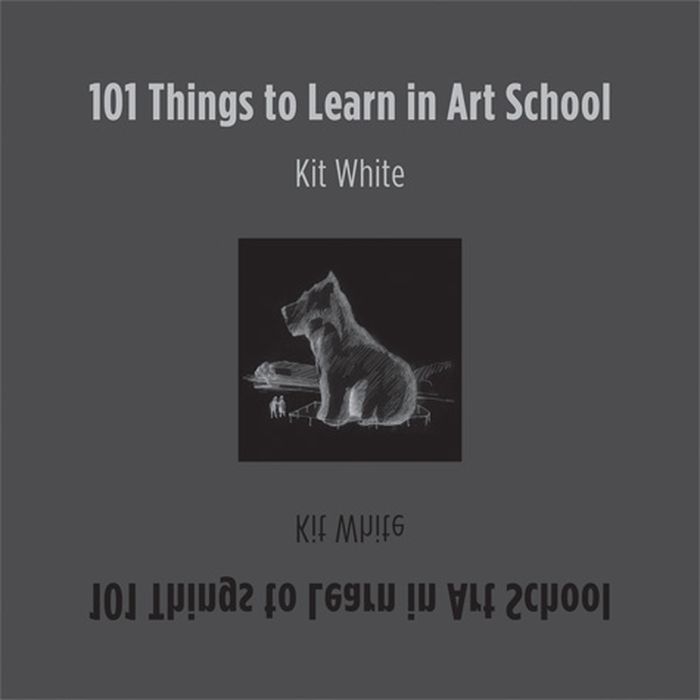
What is the first thing to learn in art school? "Art can be anything." The second thing? "Learn to draw." With 101 Things to Learn in Art School, artist and teacher Kit White delivers and develops such lessons, striking an instructive balance between technical advice and sage concepts. "Art can be anything" is illustrated by a drawing of Duchamp’s famous urinal; a(...)
Title:
101 things to learn in art school
Actions:
Price:
$22.95
(available to order)
Summary:
What is the first thing to learn in art school? "Art can be anything." The second thing? "Learn to draw." With 101 Things to Learn in Art School, artist and teacher Kit White delivers and develops such lessons, striking an instructive balance between technical advice and sage concepts. "Art can be anything" is illustrated by a drawing of Duchamp’s famous urinal; a description of chiaroscuro art is illuminated by an image "after Caravaggio"; a lesson on time and media is accompanied by a view of a Jenny Holzer projection. The book offers advice about the issues artists confront across all artistic media, but this is no simple handbook to making art. It is a guide to understanding art as a description of the world we live in, and it is a guide to using art as a medium for thought. And so this book belongs on the reading list of art students, art teachers, and artists, but it also belongs in the library of everyone who cares about art as a way of understanding life.
Form:
books
books
Publication:
October 2011
October 2011
Subject:
Art Theory
Art Theory
Form:
books
books

Actions:
Price:
$65.00
(available to order)
Summary:
Arthur Elrod was the most successful interior designer working in the Palm Springs area from 1954 to 1974. His forward-thinking midcentury interior design appeared in primary homes, second houses, third houses, spec houses, country clubs, and experimental houses- in the desert and across the US. He was charming, handsome, and worked tirelessly for his A-list clientele,(...)
Title:
Arthur Elrod: Desert modern design
Actions:
Price:
$65.00
(available to order)
Summary:
Arthur Elrod was the most successful interior designer working in the Palm Springs area from 1954 to 1974. His forward-thinking midcentury interior design appeared in primary homes, second houses, third houses, spec houses, country clubs, and experimental houses- in the desert and across the US. He was charming, handsome, and worked tirelessly for his A-list clientele, such as Lucille Ball and Walt Disney. Perhaps his most famous work was done in his own home, known as the Elrod House in Palm Springs, built by architect John Lautner in 1968. His rise paralleled the growing modernist movement in desert architecture, and he worked alongside the leading California architects of the day including E. Stewart Williams, William F. Cody, Paul R. Williams, Edward Fickett and, most famously, John Lautner. Elrod's life was cut tragically short when the convertible he was riding in was hit by a drunk driver one morning in February 1974; he was 49. This in-depth biography is the first and only of its kind.
Form:
books
books
Publication:
February 2019
February 2019
Subject:
Interior Design
Interior Design
Form:
books
books

Actions:
Price:
$25.95
(available to order)
Summary:
Larry Bennett calls contemporary Chicago the third city to distinguish it from its two predecessors: the first city, a sprawling industrial center whose historical arc ran from the Civil War to the Great Depression; and the second city, the Rustbelt exemplar of the period from around 1950 to 1990. The third city features a dramatically revitalized urban core, a shifting(...)
Title:
The third city: Chicago and American urbanism
Actions:
Price:
$25.95
(available to order)
Summary:
Larry Bennett calls contemporary Chicago the third city to distinguish it from its two predecessors: the first city, a sprawling industrial center whose historical arc ran from the Civil War to the Great Depression; and the second city, the Rustbelt exemplar of the period from around 1950 to 1990. The third city features a dramatically revitalized urban core, a shifting population mix that includes new immigrant streams, and a growing number of middle-class professionals working in new economy sectors. It is also a city utterly transformed by the top-to-bottom reconstruction of public housing developments and the ambitious provision of public works like Millennium Park. It is, according to Bennett, a work in progress spearheaded by Richard M. Daley, a self-consciously innovative mayor whose strategy of neighborhood revitalization and urban renewal is a prototype of city governance for the twenty-first century. The Third City ultimately contends that to understand Chicago under Daley’s charge is to understand what metropolitan life across North America may well look like in the coming decades.
Form:
books
books
Publication:
September 2010
September 2010
Subject:
History since 1900, Reference Books
History since 1900, Reference Books
Form:
books
books
Title:
Alabaster Cities : Urban
Alabaster Cities : Urban
Actions:
Price:
$34.95
(available to order)
Summary:
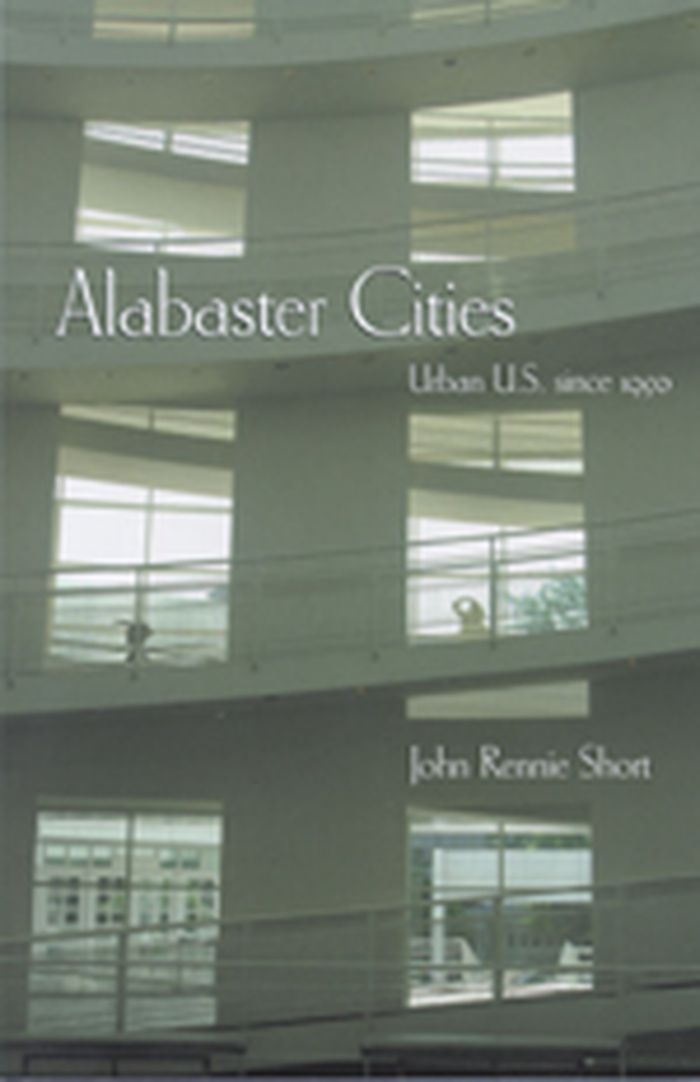
Traces the evolution of urban America since 1950, uncovering the forces behind the full emergence of a metropolitan nation, a suburban society, and a series of fragmented civic communities. With keen insight and exhaustive research John Rennie Short narrates the story of urban America from 1950 to the present, revealing a compelling portrait of urban transformation.(...)
Title:
Alabaster Cities : Urban
Actions:
Price:
$34.95
(available to order)
Summary:
Traces the evolution of urban America since 1950, uncovering the forces behind the full emergence of a metropolitan nation, a suburban society, and a series of fragmented civic communities. With keen insight and exhaustive research John Rennie Short narrates the story of urban America from 1950 to the present, revealing a compelling portrait of urban transformation. Short chronicles the steady rise of urbanization, the increasing suburbanization, and the sweeping metropolitanization of the U.S., uncovering the forces behind these shifts and their consequences for American communities. Drawing on numerous studies, first-hand anecdotes, census figures, and other statistical data, Short’s work addresses the globalization of U.S. cities, the increased polarization of urban life in the U.S., the role of civic engagement, and the huge role played by the public sector in shaping the character of cities. With deft analysis the author weaves together the themes of urban renewal, suburbanization and metropolitan fragmentation, race and ethnicity, and immigration, presenting a fascinating and highly readable account of the U.S. in the second half of the twentieth century.
Form:
books
books
Publication:
November 2006, New York
November 2006, New York
Subject:
Urban Theory
Urban Theory


