


36154 Results
Form:
books
books
Actions:
Price:
$25.00
(available to order)
Summary:
Since the mid-1960s when he started out as a fledgling critic, Dan Graham has carved out a unique role for himself, expanding the scope of the Conceptual artist to incorporate art criticism, music criticism, photography and architecture. For this volume, curator Hans Ulrich Obrist met with Graham on several occasions to discuss the artist's work, life and the numerous(...)
$25.00
(available to order)
Summary:
Since the mid-1960s when he started out as a fledgling critic, Dan Graham has carved out a unique role for himself, expanding the scope of the Conceptual artist to incorporate art criticism, music criticism, photography and architecture. For this volume, curator Hans Ulrich Obrist met with Graham on several occasions to discuss the artist's work, life and the numerous(...)
Title:
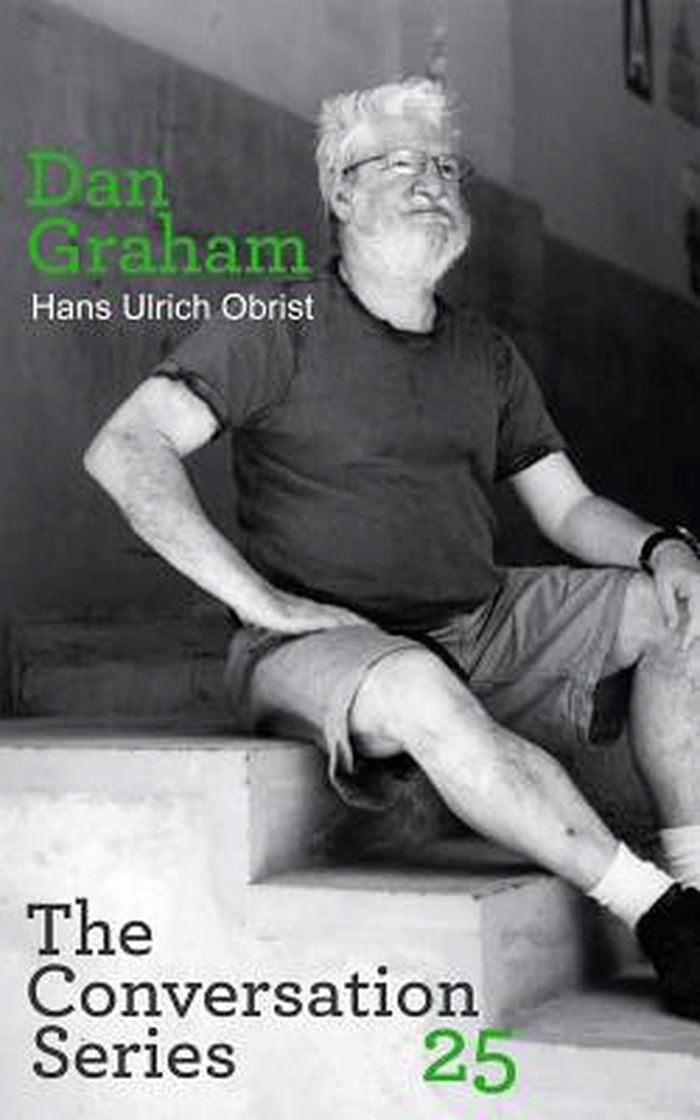
Hans Ulrich Obrist, the conversation series 25 : Dan Graham
Actions:
Price:
$25.00
(available to order)
Summary:
Since the mid-1960s when he started out as a fledgling critic, Dan Graham has carved out a unique role for himself, expanding the scope of the Conceptual artist to incorporate art criticism, music criticism, photography and architecture. For this volume, curator Hans Ulrich Obrist met with Graham on several occasions to discuss the artist's work, life and the numerous interests he passionately follows. The conversation thus wanders seamlessly from architecture to rock and roll, philosophy to astrology, Graham's early performance pieces, photography and articles, to the films and glass pavilions for which he is best known today. A fountain of art folklore, Graham offers recollections of friends and colleagues, art work and influences, providing an invaluable insight not only into the New York art scene of the 60s and 70s, but also one of its most influential representatives.
Hans Ulrich Obrist, the conversation series 25 : Dan Graham
Actions:
Price:
$25.00
(available to order)
Summary:
Since the mid-1960s when he started out as a fledgling critic, Dan Graham has carved out a unique role for himself, expanding the scope of the Conceptual artist to incorporate art criticism, music criticism, photography and architecture. For this volume, curator Hans Ulrich Obrist met with Graham on several occasions to discuss the artist's work, life and the numerous interests he passionately follows. The conversation thus wanders seamlessly from architecture to rock and roll, philosophy to astrology, Graham's early performance pieces, photography and articles, to the films and glass pavilions for which he is best known today. A fountain of art folklore, Graham offers recollections of friends and colleagues, art work and influences, providing an invaluable insight not only into the New York art scene of the 60s and 70s, but also one of its most influential representatives.
Form:
books
books
Publication:
July 2011
July 2011
Subject:
Art Theory
Art Theory
Form:
books
books
Actions:
Price:
$24.95
(available to order)
Summary:
Spanning 1989 to 2009, this anthology collects the influential writings of American artist, musician and critic John Miller (born 1954), which have been lauded by Bruce Hainley in Artforum as “a pungent intervention into the ideologies of beauty, representation and looking.” Ranging from reviews and cultural essays to theory and artist's statements, Miller's writings(...)
$24.95
(available to order)
Summary:
Spanning 1989 to 2009, this anthology collects the influential writings of American artist, musician and critic John Miller (born 1954), which have been lauded by Bruce Hainley in Artforum as “a pungent intervention into the ideologies of beauty, representation and looking.” Ranging from reviews and cultural essays to theory and artist's statements, Miller's writings(...)
Title:
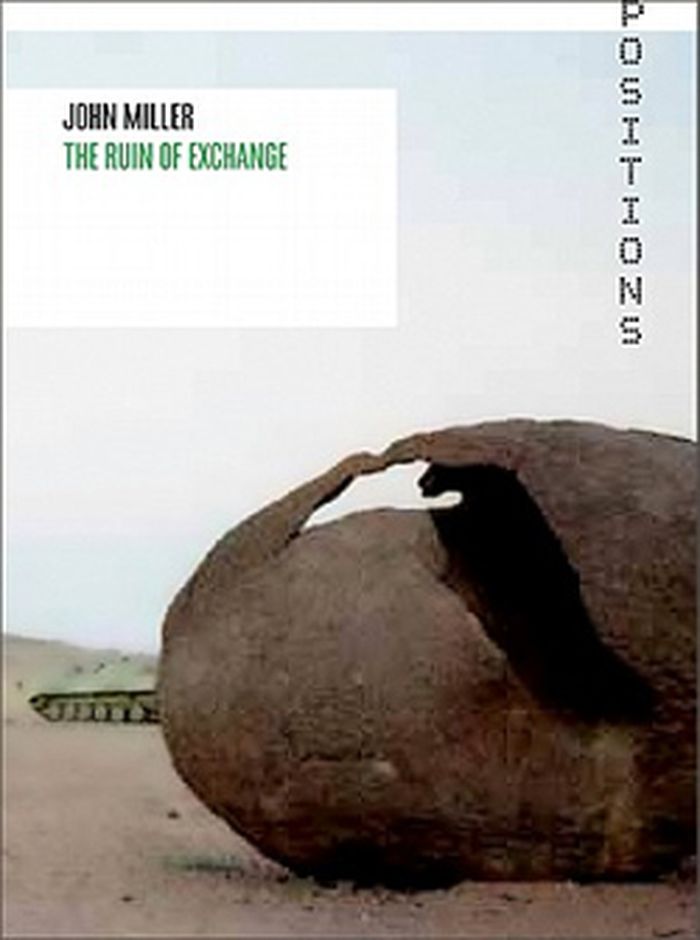
The ruin of exchange and other writings on art
Actions:
Price:
$24.95
(available to order)
Summary:
Spanning 1989 to 2009, this anthology collects the influential writings of American artist, musician and critic John Miller (born 1954), which have been lauded by Bruce Hainley in Artforum as “a pungent intervention into the ideologies of beauty, representation and looking.” Ranging from reviews and cultural essays to theory and artist's statements, Miller's writings distinguish themselves from other styles of art criticism insofar as they relate to his larger artistic concerns with the social context of the art object and its sociopolitical ramifications as a commodity (as the title of this volume implies); they are also deeply informed by Miller's vast knowledge of art history and popular culture. More recently, Miller has entered into close dialogue with Dan Graham, Bob Nickas and Nicolas Guagnini. Many of the essays collected here - such as his contributions to the German magazine Texte zur Kunst - appear in English for the first time.
The ruin of exchange and other writings on art
Actions:
Price:
$24.95
(available to order)
Summary:
Spanning 1989 to 2009, this anthology collects the influential writings of American artist, musician and critic John Miller (born 1954), which have been lauded by Bruce Hainley in Artforum as “a pungent intervention into the ideologies of beauty, representation and looking.” Ranging from reviews and cultural essays to theory and artist's statements, Miller's writings distinguish themselves from other styles of art criticism insofar as they relate to his larger artistic concerns with the social context of the art object and its sociopolitical ramifications as a commodity (as the title of this volume implies); they are also deeply informed by Miller's vast knowledge of art history and popular culture. More recently, Miller has entered into close dialogue with Dan Graham, Bob Nickas and Nicolas Guagnini. Many of the essays collected here - such as his contributions to the German magazine Texte zur Kunst - appear in English for the first time.
Form:
books
books
Publication:
December 2011
December 2011
Subject:
Art Theory
Art Theory
Form:
books
books
Actions:
Price:
$16.00
(available to order)
Summary:
George Bernard Shaw once wrote: “If you have an apple and I have an apple and we exchange these apples then you and I will still each have one apple. But if you have an idea and I have an idea and we exchange these ideas, then each of us will have two ideas.” Open Field is the Walker Art Center's ongoing experiment in participation and public space. Taking place outdoors(...)
$16.00
(available to order)
Summary:
George Bernard Shaw once wrote: “If you have an apple and I have an apple and we exchange these apples then you and I will still each have one apple. But if you have an idea and I have an idea and we exchange these ideas, then each of us will have two ideas.” Open Field is the Walker Art Center's ongoing experiment in participation and public space. Taking place outdoors(...)
Title:
Open fields : conversations on the commons
Actions:
Price:
$16.00
(available to order)
Summary:
George Bernard Shaw once wrote: “If you have an apple and I have an apple and we exchange these apples then you and I will still each have one apple. But if you have an idea and I have an idea and we exchange these ideas, then each of us will have two ideas.” Open Field is the Walker Art Center's ongoing experiment in participation and public space. Taking place outdoors in the summer months, the project invites artists and visitors to imagine and inhabit the museum's campus as a cultural commons - a shared space for idea exchange, creative gatherings and unexpected interactions. In 2010, the Walker's backyard was home to numerous activities from conversations to performances and temporary sculptures. This volume discusses Open Field's genesis, exploring the meaning and impact of public practice for institutions.
Open fields : conversations on the commons
Actions:
Price:
$16.00
(available to order)
Summary:
George Bernard Shaw once wrote: “If you have an apple and I have an apple and we exchange these apples then you and I will still each have one apple. But if you have an idea and I have an idea and we exchange these ideas, then each of us will have two ideas.” Open Field is the Walker Art Center's ongoing experiment in participation and public space. Taking place outdoors in the summer months, the project invites artists and visitors to imagine and inhabit the museum's campus as a cultural commons - a shared space for idea exchange, creative gatherings and unexpected interactions. In 2010, the Walker's backyard was home to numerous activities from conversations to performances and temporary sculptures. This volume discusses Open Field's genesis, exploring the meaning and impact of public practice for institutions.
Form:
books
books
Publication:
December 2011
December 2011
Subject:
Art Theory
Art Theory
Form:
books
books
Actions:
Price:
$22.00
(available to order)
Summary:
"The Expendable Reader" collects the key writings of John McHale (1922-1978): artist, theorist, graphic designer, sociologist, cofounder of the Independent Group and (according to Lawrence Alloway) "the father of Pop." It compiles over a dozen key texts from a range of rare magazines, bringing unavailable material back into the hands of a broader audience. In addition to(...)
$22.00
(available to order)
Summary:
"The Expendable Reader" collects the key writings of John McHale (1922-1978): artist, theorist, graphic designer, sociologist, cofounder of the Independent Group and (according to Lawrence Alloway) "the father of Pop." It compiles over a dozen key texts from a range of rare magazines, bringing unavailable material back into the hands of a broader audience. In addition to(...)
Title:
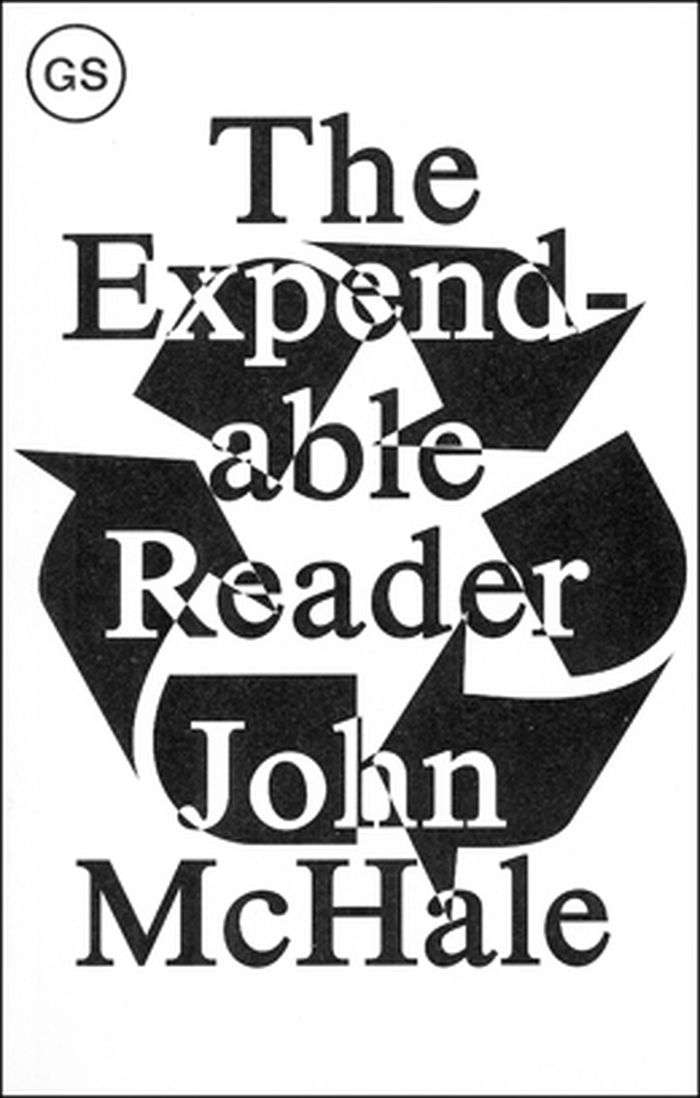
John McHale: The expendable reader
Actions:
Price:
$22.00
(available to order)
Summary:
"The Expendable Reader" collects the key writings of John McHale (1922-1978): artist, theorist, graphic designer, sociologist, cofounder of the Independent Group and (according to Lawrence Alloway) "the father of Pop." It compiles over a dozen key texts from a range of rare magazines, bringing unavailable material back into the hands of a broader audience. In addition to these writings, "The Expendable Reader" reproduces samples of the dynamic page layouts deployed in McHale's texts. All of McHale's writings wrestle with questions of expendability and the future, and the way these phenomena affect traditional conceptions of culture. While many of the terms he dwells on, such as "expendability," "lifestyle" and "network," have become central terms of contemporary cultural criticism, McHale's voice is strangely missing from the debate.
John McHale: The expendable reader
Actions:
Price:
$22.00
(available to order)
Summary:
"The Expendable Reader" collects the key writings of John McHale (1922-1978): artist, theorist, graphic designer, sociologist, cofounder of the Independent Group and (according to Lawrence Alloway) "the father of Pop." It compiles over a dozen key texts from a range of rare magazines, bringing unavailable material back into the hands of a broader audience. In addition to these writings, "The Expendable Reader" reproduces samples of the dynamic page layouts deployed in McHale's texts. All of McHale's writings wrestle with questions of expendability and the future, and the way these phenomena affect traditional conceptions of culture. While many of the terms he dwells on, such as "expendability," "lifestyle" and "network," have become central terms of contemporary cultural criticism, McHale's voice is strangely missing from the debate.
Form:
books
books
Publication:
November 2011
November 2011
Subject:
Art Theory
Art Theory
Form:
books
books
Actions:
Price:
$45.00
(available to order)
Summary:
As digital technology advances at breakneck speed, images are circulating quicker than ever before. But what is the status of the image in the digital era? In this publication, art historian Hubert Burda (born 1940) examines the "iconic turn" in ten themed chapters and conversations with leading cultural theorists. In the first chapter, "The View Through the Window,"(...)
$45.00
(available to order)
Summary:
As digital technology advances at breakneck speed, images are circulating quicker than ever before. But what is the status of the image in the digital era? In this publication, art historian Hubert Burda (born 1940) examines the "iconic turn" in ten themed chapters and conversations with leading cultural theorists. In the first chapter, "The View Through the Window,"(...)
Title:
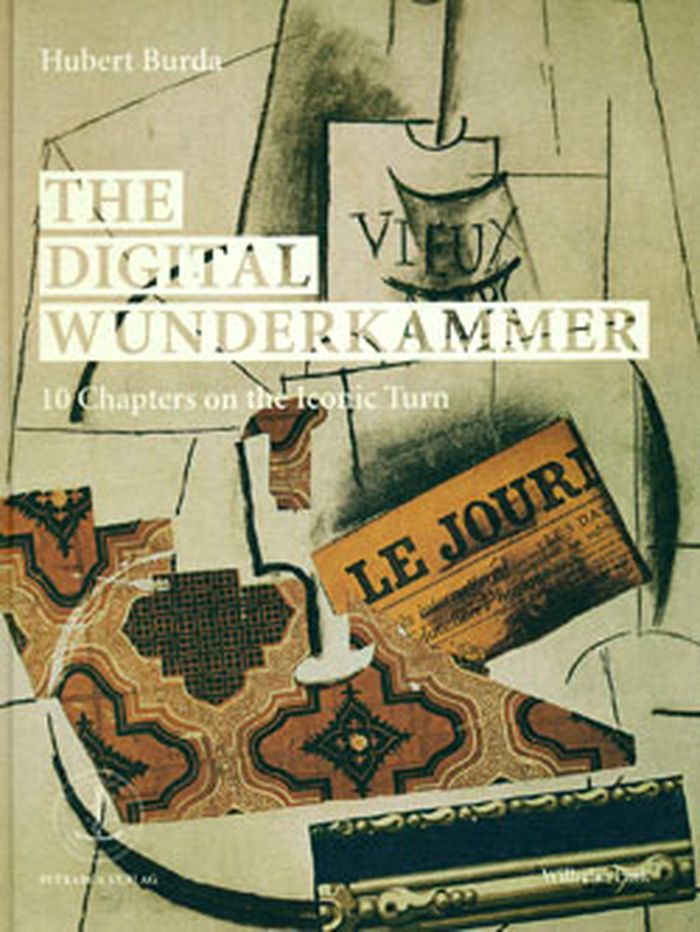
The digital wunderkammer : 10 chapters on the iconic turn
Actions:
Price:
$45.00
(available to order)
Summary:
As digital technology advances at breakneck speed, images are circulating quicker than ever before. But what is the status of the image in the digital era? In this publication, art historian Hubert Burda (born 1940) examines the "iconic turn" in ten themed chapters and conversations with leading cultural theorists. In the first chapter, "The View Through the Window," Burda traces the connection between perspectival painting and the television, demonstrating in the second chapter how the image requires a frame, which in turn requires a material vehicle - the topic of the third chapter - that in our era has become a non-material vehicle with its own formal parameters. In the fourth chapter, "The Mobile Image," Burda shows how images have always been linked to portability, but now migrate to an unprecedented degree, so that anyone with a personal device can globally disseminate, say, footage from a concert via Youtube. A discussion of the capacity of individual images to placate or ennervate leads to a seventh chapter on the appetite for the Sublime and the rhetoric and representation of power throughout art history. Following a discussion of the democratization of celebrity culture, Burda proposes that the Google search box is perhaps the most interesting "interface" of our times, analogous to the seventeenth-century cabinet of curiosities (or wunderkammer). Conversations with Friedrich Kittler, Peter Sloterdijk, Bazon Brock, Horst Bredekamp and Hans Belting further extend this imaginative debate on the "iconic turn."
The digital wunderkammer : 10 chapters on the iconic turn
Actions:
Price:
$45.00
(available to order)
Summary:
As digital technology advances at breakneck speed, images are circulating quicker than ever before. But what is the status of the image in the digital era? In this publication, art historian Hubert Burda (born 1940) examines the "iconic turn" in ten themed chapters and conversations with leading cultural theorists. In the first chapter, "The View Through the Window," Burda traces the connection between perspectival painting and the television, demonstrating in the second chapter how the image requires a frame, which in turn requires a material vehicle - the topic of the third chapter - that in our era has become a non-material vehicle with its own formal parameters. In the fourth chapter, "The Mobile Image," Burda shows how images have always been linked to portability, but now migrate to an unprecedented degree, so that anyone with a personal device can globally disseminate, say, footage from a concert via Youtube. A discussion of the capacity of individual images to placate or ennervate leads to a seventh chapter on the appetite for the Sublime and the rhetoric and representation of power throughout art history. Following a discussion of the democratization of celebrity culture, Burda proposes that the Google search box is perhaps the most interesting "interface" of our times, analogous to the seventeenth-century cabinet of curiosities (or wunderkammer). Conversations with Friedrich Kittler, Peter Sloterdijk, Bazon Brock, Horst Bredekamp and Hans Belting further extend this imaginative debate on the "iconic turn."
Form:
books
books
Publication:
August 2011
August 2011
Subject:
Epistemology
Epistemology
Form:
books
books

Actions:
Price:
$24.95
(available to order)
Summary:
When Guy Debord identified the image consumerism of “the society of the spectacle” in the 1960s, he could not have forecast that language would threaten to eclipse the image in the medium of personal technology, creating a world of ubiquitous legibility. Today, we read anytime and anywhere, on screens of all sizes; we read not only newspaper articles, but also databases,(...)
$24.95
(available to order)
Summary:
When Guy Debord identified the image consumerism of “the society of the spectacle” in the 1960s, he could not have forecast that language would threaten to eclipse the image in the medium of personal technology, creating a world of ubiquitous legibility. Today, we read anytime and anywhere, on screens of all sizes; we read not only newspaper articles, but also databases,(...)
Title:
I read where I am : exploring new information cultures
Actions:
Price:
$24.95
(available to order)
Summary:
When Guy Debord identified the image consumerism of “the society of the spectacle” in the 1960s, he could not have forecast that language would threaten to eclipse the image in the medium of personal technology, creating a world of ubiquitous legibility. Today, we read anytime and anywhere, on screens of all sizes; we read not only newspaper articles, but also databases, online archives, search engine results and navigational structures. We read while out on the street, at home or in the office, with a complete library to hand - but less and less we read a book at home on the couch. In other words, we are, or are becoming, a different kind of reader. I Read Where I Am contains texts about the future of reading and the status of the word in the digital age from designers, philosophers, journalists and politicians, looking at both sides of the argument for printed and digital reading matter.
I read where I am : exploring new information cultures
Actions:
Price:
$24.95
(available to order)
Summary:
When Guy Debord identified the image consumerism of “the society of the spectacle” in the 1960s, he could not have forecast that language would threaten to eclipse the image in the medium of personal technology, creating a world of ubiquitous legibility. Today, we read anytime and anywhere, on screens of all sizes; we read not only newspaper articles, but also databases, online archives, search engine results and navigational structures. We read while out on the street, at home or in the office, with a complete library to hand - but less and less we read a book at home on the couch. In other words, we are, or are becoming, a different kind of reader. I Read Where I Am contains texts about the future of reading and the status of the word in the digital age from designers, philosophers, journalists and politicians, looking at both sides of the argument for printed and digital reading matter.
Form:
books
books
Publication:
September 2011
September 2011
Subject:
Epistemology
Epistemology
Form:
books
books
Actions:
Price:
$32.00
(available to order)
Summary:
Italian philosopher Antonio Negri has declared that “Every kind of change belongs to a form of community art,” inverting the convention that community art can be an integral component of social change and extending the rubric of art to propose a commons of all those striving to effect change in social, economic, technological and ecological arenas. So how do these(...)
$32.00
(available to order)
Summary:
Italian philosopher Antonio Negri has declared that “Every kind of change belongs to a form of community art,” inverting the convention that community art can be an integral component of social change and extending the rubric of art to propose a commons of all those striving to effect change in social, economic, technological and ecological arenas. So how do these(...)
Title:
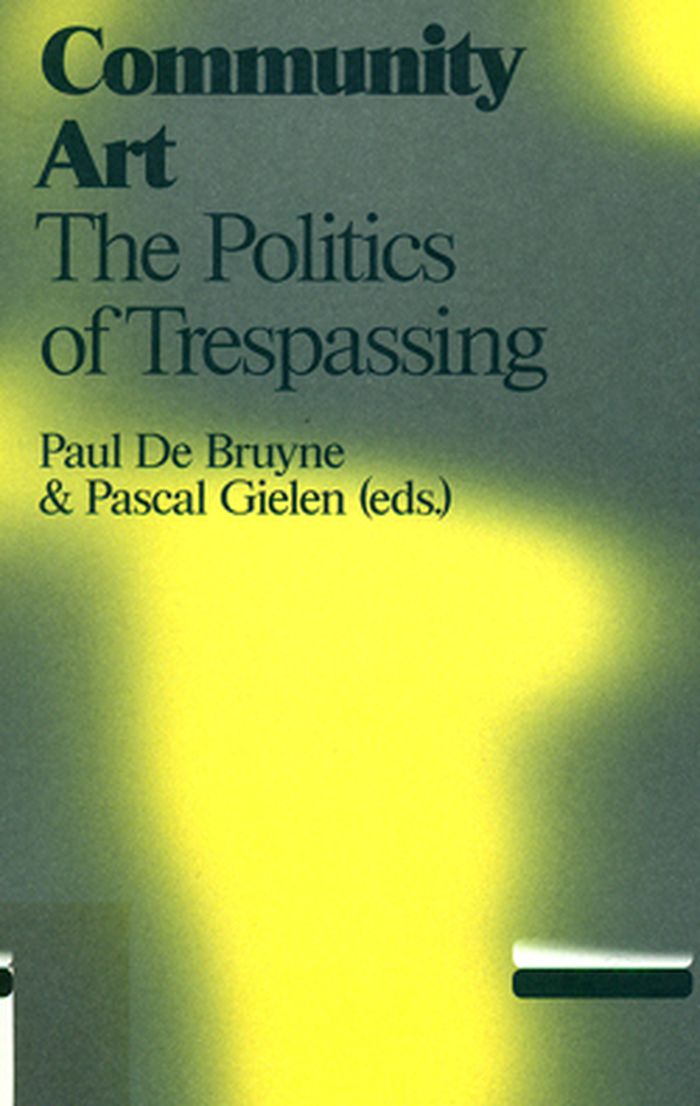
Community art : the politics of trespassing
Actions:
Price:
$32.00
(available to order)
Summary:
Italian philosopher Antonio Negri has declared that “Every kind of change belongs to a form of community art,” inverting the convention that community art can be an integral component of social change and extending the rubric of art to propose a commons of all those striving to effect change in social, economic, technological and ecological arenas. So how do these endeavors influence and act upon one another? In Community Art, artists and theorists explore the practices of artistic and social movements in western and non-western societies.
Community art : the politics of trespassing
Actions:
Price:
$32.00
(available to order)
Summary:
Italian philosopher Antonio Negri has declared that “Every kind of change belongs to a form of community art,” inverting the convention that community art can be an integral component of social change and extending the rubric of art to propose a commons of all those striving to effect change in social, economic, technological and ecological arenas. So how do these endeavors influence and act upon one another? In Community Art, artists and theorists explore the practices of artistic and social movements in western and non-western societies.
Form:
books
books
Publication:
August 2011
August 2011
Subject:
Art Theory
Art Theory
Form:
books
books
Title:
Artist-run spaces
Artist-run spaces
Actions:
Price:
$29.95
(available to order)
Summary:
In the 1960s and 70s, as the parameters of art expanded to incorporate architecture and performance and increasingly drew on urban theory and the politics of everyday life, the model of the artist-run gallery space gained enormous relevance. Developed in collaboration with the founders of the leading artist-run spaces of the 1960s and 1970s, this volume compiles the first(...)
$29.95
(available to order)
Summary:
In the 1960s and 70s, as the parameters of art expanded to incorporate architecture and performance and increasingly drew on urban theory and the politics of everyday life, the model of the artist-run gallery space gained enormous relevance. Developed in collaboration with the founders of the leading artist-run spaces of the 1960s and 1970s, this volume compiles the first(...)
Title:
Artist-run spaces
Actions:
Price:
$29.95
(available to order)
Summary:
In the 1960s and 70s, as the parameters of art expanded to incorporate architecture and performance and increasingly drew on urban theory and the politics of everyday life, the model of the artist-run gallery space gained enormous relevance. Developed in collaboration with the founders of the leading artist-run spaces of the 1960s and 1970s, this volume compiles the first extensive research on the history of this phenomenon. It introduces spaces such as Art Metropole in Toronto, Artpool in Budapest, Ecart in Geneva, Franklin Furnace in New York, La Mamelle in San Francisco, Printed Matter in New York, Western Front in Vancouver and Zona in Florence, along with their founders, including Carl Andre, John Armleder, AA Bronson, Sol LeWitt, Lucy Lippard, Tom Marioni and Maurizio Nannucci.
Artist-run spaces
Actions:
Price:
$29.95
(available to order)
Summary:
In the 1960s and 70s, as the parameters of art expanded to incorporate architecture and performance and increasingly drew on urban theory and the politics of everyday life, the model of the artist-run gallery space gained enormous relevance. Developed in collaboration with the founders of the leading artist-run spaces of the 1960s and 1970s, this volume compiles the first extensive research on the history of this phenomenon. It introduces spaces such as Art Metropole in Toronto, Artpool in Budapest, Ecart in Geneva, Franklin Furnace in New York, La Mamelle in San Francisco, Printed Matter in New York, Western Front in Vancouver and Zona in Florence, along with their founders, including Carl Andre, John Armleder, AA Bronson, Sol LeWitt, Lucy Lippard, Tom Marioni and Maurizio Nannucci.
Form:
books
books
Publication:
November 2011
November 2011
Subject:
Art Theory
Art Theory
Form:
books
books
Actions:
Price:
$33.00
(available to order)
Summary:
In this book, Amsterdam-based essayist and media theorist Arjen Mulder retells the past 500 years of visual arts to construe their culmination in the interactive art of today. Mulder investigates the origins of modern art from Leonardo da Vinci and Michelangelo through Wassily Kandinsky, Piet Mondrian and Paul Klee, reframing art history throughout as media history, and(...)
$33.00
(available to order)
Summary:
In this book, Amsterdam-based essayist and media theorist Arjen Mulder retells the past 500 years of visual arts to construe their culmination in the interactive art of today. Mulder investigates the origins of modern art from Leonardo da Vinci and Michelangelo through Wassily Kandinsky, Piet Mondrian and Paul Klee, reframing art history throughout as media history, and(...)
Title:
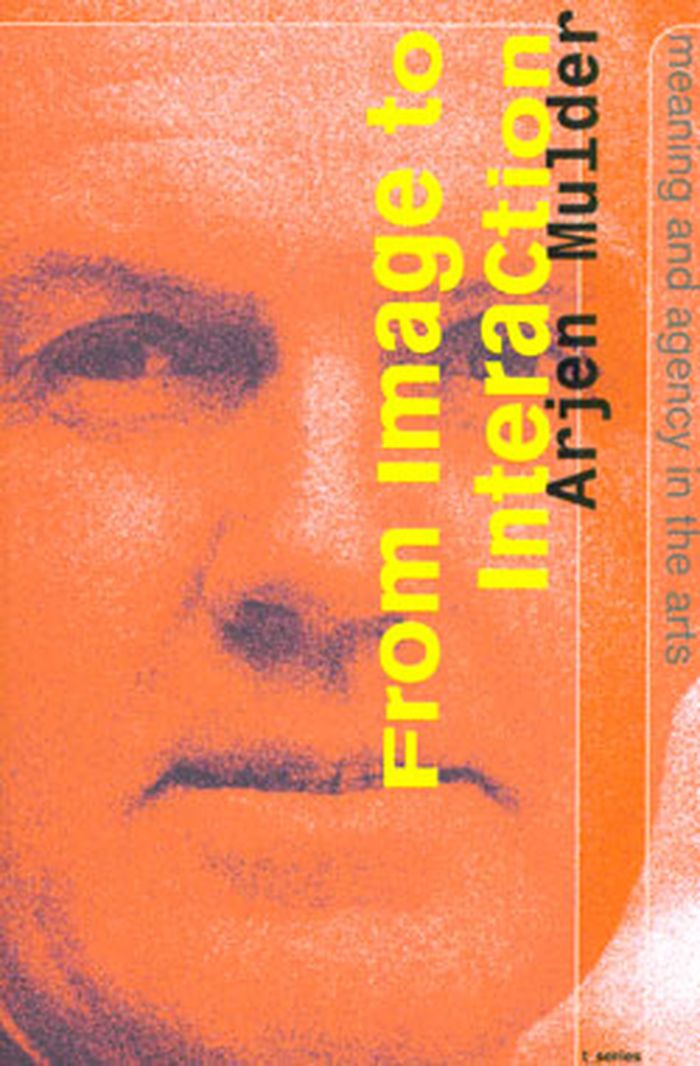
From image to interaction : meaning and agency in the arts
Actions:
Price:
$33.00
(available to order)
Summary:
In this book, Amsterdam-based essayist and media theorist Arjen Mulder retells the past 500 years of visual arts to construe their culmination in the interactive art of today. Mulder investigates the origins of modern art from Leonardo da Vinci and Michelangelo through Wassily Kandinsky, Piet Mondrian and Paul Klee, reframing art history throughout as media history, and accurately positioning these figures not only as great artists but also as great media theorists. This account of all art as a kind of “media art” underlines the experimental component of artistic endeavor: you test an idea (or a medium) which may stand or fall. Mulder's unreverent approach to art history includes in-depth analysis of the sensations and experiences that are aroused by painting and photography, establishing corollaries in digital media and the interactive arts.
From image to interaction : meaning and agency in the arts
Actions:
Price:
$33.00
(available to order)
Summary:
In this book, Amsterdam-based essayist and media theorist Arjen Mulder retells the past 500 years of visual arts to construe their culmination in the interactive art of today. Mulder investigates the origins of modern art from Leonardo da Vinci and Michelangelo through Wassily Kandinsky, Piet Mondrian and Paul Klee, reframing art history throughout as media history, and accurately positioning these figures not only as great artists but also as great media theorists. This account of all art as a kind of “media art” underlines the experimental component of artistic endeavor: you test an idea (or a medium) which may stand or fall. Mulder's unreverent approach to art history includes in-depth analysis of the sensations and experiences that are aroused by painting and photography, establishing corollaries in digital media and the interactive arts.
Form:
books
books
Publication:
August 2011
August 2011
Subject:
Art Theory
Art Theory
Form:
books
books

Actions:
Price:
$55.00
(available to order)
Summary:
This second volume in the "See this Sound" series offers in-depth studies of the historical development and theoretical foundations of the overlap between visual and aural culture. The essays are gathered into two sections. The first section opens with Simon Shaw-Miller's history of the field, from 1800 to the present; Christian Holler discusses "artistic approaches to(...)
$55.00
(available to order)
Summary:
This second volume in the "See this Sound" series offers in-depth studies of the historical development and theoretical foundations of the overlap between visual and aural culture. The essays are gathered into two sections. The first section opens with Simon Shaw-Miller's history of the field, from 1800 to the present; Christian Holler discusses "artistic approaches to(...)
Title:
See this sound : audiovisuology 2 (essays)
Actions:
Price:
$55.00
(available to order)
Summary:
This second volume in the "See this Sound" series offers in-depth studies of the historical development and theoretical foundations of the overlap between visual and aural culture. The essays are gathered into two sections. The first section opens with Simon Shaw-Miller's history of the field, from 1800 to the present; Christian Holler discusses "artistic approaches to image/sound relationships in pop culture"; and Sandra Naumann looks at "the musicalization of the visual arts in the twentieth century." The second section, "Sound & Image," includes Hans Beller on film scoring; Diedrich Diederichsen on visual traditions in pop music; Katja Kwastek on music devices and art machines; Birgit Schneider on "Hearing Eyes and Seeing Ears"; and Chris Salter on the neuroscience and aesthetics of immersion, absorption and dissolution in audiovisual art. An epilogue by Michel Chion explores the cognitive conditions of audio experience
See this sound : audiovisuology 2 (essays)
Actions:
Price:
$55.00
(available to order)
Summary:
This second volume in the "See this Sound" series offers in-depth studies of the historical development and theoretical foundations of the overlap between visual and aural culture. The essays are gathered into two sections. The first section opens with Simon Shaw-Miller's history of the field, from 1800 to the present; Christian Holler discusses "artistic approaches to image/sound relationships in pop culture"; and Sandra Naumann looks at "the musicalization of the visual arts in the twentieth century." The second section, "Sound & Image," includes Hans Beller on film scoring; Diedrich Diederichsen on visual traditions in pop music; Katja Kwastek on music devices and art machines; Birgit Schneider on "Hearing Eyes and Seeing Ears"; and Chris Salter on the neuroscience and aesthetics of immersion, absorption and dissolution in audiovisual art. An epilogue by Michel Chion explores the cognitive conditions of audio experience
Form:
books
books
Publication:
July 2011
July 2011
Subject:
Acoustics
Acoustics


