


691 Results
Form:
books
books
Actions:
Price:
$13.95
(available to order)
Summary:
La Cité du Design de Saint-Etienne est une institution d'un nouveau genre consacrée à la recherche et la formation, la communication, la diffusion et les services liés au design. Elle s'adresse aux acteurs les plus divers et intègre des pratiques variées, artistiques, industrielles, universitaires, urbaines, sociétales. Un seul volume élancé, la Platine, s'intègre dans le(...)
$13.95
(available to order)
Summary:
La Cité du Design de Saint-Etienne est une institution d'un nouveau genre consacrée à la recherche et la formation, la communication, la diffusion et les services liés au design. Elle s'adresse aux acteurs les plus divers et intègre des pratiques variées, artistiques, industrielles, universitaires, urbaines, sociétales. Un seul volume élancé, la Platine, s'intègre dans le(...)
Title:
Cité du design Saint-Étienne 2006 : 02, projections
Actions:
Price:
$13.95
(available to order)
Summary:
La Cité du Design de Saint-Etienne est une institution d'un nouveau genre consacrée à la recherche et la formation, la communication, la diffusion et les services liés au design. Elle s'adresse aux acteurs les plus divers et intègre des pratiques variées, artistiques, industrielles, universitaires, urbaines, sociétales. Un seul volume élancé, la Platine, s'intègre dans le site de l'ancienne Manufacture d'Armes de Saint-Etienne. Ce mono espace connecte les activités communicatives avec les programmes spécifiques qui s'inscrivent dans les bâtiments historiques de la Manufacture. Une tour observatoire est l'élément pionnier qui marque le point de départ de cette transformation. Trois livres décrivent la genèse de la Cité du Design de Saint-Etienne. «Observations» explore le lieu et montre la tour observatoire. «Projections» retrace le processus de la conception architecturale. «Constructions» présentera la Cité du Design achevée en 2008.
Cité du design Saint-Étienne 2006 : 02, projections
Actions:
Price:
$13.95
(available to order)
Summary:
La Cité du Design de Saint-Etienne est une institution d'un nouveau genre consacrée à la recherche et la formation, la communication, la diffusion et les services liés au design. Elle s'adresse aux acteurs les plus divers et intègre des pratiques variées, artistiques, industrielles, universitaires, urbaines, sociétales. Un seul volume élancé, la Platine, s'intègre dans le site de l'ancienne Manufacture d'Armes de Saint-Etienne. Ce mono espace connecte les activités communicatives avec les programmes spécifiques qui s'inscrivent dans les bâtiments historiques de la Manufacture. Une tour observatoire est l'élément pionnier qui marque le point de départ de cette transformation. Trois livres décrivent la genèse de la Cité du Design de Saint-Etienne. «Observations» explore le lieu et montre la tour observatoire. «Projections» retrace le processus de la conception architecturale. «Constructions» présentera la Cité du Design achevée en 2008.
Form:
books
books
Publication:
October 2006, Paris
October 2006, Paris
Subject:
small format
small format
Form:
books
books
Actions:
Price:
$99.00
(available to order)
Summary:
This book brings together frames from all of the Super-8 and video films made by the Swiss artist Roman Signer. As fractions of time, the stills mark key moments in Signers precisely choreographed work: moments of collapse, of extreme acceleration and of temporary or prolonged hiatus, of transformation, of consolidation and dispersion.
$99.00
(available to order)
Summary:
This book brings together frames from all of the Super-8 and video films made by the Swiss artist Roman Signer. As fractions of time, the stills mark key moments in Signers precisely choreographed work: moments of collapse, of extreme acceleration and of temporary or prolonged hiatus, of transformation, of consolidation and dispersion.
Title:
Projections, super-8 films and videos 1975-2008
Actions:
Price:
$99.00
(available to order)
Summary:
This book brings together frames from all of the Super-8 and video films made by the Swiss artist Roman Signer. As fractions of time, the stills mark key moments in Signers precisely choreographed work: moments of collapse, of extreme acceleration and of temporary or prolonged hiatus, of transformation, of consolidation and dispersion.
Projections, super-8 films and videos 1975-2008
Actions:
Price:
$99.00
(available to order)
Summary:
This book brings together frames from all of the Super-8 and video films made by the Swiss artist Roman Signer. As fractions of time, the stills mark key moments in Signers precisely choreographed work: moments of collapse, of extreme acceleration and of temporary or prolonged hiatus, of transformation, of consolidation and dispersion.
Form:
books
books
Publication:
March 2009, Zürich
March 2009, Zürich
Subject:
Contemporary Art Monographs
Contemporary Art Monographs
Form:
books
books
Actions:
Price:
$63.95
(available to order)
Summary:
The essays selected for this book, presented in chronological order, discuss various aspects of image-making technologies, geometrical knowledge and tools for architectural design, focusing in particular on two historical periods marked by comparable patterns of technological and cultural change. The first is the Renaissance; characterized by the rediscovery of linear(...)
$63.95
(available to order)
Summary:
The essays selected for this book, presented in chronological order, discuss various aspects of image-making technologies, geometrical knowledge and tools for architectural design, focusing in particular on two historical periods marked by comparable patterns of technological and cultural change. The first is the Renaissance; characterized by the rediscovery of linear(...)
Publication:
November 2007, Abingdon, New York
November 2007, Abingdon, New York
Title:
Perspective, projections & design : Technologies of Architectural Representation
Actions:
Price:
$63.95
(available to order)
Summary:
The essays selected for this book, presented in chronological order, discuss various aspects of image-making technologies, geometrical knowledge and tools for architectural design, focusing in particular on two historical periods marked by comparable patterns of technological and cultural change. The first is the Renaissance; characterized by the rediscovery of linear perspectives and the simultaneous rise of new formats for architectural drawing and design on paper; the second, the contemporary rise of digital technologies and the simultaneous rise of virtual reality and computer-based design and manufacturing. Many of the contributing authors explore the parallel between the invention of the perspectival paradigm in early-modern Europe and the recent development of digitized virtual reality. This issue in turn bears on the specific purposes of architectural design, where various representational tools and devices are used to visualize bi-dimensional aspects of objects that must be measured and eventually built in three-dimensional space.
Perspective, projections & design : Technologies of Architectural Representation
Actions:
Price:
$63.95
(available to order)
Summary:
The essays selected for this book, presented in chronological order, discuss various aspects of image-making technologies, geometrical knowledge and tools for architectural design, focusing in particular on two historical periods marked by comparable patterns of technological and cultural change. The first is the Renaissance; characterized by the rediscovery of linear perspectives and the simultaneous rise of new formats for architectural drawing and design on paper; the second, the contemporary rise of digital technologies and the simultaneous rise of virtual reality and computer-based design and manufacturing. Many of the contributing authors explore the parallel between the invention of the perspectival paradigm in early-modern Europe and the recent development of digitized virtual reality. This issue in turn bears on the specific purposes of architectural design, where various representational tools and devices are used to visualize bi-dimensional aspects of objects that must be measured and eventually built in three-dimensional space.
Form:
books
books
Publication:
November 2007, Abingdon, New York
November 2007, Abingdon, New York
Form:
books
books
Actions:
Price:
$41.99
(available to order)
Summary:
SHIFTS propels you into the future of Scotland's Central Belt and gives you a glimpse into the year 2057. Imagine the transformation of the M8 into a major tourist attraction running through Scotland's Central Forest. Imagine the creation of a new canal connecting the west and the east coast, wide enough to carry a floating opera house or a football stadium. Imagine(...)
$41.99
(available to order)
Summary:
SHIFTS propels you into the future of Scotland's Central Belt and gives you a glimpse into the year 2057. Imagine the transformation of the M8 into a major tourist attraction running through Scotland's Central Forest. Imagine the creation of a new canal connecting the west and the east coast, wide enough to carry a floating opera house or a football stadium. Imagine(...)
Title:
Shifts projections into the future of the Central Belt
Actions:
Price:
$41.99
(available to order)
Summary:
SHIFTS propels you into the future of Scotland's Central Belt and gives you a glimpse into the year 2057. Imagine the transformation of the M8 into a major tourist attraction running through Scotland's Central Forest. Imagine the creation of a new canal connecting the west and the east coast, wide enough to carry a floating opera house or a football stadium. Imagine a decentralisation of political and economical power, producing local decision-making structures that support local identity, culture and production. Imagine Scotland relying only on hydro and wind power, beeing Europe's main export nation of green energy. Imagine the Central Belt not as a zone to move through but to move to. Imagine the life that is faster and slower at the same time, a life that is healthier, greener and more fun. Imagine that SHIFTS have happened.
Shifts projections into the future of the Central Belt
Actions:
Price:
$41.99
(available to order)
Summary:
SHIFTS propels you into the future of Scotland's Central Belt and gives you a glimpse into the year 2057. Imagine the transformation of the M8 into a major tourist attraction running through Scotland's Central Forest. Imagine the creation of a new canal connecting the west and the east coast, wide enough to carry a floating opera house or a football stadium. Imagine a decentralisation of political and economical power, producing local decision-making structures that support local identity, culture and production. Imagine Scotland relying only on hydro and wind power, beeing Europe's main export nation of green energy. Imagine the Central Belt not as a zone to move through but to move to. Imagine the life that is faster and slower at the same time, a life that is healthier, greener and more fun. Imagine that SHIFTS have happened.
Form:
books
books
Publication:
October 2007, Glasgow
October 2007, Glasgow
Subject:
Architecture since 1900, Europe
Architecture since 1900, Europe
Form:
books
books
Actions:
Price:
$65.95
(available to order)
Summary:
In 2010 – 11 the work of Dutch sculptor Mark Manders, a winner of the Dr A.H. Heineken Prize for Art, is touring the USA for the first time, with shows at the Hammer Museum Los Angeles, Aspen Art Museum, the Walker Art Center Minneapolis, and the Dallas Museum of Art. Manders' work aims to bypass language, gathering existing and self-made objects into tableaux that(...)
$65.95
(available to order)
Summary:
In 2010 – 11 the work of Dutch sculptor Mark Manders, a winner of the Dr A.H. Heineken Prize for Art, is touring the USA for the first time, with shows at the Hammer Museum Los Angeles, Aspen Art Museum, the Walker Art Center Minneapolis, and the Dallas Museum of Art. Manders' work aims to bypass language, gathering existing and self-made objects into tableaux that(...)
Title:
Mark Manders: Slide projections: Two interconnected houses/ documented assignment
Actions:
Price:
$65.95
(available to order)
Summary:
In 2010 – 11 the work of Dutch sculptor Mark Manders, a winner of the Dr A.H. Heineken Prize for Art, is touring the USA for the first time, with shows at the Hammer Museum Los Angeles, Aspen Art Museum, the Walker Art Center Minneapolis, and the Dallas Museum of Art. Manders' work aims to bypass language, gathering existing and self-made objects into tableaux that incorporate figures, animals, household goods, archeological debris and architectural components, and evoke a mysterious world of daydreams and fairy tales. For this travelling exhibition and artist's book Manders has created an entirely new body of work, including sculpture and works on paper.
Mark Manders: Slide projections: Two interconnected houses/ documented assignment
Actions:
Price:
$65.95
(available to order)
Summary:
In 2010 – 11 the work of Dutch sculptor Mark Manders, a winner of the Dr A.H. Heineken Prize for Art, is touring the USA for the first time, with shows at the Hammer Museum Los Angeles, Aspen Art Museum, the Walker Art Center Minneapolis, and the Dallas Museum of Art. Manders' work aims to bypass language, gathering existing and self-made objects into tableaux that incorporate figures, animals, household goods, archeological debris and architectural components, and evoke a mysterious world of daydreams and fairy tales. For this travelling exhibition and artist's book Manders has created an entirely new body of work, including sculpture and works on paper.
Form:
books
books
Publication:
March 2011
March 2011
Subject:
Contemporary Art Monographs
Contemporary Art Monographs
Form:
books
books
Actions:
Holdings:
Description:
299 pages : illustrations (chiefly color) ; 30 cm
Description:
299 pages : illustrations (chiefly color) ; 30 cm
Author:
Subject:
Publication:
Cambridge, MA : Carpenter Center for the Visual Arts, Harvard University ; Somerville, MA ; New York, NY : Free Agent Media, [2020], ©2020
Cambridge, MA : Carpenter Center for the Visual Arts, Harvard University ; Somerville, MA ; New York, NY : Free Agent Media, [2020], ©2020
Title:
Pacing / Renée Green ; foreword, Dan Byers ; editors, Stacey Allan and Lucy Flint.
Actions:
Holdings:
Description:
299 pages : illustrations (chiefly color) ; 30 cm
Pacing / Renée Green ; foreword, Dan Byers ; editors, Stacey Allan and Lucy Flint.
Actions:
Holdings:
Description:
299 pages : illustrations (chiefly color) ; 30 cm
Form:
books
books
Publication:
Cambridge, MA : Carpenter Center for the Visual Arts, Harvard University ; Somerville, MA ; New York, NY : Free Agent Media, [2020], ©2020
Cambridge, MA : Carpenter Center for the Visual Arts, Harvard University ; Somerville, MA ; New York, NY : Free Agent Media, [2020], ©2020
Author:
Subject:
Form:
books
books
Actions:
Price:
$67.95
(available to order)
Summary:
À l’occasion de Nancy 2005, une exposition réunissant 20 «artistes-architectes» a pour objectif de défricher le futur de la ville par la mise en scène de réflexions et d’utopies. Quel avenir envisagent-ils pour la ville à l’horizon de l’an 3000 ? Ce sont bien des créateurs qui se sont interrogés et leurs réponses mêlent certaines utopies retrouvées, intuitions, constats,(...)
$67.95
(available to order)
Summary:
À l’occasion de Nancy 2005, une exposition réunissant 20 «artistes-architectes» a pour objectif de défricher le futur de la ville par la mise en scène de réflexions et d’utopies. Quel avenir envisagent-ils pour la ville à l’horizon de l’an 3000 ? Ce sont bien des créateurs qui se sont interrogés et leurs réponses mêlent certaines utopies retrouvées, intuitions, constats,(...)
Title:
Avenirs de villes / Future for cities
Actions:
Price:
$67.95
(available to order)
Summary:
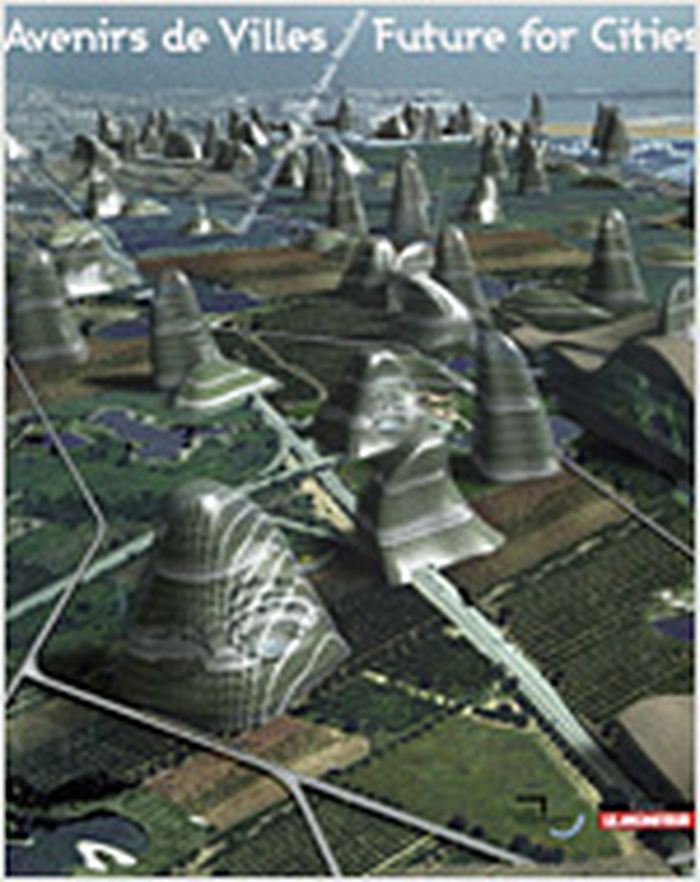
À l’occasion de Nancy 2005, une exposition réunissant 20 «artistes-architectes» a pour objectif de défricher le futur de la ville par la mise en scène de réflexions et d’utopies. Quel avenir envisagent-ils pour la ville à l’horizon de l’an 3000 ? Ce sont bien des créateurs qui se sont interrogés et leurs réponses mêlent certaines utopies retrouvées, intuitions, constats, amplification du questionnement même ou dérision et jeu. Le travail de ces penseurs du futur est expliqué dans ce livre qui n’est pas un catalogue mais une projection dans les avenirs possibles des villes.
Avenirs de villes / Future for cities
Actions:
Price:
$67.95
(available to order)
Summary:
À l’occasion de Nancy 2005, une exposition réunissant 20 «artistes-architectes» a pour objectif de défricher le futur de la ville par la mise en scène de réflexions et d’utopies. Quel avenir envisagent-ils pour la ville à l’horizon de l’an 3000 ? Ce sont bien des créateurs qui se sont interrogés et leurs réponses mêlent certaines utopies retrouvées, intuitions, constats, amplification du questionnement même ou dérision et jeu. Le travail de ces penseurs du futur est expliqué dans ce livre qui n’est pas un catalogue mais une projection dans les avenirs possibles des villes.
Form:
books
books
Publication:
June 2005, Paris
June 2005, Paris
Subject:
Urban Theory
Urban Theory
Form:
books
books
Actions:
Price:
$104.95
(available to order)
Summary:
Cet ouvrage contient un résumé des directrices, des conseils et des solutions nécessaires à la conception d'espaces destinés au jeu. A partir de la projection de l'espace jusqu'aux détails de chaque élément, les nécessités et les préférences sont exposées et classées selon âge et selon les collectifs avec leurs besoins spécifiques. Les textes explicatifs sont référencés(...)
$104.95
(available to order)
Summary:
Cet ouvrage contient un résumé des directrices, des conseils et des solutions nécessaires à la conception d'espaces destinés au jeu. A partir de la projection de l'espace jusqu'aux détails de chaque élément, les nécessités et les préférences sont exposées et classées selon âge et selon les collectifs avec leurs besoins spécifiques. Les textes explicatifs sont référencés(...)
Title:
Architecture pour enfants: aires de jeux
Actions:
Price:
$104.95
(available to order)
Summary:
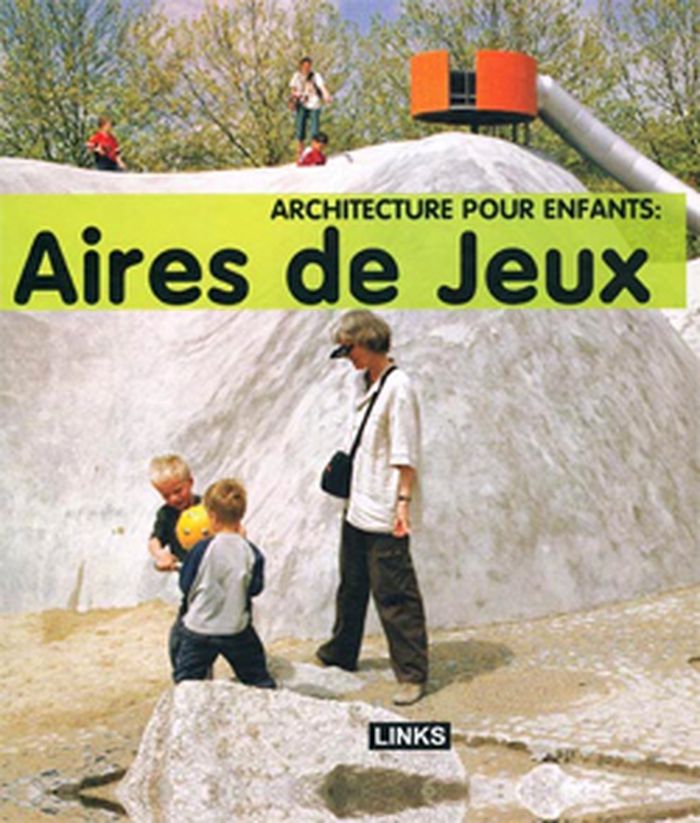
Cet ouvrage contient un résumé des directrices, des conseils et des solutions nécessaires à la conception d'espaces destinés au jeu. A partir de la projection de l'espace jusqu'aux détails de chaque élément, les nécessités et les préférences sont exposées et classées selon âge et selon les collectifs avec leurs besoins spécifiques. Les textes explicatifs sont référencés à des images claires et précises. Pour chaque élément de jeux, les mesures, les matériaux et leurs fonctions sont décrites avec précision, en prenant en compte les aspects de la sécurité et de l'accessibilité.
Architecture pour enfants: aires de jeux
Actions:
Price:
$104.95
(available to order)
Summary:
Cet ouvrage contient un résumé des directrices, des conseils et des solutions nécessaires à la conception d'espaces destinés au jeu. A partir de la projection de l'espace jusqu'aux détails de chaque élément, les nécessités et les préférences sont exposées et classées selon âge et selon les collectifs avec leurs besoins spécifiques. Les textes explicatifs sont référencés à des images claires et précises. Pour chaque élément de jeux, les mesures, les matériaux et leurs fonctions sont décrites avec précision, en prenant en compte les aspects de la sécurité et de l'accessibilité.
Form:
books
books
Publication:
January 2009
January 2009
Subject:
Contemporary Architecture
Contemporary Architecture
Form:
books
books
Actions:
Price:
$29.99
(available to order)
Summary:
Broadway avenue in downtown Los Angeles holds an extraordinary collection of twelve once-luxurious and now abandoned film-palaces, built between 1910 and 1931. In most cities worldwide, such a concentration of cinemas would have been demolished long ago - here however the buildings have survived the end of film-projection intact, some of their interiors ruined and gutted,(...)
$29.99
(available to order)
Summary:
Broadway avenue in downtown Los Angeles holds an extraordinary collection of twelve once-luxurious and now abandoned film-palaces, built between 1910 and 1931. In most cities worldwide, such a concentration of cinemas would have been demolished long ago - here however the buildings have survived the end of film-projection intact, some of their interiors ruined and gutted,(...)
Title:
Abandoned images: film and film's end
Actions:
Price:
$29.99
(available to order)
Summary:
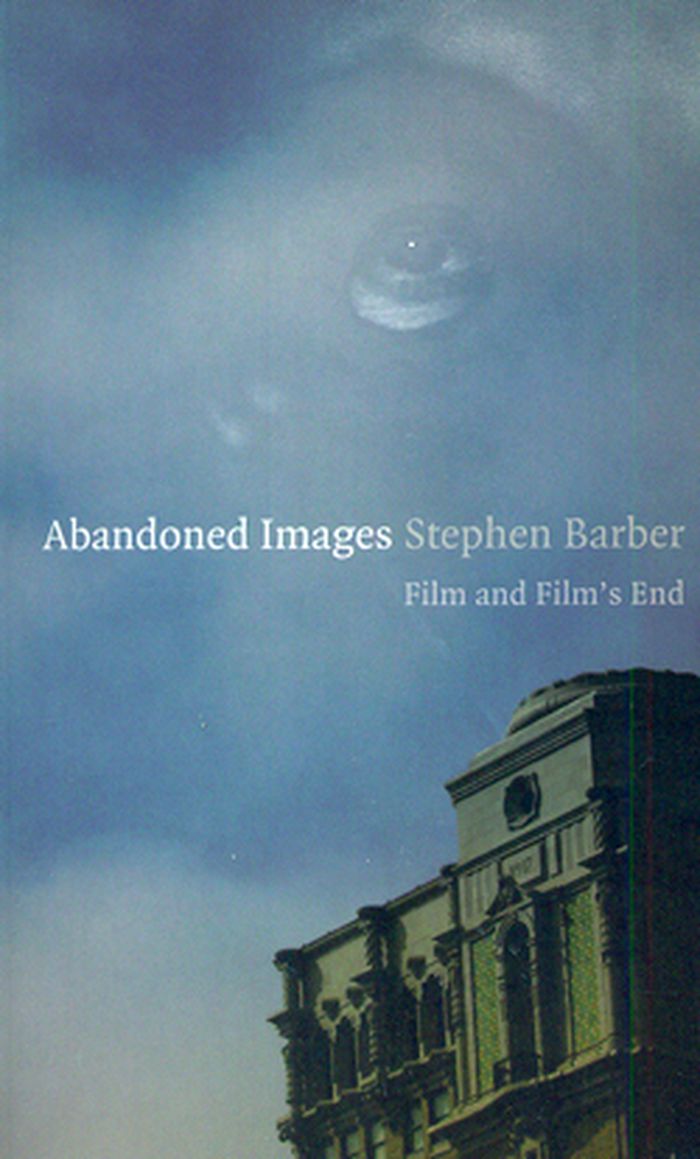
Broadway avenue in downtown Los Angeles holds an extraordinary collection of twelve once-luxurious and now abandoned film-palaces, built between 1910 and 1931. In most cities worldwide, such a concentration of cinemas would have been demolished long ago - here however the buildings have survived the end of film-projection intact, some of their interiors ruined and gutted, others transformed and re-used as churches, nightclubs and storage spaces. Stephen Barber begins with an exploration of these remarkable derelicts, and broadens to ask questions about the abandonment of film itself.
Abandoned images: film and film's end
Actions:
Price:
$29.99
(available to order)
Summary:
Broadway avenue in downtown Los Angeles holds an extraordinary collection of twelve once-luxurious and now abandoned film-palaces, built between 1910 and 1931. In most cities worldwide, such a concentration of cinemas would have been demolished long ago - here however the buildings have survived the end of film-projection intact, some of their interiors ruined and gutted, others transformed and re-used as churches, nightclubs and storage spaces. Stephen Barber begins with an exploration of these remarkable derelicts, and broadens to ask questions about the abandonment of film itself.
Form:
books
books
Publication:
February 2010
February 2010
Subject:
Architecture and Film, Set Design
Architecture and Film, Set Design
Form:
books
books
Title:
Five Stories of São Paulo
Five Stories of São Paulo
Actions:
Price:
$46.95
(available to order)
Summary:
A project by Éva Le Roi & Pierre Burquel (drawings and sketches of São Paulo); hand drawings by Éva Le Roi. In summer 2019, artist Éva Le Roi and architect Pierre Burquel travelled to São Paulo to research its particular urban conditions, in conjunction with the exhibition TODO DIA / EVERYDAY, 12th Bienal de Arquitetura de São Paulo. Five urban situation have been(...)
$46.95
(available to order)
Summary:
A project by Éva Le Roi & Pierre Burquel (drawings and sketches of São Paulo); hand drawings by Éva Le Roi. In summer 2019, artist Éva Le Roi and architect Pierre Burquel travelled to São Paulo to research its particular urban conditions, in conjunction with the exhibition TODO DIA / EVERYDAY, 12th Bienal de Arquitetura de São Paulo. Five urban situation have been(...)
Title:
Five Stories of São Paulo
Actions:
Price:
$46.95
(available to order)
Summary:
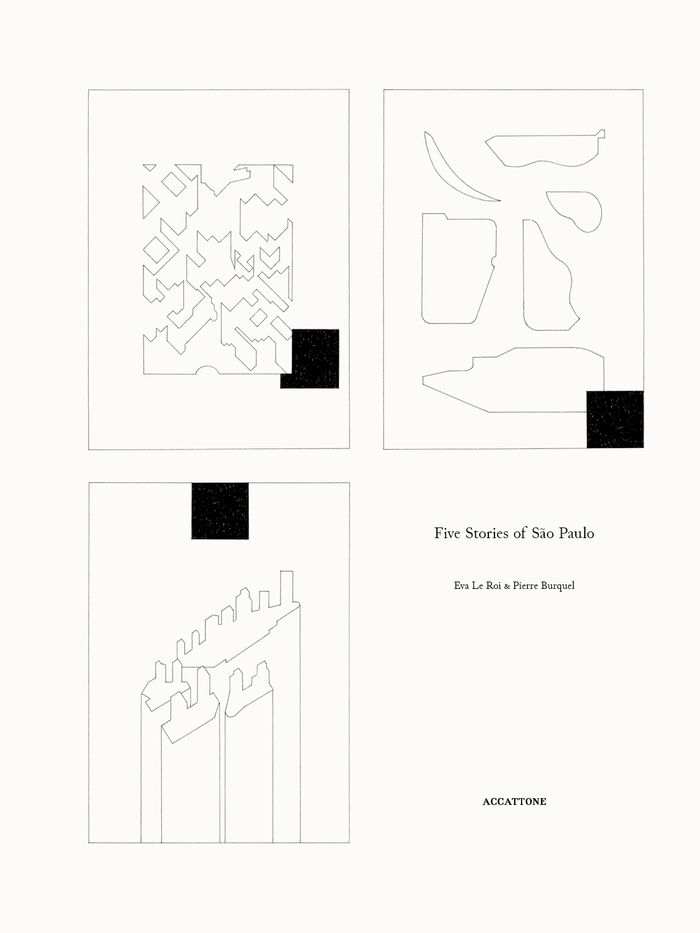
A project by Éva Le Roi & Pierre Burquel (drawings and sketches of São Paulo); hand drawings by Éva Le Roi. In summer 2019, artist Éva Le Roi and architect Pierre Burquel travelled to São Paulo to research its particular urban conditions, in conjunction with the exhibition TODO DIA / EVERYDAY, 12th Bienal de Arquitetura de São Paulo. Five urban situation have been selected and interpreted through a subjective axonometric drawing on a 1:1000 scale alongside a projection of its daily use: Telhados, Piscinões, Condomínios, Campos and Galerias. Éva Le Roi's hand drawings are reproduced in the book at their original scale.
Five Stories of São Paulo
Actions:
Price:
$46.95
(available to order)
Summary:
A project by Éva Le Roi & Pierre Burquel (drawings and sketches of São Paulo); hand drawings by Éva Le Roi. In summer 2019, artist Éva Le Roi and architect Pierre Burquel travelled to São Paulo to research its particular urban conditions, in conjunction with the exhibition TODO DIA / EVERYDAY, 12th Bienal de Arquitetura de São Paulo. Five urban situation have been selected and interpreted through a subjective axonometric drawing on a 1:1000 scale alongside a projection of its daily use: Telhados, Piscinões, Condomínios, Campos and Galerias. Éva Le Roi's hand drawings are reproduced in the book at their original scale.
Form:
books
books
Publication:
March 2020
March 2020
Subject:
Architecture Monographs
Architecture Monographs


