


6673 Results
Form:
books
books

Actions:
Price:
$35.95
(available to order)
Summary:
Deep below the ground in Tucson, Arizona, lies an aquifer forever altered by the detritus of a postwar Superfund site. "Disabled ecologies" tells the story of this contamination and its ripple effects through the largely Mexican American community living above. Drawing on her own complex relationship to this long-ago injured landscape, Sunaura Taylor takes us with her to(...)
$35.95
(available to order)
Summary:
Deep below the ground in Tucson, Arizona, lies an aquifer forever altered by the detritus of a postwar Superfund site. "Disabled ecologies" tells the story of this contamination and its ripple effects through the largely Mexican American community living above. Drawing on her own complex relationship to this long-ago injured landscape, Sunaura Taylor takes us with her to(...)
Title:
Disabled ecologies: Lessons from a wounded desert
Actions:
Price:
$35.95
(available to order)
Summary:
Deep below the ground in Tucson, Arizona, lies an aquifer forever altered by the detritus of a postwar Superfund site. "Disabled ecologies" tells the story of this contamination and its ripple effects through the largely Mexican American community living above. Drawing on her own complex relationship to this long-ago injured landscape, Sunaura Taylor takes us with her to follow the site's disabled ecology—the networks of disability, both human and wild, that are created when ecosystems are corrupted and profoundly altered. What Taylor finds is a story of entanglements that reach far beyond the Sonoran Desert. These stories tell of debilitating and sometimes life-ending injuries, but they also map out alternative modes of connection, solidarity, and resistance—an environmentalism of the injured. An original and deeply personal reflection on what disability means in an era of increasing multispecies disablement, "Disabled ecologies" is a powerful call to reflect on the kinds of care, treatment, and assistance this age of disability requires.
Disabled ecologies: Lessons from a wounded desert
Actions:
Price:
$35.95
(available to order)
Summary:
Deep below the ground in Tucson, Arizona, lies an aquifer forever altered by the detritus of a postwar Superfund site. "Disabled ecologies" tells the story of this contamination and its ripple effects through the largely Mexican American community living above. Drawing on her own complex relationship to this long-ago injured landscape, Sunaura Taylor takes us with her to follow the site's disabled ecology—the networks of disability, both human and wild, that are created when ecosystems are corrupted and profoundly altered. What Taylor finds is a story of entanglements that reach far beyond the Sonoran Desert. These stories tell of debilitating and sometimes life-ending injuries, but they also map out alternative modes of connection, solidarity, and resistance—an environmentalism of the injured. An original and deeply personal reflection on what disability means in an era of increasing multispecies disablement, "Disabled ecologies" is a powerful call to reflect on the kinds of care, treatment, and assistance this age of disability requires.
Form:
books
books
Publication:
April 2024
April 2024
Subject:
Environment and environmental theory
Environment and environmental theory
Form:
books
books
Price:
$50.00
(available to order)
Summary:
The world is facing unprecedented challenges, from climate change and population growth, to political division and technological dislocation, to declining mental health and fraying cultural fabric. With most of the planet’s population now living in urban environments, cities are the spaces where we have the greatest potential to confront and address these problems. In(...)
$50.00
(available to order)
Summary:
The world is facing unprecedented challenges, from climate change and population growth, to political division and technological dislocation, to declining mental health and fraying cultural fabric. With most of the planet’s population now living in urban environments, cities are the spaces where we have the greatest potential to confront and address these problems. In(...)
Title:
The Architecture of Urbanity: Designing for Nature, Culture, and Joy
Actions:
Price:
$50.00
(available to order)
Summary:
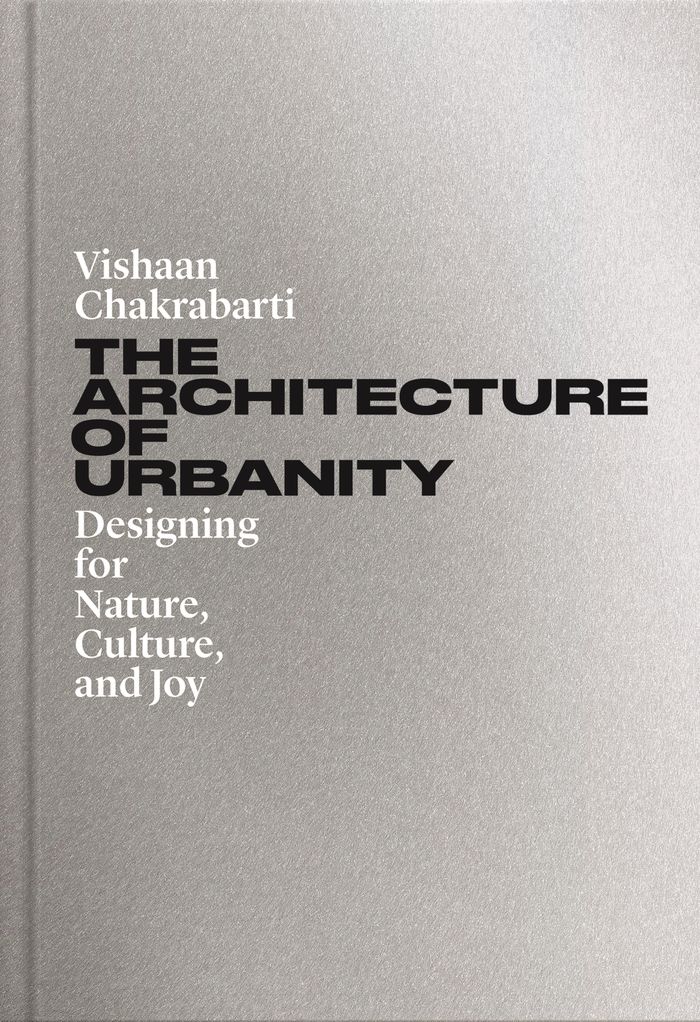
The world is facing unprecedented challenges, from climate change and population growth, to political division and technological dislocation, to declining mental health and fraying cultural fabric. With most of the planet’s population now living in urban environments, cities are the spaces where we have the greatest potential to confront and address these problems. In this visionary book, Vishaan Chakrabarti argues for an "architecture of urbanity," showing how the design of our communities can create a more equitable, sustainable, and joyous future for us all. Taking readers from the great cities of antiquity to the worldwide exurban sprawl of our postindustrial age, Chakrabarti examines architecture’s relationship to history’s greatest social, technological, and environmental dilemmas. He then presents a rich selection of work by a global array of practicing architects, demonstrating how innovative design can dramatically improve life in big cities and small settlements around the world, from campuses and refugee camps to mega-cities like São Paulo, Lima, Los Angeles, New York, Paris, and Tokyo.
The Architecture of Urbanity: Designing for Nature, Culture, and Joy
Actions:
Price:
$50.00
(available to order)
Summary:
The world is facing unprecedented challenges, from climate change and population growth, to political division and technological dislocation, to declining mental health and fraying cultural fabric. With most of the planet’s population now living in urban environments, cities are the spaces where we have the greatest potential to confront and address these problems. In this visionary book, Vishaan Chakrabarti argues for an "architecture of urbanity," showing how the design of our communities can create a more equitable, sustainable, and joyous future for us all. Taking readers from the great cities of antiquity to the worldwide exurban sprawl of our postindustrial age, Chakrabarti examines architecture’s relationship to history’s greatest social, technological, and environmental dilemmas. He then presents a rich selection of work by a global array of practicing architects, demonstrating how innovative design can dramatically improve life in big cities and small settlements around the world, from campuses and refugee camps to mega-cities like São Paulo, Lima, Los Angeles, New York, Paris, and Tokyo.
Form:
books
books
Publication:
July 2024
July 2024
Subject:
Urban Theory
Urban Theory
Form:
books
books
Title:
The Henry Clay Frick Houses
The Henry Clay Frick Houses
Actions:
Price:
$105.00
(available to order)
Summary:
First published in 2001, this volume is back in print, shining a spotlight on the four major houses purchased or built and renovated for Henry Clay Frick, the world-famous art collector and steel tycoon. This book contains exclusive content, including vintage photographs, documents, letters, original working drawings, artist’s sketches, and designer’s notes. With(...)
$105.00
(available to order)
Summary:
First published in 2001, this volume is back in print, shining a spotlight on the four major houses purchased or built and renovated for Henry Clay Frick, the world-famous art collector and steel tycoon. This book contains exclusive content, including vintage photographs, documents, letters, original working drawings, artist’s sketches, and designer’s notes. With(...)
Title:
The Henry Clay Frick Houses
Actions:
Price:
$105.00
(available to order)
Summary:
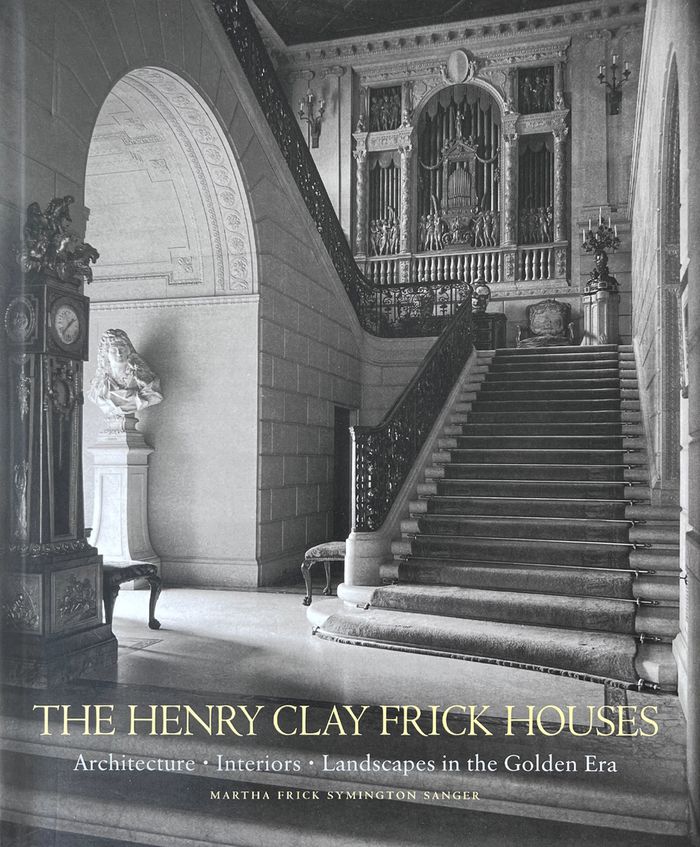
First published in 2001, this volume is back in print, shining a spotlight on the four major houses purchased or built and renovated for Henry Clay Frick, the world-famous art collector and steel tycoon. This book contains exclusive content, including vintage photographs, documents, letters, original working drawings, artist’s sketches, and designer’s notes. With America’s Gilded Age continuing to fascinate readers, this book provides a unique cross-section of the era with history, architecture, design, art, and biography. With priceless furnishings, interiors, and designed gardens by the most prestigious architects of the day, the houses featured in this book exemplify the great residences of the era: the late-Victorian Clayton in Pittsburgh, Pennsylvania houses the Frick Pittsburgh; the neoclassical Eagle Rock in Massachusetts was Frick’s summer retreat; One East Seventieth Street in New York is home to the world-renowned Frick Collection; and the Clayton Estate in Roslyn, New York is a Georgian Revival masterpiece.
The Henry Clay Frick Houses
Actions:
Price:
$105.00
(available to order)
Summary:
First published in 2001, this volume is back in print, shining a spotlight on the four major houses purchased or built and renovated for Henry Clay Frick, the world-famous art collector and steel tycoon. This book contains exclusive content, including vintage photographs, documents, letters, original working drawings, artist’s sketches, and designer’s notes. With America’s Gilded Age continuing to fascinate readers, this book provides a unique cross-section of the era with history, architecture, design, art, and biography. With priceless furnishings, interiors, and designed gardens by the most prestigious architects of the day, the houses featured in this book exemplify the great residences of the era: the late-Victorian Clayton in Pittsburgh, Pennsylvania houses the Frick Pittsburgh; the neoclassical Eagle Rock in Massachusetts was Frick’s summer retreat; One East Seventieth Street in New York is home to the world-renowned Frick Collection; and the Clayton Estate in Roslyn, New York is a Georgian Revival masterpiece.
Form:
books
books
Publication:
October 2024
October 2024
Subject:
Architecture Monographs
Architecture Monographs
Form:
books
books
Actions:
Price:
$33.95
(available to order)
Summary:
For Bataille, "the absence of myth" had itself become the myth of the modern age. In a world that had "lost the secret of its cohesion," Bataille saw surrealism as both a symptom and the beginning of an attempt to address this loss. His writings on this theme are the result of profound reflection in the wake of World War Two. "The absence of myth" is the most incisive(...)
$33.95
(available to order)
Summary:
For Bataille, "the absence of myth" had itself become the myth of the modern age. In a world that had "lost the secret of its cohesion," Bataille saw surrealism as both a symptom and the beginning of an attempt to address this loss. His writings on this theme are the result of profound reflection in the wake of World War Two. "The absence of myth" is the most incisive(...)
Title:
The absence of myth: Writings on surrealism
Actions:
Price:
$33.95
(available to order)
Summary:
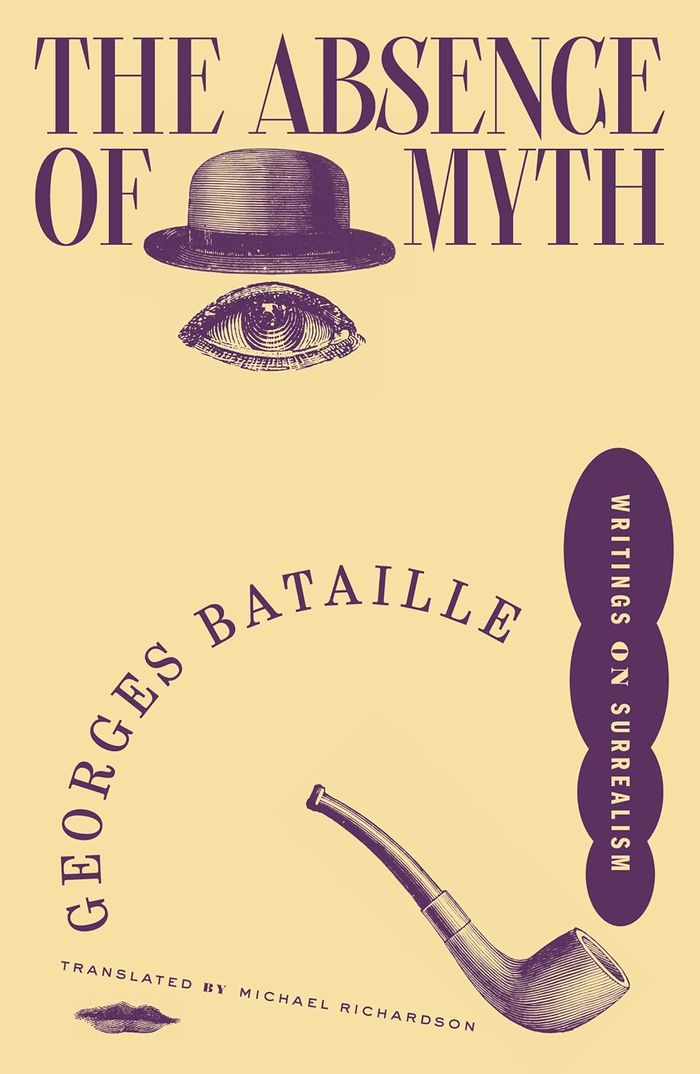
For Bataille, "the absence of myth" had itself become the myth of the modern age. In a world that had "lost the secret of its cohesion," Bataille saw surrealism as both a symptom and the beginning of an attempt to address this loss. His writings on this theme are the result of profound reflection in the wake of World War Two. "The absence of myth" is the most incisive study yet made of surrealism, insisting on its importance as a cultural and social phenomenon with far-reaching consequences. Clarifying Bataille’s links with the surrealist movement, and throwing revealing light on his complex and greatly misunderstood relationship with Andre Breton, "The absence of myth" shows Bataille to be a much more radical figure than his postmodernist devotees would have us believe: a man who continually tried to extend Marxist social theory; a pessimistic thinker, but one as far removed from nihilism as can be.
The absence of myth: Writings on surrealism
Actions:
Price:
$33.95
(available to order)
Summary:
For Bataille, "the absence of myth" had itself become the myth of the modern age. In a world that had "lost the secret of its cohesion," Bataille saw surrealism as both a symptom and the beginning of an attempt to address this loss. His writings on this theme are the result of profound reflection in the wake of World War Two. "The absence of myth" is the most incisive study yet made of surrealism, insisting on its importance as a cultural and social phenomenon with far-reaching consequences. Clarifying Bataille’s links with the surrealist movement, and throwing revealing light on his complex and greatly misunderstood relationship with Andre Breton, "The absence of myth" shows Bataille to be a much more radical figure than his postmodernist devotees would have us believe: a man who continually tried to extend Marxist social theory; a pessimistic thinker, but one as far removed from nihilism as can be.
Form:
books
books
Publication:
November 2024
November 2024
Subject:
Art Theory
Art Theory
Form:
books
books
Actions:
Price:
$71.00
(available to order)
Summary:
In 1966, at the age of 28, photographer Joel Meyerowitz embarked on a journey that would take him to the United Kingdom, Ireland, Spain, France, Germany, Eastern Europe, Turkey and Greece. In total, he drove 20,000 miles through 10 countries and ended up taking 25,000 photographs. This trip was a transcendental experience and formative in shaping Meyerowitz's instinctive(...)
$71.00
(available to order)
Summary:
In 1966, at the age of 28, photographer Joel Meyerowitz embarked on a journey that would take him to the United Kingdom, Ireland, Spain, France, Germany, Eastern Europe, Turkey and Greece. In total, he drove 20,000 miles through 10 countries and ended up taking 25,000 photographs. This trip was a transcendental experience and formative in shaping Meyerowitz's instinctive(...)
Title:
Joel Meyerowitz: Europa 1966-1967
Actions:
Price:
$71.00
(available to order)
Summary:
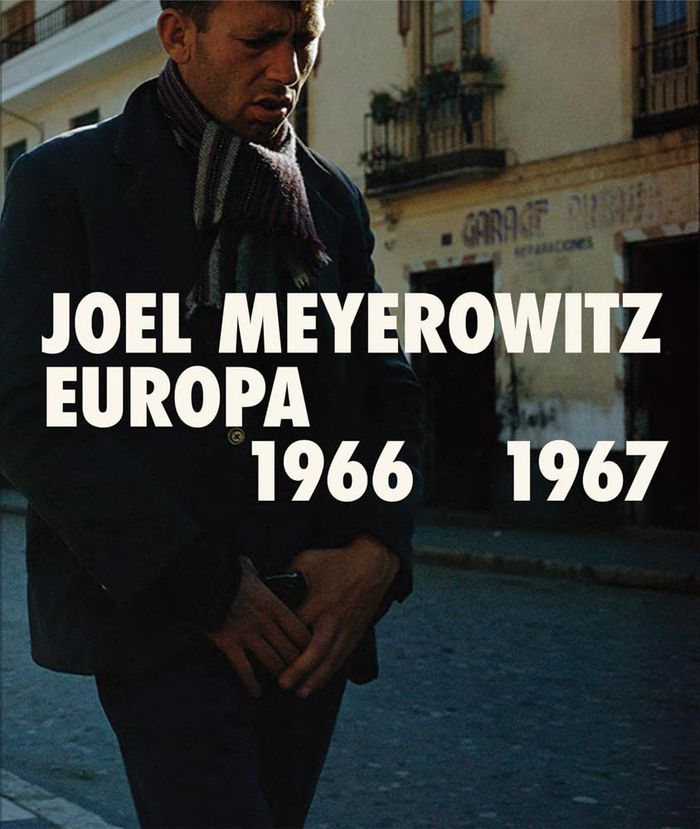
In 1966, at the age of 28, photographer Joel Meyerowitz embarked on a journey that would take him to the United Kingdom, Ireland, Spain, France, Germany, Eastern Europe, Turkey and Greece. In total, he drove 20,000 miles through 10 countries and ended up taking 25,000 photographs. This trip was a transcendental experience and formative in shaping Meyerowitz's instinctive and brilliant identity that he is known for today. Europa 1966–1967 compiles a selection of photographs taken by Meyerowitz on his yearlong trip through Europe, offering an exciting glimpse of the “New Old World” that, having lately overcome the trauma of World War II, opened itself to modernity and progress. Meyerowitz witnessed societies in transition, stuck between dictatorship and economic blossoming. Yet he also documented unshakable cultural traditions, such as when he lived with a flamenco-performing family in Francoist Spain for six months. The strength and freshness of Meyerowitz’s gaze and the new codes that were captured in these pictures inspired the next generation of photographers.
Joel Meyerowitz: Europa 1966-1967
Actions:
Price:
$71.00
(available to order)
Summary:
In 1966, at the age of 28, photographer Joel Meyerowitz embarked on a journey that would take him to the United Kingdom, Ireland, Spain, France, Germany, Eastern Europe, Turkey and Greece. In total, he drove 20,000 miles through 10 countries and ended up taking 25,000 photographs. This trip was a transcendental experience and formative in shaping Meyerowitz's instinctive and brilliant identity that he is known for today. Europa 1966–1967 compiles a selection of photographs taken by Meyerowitz on his yearlong trip through Europe, offering an exciting glimpse of the “New Old World” that, having lately overcome the trauma of World War II, opened itself to modernity and progress. Meyerowitz witnessed societies in transition, stuck between dictatorship and economic blossoming. Yet he also documented unshakable cultural traditions, such as when he lived with a flamenco-performing family in Francoist Spain for six months. The strength and freshness of Meyerowitz’s gaze and the new codes that were captured in these pictures inspired the next generation of photographers.
Form:
books
books
Publication:
October 2024
October 2024
Subject:
Photography monographs
Photography monographs
Form:
books
books
Actions:
Price:
$99.95
(available to order)
Summary:
En cinquante planches, cet ouvrage donne à voir l'image de Paris depuis la fin du Moyen Age et les traces anciennes conservées dans la cité moderne. Les plans, commentés, sont précédés d'un exposé sur ce qu'ils apportent à la compréhension de la ville. Que représentent-ils au-delà des rues, des parcelles, des maisons, des monuments Pourquoi a-t-on représenté Paris ? Pour(...)
$99.95
(available to order)
Summary:
En cinquante planches, cet ouvrage donne à voir l'image de Paris depuis la fin du Moyen Age et les traces anciennes conservées dans la cité moderne. Les plans, commentés, sont précédés d'un exposé sur ce qu'ils apportent à la compréhension de la ville. Que représentent-ils au-delà des rues, des parcelles, des maisons, des monuments Pourquoi a-t-on représenté Paris ? Pour(...)
Subject:
Architectural Drawing
Architectural Drawing
Publication:
November 2004, Paris
November 2004, Paris
Title:
Les plans de Paris : histoire d'une capitale
Actions:
Price:
$99.95
(available to order)
Summary:
En cinquante planches, cet ouvrage donne à voir l'image de Paris depuis la fin du Moyen Age et les traces anciennes conservées dans la cité moderne. Les plans, commentés, sont précédés d'un exposé sur ce qu'ils apportent à la compréhension de la ville. Que représentent-ils au-delà des rues, des parcelles, des maisons, des monuments Pourquoi a-t-on représenté Paris ? Pour préparer des projets d'aménagement par un savant arpentage ou pour magnifier les réalisations des princes ? Comment l'a-t-on représenté ? Dans les vues cavalières qui révèlent sa complexité, dans les plans géométriques qui auscultent la forme urbaine ? L'analyse de cette cartographie montre des familles, des générations, une évolution non linéaire : le plan a valeur d'image qui excite le désir de découverte du voyageur et où l'habitant reconnaît sa ville ; il répond également à une recherche de l'exactitude satisfaisant l'esprit technique et tendant à l'abstraction. La succession de ces plans historiques constitue finalement la mémoire de la ville, à travers ses métamorphoses.
Les plans de Paris : histoire d'une capitale
Actions:
Price:
$99.95
(available to order)
Summary:
En cinquante planches, cet ouvrage donne à voir l'image de Paris depuis la fin du Moyen Age et les traces anciennes conservées dans la cité moderne. Les plans, commentés, sont précédés d'un exposé sur ce qu'ils apportent à la compréhension de la ville. Que représentent-ils au-delà des rues, des parcelles, des maisons, des monuments Pourquoi a-t-on représenté Paris ? Pour préparer des projets d'aménagement par un savant arpentage ou pour magnifier les réalisations des princes ? Comment l'a-t-on représenté ? Dans les vues cavalières qui révèlent sa complexité, dans les plans géométriques qui auscultent la forme urbaine ? L'analyse de cette cartographie montre des familles, des générations, une évolution non linéaire : le plan a valeur d'image qui excite le désir de découverte du voyageur et où l'habitant reconnaît sa ville ; il répond également à une recherche de l'exactitude satisfaisant l'esprit technique et tendant à l'abstraction. La succession de ces plans historiques constitue finalement la mémoire de la ville, à travers ses métamorphoses.
Form:
books
books
Publication:
November 2004, Paris
November 2004, Paris
Subject:
Architectural Drawing
Architectural Drawing
Form:
books
books
Price:
$37.95
(available to order)
Summary:
In this first full-length study of a largely forgotten optical device from the eighteenth century, Arnaud Maillet reconfigures our historical understanding of visual experience and meaning in relation to notions of opacity, transparency, and imagination. Many are familiar with the Claude glass as a small black convex mirror used by artists and spectators of landscape to(...)
$37.95
(available to order)
Summary:
In this first full-length study of a largely forgotten optical device from the eighteenth century, Arnaud Maillet reconfigures our historical understanding of visual experience and meaning in relation to notions of opacity, transparency, and imagination. Many are familiar with the Claude glass as a small black convex mirror used by artists and spectators of landscape to(...)
Title:
The Claude glass : use and meaning of the black mirror in Western art
Actions:
Price:
$37.95
(available to order)
Summary:
In this first full-length study of a largely forgotten optical device from the eighteenth century, Arnaud Maillet reconfigures our historical understanding of visual experience and meaning in relation to notions of opacity, transparency, and imagination. Many are familiar with the Claude glass as a small black convex mirror used by artists and spectators of landscape to reflect a view and make tonal values and areas of light and shade visible. In a groundbreaking account, Maillet goes well beyond this particular function of the glass and situates it within a richer archaeology of Western thought, exploring the uncertainties and anxieties about mirrors, reflections, and their potential distortions. He takes us from the magical and occult background of the "black mirror," through a full evaluation of its importance in the age of the picturesque, to its persistence in a range of technological and representational practices, including photography, film, and contemporary art. The Claude Glass is a lasting contribution to the history of Western visual culture.
The Claude glass : use and meaning of the black mirror in Western art
Actions:
Price:
$37.95
(available to order)
Summary:
In this first full-length study of a largely forgotten optical device from the eighteenth century, Arnaud Maillet reconfigures our historical understanding of visual experience and meaning in relation to notions of opacity, transparency, and imagination. Many are familiar with the Claude glass as a small black convex mirror used by artists and spectators of landscape to reflect a view and make tonal values and areas of light and shade visible. In a groundbreaking account, Maillet goes well beyond this particular function of the glass and situates it within a richer archaeology of Western thought, exploring the uncertainties and anxieties about mirrors, reflections, and their potential distortions. He takes us from the magical and occult background of the "black mirror," through a full evaluation of its importance in the age of the picturesque, to its persistence in a range of technological and representational practices, including photography, film, and contemporary art. The Claude Glass is a lasting contribution to the history of Western visual culture.
Form:
books
books
Publication:
October 2004, New York
October 2004, New York
Subject:
Architectural Theory
Architectural Theory
Form:
books
books
Actions:
Price:
$39.50
(available to order)
Summary:
The early twentieth century was a time of extraordinary change in Europe. War and revolution shattered the traditional cohesion of European civilisation, while the machine age brought mass production and distribution and a new sense of internationalism. This ‘heroic’ period of modernity found particularly forceful expression in graphic design and photomontage throughout(...)
$39.50
(available to order)
Summary:
The early twentieth century was a time of extraordinary change in Europe. War and revolution shattered the traditional cohesion of European civilisation, while the machine age brought mass production and distribution and a new sense of internationalism. This ‘heroic’ period of modernity found particularly forceful expression in graphic design and photomontage throughout(...)
Subject:
Graphic Design and Typography
Graphic Design and Typography
Publication:
October 2004, London
October 2004, London
Title:
Avant-garde graphics 1918- 1934
Actions:
Price:
$39.50
(available to order)
Summary:
The early twentieth century was a time of extraordinary change in Europe. War and revolution shattered the traditional cohesion of European civilisation, while the machine age brought mass production and distribution and a new sense of internationalism. This ‘heroic’ period of modernity found particularly forceful expression in graphic design and photomontage throughout Europe, where new techniques allowed a fusion of typography, painting and photography, evoking the dynamism and fragmentation of cinema. "Avant-garde Graphics: 1918 – 34" showcases the work of many of the leading practitioners of the Modern movement, from Italian Futurists, the Dutch members of De Stijl and the German Bauhaus, to the Constructivists of Russia and central Europe. Drawn from the collection of Merrill C. Berman, one of the greatest collections of twentieth-century graphic art in the world, this book features colour reproductions of original posters, prints, book designs and political and commercial ephemera, together with original designers’ layouts and photomontages.
Avant-garde graphics 1918- 1934
Actions:
Price:
$39.50
(available to order)
Summary:
The early twentieth century was a time of extraordinary change in Europe. War and revolution shattered the traditional cohesion of European civilisation, while the machine age brought mass production and distribution and a new sense of internationalism. This ‘heroic’ period of modernity found particularly forceful expression in graphic design and photomontage throughout Europe, where new techniques allowed a fusion of typography, painting and photography, evoking the dynamism and fragmentation of cinema. "Avant-garde Graphics: 1918 – 34" showcases the work of many of the leading practitioners of the Modern movement, from Italian Futurists, the Dutch members of De Stijl and the German Bauhaus, to the Constructivists of Russia and central Europe. Drawn from the collection of Merrill C. Berman, one of the greatest collections of twentieth-century graphic art in the world, this book features colour reproductions of original posters, prints, book designs and political and commercial ephemera, together with original designers’ layouts and photomontages.
Form:
books
books
Publication:
October 2004, London
October 2004, London
Subject:
Graphic Design and Typography
Graphic Design and Typography
Form:
books
books
Price:
$54.99
(available to order)
Summary:
A "new alliance" is being forged between designers and commercial property developers, who are championing progressive design, in projects as diverse as apartment blocks, houses, hotels and offices. While some architects are taking a proactive role in development, others are cutting out a new position for themselves as designer-developers. This is all happening at a time(...)
$54.99
(available to order)
Summary:
A "new alliance" is being forged between designers and commercial property developers, who are championing progressive design, in projects as diverse as apartment blocks, houses, hotels and offices. While some architects are taking a proactive role in development, others are cutting out a new position for themselves as designer-developers. This is all happening at a time(...)
Title:
Property development and progressive architecture : the new alliance
Actions:
Price:
$54.99
(available to order)
Summary:
A "new alliance" is being forged between designers and commercial property developers, who are championing progressive design, in projects as diverse as apartment blocks, houses, hotels and offices. While some architects are taking a proactive role in development, others are cutting out a new position for themselves as designer-developers. This is all happening at a time that property developers are starting to recognise the added value that an architect can bring to a scheme. By taking a truly international look at the projects architects and developers are achieving together, this publication explores the economic and demographic opportunities that are now driving architect-developer alliance in cities as diverse as Amsterdam, Hong Kong, London, Malmo, Melbourne, Montréal, New York, Phoenix and Tokyo. As architects and property developers break boundaries together, they are also beginning to transcend an established pattern of notorious and longstanding ill will. Could this herald a new age of economic saviness in architecture and an appreciation of design input in development?
Property development and progressive architecture : the new alliance
Actions:
Price:
$54.99
(available to order)
Summary:
A "new alliance" is being forged between designers and commercial property developers, who are championing progressive design, in projects as diverse as apartment blocks, houses, hotels and offices. While some architects are taking a proactive role in development, others are cutting out a new position for themselves as designer-developers. This is all happening at a time that property developers are starting to recognise the added value that an architect can bring to a scheme. By taking a truly international look at the projects architects and developers are achieving together, this publication explores the economic and demographic opportunities that are now driving architect-developer alliance in cities as diverse as Amsterdam, Hong Kong, London, Malmo, Melbourne, Montréal, New York, Phoenix and Tokyo. As architects and property developers break boundaries together, they are also beginning to transcend an established pattern of notorious and longstanding ill will. Could this herald a new age of economic saviness in architecture and an appreciation of design input in development?
Form:
books
books
Publication:
January 2004, London
January 2004, London
Subject:
Magazines, Back Issues
Magazines, Back Issues
Form:
books
books
Actions:
Price:
$34.95
(available to order)
Summary:
In "Apollo's Eye", geographer Denis Cosgrove examines the historical implications for the West of conceiving and representing the earth as a globe: a unified, spherical body. Cosgrove traces how ideas of globalism and globalization have shifted historically in relation to changing images of the earth, from antiquity to the Space Age. He connects the evolving image(...)
$34.95
(available to order)
Summary:
In "Apollo's Eye", geographer Denis Cosgrove examines the historical implications for the West of conceiving and representing the earth as a globe: a unified, spherical body. Cosgrove traces how ideas of globalism and globalization have shifted historically in relation to changing images of the earth, from antiquity to the Space Age. He connects the evolving image(...)
Title:
Apollo's eye : a cartographic genealogy of the earth in the Western imagination
Actions:
Price:
$34.95
(available to order)
Summary:
In "Apollo's Eye", geographer Denis Cosgrove examines the historical implications for the West of conceiving and representing the earth as a globe: a unified, spherical body. Cosgrove traces how ideas of globalism and globalization have shifted historically in relation to changing images of the earth, from antiquity to the Space Age. He connects the evolving image of a unified globe to politically powerful conceptions of human unity. Cosgrove constructs a genealogy of global images from classical Greece and Rome to the present, giving special attention to the early sixteenth century, when Europeans circumnavigated the earth, relocated it within their understanding of the cosmos, and revolutionized its representation in models and maps. Each chapter focuses on specific images of the globe or whole earth, reproduced in a wealth of illustrations. Cosgrove's analysis traces a pattern of associations between global images and the formation of Western identities, paying tribute to the complex cosmographic tradition out of which today's geographical imagination has emerged.
Apollo's eye : a cartographic genealogy of the earth in the Western imagination
Actions:
Price:
$34.95
(available to order)
Summary:
In "Apollo's Eye", geographer Denis Cosgrove examines the historical implications for the West of conceiving and representing the earth as a globe: a unified, spherical body. Cosgrove traces how ideas of globalism and globalization have shifted historically in relation to changing images of the earth, from antiquity to the Space Age. He connects the evolving image of a unified globe to politically powerful conceptions of human unity. Cosgrove constructs a genealogy of global images from classical Greece and Rome to the present, giving special attention to the early sixteenth century, when Europeans circumnavigated the earth, relocated it within their understanding of the cosmos, and revolutionized its representation in models and maps. Each chapter focuses on specific images of the globe or whole earth, reproduced in a wealth of illustrations. Cosgrove's analysis traces a pattern of associations between global images and the formation of Western identities, paying tribute to the complex cosmographic tradition out of which today's geographical imagination has emerged.
Form:
books
books
Publication:
October 2003, Baltimore
October 2003, Baltimore
Subject:
Architectural Drawing
Architectural Drawing


