


1034 Results
Form:
books
books

Title:
Kerb 23: digital landscapes
Kerb 23: digital landscapes
Actions:
Price:
$38.95
(available to order)
Summary:
'Kerb' issue 23 examines ways in which ‘Digital Landscape’ discourse can be applied to landscape architecture. Through exploring Simulation, Fabrication, Augmentation and emerging theories of ‘Digital Ecologies’ we can navigate new horizons of what is made ‘possible’ within and through the realm of digital landscapes in regards to unlocking, transforming, storing and(...)
Subject:
Digital Architecture
Digital Architecture
Publication:
September 2016
September 2016
Title:
Kerb 23: digital landscapes
Actions:
Price:
$38.95
(available to order)
Summary:
'Kerb' issue 23 examines ways in which ‘Digital Landscape’ discourse can be applied to landscape architecture. Through exploring Simulation, Fabrication, Augmentation and emerging theories of ‘Digital Ecologies’ we can navigate new horizons of what is made ‘possible’ within and through the realm of digital landscapes in regards to unlocking, transforming, storing and distributing the way we might reveal, uncover, and generate alternative modes of translation and interaction.
Form:
books
books
Publication:
September 2016
September 2016
Subject:
Digital Architecture
Digital Architecture
Form:
books
books

Title:
The second digital turn
The second digital turn
Actions:
Price:
$33.95
(available to order)
Summary:
Almost a generation ago, the early software for computer aided design and manufacturing (CAD/CAM) spawned a style of smooth and curving lines and surfaces that gave visible form to the first digital age, and left an indelible mark on contemporary architecture. But today's digitally intelligent architecture no longer looks that way. In The Second Digital Turn, Mario Carpo(...)
Title:
The second digital turn
Actions:
Price:
$33.95
(available to order)
Summary:
Almost a generation ago, the early software for computer aided design and manufacturing (CAD/CAM) spawned a style of smooth and curving lines and surfaces that gave visible form to the first digital age, and left an indelible mark on contemporary architecture. But today's digitally intelligent architecture no longer looks that way. In The Second Digital Turn, Mario Carpo explains that this is because the design professions are now coming to terms with a new kind of digital tools they have adopted—no longer tools for making but tools for thinking. In the early 1990s the design professions were the first to intuit and interpret the new technical logic of the digital age: digital mass-customization (the use of digital tools to mass-produce variations at no extra cost) has already changed the way we produce and consume almost everything, and the same technology applied to commerce at large is now heralding a new society without scale—a flat marginal cost society where bigger markets will not make anything cheaper. But today, the unprecedented power of computation also favors a new kind of science where prediction can be based on sheer information retrieval, and form finding by simulation and optimization can replace deduction from mathematical formulas. Designers have been toying with machine thinking and machine learning for some time, and the apparently unfathomable complexity of the physical shapes they are now creating already expresses a new form of artificial intelligence, outside the tradition of modern science and alien to the organic logic of our mind.
Form:
books
books
Publication:
October 2017
October 2017
Subject:
Digital Architecture
Digital Architecture
Form:
books
books

Actions:
Price:
$21.95
(available to order)
Summary:
In 1854, the British mathematician George Boole presented the idea of a universe the elements of which could be understood in terms of the logic of absence and presence: 0 and 1, all and nothing—the foundation of binary code. The Boolean digits 0 and 1 do not designate a quantity. In the Boolean world, x times x always equals x; all and nothing meet in the formula x = xn.(...)
Title:
All and nothing : a digital apocalypse
Actions:
Price:
$21.95
(available to order)
Summary:
In 1854, the British mathematician George Boole presented the idea of a universe the elements of which could be understood in terms of the logic of absence and presence: 0 and 1, all and nothing—the foundation of binary code. The Boolean digits 0 and 1 do not designate a quantity. In the Boolean world, x times x always equals x; all and nothing meet in the formula x = xn. As everything becomes digitized, God the clockmaker is replaced by God the programmer. This book–described by its authors as “a theology for the digital world”—explores meaning in a digital age of infinite replication, in a world that has dissolved into information and achieved immortality by turning into a pure sign.
Form:
books
books
Publication:
September 2017
September 2017
Subject:
Digital Architecture
Digital Architecture
Form:
books
books

Title:
Active matter
Active matter
Actions:
Price:
$61.50
(available to order)
Summary:
The past few decades brought a revolution in computer software and hardware; today we are on the cusp of a materials revolution. If yesterday we programmed computers and other machines, today we program matter itself. This has created new capabilities in design, computing, and fabrication, which allow us to program proteins and bacteria, to generate self-transforming wood(...)
Title:
Active matter
Actions:
Price:
$61.50
(available to order)
Summary:
The past few decades brought a revolution in computer software and hardware; today we are on the cusp of a materials revolution. If yesterday we programmed computers and other machines, today we program matter itself. This has created new capabilities in design, computing, and fabrication, which allow us to program proteins and bacteria, to generate self-transforming wood products and architectural details, and to create clothing from “intelligent textiles” that grow themselves. This book offers essays and sample projects from the front lines of the emerging field of active matter.
Form:
books
books
Publication:
September 2017
September 2017
Subject:
Digital Architecture
Digital Architecture
Form:
books
books

Title:
The fabric of interface
The fabric of interface
Actions:
Price:
$38.95
(available to order)
Summary:
In The Fabric of Interface, Stephen Monteiro argues that our everyday digital practice has taken on traits common to textile and needlecraft culture. Our smart phones and tablets use some of the same skills—manual dexterity, pattern making, and linking—required by the handloom, the needlepoint hoop, and the lap-sized quilting frame. Monteiro goes on to argue that the(...)
Title:
The fabric of interface
Actions:
Price:
$38.95
(available to order)
Summary:
In The Fabric of Interface, Stephen Monteiro argues that our everyday digital practice has taken on traits common to textile and needlecraft culture. Our smart phones and tablets use some of the same skills—manual dexterity, pattern making, and linking—required by the handloom, the needlepoint hoop, and the lap-sized quilting frame. Monteiro goes on to argue that the capacity of textile metaphors to describe computing (weaving code, threaded discussions, zipped files, software patches, switch fabrics) represents deeper connections between digital communication and what has been called “homecraft” or “women’s work.”
Form:
books
books
Publication:
November 2017
November 2017
Subject:
Digital Architecture
Digital Architecture
Form:
books
books

Actions:
Price:
$20.00
(available to order)
Summary:
De 1970 à 1973, la présidence de Salvador Allende (1908-1973) entendit gérer la transition de l'économie chilienne du capitalisme vers le socialisme. Sous la direction du Britannique Stafford Beer (1926-2002), « père de la gestion cybernétique » adoubé par Norbert Wiener, une équipe interdisciplinaire conçut les modèles cybernétiques d'usines du secteur nationalisé de(...)
Title:
Le projet cybersyn: la cybernétique socialiste dans le Chili de Salvador Allende
Actions:
Price:
$20.00
(available to order)
Summary:
De 1970 à 1973, la présidence de Salvador Allende (1908-1973) entendit gérer la transition de l'économie chilienne du capitalisme vers le socialisme. Sous la direction du Britannique Stafford Beer (1926-2002), « père de la gestion cybernétique » adoubé par Norbert Wiener, une équipe interdisciplinaire conçut les modèles cybernétiques d'usines du secteur nationalisé de l'économie, et créa un réseau informatique de collecte et transmission rapides des données économiques entre le gouvernement et les ateliers de production. Bien que jamais activée, sa salle de contrôle dessinée au sein du Palais présidentiel par Gui Bonsiepe (1934- ), étudiant de l'école de design d'Ulm (où il enseigna de 1960 à 1968), constituait la partie visible de ce dispositif...
Form:
books
books
Publication:
October 2017
October 2017
Subject:
Digital Architecture
Digital Architecture
Form:
books
books
Price:
$42.00
(available to order)
Summary:
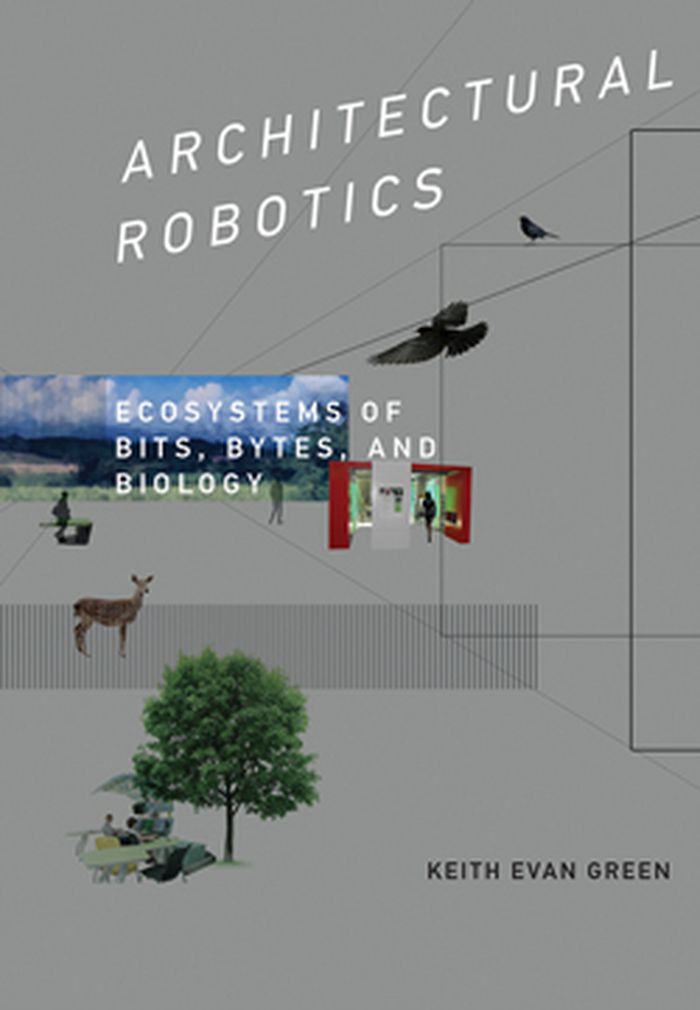
In this book, Keith Evan Green looks toward the next frontier in computing: interactive, partly intelligent, meticulously designed physical environments. Green examines how these "architectural robotic" systems will support and augment us at work, school, and home, as we roam, interconnect, and age.
Title:
Architectural Robotics: Ecosystems of Bits, Bytes, and Biology
Actions:
Price:
$42.00
(available to order)
Summary:
In this book, Keith Evan Green looks toward the next frontier in computing: interactive, partly intelligent, meticulously designed physical environments. Green examines how these "architectural robotic" systems will support and augment us at work, school, and home, as we roam, interconnect, and age.
Form:
books
books
Publication:
February 2016
February 2016
Subject:
Digital Architecture
Digital Architecture
Form:
books
books
Actions:
Price:
$57.50
(available in store)
Summary:
How might nanotechnology—the manipulation of matter at the level of atoms and molecules—change buildings and cities in the future? The authors of Barba have imagined one possible future, shaped by a miraculous nanomaterial of the same name, which can be steered and altered in real time, changing its shape and size at will. With Barba, the authors speculate, the built(...)
Title:
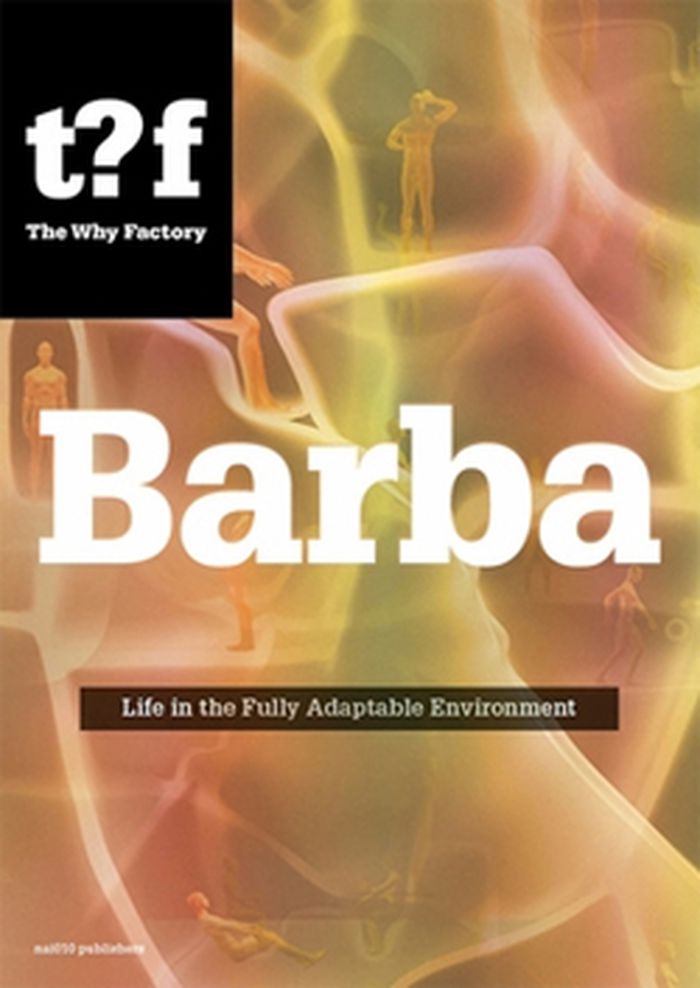
Barba: Life in the Fully Adaptable Environment
Actions:
Price:
$57.50
(available in store)
Summary:
How might nanotechnology—the manipulation of matter at the level of atoms and molecules—change buildings and cities in the future? The authors of Barba have imagined one possible future, shaped by a miraculous nanomaterial of the same name, which can be steered and altered in real time, changing its shape and size at will. With Barba, the authors speculate, the built environment can be adapted almost immediately to every desire and every need. This volume, the latest in The Why Factory’s Future Cities series, envisions the dramatic potential of nanomaterial to change cities and architecture in the not-so-distant future, further explored in a series of interactive experiments and installations. Part speculative architecture, part science fiction, Barba follows an inhabitant of this flexible future world for a day, daring the reader to imagine life in a fully adaptable environment.
Form:
books
books
Publication:
February 2016
February 2016
Subject:
Digital Architecture
Digital Architecture
Form:
journals and magazines
journals and magazines
Actions:
Price:
$44.00
(available to order)
Summary:
This book offers an innovative and highly practical approach to architectural design. Focusing on the concept of performance that brought about a paradigm shift in the humanities in earlier decades, the book discusses how to use this concept to address ongoing problems in architecture. It explores the meaning of performance in the context of the built environment, design(...)
Title:
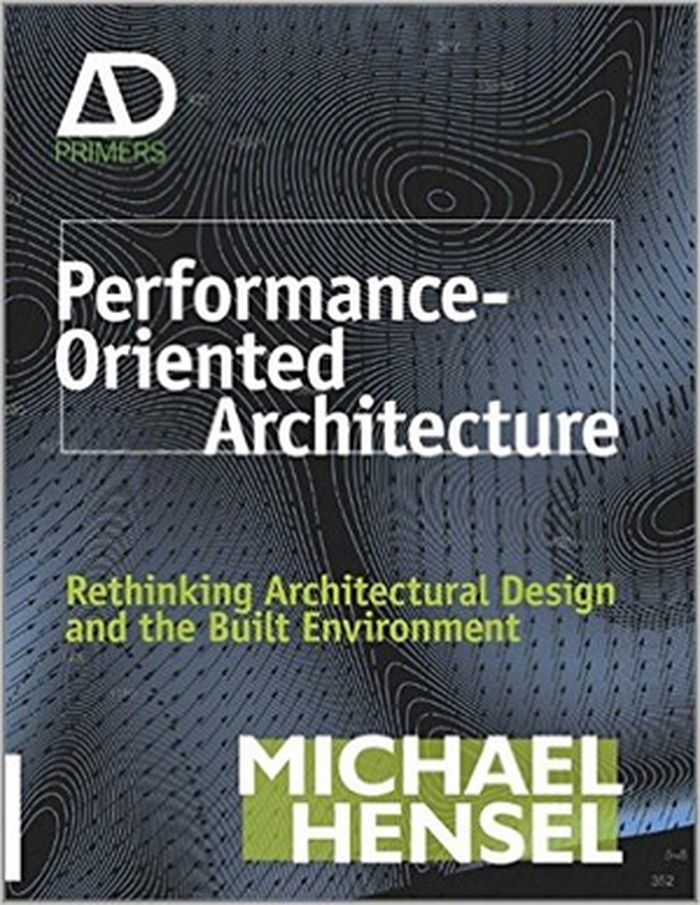
AD Primers: Performance-oriented architecture: rethinking architectural design and the built environment
Actions:
Price:
$44.00
(available to order)
Summary:
This book offers an innovative and highly practical approach to architectural design. Focusing on the concept of performance that brought about a paradigm shift in the humanities in earlier decades, the book discusses how to use this concept to address ongoing problems in architecture. It explores the meaning of performance in the context of the built environment, design processes, sustainable architecture, spatial organization, and other aspects of design. Featuring numerous color illustrations plus historical and contemporary examples, this is an eye-opening resource for architects and urban designers.
Form:
journals and magazines
journals and magazines
Publication:
October 2013
October 2013
Subject:
Digital Architecture
Digital Architecture
Form:
books
books
Actions:
Price:
$54.50
(available to order)
Summary:
In this book, editors Lisa Parks and Nicole Starosielski use the term "media infrastructure" to signal a shift in critical focus and approach that questions the international telecommunication network as a given. Contributors instead confront vital questions concerning the multiple and hybrid forms networks take, the different ways they are imagined and engaged with by(...)
Title:
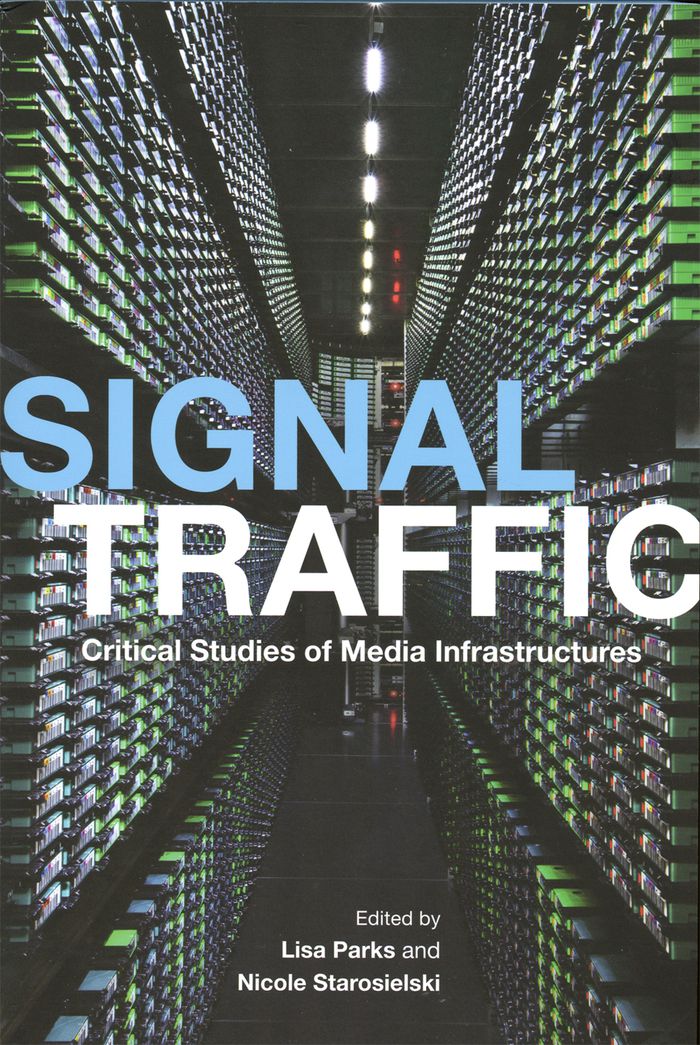
Signal traffic: critical studies of media infrastructures
Actions:
Price:
$54.50
(available to order)
Summary:
In this book, editors Lisa Parks and Nicole Starosielski use the term "media infrastructure" to signal a shift in critical focus and approach that questions the international telecommunication network as a given. Contributors instead confront vital questions concerning the multiple and hybrid forms networks take, the different ways they are imagined and engaged with by publics around the world, their local effects, and what human beings experience when a network fails.
Form:
books
books
Publication:
June 2015
June 2015
Subject:
Digital Architecture
Digital Architecture


