


655 Results
Form:
books
books
Actions:
Price:
$60.00
(available to order)
Summary:
The creative imagination is not solely based on the intuitive capacities of individuals. One of the tasks of design education is to help provide the tools, techniques, and methods that enhance constructed imagination. At the same time, the modes and practices of design need to confront the challenges of our contemporary societies. The commitment to societal engagement(...)
$60.00
(available to order)
Summary:
The creative imagination is not solely based on the intuitive capacities of individuals. One of the tasks of design education is to help provide the tools, techniques, and methods that enhance constructed imagination. At the same time, the modes and practices of design need to confront the challenges of our contemporary societies. The commitment to societal engagement(...)
Subject:
Contemporary Architecture
Contemporary Architecture
Publication:
November 2012
November 2012
Title:
Instigations: engaging architecture, landscape and the city
Actions:
Price:
$60.00
(available to order)
Summary:
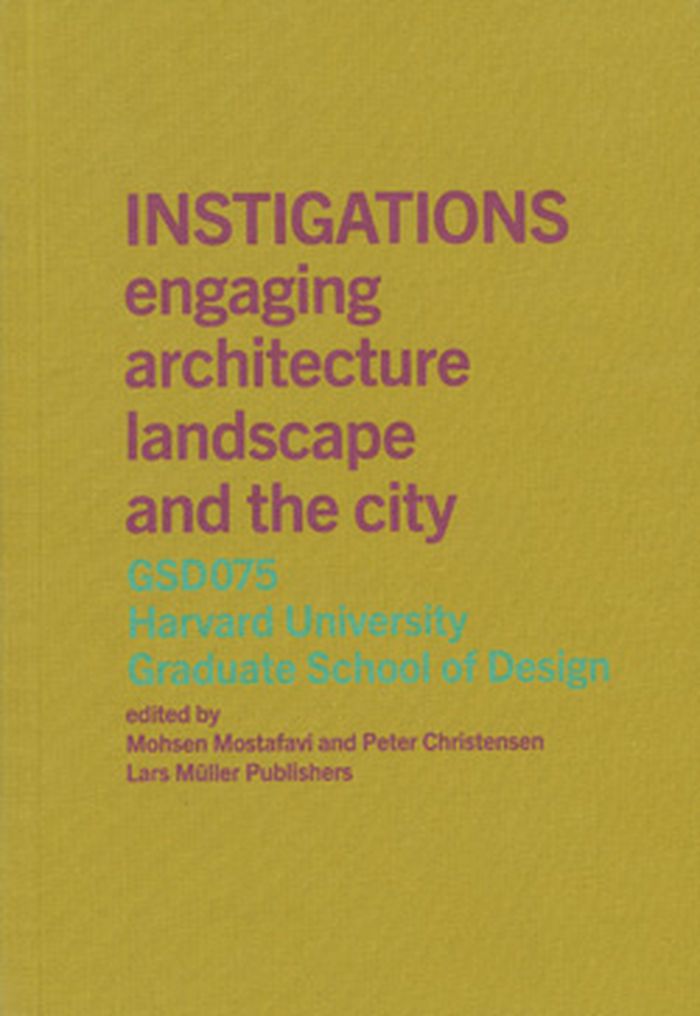
The creative imagination is not solely based on the intuitive capacities of individuals. One of the tasks of design education is to help provide the tools, techniques, and methods that enhance constructed imagination. At the same time, the modes and practices of design need to confront the challenges of our contemporary societies. The commitment to societal engagement through design excellence is at the core of the pedagogy at the Harvard Graduate School of Design. This volume celebrating the first seventy-five years of the GSD presents episodes in a rich history along with selected looks at current and future lines of teaching and research; these views reveal the constant oscillation between the pragmatic realities and the imagined yet never realized ideal that lies at the heart of design. The aspirations of the famous architecture school are demonstrated through a series of ideas, projects, practices–INSTIGATIONS–that reflect the mission for the GSD to reimagine and construct better futures.
Instigations: engaging architecture, landscape and the city
Actions:
Price:
$60.00
(available to order)
Summary:
The creative imagination is not solely based on the intuitive capacities of individuals. One of the tasks of design education is to help provide the tools, techniques, and methods that enhance constructed imagination. At the same time, the modes and practices of design need to confront the challenges of our contemporary societies. The commitment to societal engagement through design excellence is at the core of the pedagogy at the Harvard Graduate School of Design. This volume celebrating the first seventy-five years of the GSD presents episodes in a rich history along with selected looks at current and future lines of teaching and research; these views reveal the constant oscillation between the pragmatic realities and the imagined yet never realized ideal that lies at the heart of design. The aspirations of the famous architecture school are demonstrated through a series of ideas, projects, practices–INSTIGATIONS–that reflect the mission for the GSD to reimagine and construct better futures.
Form:
books
books
Publication:
November 2012
November 2012
Subject:
Contemporary Architecture
Contemporary Architecture
Form:
books
books
Actions:
Price:
$99.95
(available to order)
Summary:
This book is the first monograph on the product designer Ross Lovegrove. Written by the designer himself, with a forward by Paola Antonelli, it presents a complete overview of the designer`s career, featuring realized and unrealized project. While the main texts explains Ross Lovegrove’s philosophy and way of working, the products descriptions reveal the main feature and(...)
$99.95
(available to order)
Summary:
This book is the first monograph on the product designer Ross Lovegrove. Written by the designer himself, with a forward by Paola Antonelli, it presents a complete overview of the designer`s career, featuring realized and unrealized project. While the main texts explains Ross Lovegrove’s philosophy and way of working, the products descriptions reveal the main feature and(...)
Title:
Supernatural : the work of Ross Lovegrove
Actions:
Price:
$99.95
(available to order)
Summary:
This book is the first monograph on the product designer Ross Lovegrove. Written by the designer himself, with a forward by Paola Antonelli, it presents a complete overview of the designer`s career, featuring realized and unrealized project. While the main texts explains Ross Lovegrove’s philosophy and way of working, the products descriptions reveal the main feature and characteristic of every project. Lovegrove`s work includes a wide range of products from furniture to high-tech products, from water bottles to airplane seats and explores the possibility of realizing sculptural and organic shapes through modern technology and material. In recent years Ross Lovegrove has worked on a design concept that he likes to define as organic essentialism, inspired by elements and aesthetics taken from the natural world and reshaped in futuristic forms. His interest in this sort of new naturalism, which he terms supernatural, is accompanied by research into new materials, new applications and new methods of production. This combination of archetypal inspiration and up to date technology makes him one of the most interesting and unusual figures in the design world.
Supernatural : the work of Ross Lovegrove
Actions:
Price:
$99.95
(available to order)
Summary:
This book is the first monograph on the product designer Ross Lovegrove. Written by the designer himself, with a forward by Paola Antonelli, it presents a complete overview of the designer`s career, featuring realized and unrealized project. While the main texts explains Ross Lovegrove’s philosophy and way of working, the products descriptions reveal the main feature and characteristic of every project. Lovegrove`s work includes a wide range of products from furniture to high-tech products, from water bottles to airplane seats and explores the possibility of realizing sculptural and organic shapes through modern technology and material. In recent years Ross Lovegrove has worked on a design concept that he likes to define as organic essentialism, inspired by elements and aesthetics taken from the natural world and reshaped in futuristic forms. His interest in this sort of new naturalism, which he terms supernatural, is accompanied by research into new materials, new applications and new methods of production. This combination of archetypal inspiration and up to date technology makes him one of the most interesting and unusual figures in the design world.
Form:
books
books
Publication:
May 2004, London
May 2004, London
Subject:
Design Monographs
Design Monographs
Form:
audio
audio
Actions:
Description:
1 online resource.
Author:
Subject:
Publication:
[Place of publication not identified] : Lateral Addition, 2018.
[Place of publication not identified] : Lateral Addition, 2018.
Form:
audio
audio
Publication:
[Place of publication not identified] : Lateral Addition, 2018.
[Place of publication not identified] : Lateral Addition, 2018.
Author:
Subject:
Form:
books
books
Actions:
Price:
$90.00
(available to order)
Summary:
Le Corbusier's first trip to the United States in 1935 is generally considered a failure because it produced no commissions. The experience nevertheless had a profound effect on him, both personally and professionally. Sponsored by the Museum of Modern Art in New York, Le Corbusier promoted his ideas through a lecture tour, exhibition, and press conferences, as well as in(...)
$90.00
(available to order)
Summary:
Le Corbusier's first trip to the United States in 1935 is generally considered a failure because it produced no commissions. The experience nevertheless had a profound effect on him, both personally and professionally. Sponsored by the Museum of Modern Art in New York, Le Corbusier promoted his ideas through a lecture tour, exhibition, and press conferences, as well as in(...)
Subject:
Architecture Monographs
Architecture Monographs
Publication:
May 2001, Cambridge, Mass.
May 2001, Cambridge, Mass.
Title:
Le Corbusier in America : travels in the land of the timid
Actions:
Price:
$90.00
(available to order)
Summary:
Le Corbusier's first trip to the United States in 1935 is generally considered a failure because it produced no commissions. The experience nevertheless had a profound effect on him, both personally and professionally. Sponsored by the Museum of Modern Art in New York, Le Corbusier promoted his ideas through a lecture tour, exhibition, and press conferences, as well as in meetings with industrialists, housing reformers, New Deal technocrats, and editors. His lectures were watershed events that advanced the cause of European modernism. Yet he returned to France empty-handed and published a bittersweet account, "Quand les cathédrales étaient blanches: voyage au pays des timides" ("When the Cathedrals Were White: Journey to the Country of Timid People"), which faulted America for lacking the courage to adopt his ideas. In this first major study of Le Corbusier's American tour, Mardges Bacon reconstructs his encounter with America in all its fascinating detail. Through extensive archival research and interviews, she presents a critical history of the tour as well as a nuanced and intimate portrait of the architect. Drawing on the methods of microhistory, she also considers how small ordinary events affect larger biographical, architectural, and cultural developments. Bacon notes that Le Corbusier's dialogue with America was drafted within a spirited European discourse on américanisme. She contends that the trip validated his concept of a "second machine age" that would unite standardized industrial methods with a new humanism. Le Corbusier's subsequent work, she suggests, reflected an "Americanization," evidenced by the introduction of tension structures and the textured skyscraper conceived as an integrated system with functions articulated. She also defines Le Corbusier's role in the debate over New York City high-rise public housing. Appearing here in print for the first time are color reproductions of the pastel drawings that illustrated Le Corbusier's American lectures.
Le Corbusier in America : travels in the land of the timid
Actions:
Price:
$90.00
(available to order)
Summary:
Le Corbusier's first trip to the United States in 1935 is generally considered a failure because it produced no commissions. The experience nevertheless had a profound effect on him, both personally and professionally. Sponsored by the Museum of Modern Art in New York, Le Corbusier promoted his ideas through a lecture tour, exhibition, and press conferences, as well as in meetings with industrialists, housing reformers, New Deal technocrats, and editors. His lectures were watershed events that advanced the cause of European modernism. Yet he returned to France empty-handed and published a bittersweet account, "Quand les cathédrales étaient blanches: voyage au pays des timides" ("When the Cathedrals Were White: Journey to the Country of Timid People"), which faulted America for lacking the courage to adopt his ideas. In this first major study of Le Corbusier's American tour, Mardges Bacon reconstructs his encounter with America in all its fascinating detail. Through extensive archival research and interviews, she presents a critical history of the tour as well as a nuanced and intimate portrait of the architect. Drawing on the methods of microhistory, she also considers how small ordinary events affect larger biographical, architectural, and cultural developments. Bacon notes that Le Corbusier's dialogue with America was drafted within a spirited European discourse on américanisme. She contends that the trip validated his concept of a "second machine age" that would unite standardized industrial methods with a new humanism. Le Corbusier's subsequent work, she suggests, reflected an "Americanization," evidenced by the introduction of tension structures and the textured skyscraper conceived as an integrated system with functions articulated. She also defines Le Corbusier's role in the debate over New York City high-rise public housing. Appearing here in print for the first time are color reproductions of the pastel drawings that illustrated Le Corbusier's American lectures.
Form:
books
books
Publication:
May 2001, Cambridge, Mass.
May 2001, Cambridge, Mass.
Subject:
Architecture Monographs
Architecture Monographs
Form:
books
books
Actions:
Price:
$64.95
(available to order)
Summary:
Energy humanities is a field of scholarship that, like medical humanities and digital humanities before it, overcomes traditional boundaries between the disciplines and between academic and applied research. Like its predecessors, energy humanities highlights the essential contribution that the insights and methods of the human sciences can make to areas of study and(...)
$64.95
(available to order)
Summary:
Energy humanities is a field of scholarship that, like medical humanities and digital humanities before it, overcomes traditional boundaries between the disciplines and between academic and applied research. Like its predecessors, energy humanities highlights the essential contribution that the insights and methods of the human sciences can make to areas of study and(...)
Subject:
Environment and environmental theory
Environment and environmental theory
Publication:
February 2017
February 2017
Title:
Energy humanities: an anthology
Actions:
Price:
$64.95
(available to order)
Summary:
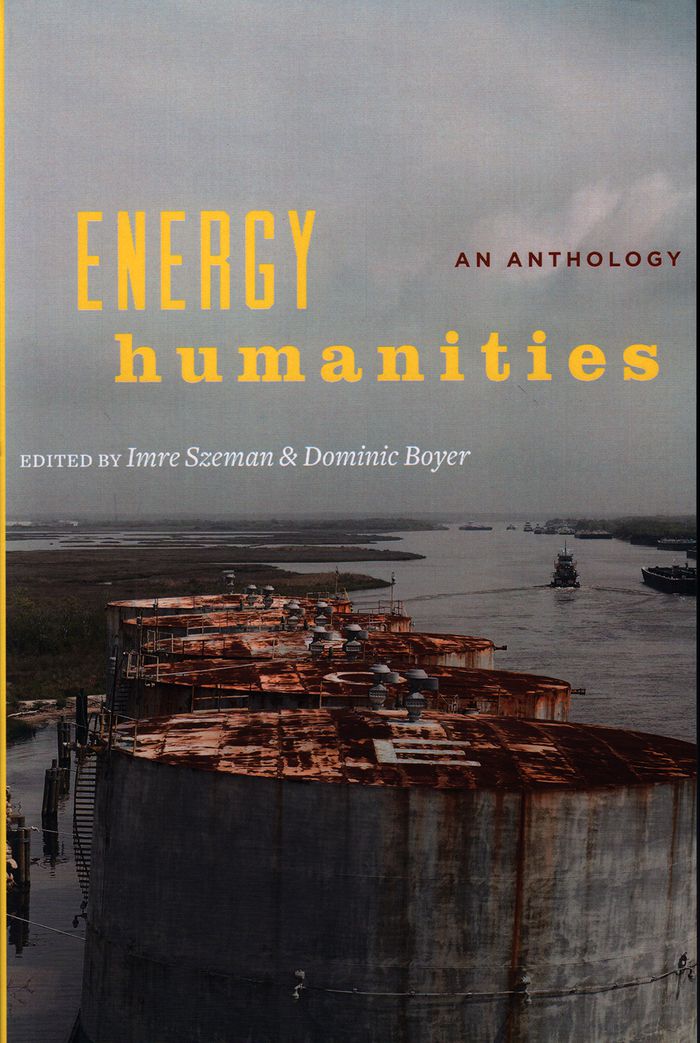
Energy humanities is a field of scholarship that, like medical humanities and digital humanities before it, overcomes traditional boundaries between the disciplines and between academic and applied research. Like its predecessors, energy humanities highlights the essential contribution that the insights and methods of the human sciences can make to areas of study and analysis once thought best left to the natural sciences. This isn't a case of the humanities simply helping their cross-campus colleagues to learn the mechanics of communication so that they might better articulate their ideas. Rather, these fields of scholarship are ones that demonstrate how the scale and complexity of the issues being explored demand insights and approaches that transcendold school disciplinary boundaries. "Energy humanities : a reader" offers a carefully curated selection of the best and most influential work in energy humanities that has appeared over the past decade. To stay true to the diverse work that makes up this emergent field, selections range from anthropology and geography to philosophy, history, and cultural studies to recent energy-focused interventions in art and literature. The three readers all agree that this is an important, ground-breaking collection of work.
Energy humanities: an anthology
Actions:
Price:
$64.95
(available to order)
Summary:
Energy humanities is a field of scholarship that, like medical humanities and digital humanities before it, overcomes traditional boundaries between the disciplines and between academic and applied research. Like its predecessors, energy humanities highlights the essential contribution that the insights and methods of the human sciences can make to areas of study and analysis once thought best left to the natural sciences. This isn't a case of the humanities simply helping their cross-campus colleagues to learn the mechanics of communication so that they might better articulate their ideas. Rather, these fields of scholarship are ones that demonstrate how the scale and complexity of the issues being explored demand insights and approaches that transcendold school disciplinary boundaries. "Energy humanities : a reader" offers a carefully curated selection of the best and most influential work in energy humanities that has appeared over the past decade. To stay true to the diverse work that makes up this emergent field, selections range from anthropology and geography to philosophy, history, and cultural studies to recent energy-focused interventions in art and literature. The three readers all agree that this is an important, ground-breaking collection of work.
Form:
books
books
Publication:
February 2017
February 2017
Subject:
Environment and environmental theory
Environment and environmental theory
Form:
books
books
Title:
Border environments: CRA 1
Border environments: CRA 1
Actions:
Price:
$50.50
(available to order)
Summary:
Over the past fifteen years, the Centre for Research Architecture at Goldsmiths, University of London, has brought together established and emergent scholars who convene to work with each other and share their ideas and insights. These assemblies have produced a space of critical encounter for developing new investigative methods, expanded spatial practices, and(...)
$50.50
(available to order)
Summary:
Over the past fifteen years, the Centre for Research Architecture at Goldsmiths, University of London, has brought together established and emergent scholars who convene to work with each other and share their ideas and insights. These assemblies have produced a space of critical encounter for developing new investigative methods, expanded spatial practices, and(...)
Subject:
Architecture ecologies
Architecture ecologies
Publication:
September 2023
September 2023
Title:
Border environments: CRA 1
Actions:
Price:
$50.50
(available to order)
Summary:
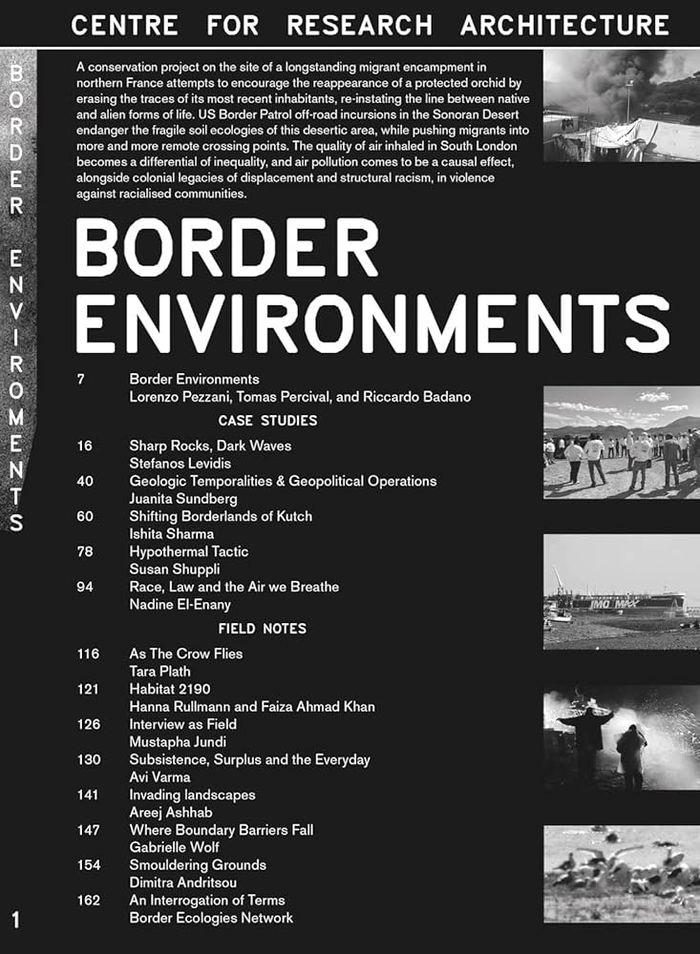
Over the past fifteen years, the Centre for Research Architecture at Goldsmiths, University of London, has brought together established and emergent scholars who convene to work with each other and share their ideas and insights. These assemblies have produced a space of critical encounter for developing new investigative methods, expanded spatial practices, and speculative propositions designed to respond to and intervene in the urgent political conditions of our time. This new series invites the reader into this ever-evolving pedagogical context. Each book is organized around a specific spatial issue and brings together a heterogeneous range of materials and contributors. The first work in the series, ''Border Environments'', explores the entanglement of ecology and migration. It examines the interplay between discriminatory politics, emergent technologies, and bordering practices within the context of (constructed) natures by highlighting a variety of interventions, investigative techniques, visual projects, and modes of witnessing that address the role of both human and more-than-human actors in border struggles. As such, the book is also a provocation that can be used to identify and organize new lines of struggle connecting environmental and mobility justice.
Border environments: CRA 1
Actions:
Price:
$50.50
(available to order)
Summary:
Over the past fifteen years, the Centre for Research Architecture at Goldsmiths, University of London, has brought together established and emergent scholars who convene to work with each other and share their ideas and insights. These assemblies have produced a space of critical encounter for developing new investigative methods, expanded spatial practices, and speculative propositions designed to respond to and intervene in the urgent political conditions of our time. This new series invites the reader into this ever-evolving pedagogical context. Each book is organized around a specific spatial issue and brings together a heterogeneous range of materials and contributors. The first work in the series, ''Border Environments'', explores the entanglement of ecology and migration. It examines the interplay between discriminatory politics, emergent technologies, and bordering practices within the context of (constructed) natures by highlighting a variety of interventions, investigative techniques, visual projects, and modes of witnessing that address the role of both human and more-than-human actors in border struggles. As such, the book is also a provocation that can be used to identify and organize new lines of struggle connecting environmental and mobility justice.
Form:
books
books
Publication:
September 2023
September 2023
Subject:
Architecture ecologies
Architecture ecologies
Form:
books
books

Actions:
Price:
$43.95
(available to order)
Summary:
''An anthology of Blackness'' examines the intersection of Black identity and practice, probing why the design field has failed to attract Black professionals, how Eurocentric hegemony impacts Black professionals, and how Black designers can create an anti-racist design industry. Contributing authors and creators demonstrate how to develop a pro-Black design practice of(...)
$43.95
(available to order)
Summary:
''An anthology of Blackness'' examines the intersection of Black identity and practice, probing why the design field has failed to attract Black professionals, how Eurocentric hegemony impacts Black professionals, and how Black designers can create an anti-racist design industry. Contributing authors and creators demonstrate how to develop a pro-Black design practice of(...)
Title:
An anthology of Blackness: the state of Black design
Actions:
Price:
$43.95
(available to order)
Summary:
''An anthology of Blackness'' examines the intersection of Black identity and practice, probing why the design field has failed to attract Black professionals, how Eurocentric hegemony impacts Black professionals, and how Black designers can create an anti-racist design industry. Contributing authors and creators demonstrate how to develop a pro-Black design practice of inclusivity, including Black representation in designed media, anti-racist pedagogy, and radical self-care. Through autoethnography, lived experience, scholarship, and applied research, these contributors share proven methods for creating an anti-racist and inclusive design practice. The contributions in ''An anthology of Blackness'' include essays, opinion pieces, case studies, and visual narratives. Many contributors write from an intersectional perspective on race, gender, sexuality, ethnicity, and ability. Each section of the book expands on community-driven concerns about the state of the design industry, design pedagogy, and design activism. Ultimately, this articulated intersection of Black identity and Black design practice reveals the power of resistance, community, and solidarity—and the hope for a more equitable future. With a foreword written by design luminary Elizabeth (Dori) Tunstall, ''An anthology of Blackness'' is a pioneering contribution to the literature of social justice.
An anthology of Blackness: the state of Black design
Actions:
Price:
$43.95
(available to order)
Summary:
''An anthology of Blackness'' examines the intersection of Black identity and practice, probing why the design field has failed to attract Black professionals, how Eurocentric hegemony impacts Black professionals, and how Black designers can create an anti-racist design industry. Contributing authors and creators demonstrate how to develop a pro-Black design practice of inclusivity, including Black representation in designed media, anti-racist pedagogy, and radical self-care. Through autoethnography, lived experience, scholarship, and applied research, these contributors share proven methods for creating an anti-racist and inclusive design practice. The contributions in ''An anthology of Blackness'' include essays, opinion pieces, case studies, and visual narratives. Many contributors write from an intersectional perspective on race, gender, sexuality, ethnicity, and ability. Each section of the book expands on community-driven concerns about the state of the design industry, design pedagogy, and design activism. Ultimately, this articulated intersection of Black identity and Black design practice reveals the power of resistance, community, and solidarity—and the hope for a more equitable future. With a foreword written by design luminary Elizabeth (Dori) Tunstall, ''An anthology of Blackness'' is a pioneering contribution to the literature of social justice.
Form:
books
books
Publication:
October 2023
October 2023
Subject:
Design Theory
Design Theory
Form:
books
books
Title:
Bauhaus futures
Bauhaus futures
Actions:
Price:
$47.00
(available to order)
Summary:
A century after its founding by Walter Gropius in Weimar, Germany, as an "experimental laboratory of the future," who are the pioneering experimentalists who reinscribe or resist Bauhaus traditions? This book explores the varied legacies, influences, and futures of the Bauhaus. Many of the animating issues of the Bauhaus—its integration of research, teaching, and(...)
$47.00
(available to order)
Summary:
A century after its founding by Walter Gropius in Weimar, Germany, as an "experimental laboratory of the future," who are the pioneering experimentalists who reinscribe or resist Bauhaus traditions? This book explores the varied legacies, influences, and futures of the Bauhaus. Many of the animating issues of the Bauhaus—its integration of research, teaching, and(...)
Subject:
Modernism
Modernism
Publication:
October 2019
October 2019
Title:
Bauhaus futures
Actions:
Price:
$47.00
(available to order)
Summary:
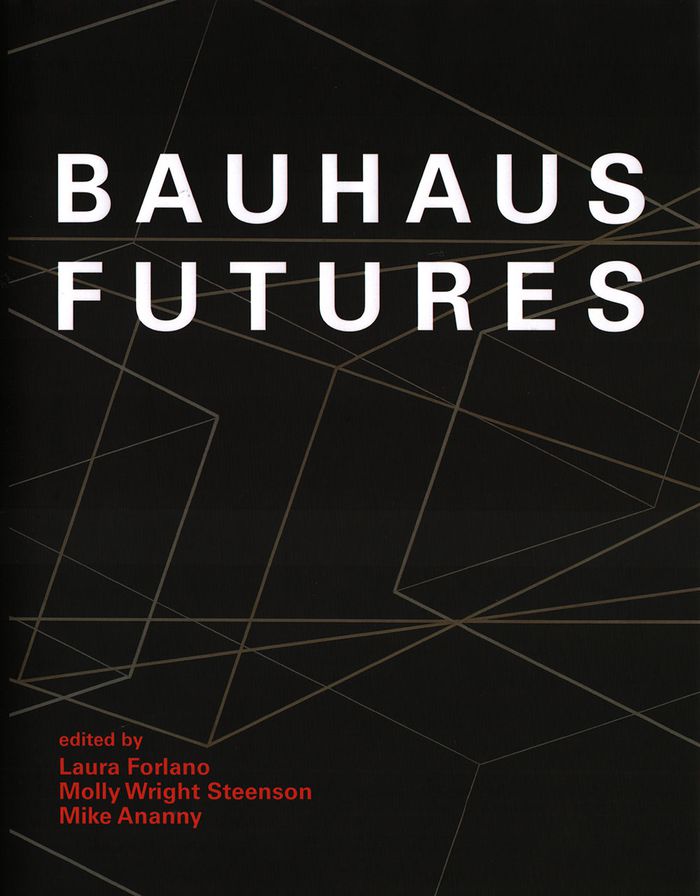
A century after its founding by Walter Gropius in Weimar, Germany, as an "experimental laboratory of the future," who are the pioneering experimentalists who reinscribe or resist Bauhaus traditions? This book explores the varied legacies, influences, and futures of the Bauhaus. Many of the animating issues of the Bauhaus—its integration of research, teaching, and practice; its experimentation with materials; its democratization of design; its open-minded, heterogeneous approach to ideas, theories, methods, and styles—remain relevant. The contributors to "Bauhaus futures" address these but go further, considering issues that design has largely ignored for the last hundred years: gender, race, ethnicity, class, sexuality, and disability. Their contributions take the form of essays, photo-essays, interviews, manifestos, diagrams, and even a play. They discuss, among other things, the Bauhaus curriculum and its contemporary offshoots; Bauhaus legacies at the MIT Media Lab, Black Mountain College, and elsewhere; the conflict between the Bauhaus ideal of humanist universalism and current approaches to design concerned with race and justice; designed objects, from the iconic to the precarious; textile and weaving work by women in the Bauhaus and the present day; and design and technology.
Bauhaus futures
Actions:
Price:
$47.00
(available to order)
Summary:
A century after its founding by Walter Gropius in Weimar, Germany, as an "experimental laboratory of the future," who are the pioneering experimentalists who reinscribe or resist Bauhaus traditions? This book explores the varied legacies, influences, and futures of the Bauhaus. Many of the animating issues of the Bauhaus—its integration of research, teaching, and practice; its experimentation with materials; its democratization of design; its open-minded, heterogeneous approach to ideas, theories, methods, and styles—remain relevant. The contributors to "Bauhaus futures" address these but go further, considering issues that design has largely ignored for the last hundred years: gender, race, ethnicity, class, sexuality, and disability. Their contributions take the form of essays, photo-essays, interviews, manifestos, diagrams, and even a play. They discuss, among other things, the Bauhaus curriculum and its contemporary offshoots; Bauhaus legacies at the MIT Media Lab, Black Mountain College, and elsewhere; the conflict between the Bauhaus ideal of humanist universalism and current approaches to design concerned with race and justice; designed objects, from the iconic to the precarious; textile and weaving work by women in the Bauhaus and the present day; and design and technology.
Form:
books
books
Publication:
October 2019
October 2019
Subject:
Modernism
Modernism
Form:
books
books
Actions:
Price:
$11.95
(available to order)
Summary:
Landscapes are all around us, but most of us know very little about how they have developed, what goes on in them, and how they react to changing climates, tectonics, and human activities. Examining what landscape is, and how we use a range of ideas and techniques to study it, Andrew Goudie and Heather Viles demonstrate how scientists have built on classic(...)
$11.95
(available to order)
Summary:
Landscapes are all around us, but most of us know very little about how they have developed, what goes on in them, and how they react to changing climates, tectonics, and human activities. Examining what landscape is, and how we use a range of ideas and techniques to study it, Andrew Goudie and Heather Viles demonstrate how scientists have built on classic(...)
Title:
Landscape and geomorphology: A very short Introduction
Actions:
Price:
$11.95
(available to order)
Summary:
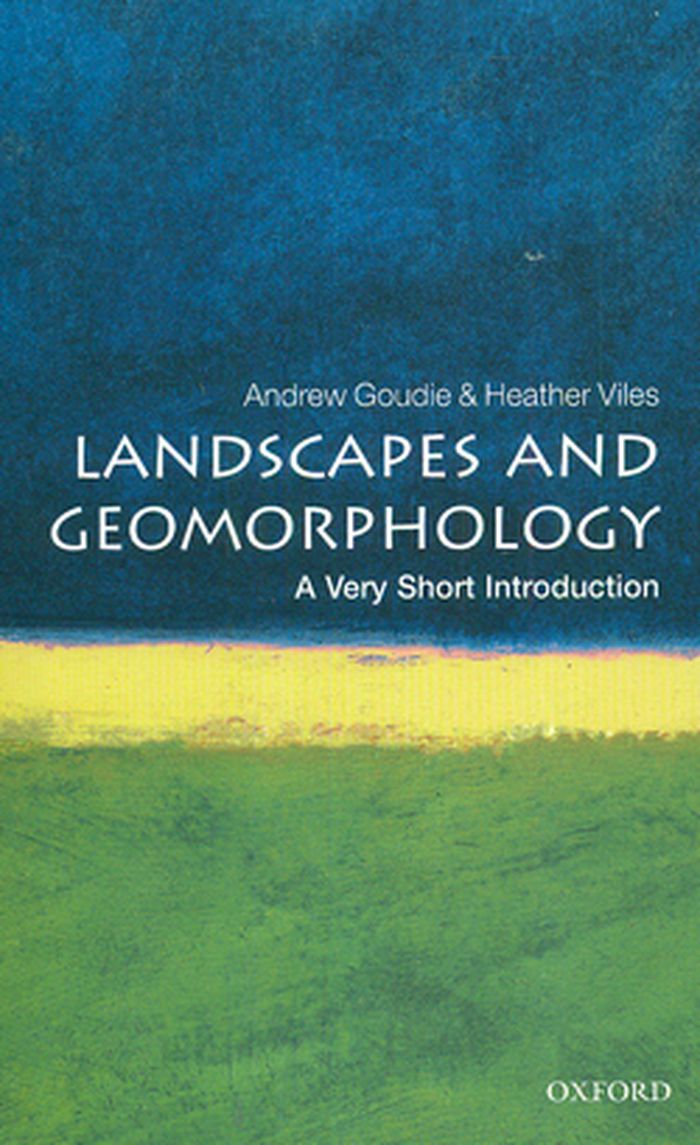
Landscapes are all around us, but most of us know very little about how they have developed, what goes on in them, and how they react to changing climates, tectonics, and human activities. Examining what landscape is, and how we use a range of ideas and techniques to study it, Andrew Goudie and Heather Viles demonstrate how scientists have built on classic methods--pioneered by the great researchers of the nineteenth century--to shed new light on our planet. Using examples from around the world, including New Zealand, the Tibetan Plateau, and the deserts of the Middle East, they examine some of the key controls on landscape today such as tectonics and climate, as well as humans and the living world. They also discuss some major "landscape detectives" from the past, including Charles Darwin, who did some important, but often overlooked, research on landscape. Concluding with the cultural importance of landscape, and exploring how this has led to the conservation of much "earth heritage," they delve into the future and look at how we can predict the response of landscapes to the projected climate change.
Landscape and geomorphology: A very short Introduction
Actions:
Price:
$11.95
(available to order)
Summary:
Landscapes are all around us, but most of us know very little about how they have developed, what goes on in them, and how they react to changing climates, tectonics, and human activities. Examining what landscape is, and how we use a range of ideas and techniques to study it, Andrew Goudie and Heather Viles demonstrate how scientists have built on classic methods--pioneered by the great researchers of the nineteenth century--to shed new light on our planet. Using examples from around the world, including New Zealand, the Tibetan Plateau, and the deserts of the Middle East, they examine some of the key controls on landscape today such as tectonics and climate, as well as humans and the living world. They also discuss some major "landscape detectives" from the past, including Charles Darwin, who did some important, but often overlooked, research on landscape. Concluding with the cultural importance of landscape, and exploring how this has led to the conservation of much "earth heritage," they delve into the future and look at how we can predict the response of landscapes to the projected climate change.
Form:
books
books
Publication:
September 2010
September 2010
Subject:
Landscape Theory
Landscape Theory
Form:
books
books
Title:
Designing the X
Designing the X
Actions:
Price:
$53.95
(available to order)
Summary:
As the pace of global change accelerates—ecologically, socially, and technologically—our traditional ways of understanding and responding to change fall short. We now live in an era of supercomplexity, where challenges like climate instability, migration, technological disruption, resource depletion, and systemic inequality converge and defy conventional(...)
$53.95
(available to order)
Summary:
As the pace of global change accelerates—ecologically, socially, and technologically—our traditional ways of understanding and responding to change fall short. We now live in an era of supercomplexity, where challenges like climate instability, migration, technological disruption, resource depletion, and systemic inequality converge and defy conventional(...)
Title:
Designing the X
Actions:
Price:
$53.95
(available to order)
Summary:
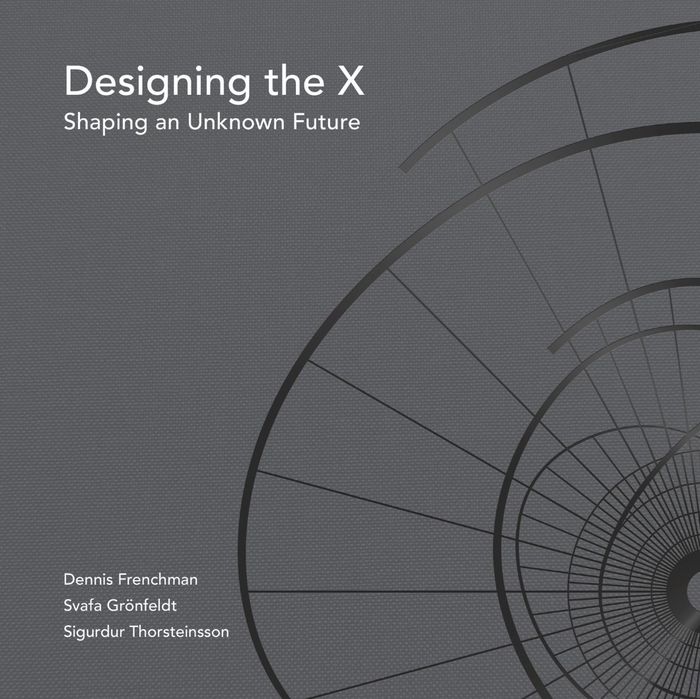
As the pace of global change accelerates—ecologically, socially, and technologically—our traditional ways of understanding and responding to change fall short. We now live in an era of supercomplexity, where challenges like climate instability, migration, technological disruption, resource depletion, and systemic inequality converge and defy conventional solutions. ''Designing the X'' meets this moment with a bold and timely proposition: when data, science, and analysis alone are insufficient to move us forward, we must turn to design as a powerful mode of reasoning through synthesis, where intuition meets insight and imagination drives action. Design enables us to move with complexity, not against it, and to shape futures beyond the limits of the present. Grounded in praxis and research—including 67 interviews with designers, technologists and scientists, innovators and entrepreneurs, urbanists, and educators— ''Designing the X'' makes a compelling case for design as an essential partner to science and technology: integrative, inventive, and profoundly human. The “X” stands for what’s missing in today’s analytic methods: the leap from parts to greater wholes, from current conditions to future potential. This book is for anyone seeking agency in an age of accelerating change. It’s a compass for those ready to imagine—and design—the future we cannot yet see.
Designing the X
Actions:
Price:
$53.95
(available to order)
Summary:
As the pace of global change accelerates—ecologically, socially, and technologically—our traditional ways of understanding and responding to change fall short. We now live in an era of supercomplexity, where challenges like climate instability, migration, technological disruption, resource depletion, and systemic inequality converge and defy conventional solutions. ''Designing the X'' meets this moment with a bold and timely proposition: when data, science, and analysis alone are insufficient to move us forward, we must turn to design as a powerful mode of reasoning through synthesis, where intuition meets insight and imagination drives action. Design enables us to move with complexity, not against it, and to shape futures beyond the limits of the present. Grounded in praxis and research—including 67 interviews with designers, technologists and scientists, innovators and entrepreneurs, urbanists, and educators— ''Designing the X'' makes a compelling case for design as an essential partner to science and technology: integrative, inventive, and profoundly human. The “X” stands for what’s missing in today’s analytic methods: the leap from parts to greater wholes, from current conditions to future potential. This book is for anyone seeking agency in an age of accelerating change. It’s a compass for those ready to imagine—and design—the future we cannot yet see.
Form:
books
books
Publication:
October 2025
October 2025
Subject:
Design Theory
Design Theory


