


655 Results
Form:
books
books
Actions:
Price:
$65.00
(available to order)
Summary:
The book ''Archive of Dreams'' is published in conjunction with the exhibition of the same name that will open the ''Archiv der Avantgarden''. Marking the hundredth anniversary of the first surrealist manifesto and the founding of the Bureau of Surrealist Research in Paris in 1924, the volume is dedicated to the surrealist movement as well as the networks it engendered(...)
$65.00
(available to order)
Summary:
The book ''Archive of Dreams'' is published in conjunction with the exhibition of the same name that will open the ''Archiv der Avantgarden''. Marking the hundredth anniversary of the first surrealist manifesto and the founding of the Bureau of Surrealist Research in Paris in 1924, the volume is dedicated to the surrealist movement as well as the networks it engendered(...)
Publication:
December 2025
December 2025
Title:
Archive of dreams: A surrealist impulse
Actions:
Price:
$65.00
(available to order)
Summary:
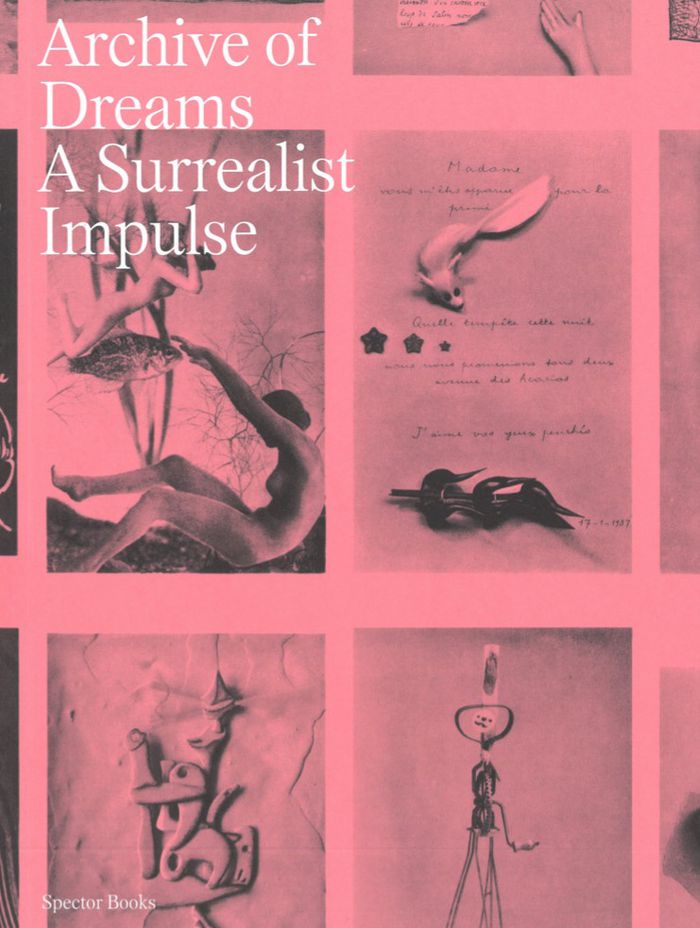
The book ''Archive of Dreams'' is published in conjunction with the exhibition of the same name that will open the ''Archiv der Avantgarden''. Marking the hundredth anniversary of the first surrealist manifesto and the founding of the Bureau of Surrealist Research in Paris in 1924, the volume is dedicated to the surrealist movement as well as the networks it engendered and the artistic stimuli it provided in the twentieth century. The idea was for the Bureau to collect dream testimonies in whatever form, not only to preserve and analyse them but also to give active expression to them in artistic processes. The publication shows how the practices of the avantgardes blurred the boundaries between dream and reality, between the traditional, passive notion of the archive and the idea of active, innovative artistic experiment — and thus ultimately also between the past, the present, and possible futures. Works and documents from the period before, during, and after the Second World War shed light on the working methods of international artists and the global network they were involved in. They are complemented by diverse reflections on global protest movements and the traumas of war, thus connecting, too, to everyday experiences in a Europe beset by warfare.
Archive of dreams: A surrealist impulse
Actions:
Price:
$65.00
(available to order)
Summary:
The book ''Archive of Dreams'' is published in conjunction with the exhibition of the same name that will open the ''Archiv der Avantgarden''. Marking the hundredth anniversary of the first surrealist manifesto and the founding of the Bureau of Surrealist Research in Paris in 1924, the volume is dedicated to the surrealist movement as well as the networks it engendered and the artistic stimuli it provided in the twentieth century. The idea was for the Bureau to collect dream testimonies in whatever form, not only to preserve and analyse them but also to give active expression to them in artistic processes. The publication shows how the practices of the avantgardes blurred the boundaries between dream and reality, between the traditional, passive notion of the archive and the idea of active, innovative artistic experiment — and thus ultimately also between the past, the present, and possible futures. Works and documents from the period before, during, and after the Second World War shed light on the working methods of international artists and the global network they were involved in. They are complemented by diverse reflections on global protest movements and the traumas of war, thus connecting, too, to everyday experiences in a Europe beset by warfare.
Form:
books
books
Publication:
December 2025
December 2025
Form:
books
books
Actions:
Price:
$28.95
(available to order)
Summary:
“Propositions for Non-Fascist Living” begins from the urgent need to model a world decidedly void of fascisms during a time when the rise of contemporary fascisms threatens the very foundations of a possibility for common life. Borrowing from Michel Foucault's notion of “non-fascist living” as an “art of living counter to all forms of fascism,” including that “in us all…(...)
$28.95
(available to order)
Summary:
“Propositions for Non-Fascist Living” begins from the urgent need to model a world decidedly void of fascisms during a time when the rise of contemporary fascisms threatens the very foundations of a possibility for common life. Borrowing from Michel Foucault's notion of “non-fascist living” as an “art of living counter to all forms of fascism,” including that “in us all…(...)
Title:
Propositions for non-fascist living: tentative and urgent
Actions:
Price:
$28.95
(available to order)
Summary:
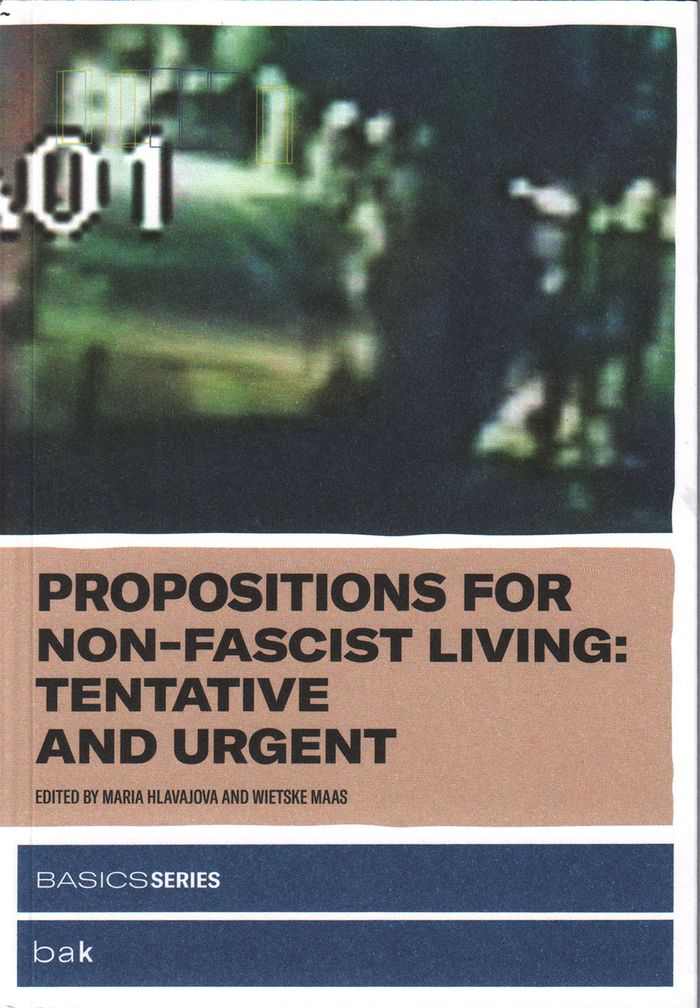
“Propositions for Non-Fascist Living” begins from the urgent need to model a world decidedly void of fascisms during a time when the rise of contemporary fascisms threatens the very foundations of a possibility for common life. Borrowing from Michel Foucault's notion of “non-fascist living” as an “art of living counter to all forms of fascism,” including that “in us all… the fascism that causes us to love power, to desire the very thing that dominates and exploits us,” the book addresses the practice of “living” rather than the mere object of life. Artists, theorists, activists, and scholars offer texts and visual essays that engage varied perspectives on practicing life and articulate methods that support multiplicity and difference rather than vaunting power and hierarchy. Architectural theorist Eyal Weizman, for example, describes an “unlikely common” in gathering evidence against false narratives; art historian and critic Sven Lütticken develops a non-fascist proposition drawn from the intersection of art, technology, and law; philosopher Rosi Braidotti explores an ethics of affirmation and the practices of dying. “Propositions for Non-Fascist Living” is the first in a BASICS series of readers from BAK, “basis voor actuele kunst”, Utrecht, engaging some of the most urgent problems of our time through theoretically informed and politically driven artistic research and practice.
Propositions for non-fascist living: tentative and urgent
Actions:
Price:
$28.95
(available to order)
Summary:
“Propositions for Non-Fascist Living” begins from the urgent need to model a world decidedly void of fascisms during a time when the rise of contemporary fascisms threatens the very foundations of a possibility for common life. Borrowing from Michel Foucault's notion of “non-fascist living” as an “art of living counter to all forms of fascism,” including that “in us all… the fascism that causes us to love power, to desire the very thing that dominates and exploits us,” the book addresses the practice of “living” rather than the mere object of life. Artists, theorists, activists, and scholars offer texts and visual essays that engage varied perspectives on practicing life and articulate methods that support multiplicity and difference rather than vaunting power and hierarchy. Architectural theorist Eyal Weizman, for example, describes an “unlikely common” in gathering evidence against false narratives; art historian and critic Sven Lütticken develops a non-fascist proposition drawn from the intersection of art, technology, and law; philosopher Rosi Braidotti explores an ethics of affirmation and the practices of dying. “Propositions for Non-Fascist Living” is the first in a BASICS series of readers from BAK, “basis voor actuele kunst”, Utrecht, engaging some of the most urgent problems of our time through theoretically informed and politically driven artistic research and practice.
Form:
books
books
Publication:
December 2019
December 2019
Subject:
Critical Theory
Critical Theory
Form:
books
books
Actions:
Price:
$37.50
(available to order)
Summary:
This book chronicles the planning and construction process of the Frank Gehry-designed Ray and Maria Stata Center at MIT. Taking us from the historical background and architectural context at MIT through the interaction of the clients' needs and the architect's vision to the choice of building materials and construction methods, "Building Stata" offers a detailed look at(...)
$37.50
(available to order)
Summary:
This book chronicles the planning and construction process of the Frank Gehry-designed Ray and Maria Stata Center at MIT. Taking us from the historical background and architectural context at MIT through the interaction of the clients' needs and the architect's vision to the choice of building materials and construction methods, "Building Stata" offers a detailed look at(...)
Subject:
Architecture Monographs
Architecture Monographs
Publication:
May 2004, Cambridge, Mass.
May 2004, Cambridge, Mass.
Title:
Building Stata : the design and construction of Frank O. Gehry's Stata Center at MIT
Actions:
Price:
$37.50
(available to order)
Summary:
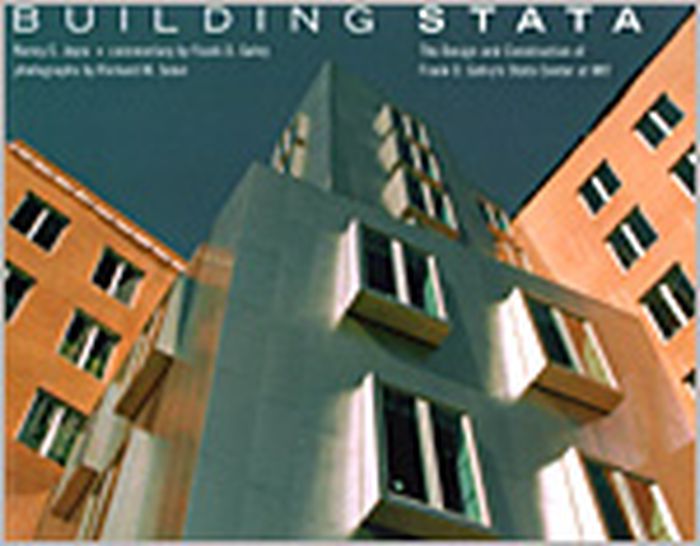
This book chronicles the planning and construction process of the Frank Gehry-designed Ray and Maria Stata Center at MIT. Taking us from the historical background and architectural context at MIT through the interaction of the clients' needs and the architect's vision to the choice of building materials and construction methods, "Building Stata" offers a detailed look at the evolution of a major work by a master architect. The purpose of the Stata Center is to bring the "intelligence sciences" - computer science, artificial intelligence, information and decision systems, linguistics, and philosophy - together into a space that emphasizes research-focused collaboration. Frank Gehry's design integrates flexible and interconnected workspaces and incorporates a series of steps from public to private space, with places for social and intellectual interaction on lower levels giving way to space for study and contemplation on the upper floors; thus a two-level warehouse-like space is topped by two towers. The Center is wrapped around a series of outdoor terraces visible from a central court in both towers. The characteristic Gehry curves are clad in metal, the more block-like elements in brick. The architectural drawings and photographs in "Building Stata" document the making of the Stata Center from concept to concrete reality. The photographs by Richard Sobol portray a work in progress, evoking the beauty of its architectural form and capturing the telling detail - the building's sculptured shape against a clear blue sky, or construction workers perched on a massive curve of metal.
Building Stata : the design and construction of Frank O. Gehry's Stata Center at MIT
Actions:
Price:
$37.50
(available to order)
Summary:
This book chronicles the planning and construction process of the Frank Gehry-designed Ray and Maria Stata Center at MIT. Taking us from the historical background and architectural context at MIT through the interaction of the clients' needs and the architect's vision to the choice of building materials and construction methods, "Building Stata" offers a detailed look at the evolution of a major work by a master architect. The purpose of the Stata Center is to bring the "intelligence sciences" - computer science, artificial intelligence, information and decision systems, linguistics, and philosophy - together into a space that emphasizes research-focused collaboration. Frank Gehry's design integrates flexible and interconnected workspaces and incorporates a series of steps from public to private space, with places for social and intellectual interaction on lower levels giving way to space for study and contemplation on the upper floors; thus a two-level warehouse-like space is topped by two towers. The Center is wrapped around a series of outdoor terraces visible from a central court in both towers. The characteristic Gehry curves are clad in metal, the more block-like elements in brick. The architectural drawings and photographs in "Building Stata" document the making of the Stata Center from concept to concrete reality. The photographs by Richard Sobol portray a work in progress, evoking the beauty of its architectural form and capturing the telling detail - the building's sculptured shape against a clear blue sky, or construction workers perched on a massive curve of metal.
Form:
books
books
Publication:
May 2004, Cambridge, Mass.
May 2004, Cambridge, Mass.
Subject:
Architecture Monographs
Architecture Monographs
Form:
books
books
Title:
Forensic architecture
Forensic architecture
Actions:
Price:
$49.95
(available to order)
Summary:
In recent years, the group Forensic Architecture began using novel research methods to undertake a series of investigations into human rights abuses. Today, the group provides crucial evidence for international courts and works with a wide range of activist groups, NGOs, Amnesty International, and the UN. Forensic Architecture has not only shed new light on human rights(...)
$49.95
(available to order)
Summary:
In recent years, the group Forensic Architecture began using novel research methods to undertake a series of investigations into human rights abuses. Today, the group provides crucial evidence for international courts and works with a wide range of activist groups, NGOs, Amnesty International, and the UN. Forensic Architecture has not only shed new light on human rights(...)
Title:
Forensic architecture
Actions:
Price:
$49.95
(available to order)
Summary:
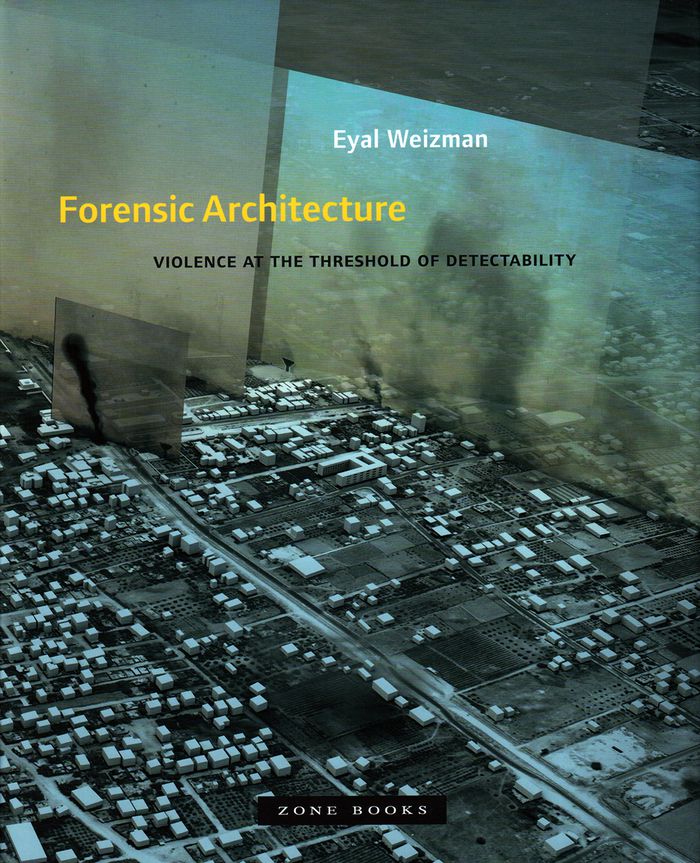
In recent years, the group Forensic Architecture began using novel research methods to undertake a series of investigations into human rights abuses. Today, the group provides crucial evidence for international courts and works with a wide range of activist groups, NGOs, Amnesty International, and the UN. Forensic Architecture has not only shed new light on human rights violations and state crimes across the globe, but has also created a new form of investigative practice that bears its name. The group uses architecture as an optical device to investigate armed conflicts and environmental destruction, as well as to cross-reference a variety of evidence sources, such as new media, remote sensing, material analysis, witness testimony, and crowd-sourcing. In "Forensic architecture", Eyal Weizman, the group’s founder, provides, for the first time, an in-depth introduction to the history, practice, assumptions, potentials, and double binds of this practice. The book includes an extensive array of images, maps, and detailed documentation that records the intricate work the group has performed. Traversing multiple scales and durations, the case studies in this volume include the analysis of the shrapnel fragments in a room struck by drones in Pakistan, the reconstruction of a contested shooting in the West Bank, the architectural recreation of a secret Syrian detention center from the memory of its survivors, a blow-by-blow account of a day-long battle in Gaza, and an investigation of environmental violence and climate change in the Guatemalan highlands and elsewhere.
Forensic architecture
Actions:
Price:
$49.95
(available to order)
Summary:
In recent years, the group Forensic Architecture began using novel research methods to undertake a series of investigations into human rights abuses. Today, the group provides crucial evidence for international courts and works with a wide range of activist groups, NGOs, Amnesty International, and the UN. Forensic Architecture has not only shed new light on human rights violations and state crimes across the globe, but has also created a new form of investigative practice that bears its name. The group uses architecture as an optical device to investigate armed conflicts and environmental destruction, as well as to cross-reference a variety of evidence sources, such as new media, remote sensing, material analysis, witness testimony, and crowd-sourcing. In "Forensic architecture", Eyal Weizman, the group’s founder, provides, for the first time, an in-depth introduction to the history, practice, assumptions, potentials, and double binds of this practice. The book includes an extensive array of images, maps, and detailed documentation that records the intricate work the group has performed. Traversing multiple scales and durations, the case studies in this volume include the analysis of the shrapnel fragments in a room struck by drones in Pakistan, the reconstruction of a contested shooting in the West Bank, the architectural recreation of a secret Syrian detention center from the memory of its survivors, a blow-by-blow account of a day-long battle in Gaza, and an investigation of environmental violence and climate change in the Guatemalan highlands and elsewhere.
Form:
books
books
Publication:
April 2017
April 2017
Subject:
Architectural Theory
Architectural Theory
Form:
books
books
Actions:
Price:
$71.95
(available to order)
Summary:
Although many people view virtual reality as a totally new phenomenon, it has its foundations in an unrecognized history of immersive images. Indeed, the search for illusionary visual space can be traced back to antiquity. In this book Oliver Grau shows how virtual art fits into the art history of illusion and immersion. He describes the metamorphosis of the concepts of(...)
$71.95
(available to order)
Summary:
Although many people view virtual reality as a totally new phenomenon, it has its foundations in an unrecognized history of immersive images. Indeed, the search for illusionary visual space can be traced back to antiquity. In this book Oliver Grau shows how virtual art fits into the art history of illusion and immersion. He describes the metamorphosis of the concepts of(...)
Title:
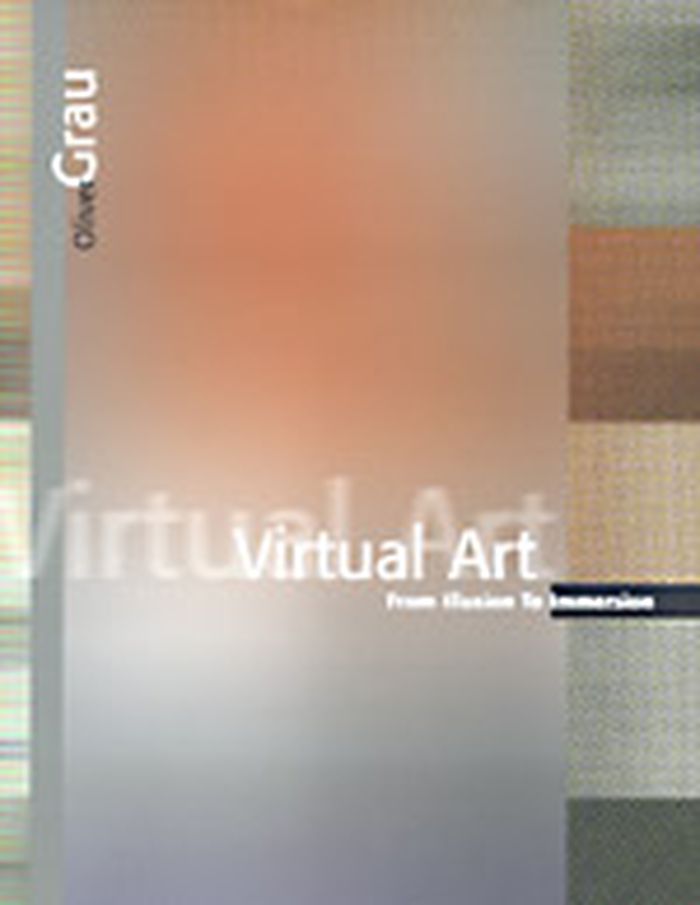
Virtual art from illusion to immersion
Actions:
Price:
$71.95
(available to order)
Summary:
Although many people view virtual reality as a totally new phenomenon, it has its foundations in an unrecognized history of immersive images. Indeed, the search for illusionary visual space can be traced back to antiquity. In this book Oliver Grau shows how virtual art fits into the art history of illusion and immersion. He describes the metamorphosis of the concepts of art and the image and relates those concepts to interactive art, interface design, agents, telepresence, and image evolution. Grau retells art history as media history, helping us to understand the phenomenon of virtual reality beyond the hype. Grau shows how each epoch used the technical means available to produce maximum illusion. He discusses frescoes such as those in the Villa dei Misteri in Pompeii and the gardens of the Villa Livia near Primaporta, Renaissance and Baroque illusion spaces, and panoramas, which were the most developed form of illusion achieved through traditional methods of painting and the mass image medium before film. Through a detailed analysis of perhaps the most important German panorama, Anton von Werner's 1883 The Battle of Sedan, Grau shows how immersion produced emotional responses. He traces immersive cinema through Cinerama, Sensorama, Expanded Cinema, 3-D, Omnimax and IMAX, and the head mounted display with its military origins. He also examines those characteristics of virtual reality that distinguish it from earlier forms of illusionary art. His analysis draws on the work of contemporary artists and groups ART+COM, Maurice Benayoun, Charlotte Davies, Monika Fleischmann, Ken Goldberg, Agnes Hegedues, Eduardo Kac, Knowbotic Research, Laurent Mignonneau, Michael Naimark, Simon Penny, Daniela Plewe, Paul Sermon, Jeffrey Shaw, Karl Sims, Christa Sommerer, and Wolfgang Strauss. Grau offers not just a history of illusionary space but also a theoretical framework for analyzing its phenomenologies, functions, and strategies throughout history and into the future.
Virtual art from illusion to immersion
Actions:
Price:
$71.95
(available to order)
Summary:
Although many people view virtual reality as a totally new phenomenon, it has its foundations in an unrecognized history of immersive images. Indeed, the search for illusionary visual space can be traced back to antiquity. In this book Oliver Grau shows how virtual art fits into the art history of illusion and immersion. He describes the metamorphosis of the concepts of art and the image and relates those concepts to interactive art, interface design, agents, telepresence, and image evolution. Grau retells art history as media history, helping us to understand the phenomenon of virtual reality beyond the hype. Grau shows how each epoch used the technical means available to produce maximum illusion. He discusses frescoes such as those in the Villa dei Misteri in Pompeii and the gardens of the Villa Livia near Primaporta, Renaissance and Baroque illusion spaces, and panoramas, which were the most developed form of illusion achieved through traditional methods of painting and the mass image medium before film. Through a detailed analysis of perhaps the most important German panorama, Anton von Werner's 1883 The Battle of Sedan, Grau shows how immersion produced emotional responses. He traces immersive cinema through Cinerama, Sensorama, Expanded Cinema, 3-D, Omnimax and IMAX, and the head mounted display with its military origins. He also examines those characteristics of virtual reality that distinguish it from earlier forms of illusionary art. His analysis draws on the work of contemporary artists and groups ART+COM, Maurice Benayoun, Charlotte Davies, Monika Fleischmann, Ken Goldberg, Agnes Hegedues, Eduardo Kac, Knowbotic Research, Laurent Mignonneau, Michael Naimark, Simon Penny, Daniela Plewe, Paul Sermon, Jeffrey Shaw, Karl Sims, Christa Sommerer, and Wolfgang Strauss. Grau offers not just a history of illusionary space but also a theoretical framework for analyzing its phenomenologies, functions, and strategies throughout history and into the future.
Form:
books
books
Publication:
January 1900, Cambridge, Mass.
January 1900, Cambridge, Mass.
Subject:
Epistemology
Epistemology


