


717 Results
Form:
books
books
Actions:
Price:
$33.95
(available to order)
Summary:
'Darkness is not empty,' writes Teju Cole in ''Black Paper,'' a book that meditates on what it means to sustain our humanity—and witness the humanity of others—in a time of darkness. One of the most celebrated essayists of his generation, Cole here plays variations on the essay form, modeling ways to attend to experience—not just to take in but to think critically about(...)
Title:
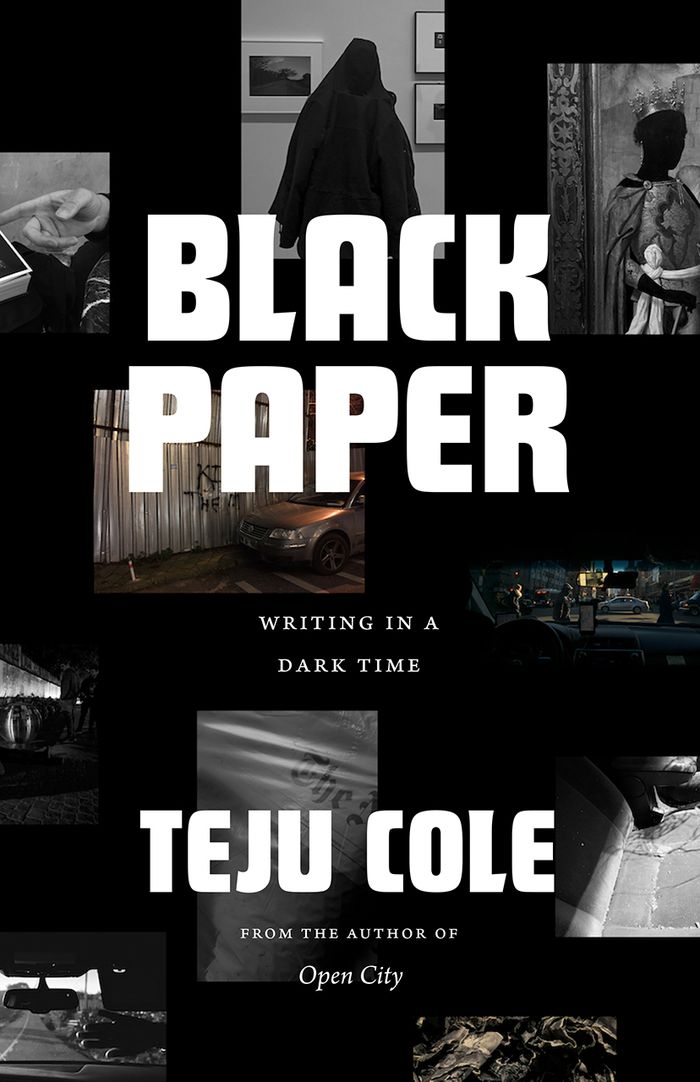
Black paper : writing in a dark time
Actions:
Price:
$33.95
(available to order)
Summary:
'Darkness is not empty,' writes Teju Cole in ''Black Paper,'' a book that meditates on what it means to sustain our humanity—and witness the humanity of others—in a time of darkness. One of the most celebrated essayists of his generation, Cole here plays variations on the essay form, modeling ways to attend to experience—not just to take in but to think critically about what we sense and what we don’t. Wide-ranging but thematically unified, the essays address ethical questions about what it means to be human and what it means to bear witness, recognizing how our individual present is informed by a collective past. Cole’s writings in ''Black Paper'' approach the fractured moment of our history through a constellation of interrelated concerns: confrontation with unsettling art, elegies both public and private, the defense of writing in a time of political upheaval, the role of the color black in the visual arts, the use of shadow in photography, and the links between literature and activism. Throughout, Cole gives us intriguing new ways of thinking about blackness and its numerous connotations. As he describes the carbon-copy process in his epilogue: 'Writing on the top white sheet would transfer the carbon from the black paper onto the bottom white sheet. Black transported the meaning.'
Form:
books
books
Publication:
October 2021
October 2021
Subject:
Social
Social
Form:
books
books
Actions:
Price:
$76.00
(available to order)
Summary:
Under the label Atelier Zanolli, a fantastic world of silk fabrics painted and imprinted with patterns, opulently embroidered cushions, colorful pearl creations, and finely crafted leather and wood articles, was created between 1905 and 1939 in Zurich. The Zanollis had immigrated from Italy in 1905. Their family business was run by Antonietta and her daughters Pia, Lea,(...)
Subject:
Fashion Design
Fashion Design
Publication:
September 2022
September 2022
Title:
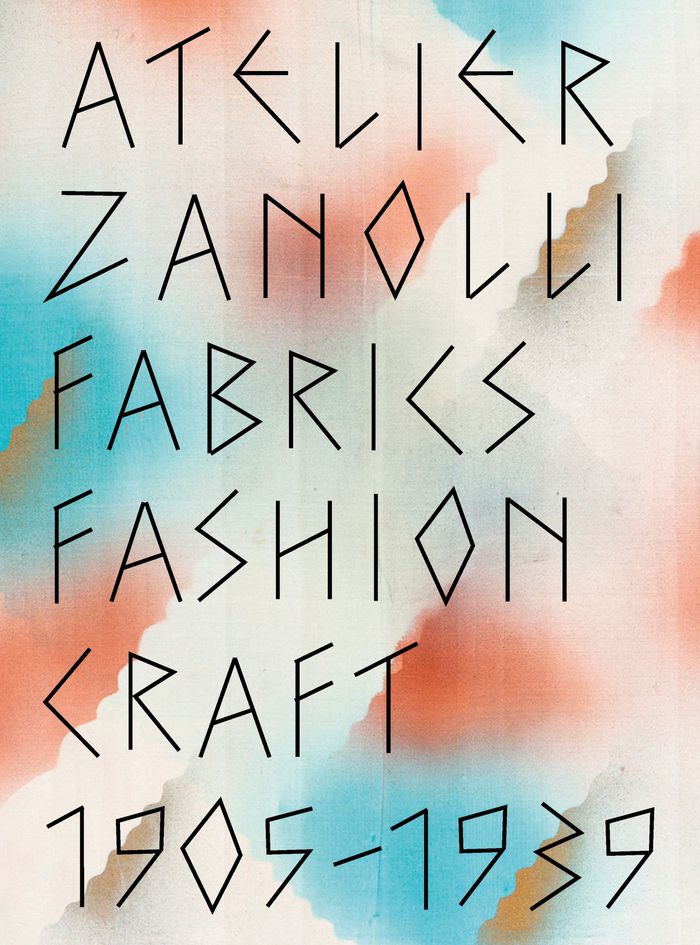
Atelier Zanolli: Fabrics, fashion, craft 1905-1939
Actions:
Price:
$76.00
(available to order)
Summary:
Under the label Atelier Zanolli, a fantastic world of silk fabrics painted and imprinted with patterns, opulently embroidered cushions, colorful pearl creations, and finely crafted leather and wood articles, was created between 1905 and 1939 in Zurich. The Zanollis had immigrated from Italy in 1905. Their family business was run by Antonietta and her daughters Pia, Lea, and Zoe Zanolli. The cultural and stylistic influences manifested in the Zanollis’ visually appealing products range from the avant-garde to an aesthetic forged by a spirit of intellectual national defense against the increasing threat of the totalitarian regimes in Nazi Germany, fascist Italy, and the communist Soviet Union, that was prevalent in Switzerland in the 1930s. Driven by a striving for artistic self-realization, the atelier defied the many economic challenges of the period and carried out many commissions for Zurich’s leading textile businesses and department stores. This book traces the history of Atelier Zanolli, places its work in the context of the growth of Zurich and the Swiss textile industry in the first half of the twentieth century, and for the first time positions the “Zanolli style” internationally. More than six hundred images show the wealth of colors and shapes in a veritable cosmos of textiles and crafted objects, as well as templates, sketches, private photographs, business cards, and letters. The essays illuminate the techniques and work processes used, discuss entire motif families and unique designs, and grant rare comprehensive insight into the tastes of the time.
Form:
books
books
Publication:
September 2022
September 2022
Subject:
Fashion Design
Fashion Design
Form:
books
books

Actions:
Price:
$22.00
(available to order)
Summary:
Cities participate in the production of meaning by providing places populated with objects for words to refer to. Inscriptions on these objects (labels, billboards, newspapers, graffiti) provide another layer of meaning. And today, the flow of digital information - from one device to another in the urban scene - creates a digital network that also exists in physical(...)
Subject:
Architectural Theory
Architectural Theory
Publication:
January 1900, Cambridge, Mass.
January 1900, Cambridge, Mass.
Title:
Placing words : symbols, space and the city
Actions:
Price:
$22.00
(available to order)
Summary:
Cities participate in the production of meaning by providing places populated with objects for words to refer to. Inscriptions on these objects (labels, billboards, newspapers, graffiti) provide another layer of meaning. And today, the flow of digital information - from one device to another in the urban scene - creates a digital network that also exists in physical space. "Placing Words" examines this emerging system of spaces, flows, and practices in a series of short essays - snapshots of the city in the twenty-first century. Mitchell questions the necessity of flashy downtown office towers in an age of corporate web sites. He casts the shocked-and-awed Baghdad as a contemporary Guernica. He describes architectural makeovers throughout history, listing Le Corbusier's Fab Five Points of difference between new and old architecture, and he discusses the architecture of Manolo Blahniks. He pens an open letter to the Secretary of Defense recommending architectural features to include in torture chambers. He compares Baudelaire, the Parisian flaneur, to Spiderman, the Manhattan traceur. He describes the iPod-like galleries of the renovated MoMA and he recognizes the camera phone as the latest step in a process of image mobilization that began when artists stopped painting on walls and began making pictures on small pieces of wood, canvas, or paper. The endless flow of information, he makes clear, is not only more pervasive and efficient than ever, it is also generating new cultural complexities.
Form:
books
books
Publication:
January 1900, Cambridge, Mass.
January 1900, Cambridge, Mass.
Subject:
Architectural Theory
Architectural Theory
Form:
books
books
Title:
Privacy a manifesto
Privacy a manifesto
Actions:
Price:
$24.95
(available to order)
Summary:
What ever happened to privacy? The simple right to be left alone? Surveillance cameras track our movements. Governments monitor our phone calls, e-mails, and Internet habits. Insurance companies know what drugs we take. Banks and credit agencies keep tabs on our smallest purchases. And new technologies - which gather, store, and share information as never before - have(...)
Title:
Privacy a manifesto
Actions:
Price:
$24.95
(available to order)
Summary:
What ever happened to privacy? The simple right to be left alone? Surveillance cameras track our movements. Governments monitor our phone calls, e-mails, and Internet habits. Insurance companies know what drugs we take. Banks and credit agencies keep tabs on our smallest purchases. And new technologies - which gather, store, and share information as never before - have made all of this possible. But, as the acclaimed social thinker Wolfgang Sofsky shows in this brief and powerful defense of privacy, neither technology nor fears of terrorism deserve all the blame. Rather, through indifference and the desire for attention, we have been accomplices in the loss of our privacy. When we aren't resigning ourselves to privacy's disappearance as the inevitable price of living in a new age, we are eagerly embracing opportunities to divulge personal information to people we know - and, increasingly, to people we don't. Dramatically demonstrating how much privacy we have already surrendered, Sofsky describes a day in the life of an average modern citizen - in other words, a person under almost constant scrutiny. He also briefly traces the changing status of privacy from ancient Rome to today, explains how liberty and freedom of thought depend on privacy, and points to some of the places where privacy is under greatest threat, from health to personal space. Privacy is a timely and compelling reminder of just how important privacy is - and just how devastating its loss would be.
Form:
books
books
Publication:
October 2008, Princeton, Oxford
October 2008, Princeton, Oxford
Subject:
Critical Theory
Critical Theory
Form:
books
books

Actions:
Price:
$25.00
(available to order)
Summary:
Chute de la biodiversité, inondations, feux de forêt : les conséquences de la crise environnementale sont chaque jour plus visibles. Malgré son importance dans l’actualité récente, la défense de l’environnement ne date pas d’hier. En 1982, le Québec est témoin de la naissance du Réseau québécois des groupes écologistes (RQGE). Durant plus de quatre décennies, ce réseau(...)
Title:
Le réseau québécois des groupes écologistes : Une perspective dissidente sur le mouvement environnental au Québec (1982-2022)
Actions:
Price:
$25.00
(available to order)
Summary:
Chute de la biodiversité, inondations, feux de forêt : les conséquences de la crise environnementale sont chaque jour plus visibles. Malgré son importance dans l’actualité récente, la défense de l’environnement ne date pas d’hier. En 1982, le Québec est témoin de la naissance du Réseau québécois des groupes écologistes (RQGE). Durant plus de quatre décennies, ce réseau sera de toutes les luttes pour la défense du territoire. La protection des forêts, la gestion des déchets et la préservation de l’eau seront sur la longue liste des luttes à mener. Dans cet ouvrage, on découvre les batailles ayant ponctué quarante ans de dévouement à la cause environnementale.
Form:
books
books
Publication:
December 2023
December 2023
Subject:
Environment and environmental theory
Environment and environmental theory
Form:
books
books

Actions:
Price:
$89.95
(available to order)
Summary:
Dans quelques années, la tour Signal prendra place dans la panorama de La Défense et le ciel de paris. Plus d'un siècle après l'inauguration de la tour Eiffel, près de quarante ans après celle de la tour Maine Montparnasse, la France réfléchit enfin à l'urbanisme vertical avec lequel elle entretient des relations passionnelles depuis toujours. Ce livre est l'histoire du(...)
Title:
Le tour signal: le nouveau défi pour la défence
Actions:
Price:
$89.95
(available to order)
Summary:
Dans quelques années, la tour Signal prendra place dans la panorama de La Défense et le ciel de paris. Plus d'un siècle après l'inauguration de la tour Eiffel, près de quarante ans après celle de la tour Maine Montparnasse, la France réfléchit enfin à l'urbanisme vertical avec lequel elle entretient des relations passionnelles depuis toujours. Ce livre est l'histoire du projet organisé par l'Etablissement public d'aménagement de la Défense, l'EPAD, pour la construction d'une tour qui fera radicalement évoluer cette typologie architecturale. Cet appel à projets autour de la construction d'une tour mixte alliant bureaux, commerces, hôtels et appartements a mis à contribution les meilleurs architectes mondiaux.
Form:
books
books
Publication:
January 1900, Paris
January 1900, Paris
Subject:
Architecture since 1900, Europe
Architecture since 1900, Europe
Form:
books
books
Title:
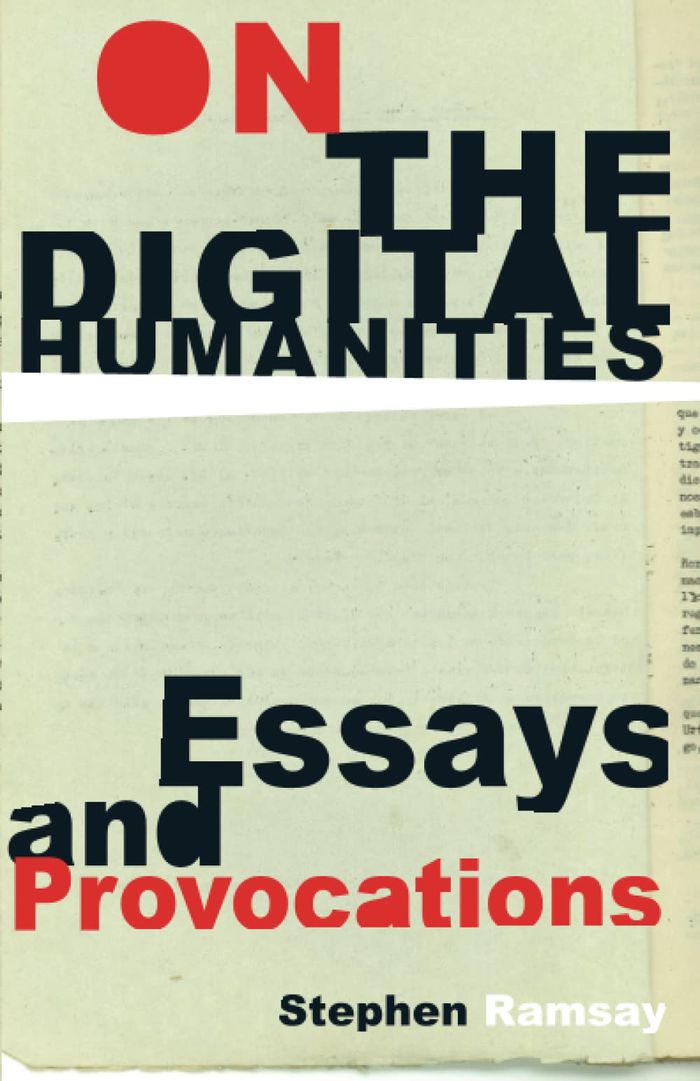
On the digital humanities
On the digital humanities
Actions:
Price:
$35.99
(available to order)
Summary:
Since its inception, the digital humanities has been repeatedly attacked as a threat to the humanities: warnings from literary and cultural theorists of technology overtaking English departments and the mechanization of teaching have peppered popular media. Stephen Ramsay’s ''On the digital humanities'', a collection of essays spanning the personal to the polemic, is a(...)
Title:
On the digital humanities
Actions:
Price:
$35.99
(available to order)
Summary:
Since its inception, the digital humanities has been repeatedly attacked as a threat to the humanities: warnings from literary and cultural theorists of technology overtaking English departments and the mechanization of teaching have peppered popular media. Stephen Ramsay’s ''On the digital humanities'', a collection of essays spanning the personal to the polemic, is a spirited defense of the field of digital humanities. A founding figure in what was once known as 'humanities computing,' Ramsay has a well-known and contentious relationship with what is now called the digital humanities (DH). Here Ramsay collects and updates his most influential and notorious essays and speeches from the past fifteen years, considering DH from an array of practical and theoretical perspectives. The essays pursue a broad variety of themes, including the nature of data and its place in more conventional notions of text and interpretation, the relationship between the constraints of computation and the more open-ended nature of the humanities, the positioning of practical skills and infrastructures in both research and pedagogical contexts, the status of DH as a program for political and social action, and personal reflections on the author’s journey into the field as both a theorist and a technologist. These wide-ranging essays all center around one idea: that DH not forsake its connection to the humanities. While 'digital humanities' may sound like an entirely new form of engagement with the artifacts of human culture, Ramsay argues that the field well reveals what is most essential to humanistic inquiry.
Form:
books
books
Publication:
August 2023
August 2023
Subject:
Archive, library and the digital
Archive, library and the digital
Form:
books
books
Title:
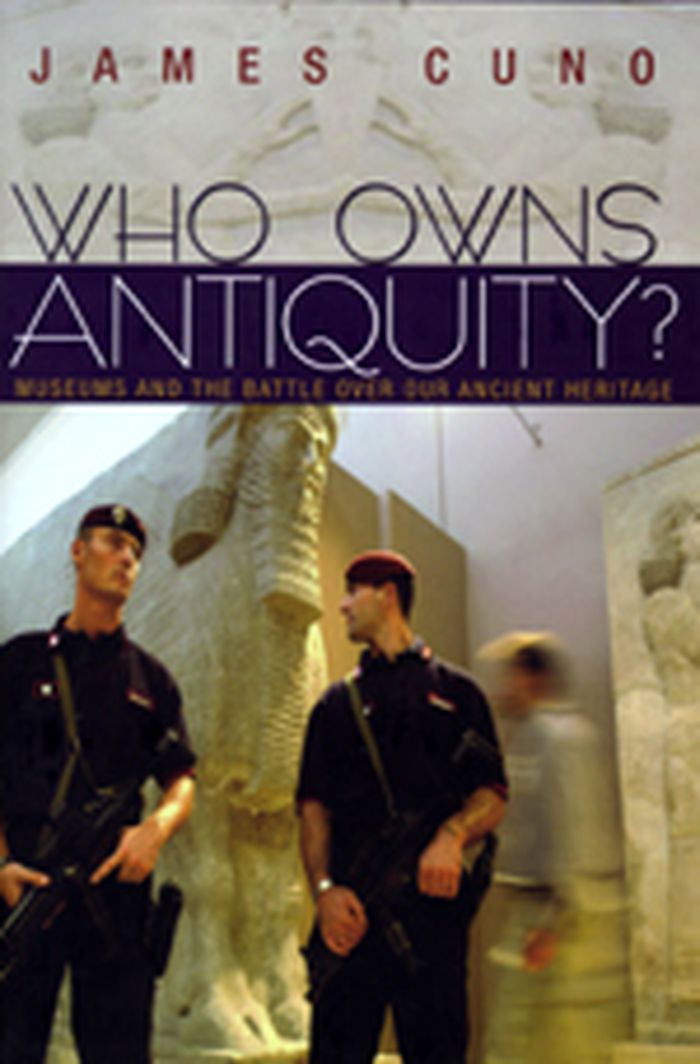
Who owns antiquity?
Who owns antiquity?
Actions:
Price:
$24.95
(available to order)
Summary:
Whether antiquities should be returned to the countries where they were found is one of the most urgent and controversial issues in the art world today, and it has pitted museums, private collectors, and dealers against source countries, archaeologists, and academics. Maintaining that the acquisition of undocumented antiquities by museums encourages the looting of(...)
Title:
Who owns antiquity?
Actions:
Price:
$24.95
(available to order)
Summary:
Whether antiquities should be returned to the countries where they were found is one of the most urgent and controversial issues in the art world today, and it has pitted museums, private collectors, and dealers against source countries, archaeologists, and academics. Maintaining that the acquisition of undocumented antiquities by museums encourages the looting of archaeological sites, countries such as Italy, Greece, Egypt, Turkey, and China have claimed ancient artifacts as state property, called for their return from museums around the world, and passed laws against their future export. But in Who Owns Antiquity?, one of the world's leading museum directors vigorously challenges this nationalistic position, arguing that it is damaging and often disingenuous. "Antiquities," James Cuno argues, "are the cultural property of all humankind," "evidence of the world's ancient past and not that of a particular modern nation. They comprise antiquity, and antiquity knows no borders." Cuno argues that nationalistic retention and reclamation policies impede common access to this common heritage and encourage a dubious and dangerous politicization of antiquities--and of culture itself. Antiquities need to be protected from looting but also from nationalistic identity politics. To do this, Cuno calls for measures to broaden rather than restrict international access to antiquities. He advocates restoration of the system under which source countries would share newly discovered artifacts in exchange for archaeological help, and he argues that museums should again be allowed reasonable ways to acquire undocumented antiquities. The first extended defense of the side of museums in the struggle over antiquities, Who Owns Antiquity? is sure to be as important as it is controversial.
Form:
books
books
Publication:
May 2008, Princeton, Oxford
May 2008, Princeton, Oxford
Subject:
Museology
Museology
Form:
books
books

Actions:
Price:
$27.95
(available to order)
Summary:
Jumelant fiction et essai, Lise Bisonnette présente l'histoire d'une maison du XIXè siècle nommée La Flouve et son projet résidentiel contemporain en collaboration avec l'architecte québécois Pierre Thibault. Au coeur de ce récit, les livres et la défense de l'inclassable occupent une place priviligiée.
Title:
La Flouve : le parfum de Balzac
Actions:
Price:
$27.95
(available to order)
Summary:
Jumelant fiction et essai, Lise Bisonnette présente l'histoire d'une maison du XIXè siècle nommée La Flouve et son projet résidentiel contemporain en collaboration avec l'architecte québécois Pierre Thibault. Au coeur de ce récit, les livres et la défense de l'inclassable occupent une place priviligiée.
Form:
books
books
Publication:
April 2006, Montréal
April 2006, Montréal
Subject:
Architecture de Montréal
Architecture de Montréal
Form:
books
books

Actions:
Price:
$150.00
(available to order)
Summary:
Attentifs au contexte culturel de leurs interventions (comme la tradition du Véda en Inde) et à l'héritage de l'architecture moderne (tour Opus 12, La Défense), les architectes Denis Valode et Jean Pistre conçoivent la tour comme un objet de recherche à la fois fonctionnel et esthétique qui doit répondre aux exigences de l'urbanité de demain : respecter l'environnement,(...)
Subject:
Architecture Monographs
Architecture Monographs
Publication:
March 2010
March 2010
Title:
Tours: Denis Valodre et Jean Pistre
Actions:
Price:
$150.00
(available to order)
Summary:
Attentifs au contexte culturel de leurs interventions (comme la tradition du Véda en Inde) et à l'héritage de l'architecture moderne (tour Opus 12, La Défense), les architectes Denis Valode et Jean Pistre conçoivent la tour comme un objet de recherche à la fois fonctionnel et esthétique qui doit répondre aux exigences de l'urbanité de demain : respecter l'environnement, économiser l'énergie et réduire l'emprise au sol, inventer des manières d'habiter les hauteurs. Certaines tours se peuplent d'arbres et de jardins (tour Generali, La Défense), d'autres inscrivent dans leur dessin la course du soleil (tour Saint-Denis, Saint-Denis/Aubervilliers). À travers douze exemples, douze tours réalisées par l'agence Valode & Pistre dans le monde entier (Russie, Liban, France, Inde, Chine), Éric Reinhardt révèle les principes et les valeurs qui fondent leur architecture.
Form:
books
books
Publication:
March 2010
March 2010
Subject:
Architecture Monographs
Architecture Monographs


