


6673 Results
Form:
books
books
Actions:
Price:
$64.95
(available to order)
Summary:
Cet ouvrage questionne une histoire récente du design où la notion d’ornement se donne au cœur de nouvelles logiques de conception et de production. Avec l’avènement du numérique et la redéfinition du rôle de l’ornement, la forme ornementale se donne à présent dans une dimension calculée de morphogenèse : sa dynamique s’ancre dans les processus de croissance de la nature.(...)
$64.95
(available to order)
Summary:
Cet ouvrage questionne une histoire récente du design où la notion d’ornement se donne au cœur de nouvelles logiques de conception et de production. Avec l’avènement du numérique et la redéfinition du rôle de l’ornement, la forme ornementale se donne à présent dans une dimension calculée de morphogenèse : sa dynamique s’ancre dans les processus de croissance de la nature.(...)
Title:
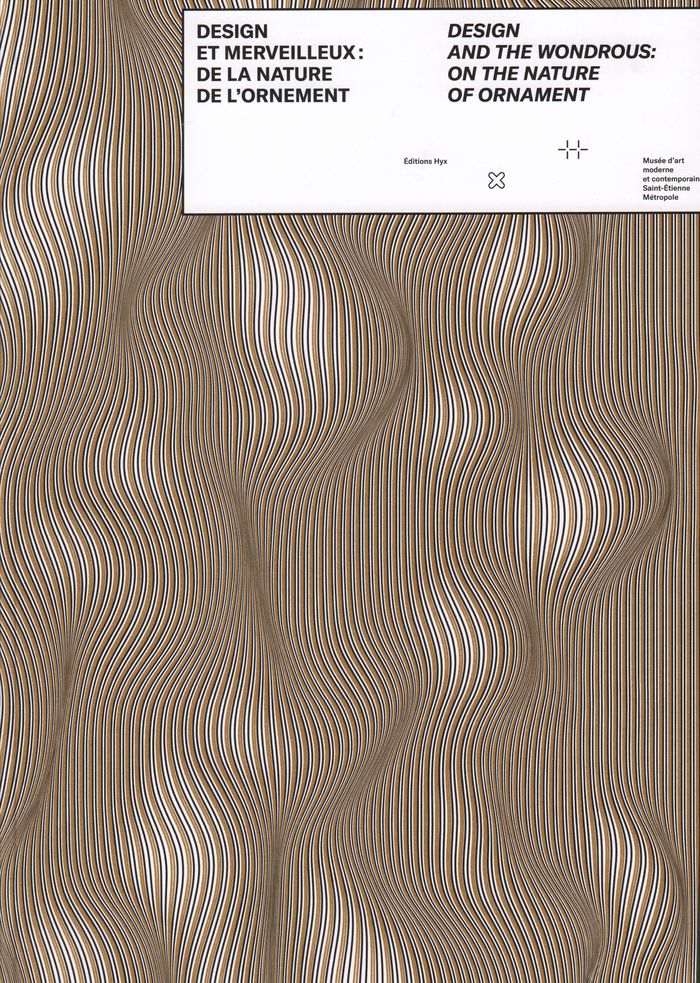
Design et merveilleux : de la nature de l'ornement / Design and the wondrous: on the nature of ornament
Actions:
Price:
$64.95
(available to order)
Summary:
Cet ouvrage questionne une histoire récente du design où la notion d’ornement se donne au cœur de nouvelles logiques de conception et de production. Avec l’avènement du numérique et la redéfinition du rôle de l’ornement, la forme ornementale se donne à présent dans une dimension calculée de morphogenèse : sa dynamique s’ancre dans les processus de croissance de la nature. Dans toutes ces réalisations, la dimension générative de la nature a conféré à l’ornement un rôle structurel nouveau. S'appuyant sur une sélection d'œuvres de plus de cinquante artistes, , quatre essais (Marie-Ange Brayer, Spyros Papapetros, Martine Dancer-Mourès et Sophie Fétro), nous donnent à lire et comprendre, l'évolution du design et de l'ornement, à l'ère du numérique. / This volume presents a new narrative of design, situated somewhere between plant life and ornament, nature and artifice. Through essays by several authors it explores the ornament’s role with respect to morphogenesis, by which the object is continually transformed through an evolving dynamic of forms. With the arrival of the digital age, the ornament’s role in design has been greatly modified. No longer a simple motif, it is used as an animated form. At the intersection of information sciences and biology, designers utilise 3D printing to create carefully calculated objects based on organic growth. With contributions by Spyros Papapetros, Marie-Ange Brayer, and others.
Design et merveilleux : de la nature de l'ornement / Design and the wondrous: on the nature of ornament
Actions:
Price:
$64.95
(available to order)
Summary:
Cet ouvrage questionne une histoire récente du design où la notion d’ornement se donne au cœur de nouvelles logiques de conception et de production. Avec l’avènement du numérique et la redéfinition du rôle de l’ornement, la forme ornementale se donne à présent dans une dimension calculée de morphogenèse : sa dynamique s’ancre dans les processus de croissance de la nature. Dans toutes ces réalisations, la dimension générative de la nature a conféré à l’ornement un rôle structurel nouveau. S'appuyant sur une sélection d'œuvres de plus de cinquante artistes, , quatre essais (Marie-Ange Brayer, Spyros Papapetros, Martine Dancer-Mourès et Sophie Fétro), nous donnent à lire et comprendre, l'évolution du design et de l'ornement, à l'ère du numérique. / This volume presents a new narrative of design, situated somewhere between plant life and ornament, nature and artifice. Through essays by several authors it explores the ornament’s role with respect to morphogenesis, by which the object is continually transformed through an evolving dynamic of forms. With the arrival of the digital age, the ornament’s role in design has been greatly modified. No longer a simple motif, it is used as an animated form. At the intersection of information sciences and biology, designers utilise 3D printing to create carefully calculated objects based on organic growth. With contributions by Spyros Papapetros, Marie-Ange Brayer, and others.
Form:
books
books
Publication:
May 2019
May 2019
Subject:
Design Theory
Design Theory
Form:
books
books
Title:
Mining photography
Mining photography
Actions:
Price:
$63.00
(available to order)
Summary:
Photography has always depended on the extraction and exploitation of so-called natural raw materials. Having started out using copper, coal, silver, and paper—the raw materials of analogue image production in the nineteenth and twentieth centuries—photography now relies, in the age of the smartphone, on rare earths and metals like coltan, cobalt, and europium. The(...)
$63.00
(available to order)
Summary:
Photography has always depended on the extraction and exploitation of so-called natural raw materials. Having started out using copper, coal, silver, and paper—the raw materials of analogue image production in the nineteenth and twentieth centuries—photography now relies, in the age of the smartphone, on rare earths and metals like coltan, cobalt, and europium. The(...)
Publication:
March 2023
March 2023
Title:
Mining photography
Actions:
Price:
$63.00
(available to order)
Summary:
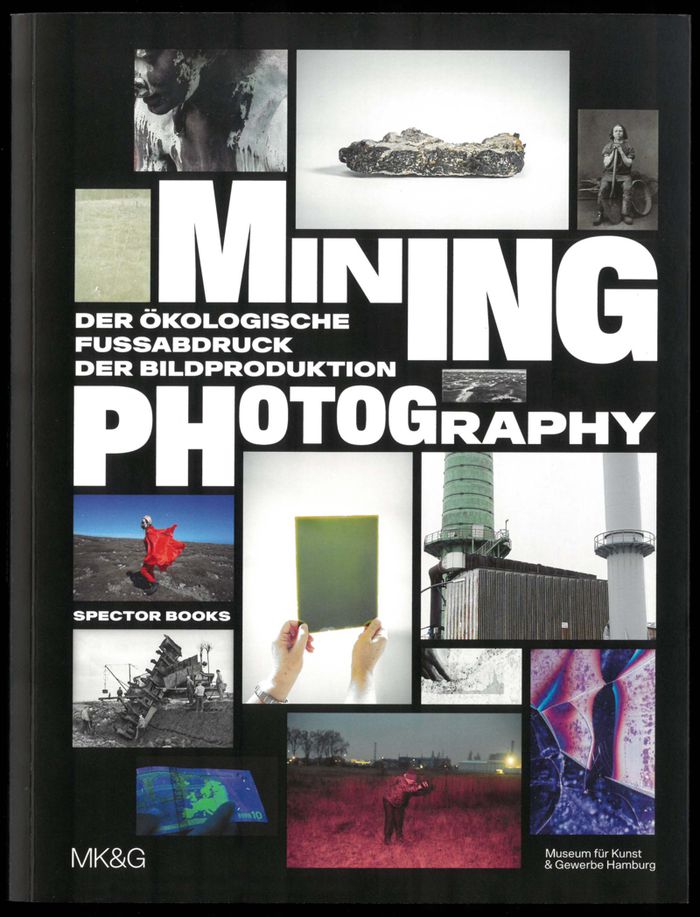
Photography has always depended on the extraction and exploitation of so-called natural raw materials. Having started out using copper, coal, silver, and paper—the raw materials of analogue image production in the nineteenth and twentieth centuries—photography now relies, in the age of the smartphone, on rare earths and metals like coltan, cobalt, and europium. The exhibition focuses on the history of key raw materials utilized in photography and establishes a connection between the history of their extraction, their disposal, and climate change. Looking at historical and contemporary works, it tells the story of photography as a history of industrial production and demonstrates that the medium is deeply implicated in human-induced changes to nature. The exhibition shows contemporary works by a range of photographers and artists, including Ignacio Acosta, Lisa Barnard, F Cartier, Susanne Kriemann, Mary Mattingly, Daphné Nan Le Sergent, Lisa Rave, Alison Rossiter, Metabolic Studio’s Optics Division, Robert Smithson, Simon Starling, Anaïs Tondeur, James Welling, Noa Yafe and Tobias Zielony, along with historical works by Eduard Christian Arning, Hermann Biow, Oscar and Theodor Hofmeister, Jürgen Friedrich Mahrt, Hermann Reichling, and others, and historical material from the Agfa Foto-Historama in Leverkusen, the Eastman Kodak Archive in Rochester and the FOMU Photo Museum in Antwerp as well as mineral samples collected by Alexander von Humboldt from the collection of the Museum für Naturkunde, Berlin.
Mining photography
Actions:
Price:
$63.00
(available to order)
Summary:
Photography has always depended on the extraction and exploitation of so-called natural raw materials. Having started out using copper, coal, silver, and paper—the raw materials of analogue image production in the nineteenth and twentieth centuries—photography now relies, in the age of the smartphone, on rare earths and metals like coltan, cobalt, and europium. The exhibition focuses on the history of key raw materials utilized in photography and establishes a connection between the history of their extraction, their disposal, and climate change. Looking at historical and contemporary works, it tells the story of photography as a history of industrial production and demonstrates that the medium is deeply implicated in human-induced changes to nature. The exhibition shows contemporary works by a range of photographers and artists, including Ignacio Acosta, Lisa Barnard, F Cartier, Susanne Kriemann, Mary Mattingly, Daphné Nan Le Sergent, Lisa Rave, Alison Rossiter, Metabolic Studio’s Optics Division, Robert Smithson, Simon Starling, Anaïs Tondeur, James Welling, Noa Yafe and Tobias Zielony, along with historical works by Eduard Christian Arning, Hermann Biow, Oscar and Theodor Hofmeister, Jürgen Friedrich Mahrt, Hermann Reichling, and others, and historical material from the Agfa Foto-Historama in Leverkusen, the Eastman Kodak Archive in Rochester and the FOMU Photo Museum in Antwerp as well as mineral samples collected by Alexander von Humboldt from the collection of the Museum für Naturkunde, Berlin.
Form:
books
books
Publication:
March 2023
March 2023
Form:
books
books
Title:
When I was a photographer
When I was a photographer
Actions:
Price:
$32.95
(available to order)
Summary:
Celebrated nineteenth-century photographer—and writer, actor, caricaturist, inventor, and balloonist—Félix Nadar published this memoir of his photographic life in 1900 at the age of eighty. Composed as a series of vignettes (we might view them as a series of “written photographs”), this intelligent and witty book offers stories of Nadar’s experiences in the early years of(...)
$32.95
(available to order)
Summary:
Celebrated nineteenth-century photographer—and writer, actor, caricaturist, inventor, and balloonist—Félix Nadar published this memoir of his photographic life in 1900 at the age of eighty. Composed as a series of vignettes (we might view them as a series of “written photographs”), this intelligent and witty book offers stories of Nadar’s experiences in the early years of(...)
Title:
When I was a photographer
Actions:
Price:
$32.95
(available to order)
Summary:
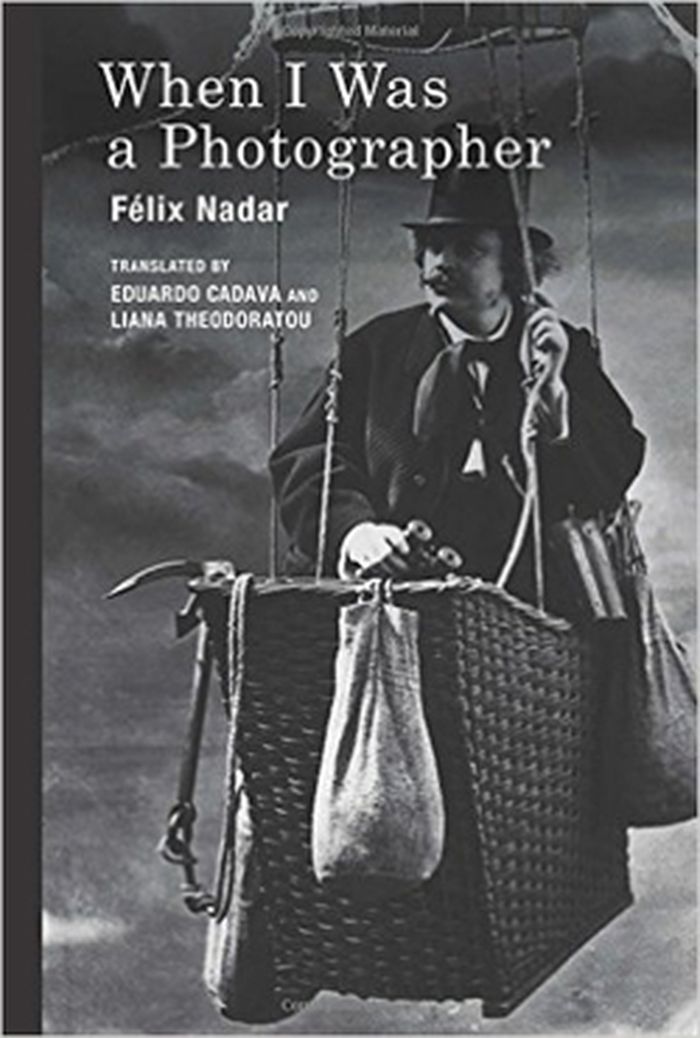
Celebrated nineteenth-century photographer—and writer, actor, caricaturist, inventor, and balloonist—Félix Nadar published this memoir of his photographic life in 1900 at the age of eighty. Composed as a series of vignettes (we might view them as a series of “written photographs”), this intelligent and witty book offers stories of Nadar’s experiences in the early years of photography, memorable character sketches, and meditations on history. It is a classic work, cited by writers from Walter Benjamin to Rosalind Krauss. This is its first and only complete English translation. In When I Was a Photographer, Nadar tells us about his descent into the sewers and catacombs of Paris, where he experimented with the use of artificial lighting, and his ascent into the skies over Paris in a hot air balloon, from which he took the first aerial photographs. He recounts his “postal photography” during the 1870-1871 Siege of Paris—an amazing scheme involving micrographic images and carrier pigeons. He describes technical innovations and important figures in photography, and offers a thoughtful consideration of society and culture; but he also writes entertainingly about such matters as Balzac’s terror of being photographed, the impact of a photograph on a celebrated murder case, and the difference between male and female clients. Nadar’s memoir captures, as surely as his photographs, traces of a vanished era.
When I was a photographer
Actions:
Price:
$32.95
(available to order)
Summary:
Celebrated nineteenth-century photographer—and writer, actor, caricaturist, inventor, and balloonist—Félix Nadar published this memoir of his photographic life in 1900 at the age of eighty. Composed as a series of vignettes (we might view them as a series of “written photographs”), this intelligent and witty book offers stories of Nadar’s experiences in the early years of photography, memorable character sketches, and meditations on history. It is a classic work, cited by writers from Walter Benjamin to Rosalind Krauss. This is its first and only complete English translation. In When I Was a Photographer, Nadar tells us about his descent into the sewers and catacombs of Paris, where he experimented with the use of artificial lighting, and his ascent into the skies over Paris in a hot air balloon, from which he took the first aerial photographs. He recounts his “postal photography” during the 1870-1871 Siege of Paris—an amazing scheme involving micrographic images and carrier pigeons. He describes technical innovations and important figures in photography, and offers a thoughtful consideration of society and culture; but he also writes entertainingly about such matters as Balzac’s terror of being photographed, the impact of a photograph on a celebrated murder case, and the difference between male and female clients. Nadar’s memoir captures, as surely as his photographs, traces of a vanished era.
Form:
books
books
Publication:
August 2015
August 2015
Subject:
Theory of Photography
Theory of Photography
Form:
books
books
Title:
The Sweetsburg archives
The Sweetsburg archives
Actions:
Price:
$25.00
(available in store)
Summary:
Jonathan Reid Sévigny was born and raised in Cowansville, in the Eastern Townships of Quebec, a culture so unique and full of rare and local treasures that become significant to those who grew up there but perhaps seem completely foreign and often tacky to outsiders. It isn’t the most glamorous town, nor does it have any particular sites or landmarks that one would go out(...)
$25.00
(available in store)
Summary:
Jonathan Reid Sévigny was born and raised in Cowansville, in the Eastern Townships of Quebec, a culture so unique and full of rare and local treasures that become significant to those who grew up there but perhaps seem completely foreign and often tacky to outsiders. It isn’t the most glamorous town, nor does it have any particular sites or landmarks that one would go out(...)
Title:
The Sweetsburg archives
Actions:
Price:
$25.00
(available in store)
Summary:
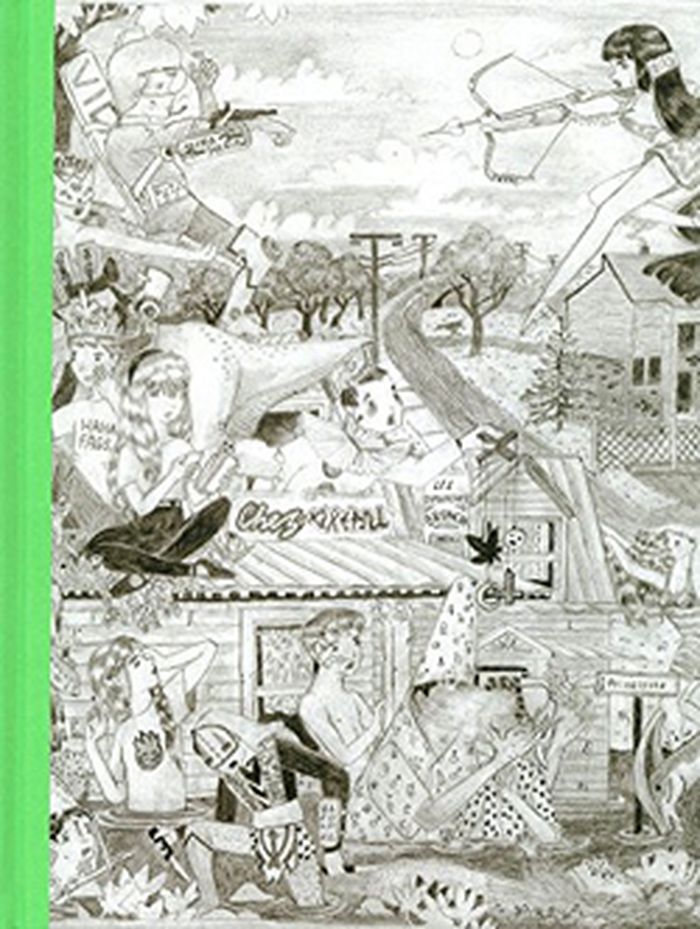
Jonathan Reid Sévigny was born and raised in Cowansville, in the Eastern Townships of Quebec, a culture so unique and full of rare and local treasures that become significant to those who grew up there but perhaps seem completely foreign and often tacky to outsiders. It isn’t the most glamorous town, nor does it have any particular sites or landmarks that one would go out of his / her way to visit. In The Sweetsburg Archives Sévigny is attempting to use his Quebeçois boyhood as an archetype for the relationship between the individual, the hometown, and the bewildering beauty that connects the two. As adults, we tend to romanticize our youth, we try and remember the best things about our coming of age, but we’re also scarred by certain events which we wish we could go back and change; fight back, kiss back. At a glance Sévigny’s depictions of Cowansville seem crisply utopian, a neat little playground of nice boys and girls. However, a closer look reveals their human forms are corrupt, splayed, eaten, and absorbed by animal fraternities, by swords of ritualistic death, by minute veils of the macrocosmic sky in all its unknown intricacies. The scene becomes otherworldly in the kid’s play, pushing us to remember that what is around and inside is both innocent and dirty, violent and soft, and constantly revised.
The Sweetsburg archives
Actions:
Price:
$25.00
(available in store)
Summary:
Jonathan Reid Sévigny was born and raised in Cowansville, in the Eastern Townships of Quebec, a culture so unique and full of rare and local treasures that become significant to those who grew up there but perhaps seem completely foreign and often tacky to outsiders. It isn’t the most glamorous town, nor does it have any particular sites or landmarks that one would go out of his / her way to visit. In The Sweetsburg Archives Sévigny is attempting to use his Quebeçois boyhood as an archetype for the relationship between the individual, the hometown, and the bewildering beauty that connects the two. As adults, we tend to romanticize our youth, we try and remember the best things about our coming of age, but we’re also scarred by certain events which we wish we could go back and change; fight back, kiss back. At a glance Sévigny’s depictions of Cowansville seem crisply utopian, a neat little playground of nice boys and girls. However, a closer look reveals their human forms are corrupt, splayed, eaten, and absorbed by animal fraternities, by swords of ritualistic death, by minute veils of the macrocosmic sky in all its unknown intricacies. The scene becomes otherworldly in the kid’s play, pushing us to remember that what is around and inside is both innocent and dirty, violent and soft, and constantly revised.
Form:
books
books
Publication:
July 2014
July 2014
Subject:
Illustration
Illustration
Form:
books
books
Actions:
Price:
$39.95
(available in store)
Summary:
How do you experience a public space? Do you feel safe? Seen? Represented? The response to these questions may differ based on factors including your race, age, ethnicity, or gender identity. In the architecture and design professions, decisions about the articulation of public spaces and who may be honored in them have often been made by white men. How do designers(...)
$39.95
(available in store)
Summary:
How do you experience a public space? Do you feel safe? Seen? Represented? The response to these questions may differ based on factors including your race, age, ethnicity, or gender identity. In the architecture and design professions, decisions about the articulation of public spaces and who may be honored in them have often been made by white men. How do designers(...)
Title:
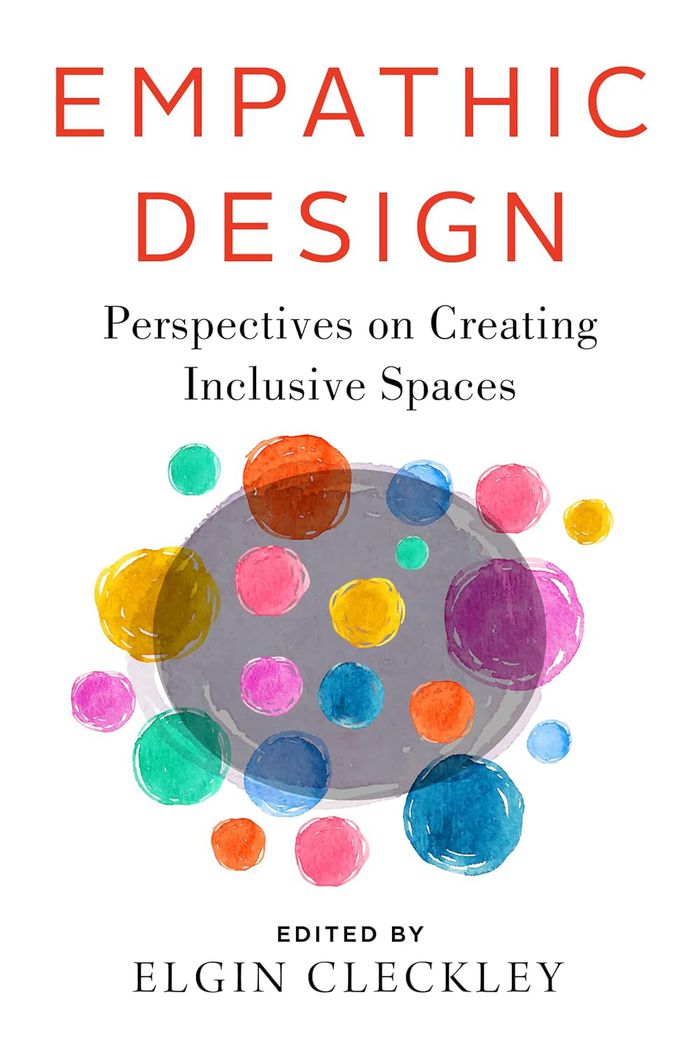
Empathic design: perspectives on creating inclusive spaces
Actions:
Price:
$39.95
(available in store)
Summary:
How do you experience a public space? Do you feel safe? Seen? Represented? The response to these questions may differ based on factors including your race, age, ethnicity, or gender identity. In the architecture and design professions, decisions about the articulation of public spaces and who may be honored in them have often been made by white men. How do designers rethink design processes to produce works that hold space for the diversity of people using them? In "Empathic design," designer and architecture professor Elgin Cleckley brings together leaders and visionary practitioners in architecture, urban design, planning, and design activism to help explore these questions. Cleckley explains that empathic designers need to approach design as iterative, changing, and shifting to say, "we see you", "we hear you". Part of an emerging design framework, empathic designers work with and in the communities affected. They acknowledge the full history of a place and approach the lived experience and memories of those in the community with respect. Early chapters explore broader conceptual approaches, proposing definitions of empathy in the context of design, disrupting colonial narratives, and making space for grief. Other chapters highlight specific design projects, including the Harriet Tubman Memorial in Newark, The Camp Barker Memorial in Washington, D.C., the Freedom Center in Oklahoma City, and the Charlottesville Memorial for Peace and Justice.
Empathic design: perspectives on creating inclusive spaces
Actions:
Price:
$39.95
(available in store)
Summary:
How do you experience a public space? Do you feel safe? Seen? Represented? The response to these questions may differ based on factors including your race, age, ethnicity, or gender identity. In the architecture and design professions, decisions about the articulation of public spaces and who may be honored in them have often been made by white men. How do designers rethink design processes to produce works that hold space for the diversity of people using them? In "Empathic design," designer and architecture professor Elgin Cleckley brings together leaders and visionary practitioners in architecture, urban design, planning, and design activism to help explore these questions. Cleckley explains that empathic designers need to approach design as iterative, changing, and shifting to say, "we see you", "we hear you". Part of an emerging design framework, empathic designers work with and in the communities affected. They acknowledge the full history of a place and approach the lived experience and memories of those in the community with respect. Early chapters explore broader conceptual approaches, proposing definitions of empathy in the context of design, disrupting colonial narratives, and making space for grief. Other chapters highlight specific design projects, including the Harriet Tubman Memorial in Newark, The Camp Barker Memorial in Washington, D.C., the Freedom Center in Oklahoma City, and the Charlottesville Memorial for Peace and Justice.
Form:
books
books
Publication:
January 2024
January 2024
Subject:
Design Theory
Design Theory
Form:
books
books
Actions:
Price:
$12.95
(available to order)
Summary:
In 1956, Time magazine called him one of the “form-givers of the 20th century“: with his invention of steel-tube furniture, Marcel Breuer (1902-1981) has made his mark in the history of design at the tender age of 23. He started his architectural career as one of the Bauhaus’s most influential architects with the 1932 Harnischmacher House. Even Breuer’s earliest work was(...)
$12.95
(available to order)
Summary:
In 1956, Time magazine called him one of the “form-givers of the 20th century“: with his invention of steel-tube furniture, Marcel Breuer (1902-1981) has made his mark in the history of design at the tender age of 23. He started his architectural career as one of the Bauhaus’s most influential architects with the 1932 Harnischmacher House. Even Breuer’s earliest work was(...)
Title:
Breuer : 1902-1981 Createur de formes du XXe siecle
Actions:
Price:
$12.95
(available to order)
Summary:
In 1956, Time magazine called him one of the “form-givers of the 20th century“: with his invention of steel-tube furniture, Marcel Breuer (1902-1981) has made his mark in the history of design at the tender age of 23. He started his architectural career as one of the Bauhaus’s most influential architects with the 1932 Harnischmacher House. Even Breuer’s earliest work was marked by the search for a symbiosis between local and global, big and small, smooth and rough. His sparse use of materials emphasized the balance among textures, colors, and shapes. In 1943, he conceived the “binuclear” house concept—the splitting of living and sleeping areas into separate wings—which he first applied to the Geller House I (1944-1946), and which would attain great popularity. After designing the UNESCO headquarters in Paris (1953-1958), reinforced concrete, with its formal plasticity und structural elasticity, continued to give monumental character to buildings such as the Abbey and Campus of St. John’s University in Minnesota (1953-1961), the IBM Research Center in France (1960-1962), and the Whitney Museum of American Art (1963-1966) in New York City. With his keen sense of proportion, shape, and material, Breuer is one of the most important Modernists and is still very much central in the discussion of contemporary architecture.
Breuer : 1902-1981 Createur de formes du XXe siecle
Actions:
Price:
$12.95
(available to order)
Summary:
In 1956, Time magazine called him one of the “form-givers of the 20th century“: with his invention of steel-tube furniture, Marcel Breuer (1902-1981) has made his mark in the history of design at the tender age of 23. He started his architectural career as one of the Bauhaus’s most influential architects with the 1932 Harnischmacher House. Even Breuer’s earliest work was marked by the search for a symbiosis between local and global, big and small, smooth and rough. His sparse use of materials emphasized the balance among textures, colors, and shapes. In 1943, he conceived the “binuclear” house concept—the splitting of living and sleeping areas into separate wings—which he first applied to the Geller House I (1944-1946), and which would attain great popularity. After designing the UNESCO headquarters in Paris (1953-1958), reinforced concrete, with its formal plasticity und structural elasticity, continued to give monumental character to buildings such as the Abbey and Campus of St. John’s University in Minnesota (1953-1961), the IBM Research Center in France (1960-1962), and the Whitney Museum of American Art (1963-1966) in New York City. With his keen sense of proportion, shape, and material, Breuer is one of the most important Modernists and is still very much central in the discussion of contemporary architecture.
Form:
books
books
Publication:
July 2007, Cologne
July 2007, Cologne
Subject:
Architecture Monographs
Architecture Monographs
Form:
books
books
Actions:
Price:
$55.95
(available to order)
Summary:
Le paysage est aujourd'hui très présent, dans la sphère publique comme dans la sphère privée. Nous l'associons à nos souvenirs les plus intimes grâce à nos photos et à nos films. Nous "paysageons" nos places, nos autoroutes et nos gares TGV. En France, il entre dans les compétences de trois ministères et une Convention européenne du paysage a été adoptée à Florence en(...)
$55.95
(available to order)
Summary:
Le paysage est aujourd'hui très présent, dans la sphère publique comme dans la sphère privée. Nous l'associons à nos souvenirs les plus intimes grâce à nos photos et à nos films. Nous "paysageons" nos places, nos autoroutes et nos gares TGV. En France, il entre dans les compétences de trois ministères et une Convention européenne du paysage a été adoptée à Florence en(...)
Title:
Naissance et renaissance du paysage
Actions:
Price:
$55.95
(available to order)
Summary:
Le paysage est aujourd'hui très présent, dans la sphère publique comme dans la sphère privée. Nous l'associons à nos souvenirs les plus intimes grâce à nos photos et à nos films. Nous "paysageons" nos places, nos autoroutes et nos gares TGV. En France, il entre dans les compétences de trois ministères et une Convention européenne du paysage a été adoptée à Florence en 2002. Pourtant, le mot paysage est un nouveau venu dans les langues de notre continent. Né au XVIe siècle dans les ateliers de peintres, il a mis du temps pour acquérir la place de choix qu'il occupe aujourd'hui. De là une question simple : avant, que se passait-il ? Nos lointains ancêtres étaient-ils insensibles à la vue des paysages ? Pour y répondre, Michel Baridon est remonté à l'Antiquité où il a trouvé de très beaux paysages, parfois à l'état de fragments, comme des tessons sur un champ de fouilles, parfois intacts dans des poèmes, sur les murs de villas ou même finement ciselés dans l'améthyste d'une bague. Suivant le fil du temps, il explique ensuite pourquoi le haut Moyen Age a figé le paysage en le symbolisant, et comment le retour à l'étude de la nature l'a fait renaître, triomphant, dans les écrits de Pétrarque et dans les fresques peintes par Ambrogio Lorenzetti sur les murs du Palazzo pubblico de Sienne.
Naissance et renaissance du paysage
Actions:
Price:
$55.95
(available to order)
Summary:
Le paysage est aujourd'hui très présent, dans la sphère publique comme dans la sphère privée. Nous l'associons à nos souvenirs les plus intimes grâce à nos photos et à nos films. Nous "paysageons" nos places, nos autoroutes et nos gares TGV. En France, il entre dans les compétences de trois ministères et une Convention européenne du paysage a été adoptée à Florence en 2002. Pourtant, le mot paysage est un nouveau venu dans les langues de notre continent. Né au XVIe siècle dans les ateliers de peintres, il a mis du temps pour acquérir la place de choix qu'il occupe aujourd'hui. De là une question simple : avant, que se passait-il ? Nos lointains ancêtres étaient-ils insensibles à la vue des paysages ? Pour y répondre, Michel Baridon est remonté à l'Antiquité où il a trouvé de très beaux paysages, parfois à l'état de fragments, comme des tessons sur un champ de fouilles, parfois intacts dans des poèmes, sur les murs de villas ou même finement ciselés dans l'améthyste d'une bague. Suivant le fil du temps, il explique ensuite pourquoi le haut Moyen Age a figé le paysage en le symbolisant, et comment le retour à l'étude de la nature l'a fait renaître, triomphant, dans les écrits de Pétrarque et dans les fresques peintes par Ambrogio Lorenzetti sur les murs du Palazzo pubblico de Sienne.
Form:
books
books
Publication:
November 2006, Paris
November 2006, Paris
Subject:
Landscape Theory
Landscape Theory
Form:
books
books
Actions:
Price:
$26.00
(available to order)
Summary:
"Bodyline" is a visual essay on the human body, approaches its subject in a spirit both playful and seriously experimental. Organised by themes in turn figurative and abstract, organic, and mechanical, immaterial, "Bodyline" contains not one predictable image of the body. Instead it uses diffracted views to conjure seven alternative visions of the flesh in the age of(...)
$26.00
(available to order)
Summary:
"Bodyline" is a visual essay on the human body, approaches its subject in a spirit both playful and seriously experimental. Organised by themes in turn figurative and abstract, organic, and mechanical, immaterial, "Bodyline" contains not one predictable image of the body. Instead it uses diffracted views to conjure seven alternative visions of the flesh in the age of(...)
Subject:
Architectural Theory
Architectural Theory
Publication:
January 1900, London
January 1900, London
Title:
Bodyline : the end of our meta-mechanical body
Actions:
Price:
$26.00
(available to order)
Summary:
"Bodyline" is a visual essay on the human body, approaches its subject in a spirit both playful and seriously experimental. Organised by themes in turn figurative and abstract, organic, and mechanical, immaterial, "Bodyline" contains not one predictable image of the body. Instead it uses diffracted views to conjure seven alternative visions of the flesh in the age of meta-mechanical reproduction, reconstructing the human physique by means of synthetic images, clothing patterns and technical blueprints. As such, "Bodyline" is a much about perception and delineation as it is about the body. The book is devided into three chapters loosely based on Robert Hughe's "Nothing if not critical". Here, through, the original categories are reversed : "Ancestors" explores the latest paradigms of virtual bodies, the computer-generated meshes of the gaming industry, which are also figurative; "Moderns", which constitutes the book's central exploration, features twentieth-century micro-narratives of pattern and garnment in which the body is already all but unrecognisable; and "Contemporaries" celebrates the reflections of self-portraiture through the projective network of Mongean geometry. The seven images of the body contained in this book - "Ectopic birth" (Nazila Maghzian), "How tall am I?" (Sharon Givony), "Vital points" (Eiichi Matsuda), "Inside out" (Kun-Min Kim), "Growth and decay" (Lawrence Ler), "Tiny deaths" (Carolin Hinne) and "10 years after" (Ema Bonifacio) - are accompagned by concise, literary texts.
Bodyline : the end of our meta-mechanical body
Actions:
Price:
$26.00
(available to order)
Summary:
"Bodyline" is a visual essay on the human body, approaches its subject in a spirit both playful and seriously experimental. Organised by themes in turn figurative and abstract, organic, and mechanical, immaterial, "Bodyline" contains not one predictable image of the body. Instead it uses diffracted views to conjure seven alternative visions of the flesh in the age of meta-mechanical reproduction, reconstructing the human physique by means of synthetic images, clothing patterns and technical blueprints. As such, "Bodyline" is a much about perception and delineation as it is about the body. The book is devided into three chapters loosely based on Robert Hughe's "Nothing if not critical". Here, through, the original categories are reversed : "Ancestors" explores the latest paradigms of virtual bodies, the computer-generated meshes of the gaming industry, which are also figurative; "Moderns", which constitutes the book's central exploration, features twentieth-century micro-narratives of pattern and garnment in which the body is already all but unrecognisable; and "Contemporaries" celebrates the reflections of self-portraiture through the projective network of Mongean geometry. The seven images of the body contained in this book - "Ectopic birth" (Nazila Maghzian), "How tall am I?" (Sharon Givony), "Vital points" (Eiichi Matsuda), "Inside out" (Kun-Min Kim), "Growth and decay" (Lawrence Ler), "Tiny deaths" (Carolin Hinne) and "10 years after" (Ema Bonifacio) - are accompagned by concise, literary texts.
Form:
books
books
Publication:
January 1900, London
January 1900, London
Subject:
Architectural Theory
Architectural Theory
Form:
books
books
Actions:
Price:
$38.00
(available to order)
Summary:
Garden design in the twentieth century ranges from Victorian-era examples to the age of Land Art. This span results in an extraordinarily varied survey - from Europe to South America, from Japan to the United States - including work by garden and landscape designers whose names are familiar to both lovers and scholars of the modern garden: Robinson, Jekyll, Jensen,(...)
$38.00
(available to order)
Summary:
Garden design in the twentieth century ranges from Victorian-era examples to the age of Land Art. This span results in an extraordinarily varied survey - from Europe to South America, from Japan to the United States - including work by garden and landscape designers whose names are familiar to both lovers and scholars of the modern garden: Robinson, Jekyll, Jensen,(...)
Title:
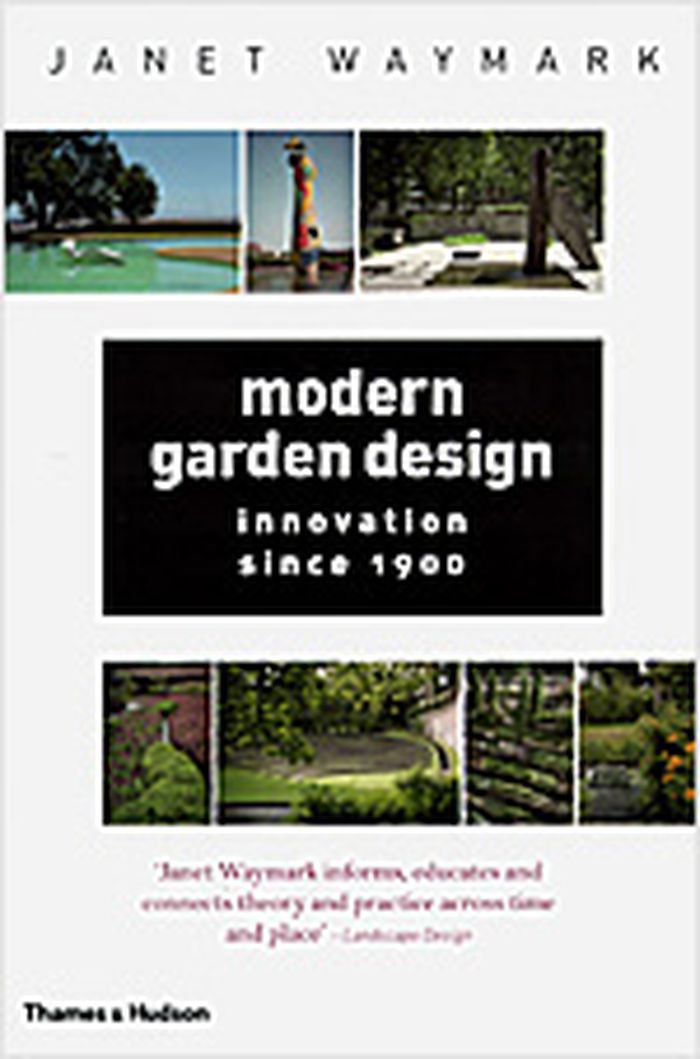
Modern garden design : innovation since 1900
Actions:
Price:
$38.00
(available to order)
Summary:
Garden design in the twentieth century ranges from Victorian-era examples to the age of Land Art. This span results in an extraordinarily varied survey - from Europe to South America, from Japan to the United States - including work by garden and landscape designers whose names are familiar to both lovers and scholars of the modern garden: Robinson, Jekyll, Jensen, Farrand, Sessions, Mawson, Church, Sørensen, and Jellicoe. Janet Waymark traces the revolutionary changes brought about in the postwar period by the Harvard Rebels - Eckbo, Rose, and Kiley - and examines the impact of Noguchi, Burle Marx, Barragán, and others, as well as the powerful international influence of Scandinavian landscape architects and designers. The garden city is also given close attention, from its beginnings in late Victorian Britain, through the Greenbelt Towns in the American Midwest, to the latest regeneration of urban centres worldwide. A long line of artists and architects of international renown have earned a place in the history of the modern garden: Monet, Le Corbusier, Mondrian, Wright, Mies van der Rohe, and Gaudí, among others. Land artists, such as Michael Heizer, Robert Smithson, Patricia Johanson, and Kathryn Gustafson in America and Richard Long, Andy Goldsworthy, and Ian Hamilton Finlay in the UK, have brought new ways of thinking about landscape and the garden into the twenty-first century.
Modern garden design : innovation since 1900
Actions:
Price:
$38.00
(available to order)
Summary:
Garden design in the twentieth century ranges from Victorian-era examples to the age of Land Art. This span results in an extraordinarily varied survey - from Europe to South America, from Japan to the United States - including work by garden and landscape designers whose names are familiar to both lovers and scholars of the modern garden: Robinson, Jekyll, Jensen, Farrand, Sessions, Mawson, Church, Sørensen, and Jellicoe. Janet Waymark traces the revolutionary changes brought about in the postwar period by the Harvard Rebels - Eckbo, Rose, and Kiley - and examines the impact of Noguchi, Burle Marx, Barragán, and others, as well as the powerful international influence of Scandinavian landscape architects and designers. The garden city is also given close attention, from its beginnings in late Victorian Britain, through the Greenbelt Towns in the American Midwest, to the latest regeneration of urban centres worldwide. A long line of artists and architects of international renown have earned a place in the history of the modern garden: Monet, Le Corbusier, Mondrian, Wright, Mies van der Rohe, and Gaudí, among others. Land artists, such as Michael Heizer, Robert Smithson, Patricia Johanson, and Kathryn Gustafson in America and Richard Long, Andy Goldsworthy, and Ian Hamilton Finlay in the UK, have brought new ways of thinking about landscape and the garden into the twenty-first century.
Form:
books
books
Publication:
January 1900, New York
January 1900, New York
Subject:
Gardens
Gardens
Form:
books
books
Price:
$49.95
(available to order)
Summary:
Born into a large French-Canadian family in 1926, Mariette Rousseau embraced her passion for creative expression through wool and weaving at an early age. She studied art and weaving at l'École des beaux-arts in Quebec City and then worked at the California studio of ground-breaking American textile designer Dorothy Liebes. Back in Canada after an art-inspired trip to(...)
$49.95
(available to order)
Summary:
Born into a large French-Canadian family in 1926, Mariette Rousseau embraced her passion for creative expression through wool and weaving at an early age. She studied art and weaving at l'École des beaux-arts in Quebec City and then worked at the California studio of ground-breaking American textile designer Dorothy Liebes. Back in Canada after an art-inspired trip to(...)
Title:
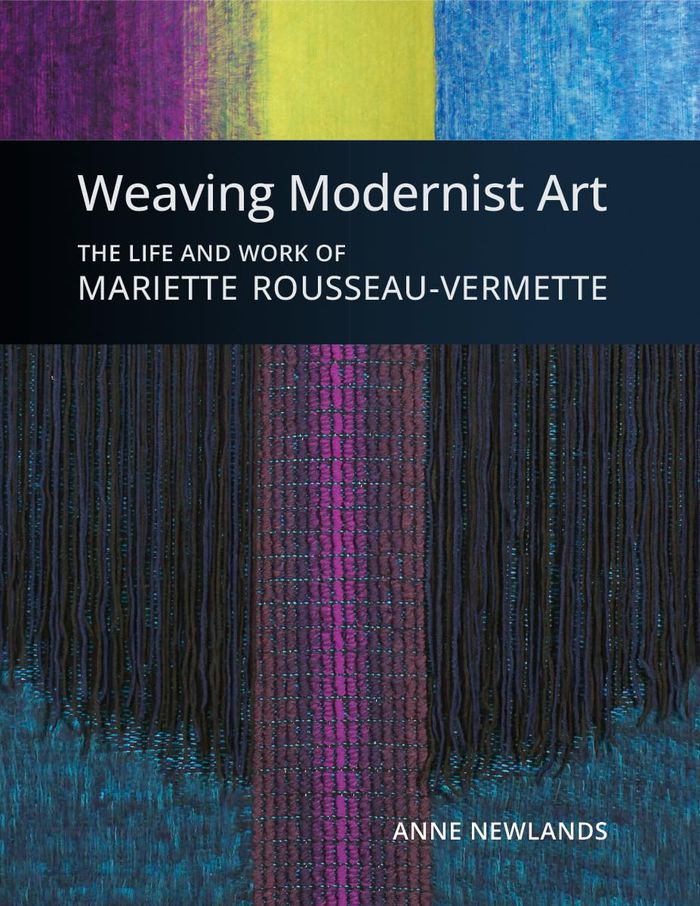
Weaving modernist art: The life and work of Mariette Rousseau-Vermette
Actions:
Price:
$49.95
(available to order)
Summary:
Born into a large French-Canadian family in 1926, Mariette Rousseau embraced her passion for creative expression through wool and weaving at an early age. She studied art and weaving at l'École des beaux-arts in Quebec City and then worked at the California studio of ground-breaking American textile designer Dorothy Liebes. Back in Canada after an art-inspired trip to Europe, she and her husband, artist and ceramist Claude Vermette, joined the growing movement of young French-Canadian artists in their embrace of abstraction and new forms of art and their rejection of the conservatism of Maurice Duplessis' mid-century Quebec. By the early 1960s, Rousseau-Vermette had forged collaborations with fellow artists, designers and architects with like ideas about public art. Over the next 40 years, she scaled the heights of her profession, weaving hundreds of radiant large-scale tapestries that complemented the cool interiors of modern architecture. She exhibited across Canada and internationally and attracted prestigious commissions from the private and public sectors, including commissions for theater curtains at the National Arts Centre, Ottawa and the Kennedy Center in Washington, DC. Yet three years after Rousseau-Vermette's death in 2006, Newlands discovered there wasn't a single book that told her story as a pioneer of modernist tapestry and one of Canada's most prolific and influential artist-weavers.
Weaving modernist art: The life and work of Mariette Rousseau-Vermette
Actions:
Price:
$49.95
(available to order)
Summary:
Born into a large French-Canadian family in 1926, Mariette Rousseau embraced her passion for creative expression through wool and weaving at an early age. She studied art and weaving at l'École des beaux-arts in Quebec City and then worked at the California studio of ground-breaking American textile designer Dorothy Liebes. Back in Canada after an art-inspired trip to Europe, she and her husband, artist and ceramist Claude Vermette, joined the growing movement of young French-Canadian artists in their embrace of abstraction and new forms of art and their rejection of the conservatism of Maurice Duplessis' mid-century Quebec. By the early 1960s, Rousseau-Vermette had forged collaborations with fellow artists, designers and architects with like ideas about public art. Over the next 40 years, she scaled the heights of her profession, weaving hundreds of radiant large-scale tapestries that complemented the cool interiors of modern architecture. She exhibited across Canada and internationally and attracted prestigious commissions from the private and public sectors, including commissions for theater curtains at the National Arts Centre, Ottawa and the Kennedy Center in Washington, DC. Yet three years after Rousseau-Vermette's death in 2006, Newlands discovered there wasn't a single book that told her story as a pioneer of modernist tapestry and one of Canada's most prolific and influential artist-weavers.
Form:
books
books
Publication:
March 2023
March 2023
Subject:
Current Exhibitions
Current Exhibitions


