


681 Results
Form:
books
books
Title:
Cartographic cinema
Cartographic cinema
Actions:
Price:
$31.50
(available to order)
Summary:
Cartography and cinema are what might be called locational machinery. Maps and movies tell their viewers where they are situated, what they are doing, and, to a strong degree, who they are. In this work,scholar Tom Conley establishes the ideological power of maps in classic, contemporary, and avant-garde cinema to shape the imaginary and mediated relations we hold with(...)
Title:
Cartographic cinema
Actions:
Price:
$31.50
(available to order)
Summary:
Cartography and cinema are what might be called locational machinery. Maps and movies tell their viewers where they are situated, what they are doing, and, to a strong degree, who they are. In this work,scholar Tom Conley establishes the ideological power of maps in classic, contemporary, and avant-garde cinema to shape the imaginary and mediated relations we hold with the world. "Cartographic cinema" examines the affinities of maps and movies through comparative theory and close analysis of films from the silent era to the French New Wave to Hollywood blockbusters. In doing so, Conley reveals that most of the movies we see contain maps of various kinds and almost invariably constitute a projective apparatus similar to cartography. In addition, he demonstrates that spatial signs in film foster a critical relation with the prevailing narrative and mimetic registers of cinema. Conley convincingly argues that the very act of watching films, and cinema itself, is actually a form of cartography. Unlike its function in an atlas, a map in a movie often causes the spectator to entertain broader questions—not only about cinema but also of the nature of space and being.
Form:
books
books
Publication:
December 2006, Minneapolis, London
December 2006, Minneapolis, London
Subject:
Architectural Theory
Architectural Theory
Form:
books
books
Actions:
Price:
$34.00
(available to order)
Summary:
The open terrain of new media is closing fast. Market concentration, legal consolidation and tightening governmental control have effectively ended the myth of the free and open networks. In Delusive Spaces, Eric Kluitenberg takes a critical position that retains a utopian potential for emerging media cultures. The book investigates the archeology of media and machine,(...)
Title:
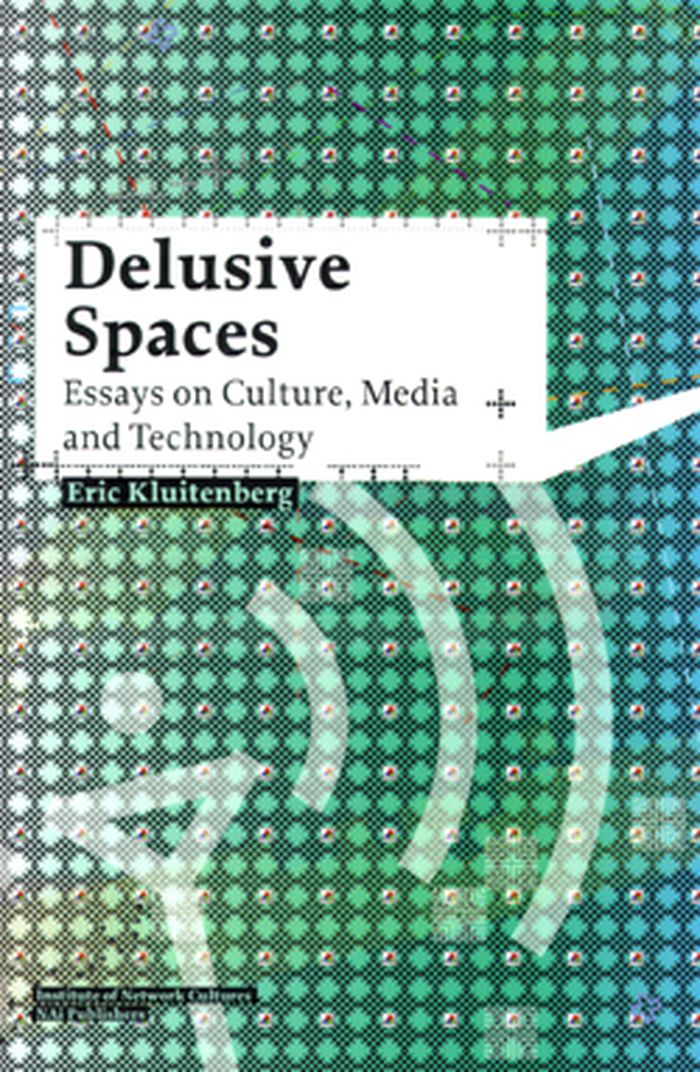
Delusive spaces: essays on culture, media and technology
Actions:
Price:
$34.00
(available to order)
Summary:
The open terrain of new media is closing fast. Market concentration, legal consolidation and tightening governmental control have effectively ended the myth of the free and open networks. In Delusive Spaces, Eric Kluitenberg takes a critical position that retains a utopian potential for emerging media cultures. The book investigates the archeology of media and machine, mapping the different methods and metaphors that speak about technology. Returning to the present, Kluitenberg discusses the cultural use of new media in an age of post-governmental politics. Delusive Spaces concludes with the impossibility of representation. Going beyond the obvious delusions of the 'new' and the 'free', Kluitenberg theorizes artistic practices and European cultural policies, demonstrating a provocative engagement with the utopian dimension of technology. Eric Kluitenberg is a Dutch media theorist, writer and organizer. Since the late 1980s, he has been involved in numerous international projects in the field of electronic art, media culture, and information politics. Kluitenberg heads the media program at De Balie, Centre for Culture and Politics in Amsterdam. He is the editor of the Book of Imaginary Media (NAi Publishers, 2006) and the theme issue Hybrid Space of Open, journal on art and the public domain (2007).
Form:
books
books
Publication:
April 2008, Rotterdam
April 2008, Rotterdam
Subject:
Epistemology
Epistemology
Form:
books
books
Title:
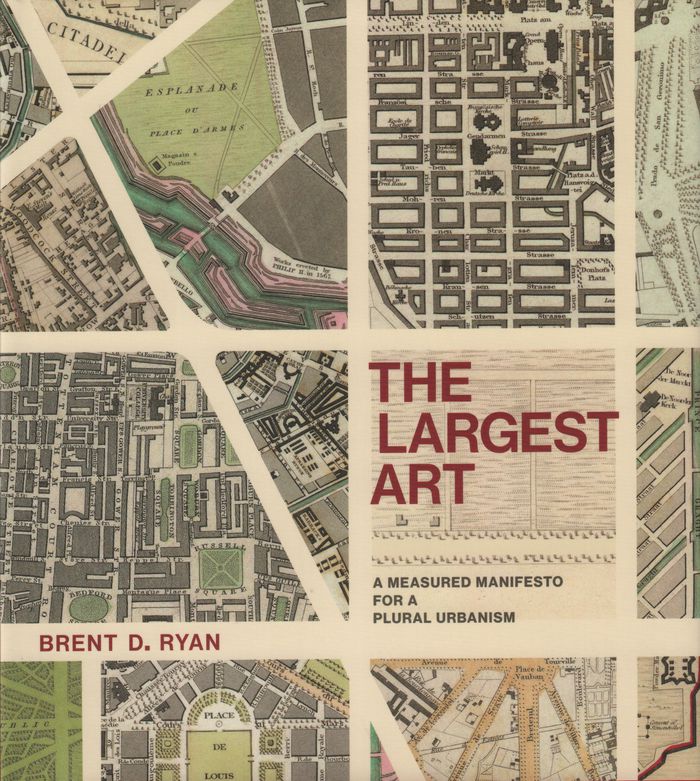
The largest art
The largest art
Actions:
Price:
$59.95
(available to order)
Summary:
In "The largest art", Brent Ryan argues that urban design encompasses more than architecture, and he provides a foundational theory of urban design beyond the architectural scale. In a "declaration of independence" for urban design, Ryan describes urban design as the largest of the building arts, with qualities of its own. Ryan distinguishes urban design from its sister(...)
Title:
The largest art
Actions:
Price:
$59.95
(available to order)
Summary:
In "The largest art", Brent Ryan argues that urban design encompasses more than architecture, and he provides a foundational theory of urban design beyond the architectural scale. In a "declaration of independence" for urban design, Ryan describes urban design as the largest of the building arts, with qualities of its own. Ryan distinguishes urban design from its sister arts by its pluralism: plural scale, ranging from an alleyway to a region; plural time, because it is deeply enmeshed in both history and the present; plural property, with many owners; plural agents, with many makers; and plural form, with a distributed quality that allows it to coexist with diverse elements of the city. Ryan looks at three well-known urban design projects through the lens of pluralism: a Brancusi sculptural ensemble in Romania, a Bronx housing project, and a formally and spatially diverse grouping of projects in Ljubljana, Slovenia. He revisits the thought of three plural urbanists working between 1960 and 1980: David Crane, Edmund Bacon, and Kevin Lynch. And he tells three design stories for the future, imaginary scenarios of plural urbanism in locations around the world.
Form:
books
books
Publication:
October 2017
October 2017
Subject:
Urban Theory
Urban Theory
Form:
books
books
Price:
$49.95
(available to order)
Summary:
Over the last decade, 'parametricism' has been heralded as a new avant-garde in the industries of architecture, urban design, and industrial design, regarded by many as the next grand style in the history of architecture, heir to postmodernism and deconstruction. From buildings to cities, the built environment is increasingly addressed, designed and constructed using(...)
Title:
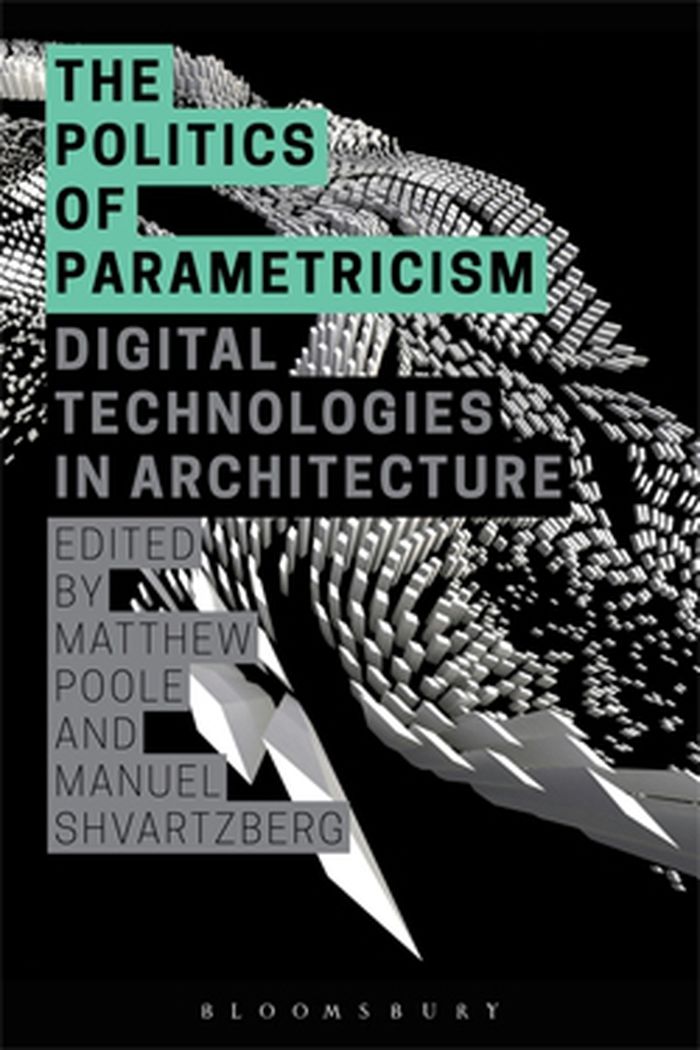
The politics of parametricism digital technologies in architecture
Actions:
Price:
$49.95
(available to order)
Summary:
Over the last decade, 'parametricism' has been heralded as a new avant-garde in the industries of architecture, urban design, and industrial design, regarded by many as the next grand style in the history of architecture, heir to postmodernism and deconstruction. From buildings to cities, the built environment is increasingly addressed, designed and constructed using digital software based on parametric scripting platforms which claim to be able to process complex physical and social modelling alike. As more and more digital tools are developed into an apparently infinite repertoire of socio-technical functions, critical questions concerning these cultural and technological shifts are often eclipsed by the seductive aesthetic and the alluring futuristic imaginary that parametric design tools and their architectural products and discourses represent. The Politics of Parametricism addresses these issues, offering a collection of new essays written by leading international thinkers in the fields of digital design, architecture, theory and technology. Exploring the social, political, ethical and philosophical issues at stake in the history, practice and processes of parametric architecture and urbanism, each chapter provides different vantage points to interrogate the challenges and opportunities presented by this latest mode of technological production.
Form:
books
books
Publication:
December 2015
December 2015
Subject:
Digital Architecture
Digital Architecture
Form:
books
books
Price:
$66.00
(available to order)
Summary:
''Lost Days, Endless Nights'' tells a history from below—an account of the lives of the forgotten and dispossessed of Los Angeles: the unemployed, the precariously employed, the evicted, the alienated, the unhoused, the anxious, the exhausted. Through an analysis of abandoned archival works, experimental films, and other projects, Andrew Witt offers an expansive account(...)
Title:
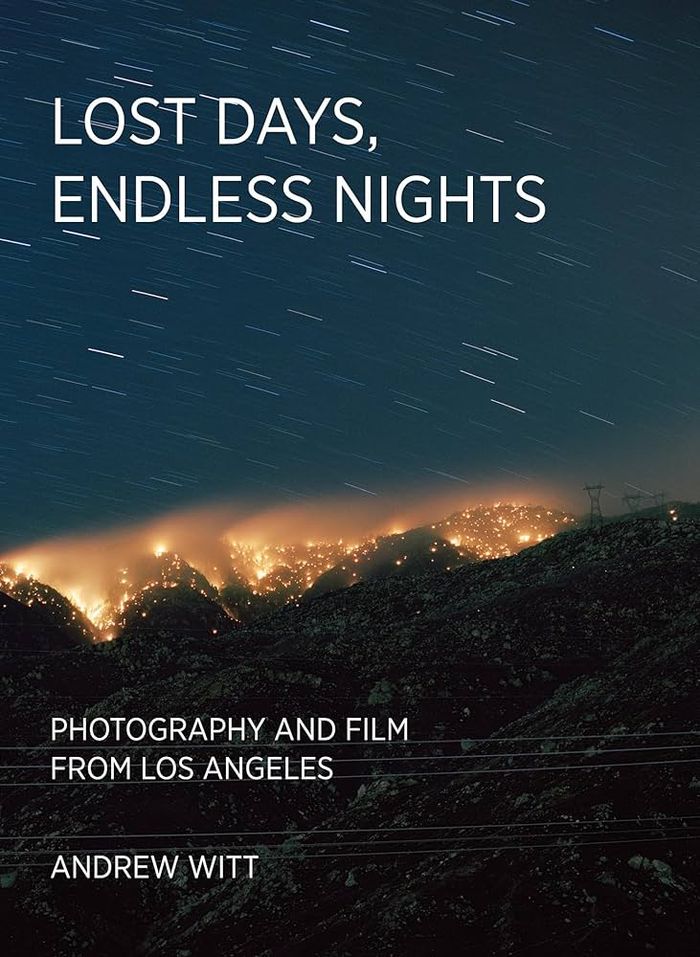
Lost days, endless nights: Photography and film from Los Angeles
Actions:
Price:
$66.00
(available to order)
Summary:
''Lost Days, Endless Nights'' tells a history from below—an account of the lives of the forgotten and dispossessed of Los Angeles: the unemployed, the precariously employed, the evicted, the alienated, the unhoused, the anxious, the exhausted. Through an analysis of abandoned archival works, experimental films, and other projects, Andrew Witt offers an expansive account of the artists who have lived or worked in Los Angeles, delving into the region's history and geography, highlighting its racial, gender, and class conflicts. Presented as a series of nine case studies, Witt explores how artists as diverse as Agnès Varda, Dana Lixenberg, Allan Sekula, Catherine Opie, John Divola, Gregory Halpern, Paul Sepuya, and Guadalupe Rosales have reimagined and reshaped our understanding of contemporary Los Angeles. The book features portraits of those who struggle and attempt to get by in the city: dock workers, students, bus riders, petty criminals, office workers, immigrants, queer and trans activists. Set against the landscape of economic turmoil and environmental crises that shadowed the 1970s, Witt highlights the urgent need for a historical perspective of cultural retrieval and counternarrative. Extending into the present, ''Lost Days, Endless Nights'' advocates for an approach that actively embraces the works and projects that have been overlooked and evicted from the historical imaginary
Form:
books
books
Publication:
December 2024
December 2024
Subject:
Architecture and Film, Set Design
Architecture and Film, Set Design
Form:
books
books
Title:
Warhol's dream
Warhol's dream
Actions:
Price:
$26.00
(available to order)
Summary:
"12 February 1972--I had slept badly. I decided to go out for breakfast, but when I got down to the street, there was no one there, and I thought, Andy, you must be still dreaming. It was like New York at eight in the morning on New Year's Day. Completely deserted. Everything shut. It's my favorite time to be out, actually. I decided to go to my favorite diner, the Star(...)
Subject:
Art Theory
Art Theory
Publication:
January 1900, Paris Zurich
January 1900, Paris Zurich
Title:
Warhol's dream
Actions:
Price:
$26.00
(available to order)
Summary:
"12 February 1972--I had slept badly. I decided to go out for breakfast, but when I got down to the street, there was no one there, and I thought, Andy, you must be still dreaming. It was like New York at eight in the morning on New Year's Day. Completely deserted. Everything shut. It's my favorite time to be out, actually. I decided to go to my favorite diner, the Star Palace, on 37th and Madison. And there, sitting alone at the window was, believe it or not, Robert Smithson, who I've met a few times. They all think he's a genius. But I still can't get through the stuff he writes in Artforum. I get a headache almost right away." Saul Anton, an Editor-at-Large at Cabinet magazine who has written for Salon and Artforum, among other publications, describes an imaginary encounter between Robert Smithson and Andy Warhol, drifting together for a day through an empty New York City, talking about entropy, glamour, science fiction, cinema and the art of their times. Published in conjunction with les Presses du reel, this highly informative and witty essay on both artists' works in the form of a fiction could be considered a contemporary Platonic Symposium.
Form:
books
books
Publication:
January 1900, Paris Zurich
January 1900, Paris Zurich
Subject:
Art Theory
Art Theory
Form:
books
books
Title:
Piranesi unbound
Piranesi unbound
Actions:
Price:
$82.95
(available to order)
Summary:
A draftsman, printmaker, architect, and archaeologist, Giovanni Battista Piranesi (1720–78) is best known today as the virtuoso etcher of the immersive and captivating ''Views of Rome'' and the darkly inventive ''Imaginary Prisons.'' Yet Carolyn Yerkes and Heather Hyde Minor argue that his single greatest art form- one that combined his obsessions most powerfully and that(...)
Title:
Piranesi unbound
Actions:
Price:
$82.95
(available to order)
Summary:
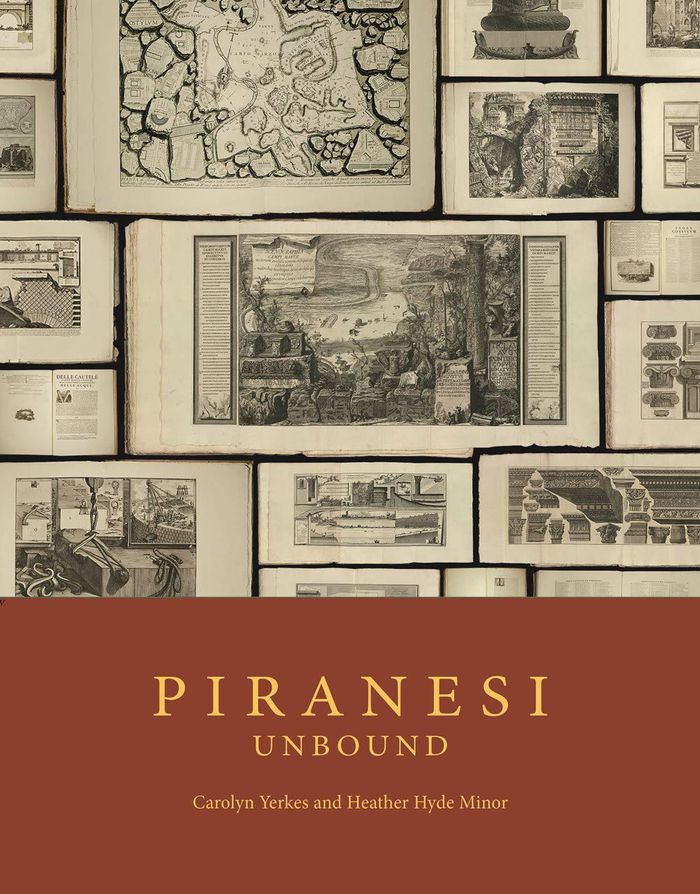
A draftsman, printmaker, architect, and archaeologist, Giovanni Battista Piranesi (1720–78) is best known today as the virtuoso etcher of the immersive and captivating ''Views of Rome'' and the darkly inventive ''Imaginary Prisons.'' Yet Carolyn Yerkes and Heather Hyde Minor argue that his single greatest art form- one that combined his obsessions most powerfully and that he pursued throughout his career- was the book. ''Piranesi unbound'' provides a fundamental reinterpretation of Piranesi by recognizing him, first and foremost, as a writer, illustrator, printer, and publisher of books. Featuring nearly two hundred of Piranesi’s engravings and drawings, including some that have never been published before, this visually stunning book returns Piranesi’s artworks to the context for which he originally produced them: a dozen volumes that combine text and image, archaeology and imagination, erudition and humor. Drawing on new research, ''Piranesi unbound'' uncovers the social networks in which Piranesi published, including the readers who bought, read, and debated his books. It reveals his habit of raiding the wastepaper pile for cast-off sheets upon which to draw and fuse printed images and texts. It shows how, even after his books were bound, they were subject to change by Piranesi and others as pages were torn out and added.
Form:
books
books
Publication:
September 2020
September 2020
Subject:
Art Theory
Art Theory
Form:
books
books
Title:
Yoko Ono: the other rooms
Yoko Ono: the other rooms
Actions:
Price:
$48.00
(available to order)
Summary:
The Other Rooms is a sequel to Yoko Ono's Grapefruit, a now classic artist's book that was first published in 1964 and became a cult classic following its wider distribution after 1970. Matching the satisfyingly compact size of Grapefruit, and beautifully bound in white cloth, The Other Rooms is conceived as a series of rooms that unfold the story of, in the words of the(...)
Title:
Yoko Ono: the other rooms
Actions:
Price:
$48.00
(available to order)
Summary:
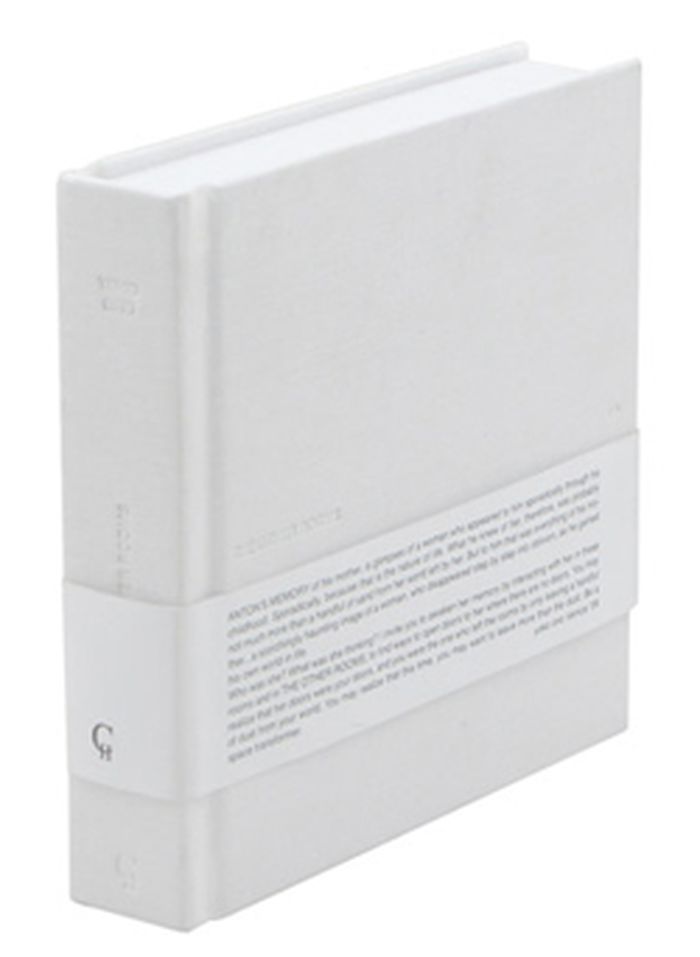
The Other Rooms is a sequel to Yoko Ono's Grapefruit, a now classic artist's book that was first published in 1964 and became a cult classic following its wider distribution after 1970. Matching the satisfyingly compact size of Grapefruit, and beautifully bound in white cloth, The Other Rooms is conceived as a series of rooms that unfold the story of, in the words of the artist, “the life of a woman seeing through the eyes of her son.” On page after page, or room after room, Ono walks the reader through her unique expression of motherly utopian pedagogy, providing observations and instruction “pieces” such as the following, for “Balance Piece”: a) Politicians should wear pink transparent loose robes or pajama-like outfits without the bottoms at all times. b) A priest should wear a bright red suit with one sleeve and bell-bottom pants with his penis exposed at all times. c) The army should wear drag (cocktail party-type flair skirts) and high-heel shoes with jewelry (earrings, etc.) Other sequences simply describe imaginary rooms, and invite the reader to inhabit them, or suggest new approaches to tasks such as gardening, or to one's hometown, all in the serenely open style for which Ono is so famed. The Other Rooms is joyfully interactive in this sense, finding ways “to open doors… where there are no doors.”
Form:
books
books
Publication:
February 2010
February 2010
Subject:
Contemporary Art Monographs
Contemporary Art Monographs
Form:
books
books
Actions:
Price:
$43.95
(available to order)
Summary:
This catalogue was published on the occasion of the exhibition "Down the path : the artist's garden after modernism" at the Queens Museum of Art. " This study will not perpetuate a restricted examination of the formal aspects of gardens but present a selection of divergent positions taken both from lived experience and scholarship. In this effort "Down the garden path:(...)
Subject:
Gardens
Gardens
Publication:
January 2006, Queens
January 2006, Queens
Title:
Down the garden path : the artist's garden after modernism
Actions:
Price:
$43.95
(available to order)
Summary:
This catalogue was published on the occasion of the exhibition "Down the path : the artist's garden after modernism" at the Queens Museum of Art. " This study will not perpetuate a restricted examination of the formal aspects of gardens but present a selection of divergent positions taken both from lived experience and scholarship. In this effort "Down the garden path: the artist’s garden after modernism" moves away from the narrow representation of only exhibiting garden documents, to show a broad range of materials that refer to gardens as metaphors or points of departure to understand history, politics, and our relationship to nature. There is a long and distinguished list of artists’ gardens. Presented here is a small selection chosen from the vast history, not because they are well known for several of them are imaginary and another has been all but destroyed, but because of their integrity to an uncompromising position about the world." (Valerie Smith). Participating artists : Vito Acconci, Ghada Amer, Lothar Baumgarten, Roberto Burle Marx, Tom Burr, Mel Chin, Thierry De Cordier, Mark Dion, Stan Douglas, Ian Hamilton Finlay, Dan Graham, Lonnie Graham, Paula Hayes, Jenny Holzer, Ronald Jones, Anissa Mack and Dave McKenzie, Gordon Matta-Clark, Franco Mondini-Ruiz, Isamu Noguchi, Nils Norman, Christian Philipp Müller, Ingrid Pollard, Robert Smithson, Alan Sonfist, Brian Tolle and Diana Balmori, Sergio Vega, Jan Vercruysse and Meg Webster.
Form:
books
books
Publication:
January 2006, Queens
January 2006, Queens
Subject:
Gardens
Gardens
Form:
journals and magazines
journals and magazines
Actions:
Price:
$40.00
(available to order)
Summary:
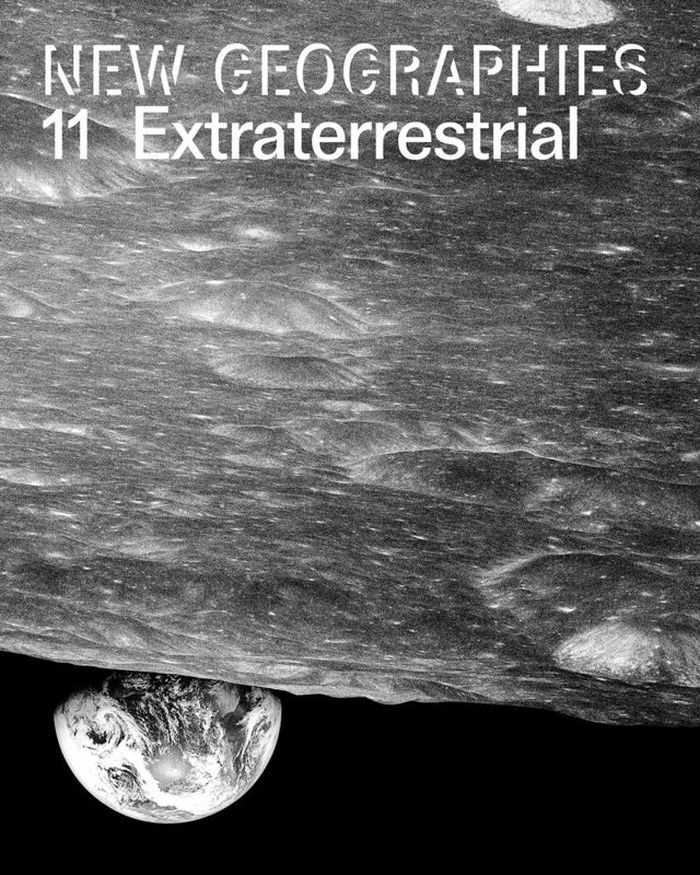
New Geographies 11: Extraterrestrial explores the historical and contemporary consequence of our planetary relationship with space. It interprets this duality through the conceptual lens of “extraterrestrial,” which engages an entangled zone of expanding practices in geography, landscape, and architecture, stretching Earth to space, and conversely, space to Earth. This(...)
Title:
New Geographies 11: Extraterrestrial
Actions:
Price:
$40.00
(available to order)
Summary:
New Geographies 11: Extraterrestrial explores the historical and contemporary consequence of our planetary relationship with space. It interprets this duality through the conceptual lens of “extraterrestrial,” which engages an entangled zone of expanding practices in geography, landscape, and architecture, stretching Earth to space, and conversely, space to Earth. This issue questions the means through which space is forged as a condition extra to our own terra. Complicit within this imagination resides a deep political and economic logic that serves to territorialize outer space as an exception to, and extension of, Earth. These critical processes are revealed as not extra at all, but rather distinctly of terra. Through a series of written, photographic, and representational investigations, this edition of New Geographies builds on earlier studies of outer space from science, technology and society, as well as from the design disciplines, history, and critical geography. It reinforces the need for humanity’s changing relationship with outer space to be recorded, critiqued, and theorized from a breadth of academic traditions and projected within design discourse. This issue brings together experts contributing to the social, political, and cultural imaginary implicit in extraterrestrial. Three primary thematic territorial devices structure these explorations: a technologically constructed space between, a material culture constructed and discharged, and a space politically and economically reflective, all revealed through historical and contemporary society.
Form:
journals and magazines
journals and magazines
Publication:
June 2020
June 2020
Subject:
Magazines
Magazines


