


694 Results
Form:
books
books

Actions:
Price:
$37.95
(available to order)
Summary:
En 1976, lorsque la SNCF lui commande le dessin de la carte voyageurs, c’est une première pour le designer suisse Rudi Meyer qui n’a jusque-là jamais dessiné de plans de réseaux ferrés. Des logos, des affiches, des caractères typographiques, du mobilier, des scénographies d’exposition, des montres, des dispositifs de projection vidéo, oui. Mais des cartes ? Aucune encore.(...)
Title:
La Fabrique de Rudi Meyer (collection prisme 03)
Actions:
Price:
$37.95
(available to order)
Summary:
En 1976, lorsque la SNCF lui commande le dessin de la carte voyageurs, c’est une première pour le designer suisse Rudi Meyer qui n’a jusque-là jamais dessiné de plans de réseaux ferrés. Des logos, des affiches, des caractères typographiques, du mobilier, des scénographies d’exposition, des montres, des dispositifs de projection vidéo, oui. Mais des cartes ? Aucune encore. Il dut, pour relever ce défi, inventer quelques outils au passage. Sa capacité à décloisonner a fait de lui un inclassable et donc un marginal au sein du cadastre des champs disciplinaires, plutôt imperméables et hiérarchisés en France. On en est parfois venu à ne plus savoir exactement quel était son métier. Qu’à cela ne tienne. Ne prenant racine dans aucun pré carré spécialisé, il multiplia les incartades, les rencontres, les collaborations et autres fertilisations croisées, sans jamais se sédentariser ni s’attacher. Dans cet entretien, Rudi Meyer revient sur des moments fondateurs de sa carrière et donne à voir sa conception d’un design inclassable, sans cesse réinventé.
Form:
books
books
Publication:
November 2023
November 2023
Subject:
Graphic Designers, Monographs
Graphic Designers, Monographs
Form:
books
books

Actions:
Price:
$35.95
(available in store)
Summary:
Climate change is already influencing how and where people live. In ''North'', Jesse M. Keenan argues that America is entering a new era marked by shifts in population that will transform everything from the physical landscape of cities to electoral politics. First, Keenan examines how human mobility is shaped by the environment and the economy. Next, he provides a(...)
Title:
North: The future of post-climat America
Actions:
Price:
$35.95
(available in store)
Summary:
Climate change is already influencing how and where people live. In ''North'', Jesse M. Keenan argues that America is entering a new era marked by shifts in population that will transform everything from the physical landscape of cities to electoral politics. First, Keenan examines how human mobility is shaped by the environment and the economy. Next, he provides a conceptual and empirical overview of adaptation science, with a focus on how people, governments, and markets are preparing for and responding to climate impacts. He documents how physical impacts in the built environment, escalating costs, and public sector inertia are converging to drive people out of high-risk areas, while, at the same time, certain other areas are attracting people who seek a more sustainable way of life. ''North'' is not just a collection of scientific observations and projections about the peril of those left behind. It is also a projection of optimism about America's capacity for decarbonization, environmental stewardship, and economic mobility for those on the move.
Form:
books
books
Publication:
December 2025
December 2025
Subject:
Architecture since 1900, Americas
Architecture since 1900, Americas
Form:
books
books
Actions:
Price:
$22.99
(available to order)
Summary:
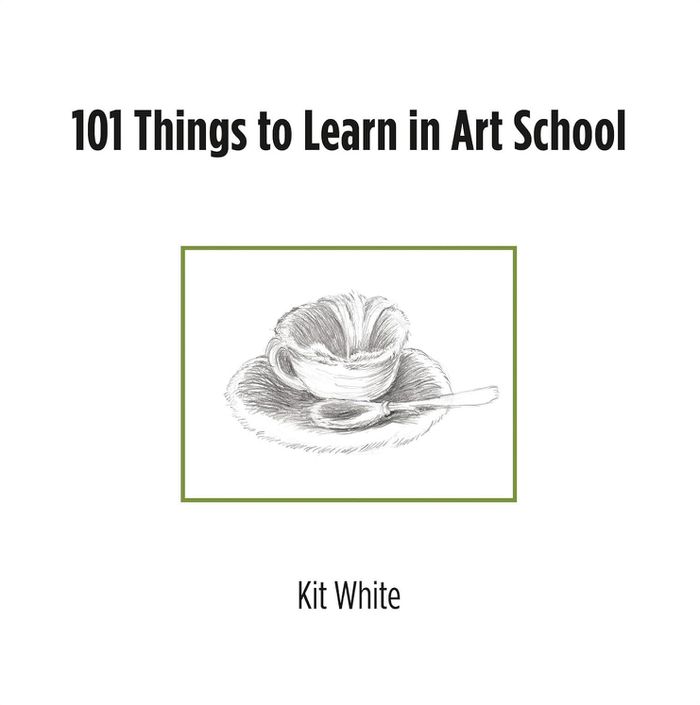
What is the first thing to learn in art school? "Art can be anything." The second thing? "Learn to draw." With "101 things to learn in art school," artist and teacher Kit White delivers and develops such lessons, striking an instructive balance between technical advice and sage concepts. These 101 maxims, meditations, and demonstrations offer both a toolkit of ideas for(...)
Title:
101 things to learn in art school, revised
Actions:
Price:
$22.99
(available to order)
Summary:
What is the first thing to learn in art school? "Art can be anything." The second thing? "Learn to draw." With "101 things to learn in art school," artist and teacher Kit White delivers and develops such lessons, striking an instructive balance between technical advice and sage concepts. These 101 maxims, meditations, and demonstrations offer both a toolkit of ideas for the art student and a set of guiding principles for the artist. Complementing each of the 101 succinct texts is an equally expressive drawing by the artist, often based on a historical or contemporary work of art, offering a visual correlative to the written thought. "Art can be anything" is illustrated by a drawing of Duchamp’s famous urinal; a description of chiaroscuro art is illuminated by an image "after Caravaggio"; a lesson on time and media is accompanied by a view of a Jenny Holzer projection; advice about surviving a critique gains resonance from Piero della Francesca’s arrow-pierced Saint Sebastian.
Form:
books
books
Publication:
October 2024
October 2024
Subject:
Art Theory
Art Theory
Form:
books
books

Title:
Membrane structures
Membrane structures
Actions:
Price:
$115.00
(available to order)
Summary:
In this comprehensive work to date on membrane technology for architecture, pioneers show how one of the world's oldest forms of building material is also its most innovative. Today, the cutting edge in architecture is not sharp but curved and undulating. It is also impermeable to moisture, resistant to extreme temperatures, flexible and portable. Known as the fifth(...)
Title:
Membrane structures
Actions:
Price:
$115.00
(available to order)
Summary:
In this comprehensive work to date on membrane technology for architecture, pioneers show how one of the world's oldest forms of building material is also its most innovative. Today, the cutting edge in architecture is not sharp but curved and undulating. It is also impermeable to moisture, resistant to extreme temperatures, flexible and portable. Known as the fifth building material after wood, stone, glass, and metal, membranes are popping up everywhere: in Olympic stadiums in Berlin and Atlanta, in airports from Denver to Bangkok, over fashion shows, formal gardens, and soccer fields. Membranes' ability to not only let in but also reflect light portends enormous possibilities for harnessing energy. This fascinating survey of membrane structures throughout the world discusses the history of the medium, describes the materials and their uses, explores the technology of membrane construction, and investigates numerous current and future projects. A final chapter offers a reasoned argument for further research and experimentation in this rapidly expanding field and a projection of its future.
Form:
books
books
Publication:
May 2004, Munich
May 2004, Munich
Subject:
Engineering Structures
Engineering Structures
Form:
books
books

Title:
Like origami gone wrong
Like origami gone wrong
Actions:
Price:
$34.00
(available to order)
Summary:
Simon Dybbroe M0ller's first monograph folds Modernist art history into something new. His interest stems in part from personal nostalgia and in part from intellectual fascination; he once told an interviewer, "You and I grew up in a society where a certain kind of provincial Modernism has had a major influence on how schools are constructed and everything. Furthermore,(...)
Title:
Like origami gone wrong
Actions:
Price:
$34.00
(available to order)
Summary:
Simon Dybbroe M0ller's first monograph folds Modernist art history into something new. His interest stems in part from personal nostalgia and in part from intellectual fascination; he once told an interviewer, "You and I grew up in a society where a certain kind of provincial Modernism has had a major influence on how schools are constructed and everything. Furthermore, Modernism represents--and I guess it is almost a cliche to say--the last period of utopia, and a belief in actually producing truths." One installation, a darkened room with scattered light sources and projection screens, recalls both a party and the fusty setting of an academic conference; in another, a portrait of Le Corbusier emerges from a stain in the ceiling. Frieze magazine has called Moller's celebration of both the past and the uninterrupted march of artistic progress "a welcome alternative to thinking about art history as a daunting public library with strict rules for readers."
Form:
books
books
Publication:
October 2007, Thun
October 2007, Thun
Subject:
Contemporary Art Monographs
Contemporary Art Monographs
Form:
books
books

Actions:
Price:
$64.95
(available to order)
Summary:
L’enjeu de ce volume est de comprendre notre expérience du monde à l’heure où s’estompe la primauté du visible et du spatial. Traitant de l’ambiance, mais plus encore des conditions d’air des architectures de l’ambiance, l’auteur met en lumière une évolution autant architecturale que politique. Penser (à) l’air, cet invisible par nature, véhicule de notre inconscient(...)
Title:
Conditions d'air: politique des architectures par l'ambiance
Actions:
Price:
$64.95
(available to order)
Summary:
L’enjeu de ce volume est de comprendre notre expérience du monde à l’heure où s’estompe la primauté du visible et du spatial. Traitant de l’ambiance, mais plus encore des conditions d’air des architectures de l’ambiance, l’auteur met en lumière une évolution autant architecturale que politique. Penser (à) l’air, cet invisible par nature, véhicule de notre inconscient climatique, c’est repenser notre rapport à la production et au projet. Le projet, plutôt que projection, deviendrait processus, reflétant une transformation profonde des pratiques architecturales, alors que l’émergence de la notion d’espace laisserait place, et c’est la thèse de l’auteur, à un échec de l’espace. À travers l’examen critique de projets de Le Corbusier (Armée du Salut) et de Robain & Guieysse (Mie de Pain) à Paris, de Christophe Amsler et de Philippe Rahm, de SANAA (EPFL Learning Center, Lausanne) et de Lacaton & Vassal (École d’Architecture, Nantes), Emmanuel Doutriaux affronte le thème de l’ambiance – concept cardinal de notre contemporain – partagé entre phénoménologie, sociologie de l’action située et philosophie pragmatiste.
Form:
books
books
Publication:
August 2020
August 2020
Subject:
Architectural Theory
Architectural Theory
Form:
books
books
Actions:
Price:
$22.95
(available to order)
Summary:
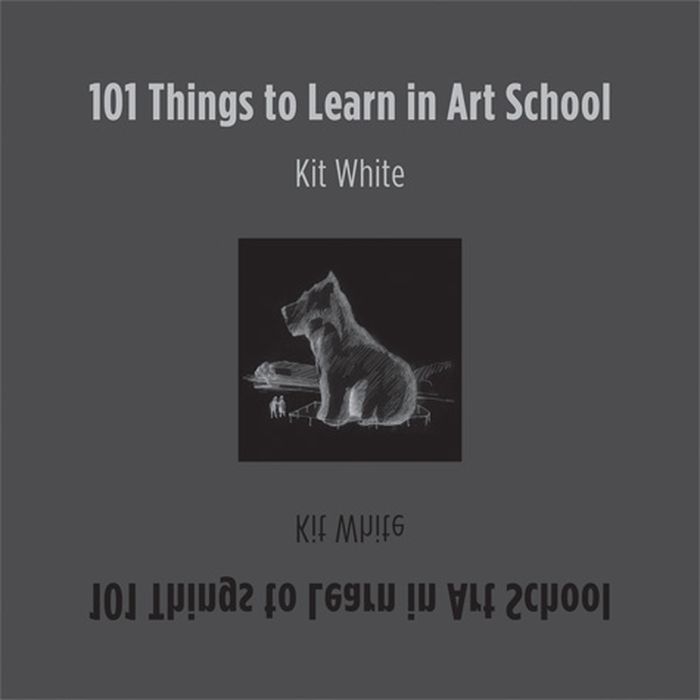
What is the first thing to learn in art school? "Art can be anything." The second thing? "Learn to draw." With 101 Things to Learn in Art School, artist and teacher Kit White delivers and develops such lessons, striking an instructive balance between technical advice and sage concepts. "Art can be anything" is illustrated by a drawing of Duchamp’s famous urinal; a(...)
Title:
101 things to learn in art school
Actions:
Price:
$22.95
(available to order)
Summary:
What is the first thing to learn in art school? "Art can be anything." The second thing? "Learn to draw." With 101 Things to Learn in Art School, artist and teacher Kit White delivers and develops such lessons, striking an instructive balance between technical advice and sage concepts. "Art can be anything" is illustrated by a drawing of Duchamp’s famous urinal; a description of chiaroscuro art is illuminated by an image "after Caravaggio"; a lesson on time and media is accompanied by a view of a Jenny Holzer projection. The book offers advice about the issues artists confront across all artistic media, but this is no simple handbook to making art. It is a guide to understanding art as a description of the world we live in, and it is a guide to using art as a medium for thought. And so this book belongs on the reading list of art students, art teachers, and artists, but it also belongs in the library of everyone who cares about art as a way of understanding life.
Form:
books
books
Publication:
October 2011
October 2011
Subject:
Art Theory
Art Theory
Form:
books
books

Actions:
Price:
$35.95
(available to order)
Summary:
"Camera" est le fruit d'une collaboration entre l'architecte Chang Yung Ho, le vidéaste Yang Fudong et l'artiste multimédia Wang Jian Wei deux artistes contemporains chinois. Au travers du rapport de l'architecture et de la vidéo, l’exposition du MAMVP voudrait encourager le spectateur à expérimenter de nouvelles formes de présentation de l'image dans l'espace. Se fondant(...)
Subject:
Contemporary Art Monographs
Contemporary Art Monographs
Publication:
June 2003, Paris
June 2003, Paris
Title:
Camera : Chang Yung Ho, Wang Jian Wei, Yang Fudong
Actions:
Price:
$35.95
(available to order)
Summary:
"Camera" est le fruit d'une collaboration entre l'architecte Chang Yung Ho, le vidéaste Yang Fudong et l'artiste multimédia Wang Jian Wei deux artistes contemporains chinois. Au travers du rapport de l'architecture et de la vidéo, l’exposition du MAMVP voudrait encourager le spectateur à expérimenter de nouvelles formes de présentation de l'image dans l'espace. Se fondant sur la métaphore de la “ camera ” en tant que chambre ou appareil, Chang Yung Ho a conçu quatre modules architecturaux, salles de projection, dans lesquelles les visiteurs regardent et sont regardés. À chaque espace correspond une marque d'appareil photographique -Polaroid, Leica, Nikon, et Seagull- faisant ainsi référence à différentes zones géographiques - respectivement les Etats-Unis, l'Allemagne, le Japon et la Chine. Pour chaque module, l'architecte a travaillé avec des matériaux différents : la tôle pour Leica, le plexiglas transparent pour Polaroid, le bois, le métal et les miroirs pour Nikon et le papier de riz pour Seagull. Les œuvres vidéo inédites de Yang Fudong et Wang Jian Wei ont été conçues spécialement pour les modules dans lesquels elles sont projetées. Ces deux artistes vivant à Shangaï et à Pékin, s'inspirent des transformations de la société chinoise contemporaine. Entretiens avec Hans-Ulrich Obrist. Textes de Hou Hanru, Laurent Gutierrez, Valérie Portefaix, Michel Nuridsany, Charles Merewether.
Form:
books
books
Publication:
June 2003, Paris
June 2003, Paris
Subject:
Contemporary Art Monographs
Contemporary Art Monographs
Form:
books
books

Actions:
Price:
$27.95
(available to order)
Summary:
1. Du rêve à l'écran: Le modèle et son double - La dissemblance - L'accès et l'obstacle - Etre en représentation - Projection mentale - L'indispensable code - Le cadre ou la réalité cernée. 2. Des grottes aux temples: Abstraction et figurines - Le verbe, l'espace, le geste - Sous l'écriture, l'image - Le code et l'analogie - Image réelle, monde virtuel - Ecce homo. 3. Des(...)
Title:
Une brève histoire de l'image (nouvelle édition)
Actions:
Price:
$27.95
(available to order)
Summary:
1. Du rêve à l'écran: Le modèle et son double - La dissemblance - L'accès et l'obstacle - Etre en représentation - Projection mentale - L'indispensable code - Le cadre ou la réalité cernée. 2. Des grottes aux temples: Abstraction et figurines - Le verbe, l'espace, le geste - Sous l'écriture, l'image - Le code et l'analogie - Image réelle, monde virtuel - Ecce homo. 3. Des idoles aux icônes: Iconoclastes contre iconodules - L'Eglise comme représentation - Les images ne tombent pas du ciel - Des dieux, des hommes et des images - L'exception scientifique. 4. Des reliques aux tableaux: Glissements progressifs vers le réalisme - Le premier tableau - Du culte à la culture - Du trésor au musée - La monnaie, image de la valeur - La question de l'orignal. 5. De l'empreinte à la page: Au risque du livre - La réduction au code - Tout le non-dit du monde - L'univers modélisé - Dessins et desseins - L'instrument de la science. 6. Le miracle de la reproduction: L'ascension d'un art mineur - Le marché de la reproduction - La démocratie des goûts et des couleurs - La théorie du reflet - Propagande, instruction, information - Le temps de la presse et des actualités. 7. Photographie : l'adhérence au réel ?: En attendant la photo - La daguerréomanie - Les derniers feux de la gravure - Le miracle de la trame - Trente épreuves et pas plus. 8. Du théâtre d'ombres au magnétoscope: La rhétorique du mouvement - Bâtard du livre et de l'image : la BD - Eau et télé à tous les étages.
Form:
books
books
Publication:
April 2017
April 2017
Subject:
Art Theory
Art Theory
Form:
books
books

Title:
Sweaterlodge
Sweaterlodge
Actions:
Price:
$39.95
(available to order)
Summary:
SweaterLodge, un projet de Pechet and Robb Studio de Vancouver, a été sélectionné par un concours national avec jury pour représenter le Canada à l’édition 2006 de la Biennale de Venise en architecture. La 10ième édition de cette Biennale, qui est la plus prestigieuse manifestation d’architecture du monde, sera présentée de septembre à novembre 2006, à Venise en(...)
Subject:
Architecture Monographs
Architecture Monographs
Publication:
December 2006, Ottawa
December 2006, Ottawa
Title:
Sweaterlodge
Actions:
Price:
$39.95
(available to order)
Summary:
SweaterLodge, un projet de Pechet and Robb Studio de Vancouver, a été sélectionné par un concours national avec jury pour représenter le Canada à l’édition 2006 de la Biennale de Venise en architecture. La 10ième édition de cette Biennale, qui est la plus prestigieuse manifestation d’architecture du monde, sera présentée de septembre à novembre 2006, à Venise en Italie. SweaterLodge explore l’influence de la culture des loisirs et de la nature sur la vie urbaine à Vancouver. L’élément majeur de SweaterLodge est un abri géant en molleton Polarfleece fait de fibres plastiques provenant de canettes recyclées. Suspendu à l’intérieur du pavillon canadien, ce vêtement abrite les visiteurs, comme un grand cocon orange. Les visiteurs qui entrent dans ce grand chandail peuvent assister à des projections de films numériques montrant des capsules d’une ville où nature sauvage et vie urbaine s’entremêlent. Chaque projection est activée par un spectateur qui pédale sur un vélo stationnaire : plus il pédale vite, plus la bande vidéo passe rapidement. Les caisses d’expédition et les bagages utilisés pour le transport de l’exposition se transformeront pour devenir le mobilier du pavillon, SweaterLodge présupposant un avenir où les objets seront polyvalents : un chandail se convertit en abri, des bagages deviennent des sofas, et des vélos, des projecteurs. Ces éléments mis ensemble brossent le portrait d’une ville où le culte de la nature et la culture urbaine s’imbriquent le plus souvent de manière riche et surprenante.
Form:
books
books
Publication:
December 2006, Ottawa
December 2006, Ottawa
Subject:
Architecture Monographs
Architecture Monographs


