


2113 Results
Form:
drawings
drawings
Actions:
Reference number:
AP046.S1.1983.PR01.418
Description:
This file includes drawing showing proposed tree planting locations for the CCA and gardens.
AP046.S1.1983.PR01.418
Description:
This file includes drawing showing proposed tree planting locations for the CCA and gardens.
People:
Date:
1983-1989
1983-1989
Title:
Graded landscaping plans, Canadian Centre for Architecture, Montréal, Québec
Actions:
AP046.S1.1983.PR01.418
Description:
This file includes drawing showing proposed tree planting locations for the CCA and gardens.
Graded landscaping plans, Canadian Centre for Architecture, Montréal, Québec
Actions:
AP046.S1.1983.PR01.418
Description:
This file includes drawing showing proposed tree planting locations for the CCA and gardens.
Form:
drawings
drawings
Date:
1983-1989
1983-1989
People:
Level of archival description:
Project
Project
Actions:
Reference number:
AP075.S1.2000.PR09
Description:
Project series documents Cornelia Hahn Oberlander's proposal for the landscape projet for the Portside expansion of the Vancouver Convention Centre. Oberlander worked in this project in 2005 with architectural firm Downs, Archambault & Partners Architects and Musson Cattel Mackey Partnership. The team had previously worked together on another project of expansion and redesign of the portiside in the mid-1980s for Canada Place. Like for the previous project, Oberlander's concept design was intended as a way of creating a link between the sea and the city and ease public access to the portside. Oberlander design raised precast planters with a selection of plants and trees adapted to the Burrad Inlet for the promenade. She was also in charge of the landscape design for the terraced roofscape above the new lobby of the Convention Centre, and the planters lining the pedestrian connection to the waterfront walkway. The project series contains design development drawings, including landscape plans, and details for planters, reference drawings of the existing landscape, and working drawings, including landscape plans, irrigation plans, and planting plans. The project is also documented through correspondence, including correspondence with architects, clients, consultants and contractors, Oberlander's concept notes, proposal for the landscape concept, documents related to the plant selection, financial documents, press clippings on the project, and photographs of the planting.
AP075.S1.2000.PR09
Description:
Project series documents Cornelia Hahn Oberlander's proposal for the landscape projet for the Portside expansion of the Vancouver Convention Centre. Oberlander worked in this project in 2005 with architectural firm Downs, Archambault & Partners Architects and Musson Cattel Mackey Partnership. The team had previously worked together on another project of expansion and redesign of the portiside in the mid-1980s for Canada Place. Like for the previous project, Oberlander's concept design was intended as a way of creating a link between the sea and the city and ease public access to the portside. Oberlander design raised precast planters with a selection of plants and trees adapted to the Burrad Inlet for the promenade. She was also in charge of the landscape design for the terraced roofscape above the new lobby of the Convention Centre, and the planters lining the pedestrian connection to the waterfront walkway. The project series contains design development drawings, including landscape plans, and details for planters, reference drawings of the existing landscape, and working drawings, including landscape plans, irrigation plans, and planting plans. The project is also documented through correspondence, including correspondence with architects, clients, consultants and contractors, Oberlander's concept notes, proposal for the landscape concept, documents related to the plant selection, financial documents, press clippings on the project, and photographs of the planting.
People:
Date:
1999-2005
1999-2005
Title:
Vancouver Convention Centre, Portside expansion, British Columbia (2005)
Actions:
AP075.S1.2000.PR09
Description:
Project series documents Cornelia Hahn Oberlander's proposal for the landscape projet for the Portside expansion of the Vancouver Convention Centre. Oberlander worked in this project in 2005 with architectural firm Downs, Archambault & Partners Architects and Musson Cattel Mackey Partnership. The team had previously worked together on another project of expansion and redesign of the portiside in the mid-1980s for Canada Place. Like for the previous project, Oberlander's concept design was intended as a way of creating a link between the sea and the city and ease public access to the portside. Oberlander design raised precast planters with a selection of plants and trees adapted to the Burrad Inlet for the promenade. She was also in charge of the landscape design for the terraced roofscape above the new lobby of the Convention Centre, and the planters lining the pedestrian connection to the waterfront walkway. The project series contains design development drawings, including landscape plans, and details for planters, reference drawings of the existing landscape, and working drawings, including landscape plans, irrigation plans, and planting plans. The project is also documented through correspondence, including correspondence with architects, clients, consultants and contractors, Oberlander's concept notes, proposal for the landscape concept, documents related to the plant selection, financial documents, press clippings on the project, and photographs of the planting.
Vancouver Convention Centre, Portside expansion, British Columbia (2005)
Actions:
AP075.S1.2000.PR09
Description:
Project series documents Cornelia Hahn Oberlander's proposal for the landscape projet for the Portside expansion of the Vancouver Convention Centre. Oberlander worked in this project in 2005 with architectural firm Downs, Archambault & Partners Architects and Musson Cattel Mackey Partnership. The team had previously worked together on another project of expansion and redesign of the portiside in the mid-1980s for Canada Place. Like for the previous project, Oberlander's concept design was intended as a way of creating a link between the sea and the city and ease public access to the portside. Oberlander design raised precast planters with a selection of plants and trees adapted to the Burrad Inlet for the promenade. She was also in charge of the landscape design for the terraced roofscape above the new lobby of the Convention Centre, and the planters lining the pedestrian connection to the waterfront walkway. The project series contains design development drawings, including landscape plans, and details for planters, reference drawings of the existing landscape, and working drawings, including landscape plans, irrigation plans, and planting plans. The project is also documented through correspondence, including correspondence with architects, clients, consultants and contractors, Oberlander's concept notes, proposal for the landscape concept, documents related to the plant selection, financial documents, press clippings on the project, and photographs of the planting.
Level of archival description:
Project
Project
Date:
1999-2005
1999-2005
People:
Level of archival description:
Project
Project
Title:
Campus Commons and Amphitheatre, University of the Cariboo, Kamloops, British Columbia (1991-1994)
Campus Commons and Amphitheatre, University of the Cariboo, Kamloops, British Columbia (1991-1994)
Actions:
Reference number:
AP075.S1.1991.PR02
Description:
Project series documents Cornelia Hahn Oberlander’s landscape project for Campus Commons and Amphitheatre, University of the Cariboo on McGill Road in Kamloops, British Columbia. Oberlander worked on this project in 1991-1993 with architectural firm Downs Archambault & Partners. The landscape design included tree planting for the stairs leading to the amphitheatre and planting around plaza and paved pathways connecting the new campus buildings. The university is now known as the Thompson Rivers University after a merging with the BC Open University in 2005. The project series contains design development drawings, including landscape concept plans, details and planting plans, presentation drawings, including elevations and sections, and working drawings, such as irrigation plans, site plans, planting plans and details. The project is also documented through concept notes by Oberlander, proposals, correspondence with architects and clients, specifications, including landscape specifications, and also photographs of the landscaping.
AP075.S1.1991.PR02
Description:
Project series documents Cornelia Hahn Oberlander’s landscape project for Campus Commons and Amphitheatre, University of the Cariboo on McGill Road in Kamloops, British Columbia. Oberlander worked on this project in 1991-1993 with architectural firm Downs Archambault & Partners. The landscape design included tree planting for the stairs leading to the amphitheatre and planting around plaza and paved pathways connecting the new campus buildings. The university is now known as the Thompson Rivers University after a merging with the BC Open University in 2005. The project series contains design development drawings, including landscape concept plans, details and planting plans, presentation drawings, including elevations and sections, and working drawings, such as irrigation plans, site plans, planting plans and details. The project is also documented through concept notes by Oberlander, proposals, correspondence with architects and clients, specifications, including landscape specifications, and also photographs of the landscaping.
People:
Date:
1990-1994
1990-1994
Title:
Campus Commons and Amphitheatre, University of the Cariboo, Kamloops, British Columbia (1991-1994)
Actions:
AP075.S1.1991.PR02
Description:
Project series documents Cornelia Hahn Oberlander’s landscape project for Campus Commons and Amphitheatre, University of the Cariboo on McGill Road in Kamloops, British Columbia. Oberlander worked on this project in 1991-1993 with architectural firm Downs Archambault & Partners. The landscape design included tree planting for the stairs leading to the amphitheatre and planting around plaza and paved pathways connecting the new campus buildings. The university is now known as the Thompson Rivers University after a merging with the BC Open University in 2005. The project series contains design development drawings, including landscape concept plans, details and planting plans, presentation drawings, including elevations and sections, and working drawings, such as irrigation plans, site plans, planting plans and details. The project is also documented through concept notes by Oberlander, proposals, correspondence with architects and clients, specifications, including landscape specifications, and also photographs of the landscaping.
Campus Commons and Amphitheatre, University of the Cariboo, Kamloops, British Columbia (1991-1994)
Actions:
AP075.S1.1991.PR02
Description:
Project series documents Cornelia Hahn Oberlander’s landscape project for Campus Commons and Amphitheatre, University of the Cariboo on McGill Road in Kamloops, British Columbia. Oberlander worked on this project in 1991-1993 with architectural firm Downs Archambault & Partners. The landscape design included tree planting for the stairs leading to the amphitheatre and planting around plaza and paved pathways connecting the new campus buildings. The university is now known as the Thompson Rivers University after a merging with the BC Open University in 2005. The project series contains design development drawings, including landscape concept plans, details and planting plans, presentation drawings, including elevations and sections, and working drawings, such as irrigation plans, site plans, planting plans and details. The project is also documented through concept notes by Oberlander, proposals, correspondence with architects and clients, specifications, including landscape specifications, and also photographs of the landscaping.
Level of archival description:
Project
Project
Date:
1990-1994
1990-1994
People:
Form:
photographs
photographs
Reference number:
PH1984:0977:461
Description:
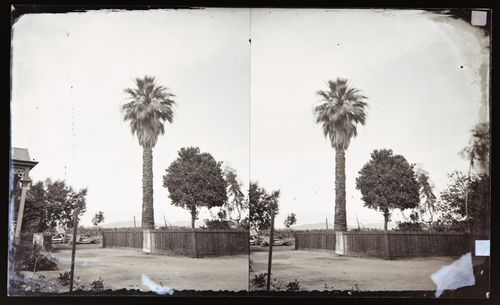
A date palm and another tree surrounded by picket fence with the porch of a building on the left.
PH1984:0977:461
Description:
A date palm and another tree surrounded by picket fence with the porch of a building on the left.
People:
Date:
ca. 1860-1880
ca. 1860-1880
Title:
Stereograph of a date palm, California, United States of America
Actions:
PH1984:0977:461
Description:
A date palm and another tree surrounded by picket fence with the porch of a building on the left.
Stereograph of a date palm, California, United States of America
Actions:
PH1984:0977:461
Description:
A date palm and another tree surrounded by picket fence with the porch of a building on the left.
Form:
photographs
photographs
Date:
ca. 1860-1880
ca. 1860-1880
People:
Level of archival description:
Project
Project
Reference number:
AP075.S1.1993.PR01
Description:
Project series documents Cornelia Hahn Oberlnader's landscape project for the C. K. Choi Building of the Institute of Asian Research at the University of British Columbia, Vancouver. Oberlander worked on this project from 1993-1995 with architectural firm Matsuzaki Wright Architects. The project consisted in creating a environmentally responsible building as well as for the landscape design. In this idea, Oberlander's landscape design only included native plans that need little maintenance, to avoid the usage of pesticides, and allow the use of organic fertilizers. She also selected trees valued as excellent absorbers of air polluants for the planting on the street edge. [1] The project was completed in 1995. The project series includes sketches design development drawings, including landscape plans, landscape details and sections, presentation drawings, working drawings, such as site plans, grading plans, and planting details, and building construction drawings used as reference.The project is also documented through concept notes by Oberlander, correspondence with architects, clients and consultants, documents related to plant selection, specifications, financial documents, and some press clippings and promotional material about the project. The project series also includes photographs of the landscaping work. Sources: [1] Herrington, Susan. Cornelia Hahn Oberlander: Making the Modern Landscape, University of Virginia Press, 2014, 304 pages, p. 184.
AP075.S1.1993.PR01
Description:
Project series documents Cornelia Hahn Oberlnader's landscape project for the C. K. Choi Building of the Institute of Asian Research at the University of British Columbia, Vancouver. Oberlander worked on this project from 1993-1995 with architectural firm Matsuzaki Wright Architects. The project consisted in creating a environmentally responsible building as well as for the landscape design. In this idea, Oberlander's landscape design only included native plans that need little maintenance, to avoid the usage of pesticides, and allow the use of organic fertilizers. She also selected trees valued as excellent absorbers of air polluants for the planting on the street edge. [1] The project was completed in 1995. The project series includes sketches design development drawings, including landscape plans, landscape details and sections, presentation drawings, working drawings, such as site plans, grading plans, and planting details, and building construction drawings used as reference.The project is also documented through concept notes by Oberlander, correspondence with architects, clients and consultants, documents related to plant selection, specifications, financial documents, and some press clippings and promotional material about the project. The project series also includes photographs of the landscaping work. Sources: [1] Herrington, Susan. Cornelia Hahn Oberlander: Making the Modern Landscape, University of Virginia Press, 2014, 304 pages, p. 184.
People:
Date:
1991-2001
1991-2001
Title:
C. K. Choi Institute of Asian Research, University of British Columbia, Vancouver, British Columbia (1993-1996)
Actions:
AP075.S1.1993.PR01
Description:
Project series documents Cornelia Hahn Oberlnader's landscape project for the C. K. Choi Building of the Institute of Asian Research at the University of British Columbia, Vancouver. Oberlander worked on this project from 1993-1995 with architectural firm Matsuzaki Wright Architects. The project consisted in creating a environmentally responsible building as well as for the landscape design. In this idea, Oberlander's landscape design only included native plans that need little maintenance, to avoid the usage of pesticides, and allow the use of organic fertilizers. She also selected trees valued as excellent absorbers of air polluants for the planting on the street edge. [1] The project was completed in 1995. The project series includes sketches design development drawings, including landscape plans, landscape details and sections, presentation drawings, working drawings, such as site plans, grading plans, and planting details, and building construction drawings used as reference.The project is also documented through concept notes by Oberlander, correspondence with architects, clients and consultants, documents related to plant selection, specifications, financial documents, and some press clippings and promotional material about the project. The project series also includes photographs of the landscaping work. Sources: [1] Herrington, Susan. Cornelia Hahn Oberlander: Making the Modern Landscape, University of Virginia Press, 2014, 304 pages, p. 184.
C. K. Choi Institute of Asian Research, University of British Columbia, Vancouver, British Columbia (1993-1996)
Actions:
AP075.S1.1993.PR01
Description:
Project series documents Cornelia Hahn Oberlnader's landscape project for the C. K. Choi Building of the Institute of Asian Research at the University of British Columbia, Vancouver. Oberlander worked on this project from 1993-1995 with architectural firm Matsuzaki Wright Architects. The project consisted in creating a environmentally responsible building as well as for the landscape design. In this idea, Oberlander's landscape design only included native plans that need little maintenance, to avoid the usage of pesticides, and allow the use of organic fertilizers. She also selected trees valued as excellent absorbers of air polluants for the planting on the street edge. [1] The project was completed in 1995. The project series includes sketches design development drawings, including landscape plans, landscape details and sections, presentation drawings, working drawings, such as site plans, grading plans, and planting details, and building construction drawings used as reference.The project is also documented through concept notes by Oberlander, correspondence with architects, clients and consultants, documents related to plant selection, specifications, financial documents, and some press clippings and promotional material about the project. The project series also includes photographs of the landscaping work. Sources: [1] Herrington, Susan. Cornelia Hahn Oberlander: Making the Modern Landscape, University of Virginia Press, 2014, 304 pages, p. 184.
Level of archival description:
Project
Project
Date:
1991-2001
1991-2001
People:
Level of archival description:
Project
Project
Reference number:
AP075.S1.1983.PR02
Description:
Project series documents Cornelia Hahn Oberlander's landscape project for the Canadian Chancery on Pennsylvania Avenue, in Washington D.C. Oberlander worked in this project from 1983-1989 with architect Arthur Erickson. Oberlander and Erickson received the National Landscape Award for the project landscape design. The design included a paved courtyard accessible through Pennsylvania Avenue and John Marshall Place Park. Oberlanded connected the park, designed by landscape architect Carol L. Johnson in 1983, to the Chancery site by adding a paving area in place of the closed street separating the two blocks. A terraced façade featuring a hanging garden with trees and roses was design as a way of extending the John Marshall Park up to the roof of the building. The project series contains sketches and working drawings for the landscaping, including planting plans, irrigation plans, planters details, sections and planters irrigation plans, and architectural plans provided for reference use. It also contains photographs of the building and the courtyard landscaping. The project is also documented through textual records, including concept notes by Oberlander, correspondence with clients, architects, suppliers and consultants, specifications, meetings notes, financial documents, promotional material and articles on the project. Source: Herrington, Susan. Cornelia Hahn Oberlander: Making the Modern Landscape, University of Virginia Press, 2014, 304 pages.
AP075.S1.1983.PR02
Description:
Project series documents Cornelia Hahn Oberlander's landscape project for the Canadian Chancery on Pennsylvania Avenue, in Washington D.C. Oberlander worked in this project from 1983-1989 with architect Arthur Erickson. Oberlander and Erickson received the National Landscape Award for the project landscape design. The design included a paved courtyard accessible through Pennsylvania Avenue and John Marshall Place Park. Oberlanded connected the park, designed by landscape architect Carol L. Johnson in 1983, to the Chancery site by adding a paving area in place of the closed street separating the two blocks. A terraced façade featuring a hanging garden with trees and roses was design as a way of extending the John Marshall Park up to the roof of the building. The project series contains sketches and working drawings for the landscaping, including planting plans, irrigation plans, planters details, sections and planters irrigation plans, and architectural plans provided for reference use. It also contains photographs of the building and the courtyard landscaping. The project is also documented through textual records, including concept notes by Oberlander, correspondence with clients, architects, suppliers and consultants, specifications, meetings notes, financial documents, promotional material and articles on the project. Source: Herrington, Susan. Cornelia Hahn Oberlander: Making the Modern Landscape, University of Virginia Press, 2014, 304 pages.
People:
Date:
1983-1990
1983-1990
Title:
Canadian Chancery, Washington D.C. (1983-1990)
Actions:
AP075.S1.1983.PR02
Description:
Project series documents Cornelia Hahn Oberlander's landscape project for the Canadian Chancery on Pennsylvania Avenue, in Washington D.C. Oberlander worked in this project from 1983-1989 with architect Arthur Erickson. Oberlander and Erickson received the National Landscape Award for the project landscape design. The design included a paved courtyard accessible through Pennsylvania Avenue and John Marshall Place Park. Oberlanded connected the park, designed by landscape architect Carol L. Johnson in 1983, to the Chancery site by adding a paving area in place of the closed street separating the two blocks. A terraced façade featuring a hanging garden with trees and roses was design as a way of extending the John Marshall Park up to the roof of the building. The project series contains sketches and working drawings for the landscaping, including planting plans, irrigation plans, planters details, sections and planters irrigation plans, and architectural plans provided for reference use. It also contains photographs of the building and the courtyard landscaping. The project is also documented through textual records, including concept notes by Oberlander, correspondence with clients, architects, suppliers and consultants, specifications, meetings notes, financial documents, promotional material and articles on the project. Source: Herrington, Susan. Cornelia Hahn Oberlander: Making the Modern Landscape, University of Virginia Press, 2014, 304 pages.
Canadian Chancery, Washington D.C. (1983-1990)
Actions:
AP075.S1.1983.PR02
Description:
Project series documents Cornelia Hahn Oberlander's landscape project for the Canadian Chancery on Pennsylvania Avenue, in Washington D.C. Oberlander worked in this project from 1983-1989 with architect Arthur Erickson. Oberlander and Erickson received the National Landscape Award for the project landscape design. The design included a paved courtyard accessible through Pennsylvania Avenue and John Marshall Place Park. Oberlanded connected the park, designed by landscape architect Carol L. Johnson in 1983, to the Chancery site by adding a paving area in place of the closed street separating the two blocks. A terraced façade featuring a hanging garden with trees and roses was design as a way of extending the John Marshall Park up to the roof of the building. The project series contains sketches and working drawings for the landscaping, including planting plans, irrigation plans, planters details, sections and planters irrigation plans, and architectural plans provided for reference use. It also contains photographs of the building and the courtyard landscaping. The project is also documented through textual records, including concept notes by Oberlander, correspondence with clients, architects, suppliers and consultants, specifications, meetings notes, financial documents, promotional material and articles on the project. Source: Herrington, Susan. Cornelia Hahn Oberlander: Making the Modern Landscape, University of Virginia Press, 2014, 304 pages.
Level of archival description:
Project
Project
Date:
1983-1990
1983-1990
People:
Level of archival description:
Project
Project
Actions:
Reference number:
AP075.S1.1990.PR03
Description:
Project series documents Cornelia Hahn Oberlander's landscape design for the United Nations Peacekeeping Monument in Ottawa, Ontario. Oberlander worked on this from 1990-1993 with Richard Henriquez & Partners and sculptor Jack Harmon. Together, they won the design competition organized by the National Capital Commission in 1990. The monument is situated between the National Gallery of Canada and the United States Embassy, between St. Patrick Street and Murray Street. The monument consists in three bronze cast figures of peacekeeping soldiers on a granite slab. Oberlander elaborated the planting scheme and designed "an oval grove of twelve oak trees representing Canada's ten provinces and two territories [...]" [1], except Nunavut that was still included in the Northwest Territories at the time. The project was completed in 1993. Project series contains ten landscape working drawings, including a site plan, landscape sections, planting and grading plans, and an irrigations plan. The project is also documented through textual records, including design competition information documents, competition proposal, correspondence with architects, client and consultants, specifications, financial documents, press about the project and photographs of the construction and the inauguration of the monument. Source: [1] Herrington, Susan. Cornelia Hahn Oberlander: Making the Modern Landscape, University of Virginia Press, 2014, 304 pages, p. 171.
AP075.S1.1990.PR03
Description:
Project series documents Cornelia Hahn Oberlander's landscape design for the United Nations Peacekeeping Monument in Ottawa, Ontario. Oberlander worked on this from 1990-1993 with Richard Henriquez & Partners and sculptor Jack Harmon. Together, they won the design competition organized by the National Capital Commission in 1990. The monument is situated between the National Gallery of Canada and the United States Embassy, between St. Patrick Street and Murray Street. The monument consists in three bronze cast figures of peacekeeping soldiers on a granite slab. Oberlander elaborated the planting scheme and designed "an oval grove of twelve oak trees representing Canada's ten provinces and two territories [...]" [1], except Nunavut that was still included in the Northwest Territories at the time. The project was completed in 1993. Project series contains ten landscape working drawings, including a site plan, landscape sections, planting and grading plans, and an irrigations plan. The project is also documented through textual records, including design competition information documents, competition proposal, correspondence with architects, client and consultants, specifications, financial documents, press about the project and photographs of the construction and the inauguration of the monument. Source: [1] Herrington, Susan. Cornelia Hahn Oberlander: Making the Modern Landscape, University of Virginia Press, 2014, 304 pages, p. 171.
People:
Date:
1990-1993
1990-1993
Title:
United Nations Peacekeeping Monument, Ottawa, Ontario (1990-1993)
Actions:
AP075.S1.1990.PR03
Description:
Project series documents Cornelia Hahn Oberlander's landscape design for the United Nations Peacekeeping Monument in Ottawa, Ontario. Oberlander worked on this from 1990-1993 with Richard Henriquez & Partners and sculptor Jack Harmon. Together, they won the design competition organized by the National Capital Commission in 1990. The monument is situated between the National Gallery of Canada and the United States Embassy, between St. Patrick Street and Murray Street. The monument consists in three bronze cast figures of peacekeeping soldiers on a granite slab. Oberlander elaborated the planting scheme and designed "an oval grove of twelve oak trees representing Canada's ten provinces and two territories [...]" [1], except Nunavut that was still included in the Northwest Territories at the time. The project was completed in 1993. Project series contains ten landscape working drawings, including a site plan, landscape sections, planting and grading plans, and an irrigations plan. The project is also documented through textual records, including design competition information documents, competition proposal, correspondence with architects, client and consultants, specifications, financial documents, press about the project and photographs of the construction and the inauguration of the monument. Source: [1] Herrington, Susan. Cornelia Hahn Oberlander: Making the Modern Landscape, University of Virginia Press, 2014, 304 pages, p. 171.
United Nations Peacekeeping Monument, Ottawa, Ontario (1990-1993)
Actions:
AP075.S1.1990.PR03
Description:
Project series documents Cornelia Hahn Oberlander's landscape design for the United Nations Peacekeeping Monument in Ottawa, Ontario. Oberlander worked on this from 1990-1993 with Richard Henriquez & Partners and sculptor Jack Harmon. Together, they won the design competition organized by the National Capital Commission in 1990. The monument is situated between the National Gallery of Canada and the United States Embassy, between St. Patrick Street and Murray Street. The monument consists in three bronze cast figures of peacekeeping soldiers on a granite slab. Oberlander elaborated the planting scheme and designed "an oval grove of twelve oak trees representing Canada's ten provinces and two territories [...]" [1], except Nunavut that was still included in the Northwest Territories at the time. The project was completed in 1993. Project series contains ten landscape working drawings, including a site plan, landscape sections, planting and grading plans, and an irrigations plan. The project is also documented through textual records, including design competition information documents, competition proposal, correspondence with architects, client and consultants, specifications, financial documents, press about the project and photographs of the construction and the inauguration of the monument. Source: [1] Herrington, Susan. Cornelia Hahn Oberlander: Making the Modern Landscape, University of Virginia Press, 2014, 304 pages, p. 171.
Level of archival description:
Project
Project
Date:
1990-1993
1990-1993
People:
Level of archival description:
Project
Project
Reference number:
AP018.S1.1962.PR02
Description:
This project series documents the Bata Limited office building in Toronto from 1962-1965. The office identified the project number as 6243. This project consisted of a three-storey office building for the shoe company, Bata Limited, located at the corners of Eglington Avenue and Don Mills Road. The building consisted of a basement with mechanical equipment and storage, a first floor with waiting room, cafeteria, kitchen and conference rooms, and second and third floors with general office space. This pavilion style building had 27 tree-like columns lining the outside that the top two storeys rested upon. The interior had similar columns to carry the design inside the building. This project was celebrated as an iconic example of modern architecture in Canada. It has since been demolished. The project is recorded through construction drawings, which are mostly reprographic copies, dating from 1963-1964.
AP018.S1.1962.PR02
Description:
This project series documents the Bata Limited office building in Toronto from 1962-1965. The office identified the project number as 6243. This project consisted of a three-storey office building for the shoe company, Bata Limited, located at the corners of Eglington Avenue and Don Mills Road. The building consisted of a basement with mechanical equipment and storage, a first floor with waiting room, cafeteria, kitchen and conference rooms, and second and third floors with general office space. This pavilion style building had 27 tree-like columns lining the outside that the top two storeys rested upon. The interior had similar columns to carry the design inside the building. This project was celebrated as an iconic example of modern architecture in Canada. It has since been demolished. The project is recorded through construction drawings, which are mostly reprographic copies, dating from 1963-1964.
People:
Date:
1963-1964
1963-1964
Title:
Bata Limited Office Building, Don Mills, Ontario (1962-1965)
Actions:
AP018.S1.1962.PR02
Description:
This project series documents the Bata Limited office building in Toronto from 1962-1965. The office identified the project number as 6243. This project consisted of a three-storey office building for the shoe company, Bata Limited, located at the corners of Eglington Avenue and Don Mills Road. The building consisted of a basement with mechanical equipment and storage, a first floor with waiting room, cafeteria, kitchen and conference rooms, and second and third floors with general office space. This pavilion style building had 27 tree-like columns lining the outside that the top two storeys rested upon. The interior had similar columns to carry the design inside the building. This project was celebrated as an iconic example of modern architecture in Canada. It has since been demolished. The project is recorded through construction drawings, which are mostly reprographic copies, dating from 1963-1964.
Bata Limited Office Building, Don Mills, Ontario (1962-1965)
Actions:
AP018.S1.1962.PR02
Description:
This project series documents the Bata Limited office building in Toronto from 1962-1965. The office identified the project number as 6243. This project consisted of a three-storey office building for the shoe company, Bata Limited, located at the corners of Eglington Avenue and Don Mills Road. The building consisted of a basement with mechanical equipment and storage, a first floor with waiting room, cafeteria, kitchen and conference rooms, and second and third floors with general office space. This pavilion style building had 27 tree-like columns lining the outside that the top two storeys rested upon. The interior had similar columns to carry the design inside the building. This project was celebrated as an iconic example of modern architecture in Canada. It has since been demolished. The project is recorded through construction drawings, which are mostly reprographic copies, dating from 1963-1964.
Level of archival description:
Project
Project
Date:
1963-1964
1963-1964
People:
Form:
books
books
Title:
Homegrown Sundwellings
Homegrown Sundwellings
Actions:
Reference number:
PH2006:0266
Description:
The book is inscribed to Gordon Matta-Clark on the front flyleaf by Peter van Dresser.
PH2006:0266
Description:
The book is inscribed to Gordon Matta-Clark on the front flyleaf by Peter van Dresser.
People:
Date:
published 1977
published 1977
Title:
Homegrown Sundwellings
Actions:
PH2006:0266
Description:
The book is inscribed to Gordon Matta-Clark on the front flyleaf by Peter van Dresser.
Homegrown Sundwellings
Actions:
PH2006:0266
Description:
The book is inscribed to Gordon Matta-Clark on the front flyleaf by Peter van Dresser.
Form:
books
books
Date:
published 1977
published 1977
People:
Level of archival description:
Project
Project
Reference number:
AP075.S1.1995.PR01
Description:
Project series documents Cornelia Hahn Oberlander's project for proposed improvements to the garden of the Rotman Residence on Forest Hill Road in Toronto, Ontario. Orberlander worked on this project in 1994. The Georgian style residence was originally design by architect John Lyle in 1924. As the residence was sited perpendicularly to the street, Oberlander's landscape concept was to create a series of garden from the street to the back of the property, which included terraces for entertaining at the front of the property, a rose garden and lawn for strolling. She also created a birch trees walk with ascending grass stairs. Oberlander was later commissioned in 1996-1997 to combine the existing garden with an extensionof the property after the acquisition of a lot next door by the owners of the residence. She extended the birch walk and created a oval-shaped lawn accessed through a wrought iron gate. The project series also contains material related to later restorations to the garden, including an alteration to the garden in 2013 to improve the view from the living room. The project series contains design development drawings, including landscape plans, planting plans, and grading plans, and also a landscape presentation drawing.The project is also documents through photographs of the landscaping, research material, correspondence with clients and contractors, concept notes by Oberlander, specifications, and meetings notes.
AP075.S1.1995.PR01
Description:
Project series documents Cornelia Hahn Oberlander's project for proposed improvements to the garden of the Rotman Residence on Forest Hill Road in Toronto, Ontario. Orberlander worked on this project in 1994. The Georgian style residence was originally design by architect John Lyle in 1924. As the residence was sited perpendicularly to the street, Oberlander's landscape concept was to create a series of garden from the street to the back of the property, which included terraces for entertaining at the front of the property, a rose garden and lawn for strolling. She also created a birch trees walk with ascending grass stairs. Oberlander was later commissioned in 1996-1997 to combine the existing garden with an extensionof the property after the acquisition of a lot next door by the owners of the residence. She extended the birch walk and created a oval-shaped lawn accessed through a wrought iron gate. The project series also contains material related to later restorations to the garden, including an alteration to the garden in 2013 to improve the view from the living room. The project series contains design development drawings, including landscape plans, planting plans, and grading plans, and also a landscape presentation drawing.The project is also documents through photographs of the landscaping, research material, correspondence with clients and contractors, concept notes by Oberlander, specifications, and meetings notes.
People:
Date:
1994-2014
1994-2014
Title:
Rotman Residence, Toronto, Ontario (1995-1997)
Actions:
AP075.S1.1995.PR01
Description:
Project series documents Cornelia Hahn Oberlander's project for proposed improvements to the garden of the Rotman Residence on Forest Hill Road in Toronto, Ontario. Orberlander worked on this project in 1994. The Georgian style residence was originally design by architect John Lyle in 1924. As the residence was sited perpendicularly to the street, Oberlander's landscape concept was to create a series of garden from the street to the back of the property, which included terraces for entertaining at the front of the property, a rose garden and lawn for strolling. She also created a birch trees walk with ascending grass stairs. Oberlander was later commissioned in 1996-1997 to combine the existing garden with an extensionof the property after the acquisition of a lot next door by the owners of the residence. She extended the birch walk and created a oval-shaped lawn accessed through a wrought iron gate. The project series also contains material related to later restorations to the garden, including an alteration to the garden in 2013 to improve the view from the living room. The project series contains design development drawings, including landscape plans, planting plans, and grading plans, and also a landscape presentation drawing.The project is also documents through photographs of the landscaping, research material, correspondence with clients and contractors, concept notes by Oberlander, specifications, and meetings notes.
Rotman Residence, Toronto, Ontario (1995-1997)
Actions:
AP075.S1.1995.PR01
Description:
Project series documents Cornelia Hahn Oberlander's project for proposed improvements to the garden of the Rotman Residence on Forest Hill Road in Toronto, Ontario. Orberlander worked on this project in 1994. The Georgian style residence was originally design by architect John Lyle in 1924. As the residence was sited perpendicularly to the street, Oberlander's landscape concept was to create a series of garden from the street to the back of the property, which included terraces for entertaining at the front of the property, a rose garden and lawn for strolling. She also created a birch trees walk with ascending grass stairs. Oberlander was later commissioned in 1996-1997 to combine the existing garden with an extensionof the property after the acquisition of a lot next door by the owners of the residence. She extended the birch walk and created a oval-shaped lawn accessed through a wrought iron gate. The project series also contains material related to later restorations to the garden, including an alteration to the garden in 2013 to improve the view from the living room. The project series contains design development drawings, including landscape plans, planting plans, and grading plans, and also a landscape presentation drawing.The project is also documents through photographs of the landscaping, research material, correspondence with clients and contractors, concept notes by Oberlander, specifications, and meetings notes.
Level of archival description:
Project
Project
Date:
1994-2014
1994-2014
People:


