


3045 Results
Form:
drawings
drawings
Title:
Elevations and profiles for variant types of dormer windows for the office buildings, Fonthill House
Elevations and profiles for variant types of dormer windows for the office buildings, Fonthill House
Actions:
Reference number:
DR1988:0433:029
Description:
- Designs for three types of gabled dormer windows for the service wings of Fonthill House, Wiltshire. - One of a group of working drawings for William Burn's October 1849 project for Fonthill House, Wiltshire, a country house designed in the Jacobethan style. This group represents only one of the projects that Burn proposed for Fonthill House; the final project, executed in 1856, was much smaller (Walker, 31, illustrated in Hitchcock, vol. 2, fig. VIII 31). Drawings include plans, elevations, and sections, as well as full-scale drawings of masonry details. Approximately half of the drawings are part of a numbered series from one to twenty-two, while the other drawings, mostly masonry details, were not numbered. These latter drawings are not as carefully finished, and a few are incomplete.
DR1988:0433:029
Description:
- Designs for three types of gabled dormer windows for the service wings of Fonthill House, Wiltshire. - One of a group of working drawings for William Burn's October 1849 project for Fonthill House, Wiltshire, a country house designed in the Jacobethan style. This group represents only one of the projects that Burn proposed for Fonthill House; the final project, executed in 1856, was much smaller (Walker, 31, illustrated in Hitchcock, vol. 2, fig. VIII 31). Drawings include plans, elevations, and sections, as well as full-scale drawings of masonry details. Approximately half of the drawings are part of a numbered series from one to twenty-two, while the other drawings, mostly masonry details, were not numbered. These latter drawings are not as carefully finished, and a few are incomplete.
People:
Subject:
architecture
architecture
Date:
October 1849
October 1849
Title:
Elevations and profiles for variant types of dormer windows for the office buildings, Fonthill House
Actions:
DR1988:0433:029
Description:
- Designs for three types of gabled dormer windows for the service wings of Fonthill House, Wiltshire. - One of a group of working drawings for William Burn's October 1849 project for Fonthill House, Wiltshire, a country house designed in the Jacobethan style. This group represents only one of the projects that Burn proposed for Fonthill House; the final project, executed in 1856, was much smaller (Walker, 31, illustrated in Hitchcock, vol. 2, fig. VIII 31). Drawings include plans, elevations, and sections, as well as full-scale drawings of masonry details. Approximately half of the drawings are part of a numbered series from one to twenty-two, while the other drawings, mostly masonry details, were not numbered. These latter drawings are not as carefully finished, and a few are incomplete.
Elevations and profiles for variant types of dormer windows for the office buildings, Fonthill House
Actions:
DR1988:0433:029
Description:
- Designs for three types of gabled dormer windows for the service wings of Fonthill House, Wiltshire. - One of a group of working drawings for William Burn's October 1849 project for Fonthill House, Wiltshire, a country house designed in the Jacobethan style. This group represents only one of the projects that Burn proposed for Fonthill House; the final project, executed in 1856, was much smaller (Walker, 31, illustrated in Hitchcock, vol. 2, fig. VIII 31). Drawings include plans, elevations, and sections, as well as full-scale drawings of masonry details. Approximately half of the drawings are part of a numbered series from one to twenty-two, while the other drawings, mostly masonry details, were not numbered. These latter drawings are not as carefully finished, and a few are incomplete.
Form:
drawings
drawings
Date:
October 1849
October 1849
People:
Subject:
architecture
architecture
Form:
drawings, textual records, works of art
drawings, textual records, works of art

Actions:
Reference number:
DR1974:0002:012:001-049
Description:
- This album contains student drawings by Hubert Rohault de Fleury executed at the École spéciale de peinture, sculpture et architecture, Paris (1798-1802), including drawings for the Grand Prix Competitions of 1800, 1801 and 1802, the Concours d'essai, the Concours d'émulation of 1800 and 1801, and other undetermined competitions. The drawings illustrate all stages of the design and competition process, ranging from preliminary sketches and esquisses to finished renderings, but do not include the renderings submitted to the Grand Prix Competitions. Drawings for the conversion of the Église de la Madeleine into a Temple de la Gloire (ca. 1806-1807) include line and wash drawings. Hubert's 1800 Grand Prix entry for an École nationale des beaux-arts was awarded the "deuxième Grand Prix" and this album includes: the esquisse; a handwritten copy of the programme; 11 large-scale line drawings - sections, elevations, and details of the ornamentation (DR1974:0002:012:008 R; DR1974:0002:012:012 R; DR1974:0002:012:037, DR1974:0002:012:039, DR1974:0002:012:041 - DR1974:0002:012:049). Two other drawings depict an École des beaux-arts, but they do not conform to the esquisse of Hubert's 1800 Grand Prix entry (DR1974:0002:012:012 V and DR1974:0002:012:013). Hubert's 1801 Grand Prix entry for a forum or public square dedicated to peace, is represented by the esquisse and four elevations, one coloured with wash (DR1974:0002:012:009 R/V - DR1974:0002:012:011 R). Studies of triumphal arches, probably relate to this project (DR1974:0002:012:011 V). Hubert's winning 1802 Grand Prix entry for a public fair with a hall for the exhibition of products of industry located on the banks of a large river is represented by an elevation and sectional elevation for the esquisse; 3 prints; finished plans, one of which is possibly part of the esquisse; elevations; sectional elevations; and one section (DR1974:0002:012:001 R/V - DR1974:0002:012:006 R/V:001-004). Three drawings which are apparently for public fairs are perhaps studies for the 1802 Grand Prix Competition (DR1974:0002:012:007 R:001-003). Also included are Hubert's entries in the Concours d'essai for each of these Grand Prix Competitions. The presence of "devises" on several drawings indicates they are the submitted competition entries: a school or college for the Concours d'émulation of 25 June 1801, for which Rohault de Fleury won a medal, a temple, a lycée, an opera house, a public bath, a sepulchral chapel, and possibly an exchange. An uncharacteristic nocturnal elevation is possibly for a cenotaph dedicated to Isaac Newton (DR1974:0002:012:014). Rohault de Fleury's design for the conversion of the Église de la Madeleine is represented by two plans (one with an elevation) drawn on engraved plans of the Madeleine, three sketch plans, a section, an elevation of a capital and other ornamentation, and an engraved plan of the designs by Pierre Contant d'Ivry and Guillaume Martin Couture for the same project.
DR1974:0002:012:001-049
Description:
- This album contains student drawings by Hubert Rohault de Fleury executed at the École spéciale de peinture, sculpture et architecture, Paris (1798-1802), including drawings for the Grand Prix Competitions of 1800, 1801 and 1802, the Concours d'essai, the Concours d'émulation of 1800 and 1801, and other undetermined competitions. The drawings illustrate all stages of the design and competition process, ranging from preliminary sketches and esquisses to finished renderings, but do not include the renderings submitted to the Grand Prix Competitions. Drawings for the conversion of the Église de la Madeleine into a Temple de la Gloire (ca. 1806-1807) include line and wash drawings. Hubert's 1800 Grand Prix entry for an École nationale des beaux-arts was awarded the "deuxième Grand Prix" and this album includes: the esquisse; a handwritten copy of the programme; 11 large-scale line drawings - sections, elevations, and details of the ornamentation (DR1974:0002:012:008 R; DR1974:0002:012:012 R; DR1974:0002:012:037, DR1974:0002:012:039, DR1974:0002:012:041 - DR1974:0002:012:049). Two other drawings depict an École des beaux-arts, but they do not conform to the esquisse of Hubert's 1800 Grand Prix entry (DR1974:0002:012:012 V and DR1974:0002:012:013). Hubert's 1801 Grand Prix entry for a forum or public square dedicated to peace, is represented by the esquisse and four elevations, one coloured with wash (DR1974:0002:012:009 R/V - DR1974:0002:012:011 R). Studies of triumphal arches, probably relate to this project (DR1974:0002:012:011 V). Hubert's winning 1802 Grand Prix entry for a public fair with a hall for the exhibition of products of industry located on the banks of a large river is represented by an elevation and sectional elevation for the esquisse; 3 prints; finished plans, one of which is possibly part of the esquisse; elevations; sectional elevations; and one section (DR1974:0002:012:001 R/V - DR1974:0002:012:006 R/V:001-004). Three drawings which are apparently for public fairs are perhaps studies for the 1802 Grand Prix Competition (DR1974:0002:012:007 R:001-003). Also included are Hubert's entries in the Concours d'essai for each of these Grand Prix Competitions. The presence of "devises" on several drawings indicates they are the submitted competition entries: a school or college for the Concours d'émulation of 25 June 1801, for which Rohault de Fleury won a medal, a temple, a lycée, an opera house, a public bath, a sepulchral chapel, and possibly an exchange. An uncharacteristic nocturnal elevation is possibly for a cenotaph dedicated to Isaac Newton (DR1974:0002:012:014). Rohault de Fleury's design for the conversion of the Église de la Madeleine is represented by two plans (one with an elevation) drawn on engraved plans of the Madeleine, three sketch plans, a section, an elevation of a capital and other ornamentation, and an engraved plan of the designs by Pierre Contant d'Ivry and Guillaume Martin Couture for the same project.
People:
Subject:
architecture, temporary architecture, urban planning
architecture, temporary architecture, urban planning
Date:
drawings executed 1800-1807, manuscripts between 1800 and 1802, published 1806
drawings executed 1800-1807, manuscripts between 1800 and 1802, published 1806
Title:
Album of student drawings for architectural competitions held at the École spéciale de peinture, sculpture et architecture and drawings for the conversion of the Église de la Madeleine into a Temple de la Gloire, Paris
Actions:
DR1974:0002:012:001-049
Description:
- This album contains student drawings by Hubert Rohault de Fleury executed at the École spéciale de peinture, sculpture et architecture, Paris (1798-1802), including drawings for the Grand Prix Competitions of 1800, 1801 and 1802, the Concours d'essai, the Concours d'émulation of 1800 and 1801, and other undetermined competitions. The drawings illustrate all stages of the design and competition process, ranging from preliminary sketches and esquisses to finished renderings, but do not include the renderings submitted to the Grand Prix Competitions. Drawings for the conversion of the Église de la Madeleine into a Temple de la Gloire (ca. 1806-1807) include line and wash drawings. Hubert's 1800 Grand Prix entry for an École nationale des beaux-arts was awarded the "deuxième Grand Prix" and this album includes: the esquisse; a handwritten copy of the programme; 11 large-scale line drawings - sections, elevations, and details of the ornamentation (DR1974:0002:012:008 R; DR1974:0002:012:012 R; DR1974:0002:012:037, DR1974:0002:012:039, DR1974:0002:012:041 - DR1974:0002:012:049). Two other drawings depict an École des beaux-arts, but they do not conform to the esquisse of Hubert's 1800 Grand Prix entry (DR1974:0002:012:012 V and DR1974:0002:012:013). Hubert's 1801 Grand Prix entry for a forum or public square dedicated to peace, is represented by the esquisse and four elevations, one coloured with wash (DR1974:0002:012:009 R/V - DR1974:0002:012:011 R). Studies of triumphal arches, probably relate to this project (DR1974:0002:012:011 V). Hubert's winning 1802 Grand Prix entry for a public fair with a hall for the exhibition of products of industry located on the banks of a large river is represented by an elevation and sectional elevation for the esquisse; 3 prints; finished plans, one of which is possibly part of the esquisse; elevations; sectional elevations; and one section (DR1974:0002:012:001 R/V - DR1974:0002:012:006 R/V:001-004). Three drawings which are apparently for public fairs are perhaps studies for the 1802 Grand Prix Competition (DR1974:0002:012:007 R:001-003). Also included are Hubert's entries in the Concours d'essai for each of these Grand Prix Competitions. The presence of "devises" on several drawings indicates they are the submitted competition entries: a school or college for the Concours d'émulation of 25 June 1801, for which Rohault de Fleury won a medal, a temple, a lycée, an opera house, a public bath, a sepulchral chapel, and possibly an exchange. An uncharacteristic nocturnal elevation is possibly for a cenotaph dedicated to Isaac Newton (DR1974:0002:012:014). Rohault de Fleury's design for the conversion of the Église de la Madeleine is represented by two plans (one with an elevation) drawn on engraved plans of the Madeleine, three sketch plans, a section, an elevation of a capital and other ornamentation, and an engraved plan of the designs by Pierre Contant d'Ivry and Guillaume Martin Couture for the same project.
Album of student drawings for architectural competitions held at the École spéciale de peinture, sculpture et architecture and drawings for the conversion of the Église de la Madeleine into a Temple de la Gloire, Paris
Actions:
DR1974:0002:012:001-049
Description:
- This album contains student drawings by Hubert Rohault de Fleury executed at the École spéciale de peinture, sculpture et architecture, Paris (1798-1802), including drawings for the Grand Prix Competitions of 1800, 1801 and 1802, the Concours d'essai, the Concours d'émulation of 1800 and 1801, and other undetermined competitions. The drawings illustrate all stages of the design and competition process, ranging from preliminary sketches and esquisses to finished renderings, but do not include the renderings submitted to the Grand Prix Competitions. Drawings for the conversion of the Église de la Madeleine into a Temple de la Gloire (ca. 1806-1807) include line and wash drawings. Hubert's 1800 Grand Prix entry for an École nationale des beaux-arts was awarded the "deuxième Grand Prix" and this album includes: the esquisse; a handwritten copy of the programme; 11 large-scale line drawings - sections, elevations, and details of the ornamentation (DR1974:0002:012:008 R; DR1974:0002:012:012 R; DR1974:0002:012:037, DR1974:0002:012:039, DR1974:0002:012:041 - DR1974:0002:012:049). Two other drawings depict an École des beaux-arts, but they do not conform to the esquisse of Hubert's 1800 Grand Prix entry (DR1974:0002:012:012 V and DR1974:0002:012:013). Hubert's 1801 Grand Prix entry for a forum or public square dedicated to peace, is represented by the esquisse and four elevations, one coloured with wash (DR1974:0002:012:009 R/V - DR1974:0002:012:011 R). Studies of triumphal arches, probably relate to this project (DR1974:0002:012:011 V). Hubert's winning 1802 Grand Prix entry for a public fair with a hall for the exhibition of products of industry located on the banks of a large river is represented by an elevation and sectional elevation for the esquisse; 3 prints; finished plans, one of which is possibly part of the esquisse; elevations; sectional elevations; and one section (DR1974:0002:012:001 R/V - DR1974:0002:012:006 R/V:001-004). Three drawings which are apparently for public fairs are perhaps studies for the 1802 Grand Prix Competition (DR1974:0002:012:007 R:001-003). Also included are Hubert's entries in the Concours d'essai for each of these Grand Prix Competitions. The presence of "devises" on several drawings indicates they are the submitted competition entries: a school or college for the Concours d'émulation of 25 June 1801, for which Rohault de Fleury won a medal, a temple, a lycée, an opera house, a public bath, a sepulchral chapel, and possibly an exchange. An uncharacteristic nocturnal elevation is possibly for a cenotaph dedicated to Isaac Newton (DR1974:0002:012:014). Rohault de Fleury's design for the conversion of the Église de la Madeleine is represented by two plans (one with an elevation) drawn on engraved plans of the Madeleine, three sketch plans, a section, an elevation of a capital and other ornamentation, and an engraved plan of the designs by Pierre Contant d'Ivry and Guillaume Martin Couture for the same project.
Form:
drawings, textual records, works of art
drawings, textual records, works of art
Date:
drawings executed 1800-1807, manuscripts between 1800 and 1802, published 1806
drawings executed 1800-1807, manuscripts between 1800 and 1802, published 1806
People:
Subject:
architecture, temporary architecture, urban planning
architecture, temporary architecture, urban planning
Form:
exhibitions
exhibitions
Actions:
Description:
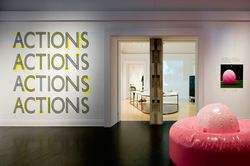
Seemingly common activities such as walking, playing, recycling, and gardening are pushed beyond their usual definition by the international architects, artists, and collectives featured in the exhibition. Their actions push against accepted norms of behaviour in cities, at times even challenging legal limitations. The individuals and groups employ a range of approaches(...)
Seemingly common activities such as walking, playing, recycling, and gardening are pushed beyond their usual definition by the international architects, artists, and collectives featured in the exhibition. Their actions push against accepted norms of behaviour in cities, at times even challenging legal limitations. The individuals and groups employ a range of approaches(...)
Location:
Main galleries
Main galleries
Date:
26 November 2008 to 19 April 2009
26 November 2008 to 19 April 2009
Title:
Actions: What You Can Do With the City
Actions:
Description:
Seemingly common activities such as walking, playing, recycling, and gardening are pushed beyond their usual definition by the international architects, artists, and collectives featured in the exhibition. Their actions push against accepted norms of behaviour in cities, at times even challenging legal limitations. The individuals and groups employ a range of approaches(...)
Actions: What You Can Do With the City
Actions:
Description:
Seemingly common activities such as walking, playing, recycling, and gardening are pushed beyond their usual definition by the international architects, artists, and collectives featured in the exhibition. Their actions push against accepted norms of behaviour in cities, at times even challenging legal limitations. The individuals and groups employ a range of approaches(...)
Form:
exhibitions
exhibitions
Date:
26 November 2008 to
19 April 2009
26 November 2008 to
19 April 2009
Location:
Main galleries
Main galleries
Form:
drawings
drawings
Actions:
Reference number:
DR1989:0001
Description:
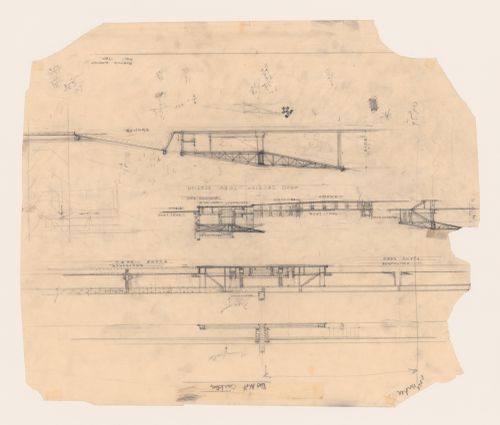
- In organization, presentation, scale and in most details this drawing corresponds to the lower half of the submitted competition panel (DR1987:0359) for which it is a preparatory drawing. Inscriptions at upper left and upper centre are instructions to the draughtsman (possibly himself) who would transfer these drawings to the panel. There are several small changes made in the submitted panel but the most noticeable is the section of the plane shed concourse.
DR1989:0001
Description:
- In organization, presentation, scale and in most details this drawing corresponds to the lower half of the submitted competition panel (DR1987:0359) for which it is a preparatory drawing. Inscriptions at upper left and upper centre are instructions to the draughtsman (possibly himself) who would transfer these drawings to the panel. There are several small changes made in the submitted panel but the most noticeable is the section of the plane shed concourse.
People:
Subject:
architecture
architecture
Date:
1929
1929
Title:
Lehigh Airports Competition Entry: Elevation for the station and sections through the hangars and concourse
Actions:
DR1989:0001
Description:
- In organization, presentation, scale and in most details this drawing corresponds to the lower half of the submitted competition panel (DR1987:0359) for which it is a preparatory drawing. Inscriptions at upper left and upper centre are instructions to the draughtsman (possibly himself) who would transfer these drawings to the panel. There are several small changes made in the submitted panel but the most noticeable is the section of the plane shed concourse.
Lehigh Airports Competition Entry: Elevation for the station and sections through the hangars and concourse
Actions:
DR1989:0001
Description:
- In organization, presentation, scale and in most details this drawing corresponds to the lower half of the submitted competition panel (DR1987:0359) for which it is a preparatory drawing. Inscriptions at upper left and upper centre are instructions to the draughtsman (possibly himself) who would transfer these drawings to the panel. There are several small changes made in the submitted panel but the most noticeable is the section of the plane shed concourse.
Form:
drawings
drawings
Date:
1929
1929
People:
Subject:
architecture
architecture
Form:
drawings
drawings
Actions:
Reference number:
DR1988:0433:037
Description:
- One of a group of working drawings for William Burn's October 1849 project for Fonthill House, Wiltshire, a country house designed in the Jacobethan style. This group represents only one of the projects that Burn proposed for Fonthill House; the final project, executed in 1856, was much smaller (Walker, 31, illustrated in Hitchcock, vol. 2, fig. VIII 31). Drawings include plans, elevations, and sections, as well as full-scale drawings of masonry details. Approximately half of the drawings are part of a numbered series from one to twenty-two, while the other drawings, mostly masonry details, were not numbered. These latter drawings are not as carefully finished, and a few are incomplete.
DR1988:0433:037
Description:
- One of a group of working drawings for William Burn's October 1849 project for Fonthill House, Wiltshire, a country house designed in the Jacobethan style. This group represents only one of the projects that Burn proposed for Fonthill House; the final project, executed in 1856, was much smaller (Walker, 31, illustrated in Hitchcock, vol. 2, fig. VIII 31). Drawings include plans, elevations, and sections, as well as full-scale drawings of masonry details. Approximately half of the drawings are part of a numbered series from one to twenty-two, while the other drawings, mostly masonry details, were not numbered. These latter drawings are not as carefully finished, and a few are incomplete.
People:
Subject:
architecture
architecture
Date:
October 1849
October 1849
Title:
Elevations and sections for the balustrade for the south balcony, Fonthill House
Actions:
DR1988:0433:037
Description:
- One of a group of working drawings for William Burn's October 1849 project for Fonthill House, Wiltshire, a country house designed in the Jacobethan style. This group represents only one of the projects that Burn proposed for Fonthill House; the final project, executed in 1856, was much smaller (Walker, 31, illustrated in Hitchcock, vol. 2, fig. VIII 31). Drawings include plans, elevations, and sections, as well as full-scale drawings of masonry details. Approximately half of the drawings are part of a numbered series from one to twenty-two, while the other drawings, mostly masonry details, were not numbered. These latter drawings are not as carefully finished, and a few are incomplete.
Elevations and sections for the balustrade for the south balcony, Fonthill House
Actions:
DR1988:0433:037
Description:
- One of a group of working drawings for William Burn's October 1849 project for Fonthill House, Wiltshire, a country house designed in the Jacobethan style. This group represents only one of the projects that Burn proposed for Fonthill House; the final project, executed in 1856, was much smaller (Walker, 31, illustrated in Hitchcock, vol. 2, fig. VIII 31). Drawings include plans, elevations, and sections, as well as full-scale drawings of masonry details. Approximately half of the drawings are part of a numbered series from one to twenty-two, while the other drawings, mostly masonry details, were not numbered. These latter drawings are not as carefully finished, and a few are incomplete.
Form:
drawings
drawings
Date:
October 1849
October 1849
People:
Subject:
architecture
architecture
Form:
drawings
drawings
Actions:
Reference number:
DR1988:0433:007
Description:
- One of a group of working drawings for William Burn's October 1849 project for Fonthill House, Wiltshire, a country house designed in the Jacobethan style. This group represents only one of the projects that Burn proposed for Fonthill House; the final project, executed in 1856, was much smaller (Walker, 31, illustrated in Hitchcock, vol. 2, fig. VIII 31). Drawings include plans, elevations, and sections, as well as full-scale drawings of masonry details. Approximately half of the drawings are part of a numbered series from one to twenty-two, while the other drawings, mostly masonry details, were not numbered. These latter drawings are not as carefully finished, and a few are incomplete.
DR1988:0433:007
Description:
- One of a group of working drawings for William Burn's October 1849 project for Fonthill House, Wiltshire, a country house designed in the Jacobethan style. This group represents only one of the projects that Burn proposed for Fonthill House; the final project, executed in 1856, was much smaller (Walker, 31, illustrated in Hitchcock, vol. 2, fig. VIII 31). Drawings include plans, elevations, and sections, as well as full-scale drawings of masonry details. Approximately half of the drawings are part of a numbered series from one to twenty-two, while the other drawings, mostly masonry details, were not numbered. These latter drawings are not as carefully finished, and a few are incomplete.
People:
Subject:
architecture
architecture
Date:
October 1849
October 1849
Title:
Plan for the roof for Fonthill House, including chimneys and the drainage system
Actions:
DR1988:0433:007
Description:
- One of a group of working drawings for William Burn's October 1849 project for Fonthill House, Wiltshire, a country house designed in the Jacobethan style. This group represents only one of the projects that Burn proposed for Fonthill House; the final project, executed in 1856, was much smaller (Walker, 31, illustrated in Hitchcock, vol. 2, fig. VIII 31). Drawings include plans, elevations, and sections, as well as full-scale drawings of masonry details. Approximately half of the drawings are part of a numbered series from one to twenty-two, while the other drawings, mostly masonry details, were not numbered. These latter drawings are not as carefully finished, and a few are incomplete.
Plan for the roof for Fonthill House, including chimneys and the drainage system
Actions:
DR1988:0433:007
Description:
- One of a group of working drawings for William Burn's October 1849 project for Fonthill House, Wiltshire, a country house designed in the Jacobethan style. This group represents only one of the projects that Burn proposed for Fonthill House; the final project, executed in 1856, was much smaller (Walker, 31, illustrated in Hitchcock, vol. 2, fig. VIII 31). Drawings include plans, elevations, and sections, as well as full-scale drawings of masonry details. Approximately half of the drawings are part of a numbered series from one to twenty-two, while the other drawings, mostly masonry details, were not numbered. These latter drawings are not as carefully finished, and a few are incomplete.
Form:
drawings
drawings
Date:
October 1849
October 1849
People:
Subject:
architecture
architecture
Form:
models
models
Actions:
Reference number:
DR1995:0263:031
Description:
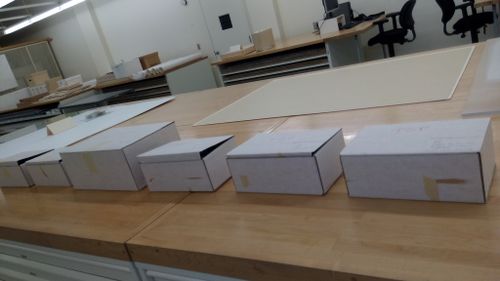
Unassembled pieces of model in 6 boxes, including notes on two folded sheets. One of the sheets contains notes and a sketch related to the scale of the model and the dimensions of human figures. The other sheet, dated 9 December 1974, contains a list of different types of furniture models with quantities and drawing references.
DR1995:0263:031
Description:
Unassembled pieces of model in 6 boxes, including notes on two folded sheets. One of the sheets contains notes and a sketch related to the scale of the model and the dimensions of human figures. The other sheet, dated 9 December 1974, contains a list of different types of furniture models with quantities and drawing references.
People:
Date:
circa 1973-1975
circa 1973-1975
Title:
McAppy: model for the Portable Enclosures Programme (PEP)
Actions:
DR1995:0263:031
Description:
Unassembled pieces of model in 6 boxes, including notes on two folded sheets. One of the sheets contains notes and a sketch related to the scale of the model and the dimensions of human figures. The other sheet, dated 9 December 1974, contains a list of different types of furniture models with quantities and drawing references.
McAppy: model for the Portable Enclosures Programme (PEP)
Actions:
DR1995:0263:031
Description:
Unassembled pieces of model in 6 boxes, including notes on two folded sheets. One of the sheets contains notes and a sketch related to the scale of the model and the dimensions of human figures. The other sheet, dated 9 December 1974, contains a list of different types of furniture models with quantities and drawing references.
Form:
models
models
Date:
circa 1973-1975
circa 1973-1975
People:
Form:
models
models
Reference number:
DR1995:0263:031-031
Description:
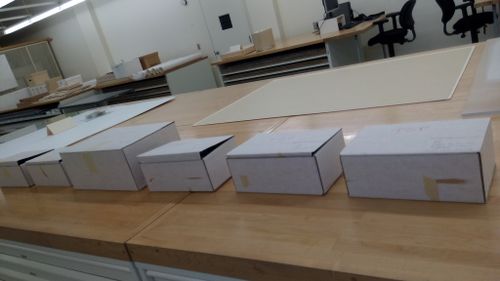
Unassembled pieces of model in 6 boxes, including notes on two folded sheets. One of the sheets contains notes and a sketch related to the scale of the model and the dimensions of human figures. The other sheet, dated 9 December 1974, contains a list of different types of furniture models with quantities and drawing references.
DR1995:0263:031-031
Description:
Unassembled pieces of model in 6 boxes, including notes on two folded sheets. One of the sheets contains notes and a sketch related to the scale of the model and the dimensions of human figures. The other sheet, dated 9 December 1974, contains a list of different types of furniture models with quantities and drawing references.
People:
Date:
circa 1973-1975
circa 1973-1975
Title:
McAppy: model for the Portable Enclosures Programme (PEP)
Actions:
DR1995:0263:031-031
Description:
Unassembled pieces of model in 6 boxes, including notes on two folded sheets. One of the sheets contains notes and a sketch related to the scale of the model and the dimensions of human figures. The other sheet, dated 9 December 1974, contains a list of different types of furniture models with quantities and drawing references.
McAppy: model for the Portable Enclosures Programme (PEP)
Actions:
DR1995:0263:031-031
Description:
Unassembled pieces of model in 6 boxes, including notes on two folded sheets. One of the sheets contains notes and a sketch related to the scale of the model and the dimensions of human figures. The other sheet, dated 9 December 1974, contains a list of different types of furniture models with quantities and drawing references.
Form:
models
models
Date:
circa 1973-1975
circa 1973-1975
People:
Form:
drawings
drawings
Actions:
Reference number:
DR1988:0433:023
Description:
- One of a group of working drawings for William Burn's October 1849 project for Fonthill House, Wiltshire, a country house designed in the Jacobethan style. This group represents only one of the projects that Burn proposed for Fonthill House; the final project, executed in 1856, was much smaller (Walker, 31, illustrated in Hitchcock, vol. 2, fig. VIII 31). Drawings include plans, elevations, and sections, as well as full-scale drawings of masonry details. Approximately half of the drawings are part of a numbered series from one to twenty-two, while the other drawings, mostly masonry details, were not numbered. These latter drawings are not as carefully finished, and a few are incomplete.
DR1988:0433:023
Description:
- One of a group of working drawings for William Burn's October 1849 project for Fonthill House, Wiltshire, a country house designed in the Jacobethan style. This group represents only one of the projects that Burn proposed for Fonthill House; the final project, executed in 1856, was much smaller (Walker, 31, illustrated in Hitchcock, vol. 2, fig. VIII 31). Drawings include plans, elevations, and sections, as well as full-scale drawings of masonry details. Approximately half of the drawings are part of a numbered series from one to twenty-two, while the other drawings, mostly masonry details, were not numbered. These latter drawings are not as carefully finished, and a few are incomplete.
People:
Subject:
architecture
architecture
Date:
October 1849
October 1849
Title:
Elevation and sections for the window balustrades for the library and Lord Westminster's room, Fonthill House
Actions:
DR1988:0433:023
Description:
- One of a group of working drawings for William Burn's October 1849 project for Fonthill House, Wiltshire, a country house designed in the Jacobethan style. This group represents only one of the projects that Burn proposed for Fonthill House; the final project, executed in 1856, was much smaller (Walker, 31, illustrated in Hitchcock, vol. 2, fig. VIII 31). Drawings include plans, elevations, and sections, as well as full-scale drawings of masonry details. Approximately half of the drawings are part of a numbered series from one to twenty-two, while the other drawings, mostly masonry details, were not numbered. These latter drawings are not as carefully finished, and a few are incomplete.
Elevation and sections for the window balustrades for the library and Lord Westminster's room, Fonthill House
Actions:
DR1988:0433:023
Description:
- One of a group of working drawings for William Burn's October 1849 project for Fonthill House, Wiltshire, a country house designed in the Jacobethan style. This group represents only one of the projects that Burn proposed for Fonthill House; the final project, executed in 1856, was much smaller (Walker, 31, illustrated in Hitchcock, vol. 2, fig. VIII 31). Drawings include plans, elevations, and sections, as well as full-scale drawings of masonry details. Approximately half of the drawings are part of a numbered series from one to twenty-two, while the other drawings, mostly masonry details, were not numbered. These latter drawings are not as carefully finished, and a few are incomplete.
Form:
drawings
drawings
Date:
October 1849
October 1849
People:
Subject:
architecture
architecture
Form:
drawings
drawings
Actions:
Reference number:
DR1988:0433:002
Description:
- One of a group of working drawings for William Burn's October 1849 project for Fonthill House, Wiltshire, a country house designed in the Jacobethan style. This group represents only one of the projects that Burn proposed for Fonthill House; the final project, executed in 1856, was much smaller (Walker, 31, illustrated in Hitchcock, vol. 2, fig. VIII 31). Drawings include plans, elevations, and sections, as well as full-scale drawings of masonry details. Approximately half of the drawings are part of a numbered series from one to twenty-two, while the other drawings, mostly masonry details, were not numbered. These latter drawings are not as carefully finished, and a few are incomplete.
DR1988:0433:002
Description:
- One of a group of working drawings for William Burn's October 1849 project for Fonthill House, Wiltshire, a country house designed in the Jacobethan style. This group represents only one of the projects that Burn proposed for Fonthill House; the final project, executed in 1856, was much smaller (Walker, 31, illustrated in Hitchcock, vol. 2, fig. VIII 31). Drawings include plans, elevations, and sections, as well as full-scale drawings of masonry details. Approximately half of the drawings are part of a numbered series from one to twenty-two, while the other drawings, mostly masonry details, were not numbered. These latter drawings are not as carefully finished, and a few are incomplete.
People:
Subject:
architecture
architecture
Date:
October 1849
October 1849
Title:
Plan for the basement for Fonthill House
Actions:
DR1988:0433:002
Description:
- One of a group of working drawings for William Burn's October 1849 project for Fonthill House, Wiltshire, a country house designed in the Jacobethan style. This group represents only one of the projects that Burn proposed for Fonthill House; the final project, executed in 1856, was much smaller (Walker, 31, illustrated in Hitchcock, vol. 2, fig. VIII 31). Drawings include plans, elevations, and sections, as well as full-scale drawings of masonry details. Approximately half of the drawings are part of a numbered series from one to twenty-two, while the other drawings, mostly masonry details, were not numbered. These latter drawings are not as carefully finished, and a few are incomplete.
Plan for the basement for Fonthill House
Actions:
DR1988:0433:002
Description:
- One of a group of working drawings for William Burn's October 1849 project for Fonthill House, Wiltshire, a country house designed in the Jacobethan style. This group represents only one of the projects that Burn proposed for Fonthill House; the final project, executed in 1856, was much smaller (Walker, 31, illustrated in Hitchcock, vol. 2, fig. VIII 31). Drawings include plans, elevations, and sections, as well as full-scale drawings of masonry details. Approximately half of the drawings are part of a numbered series from one to twenty-two, while the other drawings, mostly masonry details, were not numbered. These latter drawings are not as carefully finished, and a few are incomplete.
Form:
drawings
drawings
Date:
October 1849
October 1849
People:
Subject:
architecture
architecture


