


5084 Results
Form:
photographs
photographs
Actions:
Reference number:
PH1997:0059
Description:
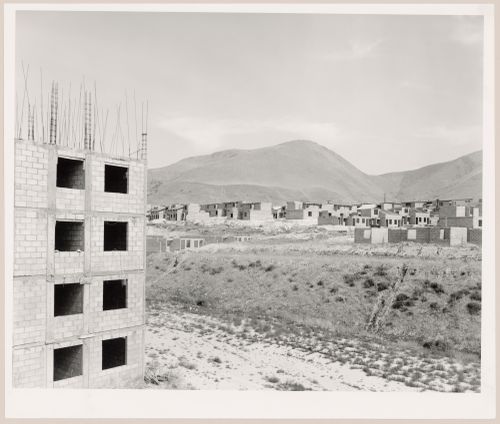
- The series "Running Fence 1997" focuses "on the first 14 miles of the border fence that separates the United States and Mexico, beginning at the Pacific Ocean and ending in the Otay Mountains.... [It] analyzes the "idea" of the border and explores its iconography, the border being a subject that is of extreme importance to the public as the world proceeds towards greater globalization. [Geoffrey] James has written of the project: "[The border fence] was built by the US Army Corps of Engineers in 1994, out of recycled metal landing strip - the most visible symbol of what is known as Operation Gatekeeper. Because the steel sheets are placed in the ground so that their ridges run horizontally, a man can hop over the fence with ease; and no Mexican child ever seems to be impeded from retrieving a soccer ball from US territory. The real barrier to illegal immigration from Mexico into the USA is less visible: hundreds of buried sensors linked to a central computer, nightscopes, helicopters and Border Patrol Agents in white Broncos."" (Evans).
People:
Subject:
architecture, engineering, topographic
architecture, engineering, topographic
Date:
1997
1997
Title:
View of an industrial park under construction with a partially completed building in the foreground and partially completed houses and mountains in the background, Mesa de Otay, Tijuana, Baja California, Mexico
Actions:
PH1997:0059
Description:
- The series "Running Fence 1997" focuses "on the first 14 miles of the border fence that separates the United States and Mexico, beginning at the Pacific Ocean and ending in the Otay Mountains.... [It] analyzes the "idea" of the border and explores its iconography, the border being a subject that is of extreme importance to the public as the world proceeds towards greater globalization. [Geoffrey] James has written of the project: "[The border fence] was built by the US Army Corps of Engineers in 1994, out of recycled metal landing strip - the most visible symbol of what is known as Operation Gatekeeper. Because the steel sheets are placed in the ground so that their ridges run horizontally, a man can hop over the fence with ease; and no Mexican child ever seems to be impeded from retrieving a soccer ball from US territory. The real barrier to illegal immigration from Mexico into the USA is less visible: hundreds of buried sensors linked to a central computer, nightscopes, helicopters and Border Patrol Agents in white Broncos."" (Evans).
Form:
photographs
photographs
Date:
1997
1997
People:
Subject:
architecture, engineering, topographic
architecture, engineering, topographic
Form:
photographs
photographs
Actions:
Reference number:
PH1997:0060
Description:
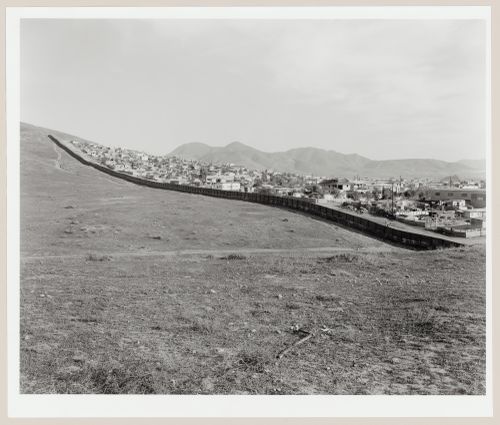
The series "Running Fence 1997" focuses "on the first 14 miles of the border fence that separates the United States and Mexico, beginning at the Pacific Ocean and ending in the Otay Mountains.... [It] analyzes the "idea" of the border and explores its iconography, the border being a subject that is of extreme importance to the public as the world proceeds towards greater globalization. [Geoffrey] James has written of the project: "[The border fence] was built by the US Army Corps of Engineers in 1994, out of recycled metal landing strip - the most visible symbol of what is known as Operation Gatekeeper. Because the steel sheets are placed in the ground so that their ridges run horizontally, a man can hop over the fence with ease; and no Mexican child ever seems to be impeded from retrieving a soccer ball from US territory. The real barrier to illegal immigration from Mexico into the USA is less visible: hundreds of buried sensors linked to a central computer, nightscopes, helicopters and Border Patrol Agents in white Broncos."" (Evans).
People:
Subject:
architecture, engineering, topographic
architecture, engineering, topographic
Date:
1997
1997
Title:
View of Otay Mesa, Mexico from San Diego County, California showing the United States-Mexico border fence, from the series "Running Fence"
Actions:
PH1997:0060
Description:
The series "Running Fence 1997" focuses "on the first 14 miles of the border fence that separates the United States and Mexico, beginning at the Pacific Ocean and ending in the Otay Mountains.... [It] analyzes the "idea" of the border and explores its iconography, the border being a subject that is of extreme importance to the public as the world proceeds towards greater globalization. [Geoffrey] James has written of the project: "[The border fence] was built by the US Army Corps of Engineers in 1994, out of recycled metal landing strip - the most visible symbol of what is known as Operation Gatekeeper. Because the steel sheets are placed in the ground so that their ridges run horizontally, a man can hop over the fence with ease; and no Mexican child ever seems to be impeded from retrieving a soccer ball from US territory. The real barrier to illegal immigration from Mexico into the USA is less visible: hundreds of buried sensors linked to a central computer, nightscopes, helicopters and Border Patrol Agents in white Broncos."" (Evans).
Form:
photographs
photographs
Date:
1997
1997
People:
Subject:
architecture, engineering, topographic
architecture, engineering, topographic
Form:
photographs
photographs
Actions:
Reference number:
PH1997:0061
Description:
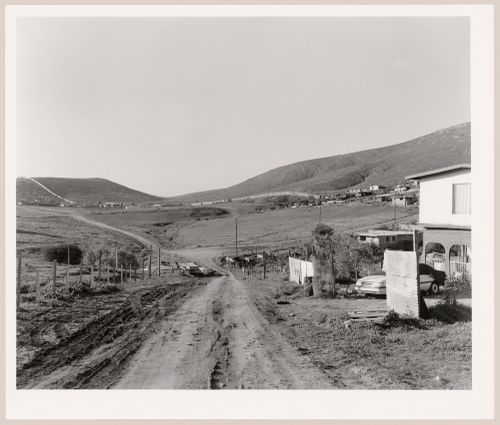
- The series "Running Fence 1997" focuses "on the first 14 miles of the border fence that separates the United States and Mexico, beginning at the Pacific Ocean and ending in the Otay Mountains.... [It] analyzes the "idea" of the border and explores its iconography, the border being a subject that is of extreme importance to the public as the world proceeds towards greater globalization. [Geoffrey] James has written of the project: "[The border fence] was built by the US Army Corps of Engineers in 1994, out of recycled metal landing strip - the most visible symbol of what is known as Operation Gatekeeper. Because the steel sheets are placed in the ground so that their ridges run horizontally, a man can hop over the fence with ease; and no Mexican child ever seems to be impeded from retrieving a soccer ball from US territory. The real barrier to illegal immigration from Mexico into the USA is less visible: hundreds of buried sensors linked to a central computer, nightscopes, helicopters and Border Patrol Agents in white Broncos."" (Evans).
People:
Subject:
architecture, engineering, topographic
architecture, engineering, topographic
Date:
1997
1997
Title:
View of roads and houses with a partial view of the United States-Mexico border fence, Otay Mesa, San Diego County, California, United States, and Tijuana, Baja California, Mexico
Actions:
PH1997:0061
Description:
- The series "Running Fence 1997" focuses "on the first 14 miles of the border fence that separates the United States and Mexico, beginning at the Pacific Ocean and ending in the Otay Mountains.... [It] analyzes the "idea" of the border and explores its iconography, the border being a subject that is of extreme importance to the public as the world proceeds towards greater globalization. [Geoffrey] James has written of the project: "[The border fence] was built by the US Army Corps of Engineers in 1994, out of recycled metal landing strip - the most visible symbol of what is known as Operation Gatekeeper. Because the steel sheets are placed in the ground so that their ridges run horizontally, a man can hop over the fence with ease; and no Mexican child ever seems to be impeded from retrieving a soccer ball from US territory. The real barrier to illegal immigration from Mexico into the USA is less visible: hundreds of buried sensors linked to a central computer, nightscopes, helicopters and Border Patrol Agents in white Broncos."" (Evans).
Form:
photographs
photographs
Date:
1997
1997
People:
Subject:
architecture, engineering, topographic
architecture, engineering, topographic
Form:
photographs
photographs
Actions:
Reference number:
PH1997:0062
Description:
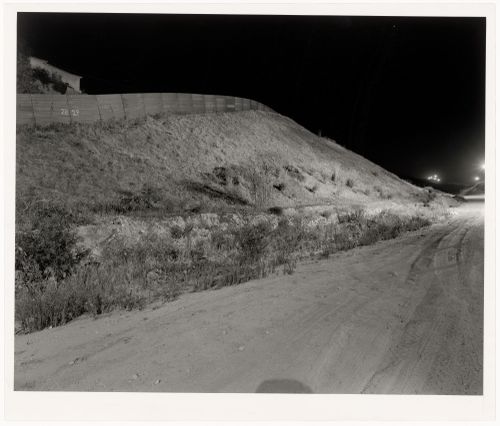
- The series "Running Fence 1997" focuses "on the first 14 miles of the border fence that separates the United States and Mexico, beginning at the Pacific Ocean and ending in the Otay Mountains.... [It] analyzes the "idea" of the border and explores its iconography, the border being a subject that is of extreme importance to the public as the world proceeds towards greater globalization. [Geoffrey] James has written of the project: "[The border fence] was built by the US Army Corps of Engineers in 1994, out of recycled metal landing strip - the most visible symbol of what is known as Operation Gatekeeper. Because the steel sheets are placed in the ground so that their ridges run horizontally, a man can hop over the fence with ease; and no Mexican child ever seems to be impeded from retrieving a soccer ball from US territory. The real barrier to illegal immigration from Mexico into the USA is less visible: hundreds of buried sensors linked to a central computer, nightscopes, helicopters and Border Patrol Agents in white Broncos."" (Evans).
People:
Subject:
architecture, engineering
architecture, engineering
Date:
1997
1997
Title:
Partial night view of the United States-Mexico border fence from the United States side, San Diego County, California, United States, and Tijuana, Baja California, Mexico
Actions:
PH1997:0062
Description:
- The series "Running Fence 1997" focuses "on the first 14 miles of the border fence that separates the United States and Mexico, beginning at the Pacific Ocean and ending in the Otay Mountains.... [It] analyzes the "idea" of the border and explores its iconography, the border being a subject that is of extreme importance to the public as the world proceeds towards greater globalization. [Geoffrey] James has written of the project: "[The border fence] was built by the US Army Corps of Engineers in 1994, out of recycled metal landing strip - the most visible symbol of what is known as Operation Gatekeeper. Because the steel sheets are placed in the ground so that their ridges run horizontally, a man can hop over the fence with ease; and no Mexican child ever seems to be impeded from retrieving a soccer ball from US territory. The real barrier to illegal immigration from Mexico into the USA is less visible: hundreds of buried sensors linked to a central computer, nightscopes, helicopters and Border Patrol Agents in white Broncos."" (Evans).
Form:
photographs
photographs
Date:
1997
1997
People:
Subject:
architecture, engineering
architecture, engineering
Form:
photographs
photographs
Actions:
Reference number:
PH1997:0063
Description:
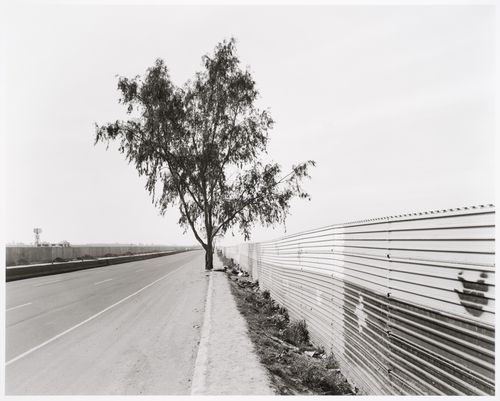
- The series "Running Fence 1997" focuses "on the first 14 miles of the border fence that separates the United States and Mexico, beginning at the Pacific Ocean and ending in the Otay Mountains.... [It] analyzes the "idea" of the border and explores its iconography, the border being a subject that is of extreme importance to the public as the world proceeds towards greater globalization. [Geoffrey] James has written of the project: "[The border fence] was built by the US Army Corps of Engineers in 1994, out of recycled metal landing strip - the most visible symbol of what is known as Operation Gatekeeper. Because the steel sheets are placed in the ground so that their ridges run horizontally, a man can hop over the fence with ease; and no Mexican child ever seems to be impeded from retrieving a soccer ball from US territory. The real barrier to illegal immigration from Mexico into the USA is less visible: hundreds of buried sensors linked to a central computer, nightscopes, helicopters and Border Patrol Agents in white Broncos."" (Evans).
People:
Subject:
architecture, engineering
architecture, engineering
Date:
1997
1997
Title:
View along a highway leading to the airport in Tijuana, Baja California, Mexico, showing a partial view of the United States-Mexico border fence
Actions:
PH1997:0063
Description:
- The series "Running Fence 1997" focuses "on the first 14 miles of the border fence that separates the United States and Mexico, beginning at the Pacific Ocean and ending in the Otay Mountains.... [It] analyzes the "idea" of the border and explores its iconography, the border being a subject that is of extreme importance to the public as the world proceeds towards greater globalization. [Geoffrey] James has written of the project: "[The border fence] was built by the US Army Corps of Engineers in 1994, out of recycled metal landing strip - the most visible symbol of what is known as Operation Gatekeeper. Because the steel sheets are placed in the ground so that their ridges run horizontally, a man can hop over the fence with ease; and no Mexican child ever seems to be impeded from retrieving a soccer ball from US territory. The real barrier to illegal immigration from Mexico into the USA is less visible: hundreds of buried sensors linked to a central computer, nightscopes, helicopters and Border Patrol Agents in white Broncos."" (Evans).
Form:
photographs
photographs
Date:
1997
1997
People:
Subject:
architecture, engineering
architecture, engineering
Form:
events
events
Actions:
Description:
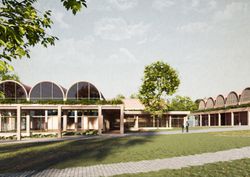
How can architecture meaningfully bridge inherited traditions and contemporary realities? Join us for a talk with architect Olayinka Dosekun-Adjei, co-founder and creative director of Studio Contra.
How can architecture meaningfully bridge inherited traditions and contemporary realities? Join us for a talk with architect Olayinka Dosekun-Adjei, co-founder and creative director of Studio Contra.
Date:
11 June 2026, 6pm to 7:30pm
11 June 2026, 6pm to 7:30pm
Title:
Reworking Material, Craft, and Form in Contemporary West Africa with Olayinka Dosekun-Adjei
Actions:
Description:
How can architecture meaningfully bridge inherited traditions and contemporary realities? Join us for a talk with architect Olayinka Dosekun-Adjei, co-founder and creative director of Studio Contra.
Form:
events
events
Date:
11 June 2026
6pm to 7:30pm
11 June 2026
6pm to 7:30pm
Form:
events
events
Actions:
Description:
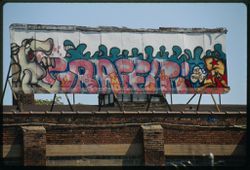
Join us on for a 90-minute workshop on the evolution and legacy of hip hop and urban space, where we will listen to rap music, write lyrics, and draw maps in graffiti.
Join us on for a 90-minute workshop on the evolution and legacy of hip hop and urban space, where we will listen to rap music, write lyrics, and draw maps in graffiti.
Date:
21 February 2026, 12pm to 1pm
21 February 2026, 12pm to 1pm
Title:
Grown from the Concrete: Hip Hop and Urban Space
Actions:
Description:
Join us on for a 90-minute workshop on the evolution and legacy of hip hop and urban space, where we will listen to rap music, write lyrics, and draw maps in graffiti.
Grown from the Concrete: Hip Hop and Urban Space
Actions:
Description:
Join us on for a 90-minute workshop on the evolution and legacy of hip hop and urban space, where we will listen to rap music, write lyrics, and draw maps in graffiti.
Form:
events
events
Date:
21 February 2026
12pm to 1pm
21 February 2026
12pm to 1pm
Form:
events
events

Actions:
Description:
Please join us for a conversation around the publication States of emergency: A Spatial History of the French Colonial Continuum, published by Columbia Books on Architecture and the City, with the author Léopold Lambert.
Please join us for a conversation around the publication States of emergency: A Spatial History of the French Colonial Continuum, published by Columbia Books on Architecture and the City, with the author Léopold Lambert.
Date:
12 November 2026, 6pm to 7:30pm
12 November 2026, 6pm to 7:30pm
Title:
States of Emergency with Leopold Lambert
Actions:
Description:
Please join us for a conversation around the publication States of emergency: A Spatial History of the French Colonial Continuum, published by Columbia Books on Architecture and the City, with the author Léopold Lambert.
States of Emergency with Leopold Lambert
Actions:
Description:
Please join us for a conversation around the publication States of emergency: A Spatial History of the French Colonial Continuum, published by Columbia Books on Architecture and the City, with the author Léopold Lambert.
Form:
events
events
Date:
12 November 2026
6pm to 7:30pm
12 November 2026
6pm to 7:30pm
Form:
events
events
Title:
Open House for Students
Open House for Students
Actions:
Description:
On 26 September 2024 we invite students to explore our exhibitions, Study Room, and public spaces, and ask us anything and everything you would like to know about the CCA.
On 26 September 2024 we invite students to explore our exhibitions, Study Room, and public spaces, and ask us anything and everything you would like to know about the CCA.
Date:
26 September 2024, 6pm to 8:30pm
26 September 2024, 6pm to 8:30pm
Title:
Open House for Students
Actions:
Description:
On 26 September 2024 we invite students to explore our exhibitions, Study Room, and public spaces, and ask us anything and everything you would like to know about the CCA.
Open House for Students
Actions:
Description:
On 26 September 2024 we invite students to explore our exhibitions, Study Room, and public spaces, and ask us anything and everything you would like to know about the CCA.
Form:
events
events
Date:
26 September 2024
6pm to 8:30pm
26 September 2024
6pm to 8:30pm
Form:
events
events
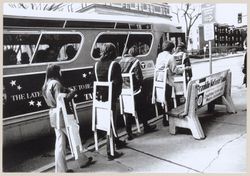
Title:
Open House for Students
Open House for Students
Actions:
Description:
On 14 September 2023 we invite students to explore our exhibitions, Study Room, and public spaces, and ask us anything and everything you would like to know about the CCA.
On 14 September 2023 we invite students to explore our exhibitions, Study Room, and public spaces, and ask us anything and everything you would like to know about the CCA.
Date:
14 September 2023, 6pm to 9pm
14 September 2023, 6pm to 9pm
Title:
Open House for Students
Actions:
Description:
On 14 September 2023 we invite students to explore our exhibitions, Study Room, and public spaces, and ask us anything and everything you would like to know about the CCA.
Open House for Students
Actions:
Description:
On 14 September 2023 we invite students to explore our exhibitions, Study Room, and public spaces, and ask us anything and everything you would like to know about the CCA.
Form:
events
events
Date:
14 September 2023
6pm to 9pm
14 September 2023
6pm to 9pm


