


781 Results
Form:
books
books
Actions:
Price:
$35.00
(available to order)
Summary:
''Seventeen Playgrounds'' is a research project by Denisa Kollarová and Anna van Lingen on the work of the Dutch architect Aldo van Eyck (1918–1999), who designed hundreds of playgrounds in Amsterdam between the 1950s and 1970s. These playgrounds, characterised by simple metal structures and concrete elements, enabled children to develop autonomy and creativity through(...)
$35.00
(available to order)
Summary:
''Seventeen Playgrounds'' is a research project by Denisa Kollarová and Anna van Lingen on the work of the Dutch architect Aldo van Eyck (1918–1999), who designed hundreds of playgrounds in Amsterdam between the 1950s and 1970s. These playgrounds, characterised by simple metal structures and concrete elements, enabled children to develop autonomy and creativity through(...)
Title:
Aldo van Eyck: Seventeen 18, 19... Playgrounds
Actions:
Price:
$35.00
(available to order)
Summary:
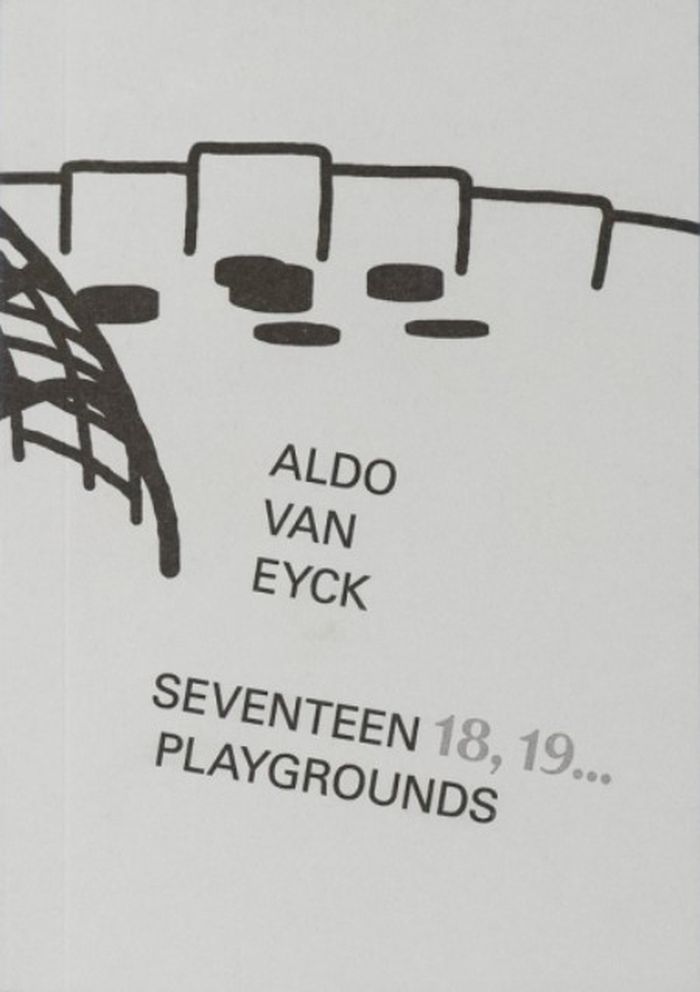
''Seventeen Playgrounds'' is a research project by Denisa Kollarová and Anna van Lingen on the work of the Dutch architect Aldo van Eyck (1918–1999), who designed hundreds of playgrounds in Amsterdam between the 1950s and 1970s. These playgrounds, characterised by simple metal structures and concrete elements, enabled children to develop autonomy and creativity through play. The research began as a mapping of the few surviving sites still present in Amsterdam’s cityscape, developed within the Graphic Design course at the Gerrit Rietveld Academie, and was first published by Lecturis (NL) in 2015. This second edition is co-published with the Faculty of Fine Arts at the Technical University of Brno (CZ).
Aldo van Eyck: Seventeen 18, 19... Playgrounds
Actions:
Price:
$35.00
(available to order)
Summary:
''Seventeen Playgrounds'' is a research project by Denisa Kollarová and Anna van Lingen on the work of the Dutch architect Aldo van Eyck (1918–1999), who designed hundreds of playgrounds in Amsterdam between the 1950s and 1970s. These playgrounds, characterised by simple metal structures and concrete elements, enabled children to develop autonomy and creativity through play. The research began as a mapping of the few surviving sites still present in Amsterdam’s cityscape, developed within the Graphic Design course at the Gerrit Rietveld Academie, and was first published by Lecturis (NL) in 2015. This second edition is co-published with the Faculty of Fine Arts at the Technical University of Brno (CZ).
Form:
books
books
Publication:
January 2024
January 2024
Subject:
Architecture Monographs
Architecture Monographs
Form:
books
books
Title:
Suburban Transformations
Suburban Transformations
Actions:
Price:
$44.95
(available to order)
Summary:
Smart Growth advocates, environmentalists, and New Urbanists have all tried in their own ways to spread the message of reforming current land use patterns. Their solutions are often criticized for being overly prescriptive, opposed to growth, or nostalgic, respectively. Suburban Transformations offers an alternative to these practices while synthesizing many of the ideas(...)
$44.95
(available to order)
Summary:
Smart Growth advocates, environmentalists, and New Urbanists have all tried in their own ways to spread the message of reforming current land use patterns. Their solutions are often criticized for being overly prescriptive, opposed to growth, or nostalgic, respectively. Suburban Transformations offers an alternative to these practices while synthesizing many of the ideas(...)
Title:
Suburban Transformations
Actions:
Price:
$44.95
(available to order)
Summary:
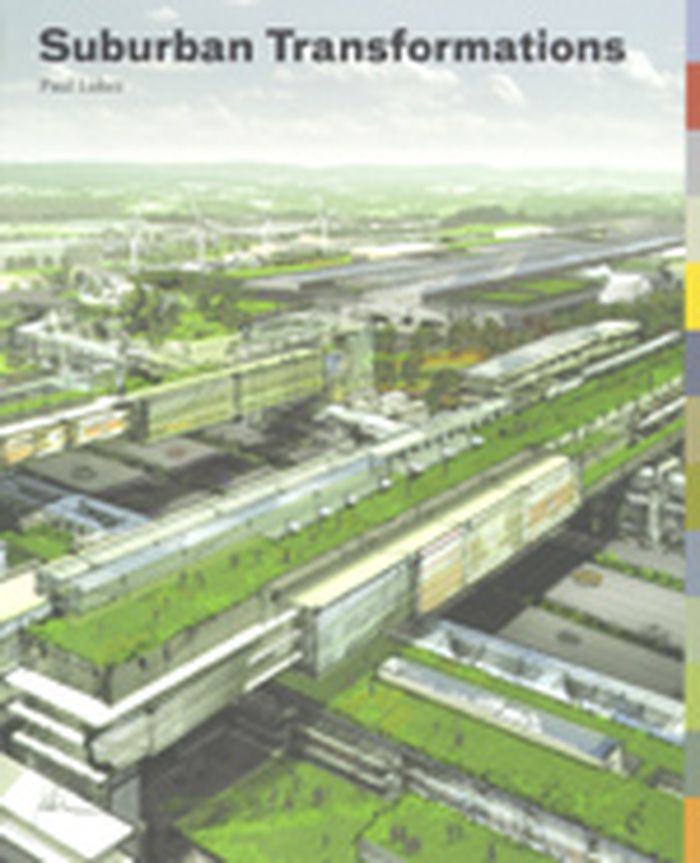
Smart Growth advocates, environmentalists, and New Urbanists have all tried in their own ways to spread the message of reforming current land use patterns. Their solutions are often criticized for being overly prescriptive, opposed to growth, or nostalgic, respectively. Suburban Transformations offers an alternative to these practices while synthesizing many of the ideas and proposals that they put forth. Five case studies provide fully expressed examples of the process, beginning with a sophisticated system of mapping and culminating in computer projections of likely future outcomes, giving the designer the ability to project changes in the community fabric and adding that knowledge to the designers kit of place-making tools.
Suburban Transformations
Actions:
Price:
$44.95
(available to order)
Summary:
Smart Growth advocates, environmentalists, and New Urbanists have all tried in their own ways to spread the message of reforming current land use patterns. Their solutions are often criticized for being overly prescriptive, opposed to growth, or nostalgic, respectively. Suburban Transformations offers an alternative to these practices while synthesizing many of the ideas and proposals that they put forth. Five case studies provide fully expressed examples of the process, beginning with a sophisticated system of mapping and culminating in computer projections of likely future outcomes, giving the designer the ability to project changes in the community fabric and adding that knowledge to the designers kit of place-making tools.
Form:
books
books
Publication:
August 2007, New York
August 2007, New York
Form:
books
books

Title:
Activism doubt
Activism doubt
Actions:
Price:
$35.95
(available in store)
Summary:
The visual report ‘Activism Doubt,’ is the vibrant result of a series of public works where Jonas Staal and Harmen de Hoop used each other as performers for their respective works according to a number of agreed rules. This process resulted in a powerful mapping of artistic possibilities that engage with public space/the public domain, while also examining such questions(...)
$35.95
(available in store)
Summary:
The visual report ‘Activism Doubt,’ is the vibrant result of a series of public works where Jonas Staal and Harmen de Hoop used each other as performers for their respective works according to a number of agreed rules. This process resulted in a powerful mapping of artistic possibilities that engage with public space/the public domain, while also examining such questions(...)
Title:
Activism doubt
Actions:
Price:
$35.95
(available in store)
Summary:
The visual report ‘Activism Doubt,’ is the vibrant result of a series of public works where Jonas Staal and Harmen de Hoop used each other as performers for their respective works according to a number of agreed rules. This process resulted in a powerful mapping of artistic possibilities that engage with public space/the public domain, while also examining such questions as – is it possible to combine both political and artistic objectives?, and; what is the influence of the artist on the structure and usage of the public domain? Intriguing and engaging, the book is illustrated throughout and accompanied by interviews with the two artists, letters and explanatory notes.
Activism doubt
Actions:
Price:
$35.95
(available in store)
Summary:
The visual report ‘Activism Doubt,’ is the vibrant result of a series of public works where Jonas Staal and Harmen de Hoop used each other as performers for their respective works according to a number of agreed rules. This process resulted in a powerful mapping of artistic possibilities that engage with public space/the public domain, while also examining such questions as – is it possible to combine both political and artistic objectives?, and; what is the influence of the artist on the structure and usage of the public domain? Intriguing and engaging, the book is illustrated throughout and accompanied by interviews with the two artists, letters and explanatory notes.
Form:
books
books
Publication:
January 2010
January 2010
Form:
books
books
Actions:
Price:
$72.95
(available to order)
Summary:
James Stirling: Revisionary Modernist is the first in-depth, book-length analysis of the architect's work. Amanda Reeser Lawrence focuses on six of Stirling's projects from the early 1950s through the late 1970s, offering detailed formal analysis of the buildings and drawings while also mapping his relationship to a broader architectural and cultural context. Though it is(...)
$72.95
(available to order)
Summary:
James Stirling: Revisionary Modernist is the first in-depth, book-length analysis of the architect's work. Amanda Reeser Lawrence focuses on six of Stirling's projects from the early 1950s through the late 1970s, offering detailed formal analysis of the buildings and drawings while also mapping his relationship to a broader architectural and cultural context. Though it is(...)
Title:
James Stirling : revisionary modernist
Actions:
Price:
$72.95
(available to order)
Summary:
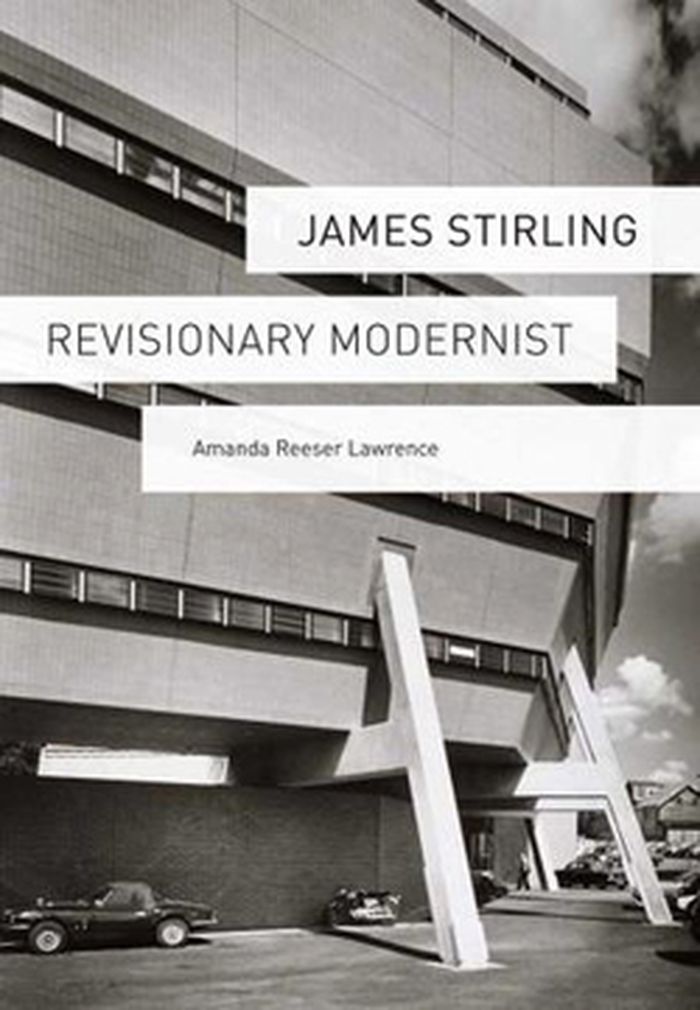
James Stirling: Revisionary Modernist is the first in-depth, book-length analysis of the architect's work. Amanda Reeser Lawrence focuses on six of Stirling's projects from the early 1950s through the late 1970s, offering detailed formal analysis of the buildings and drawings while also mapping his relationship to a broader architectural and cultural context. Though it is widely held that Stirling took a mid-career turn toward postmodernism, Lawrence shows that he was undeniably modern throughout his career. She clarifies the ways in which Stirling understood modernism as inextricably linked to the past and placed his own work in what he termed a "dialogue with architectural tradition."
James Stirling : revisionary modernist
Actions:
Price:
$72.95
(available to order)
Summary:
James Stirling: Revisionary Modernist is the first in-depth, book-length analysis of the architect's work. Amanda Reeser Lawrence focuses on six of Stirling's projects from the early 1950s through the late 1970s, offering detailed formal analysis of the buildings and drawings while also mapping his relationship to a broader architectural and cultural context. Though it is widely held that Stirling took a mid-career turn toward postmodernism, Lawrence shows that he was undeniably modern throughout his career. She clarifies the ways in which Stirling understood modernism as inextricably linked to the past and placed his own work in what he termed a "dialogue with architectural tradition."
Form:
books
books
Publication:
January 2013
January 2013
Subject:
Architecture Monographs
Architecture Monographs
Form:
books
books
Actions:
Price:
$60.00
(available to order)
Summary:
What if every vista, every island—indeed, every geographical feature on Earth—could be viewed as an art object? In ''Living Surfaces'', Abelardo Gil-Fournier and Jussi Parikka explore how the surface of the Earth has, over the last two centuries, become known and perceived as an environment of images. ''Living Surfaces'' features a range of case studies from(...)
$60.00
(available to order)
Summary:
What if every vista, every island—indeed, every geographical feature on Earth—could be viewed as an art object? In ''Living Surfaces'', Abelardo Gil-Fournier and Jussi Parikka explore how the surface of the Earth has, over the last two centuries, become known and perceived as an environment of images. ''Living Surfaces'' features a range of case studies from(...)
Subject:
Environment and environmental theory
Environment and environmental theory
Publication:
June 2024
June 2024
Title:
Living surfaces: Images, plants and environments of media
Actions:
Price:
$60.00
(available to order)
Summary:
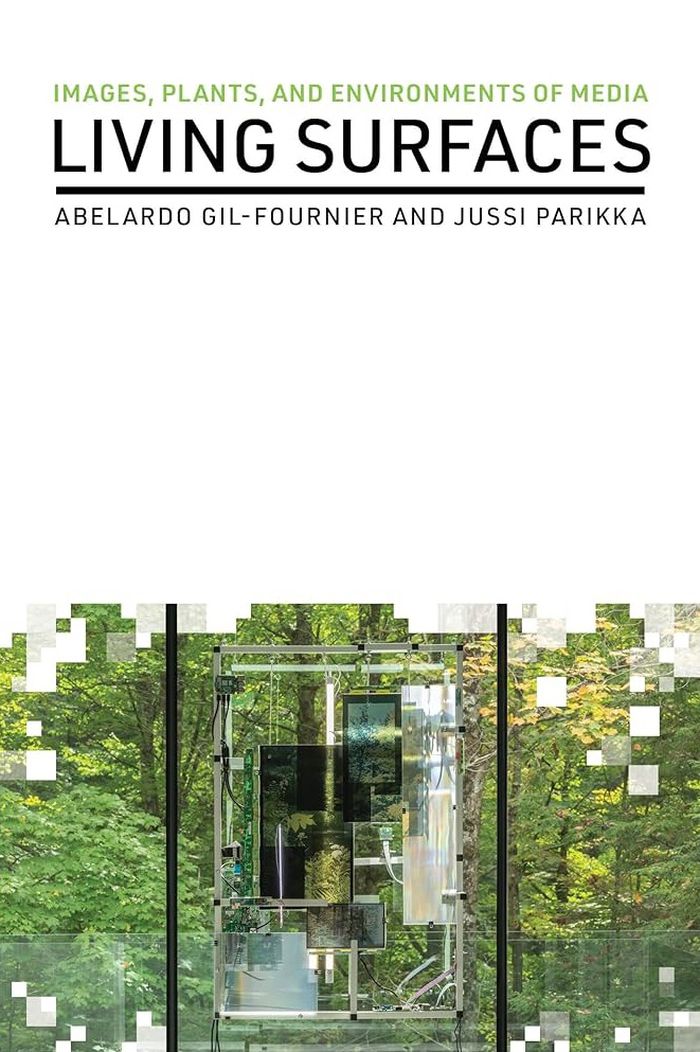
What if every vista, every island—indeed, every geographical feature on Earth—could be viewed as an art object? In ''Living Surfaces'', Abelardo Gil-Fournier and Jussi Parikka explore how the surface of the Earth has, over the last two centuries, become known and perceived as an environment of images. ''Living Surfaces'' features a range of case studies from eighteenth-century experiments with and observations of vegetal matter, photosynthesis, and plant physiology to twenty-first-century machine vision and AI techniques of calculating agricultural and other landscape surfaces. Mapping these different scales of vegetal images, Gil-Fournier and Parikka help us understand core questions that pertain to the artistic and architectural reference points for the Anthropocene.
Living surfaces: Images, plants and environments of media
Actions:
Price:
$60.00
(available to order)
Summary:
What if every vista, every island—indeed, every geographical feature on Earth—could be viewed as an art object? In ''Living Surfaces'', Abelardo Gil-Fournier and Jussi Parikka explore how the surface of the Earth has, over the last two centuries, become known and perceived as an environment of images. ''Living Surfaces'' features a range of case studies from eighteenth-century experiments with and observations of vegetal matter, photosynthesis, and plant physiology to twenty-first-century machine vision and AI techniques of calculating agricultural and other landscape surfaces. Mapping these different scales of vegetal images, Gil-Fournier and Parikka help us understand core questions that pertain to the artistic and architectural reference points for the Anthropocene.
Form:
books
books
Publication:
June 2024
June 2024
Subject:
Environment and environmental theory
Environment and environmental theory
Form:
books
books
Title:
Walking Rome's waters
Walking Rome's waters
Actions:
Price:
$50.00
(available in store)
Summary:
Written by a leading expert on the water infrastructure of Rome, this grand tour offers a new way to appreciate the history, geology, and character of the ancient and contemporary city. Illustrated itineraries wind through Rome’s streets, piazzas, and gardens, following the trail of water as it flows, propelled by gravity, through different neighborhoods. In addition to(...)
$50.00
(available in store)
Summary:
Written by a leading expert on the water infrastructure of Rome, this grand tour offers a new way to appreciate the history, geology, and character of the ancient and contemporary city. Illustrated itineraries wind through Rome’s streets, piazzas, and gardens, following the trail of water as it flows, propelled by gravity, through different neighborhoods. In addition to(...)
Title:
Walking Rome's waters
Actions:
Price:
$50.00
(available in store)
Summary:
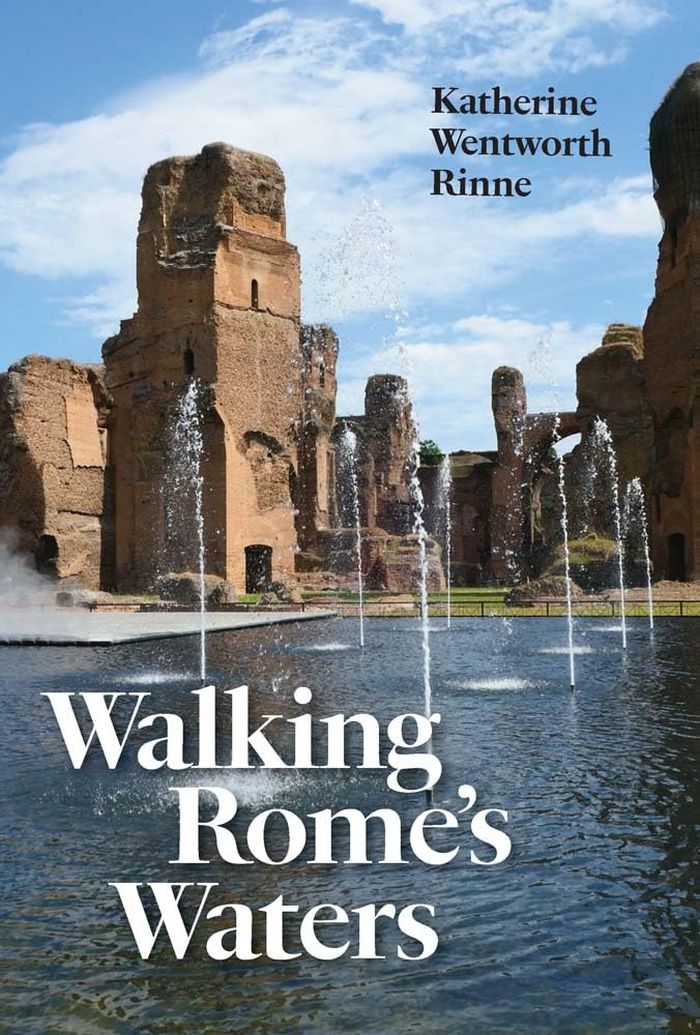
Written by a leading expert on the water infrastructure of Rome, this grand tour offers a new way to appreciate the history, geology, and character of the ancient and contemporary city. Illustrated itineraries wind through Rome’s streets, piazzas, and gardens, following the trail of water as it flows, propelled by gravity, through different neighborhoods. In addition to mapping thirteen walking tours, Katherine Wentworth Rinne also pulls the reader underground—where hidden springs and streams still flow—to illuminate how Rome’s complex topography has been transformed since antiquity, as well as into the sky, imaginatively flying over Rome’s villas and parks to give readers a sense of the infrastructure through an aerial view.
Walking Rome's waters
Actions:
Price:
$50.00
(available in store)
Summary:
Written by a leading expert on the water infrastructure of Rome, this grand tour offers a new way to appreciate the history, geology, and character of the ancient and contemporary city. Illustrated itineraries wind through Rome’s streets, piazzas, and gardens, following the trail of water as it flows, propelled by gravity, through different neighborhoods. In addition to mapping thirteen walking tours, Katherine Wentworth Rinne also pulls the reader underground—where hidden springs and streams still flow—to illuminate how Rome’s complex topography has been transformed since antiquity, as well as into the sky, imaginatively flying over Rome’s villas and parks to give readers a sense of the infrastructure through an aerial view.
Form:
books
books
Publication:
January 2025
January 2025
Subject:
History until 1900, Italy
History until 1900, Italy
Form:
books
books
Actions:
Price:
$90.00
(available to order)
Summary:
This massive new edition of See This Sound consists of two parts: the first, "Compendium," offers comprehensive scholarship on the relationship between images and sounds, exploring historical examples of multimedia art from Busby Berkeley and Oskar Fischinger to John Cage, Jordan Belson, Tony Conrad and Brian Eno, as well as strategies of montage, mapping and synesthetic(...)
$90.00
(available to order)
Summary:
This massive new edition of See This Sound consists of two parts: the first, "Compendium," offers comprehensive scholarship on the relationship between images and sounds, exploring historical examples of multimedia art from Busby Berkeley and Oskar Fischinger to John Cage, Jordan Belson, Tony Conrad and Brian Eno, as well as strategies of montage, mapping and synesthetic(...)
Title:
See this sound: audiovisuology, a reader
Actions:
Price:
$90.00
(available to order)
Summary:
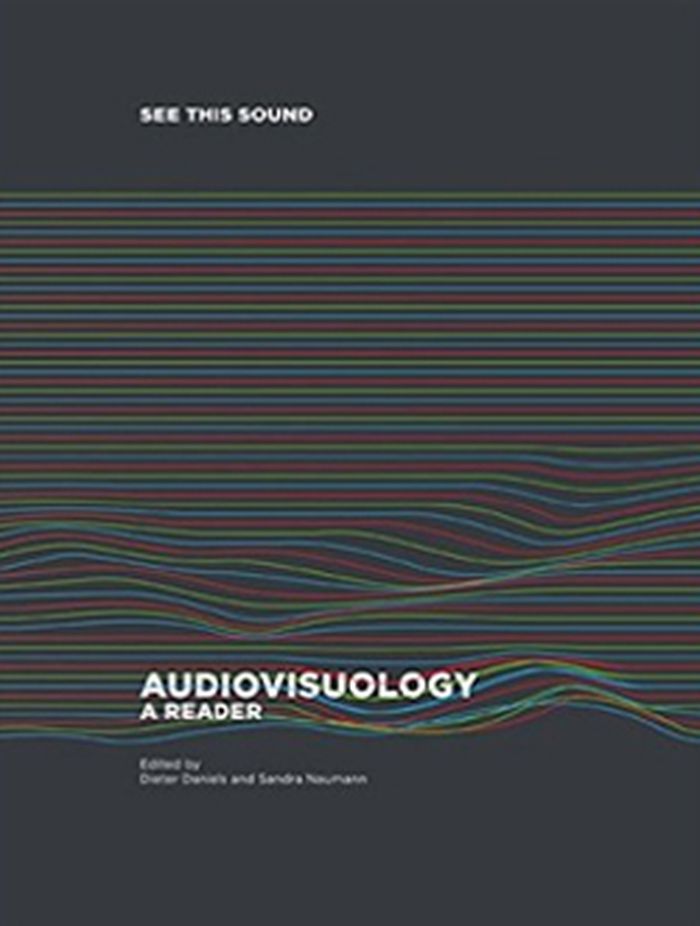
This massive new edition of See This Sound consists of two parts: the first, "Compendium," offers comprehensive scholarship on the relationship between images and sounds, exploring historical examples of multimedia art from Busby Berkeley and Oskar Fischinger to John Cage, Jordan Belson, Tony Conrad and Brian Eno, as well as strategies of montage, mapping and synesthetic effects. The second part, "Essays," offers in-depth studies on the historical development and theoretical framework of audiovisual culture, looking at image-sound relationships in popular culture, media aesthetics, pop music and "the musicalization of the visual arts in the twentieth century." As such, it offers an ambitious and definitive survey of the past and future of image-sound art.
See this sound: audiovisuology, a reader
Actions:
Price:
$90.00
(available to order)
Summary:
This massive new edition of See This Sound consists of two parts: the first, "Compendium," offers comprehensive scholarship on the relationship between images and sounds, exploring historical examples of multimedia art from Busby Berkeley and Oskar Fischinger to John Cage, Jordan Belson, Tony Conrad and Brian Eno, as well as strategies of montage, mapping and synesthetic effects. The second part, "Essays," offers in-depth studies on the historical development and theoretical framework of audiovisual culture, looking at image-sound relationships in popular culture, media aesthetics, pop music and "the musicalization of the visual arts in the twentieth century." As such, it offers an ambitious and definitive survey of the past and future of image-sound art.
Form:
books
books
Publication:
March 2016
March 2016
Subject:
Acoustics
Acoustics
Form:
books
books
Actions:
Price:
$60.00
(available in store)
Summary:
"Un Fantastico Altrove" is a photography book and, at the same time, a visual diary – both intimate and political – that tells the story of a queer relationship shaped by time, distance, returns and transformations. Through a flow of images and words, the bond between Silvia Clo Di Gregorio and Samuele Galli takes shape: a story that is both biography and utopia. Their(...)
$60.00
(available in store)
Summary:
"Un Fantastico Altrove" is a photography book and, at the same time, a visual diary – both intimate and political – that tells the story of a queer relationship shaped by time, distance, returns and transformations. Through a flow of images and words, the bond between Silvia Clo Di Gregorio and Samuele Galli takes shape: a story that is both biography and utopia. Their(...)
Title:
Silvia Clo Di Gregorio: Un Fantastico Altrove
Actions:
Price:
$60.00
(available in store)
Summary:
"Un Fantastico Altrove" is a photography book and, at the same time, a visual diary – both intimate and political – that tells the story of a queer relationship shaped by time, distance, returns and transformations. Through a flow of images and words, the bond between Silvia Clo Di Gregorio and Samuele Galli takes shape: a story that is both biography and utopia. Their emotional archive moves between personal experience and collective imagination, mapping a geography made of closeness, care and desire. Here, queer love becomes a celebration of the possibility to inhabit the world otherwise – together, beyond normative frameworks, yet deeply rooted in everyday life as both a political gesture and euphoric feeling.
Silvia Clo Di Gregorio: Un Fantastico Altrove
Actions:
Price:
$60.00
(available in store)
Summary:
"Un Fantastico Altrove" is a photography book and, at the same time, a visual diary – both intimate and political – that tells the story of a queer relationship shaped by time, distance, returns and transformations. Through a flow of images and words, the bond between Silvia Clo Di Gregorio and Samuele Galli takes shape: a story that is both biography and utopia. Their emotional archive moves between personal experience and collective imagination, mapping a geography made of closeness, care and desire. Here, queer love becomes a celebration of the possibility to inhabit the world otherwise – together, beyond normative frameworks, yet deeply rooted in everyday life as both a political gesture and euphoric feeling.
Form:
books
books
Publication:
June 2025
June 2025
Form:
books
books
Title:
Visualization as Assemblage: A Framework to apply modesty, ethics and attachment to art practice
Visualization as Assemblage: A Framework to apply modesty, ethics and attachment to art practice
Actions:
Price:
$38.00
(available in store)
Summary:
Visualization is a form of design practice that deploys representational processes of enormous rhetorical and analytical power. What is often left out of the picture is the network of processes which it assembles and the nonvisual effects it produces. Building upon the arguments of Latour, Deleuze and Guattari, author Patricio Dávila applies an assemblage framework to(...)
$38.00
(available in store)
Summary:
Visualization is a form of design practice that deploys representational processes of enormous rhetorical and analytical power. What is often left out of the picture is the network of processes which it assembles and the nonvisual effects it produces. Building upon the arguments of Latour, Deleuze and Guattari, author Patricio Dávila applies an assemblage framework to(...)
Title:
Visualization as Assemblage: A Framework to apply modesty, ethics and attachment to art practice
Actions:
Price:
$38.00
(available in store)
Summary:
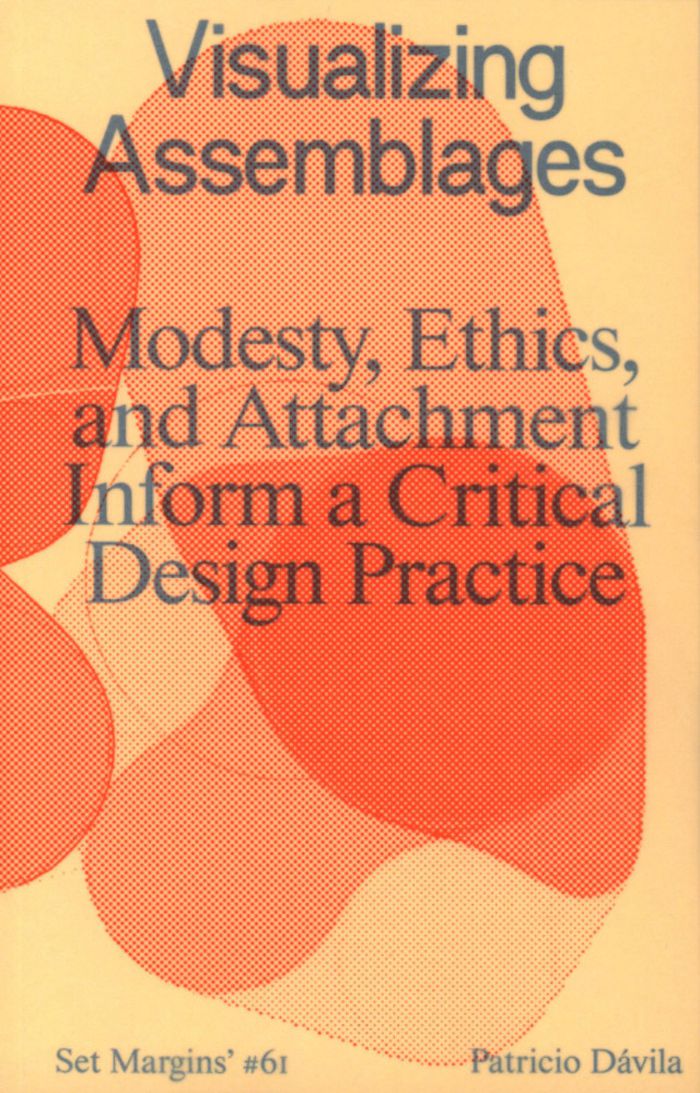
Visualization is a form of design practice that deploys representational processes of enormous rhetorical and analytical power. What is often left out of the picture is the network of processes which it assembles and the nonvisual effects it produces. Building upon the arguments of Latour, Deleuze and Guattari, author Patricio Dávila applies an assemblage framework to three case studies offering distinct instances of critical visualization practices: "Liquid Traces" (2014), from Forensic Architecture; "Anti-Eviction Mapping Project" (2013–), from the San Francisco Tenants Union; and "In the Air, Tonight" (2013–16), from the Public Visualization Lab/Studio. Dávila underscores an ethics of visualization that refocuses criticality on the potential of design to act modestly by revealing its own construction.
Visualization as Assemblage: A Framework to apply modesty, ethics and attachment to art practice
Actions:
Price:
$38.00
(available in store)
Summary:
Visualization is a form of design practice that deploys representational processes of enormous rhetorical and analytical power. What is often left out of the picture is the network of processes which it assembles and the nonvisual effects it produces. Building upon the arguments of Latour, Deleuze and Guattari, author Patricio Dávila applies an assemblage framework to three case studies offering distinct instances of critical visualization practices: "Liquid Traces" (2014), from Forensic Architecture; "Anti-Eviction Mapping Project" (2013–), from the San Francisco Tenants Union; and "In the Air, Tonight" (2013–16), from the Public Visualization Lab/Studio. Dávila underscores an ethics of visualization that refocuses criticality on the potential of design to act modestly by revealing its own construction.
Form:
books
books
Publication:
September 2026
September 2026
Subject:
Art Theory
Art Theory
Form:
books
books
Actions:
Price:
$54.00
(available in store)
Summary:
The ''Subjective Atlas of Groningen'' brings together a diverse group of Groningers mapping the province and what it means to be “at home,” in order to share and make visible the personal, but often invisible, experiences of various resident groups in Groningen. Created through participatory workshops and public activities – including exhibitions, events, and(...)
$54.00
(available in store)
Summary:
The ''Subjective Atlas of Groningen'' brings together a diverse group of Groningers mapping the province and what it means to be “at home,” in order to share and make visible the personal, but often invisible, experiences of various resident groups in Groningen. Created through participatory workshops and public activities – including exhibitions, events, and(...)
Title:
The subjective atlas of Groningen
Actions:
Price:
$54.00
(available in store)
Summary:
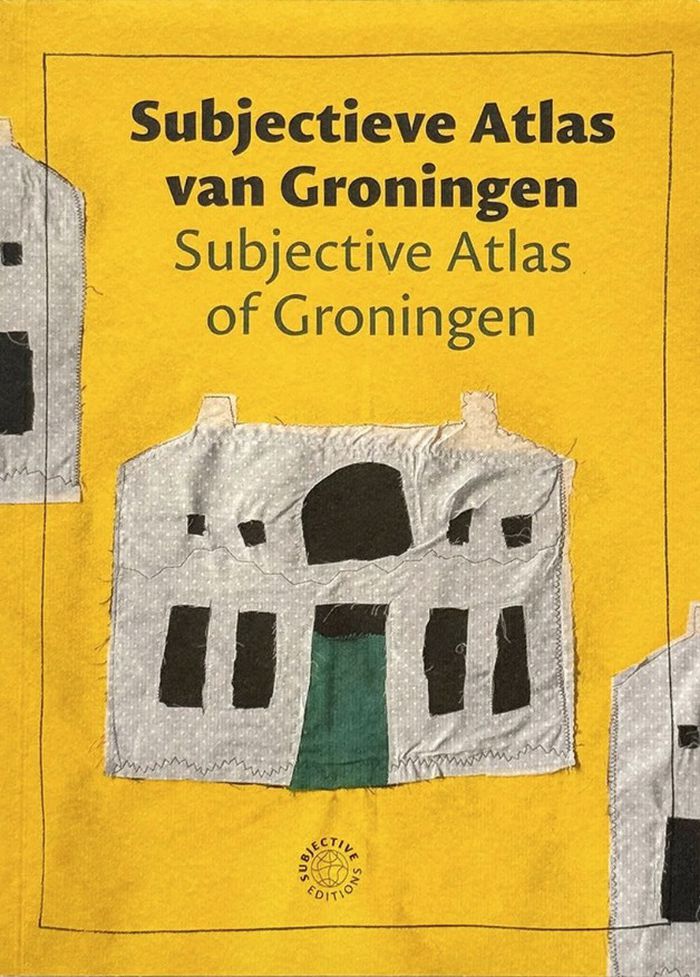
The ''Subjective Atlas of Groningen'' brings together a diverse group of Groningers mapping the province and what it means to be “at home,” in order to share and make visible the personal, but often invisible, experiences of various resident groups in Groningen. Created through participatory workshops and public activities – including exhibitions, events, and participatory sessions across the province – the project invites local communities to share their stories, becoming visible both physically and online. In seven workshops organized by the partner organizations, approximately 80 participants explored their vision of “being at home” in Groningen. Through creative sessions, they reflected on personal themes and developed visual contributions, fostering interaction and providing space for diverse perspectives and stories.
The subjective atlas of Groningen
Actions:
Price:
$54.00
(available in store)
Summary:
The ''Subjective Atlas of Groningen'' brings together a diverse group of Groningers mapping the province and what it means to be “at home,” in order to share and make visible the personal, but often invisible, experiences of various resident groups in Groningen. Created through participatory workshops and public activities – including exhibitions, events, and participatory sessions across the province – the project invites local communities to share their stories, becoming visible both physically and online. In seven workshops organized by the partner organizations, approximately 80 participants explored their vision of “being at home” in Groningen. Through creative sessions, they reflected on personal themes and developed visual contributions, fostering interaction and providing space for diverse perspectives and stories.
Form:
books
books
Publication:
June 2026
June 2026
Subject:
Urban Theory
Urban Theory


