


29585 Results
Form:
photographs
photographs
Actions:
Reference number:
PH1980:1219:021
Description:
- This photograph is from book PH1980:1219:001-100, 'Architecture in Dharwar and Mysore', which has been disassembled for the CCA exhibition 'Traces of India: Photography, Architecture, and the Politics of Representation/Empreintes de l'Inde: Photographie, architecture et politiques de la représentation'.
PH1980:1219:021
Description:
- This photograph is from book PH1980:1219:001-100, 'Architecture in Dharwar and Mysore', which has been disassembled for the CCA exhibition 'Traces of India: Photography, Architecture, and the Politics of Representation/Empreintes de l'Inde: Photographie, architecture et politiques de la représentation'.
People:
Subject:
architecture, sculpture
architecture, sculpture
Date:
between 1850 and 1866
between 1850 and 1866
Title:
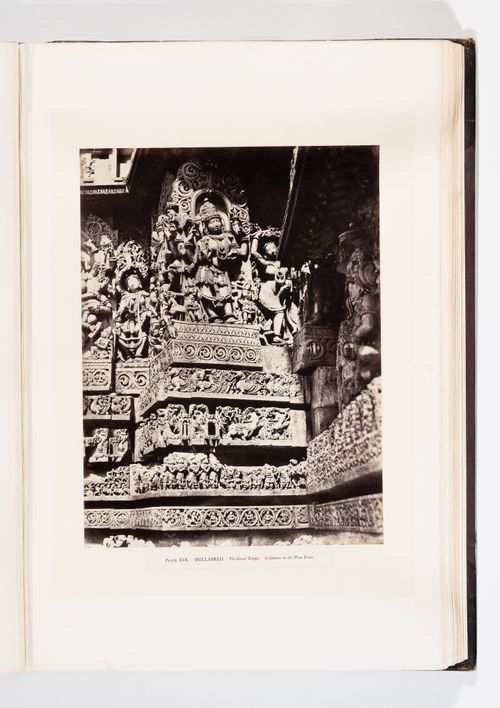
Close-up view of reliefs and sculptures on a façade, Hoysalesvara Temple, Halebid, India
Actions:
PH1980:1219:021
Description:
- This photograph is from book PH1980:1219:001-100, 'Architecture in Dharwar and Mysore', which has been disassembled for the CCA exhibition 'Traces of India: Photography, Architecture, and the Politics of Representation/Empreintes de l'Inde: Photographie, architecture et politiques de la représentation'.
Close-up view of reliefs and sculptures on a façade, Hoysalesvara Temple, Halebid, India
Actions:
PH1980:1219:021
Description:
- This photograph is from book PH1980:1219:001-100, 'Architecture in Dharwar and Mysore', which has been disassembled for the CCA exhibition 'Traces of India: Photography, Architecture, and the Politics of Representation/Empreintes de l'Inde: Photographie, architecture et politiques de la représentation'.
Form:
photographs
photographs
Date:
between 1850 and 1866
between 1850 and 1866
People:
Subject:
architecture, sculpture
architecture, sculpture
Form:
photographs
photographs
Actions:
Reference number:
PH1980:1219:023
Description:
- This photograph is from book PH1980:1219:001-100, 'Architecture in Dharwar and Mysore', which has been disassembled for the CCA exhibition 'Traces of India: Photography, Architecture, and the Politics of Representation/Empreintes de l'Inde: Photographie, architecture et politiques de la représentation'.
PH1980:1219:023
Description:
- This photograph is from book PH1980:1219:001-100, 'Architecture in Dharwar and Mysore', which has been disassembled for the CCA exhibition 'Traces of India: Photography, Architecture, and the Politics of Representation/Empreintes de l'Inde: Photographie, architecture et politiques de la représentation'.
People:
Subject:
architecture, sculpture
architecture, sculpture
Date:
between 1850 and 1866
between 1850 and 1866
Title:
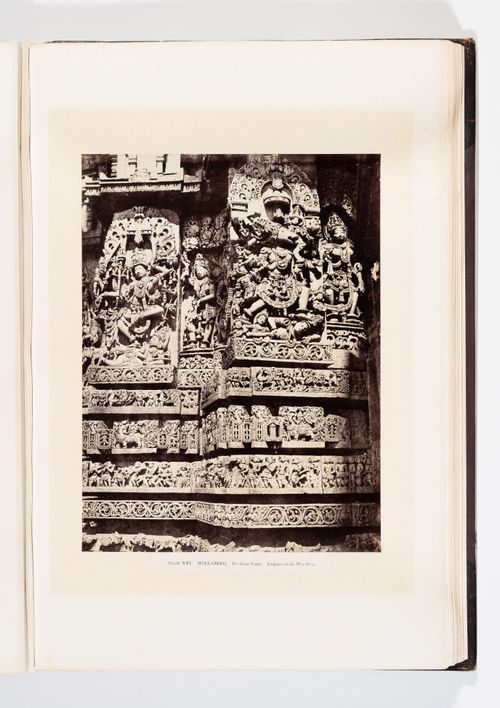
Close-up view of reliefs and sculptures on a façade, Hoysalesvara Temple, Halebid, India
Actions:
PH1980:1219:023
Description:
- This photograph is from book PH1980:1219:001-100, 'Architecture in Dharwar and Mysore', which has been disassembled for the CCA exhibition 'Traces of India: Photography, Architecture, and the Politics of Representation/Empreintes de l'Inde: Photographie, architecture et politiques de la représentation'.
Close-up view of reliefs and sculptures on a façade, Hoysalesvara Temple, Halebid, India
Actions:
PH1980:1219:023
Description:
- This photograph is from book PH1980:1219:001-100, 'Architecture in Dharwar and Mysore', which has been disassembled for the CCA exhibition 'Traces of India: Photography, Architecture, and the Politics of Representation/Empreintes de l'Inde: Photographie, architecture et politiques de la représentation'.
Form:
photographs
photographs
Date:
between 1850 and 1866
between 1850 and 1866
People:
Subject:
architecture, sculpture
architecture, sculpture
Form:
photographs
photographs
Actions:
Reference number:
PH1980:1219:049
Description:
- This photograph is from book PH1980:1219:001-100, 'Architecture in Dharwar and Mysore', which has been disassembled for the CCA exhibition 'Traces of India: Photography, Architecture, and the Politics of Representation/Empreintes de l'Inde: Photographie, architecture et politiques de la représentation'.
PH1980:1219:049
Description:
- This photograph is from book PH1980:1219:001-100, 'Architecture in Dharwar and Mysore', which has been disassembled for the CCA exhibition 'Traces of India: Photography, Architecture, and the Politics of Representation/Empreintes de l'Inde: Photographie, architecture et politiques de la représentation'.
People:
Subject:
architecture, sculpture
architecture, sculpture
Date:
between 1854 and 1858
between 1854 and 1858
Title:
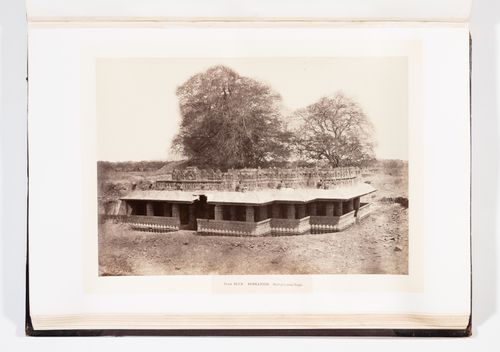
View of a temple, Bunkapoor (now Bankipur) India
Actions:
PH1980:1219:049
Description:
- This photograph is from book PH1980:1219:001-100, 'Architecture in Dharwar and Mysore', which has been disassembled for the CCA exhibition 'Traces of India: Photography, Architecture, and the Politics of Representation/Empreintes de l'Inde: Photographie, architecture et politiques de la représentation'.
View of a temple, Bunkapoor (now Bankipur) India
Actions:
PH1980:1219:049
Description:
- This photograph is from book PH1980:1219:001-100, 'Architecture in Dharwar and Mysore', which has been disassembled for the CCA exhibition 'Traces of India: Photography, Architecture, and the Politics of Representation/Empreintes de l'Inde: Photographie, architecture et politiques de la représentation'.
Form:
photographs
photographs
Date:
between 1854 and 1858
between 1854 and 1858
People:
Subject:
architecture, sculpture
architecture, sculpture
Form:
photographs
photographs
Actions:
Reference number:
PH1980:1219:073
Description:
- This photograph is from book PH1980:1219:001-100, 'Architecture in Dharwar and Mysore', which has been disassembled for the CCA exhibition 'Traces of India: Photography, Architecture, and the Politics of Representation/Empreintes de l'Inde: Photographie, architecture et politiques de la représentation'.
PH1980:1219:073
Description:
- This photograph is from book PH1980:1219:001-100, 'Architecture in Dharwar and Mysore', which has been disassembled for the CCA exhibition 'Traces of India: Photography, Architecture, and the Politics of Representation/Empreintes de l'Inde: Photographie, architecture et politiques de la représentation'.
People:
Subject:
architecture, sculpture
architecture, sculpture
Date:
between 1854 and 1866
between 1854 and 1866
Title:
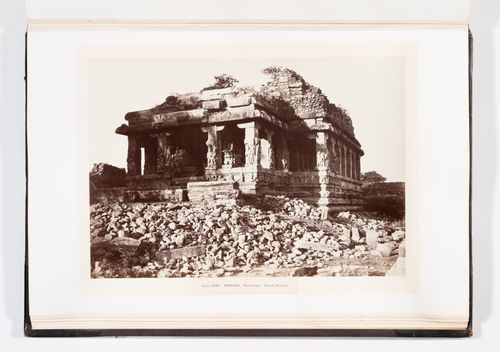
Close-up view of the Durga Temple, Aihole, India
Actions:
PH1980:1219:073
Description:
- This photograph is from book PH1980:1219:001-100, 'Architecture in Dharwar and Mysore', which has been disassembled for the CCA exhibition 'Traces of India: Photography, Architecture, and the Politics of Representation/Empreintes de l'Inde: Photographie, architecture et politiques de la représentation'.
Close-up view of the Durga Temple, Aihole, India
Actions:
PH1980:1219:073
Description:
- This photograph is from book PH1980:1219:001-100, 'Architecture in Dharwar and Mysore', which has been disassembled for the CCA exhibition 'Traces of India: Photography, Architecture, and the Politics of Representation/Empreintes de l'Inde: Photographie, architecture et politiques de la représentation'.
Form:
photographs
photographs
Date:
between 1854 and 1866
between 1854 and 1866
People:
Subject:
architecture, sculpture
architecture, sculpture
Form:
photographs
photographs
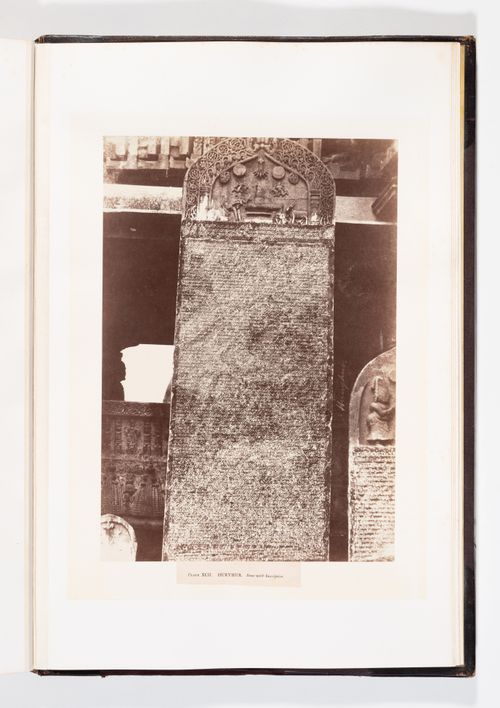
Reference number:
PH1980:1219:094
Description:
- This photograph is from book PH1980:1219:001-100, 'Architecture in Dharwar and Mysore', which has been disassembled for the CCA exhibition 'Traces of India: Photography, Architecture, and the Politics of Representation/Empreintes de l'Inde: Photographie, architecture et politiques de la représentation'.
PH1980:1219:094
Description:
- This photograph is from book PH1980:1219:001-100, 'Architecture in Dharwar and Mysore', which has been disassembled for the CCA exhibition 'Traces of India: Photography, Architecture, and the Politics of Representation/Empreintes de l'Inde: Photographie, architecture et politiques de la représentation'.
People:
Subject:
architecture, sculpture
architecture, sculpture
Date:
between 1854 and 1858
between 1854 and 1858
Title:
View of stone slabs showing inscriptions and reliefs, Harihara, India
Actions:
PH1980:1219:094
Description:
- This photograph is from book PH1980:1219:001-100, 'Architecture in Dharwar and Mysore', which has been disassembled for the CCA exhibition 'Traces of India: Photography, Architecture, and the Politics of Representation/Empreintes de l'Inde: Photographie, architecture et politiques de la représentation'.
View of stone slabs showing inscriptions and reliefs, Harihara, India
Actions:
PH1980:1219:094
Description:
- This photograph is from book PH1980:1219:001-100, 'Architecture in Dharwar and Mysore', which has been disassembled for the CCA exhibition 'Traces of India: Photography, Architecture, and the Politics of Representation/Empreintes de l'Inde: Photographie, architecture et politiques de la représentation'.
Form:
photographs
photographs
Date:
between 1854 and 1858
between 1854 and 1858
People:
Subject:
architecture, sculpture
architecture, sculpture
Form:
photographs
photographs
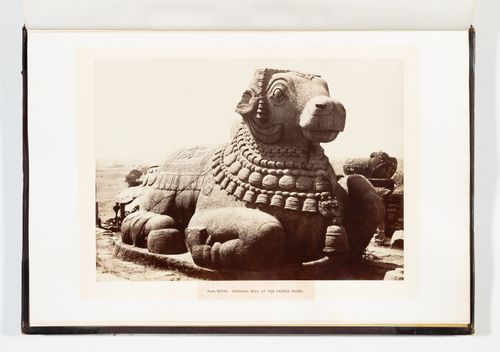
Actions:
Reference number:
PH1980:1219:100
Description:
- This photograph is from book PH1980:1219:001-100, 'Architecture in Dharwar and Mysore', which has been disassembled for the CCA exhibition 'Traces of India: Photography, Architecture, and the Politics of Representation/Empreintes de l'Inde: Photographie, architecture et politiques de la représentation'.
PH1980:1219:100
Description:
- This photograph is from book PH1980:1219:001-100, 'Architecture in Dharwar and Mysore', which has been disassembled for the CCA exhibition 'Traces of India: Photography, Architecture, and the Politics of Representation/Empreintes de l'Inde: Photographie, architecture et politiques de la représentation'.
People:
Subject:
sculpture
sculpture
Date:
between 1854 and 1858
between 1854 and 1858
Title:
View of a Nandi, Chamundi Hill, near Mysore, India
Actions:
PH1980:1219:100
Description:
- This photograph is from book PH1980:1219:001-100, 'Architecture in Dharwar and Mysore', which has been disassembled for the CCA exhibition 'Traces of India: Photography, Architecture, and the Politics of Representation/Empreintes de l'Inde: Photographie, architecture et politiques de la représentation'.
View of a Nandi, Chamundi Hill, near Mysore, India
Actions:
PH1980:1219:100
Description:
- This photograph is from book PH1980:1219:001-100, 'Architecture in Dharwar and Mysore', which has been disassembled for the CCA exhibition 'Traces of India: Photography, Architecture, and the Politics of Representation/Empreintes de l'Inde: Photographie, architecture et politiques de la représentation'.
Form:
photographs
photographs
Date:
between 1854 and 1858
between 1854 and 1858
People:
Subject:
sculpture
sculpture
Form:
exhibitions
exhibitions
Actions:
Description:
Between 1836 and 1848, the German-Dutch explorer Franz Wilhelm Junghuhn made several expeditions in Java in the service of the Dutch colonial authorities. He was among the first colonists to climb the island’s many volcanoes. His scientific works, books, maps, and lithographs made him the “Humboldt of Java.” This exhibition follows Junghuhn’s footsteps and explores(...)
Between 1836 and 1848, the German-Dutch explorer Franz Wilhelm Junghuhn made several expeditions in Java in the service of the Dutch colonial authorities. He was among the first colonists to climb the island’s many volcanoes. His scientific works, books, maps, and lithographs made him the “Humboldt of Java.” This exhibition follows Junghuhn’s footsteps and explores(...)
Location:
Octagonal gallery
Octagonal gallery
Date:
29 September 2016 to 22 January 2017
29 September 2016 to 22 January 2017
Title:
17 Volcanoes: Works by Franz Wilhelm Junghuhn, Armin Linke, and Bas Princen
Actions:
Description:
Between 1836 and 1848, the German-Dutch explorer Franz Wilhelm Junghuhn made several expeditions in Java in the service of the Dutch colonial authorities. He was among the first colonists to climb the island’s many volcanoes. His scientific works, books, maps, and lithographs made him the “Humboldt of Java.” This exhibition follows Junghuhn’s footsteps and explores(...)
17 Volcanoes: Works by Franz Wilhelm Junghuhn, Armin Linke, and Bas Princen
Actions:
Description:
Between 1836 and 1848, the German-Dutch explorer Franz Wilhelm Junghuhn made several expeditions in Java in the service of the Dutch colonial authorities. He was among the first colonists to climb the island’s many volcanoes. His scientific works, books, maps, and lithographs made him the “Humboldt of Java.” This exhibition follows Junghuhn’s footsteps and explores(...)
Form:
exhibitions
exhibitions
Date:
29 September 2016 to
22 January 2017
29 September 2016 to
22 January 2017
Location:
Octagonal gallery
Octagonal gallery
Form:
exhibitions
exhibitions
Actions:
Description:
Architecture and Its Image examines the complex relationships between drawings, photographs, prints, and other architectural representations and the buildings, landscapes, and cities they represent. The exhibition assembles images dating from the early sixteenth century to the late twentieth century from Tokyo and Rome to Mississauga and Montreal and includes maps, books,(...)
Architecture and Its Image examines the complex relationships between drawings, photographs, prints, and other architectural representations and the buildings, landscapes, and cities they represent. The exhibition assembles images dating from the early sixteenth century to the late twentieth century from Tokyo and Rome to Mississauga and Montreal and includes maps, books,(...)
Date:
7 May 1989 to 7 August 1989
7 May 1989 to 7 August 1989
Title:
Architecture and Its Image
Actions:
Description:
Architecture and Its Image examines the complex relationships between drawings, photographs, prints, and other architectural representations and the buildings, landscapes, and cities they represent. The exhibition assembles images dating from the early sixteenth century to the late twentieth century from Tokyo and Rome to Mississauga and Montreal and includes maps, books,(...)
Architecture and Its Image
Actions:
Description:
Architecture and Its Image examines the complex relationships between drawings, photographs, prints, and other architectural representations and the buildings, landscapes, and cities they represent. The exhibition assembles images dating from the early sixteenth century to the late twentieth century from Tokyo and Rome to Mississauga and Montreal and includes maps, books,(...)
Form:
exhibitions
exhibitions
Date:
7 May 1989 to
7 August 1989
7 May 1989 to
7 August 1989
Level of archival description:
Project
Project
Title:
Maison Coloniale
Maison Coloniale
Reference number:
AP066.S2.D19
Description:
Le dossier documente le projet de construction de la Maison Coloniale, une habitation associée à un atelier d'architecture et un hall d'exposition, situé au 4333 avenue Coloniale, à Montréal, Québec. Les matériaux utilisés pour réaliser cette construction sont le béton armé, l'acier et le bois. Le budget alloué pour ce projet était de 300 000$ et la superficie est de 340 mètres carrés. Aussi, le projet s'est mérité le Prix d'architecture du Gouverneur général du Canada. Le dossier contient des dessins, des reprographies, des photographies, des documents textuels, des maquettes et un négatif. Description du projet par l'architecte: "En concevant la Maison Coloniale, entre autres choses qui s'y trouvent inscrites, j'ai pensé à l'état des métiers. La solidarité qui nous lie est tellement ténue, les savoir-faire se déplacent, les langages s'autonomisent. Ici la structure de béton n'aura pour but structural que de survivre à sa peine : le squelette est dehors, qu'est-ce que cela veut nous dire? Partout la division, la séparation des éléments. La juxtaposition, la superposition et la répétition forment un langage dans le langage. Tout y est contact de points et de surface, d'appuis et d'ancrages. Le squelette est dehors, le corps est dedans. Qu'est-ce que cela veut nous dire? La Maison nous dit la nature de notre côtoiement. Elle nous rappelle nos liens possibles et nous apprend qu'à force de séparation, tout s'unit. Elle nous indique la distance qu'il nous reste à franchir pour se toucher et s'émouvoir. Elle est comme vous et moi, un peu résistante et prête à tout donner. Elle nous dit la convivialité et nous rappelle nos moyens d'humains. Elle nous rappelle que c'est nous qui l'avons faite!" Jacques Rousseau, "Éthique et tact", dans Architecture, éthique et technologie, édité par Louise Pelletier et Alberto Pérez-Gómez, McGill-Queen's University Press, Montréal, 1994, p. 137-150.
AP066.S2.D19
Description:
Le dossier documente le projet de construction de la Maison Coloniale, une habitation associée à un atelier d'architecture et un hall d'exposition, situé au 4333 avenue Coloniale, à Montréal, Québec. Les matériaux utilisés pour réaliser cette construction sont le béton armé, l'acier et le bois. Le budget alloué pour ce projet était de 300 000$ et la superficie est de 340 mètres carrés. Aussi, le projet s'est mérité le Prix d'architecture du Gouverneur général du Canada. Le dossier contient des dessins, des reprographies, des photographies, des documents textuels, des maquettes et un négatif. Description du projet par l'architecte: "En concevant la Maison Coloniale, entre autres choses qui s'y trouvent inscrites, j'ai pensé à l'état des métiers. La solidarité qui nous lie est tellement ténue, les savoir-faire se déplacent, les langages s'autonomisent. Ici la structure de béton n'aura pour but structural que de survivre à sa peine : le squelette est dehors, qu'est-ce que cela veut nous dire? Partout la division, la séparation des éléments. La juxtaposition, la superposition et la répétition forment un langage dans le langage. Tout y est contact de points et de surface, d'appuis et d'ancrages. Le squelette est dehors, le corps est dedans. Qu'est-ce que cela veut nous dire? La Maison nous dit la nature de notre côtoiement. Elle nous rappelle nos liens possibles et nous apprend qu'à force de séparation, tout s'unit. Elle nous indique la distance qu'il nous reste à franchir pour se toucher et s'émouvoir. Elle est comme vous et moi, un peu résistante et prête à tout donner. Elle nous dit la convivialité et nous rappelle nos moyens d'humains. Elle nous rappelle que c'est nous qui l'avons faite!" Jacques Rousseau, "Éthique et tact", dans Architecture, éthique et technologie, édité par Louise Pelletier et Alberto Pérez-Gómez, McGill-Queen's University Press, Montréal, 1994, p. 137-150.
People:
Date:
1986-1990
1986-1990
Title:
Maison Coloniale
Actions:
AP066.S2.D19
Description:
Le dossier documente le projet de construction de la Maison Coloniale, une habitation associée à un atelier d'architecture et un hall d'exposition, situé au 4333 avenue Coloniale, à Montréal, Québec. Les matériaux utilisés pour réaliser cette construction sont le béton armé, l'acier et le bois. Le budget alloué pour ce projet était de 300 000$ et la superficie est de 340 mètres carrés. Aussi, le projet s'est mérité le Prix d'architecture du Gouverneur général du Canada. Le dossier contient des dessins, des reprographies, des photographies, des documents textuels, des maquettes et un négatif. Description du projet par l'architecte: "En concevant la Maison Coloniale, entre autres choses qui s'y trouvent inscrites, j'ai pensé à l'état des métiers. La solidarité qui nous lie est tellement ténue, les savoir-faire se déplacent, les langages s'autonomisent. Ici la structure de béton n'aura pour but structural que de survivre à sa peine : le squelette est dehors, qu'est-ce que cela veut nous dire? Partout la division, la séparation des éléments. La juxtaposition, la superposition et la répétition forment un langage dans le langage. Tout y est contact de points et de surface, d'appuis et d'ancrages. Le squelette est dehors, le corps est dedans. Qu'est-ce que cela veut nous dire? La Maison nous dit la nature de notre côtoiement. Elle nous rappelle nos liens possibles et nous apprend qu'à force de séparation, tout s'unit. Elle nous indique la distance qu'il nous reste à franchir pour se toucher et s'émouvoir. Elle est comme vous et moi, un peu résistante et prête à tout donner. Elle nous dit la convivialité et nous rappelle nos moyens d'humains. Elle nous rappelle que c'est nous qui l'avons faite!" Jacques Rousseau, "Éthique et tact", dans Architecture, éthique et technologie, édité par Louise Pelletier et Alberto Pérez-Gómez, McGill-Queen's University Press, Montréal, 1994, p. 137-150.
Maison Coloniale
Actions:
AP066.S2.D19
Description:
Le dossier documente le projet de construction de la Maison Coloniale, une habitation associée à un atelier d'architecture et un hall d'exposition, situé au 4333 avenue Coloniale, à Montréal, Québec. Les matériaux utilisés pour réaliser cette construction sont le béton armé, l'acier et le bois. Le budget alloué pour ce projet était de 300 000$ et la superficie est de 340 mètres carrés. Aussi, le projet s'est mérité le Prix d'architecture du Gouverneur général du Canada. Le dossier contient des dessins, des reprographies, des photographies, des documents textuels, des maquettes et un négatif. Description du projet par l'architecte: "En concevant la Maison Coloniale, entre autres choses qui s'y trouvent inscrites, j'ai pensé à l'état des métiers. La solidarité qui nous lie est tellement ténue, les savoir-faire se déplacent, les langages s'autonomisent. Ici la structure de béton n'aura pour but structural que de survivre à sa peine : le squelette est dehors, qu'est-ce que cela veut nous dire? Partout la division, la séparation des éléments. La juxtaposition, la superposition et la répétition forment un langage dans le langage. Tout y est contact de points et de surface, d'appuis et d'ancrages. Le squelette est dehors, le corps est dedans. Qu'est-ce que cela veut nous dire? La Maison nous dit la nature de notre côtoiement. Elle nous rappelle nos liens possibles et nous apprend qu'à force de séparation, tout s'unit. Elle nous indique la distance qu'il nous reste à franchir pour se toucher et s'émouvoir. Elle est comme vous et moi, un peu résistante et prête à tout donner. Elle nous dit la convivialité et nous rappelle nos moyens d'humains. Elle nous rappelle que c'est nous qui l'avons faite!" Jacques Rousseau, "Éthique et tact", dans Architecture, éthique et technologie, édité par Louise Pelletier et Alberto Pérez-Gómez, McGill-Queen's University Press, Montréal, 1994, p. 137-150.
Level of archival description:
Projet
Projet
Date:
1986-1990
1986-1990
People:
Form:
exhibitions
exhibitions
Description:
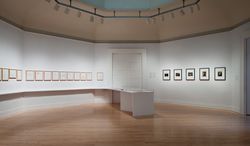
Portuguese architect Álvaro Siza travelled to Peru in 1995 with his usual baggage: only a few changes of clothes, some books of poetry, and a single sketchbook. This was the toolkit he used to interpret the voyage and integrate it into his architecture. More than half a century earlier, Peruvian photographer Martín Chambi had taken his famous series of portraits of the(...)
Portuguese architect Álvaro Siza travelled to Peru in 1995 with his usual baggage: only a few changes of clothes, some books of poetry, and a single sketchbook. This was the toolkit he used to interpret the voyage and integrate it into his architecture. More than half a century earlier, Peruvian photographer Martín Chambi had taken his famous series of portraits of the(...)
Location:
Octagonal gallery
Octagonal gallery
Date:
26 January 2012 to 29 April 2012
26 January 2012 to 29 April 2012
Title:
Alturas de Machu Picchu: Martín Chambi – Álvaro Siza at work
Actions:
Description:
Portuguese architect Álvaro Siza travelled to Peru in 1995 with his usual baggage: only a few changes of clothes, some books of poetry, and a single sketchbook. This was the toolkit he used to interpret the voyage and integrate it into his architecture. More than half a century earlier, Peruvian photographer Martín Chambi had taken his famous series of portraits of the(...)
Alturas de Machu Picchu: Martín Chambi – Álvaro Siza at work
Actions:
Description:
Portuguese architect Álvaro Siza travelled to Peru in 1995 with his usual baggage: only a few changes of clothes, some books of poetry, and a single sketchbook. This was the toolkit he used to interpret the voyage and integrate it into his architecture. More than half a century earlier, Peruvian photographer Martín Chambi had taken his famous series of portraits of the(...)
Form:
exhibitions
exhibitions
Date:
26 January 2012 to
29 April 2012
26 January 2012 to
29 April 2012
Location:
Octagonal gallery
Octagonal gallery


