


7457 Results
Form:
books
books
Actions:
Price:
$200.00
(available in store)
Summary:
"Elements of Architecture" focuses on the fragments of the rich and complex architectural collage. Window, façade, balcony, corridor, fireplace, stair, escalator, elevator: the book seeks to excavate the micro-narratives of building detail.The result is no single history, but rather the web of origins, contaminations, similarities, and differences in architectural(...)
$200.00
(available in store)
Summary:
"Elements of Architecture" focuses on the fragments of the rich and complex architectural collage. Window, façade, balcony, corridor, fireplace, stair, escalator, elevator: the book seeks to excavate the micro-narratives of building detail.The result is no single history, but rather the web of origins, contaminations, similarities, and differences in architectural(...)
Title:
Rem Koolhaas: elements of architecture
Actions:
Price:
$200.00
(available in store)
Summary:
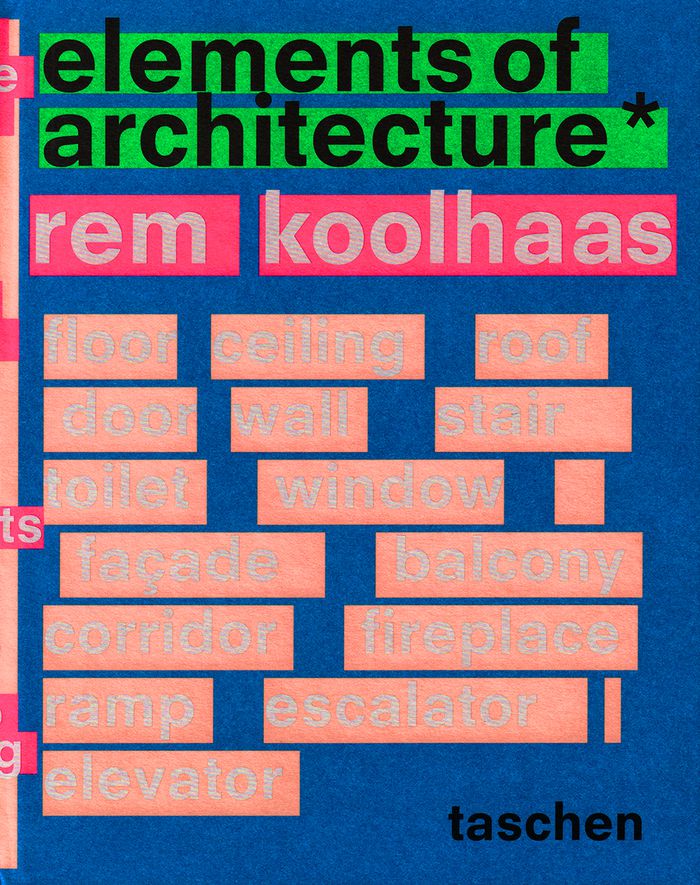
"Elements of Architecture" focuses on the fragments of the rich and complex architectural collage. Window, façade, balcony, corridor, fireplace, stair, escalator, elevator: the book seeks to excavate the micro-narratives of building detail.The result is no single history, but rather the web of origins, contaminations, similarities, and differences in architectural evolution, including the influence of technological advances, climatic adaptation, political calculation, economic contexts, regulatory requirements, and new digital opportunities. It’s a guide that is long overdue—in Koolhaas’s own words, “Never was a book more relevant—at a moment where architecture as we know it is changing beyond recognition.” Derived, updated, and expanded from Koolhaas's exhaustive and much-lauded exhibition at the 2014 Venice Architecture Biennale, this is an essential toolkit to understanding the fundamentals that comprise structure around the globe. Designed by Irma Boom and based on research from the Harvard Graduate School of Design, the 2,600-page monograph contains essays from Rem Koolhaas, Stephan Trueby, Manfredo di Robilant, and Jeffrey Inaba; interviews with Werner Sobek and Tony Fadell (of Nest); and an exclusive photo essay by Wolfgang Tillmans.
Rem Koolhaas: elements of architecture
Actions:
Price:
$200.00
(available in store)
Summary:
"Elements of Architecture" focuses on the fragments of the rich and complex architectural collage. Window, façade, balcony, corridor, fireplace, stair, escalator, elevator: the book seeks to excavate the micro-narratives of building detail.The result is no single history, but rather the web of origins, contaminations, similarities, and differences in architectural evolution, including the influence of technological advances, climatic adaptation, political calculation, economic contexts, regulatory requirements, and new digital opportunities. It’s a guide that is long overdue—in Koolhaas’s own words, “Never was a book more relevant—at a moment where architecture as we know it is changing beyond recognition.” Derived, updated, and expanded from Koolhaas's exhaustive and much-lauded exhibition at the 2014 Venice Architecture Biennale, this is an essential toolkit to understanding the fundamentals that comprise structure around the globe. Designed by Irma Boom and based on research from the Harvard Graduate School of Design, the 2,600-page monograph contains essays from Rem Koolhaas, Stephan Trueby, Manfredo di Robilant, and Jeffrey Inaba; interviews with Werner Sobek and Tony Fadell (of Nest); and an exclusive photo essay by Wolfgang Tillmans.
Form:
books
books
Publication:
October 2018
October 2018
Subject:
Biennial
Biennial
Form:
journals and magazines
journals and magazines
Title:
Idea 340: Forms of practice
Idea 340: Forms of practice
Actions:
Price:
$54.00
(available in store)
Summary:
A number of young designers in Europe and America are attempting to develop their own paths in exploring graphic design through innovative small-scale practices. Many of the designers featured here were born in the 1970s and 1980s, coming of age in commercial practice in the digital environment. The majority of those featured operate within the sphere of graphic design(...)
$54.00
(available in store)
Summary:
A number of young designers in Europe and America are attempting to develop their own paths in exploring graphic design through innovative small-scale practices. Many of the designers featured here were born in the 1970s and 1980s, coming of age in commercial practice in the digital environment. The majority of those featured operate within the sphere of graphic design(...)
Title:
Idea 340: Forms of practice
Actions:
Price:
$54.00
(available in store)
Summary:
A number of young designers in Europe and America are attempting to develop their own paths in exploring graphic design through innovative small-scale practices. Many of the designers featured here were born in the 1970s and 1980s, coming of age in commercial practice in the digital environment. The majority of those featured operate within the sphere of graphic design production from the approach of a more personal practice, inflecting their work with nuanced, idiosyncratic conceptual and formal approaches. While widely varied due to cultural context and social/environmental differences, all have a kinship in unique approaches to developing formal options for clients. The use of the word "option" as applied here is perhaps the most relevant key point for the latest wave of graphic design from abroad- perhaps the "solution" as an end result of graphic design as a process is a dead methodology. What are instead offered are graphic "options" in lieu of "solutions"- inquiries answered with inquiries, questions answered with questions. The work featured offers playful, tentative answers instead of cold, hard end results.
Idea 340: Forms of practice
Actions:
Price:
$54.00
(available in store)
Summary:
A number of young designers in Europe and America are attempting to develop their own paths in exploring graphic design through innovative small-scale practices. Many of the designers featured here were born in the 1970s and 1980s, coming of age in commercial practice in the digital environment. The majority of those featured operate within the sphere of graphic design production from the approach of a more personal practice, inflecting their work with nuanced, idiosyncratic conceptual and formal approaches. While widely varied due to cultural context and social/environmental differences, all have a kinship in unique approaches to developing formal options for clients. The use of the word "option" as applied here is perhaps the most relevant key point for the latest wave of graphic design from abroad- perhaps the "solution" as an end result of graphic design as a process is a dead methodology. What are instead offered are graphic "options" in lieu of "solutions"- inquiries answered with inquiries, questions answered with questions. The work featured offers playful, tentative answers instead of cold, hard end results.
Form:
journals and magazines
journals and magazines
Publication:
April 2010
April 2010
Subject:
Magazines
Magazines
Form:
journals and magazines
journals and magazines
Actions:
Price:
$50.00
(available to order)
Summary:
Despite the exaggerated news of the untimely 'death of the detail' by Greg Lynn, the architectural detail is now more lifelike and active than ever before. In this era of digital design and production technologies, new materials, parametrics, building information modeling (BIM), augmented realities and the nano-bio-information-computation consilience, the detail is now an(...)
$50.00
(available to order)
Summary:
Despite the exaggerated news of the untimely 'death of the detail' by Greg Lynn, the architectural detail is now more lifelike and active than ever before. In this era of digital design and production technologies, new materials, parametrics, building information modeling (BIM), augmented realities and the nano-bio-information-computation consilience, the detail is now an(...)
Title:
AD 84:4 Future details of architecture
Actions:
Price:
$50.00
(available to order)
Summary:
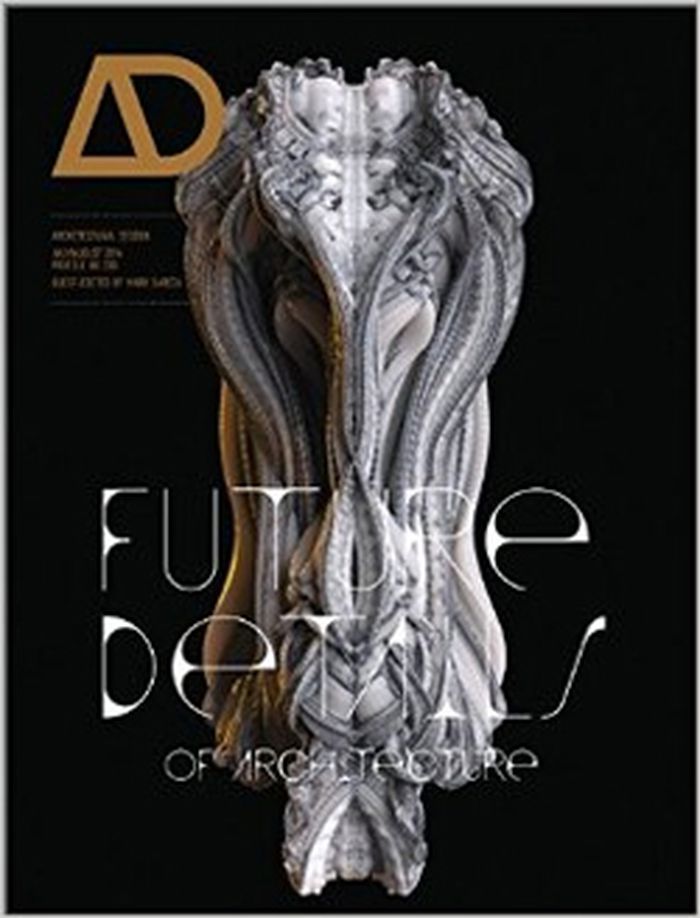
Despite the exaggerated news of the untimely 'death of the detail' by Greg Lynn, the architectural detail is now more lifelike and active than ever before. In this era of digital design and production technologies, new materials, parametrics, building information modeling (BIM), augmented realities and the nano-bio-information-computation consilience, the detail is now an increasingly vital force in architecture. Though such digitally designed and produced details are diminishing in size to the molecular and nano levels, they are increasingly becoming more complex, multi-functional, high performance and self-replicating. Far from being a non-essential and final finish, this new type of highly evolved high-tech detail is rapidly becoming the indispensable and critical core, the (sometimes iconic) DNA of an innovative new species of built environmental form that is spawning in scale and prominence, across product, interior, urban and landscape design. This issue of AD re-examines the history, theories and design of the world’s most significant spatial details, and explores their innovative potentials and possibilities for the future of architecture.
AD 84:4 Future details of architecture
Actions:
Price:
$50.00
(available to order)
Summary:
Despite the exaggerated news of the untimely 'death of the detail' by Greg Lynn, the architectural detail is now more lifelike and active than ever before. In this era of digital design and production technologies, new materials, parametrics, building information modeling (BIM), augmented realities and the nano-bio-information-computation consilience, the detail is now an increasingly vital force in architecture. Though such digitally designed and produced details are diminishing in size to the molecular and nano levels, they are increasingly becoming more complex, multi-functional, high performance and self-replicating. Far from being a non-essential and final finish, this new type of highly evolved high-tech detail is rapidly becoming the indispensable and critical core, the (sometimes iconic) DNA of an innovative new species of built environmental form that is spawning in scale and prominence, across product, interior, urban and landscape design. This issue of AD re-examines the history, theories and design of the world’s most significant spatial details, and explores their innovative potentials and possibilities for the future of architecture.
Form:
journals and magazines
journals and magazines
Publication:
December 2014
December 2014
Subject:
Magazines
Magazines
Form:
books
books
Actions:
Price:
$38.95
(available to order)
Summary:
Beautiful Data is both a history of big data and interactivity, and a sophisticated meditation on ideas about vision and cognition in the second half of the twentieth century. Contending that our forms of attention, observation, and truth are contingent and contested, Orit Halpern historicizes the ways that we are trained, and train ourselves, to observe and analyze the(...)
$38.95
(available to order)
Summary:
Beautiful Data is both a history of big data and interactivity, and a sophisticated meditation on ideas about vision and cognition in the second half of the twentieth century. Contending that our forms of attention, observation, and truth are contingent and contested, Orit Halpern historicizes the ways that we are trained, and train ourselves, to observe and analyze the(...)
Title:
Beautiful data: a history of vision and reason since 1945
Actions:
Price:
$38.95
(available to order)
Summary:
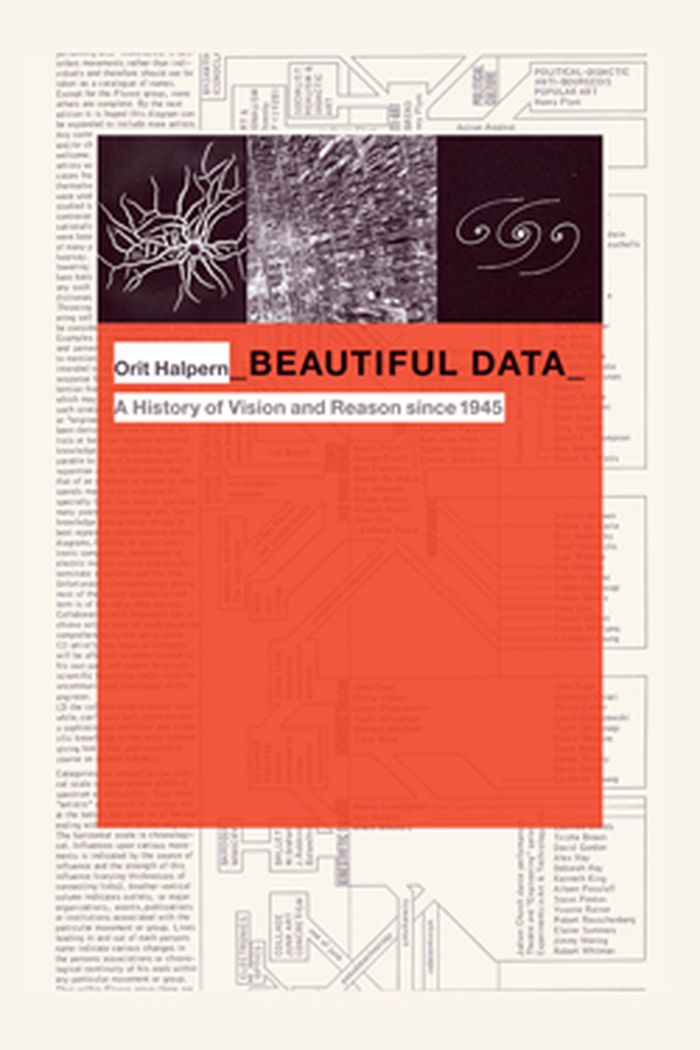
Beautiful Data is both a history of big data and interactivity, and a sophisticated meditation on ideas about vision and cognition in the second half of the twentieth century. Contending that our forms of attention, observation, and truth are contingent and contested, Orit Halpern historicizes the ways that we are trained, and train ourselves, to observe and analyze the world. Tracing the postwar impact of cybernetics and the communication sciences on the social and human sciences, design, arts, and urban planning, she finds a radical shift in attitudes toward recording and displaying information. These changed attitudes produced what she calls communicative objectivity: new forms of observation, rationality, and economy based on the management and analysis of data. Halpern complicates assumptions about the value of data and visualization, arguing that changes in how we manage and train perception, and define reason and intelligence, are also transformations in governmentality. She also challenges the paradoxical belief that we are experiencing a crisis of attention caused by digital media, a crisis that can be resolved only through intensified media consumption.
Beautiful data: a history of vision and reason since 1945
Actions:
Price:
$38.95
(available to order)
Summary:
Beautiful Data is both a history of big data and interactivity, and a sophisticated meditation on ideas about vision and cognition in the second half of the twentieth century. Contending that our forms of attention, observation, and truth are contingent and contested, Orit Halpern historicizes the ways that we are trained, and train ourselves, to observe and analyze the world. Tracing the postwar impact of cybernetics and the communication sciences on the social and human sciences, design, arts, and urban planning, she finds a radical shift in attitudes toward recording and displaying information. These changed attitudes produced what she calls communicative objectivity: new forms of observation, rationality, and economy based on the management and analysis of data. Halpern complicates assumptions about the value of data and visualization, arguing that changes in how we manage and train perception, and define reason and intelligence, are also transformations in governmentality. She also challenges the paradoxical belief that we are experiencing a crisis of attention caused by digital media, a crisis that can be resolved only through intensified media consumption.
Form:
books
books
Publication:
August 2014
August 2014
Subject:
Architectural Theory
Architectural Theory
Form:
books
books
Price:
$190.00
(available to order)
Summary:
Architecture is a strange mixture of persistence and flux, an amalgamation of elements - some that have been around for over 5,000 years and others that were (re)invented yesterday. The fact that these elements change independently of each other, according to different cycles and economies, and for different reasons, turns each building into a complex collage of the(...)
$190.00
(available to order)
Summary:
Architecture is a strange mixture of persistence and flux, an amalgamation of elements - some that have been around for over 5,000 years and others that were (re)invented yesterday. The fact that these elements change independently of each other, according to different cycles and economies, and for different reasons, turns each building into a complex collage of the(...)
Title:
Elements
Actions:
Price:
$190.00
(available to order)
Summary:
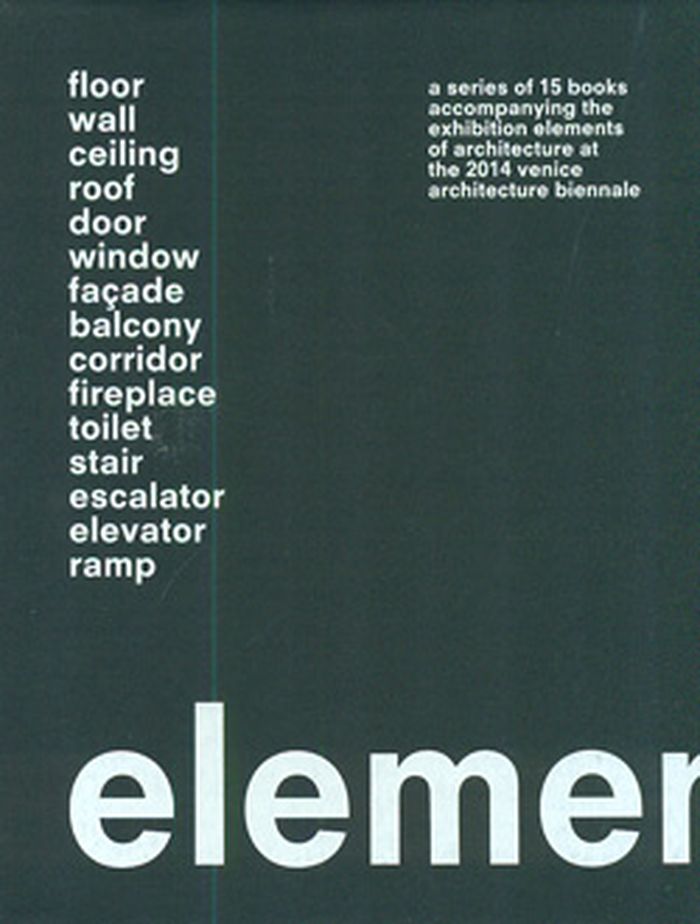
Architecture is a strange mixture of persistence and flux, an amalgamation of elements - some that have been around for over 5,000 years and others that were (re)invented yesterday. The fact that these elements change independently of each other, according to different cycles and economies, and for different reasons, turns each building into a complex collage of the archaic and the current, the site-specific and the standard, mechanical smoothness and the spontaneous. Only by looking at the elements under a wide lens can we recognize the cultural preferences, forgotten symbolism, technological advances, mutations triggered by intensifying global exchange, climatic adaptions, political calculations, regulatory requirements, new digital regimes, and, somewhere in the mix - the ideas of the architect that constitute the practice of architecture today. A collection of these essential elements into 15 books in a package launched at the 2014 Venice Biennale that allows us to look through a microscope at the real fundamentals of our buildings and see again the essential design techniques used by any architect, anywhere, anytime.
Elements
Actions:
Price:
$190.00
(available to order)
Summary:
Architecture is a strange mixture of persistence and flux, an amalgamation of elements - some that have been around for over 5,000 years and others that were (re)invented yesterday. The fact that these elements change independently of each other, according to different cycles and economies, and for different reasons, turns each building into a complex collage of the archaic and the current, the site-specific and the standard, mechanical smoothness and the spontaneous. Only by looking at the elements under a wide lens can we recognize the cultural preferences, forgotten symbolism, technological advances, mutations triggered by intensifying global exchange, climatic adaptions, political calculations, regulatory requirements, new digital regimes, and, somewhere in the mix - the ideas of the architect that constitute the practice of architecture today. A collection of these essential elements into 15 books in a package launched at the 2014 Venice Biennale that allows us to look through a microscope at the real fundamentals of our buildings and see again the essential design techniques used by any architect, anywhere, anytime.
Form:
books
books
Publication:
September 2014
September 2014
Subject:
Architecture Monographs
Architecture Monographs
Form:
books
books

Price:
$65.00
(available to order)
Summary:
One of Japan’s leading contemporary artists, Takashi Murakami (b. 1962) is known for a wide-ranging practice that encompasses not only fine art but fashion, consumer products, curation, and entertainment. Founder of the Superflat movement, Murakami makes art that is larger than life, boldly colored, and buoyant, with a Pop sensibility that draws inspiration from anime and(...)
$65.00
(available to order)
Summary:
One of Japan’s leading contemporary artists, Takashi Murakami (b. 1962) is known for a wide-ranging practice that encompasses not only fine art but fashion, consumer products, curation, and entertainment. Founder of the Superflat movement, Murakami makes art that is larger than life, boldly colored, and buoyant, with a Pop sensibility that draws inspiration from anime and(...)
Subject:
Contemporary Art Monographs
Contemporary Art Monographs
Publication:
September 2023
September 2023
Title:
Murakami: Unfamiliar people- swelling of monsterized human ego
Actions:
Price:
$65.00
(available to order)
Summary:
One of Japan’s leading contemporary artists, Takashi Murakami (b. 1962) is known for a wide-ranging practice that encompasses not only fine art but fashion, consumer products, curation, and entertainment. Founder of the Superflat movement, Murakami makes art that is larger than life, boldly colored, and buoyant, with a Pop sensibility that draws inspiration from anime and manga. But beyond the happy flowers and kawaii characters that have defined Murakami’s career lurk darker manifestations: the sharp-toothed, multi-eyed monsters that have increasingly become the artist’s vehicle for expressing the effects of rampant consumerism, human fallibility, and the perils of life in the digital fast lane. This book explores these themes in works from the last decade, presenting a disquieting vision of monsterized beings born in an era of unprecedented environmental, political, and social turmoil. Conversations with Murakami and essays by Laura W. Allen, Hiroko Ikegami, and Masako Shiba deconstruct what monsters mean to the artist and reflect on new directions in Murakami’s sculpture and the genesis of his recent NFT projects.
Murakami: Unfamiliar people- swelling of monsterized human ego
Actions:
Price:
$65.00
(available to order)
Summary:
One of Japan’s leading contemporary artists, Takashi Murakami (b. 1962) is known for a wide-ranging practice that encompasses not only fine art but fashion, consumer products, curation, and entertainment. Founder of the Superflat movement, Murakami makes art that is larger than life, boldly colored, and buoyant, with a Pop sensibility that draws inspiration from anime and manga. But beyond the happy flowers and kawaii characters that have defined Murakami’s career lurk darker manifestations: the sharp-toothed, multi-eyed monsters that have increasingly become the artist’s vehicle for expressing the effects of rampant consumerism, human fallibility, and the perils of life in the digital fast lane. This book explores these themes in works from the last decade, presenting a disquieting vision of monsterized beings born in an era of unprecedented environmental, political, and social turmoil. Conversations with Murakami and essays by Laura W. Allen, Hiroko Ikegami, and Masako Shiba deconstruct what monsters mean to the artist and reflect on new directions in Murakami’s sculpture and the genesis of his recent NFT projects.
Form:
books
books
Publication:
September 2023
September 2023
Subject:
Contemporary Art Monographs
Contemporary Art Monographs
Form:
books
books

Title:
The Black geographic
The Black geographic
Actions:
Price:
$38.95
(available to order)
Summary:
The contributors to ''The Black geographic'' explore the theoretical innovations of Black Geographies scholarship and how it approaches Blackness as historically and spatially situated. In studies that span from Oakland to the Alabama Black Belt to Senegal to Brazil, the contributors draw on ethnography, archival records, digital humanities, literary criticism, and art to(...)
$38.95
(available to order)
Summary:
The contributors to ''The Black geographic'' explore the theoretical innovations of Black Geographies scholarship and how it approaches Blackness as historically and spatially situated. In studies that span from Oakland to the Alabama Black Belt to Senegal to Brazil, the contributors draw on ethnography, archival records, digital humanities, literary criticism, and art to(...)
Title:
The Black geographic
Actions:
Price:
$38.95
(available to order)
Summary:
The contributors to ''The Black geographic'' explore the theoretical innovations of Black Geographies scholarship and how it approaches Blackness as historically and spatially situated. In studies that span from Oakland to the Alabama Black Belt to Senegal to Brazil, the contributors draw on ethnography, archival records, digital humanities, literary criticism, and art to show how understanding the spatial dimensions of Black life contributes to a broader understanding of race and space. They examine key sites of inquiry: Black spatial imaginaries, resistance to racial violence, the geographies of racial capitalism, and struggles over urban space. Throughout, the contributors demonstrate that Blackness is itself a situating and place-making force, even as it is shaped by spatial processes and diasporic routes. Whether discussing eighteenth- and nineteenth-century abolitionist print records or migration and surveillance in Niger, this volume demonstrates that Black Geographies is a mode of analyzing Blackness that fundamentally challenges the very foundations of the field of geography and its historical entwinement with colonialism, enslavement, and imperialism. In short, it marks a new step in the evolution of the field.
The Black geographic
Actions:
Price:
$38.95
(available to order)
Summary:
The contributors to ''The Black geographic'' explore the theoretical innovations of Black Geographies scholarship and how it approaches Blackness as historically and spatially situated. In studies that span from Oakland to the Alabama Black Belt to Senegal to Brazil, the contributors draw on ethnography, archival records, digital humanities, literary criticism, and art to show how understanding the spatial dimensions of Black life contributes to a broader understanding of race and space. They examine key sites of inquiry: Black spatial imaginaries, resistance to racial violence, the geographies of racial capitalism, and struggles over urban space. Throughout, the contributors demonstrate that Blackness is itself a situating and place-making force, even as it is shaped by spatial processes and diasporic routes. Whether discussing eighteenth- and nineteenth-century abolitionist print records or migration and surveillance in Niger, this volume demonstrates that Black Geographies is a mode of analyzing Blackness that fundamentally challenges the very foundations of the field of geography and its historical entwinement with colonialism, enslavement, and imperialism. In short, it marks a new step in the evolution of the field.
Form:
books
books
Publication:
October 2023
October 2023
Subject:
Social
Social
Form:
books
books
Price:
$35.95
(available to order)
Summary:
The city is one of the greatest unsung heroes in cinema -- a modernist inspiration for silent classics such as Metropolis (1926) and a dense urban jungle in The Matrix (1999) -- yet there have been few attempts to grasp the cultural and aesthetic nature of its role in film. This volume is an ambitious collection of writings and photo-essays discussing this complex yet(...)
$35.95
(available to order)
Summary:
The city is one of the greatest unsung heroes in cinema -- a modernist inspiration for silent classics such as Metropolis (1926) and a dense urban jungle in The Matrix (1999) -- yet there have been few attempts to grasp the cultural and aesthetic nature of its role in film. This volume is an ambitious collection of writings and photo-essays discussing this complex yet(...)
Subject:
Architecture and Film, Set Design
Architecture and Film, Set Design
Publication:
August 2008, London, New York
August 2008, London, New York
Title:
Cities in transition: the moving image and the modern metropolis
Actions:
Price:
$35.95
(available to order)
Summary:
The city is one of the greatest unsung heroes in cinema -- a modernist inspiration for silent classics such as Metropolis (1926) and a dense urban jungle in The Matrix (1999) -- yet there have been few attempts to grasp the cultural and aesthetic nature of its role in film. This volume is an ambitious collection of writings and photo-essays discussing this complex yet enduring relationship, and how early cinema, digital technology and changing urban geographies have all impacted upon notions and representations of the modern city. Amongst the films discussed are Peeping Tom (1960), Performance (1970), Sans Soleil (1983) and Amores perros (2000). Contributions come from the fields of film studies, cultural theory, architecture and design, as well as filmmakers Patrick Keiller and Chris Petit. Andrew Webber is Reader in Modern German and Comparative Culture at Churchill College, University of Cambridge. He is the author of The European Avant-garde (2004). Emma Wilson is Reader in Contemporary French Literature and Film at Corpus Christi College, University of Cambridge. She is the author of Cinema's Missing Children (2003) and Alain Resnais (2006).
Cities in transition: the moving image and the modern metropolis
Actions:
Price:
$35.95
(available to order)
Summary:
The city is one of the greatest unsung heroes in cinema -- a modernist inspiration for silent classics such as Metropolis (1926) and a dense urban jungle in The Matrix (1999) -- yet there have been few attempts to grasp the cultural and aesthetic nature of its role in film. This volume is an ambitious collection of writings and photo-essays discussing this complex yet enduring relationship, and how early cinema, digital technology and changing urban geographies have all impacted upon notions and representations of the modern city. Amongst the films discussed are Peeping Tom (1960), Performance (1970), Sans Soleil (1983) and Amores perros (2000). Contributions come from the fields of film studies, cultural theory, architecture and design, as well as filmmakers Patrick Keiller and Chris Petit. Andrew Webber is Reader in Modern German and Comparative Culture at Churchill College, University of Cambridge. He is the author of The European Avant-garde (2004). Emma Wilson is Reader in Contemporary French Literature and Film at Corpus Christi College, University of Cambridge. She is the author of Cinema's Missing Children (2003) and Alain Resnais (2006).
Form:
books
books
Publication:
August 2008, London, New York
August 2008, London, New York
Subject:
Architecture and Film, Set Design
Architecture and Film, Set Design
Form:
books
books
Actions:
Price:
$63.95
(available to order)
Summary:
Is less really more? At long last, designers, artists, and architects have rediscovered the evocative effect of patterns and are paying homage to décors once rejected as superfluous, by covering lamps, chairs, rooms or entire façades with stripes, polka dots and camouflage designs. Indispensable for anyone interested in contemporary trends in design, art and(...)
$63.95
(available to order)
Summary:
Is less really more? At long last, designers, artists, and architects have rediscovered the evocative effect of patterns and are paying homage to décors once rejected as superfluous, by covering lamps, chairs, rooms or entire façades with stripes, polka dots and camouflage designs. Indispensable for anyone interested in contemporary trends in design, art and(...)
Subject:
Ornementation
Ornementation
Publication:
May 2007, Basel - Boston - Berlin
May 2007, Basel - Boston - Berlin
Title:
Patterns in design, art and architecture
Actions:
Price:
$63.95
(available to order)
Summary:
Is less really more? At long last, designers, artists, and architects have rediscovered the evocative effect of patterns and are paying homage to décors once rejected as superfluous, by covering lamps, chairs, rooms or entire façades with stripes, polka dots and camouflage designs. Indispensable for anyone interested in contemporary trends in design, art and architecture, this softcover edition of a classic is quite simply opulent and dazzling – a lavishly illustrated overview composed by experts. This book presents the various multidisciplinary approaches to patterns, showing the many functions and fields of application. Using examples of contemporary work by internationally renowned designers such as Fabio Novembre, Claesson Koivisto Rune and Karim Rashid, by architects such as Herzog & de Meuron, Steven Holl and Sauerbruch Hutton, and artists such as Bridget Riley and Gerhard Richter, a kaleidoscope of colours and forms are laid out before the reader. New interpretations of traditional motifs are illustrated, as well as the impact and influence of technical innovations such as laser engraving and digital milling on the creation and realization of patterns today.
Patterns in design, art and architecture
Actions:
Price:
$63.95
(available to order)
Summary:
Is less really more? At long last, designers, artists, and architects have rediscovered the evocative effect of patterns and are paying homage to décors once rejected as superfluous, by covering lamps, chairs, rooms or entire façades with stripes, polka dots and camouflage designs. Indispensable for anyone interested in contemporary trends in design, art and architecture, this softcover edition of a classic is quite simply opulent and dazzling – a lavishly illustrated overview composed by experts. This book presents the various multidisciplinary approaches to patterns, showing the many functions and fields of application. Using examples of contemporary work by internationally renowned designers such as Fabio Novembre, Claesson Koivisto Rune and Karim Rashid, by architects such as Herzog & de Meuron, Steven Holl and Sauerbruch Hutton, and artists such as Bridget Riley and Gerhard Richter, a kaleidoscope of colours and forms are laid out before the reader. New interpretations of traditional motifs are illustrated, as well as the impact and influence of technical innovations such as laser engraving and digital milling on the creation and realization of patterns today.
Form:
books
books
Publication:
May 2007, Basel - Boston - Berlin
May 2007, Basel - Boston - Berlin
Subject:
Ornementation
Ornementation
Form:
books
books
Title:
Activity diagrams
Activity diagrams
Actions:
Price:
$116.00
(available to order)
Summary:
Due to the rapid development of high-speed transportation and digital-network, the life pattern of modern people also has been rapidly desconstructed and reorganized. To respond such a flexible, multi-layered, and ambiguous period, various contermeasures have been studied in terms of modern architectural programs. As one of the solutions, activity diagrams are a(...)
$116.00
(available to order)
Summary:
Due to the rapid development of high-speed transportation and digital-network, the life pattern of modern people also has been rapidly desconstructed and reorganized. To respond such a flexible, multi-layered, and ambiguous period, various contermeasures have been studied in terms of modern architectural programs. As one of the solutions, activity diagrams are a(...)
Publication:
March 2006, Seoul
March 2006, Seoul
Title:
Activity diagrams
Actions:
Price:
$116.00
(available to order)
Summary:
Due to the rapid development of high-speed transportation and digital-network, the life pattern of modern people also has been rapidly desconstructed and reorganized. To respond such a flexible, multi-layered, and ambiguous period, various contermeasures have been studied in terms of modern architectural programs. As one of the solutions, activity diagrams are a methodology which creates an architectural space through a process of analyzing people's behaviors as weel as re-organizing their systems. Modern architecture is already familiarized with the words 'program' and 'diagram'. Many architects throughout the world use these words as a design tool. Therefore, we sought for 9 architects, regardless of nationality, who used their diagrams as aninnovative design tool, and selected 30 architectural works in which their diagrams were applied. Also, we interviewed them on their architectural design methodology through diagrams they are currently using. With this, we could study out a diagram's inclusive meanings and roles within architecture. This book is published in the hope of being an architectural guide to modern architects who have to design relations. Text in English / Korean
Activity diagrams
Actions:
Price:
$116.00
(available to order)
Summary:
Due to the rapid development of high-speed transportation and digital-network, the life pattern of modern people also has been rapidly desconstructed and reorganized. To respond such a flexible, multi-layered, and ambiguous period, various contermeasures have been studied in terms of modern architectural programs. As one of the solutions, activity diagrams are a methodology which creates an architectural space through a process of analyzing people's behaviors as weel as re-organizing their systems. Modern architecture is already familiarized with the words 'program' and 'diagram'. Many architects throughout the world use these words as a design tool. Therefore, we sought for 9 architects, regardless of nationality, who used their diagrams as aninnovative design tool, and selected 30 architectural works in which their diagrams were applied. Also, we interviewed them on their architectural design methodology through diagrams they are currently using. With this, we could study out a diagram's inclusive meanings and roles within architecture. This book is published in the hope of being an architectural guide to modern architects who have to design relations. Text in English / Korean
Form:
books
books
Publication:
March 2006, Seoul
March 2006, Seoul


