


7457 Results
Form:
books
books
Title:
Neues Museum
Neues Museum
Actions:
Price:
$50.00
(available to order)
Summary:
The Neues Museum - an important mid-nineteenth century example of Neoclassical architecture and the centerpiece of Berlin's Museum Island - was badly damaged during World War II. From 1997-2009, British architect David Chipperfield worked to restore the structure - which was originally completed by Friedrich August Stueler in 1859 - to its pre-war function. Located behind(...)
$50.00
(available to order)
Summary:
The Neues Museum - an important mid-nineteenth century example of Neoclassical architecture and the centerpiece of Berlin's Museum Island - was badly damaged during World War II. From 1997-2009, British architect David Chipperfield worked to restore the structure - which was originally completed by Friedrich August Stueler in 1859 - to its pre-war function. Located behind(...)
Subject:
Architecture Monographs
Architecture Monographs
Publication:
September 2009
September 2009
Title:
Neues Museum
Actions:
Price:
$50.00
(available to order)
Summary:
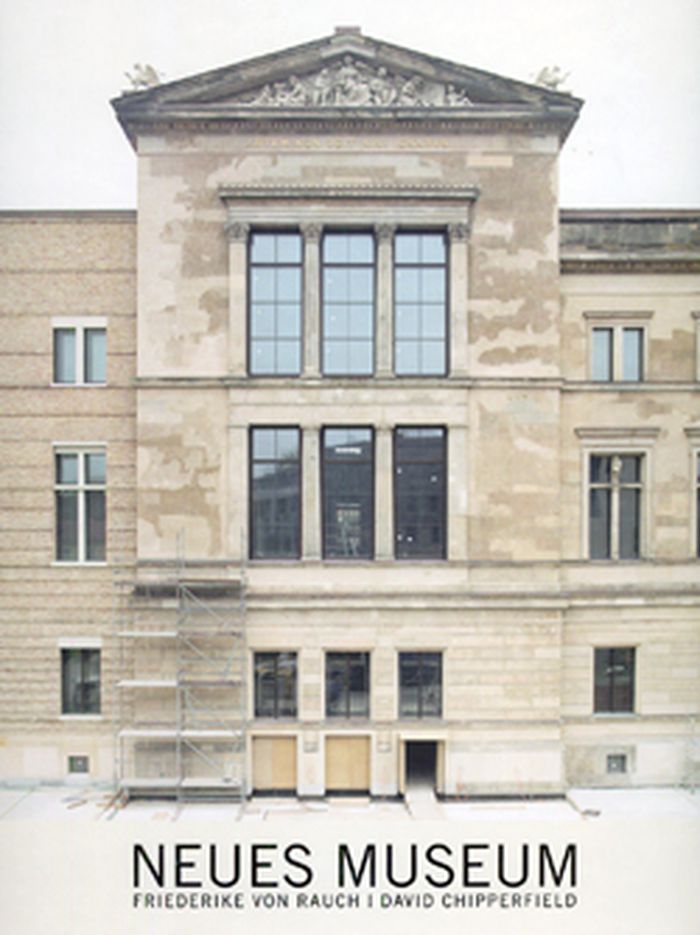
The Neues Museum - an important mid-nineteenth century example of Neoclassical architecture and the centerpiece of Berlin's Museum Island - was badly damaged during World War II. From 1997-2009, British architect David Chipperfield worked to restore the structure - which was originally completed by Friedrich August Stueler in 1859 - to its pre-war function. Located behind the Altes Museum, the space housed the Egyptian Collection. Chipperfield's controversial plans followed a principle of conservation (or amalgamation) rather than reconstruction; he preserved the skeleton of the original building, with its elaborate finishes, attractive brickwork, frescoes and ornamentation, merging and contrasting these characteristics with his own subtle interpolations of clean white lines and quiet geometrical structures. The results are astounding, setting new standards in the field and opening up exciting possibilities for museum conversions. This volume celebrates Chipperfield's work in a series of images by the Berlin-based architectural photographer Friederike von Rauch. Von Rauch is well known for her unusual and exacting approach to architectural photography : eschewing digital technology and only using natural light, she presents a crisp and vibrant series of images that eloquently tell the story of Chipperfield's unorthodox but successful restoration.
Neues Museum
Actions:
Price:
$50.00
(available to order)
Summary:
The Neues Museum - an important mid-nineteenth century example of Neoclassical architecture and the centerpiece of Berlin's Museum Island - was badly damaged during World War II. From 1997-2009, British architect David Chipperfield worked to restore the structure - which was originally completed by Friedrich August Stueler in 1859 - to its pre-war function. Located behind the Altes Museum, the space housed the Egyptian Collection. Chipperfield's controversial plans followed a principle of conservation (or amalgamation) rather than reconstruction; he preserved the skeleton of the original building, with its elaborate finishes, attractive brickwork, frescoes and ornamentation, merging and contrasting these characteristics with his own subtle interpolations of clean white lines and quiet geometrical structures. The results are astounding, setting new standards in the field and opening up exciting possibilities for museum conversions. This volume celebrates Chipperfield's work in a series of images by the Berlin-based architectural photographer Friederike von Rauch. Von Rauch is well known for her unusual and exacting approach to architectural photography : eschewing digital technology and only using natural light, she presents a crisp and vibrant series of images that eloquently tell the story of Chipperfield's unorthodox but successful restoration.
Form:
books
books
Publication:
September 2009
September 2009
Subject:
Architecture Monographs
Architecture Monographs
Form:
books
books
Actions:
Price:
$56.95
(available to order)
Summary:
During the late 1980s and throughout the 1990s, graphic design was experiencing one of its most exciting and transformative periods. The Apple Macintosh computer had been introduced, design schools were exploring French linguistic theory, the vernacular had become a serious source of study and inspiration, the design and manufacture of typefaces was suddenly opened up to(...)
$56.95
(available to order)
Summary:
During the late 1980s and throughout the 1990s, graphic design was experiencing one of its most exciting and transformative periods. The Apple Macintosh computer had been introduced, design schools were exploring French linguistic theory, the vernacular had become a serious source of study and inspiration, the design and manufacture of typefaces was suddenly opened up to(...)
Title:
Emigre no 70, the look back issue, selections from Emigre magazine #1 - #69
Actions:
Price:
$56.95
(available to order)
Summary:
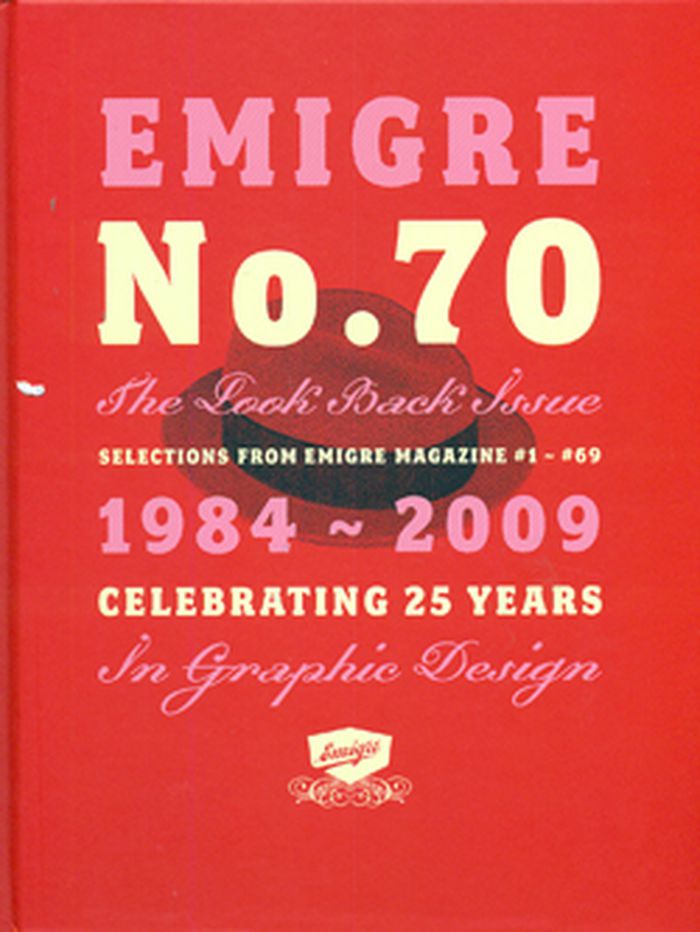
During the late 1980s and throughout the 1990s, graphic design was experiencing one of its most exciting and transformative periods. The Apple Macintosh computer had been introduced, design schools were exploring French linguistic theory, the vernacular had become a serious source of study and inspiration, the design and manufacture of typefaces was suddenly opened up to everyone who could use a computer, and for the first time in the United States, New York City was no longer the place to look for the latest developments in graphic design. And in Berkeley, California, across the bay from Silicon Valley, Emigre magazine, like no other, recognized the significance of the events, and became both a leading participant and a keen observer of this innovative international design scene, generating a body of work and ideas that still resonate today. Fueled by Emigre s successful digital type foundry, the magazine became one of the most popular and controversial graphic design magazines of its time. 69 issues were published in a variety of formats, featuring in-depth interviews with fellow design trailblazers and critical essays by an emerging group of young design writers.
Emigre no 70, the look back issue, selections from Emigre magazine #1 - #69
Actions:
Price:
$56.95
(available to order)
Summary:
During the late 1980s and throughout the 1990s, graphic design was experiencing one of its most exciting and transformative periods. The Apple Macintosh computer had been introduced, design schools were exploring French linguistic theory, the vernacular had become a serious source of study and inspiration, the design and manufacture of typefaces was suddenly opened up to everyone who could use a computer, and for the first time in the United States, New York City was no longer the place to look for the latest developments in graphic design. And in Berkeley, California, across the bay from Silicon Valley, Emigre magazine, like no other, recognized the significance of the events, and became both a leading participant and a keen observer of this innovative international design scene, generating a body of work and ideas that still resonate today. Fueled by Emigre s successful digital type foundry, the magazine became one of the most popular and controversial graphic design magazines of its time. 69 issues were published in a variety of formats, featuring in-depth interviews with fellow design trailblazers and critical essays by an emerging group of young design writers.
Form:
books
books
Publication:
November 2009
November 2009
Subject:
Graphic Design and Typography
Graphic Design and Typography
Form:
books
books
Actions:
Price:
$30.00
(available to order)
Summary:
Michiel Schwarz and Joost Elffers declare the dawn of a new cultural era, as we transition from modernity to sustainity - towards a world that is more connected, more localist, more digital and more sustainable. As the authors of this manifesto argue, "sustainism marks a shift not only in thinking and doing but in collective perception - of how we live, do business, feed(...)
$30.00
(available to order)
Summary:
Michiel Schwarz and Joost Elffers declare the dawn of a new cultural era, as we transition from modernity to sustainity - towards a world that is more connected, more localist, more digital and more sustainable. As the authors of this manifesto argue, "sustainism marks a shift not only in thinking and doing but in collective perception - of how we live, do business, feed(...)
Title:
Sustainism is the new modernism : a cultural manifesto for the sustainist era
Actions:
Price:
$30.00
(available to order)
Summary:
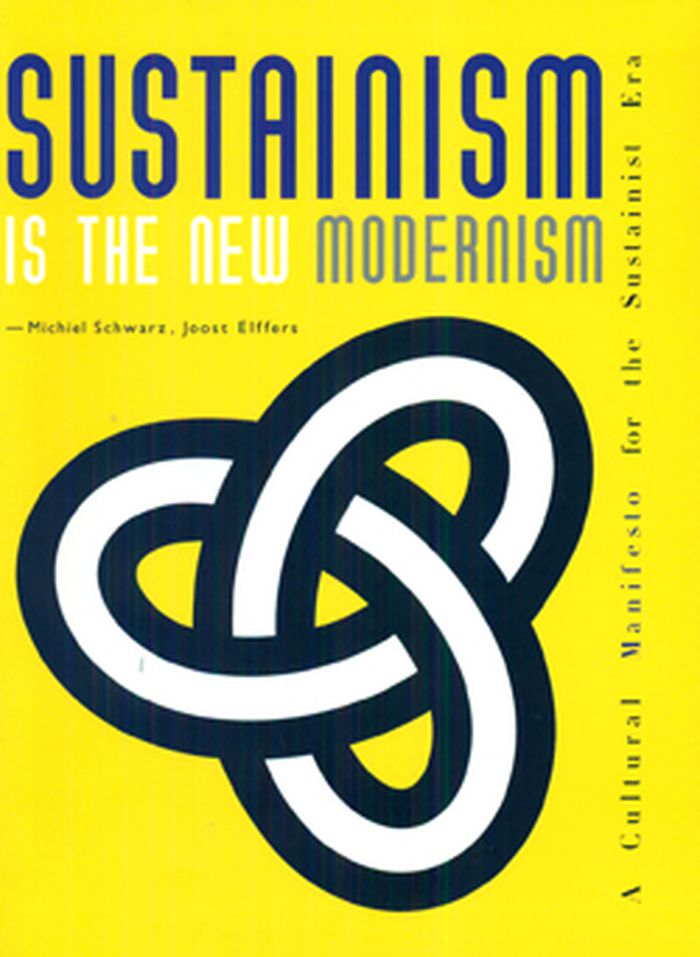
Michiel Schwarz and Joost Elffers declare the dawn of a new cultural era, as we transition from modernity to sustainity - towards a world that is more connected, more localist, more digital and more sustainable. As the authors of this manifesto argue, "sustainism marks a shift not only in thinking and doing but in collective perception - of how we live, do business, feed ourselves, design, travel and communicate, as much as how we deal with nature." In the twentieth century, whether we knew it or not, our world was shaped by modernist values, from the design of our cities to our homes, technologies and our conceptions of progress. Sustainism recasts our relationship to all of these things, binding ecological issues to a larger picture of our world. Through a series of graphically dynamic aphorisms, quotes and symbols designed for worldwide use by businesses, individuals and institutions, to signal support for sustainism, Michiel Schwarz and Joost Elffers show how the movement is already reshaping global culture, technology, food and media. With this concise manifesto, they launch the term sustainism into the public consciousness. The sustainist era has begun.
Sustainism is the new modernism : a cultural manifesto for the sustainist era
Actions:
Price:
$30.00
(available to order)
Summary:
Michiel Schwarz and Joost Elffers declare the dawn of a new cultural era, as we transition from modernity to sustainity - towards a world that is more connected, more localist, more digital and more sustainable. As the authors of this manifesto argue, "sustainism marks a shift not only in thinking and doing but in collective perception - of how we live, do business, feed ourselves, design, travel and communicate, as much as how we deal with nature." In the twentieth century, whether we knew it or not, our world was shaped by modernist values, from the design of our cities to our homes, technologies and our conceptions of progress. Sustainism recasts our relationship to all of these things, binding ecological issues to a larger picture of our world. Through a series of graphically dynamic aphorisms, quotes and symbols designed for worldwide use by businesses, individuals and institutions, to signal support for sustainism, Michiel Schwarz and Joost Elffers show how the movement is already reshaping global culture, technology, food and media. With this concise manifesto, they launch the term sustainism into the public consciousness. The sustainist era has begun.
Form:
books
books
Publication:
August 2010
August 2010
Subject:
Green Architecture
Green Architecture
Form:
books
books
Price:
$57.00
(available to order)
Summary:
With three billion more humans projected to be living in cities by 2050, all design is increasingly urban design. And with as much data now produced every day as was produced in all of human history to the year 2007, all architecture is increasingly information architecture. Praised in the NewYork Times for its "intelligent enquiry and actionable theorizing," Local Code(...)
$57.00
(available to order)
Summary:
With three billion more humans projected to be living in cities by 2050, all design is increasingly urban design. And with as much data now produced every day as was produced in all of human history to the year 2007, all architecture is increasingly information architecture. Praised in the NewYork Times for its "intelligent enquiry and actionable theorizing," Local Code(...)
Title:
Local code: 3659 proposals about data, design, and the nature of cities
Actions:
Price:
$57.00
(available to order)
Summary:
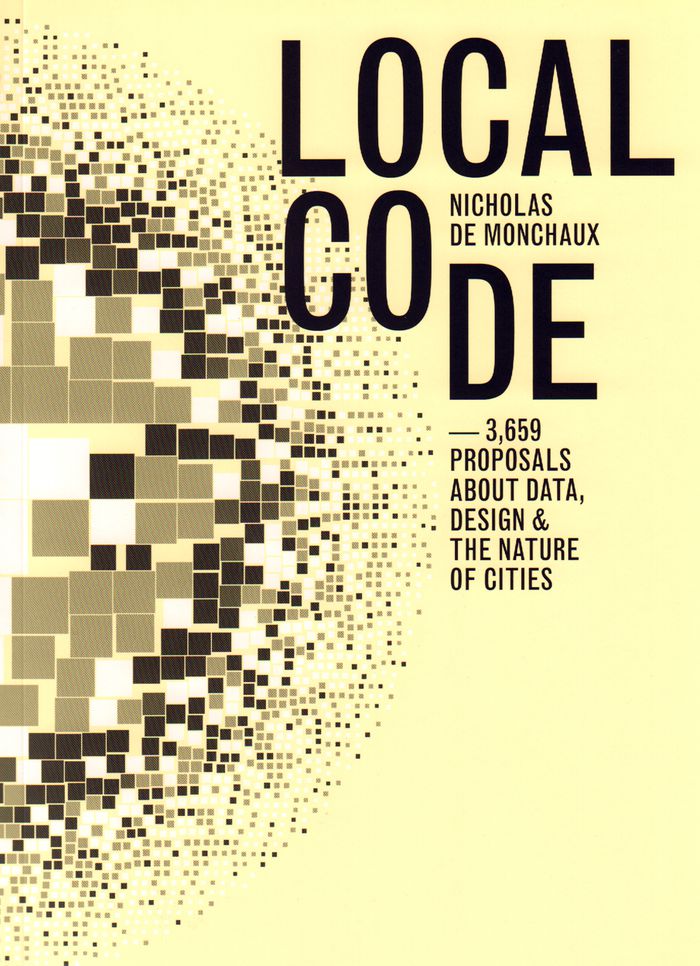
With three billion more humans projected to be living in cities by 2050, all design is increasingly urban design. And with as much data now produced every day as was produced in all of human history to the year 2007, all architecture is increasingly information architecture. Praised in the NewYork Times for its "intelligent enquiry and actionable theorizing," Local Code is a collection of data-driven tools and design prototypes for understanding and transforming the physical, social, and ecological resilience of cities.'the book's data-driven layout arranges drawings of 3,659 digitally-tailored interventions for vacant public land in San Francisco, Los Angeles, New York City, and Venice, Italy. Between these illustrated case studies, critical essays present surprising and essential links between such designs and the seminal work of urbanist Jane Jacobs, artist Gordon Matta-Clark, and digital mapping pioneer Howard Fisher, along with the developing science of urban nature and complexity. In text and image, Local Code presents'a digitally prolific, open-ended approach to urban resilience and social and environmental justice; At once analytic and visionary, it pioneers a new field of enquiry and action at the meeting of big data and the expanding city.
Local code: 3659 proposals about data, design, and the nature of cities
Actions:
Price:
$57.00
(available to order)
Summary:
With three billion more humans projected to be living in cities by 2050, all design is increasingly urban design. And with as much data now produced every day as was produced in all of human history to the year 2007, all architecture is increasingly information architecture. Praised in the NewYork Times for its "intelligent enquiry and actionable theorizing," Local Code is a collection of data-driven tools and design prototypes for understanding and transforming the physical, social, and ecological resilience of cities.'the book's data-driven layout arranges drawings of 3,659 digitally-tailored interventions for vacant public land in San Francisco, Los Angeles, New York City, and Venice, Italy. Between these illustrated case studies, critical essays present surprising and essential links between such designs and the seminal work of urbanist Jane Jacobs, artist Gordon Matta-Clark, and digital mapping pioneer Howard Fisher, along with the developing science of urban nature and complexity. In text and image, Local Code presents'a digitally prolific, open-ended approach to urban resilience and social and environmental justice; At once analytic and visionary, it pioneers a new field of enquiry and action at the meeting of big data and the expanding city.
Form:
books
books
Publication:
October 2016
October 2016
Subject:
Urban Theory
Urban Theory
Form:
books
books
Actions:
Price:
$29.00
(available to order)
Summary:
Pippa Garner’s (born 1942) ''Better Living Catalog'', originally published in 1982, takes the form of a mail-order catalog featuring clever, whimsical inventions that parody consumer goods and America’s obsession with ingenuity, efficiency, leisure and comfort. These works, which were made as prototypes and photographed for the publication, include the Reactiononometer, a(...)
$29.00
(available to order)
Summary:
Pippa Garner’s (born 1942) ''Better Living Catalog'', originally published in 1982, takes the form of a mail-order catalog featuring clever, whimsical inventions that parody consumer goods and America’s obsession with ingenuity, efficiency, leisure and comfort. These works, which were made as prototypes and photographed for the publication, include the Reactiononometer, a(...)
Title:
Philip Garner's Better Living catalogue
Actions:
Price:
$29.00
(available to order)
Summary:
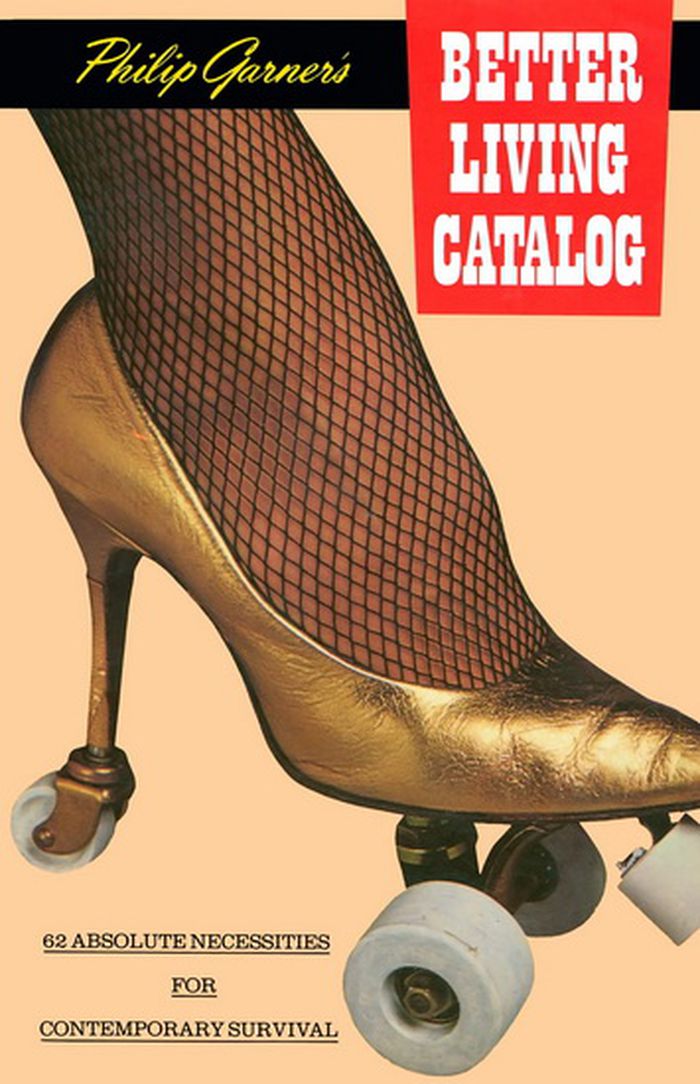
Pippa Garner’s (born 1942) ''Better Living Catalog'', originally published in 1982, takes the form of a mail-order catalog featuring clever, whimsical inventions that parody consumer goods and America’s obsession with ingenuity, efficiency, leisure and comfort. These works, which were made as prototypes and photographed for the publication, include the Reactiononometer, a portable wristband that instantly measures social success; the Digital Diet Loafers, which display the wearer’s weight with every step; and other items promising financial solvency (the controlled cash flow Autowallet) or mess-free companionship (the Pet-a-Vision TV console). The ''Better Living Catalog'' was a pop hit when it was published, earning Garner spots on nighttime TV talk shows and attention from magazines such as Vogue and Rolling Stone. The works still resonate today, finding their analogue in many consumer products and—in the case of the High Heel Skates—even appearing unattributed in the runway collection of a major fashion brand. Around the time that the ''Better Living Catalog'' was published, Garner began her gender transition, which she has characterized as an artistic project with conceptual parallels to the altered consumer goods she has continued to create since the 1970s.
Philip Garner's Better Living catalogue
Actions:
Price:
$29.00
(available to order)
Summary:
Pippa Garner’s (born 1942) ''Better Living Catalog'', originally published in 1982, takes the form of a mail-order catalog featuring clever, whimsical inventions that parody consumer goods and America’s obsession with ingenuity, efficiency, leisure and comfort. These works, which were made as prototypes and photographed for the publication, include the Reactiononometer, a portable wristband that instantly measures social success; the Digital Diet Loafers, which display the wearer’s weight with every step; and other items promising financial solvency (the controlled cash flow Autowallet) or mess-free companionship (the Pet-a-Vision TV console). The ''Better Living Catalog'' was a pop hit when it was published, earning Garner spots on nighttime TV talk shows and attention from magazines such as Vogue and Rolling Stone. The works still resonate today, finding their analogue in many consumer products and—in the case of the High Heel Skates—even appearing unattributed in the runway collection of a major fashion brand. Around the time that the ''Better Living Catalog'' was published, Garner began her gender transition, which she has characterized as an artistic project with conceptual parallels to the altered consumer goods she has continued to create since the 1970s.
Form:
books
books
Publication:
August 2023
August 2023
Subject:
Contemporary Art Monographs
Contemporary Art Monographs
Form:
books
books
Actions:
Price:
$85.00
(available to order)
Summary:
From Egypt and Classical Greece and Rome through the building booms of the Gothic era and the Renaissance, and from the Industrial Revolution to the present era of digital modeling, "Building : 3,000 Years of Design, Engineering, and Construction", charts centuries of innovations in engineering and building construction. This comprehensive and heavily illustrated volume,(...)
$85.00
(available to order)
Summary:
From Egypt and Classical Greece and Rome through the building booms of the Gothic era and the Renaissance, and from the Industrial Revolution to the present era of digital modeling, "Building : 3,000 Years of Design, Engineering, and Construction", charts centuries of innovations in engineering and building construction. This comprehensive and heavily illustrated volume,(...)
Title:
Building : 3000 years of design engineering and construction
Actions:
Price:
$85.00
(available to order)
Summary:
From Egypt and Classical Greece and Rome through the building booms of the Gothic era and the Renaissance, and from the Industrial Revolution to the present era of digital modeling, "Building : 3,000 Years of Design, Engineering, and Construction", charts centuries of innovations in engineering and building construction. This comprehensive and heavily illustrated volume, aimed at students and young professionals as well as general readers, explores the materials, classic texts, instruments, and theories that have propelled modern engineering, and the famous and not-so-famous buildings designed through the ages, from the Parthenon to Chartes Cathedral and the dome of St. Peter's, from eighteenth-century silk mills in England to the Crystal Palace, and on to the first Chicago high-rises, the Sydney Opera House, and the latest "green" skyscrapers. The book concentrates on developments since the industrial and scientific revolutions of the seventeenth and eighteenth centuries. Incorporated within the continuous narrative are sidebars with short biographies of eminent engineers, excerpts from classic texts, stories of individual projects of major importance, and brief histories of key concepts such as calculus. Also included are extensive reference materials: appendices, a glossary, bibliography, and index.
Building : 3000 years of design engineering and construction
Actions:
Price:
$85.00
(available to order)
Summary:
From Egypt and Classical Greece and Rome through the building booms of the Gothic era and the Renaissance, and from the Industrial Revolution to the present era of digital modeling, "Building : 3,000 Years of Design, Engineering, and Construction", charts centuries of innovations in engineering and building construction. This comprehensive and heavily illustrated volume, aimed at students and young professionals as well as general readers, explores the materials, classic texts, instruments, and theories that have propelled modern engineering, and the famous and not-so-famous buildings designed through the ages, from the Parthenon to Chartes Cathedral and the dome of St. Peter's, from eighteenth-century silk mills in England to the Crystal Palace, and on to the first Chicago high-rises, the Sydney Opera House, and the latest "green" skyscrapers. The book concentrates on developments since the industrial and scientific revolutions of the seventeenth and eighteenth centuries. Incorporated within the continuous narrative are sidebars with short biographies of eminent engineers, excerpts from classic texts, stories of individual projects of major importance, and brief histories of key concepts such as calculus. Also included are extensive reference materials: appendices, a glossary, bibliography, and index.
Form:
books
books
Publication:
March 2007, London, New York
March 2007, London, New York
Subject:
Engineering Structures
Engineering Structures
Form:
books
books
Actions:
Price:
$22.95
(available to order)
Summary:
In response to the contentious process surrounding the selection of a design for the World Trade Center site, the use of spectacular buildings to brand cities and institutions, and the dizzying transformations of the skylines of Shanghai and Dubai, public awareness of architecture and design has perhaps never been higher. At the same time, architecture itself is(...)
$22.95
(available to order)
Summary:
In response to the contentious process surrounding the selection of a design for the World Trade Center site, the use of spectacular buildings to brand cities and institutions, and the dizzying transformations of the skylines of Shanghai and Dubai, public awareness of architecture and design has perhaps never been higher. At the same time, architecture itself is(...)
Title:
The new architectural pragmatism
Actions:
Price:
$22.95
(available to order)
Summary:
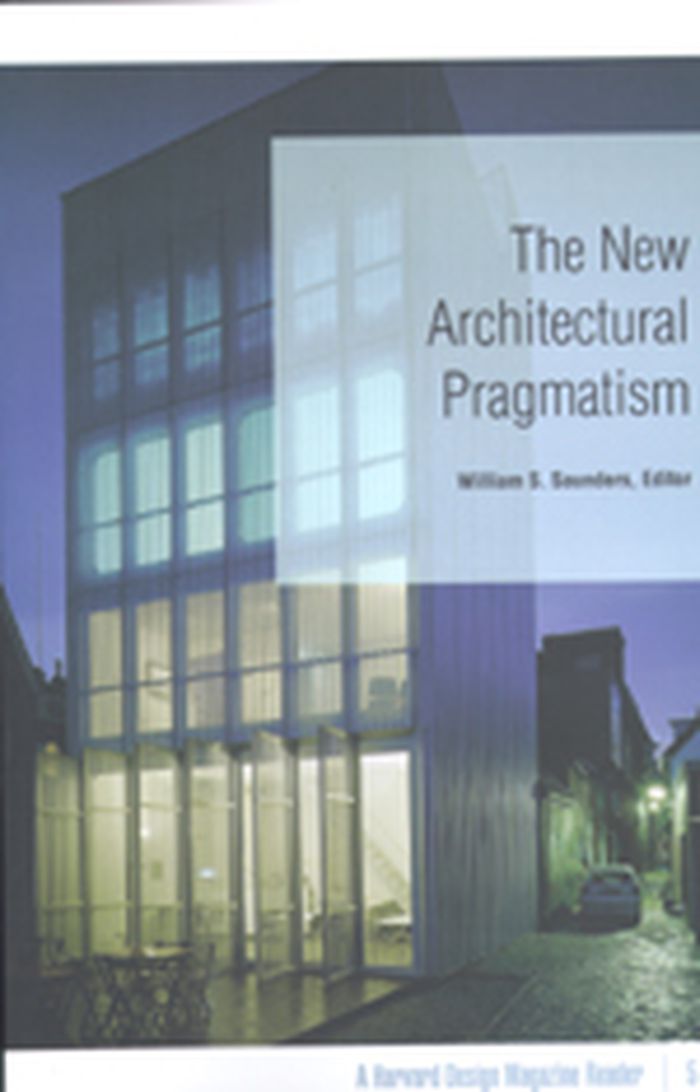
In response to the contentious process surrounding the selection of a design for the World Trade Center site, the use of spectacular buildings to brand cities and institutions, and the dizzying transformations of the skylines of Shanghai and Dubai, public awareness of architecture and design has perhaps never been higher. At the same time, architecture itself is undergoing an identity crisis as it confronts fundamental issues: the effect of digital technology on design, the pervasive impact of global capitalism, and whether to embrace or resist popular media and taste. The New Architectural Pragmatism collects the most provocative, penetrating, and influential attempts by leading theorists and practitioners in the field to define what architectural practice should be at the beginning of the twenty-first century. Written in the aftermath of modernism’s utopian impulse and postmodernism’s detached playfulness, the essays gathered here express and critique a new spirit of cultural and political engagement with contemporary society. Interrogating the architect’s social responsibility, the contributors deliberate about how much we should ask of architecture and suggest that in the coming century, architecture must be at once flexible and robust, responsive and self-directed.
The new architectural pragmatism
Actions:
Price:
$22.95
(available to order)
Summary:
In response to the contentious process surrounding the selection of a design for the World Trade Center site, the use of spectacular buildings to brand cities and institutions, and the dizzying transformations of the skylines of Shanghai and Dubai, public awareness of architecture and design has perhaps never been higher. At the same time, architecture itself is undergoing an identity crisis as it confronts fundamental issues: the effect of digital technology on design, the pervasive impact of global capitalism, and whether to embrace or resist popular media and taste. The New Architectural Pragmatism collects the most provocative, penetrating, and influential attempts by leading theorists and practitioners in the field to define what architectural practice should be at the beginning of the twenty-first century. Written in the aftermath of modernism’s utopian impulse and postmodernism’s detached playfulness, the essays gathered here express and critique a new spirit of cultural and political engagement with contemporary society. Interrogating the architect’s social responsibility, the contributors deliberate about how much we should ask of architecture and suggest that in the coming century, architecture must be at once flexible and robust, responsive and self-directed.
Form:
books
books
Publication:
November 2007, Minneapolis
November 2007, Minneapolis
Subject:
Architectural Theory
Architectural Theory
Form:
books
books
Title:
Image & imagination
Image & imagination
Actions:
Price:
$10.00
(available to order)
Summary:
Photography and reality are inextricably linked but, whether one is being photographed, making a photograph, or looking at a photograph, photography is an act of the imagination. In nine original essays, art historians and cultural theorists break with photographic tradition to explore the crucial role of the imagination in photography from nineteenth-century studio(...)
$10.00
(available to order)
Summary:
Photography and reality are inextricably linked but, whether one is being photographed, making a photograph, or looking at a photograph, photography is an act of the imagination. In nine original essays, art historians and cultural theorists break with photographic tradition to explore the crucial role of the imagination in photography from nineteenth-century studio(...)
Publication:
August 2005, Montréal
August 2005, Montréal
Title:
Image & imagination
Actions:
Price:
$10.00
(available to order)
Summary:
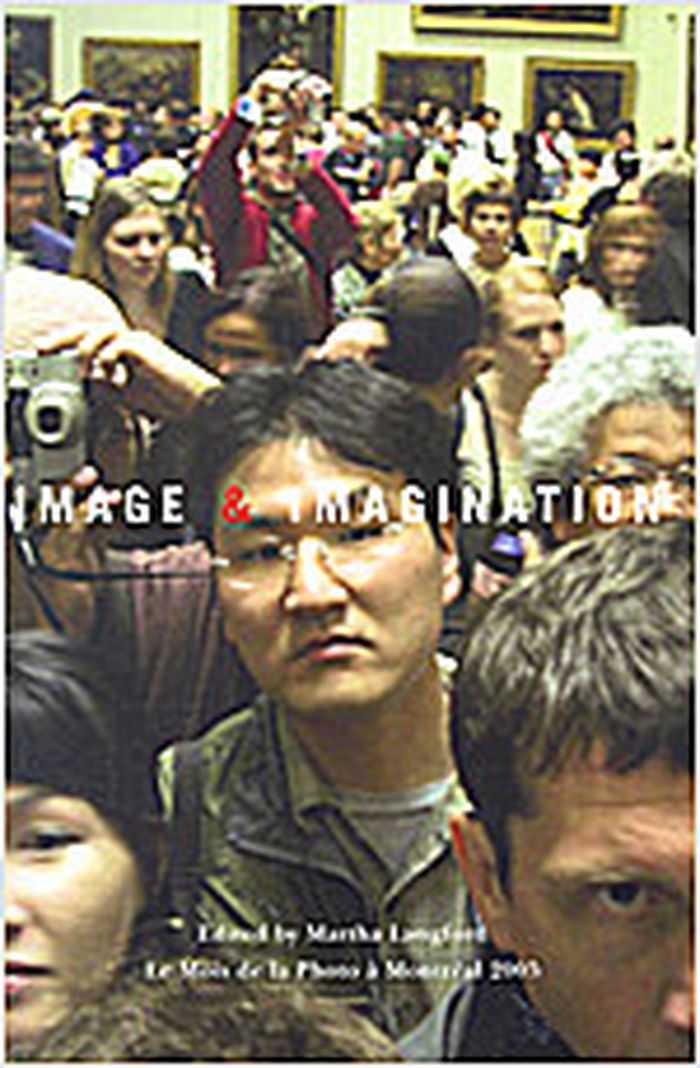
Photography and reality are inextricably linked but, whether one is being photographed, making a photograph, or looking at a photograph, photography is an act of the imagination. In nine original essays, art historians and cultural theorists break with photographic tradition to explore the crucial role of the imagination in photography from nineteenth-century studio portraiture to twenty-first-century digital innovations. Drawing on the twenty-nine exhibitions of Le Mois de la Photo à Montréal 2005, Image & Imagination features the work of sixty contemporary artists from Canada, Australia, the United States, France, England, Haiti, and Japan, including Marc Audette, Iain Baxter, Diane Borsato, Denis Farley, Alain Bublex, Michel Campeau, Destiny Deacon, Evergon, Adad Hannah, David Hlynsky, Tracey Moffatt, Shana and Robert ParkeHarrison, Lynne Marsh, Polixeni Papapetrou, Martin Parr, Ramona Ramlochand, Carolee Schneemann, Michael Snow, and Hulleah J. Tsinhnahjinnie. Essayists include Geoffrey Batchen (City University of New York), Catherine Bédard (Canadian Cultural Centre, Paris), Fae Brauer (University of New South Wales), Francine Dagenais (McGill University), Martyn Jolly (Australian National University), Petra Halkes (Concordia University), Martha Langford (Concordia University), Kirsty Robertson (Queen's University), and Ian Walker (University of Wales College).
Image & imagination
Actions:
Price:
$10.00
(available to order)
Summary:
Photography and reality are inextricably linked but, whether one is being photographed, making a photograph, or looking at a photograph, photography is an act of the imagination. In nine original essays, art historians and cultural theorists break with photographic tradition to explore the crucial role of the imagination in photography from nineteenth-century studio portraiture to twenty-first-century digital innovations. Drawing on the twenty-nine exhibitions of Le Mois de la Photo à Montréal 2005, Image & Imagination features the work of sixty contemporary artists from Canada, Australia, the United States, France, England, Haiti, and Japan, including Marc Audette, Iain Baxter, Diane Borsato, Denis Farley, Alain Bublex, Michel Campeau, Destiny Deacon, Evergon, Adad Hannah, David Hlynsky, Tracey Moffatt, Shana and Robert ParkeHarrison, Lynne Marsh, Polixeni Papapetrou, Martin Parr, Ramona Ramlochand, Carolee Schneemann, Michael Snow, and Hulleah J. Tsinhnahjinnie. Essayists include Geoffrey Batchen (City University of New York), Catherine Bédard (Canadian Cultural Centre, Paris), Fae Brauer (University of New South Wales), Francine Dagenais (McGill University), Martyn Jolly (Australian National University), Petra Halkes (Concordia University), Martha Langford (Concordia University), Kirsty Robertson (Queen's University), and Ian Walker (University of Wales College).
Form:
books
books
Publication:
August 2005, Montréal
August 2005, Montréal
Form:
books
books

Title:
Holocaust memorial, Berlin
Holocaust memorial, Berlin
Actions:
Price:
$58.00
(available to order)
Summary:
Inescapably controversial, the Holocaust Memorial Berlin (or, as it’s formally known, the Memorial to the Murdered Jews of Europe) is now finished, some 16 years after it was first proposed. Architect Peter Eisenman’s design, which filled a four-football-field-size parcel of land in the middle of Berlin with more than 2,700 concrete slabs, or stelae, was itself hotly(...)
$58.00
(available to order)
Summary:
Inescapably controversial, the Holocaust Memorial Berlin (or, as it’s formally known, the Memorial to the Murdered Jews of Europe) is now finished, some 16 years after it was first proposed. Architect Peter Eisenman’s design, which filled a four-football-field-size parcel of land in the middle of Berlin with more than 2,700 concrete slabs, or stelae, was itself hotly(...)
Subject:
Architecture Monographs
Architecture Monographs
Publication:
January 1900, Baden
January 1900, Baden
Title:
Holocaust memorial, Berlin
Actions:
Price:
$58.00
(available to order)
Summary:
Inescapably controversial, the Holocaust Memorial Berlin (or, as it’s formally known, the Memorial to the Murdered Jews of Europe) is now finished, some 16 years after it was first proposed. Architect Peter Eisenman’s design, which filled a four-football-field-size parcel of land in the middle of Berlin with more than 2,700 concrete slabs, or stelae, was itself hotly debated, with some complaining that its abstractness, Eisenman’s trademark, made it a monument that evoked no memories. As the debates give way to accounts of the experience of the space, the readers of this book, produced with Eisenman’s cooperation, will be able to compare how successfully the architect’s conception matches the reality. This volume offers a full picture of the process from conceptual and architectural drawings and digital plans to photographs of construction. It holds the narrative of a difficult task, turning “the place of no meaning,” as Eisenman once referred to the site in the hopes of dispelling fears that he was trying to symbolize the deaths that took place during the Holocaust, into a confrontation with the past. Photographs by Hélène Binet and Lukas Wasserman.
Holocaust memorial, Berlin
Actions:
Price:
$58.00
(available to order)
Summary:
Inescapably controversial, the Holocaust Memorial Berlin (or, as it’s formally known, the Memorial to the Murdered Jews of Europe) is now finished, some 16 years after it was first proposed. Architect Peter Eisenman’s design, which filled a four-football-field-size parcel of land in the middle of Berlin with more than 2,700 concrete slabs, or stelae, was itself hotly debated, with some complaining that its abstractness, Eisenman’s trademark, made it a monument that evoked no memories. As the debates give way to accounts of the experience of the space, the readers of this book, produced with Eisenman’s cooperation, will be able to compare how successfully the architect’s conception matches the reality. This volume offers a full picture of the process from conceptual and architectural drawings and digital plans to photographs of construction. It holds the narrative of a difficult task, turning “the place of no meaning,” as Eisenman once referred to the site in the hopes of dispelling fears that he was trying to symbolize the deaths that took place during the Holocaust, into a confrontation with the past. Photographs by Hélène Binet and Lukas Wasserman.
Form:
books
books
Publication:
January 1900, Baden
January 1900, Baden
Subject:
Architecture Monographs
Architecture Monographs
Form:
books
books
Title:
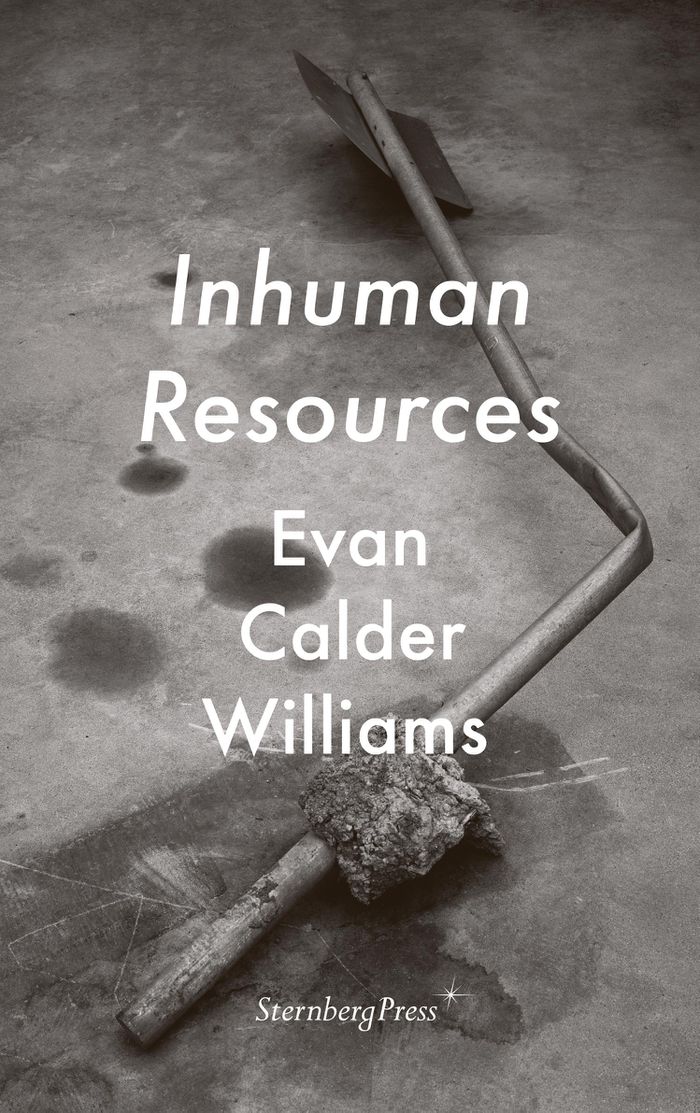
Inhuman resources
Inhuman resources
Actions:
Price:
$34.95
(available in store)
Summary:
What gets stranded outside the borders of the political? ''Inhuman Resources'' develops an account of sabotage, insubordination, and the invisible activities that undermine the ideas of accountability and identi?cation on which representative politics rely. Drawing from histories of labor, disability, infrastructure, writing, and war, Williams offers genealogies of the(...)
$34.95
(available in store)
Summary:
What gets stranded outside the borders of the political? ''Inhuman Resources'' develops an account of sabotage, insubordination, and the invisible activities that undermine the ideas of accountability and identi?cation on which representative politics rely. Drawing from histories of labor, disability, infrastructure, writing, and war, Williams offers genealogies of the(...)
Title:
Inhuman resources
Actions:
Price:
$34.95
(available in store)
Summary:
What gets stranded outside the borders of the political? ''Inhuman Resources'' develops an account of sabotage, insubordination, and the invisible activities that undermine the ideas of accountability and identi?cation on which representative politics rely. Drawing from histories of labor, disability, infrastructure, writing, and war, Williams offers genealogies of the tropes of paralysis and sabotage, which leave behind notions of public citizenship to reveal an “inhuman” agency that hinges on the unexpected friction between humans, materials, machinery, and other non-human life. Yet to detect this and move away from fantasies of clarity and visibility, we need to take cues from political and artistic practices that evade such legibility, and are attuned to what happens off-screen and without recognition. Spanning an ambitious range of subjects—from prison architecture to digital animation, legal history to self-help books, and electrical blackouts to silkworms saturated with toxic dye— ''Inhuman Resources'' gathers materials for thinking differently about insurgent activity. This is a theory that does not privilege exodus, pride, or autonomy but instead takes shape inside the very processes, architectures, appearances, and systems it seeks to ruin.
Inhuman resources
Actions:
Price:
$34.95
(available in store)
Summary:
What gets stranded outside the borders of the political? ''Inhuman Resources'' develops an account of sabotage, insubordination, and the invisible activities that undermine the ideas of accountability and identi?cation on which representative politics rely. Drawing from histories of labor, disability, infrastructure, writing, and war, Williams offers genealogies of the tropes of paralysis and sabotage, which leave behind notions of public citizenship to reveal an “inhuman” agency that hinges on the unexpected friction between humans, materials, machinery, and other non-human life. Yet to detect this and move away from fantasies of clarity and visibility, we need to take cues from political and artistic practices that evade such legibility, and are attuned to what happens off-screen and without recognition. Spanning an ambitious range of subjects—from prison architecture to digital animation, legal history to self-help books, and electrical blackouts to silkworms saturated with toxic dye— ''Inhuman Resources'' gathers materials for thinking differently about insurgent activity. This is a theory that does not privilege exodus, pride, or autonomy but instead takes shape inside the very processes, architectures, appearances, and systems it seeks to ruin.
Form:
books
books
Publication:
March 2026
March 2026
Subject:
Critical Theory
Critical Theory


