


63518 Results
Level of archival description:
Project
Project
Reference number:
AP148.S1.1972.PR01
Description:
Project series documents Poli's research and design work on his major project about a peasant farmer named Zeno from Riparbella. This project, entitled "Zeno, una cultura autosufficiente," was presented at the 1978 Venice Biennale with Superstudio as "La Coscienza di Zeno (Zeno's consciousness)". The project also appears to have some overlap with another research project in which Poli and other members of Superstudio were involved: Culture materiale extraurbane. This involved research and the development of a course in the architecture programme at the University of Florence on research into traditional tools and other aspects of rural material culture. The research work on rural culture was published in the magazine Modo (no.7) in March 1978. The Zeno project reflects a major project in Poli's output, with work beginning on it in 1972 and into 1980. There are numerous narratives at work in this project. There is the narrative of Zeno's relationship to the small house built by his grandfather and in which he was born, and has always lived. Alongside this, is Poli's interest in Zeno's relationship to his tools, his clothes, all the material elements of his life in the only house he has ever known. The fictional narrative that Poli weaves into this project involves an imagined encounter between Zeno and astronaut Buzz Aldrin. Poli's fascination with Zeno's material culture extends into a comparison of these two men and their physical interactions with their worlds: both self-sufficient capsules of a kind. Material in this project includes a large number of drawings and collages depicting different domestic and working spaces and tools in Zeno's life. A number of these drawings feature artefacts, such as cloth pillowcases, metal pieces, and a rope. In addition, the project series includes a number of physical artefacts, such as tools and even Zeno's door. A notable element in this series is an artist book by Poli which features a catalogue or register of elements in Zeno's life, detailing everything about his spaces, his working days, and even the food he eats.
AP148.S1.1972.PR01
Description:
Project series documents Poli's research and design work on his major project about a peasant farmer named Zeno from Riparbella. This project, entitled "Zeno, una cultura autosufficiente," was presented at the 1978 Venice Biennale with Superstudio as "La Coscienza di Zeno (Zeno's consciousness)". The project also appears to have some overlap with another research project in which Poli and other members of Superstudio were involved: Culture materiale extraurbane. This involved research and the development of a course in the architecture programme at the University of Florence on research into traditional tools and other aspects of rural material culture. The research work on rural culture was published in the magazine Modo (no.7) in March 1978. The Zeno project reflects a major project in Poli's output, with work beginning on it in 1972 and into 1980. There are numerous narratives at work in this project. There is the narrative of Zeno's relationship to the small house built by his grandfather and in which he was born, and has always lived. Alongside this, is Poli's interest in Zeno's relationship to his tools, his clothes, all the material elements of his life in the only house he has ever known. The fictional narrative that Poli weaves into this project involves an imagined encounter between Zeno and astronaut Buzz Aldrin. Poli's fascination with Zeno's material culture extends into a comparison of these two men and their physical interactions with their worlds: both self-sufficient capsules of a kind. Material in this project includes a large number of drawings and collages depicting different domestic and working spaces and tools in Zeno's life. A number of these drawings feature artefacts, such as cloth pillowcases, metal pieces, and a rope. In addition, the project series includes a number of physical artefacts, such as tools and even Zeno's door. A notable element in this series is an artist book by Poli which features a catalogue or register of elements in Zeno's life, detailing everything about his spaces, his working days, and even the food he eats.
People:
Date:
1972-1980
1972-1980
Title:
Zeno, una cultura autosufficiente [Zeno, a self-sufficient culture] (1972-1980)
Actions:
AP148.S1.1972.PR01
Description:
Project series documents Poli's research and design work on his major project about a peasant farmer named Zeno from Riparbella. This project, entitled "Zeno, una cultura autosufficiente," was presented at the 1978 Venice Biennale with Superstudio as "La Coscienza di Zeno (Zeno's consciousness)". The project also appears to have some overlap with another research project in which Poli and other members of Superstudio were involved: Culture materiale extraurbane. This involved research and the development of a course in the architecture programme at the University of Florence on research into traditional tools and other aspects of rural material culture. The research work on rural culture was published in the magazine Modo (no.7) in March 1978. The Zeno project reflects a major project in Poli's output, with work beginning on it in 1972 and into 1980. There are numerous narratives at work in this project. There is the narrative of Zeno's relationship to the small house built by his grandfather and in which he was born, and has always lived. Alongside this, is Poli's interest in Zeno's relationship to his tools, his clothes, all the material elements of his life in the only house he has ever known. The fictional narrative that Poli weaves into this project involves an imagined encounter between Zeno and astronaut Buzz Aldrin. Poli's fascination with Zeno's material culture extends into a comparison of these two men and their physical interactions with their worlds: both self-sufficient capsules of a kind. Material in this project includes a large number of drawings and collages depicting different domestic and working spaces and tools in Zeno's life. A number of these drawings feature artefacts, such as cloth pillowcases, metal pieces, and a rope. In addition, the project series includes a number of physical artefacts, such as tools and even Zeno's door. A notable element in this series is an artist book by Poli which features a catalogue or register of elements in Zeno's life, detailing everything about his spaces, his working days, and even the food he eats.
Zeno, una cultura autosufficiente [Zeno, a self-sufficient culture] (1972-1980)
Actions:
AP148.S1.1972.PR01
Description:
Project series documents Poli's research and design work on his major project about a peasant farmer named Zeno from Riparbella. This project, entitled "Zeno, una cultura autosufficiente," was presented at the 1978 Venice Biennale with Superstudio as "La Coscienza di Zeno (Zeno's consciousness)". The project also appears to have some overlap with another research project in which Poli and other members of Superstudio were involved: Culture materiale extraurbane. This involved research and the development of a course in the architecture programme at the University of Florence on research into traditional tools and other aspects of rural material culture. The research work on rural culture was published in the magazine Modo (no.7) in March 1978. The Zeno project reflects a major project in Poli's output, with work beginning on it in 1972 and into 1980. There are numerous narratives at work in this project. There is the narrative of Zeno's relationship to the small house built by his grandfather and in which he was born, and has always lived. Alongside this, is Poli's interest in Zeno's relationship to his tools, his clothes, all the material elements of his life in the only house he has ever known. The fictional narrative that Poli weaves into this project involves an imagined encounter between Zeno and astronaut Buzz Aldrin. Poli's fascination with Zeno's material culture extends into a comparison of these two men and their physical interactions with their worlds: both self-sufficient capsules of a kind. Material in this project includes a large number of drawings and collages depicting different domestic and working spaces and tools in Zeno's life. A number of these drawings feature artefacts, such as cloth pillowcases, metal pieces, and a rope. In addition, the project series includes a number of physical artefacts, such as tools and even Zeno's door. A notable element in this series is an artist book by Poli which features a catalogue or register of elements in Zeno's life, detailing everything about his spaces, his working days, and even the food he eats.
Level of archival description:
Project
Project
Date:
1972-1980
1972-1980
People:
Form:
textual records
Quantity:
18 file
textual records
Quantity:
18 file
Title:
Article Texts, 1996-1997
Article Texts, 1996-1997
Actions:
Reference number:
ARCH242924
Description:
Martin, Well-Opener - drafts of articles by Reinhold Martin (3 files) Koss - drafts of article by Juliet Koss El-Dahdah Book Review - drafts of review by Farès el-Dahdah of Jean-François de Bastide's The Little House, An Architectural Seduction Picon - drafts and translations of article by Antoine Picon Eigen - drafts of article by Edward Eigen (2 files) Project - Sm-M / Hawk (Smith-Miller + Hawkinson Architects) - transcript of conversation between Henry Smith-Miller, Laurie Hawkinson, Cynthia Davidson, and Ernest Pascucci Kurgan - drafts of article by Laura Kurgan Wigley - drafts of articles by Mark Wigley Nordenson - drafts of article by Guy Nordenson, with illustrations Wong - drafts of article by Y. C. Wong Branden Joseph - drafts of article by Branden W. Joseph Segrest - drafts of article by Robert Segrest Roy - drafts of article by Lindy Roy Colomina - drafts of article by Beatriz Colomina Robbins - drafts of review by Edward Robbins of M. Christine Boyer's The City of Collective Memory
ARCH242924
Description:
Martin, Well-Opener - drafts of articles by Reinhold Martin (3 files) Koss - drafts of article by Juliet Koss El-Dahdah Book Review - drafts of review by Farès el-Dahdah of Jean-François de Bastide's The Little House, An Architectural Seduction Picon - drafts and translations of article by Antoine Picon Eigen - drafts of article by Edward Eigen (2 files) Project - Sm-M / Hawk (Smith-Miller + Hawkinson Architects) - transcript of conversation between Henry Smith-Miller, Laurie Hawkinson, Cynthia Davidson, and Ernest Pascucci Kurgan - drafts of article by Laura Kurgan Wigley - drafts of articles by Mark Wigley Nordenson - drafts of article by Guy Nordenson, with illustrations Wong - drafts of article by Y. C. Wong Branden Joseph - drafts of article by Branden W. Joseph Segrest - drafts of article by Robert Segrest Roy - drafts of article by Lindy Roy Colomina - drafts of article by Beatriz Colomina Robbins - drafts of review by Edward Robbins of M. Christine Boyer's The City of Collective Memory
People:
Date:
1996-1997
1996-1997
Title:
Article Texts, 1996-1997
Actions:
ARCH242924
Description:
Martin, Well-Opener - drafts of articles by Reinhold Martin (3 files) Koss - drafts of article by Juliet Koss El-Dahdah Book Review - drafts of review by Farès el-Dahdah of Jean-François de Bastide's The Little House, An Architectural Seduction Picon - drafts and translations of article by Antoine Picon Eigen - drafts of article by Edward Eigen (2 files) Project - Sm-M / Hawk (Smith-Miller + Hawkinson Architects) - transcript of conversation between Henry Smith-Miller, Laurie Hawkinson, Cynthia Davidson, and Ernest Pascucci Kurgan - drafts of article by Laura Kurgan Wigley - drafts of articles by Mark Wigley Nordenson - drafts of article by Guy Nordenson, with illustrations Wong - drafts of article by Y. C. Wong Branden Joseph - drafts of article by Branden W. Joseph Segrest - drafts of article by Robert Segrest Roy - drafts of article by Lindy Roy Colomina - drafts of article by Beatriz Colomina Robbins - drafts of review by Edward Robbins of M. Christine Boyer's The City of Collective Memory
Article Texts, 1996-1997
Actions:
ARCH242924
Description:
Martin, Well-Opener - drafts of articles by Reinhold Martin (3 files) Koss - drafts of article by Juliet Koss El-Dahdah Book Review - drafts of review by Farès el-Dahdah of Jean-François de Bastide's The Little House, An Architectural Seduction Picon - drafts and translations of article by Antoine Picon Eigen - drafts of article by Edward Eigen (2 files) Project - Sm-M / Hawk (Smith-Miller + Hawkinson Architects) - transcript of conversation between Henry Smith-Miller, Laurie Hawkinson, Cynthia Davidson, and Ernest Pascucci Kurgan - drafts of article by Laura Kurgan Wigley - drafts of articles by Mark Wigley Nordenson - drafts of article by Guy Nordenson, with illustrations Wong - drafts of article by Y. C. Wong Branden Joseph - drafts of article by Branden W. Joseph Segrest - drafts of article by Robert Segrest Roy - drafts of article by Lindy Roy Colomina - drafts of article by Beatriz Colomina Robbins - drafts of review by Edward Robbins of M. Christine Boyer's The City of Collective Memory
Form:
textual records
Quantity:
18 file
textual records
Quantity:
18 file
Date:
1996-1997
1996-1997
People:
Form:
photographs
photographs
Reference number:
ARCH257680
Description:
Russel and Dumoulin office interiors; St David's School for Boys ; Yarmonic University; Berlitz alterations ; Camberra Exposition ; De Havilland Aircraft ; Duthie Book Store ; False Creek Theatre ; PNE Administration Building ; Anton Residence : 3 planches ; Puddifoot Shop ; Village Lake Louise ; Wood Gundy Offices ; World Wide Travel ; Redekop Apartments ; Shannon News Estate ; Trail urban developemnt ; Champlain Heights Elementary School; Beaubien Estates Townhouses ; Compartime ; British Columbia Research Council ; Garibaldi Olympic development ass. ; Massey College ; Metal Residence ; Matsoui/Matsqui Office Building ; Mitchell Residence ; Simon Fraser University ; Simpson Apartments ; Stegman Residence ; University of Victoria ; Venezuela Pavilion Expo '67 ; Woodcroft Estates ; X-Kalay; NAPP Laboratories; Dilworth Nountain ;Mac Millan Bloedel ; "Man in the Community" ; Expo' 70 Pavilion, victoria Harbour ; Canada Place, Edmonton; Bank of Canada head office; Begg Building; Canadian Chancery / New Canadian Embassy, Washington; Dawson housing Port Moody; Dowtown Core, BC Building; British Columbia Place Park ; Francisco Kripacz Appartment ; Mont Seymor Cafeteria; Lethbridge University; Winnipeg project, Trizac; Children Gallery VAG; Greenwood Park; Metro Toronto HQ
ARCH257680
Description:
Russel and Dumoulin office interiors; St David's School for Boys ; Yarmonic University; Berlitz alterations ; Camberra Exposition ; De Havilland Aircraft ; Duthie Book Store ; False Creek Theatre ; PNE Administration Building ; Anton Residence : 3 planches ; Puddifoot Shop ; Village Lake Louise ; Wood Gundy Offices ; World Wide Travel ; Redekop Apartments ; Shannon News Estate ; Trail urban developemnt ; Champlain Heights Elementary School; Beaubien Estates Townhouses ; Compartime ; British Columbia Research Council ; Garibaldi Olympic development ass. ; Massey College ; Metal Residence ; Matsoui/Matsqui Office Building ; Mitchell Residence ; Simon Fraser University ; Simpson Apartments ; Stegman Residence ; University of Victoria ; Venezuela Pavilion Expo '67 ; Woodcroft Estates ; X-Kalay; NAPP Laboratories; Dilworth Nountain ;Mac Millan Bloedel ; "Man in the Community" ; Expo' 70 Pavilion, victoria Harbour ; Canada Place, Edmonton; Bank of Canada head office; Begg Building; Canadian Chancery / New Canadian Embassy, Washington; Dawson housing Port Moody; Dowtown Core, BC Building; British Columbia Place Park ; Francisco Kripacz Appartment ; Mont Seymor Cafeteria; Lethbridge University; Winnipeg project, Trizac; Children Gallery VAG; Greenwood Park; Metro Toronto HQ
People:
Title:
Projects photographs for various projects
Actions:
ARCH257680
Description:
Russel and Dumoulin office interiors; St David's School for Boys ; Yarmonic University; Berlitz alterations ; Camberra Exposition ; De Havilland Aircraft ; Duthie Book Store ; False Creek Theatre ; PNE Administration Building ; Anton Residence : 3 planches ; Puddifoot Shop ; Village Lake Louise ; Wood Gundy Offices ; World Wide Travel ; Redekop Apartments ; Shannon News Estate ; Trail urban developemnt ; Champlain Heights Elementary School; Beaubien Estates Townhouses ; Compartime ; British Columbia Research Council ; Garibaldi Olympic development ass. ; Massey College ; Metal Residence ; Matsoui/Matsqui Office Building ; Mitchell Residence ; Simon Fraser University ; Simpson Apartments ; Stegman Residence ; University of Victoria ; Venezuela Pavilion Expo '67 ; Woodcroft Estates ; X-Kalay; NAPP Laboratories; Dilworth Nountain ;Mac Millan Bloedel ; "Man in the Community" ; Expo' 70 Pavilion, victoria Harbour ; Canada Place, Edmonton; Bank of Canada head office; Begg Building; Canadian Chancery / New Canadian Embassy, Washington; Dawson housing Port Moody; Dowtown Core, BC Building; British Columbia Place Park ; Francisco Kripacz Appartment ; Mont Seymor Cafeteria; Lethbridge University; Winnipeg project, Trizac; Children Gallery VAG; Greenwood Park; Metro Toronto HQ
Projects photographs for various projects
Actions:
ARCH257680
Description:
Russel and Dumoulin office interiors; St David's School for Boys ; Yarmonic University; Berlitz alterations ; Camberra Exposition ; De Havilland Aircraft ; Duthie Book Store ; False Creek Theatre ; PNE Administration Building ; Anton Residence : 3 planches ; Puddifoot Shop ; Village Lake Louise ; Wood Gundy Offices ; World Wide Travel ; Redekop Apartments ; Shannon News Estate ; Trail urban developemnt ; Champlain Heights Elementary School; Beaubien Estates Townhouses ; Compartime ; British Columbia Research Council ; Garibaldi Olympic development ass. ; Massey College ; Metal Residence ; Matsoui/Matsqui Office Building ; Mitchell Residence ; Simon Fraser University ; Simpson Apartments ; Stegman Residence ; University of Victoria ; Venezuela Pavilion Expo '67 ; Woodcroft Estates ; X-Kalay; NAPP Laboratories; Dilworth Nountain ;Mac Millan Bloedel ; "Man in the Community" ; Expo' 70 Pavilion, victoria Harbour ; Canada Place, Edmonton; Bank of Canada head office; Begg Building; Canadian Chancery / New Canadian Embassy, Washington; Dawson housing Port Moody; Dowtown Core, BC Building; British Columbia Place Park ; Francisco Kripacz Appartment ; Mont Seymor Cafeteria; Lethbridge University; Winnipeg project, Trizac; Children Gallery VAG; Greenwood Park; Metro Toronto HQ
Form:
photographs
photographs
People:
Form:
textual records
textual records
Title:
Portfolio of projects
Portfolio of projects
Actions:
Reference number:
ARCH270971
Description:
The book is in English and presents projects by the firm Abalos & Herreros from 1993 to 2002. It includes these projects: - Recualificación del espacio público de Ramos, Rio de Janeiro, Brazil (AP164.S1.1997.D7); - Aula medioambiental y oficinas, Arico, Tenerife, Spain (AP164.S1.1998.D1); - Plaza y torre Woermann, Las Palmas, Canary Islands (AP164.S1.2001.D7); - Casa Mora, Cádiz (AP164.S1.2000.D10); - El mirador: torre mixta en la bahía de Algeciras (AP164.S1.1999.D10); - Delegación de hacienda, Almería (AP164.S1.1997.D8); - Es Pil•larí, Palma de Mallorca (AP164.S1.2000.D5); - Parque litroral nord-est, Barcelona (AP164.S1.2000.D9.SD1); - Biblioteca Usera, Madrid (AP164.S1.1995.D1); - Planta de reciclaje de residuos urbanos de Valdemingómez, Madrid (AP164.S1.1996.D4); - La Casa verde, Pozuelo, Madrid (AP164.S1.1997.D4); - Estudio Gordillo, Villanueva de la Cañada, Madrid (AP164.S1.1999.D6); - Planta de biometanización y compostaje de residuos urbanos, Pinto, Madrid (AP164.S1.2000.D6); - Sala municipal y plaza en Colmenarejo, Madrid (AP164.S1.1997.D11); - Centro universitario en Mérida (AP164.S1.1999.D4); - Torres mixtas bioclimáticas en el Humedal de Salburua, Vitoria (AP164.S1.2002.D2); - Ordenación del área de Abandoibarra, Bilbao (AP164.S1.1993.D5).
ARCH270971
Description:
The book is in English and presents projects by the firm Abalos & Herreros from 1993 to 2002. It includes these projects: - Recualificación del espacio público de Ramos, Rio de Janeiro, Brazil (AP164.S1.1997.D7); - Aula medioambiental y oficinas, Arico, Tenerife, Spain (AP164.S1.1998.D1); - Plaza y torre Woermann, Las Palmas, Canary Islands (AP164.S1.2001.D7); - Casa Mora, Cádiz (AP164.S1.2000.D10); - El mirador: torre mixta en la bahía de Algeciras (AP164.S1.1999.D10); - Delegación de hacienda, Almería (AP164.S1.1997.D8); - Es Pil•larí, Palma de Mallorca (AP164.S1.2000.D5); - Parque litroral nord-est, Barcelona (AP164.S1.2000.D9.SD1); - Biblioteca Usera, Madrid (AP164.S1.1995.D1); - Planta de reciclaje de residuos urbanos de Valdemingómez, Madrid (AP164.S1.1996.D4); - La Casa verde, Pozuelo, Madrid (AP164.S1.1997.D4); - Estudio Gordillo, Villanueva de la Cañada, Madrid (AP164.S1.1999.D6); - Planta de biometanización y compostaje de residuos urbanos, Pinto, Madrid (AP164.S1.2000.D6); - Sala municipal y plaza en Colmenarejo, Madrid (AP164.S1.1997.D11); - Centro universitario en Mérida (AP164.S1.1999.D4); - Torres mixtas bioclimáticas en el Humedal de Salburua, Vitoria (AP164.S1.2002.D2); - Ordenación del área de Abandoibarra, Bilbao (AP164.S1.1993.D5).
People:
Date:
2002 or after
2002 or after
Title:
Portfolio of projects
Actions:
ARCH270971
Description:
The book is in English and presents projects by the firm Abalos & Herreros from 1993 to 2002. It includes these projects: - Recualificación del espacio público de Ramos, Rio de Janeiro, Brazil (AP164.S1.1997.D7); - Aula medioambiental y oficinas, Arico, Tenerife, Spain (AP164.S1.1998.D1); - Plaza y torre Woermann, Las Palmas, Canary Islands (AP164.S1.2001.D7); - Casa Mora, Cádiz (AP164.S1.2000.D10); - El mirador: torre mixta en la bahía de Algeciras (AP164.S1.1999.D10); - Delegación de hacienda, Almería (AP164.S1.1997.D8); - Es Pil•larí, Palma de Mallorca (AP164.S1.2000.D5); - Parque litroral nord-est, Barcelona (AP164.S1.2000.D9.SD1); - Biblioteca Usera, Madrid (AP164.S1.1995.D1); - Planta de reciclaje de residuos urbanos de Valdemingómez, Madrid (AP164.S1.1996.D4); - La Casa verde, Pozuelo, Madrid (AP164.S1.1997.D4); - Estudio Gordillo, Villanueva de la Cañada, Madrid (AP164.S1.1999.D6); - Planta de biometanización y compostaje de residuos urbanos, Pinto, Madrid (AP164.S1.2000.D6); - Sala municipal y plaza en Colmenarejo, Madrid (AP164.S1.1997.D11); - Centro universitario en Mérida (AP164.S1.1999.D4); - Torres mixtas bioclimáticas en el Humedal de Salburua, Vitoria (AP164.S1.2002.D2); - Ordenación del área de Abandoibarra, Bilbao (AP164.S1.1993.D5).
Portfolio of projects
Actions:
ARCH270971
Description:
The book is in English and presents projects by the firm Abalos & Herreros from 1993 to 2002. It includes these projects: - Recualificación del espacio público de Ramos, Rio de Janeiro, Brazil (AP164.S1.1997.D7); - Aula medioambiental y oficinas, Arico, Tenerife, Spain (AP164.S1.1998.D1); - Plaza y torre Woermann, Las Palmas, Canary Islands (AP164.S1.2001.D7); - Casa Mora, Cádiz (AP164.S1.2000.D10); - El mirador: torre mixta en la bahía de Algeciras (AP164.S1.1999.D10); - Delegación de hacienda, Almería (AP164.S1.1997.D8); - Es Pil•larí, Palma de Mallorca (AP164.S1.2000.D5); - Parque litroral nord-est, Barcelona (AP164.S1.2000.D9.SD1); - Biblioteca Usera, Madrid (AP164.S1.1995.D1); - Planta de reciclaje de residuos urbanos de Valdemingómez, Madrid (AP164.S1.1996.D4); - La Casa verde, Pozuelo, Madrid (AP164.S1.1997.D4); - Estudio Gordillo, Villanueva de la Cañada, Madrid (AP164.S1.1999.D6); - Planta de biometanización y compostaje de residuos urbanos, Pinto, Madrid (AP164.S1.2000.D6); - Sala municipal y plaza en Colmenarejo, Madrid (AP164.S1.1997.D11); - Centro universitario en Mérida (AP164.S1.1999.D4); - Torres mixtas bioclimáticas en el Humedal de Salburua, Vitoria (AP164.S1.2002.D2); - Ordenación del área de Abandoibarra, Bilbao (AP164.S1.1993.D5).
Form:
textual records
textual records
Date:
2002 or after
2002 or after
People:
Form:
textual records
textual records
Title:
Portfiolio of projects
Portfiolio of projects
Actions:
Reference number:
ARCH270973
Description:
The book is in English and presents projects by the firm Abalos & Herreros from 1993 to 2002. It includes these projects: - Recualificación del espacio público de Ramos, Rio de Janeiro (AP164.S1.1997.D7); - Aula medioambiental y oficinas, Arico, Tenerife (AP164.S1.1998.D1); - Plaza y torre Woermann, Las Palmas (AP164.S1.2001.D7); - Casa Mora, Cádiz (AP164.S1.2000.D10); - El mirador: torre mixta en la bahía de Algeciras (AP164.S1.1999.D10); - Delegación de hacienda, Almería (AP164.S1.1997.D8); - Es Pil•larí, Palma de Mallorca (AP164.S1.2000.D5); - Parque litroral nord-est, Barcelona (AP164.S1.2000.D9.SD1); - Biblioteca Usera, Madrid (AP164.S1.1995.D1); - Planta de reciclaje de residuos urbanos de Valdemingómez, Madrid (AP164.S1.1996.D4); - La Casa verde, Pozuelo, Madrid (AP164.S1.1997.D4); - Estudio Gordillo, Villanueva de la Cañada, Madrid (AP164.S1.1999.D6); - Planta de biometanización y compostaje de residuos urbanos, Pinto, Madrid (AP164.S1.2000.D6); - Sala municipal y plaza en Colmenarejo, Madrid (AP164.S1.1997.D11); - Centro universitario en Mérida (AP164.S1.1999.D4); - Torres mixtas bioclimáticas en el Humedal de Salburua, Vitoria (AP164.S1.2002.D2); - Ordenación del área de Abandoibarra, Bilbao (AP164.S1.1993.D5).
ARCH270973
Description:
The book is in English and presents projects by the firm Abalos & Herreros from 1993 to 2002. It includes these projects: - Recualificación del espacio público de Ramos, Rio de Janeiro (AP164.S1.1997.D7); - Aula medioambiental y oficinas, Arico, Tenerife (AP164.S1.1998.D1); - Plaza y torre Woermann, Las Palmas (AP164.S1.2001.D7); - Casa Mora, Cádiz (AP164.S1.2000.D10); - El mirador: torre mixta en la bahía de Algeciras (AP164.S1.1999.D10); - Delegación de hacienda, Almería (AP164.S1.1997.D8); - Es Pil•larí, Palma de Mallorca (AP164.S1.2000.D5); - Parque litroral nord-est, Barcelona (AP164.S1.2000.D9.SD1); - Biblioteca Usera, Madrid (AP164.S1.1995.D1); - Planta de reciclaje de residuos urbanos de Valdemingómez, Madrid (AP164.S1.1996.D4); - La Casa verde, Pozuelo, Madrid (AP164.S1.1997.D4); - Estudio Gordillo, Villanueva de la Cañada, Madrid (AP164.S1.1999.D6); - Planta de biometanización y compostaje de residuos urbanos, Pinto, Madrid (AP164.S1.2000.D6); - Sala municipal y plaza en Colmenarejo, Madrid (AP164.S1.1997.D11); - Centro universitario en Mérida (AP164.S1.1999.D4); - Torres mixtas bioclimáticas en el Humedal de Salburua, Vitoria (AP164.S1.2002.D2); - Ordenación del área de Abandoibarra, Bilbao (AP164.S1.1993.D5).
People:
Date:
circa 2002
circa 2002
Title:
Portfiolio of projects
Actions:
ARCH270973
Description:
The book is in English and presents projects by the firm Abalos & Herreros from 1993 to 2002. It includes these projects: - Recualificación del espacio público de Ramos, Rio de Janeiro (AP164.S1.1997.D7); - Aula medioambiental y oficinas, Arico, Tenerife (AP164.S1.1998.D1); - Plaza y torre Woermann, Las Palmas (AP164.S1.2001.D7); - Casa Mora, Cádiz (AP164.S1.2000.D10); - El mirador: torre mixta en la bahía de Algeciras (AP164.S1.1999.D10); - Delegación de hacienda, Almería (AP164.S1.1997.D8); - Es Pil•larí, Palma de Mallorca (AP164.S1.2000.D5); - Parque litroral nord-est, Barcelona (AP164.S1.2000.D9.SD1); - Biblioteca Usera, Madrid (AP164.S1.1995.D1); - Planta de reciclaje de residuos urbanos de Valdemingómez, Madrid (AP164.S1.1996.D4); - La Casa verde, Pozuelo, Madrid (AP164.S1.1997.D4); - Estudio Gordillo, Villanueva de la Cañada, Madrid (AP164.S1.1999.D6); - Planta de biometanización y compostaje de residuos urbanos, Pinto, Madrid (AP164.S1.2000.D6); - Sala municipal y plaza en Colmenarejo, Madrid (AP164.S1.1997.D11); - Centro universitario en Mérida (AP164.S1.1999.D4); - Torres mixtas bioclimáticas en el Humedal de Salburua, Vitoria (AP164.S1.2002.D2); - Ordenación del área de Abandoibarra, Bilbao (AP164.S1.1993.D5).
Portfiolio of projects
Actions:
ARCH270973
Description:
The book is in English and presents projects by the firm Abalos & Herreros from 1993 to 2002. It includes these projects: - Recualificación del espacio público de Ramos, Rio de Janeiro (AP164.S1.1997.D7); - Aula medioambiental y oficinas, Arico, Tenerife (AP164.S1.1998.D1); - Plaza y torre Woermann, Las Palmas (AP164.S1.2001.D7); - Casa Mora, Cádiz (AP164.S1.2000.D10); - El mirador: torre mixta en la bahía de Algeciras (AP164.S1.1999.D10); - Delegación de hacienda, Almería (AP164.S1.1997.D8); - Es Pil•larí, Palma de Mallorca (AP164.S1.2000.D5); - Parque litroral nord-est, Barcelona (AP164.S1.2000.D9.SD1); - Biblioteca Usera, Madrid (AP164.S1.1995.D1); - Planta de reciclaje de residuos urbanos de Valdemingómez, Madrid (AP164.S1.1996.D4); - La Casa verde, Pozuelo, Madrid (AP164.S1.1997.D4); - Estudio Gordillo, Villanueva de la Cañada, Madrid (AP164.S1.1999.D6); - Planta de biometanización y compostaje de residuos urbanos, Pinto, Madrid (AP164.S1.2000.D6); - Sala municipal y plaza en Colmenarejo, Madrid (AP164.S1.1997.D11); - Centro universitario en Mérida (AP164.S1.1999.D4); - Torres mixtas bioclimáticas en el Humedal de Salburua, Vitoria (AP164.S1.2002.D2); - Ordenación del área de Abandoibarra, Bilbao (AP164.S1.1993.D5).
Form:
textual records
textual records
Date:
circa 2002
circa 2002
People:
Form:
textual records
textual records
Title:
Portfolio of projects
Portfolio of projects
Actions:
Reference number:
ARCH270974
Description:
The book is in English and presents projects by the firm Abalos & Herreros from 1993 to 2002. It includes these projects: - Recualificación del espacio público de Ramos, Rio de Janeiro (AP164.S1.1997.D7); - Aula medioambiental y oficinas, Arico, Tenerife (AP164.S1.1998.D1); - Plaza y torre Woermann, Las Palmas (AP164.S1.2001.D7); - Casa Mora, Cádiz (AP164.S1.2000.D10); - El mirador: torre mixta en la bahía de Algeciras (AP164.S1.1999.D10); - Delegación de hacienda, Almería (AP164.S1.1997.D8); - Es Pil•larí, Palma de Mallorca (AP164.S1.2000.D5); - Parque litroral nord-est, Barcelona (AP164.S1.2000.D9.SD1); - Biblioteca Usera, Madrid (AP164.S1.1995.D1); - Planta de reciclaje de residuos urbanos de Valdemingómez, Madrid (AP164.S1.1996.D4); - La Casa verde, Pozuelo, Madrid (AP164.S1.1997.D4); - Estudio Gordillo, Villanueva de la Cañada, Madrid (AP164.S1.1999.D6); - Planta de biometanización y compostaje de residuos urbanos, Pinto, Madrid (AP164.S1.2000.D6); - Sala municipal y plaza en Colmenarejo, Madrid (AP164.S1.1997.D11); - Centro universitario en Mérida (AP164.S1.1999.D4); - Torres mixtas bioclimáticas en el Humedal de Salburua, Vitoria (AP164.S1.2002.D2); - Ordenación del área de Abandoibarra, Bilbao (AP164.S1.1993.D5).
ARCH270974
Description:
The book is in English and presents projects by the firm Abalos & Herreros from 1993 to 2002. It includes these projects: - Recualificación del espacio público de Ramos, Rio de Janeiro (AP164.S1.1997.D7); - Aula medioambiental y oficinas, Arico, Tenerife (AP164.S1.1998.D1); - Plaza y torre Woermann, Las Palmas (AP164.S1.2001.D7); - Casa Mora, Cádiz (AP164.S1.2000.D10); - El mirador: torre mixta en la bahía de Algeciras (AP164.S1.1999.D10); - Delegación de hacienda, Almería (AP164.S1.1997.D8); - Es Pil•larí, Palma de Mallorca (AP164.S1.2000.D5); - Parque litroral nord-est, Barcelona (AP164.S1.2000.D9.SD1); - Biblioteca Usera, Madrid (AP164.S1.1995.D1); - Planta de reciclaje de residuos urbanos de Valdemingómez, Madrid (AP164.S1.1996.D4); - La Casa verde, Pozuelo, Madrid (AP164.S1.1997.D4); - Estudio Gordillo, Villanueva de la Cañada, Madrid (AP164.S1.1999.D6); - Planta de biometanización y compostaje de residuos urbanos, Pinto, Madrid (AP164.S1.2000.D6); - Sala municipal y plaza en Colmenarejo, Madrid (AP164.S1.1997.D11); - Centro universitario en Mérida (AP164.S1.1999.D4); - Torres mixtas bioclimáticas en el Humedal de Salburua, Vitoria (AP164.S1.2002.D2); - Ordenación del área de Abandoibarra, Bilbao (AP164.S1.1993.D5).
People:
Date:
circa 2002
circa 2002
Title:
Portfolio of projects
Actions:
ARCH270974
Description:
The book is in English and presents projects by the firm Abalos & Herreros from 1993 to 2002. It includes these projects: - Recualificación del espacio público de Ramos, Rio de Janeiro (AP164.S1.1997.D7); - Aula medioambiental y oficinas, Arico, Tenerife (AP164.S1.1998.D1); - Plaza y torre Woermann, Las Palmas (AP164.S1.2001.D7); - Casa Mora, Cádiz (AP164.S1.2000.D10); - El mirador: torre mixta en la bahía de Algeciras (AP164.S1.1999.D10); - Delegación de hacienda, Almería (AP164.S1.1997.D8); - Es Pil•larí, Palma de Mallorca (AP164.S1.2000.D5); - Parque litroral nord-est, Barcelona (AP164.S1.2000.D9.SD1); - Biblioteca Usera, Madrid (AP164.S1.1995.D1); - Planta de reciclaje de residuos urbanos de Valdemingómez, Madrid (AP164.S1.1996.D4); - La Casa verde, Pozuelo, Madrid (AP164.S1.1997.D4); - Estudio Gordillo, Villanueva de la Cañada, Madrid (AP164.S1.1999.D6); - Planta de biometanización y compostaje de residuos urbanos, Pinto, Madrid (AP164.S1.2000.D6); - Sala municipal y plaza en Colmenarejo, Madrid (AP164.S1.1997.D11); - Centro universitario en Mérida (AP164.S1.1999.D4); - Torres mixtas bioclimáticas en el Humedal de Salburua, Vitoria (AP164.S1.2002.D2); - Ordenación del área de Abandoibarra, Bilbao (AP164.S1.1993.D5).
Portfolio of projects
Actions:
ARCH270974
Description:
The book is in English and presents projects by the firm Abalos & Herreros from 1993 to 2002. It includes these projects: - Recualificación del espacio público de Ramos, Rio de Janeiro (AP164.S1.1997.D7); - Aula medioambiental y oficinas, Arico, Tenerife (AP164.S1.1998.D1); - Plaza y torre Woermann, Las Palmas (AP164.S1.2001.D7); - Casa Mora, Cádiz (AP164.S1.2000.D10); - El mirador: torre mixta en la bahía de Algeciras (AP164.S1.1999.D10); - Delegación de hacienda, Almería (AP164.S1.1997.D8); - Es Pil•larí, Palma de Mallorca (AP164.S1.2000.D5); - Parque litroral nord-est, Barcelona (AP164.S1.2000.D9.SD1); - Biblioteca Usera, Madrid (AP164.S1.1995.D1); - Planta de reciclaje de residuos urbanos de Valdemingómez, Madrid (AP164.S1.1996.D4); - La Casa verde, Pozuelo, Madrid (AP164.S1.1997.D4); - Estudio Gordillo, Villanueva de la Cañada, Madrid (AP164.S1.1999.D6); - Planta de biometanización y compostaje de residuos urbanos, Pinto, Madrid (AP164.S1.2000.D6); - Sala municipal y plaza en Colmenarejo, Madrid (AP164.S1.1997.D11); - Centro universitario en Mérida (AP164.S1.1999.D4); - Torres mixtas bioclimáticas en el Humedal de Salburua, Vitoria (AP164.S1.2002.D2); - Ordenación del área de Abandoibarra, Bilbao (AP164.S1.1993.D5).
Form:
textual records
textual records
Date:
circa 2002
circa 2002
People:
Form:
textual records
textual records
Title:
Portfolio of projects
Portfolio of projects
Actions:
Reference number:
ARCH270978
Description:
The book is in Spanish and presents projects by the firm Abalos & Herreros from 1995 to 2004. It includes these projects: - Plaza y torre Woermann, Las Palmas (AP164.S1.2001.D7); - Barcelona Forum 2004: Parque litroral nord-est, Barcelona (AP164.S1.2000.D9.SD1); - Barcelona Forum 2004: Tersa/Edificio de oficinas y planta integral de RSU (AP164.S1.2000.D9.SD2); - Planta de biometanización y compostaje de residuos urbanos, Pinto, Madrid (AP164.S1.2000.D6); - Biblioteca Usera, Madrid (AP164.S1.1995.D1); - Pabellón de gimnasia en el parque del Retiro, Madrid (AP164.S1.2000.D3); - Aula medioambiental y oficinas, Arico, Tenerife (AP164.S1.1998.D1); - Estudio Gordillo, Villanueva de la Cañada, Madrid (AP164.S1.1999.D6); - Planta de reciclaje de residuos urbanos de Valdemingómez, Madrid (AP164.S1.1996.D4); - Integración del ferrocarril, Logroño (AP164.S1.2004.D10); - The Collection building, Miami (AP164.S1.2003.D12); - Hotel Toyo, Almería (AP164.S1.2002.D11); - Urbanización del sector La Lastra, León (AP164.S1.2003.D10); - Edificio de equipamiento, Alcalá de Henares (AP164.S1.2004.D2); - EPFL learning center, Lausanne (AP164.S1.2004.D9); - Sagüés, San Sebastián (AP164.S1.2003.D5); - New Museum de Arte Contemporáneo, New York (AP164.S1.2003.D1); - Estación Zaragoza (AP164.S1.1999.D5).
ARCH270978
Description:
The book is in Spanish and presents projects by the firm Abalos & Herreros from 1995 to 2004. It includes these projects: - Plaza y torre Woermann, Las Palmas (AP164.S1.2001.D7); - Barcelona Forum 2004: Parque litroral nord-est, Barcelona (AP164.S1.2000.D9.SD1); - Barcelona Forum 2004: Tersa/Edificio de oficinas y planta integral de RSU (AP164.S1.2000.D9.SD2); - Planta de biometanización y compostaje de residuos urbanos, Pinto, Madrid (AP164.S1.2000.D6); - Biblioteca Usera, Madrid (AP164.S1.1995.D1); - Pabellón de gimnasia en el parque del Retiro, Madrid (AP164.S1.2000.D3); - Aula medioambiental y oficinas, Arico, Tenerife (AP164.S1.1998.D1); - Estudio Gordillo, Villanueva de la Cañada, Madrid (AP164.S1.1999.D6); - Planta de reciclaje de residuos urbanos de Valdemingómez, Madrid (AP164.S1.1996.D4); - Integración del ferrocarril, Logroño (AP164.S1.2004.D10); - The Collection building, Miami (AP164.S1.2003.D12); - Hotel Toyo, Almería (AP164.S1.2002.D11); - Urbanización del sector La Lastra, León (AP164.S1.2003.D10); - Edificio de equipamiento, Alcalá de Henares (AP164.S1.2004.D2); - EPFL learning center, Lausanne (AP164.S1.2004.D9); - Sagüés, San Sebastián (AP164.S1.2003.D5); - New Museum de Arte Contemporáneo, New York (AP164.S1.2003.D1); - Estación Zaragoza (AP164.S1.1999.D5).
People:
Date:
March 2005
March 2005
Title:
Portfolio of projects
Actions:
ARCH270978
Description:
The book is in Spanish and presents projects by the firm Abalos & Herreros from 1995 to 2004. It includes these projects: - Plaza y torre Woermann, Las Palmas (AP164.S1.2001.D7); - Barcelona Forum 2004: Parque litroral nord-est, Barcelona (AP164.S1.2000.D9.SD1); - Barcelona Forum 2004: Tersa/Edificio de oficinas y planta integral de RSU (AP164.S1.2000.D9.SD2); - Planta de biometanización y compostaje de residuos urbanos, Pinto, Madrid (AP164.S1.2000.D6); - Biblioteca Usera, Madrid (AP164.S1.1995.D1); - Pabellón de gimnasia en el parque del Retiro, Madrid (AP164.S1.2000.D3); - Aula medioambiental y oficinas, Arico, Tenerife (AP164.S1.1998.D1); - Estudio Gordillo, Villanueva de la Cañada, Madrid (AP164.S1.1999.D6); - Planta de reciclaje de residuos urbanos de Valdemingómez, Madrid (AP164.S1.1996.D4); - Integración del ferrocarril, Logroño (AP164.S1.2004.D10); - The Collection building, Miami (AP164.S1.2003.D12); - Hotel Toyo, Almería (AP164.S1.2002.D11); - Urbanización del sector La Lastra, León (AP164.S1.2003.D10); - Edificio de equipamiento, Alcalá de Henares (AP164.S1.2004.D2); - EPFL learning center, Lausanne (AP164.S1.2004.D9); - Sagüés, San Sebastián (AP164.S1.2003.D5); - New Museum de Arte Contemporáneo, New York (AP164.S1.2003.D1); - Estación Zaragoza (AP164.S1.1999.D5).
Portfolio of projects
Actions:
ARCH270978
Description:
The book is in Spanish and presents projects by the firm Abalos & Herreros from 1995 to 2004. It includes these projects: - Plaza y torre Woermann, Las Palmas (AP164.S1.2001.D7); - Barcelona Forum 2004: Parque litroral nord-est, Barcelona (AP164.S1.2000.D9.SD1); - Barcelona Forum 2004: Tersa/Edificio de oficinas y planta integral de RSU (AP164.S1.2000.D9.SD2); - Planta de biometanización y compostaje de residuos urbanos, Pinto, Madrid (AP164.S1.2000.D6); - Biblioteca Usera, Madrid (AP164.S1.1995.D1); - Pabellón de gimnasia en el parque del Retiro, Madrid (AP164.S1.2000.D3); - Aula medioambiental y oficinas, Arico, Tenerife (AP164.S1.1998.D1); - Estudio Gordillo, Villanueva de la Cañada, Madrid (AP164.S1.1999.D6); - Planta de reciclaje de residuos urbanos de Valdemingómez, Madrid (AP164.S1.1996.D4); - Integración del ferrocarril, Logroño (AP164.S1.2004.D10); - The Collection building, Miami (AP164.S1.2003.D12); - Hotel Toyo, Almería (AP164.S1.2002.D11); - Urbanización del sector La Lastra, León (AP164.S1.2003.D10); - Edificio de equipamiento, Alcalá de Henares (AP164.S1.2004.D2); - EPFL learning center, Lausanne (AP164.S1.2004.D9); - Sagüés, San Sebastián (AP164.S1.2003.D5); - New Museum de Arte Contemporáneo, New York (AP164.S1.2003.D1); - Estación Zaragoza (AP164.S1.1999.D5).
Form:
textual records
textual records
Date:
March 2005
March 2005
People:
Title:
Panorama of the Hudson
Panorama of the Hudson
Actions:
Reference number:
PH1979:0549
Description:
This album titled 'Panorama of the Hudson' shows views of the east bank of the river printed upside down under corresponding views of the west bank. The full title reads: "Panorama of the Hudson showing both sides of the River from New York to Albany. First photo-panorama of any river ever published. One hundred and fifty miles of continuous scenery accurately represented from eight hundred consecutive photographs. From the metropolis to the capital the Hudson varies in width from a half mile to four miles and a half; but the river remains uniform in these pages as most convenient for a book of reference or tourist guide". Sites of interest are noted in typeface on both east and west sides of the river. On verso of title page : Copyright 1888 by Bryant Literary Union. Photographed by G. Willard Shear. Engraved by Moss Engraving Company. Printed by A.V. Haight. Published by Bryant Literary Union. Evening Post Building.
PH1979:0549
Description:
This album titled 'Panorama of the Hudson' shows views of the east bank of the river printed upside down under corresponding views of the west bank. The full title reads: "Panorama of the Hudson showing both sides of the River from New York to Albany. First photo-panorama of any river ever published. One hundred and fifty miles of continuous scenery accurately represented from eight hundred consecutive photographs. From the metropolis to the capital the Hudson varies in width from a half mile to four miles and a half; but the river remains uniform in these pages as most convenient for a book of reference or tourist guide". Sites of interest are noted in typeface on both east and west sides of the river. On verso of title page : Copyright 1888 by Bryant Literary Union. Photographed by G. Willard Shear. Engraved by Moss Engraving Company. Printed by A.V. Haight. Published by Bryant Literary Union. Evening Post Building.
People:
Subject:
architecture, topographic
architecture, topographic
Date:
1888
1888
Title:
Panorama of the Hudson
Actions:
PH1979:0549
Description:
This album titled 'Panorama of the Hudson' shows views of the east bank of the river printed upside down under corresponding views of the west bank. The full title reads: "Panorama of the Hudson showing both sides of the River from New York to Albany. First photo-panorama of any river ever published. One hundred and fifty miles of continuous scenery accurately represented from eight hundred consecutive photographs. From the metropolis to the capital the Hudson varies in width from a half mile to four miles and a half; but the river remains uniform in these pages as most convenient for a book of reference or tourist guide". Sites of interest are noted in typeface on both east and west sides of the river. On verso of title page : Copyright 1888 by Bryant Literary Union. Photographed by G. Willard Shear. Engraved by Moss Engraving Company. Printed by A.V. Haight. Published by Bryant Literary Union. Evening Post Building.
Panorama of the Hudson
Actions:
PH1979:0549
Description:
This album titled 'Panorama of the Hudson' shows views of the east bank of the river printed upside down under corresponding views of the west bank. The full title reads: "Panorama of the Hudson showing both sides of the River from New York to Albany. First photo-panorama of any river ever published. One hundred and fifty miles of continuous scenery accurately represented from eight hundred consecutive photographs. From the metropolis to the capital the Hudson varies in width from a half mile to four miles and a half; but the river remains uniform in these pages as most convenient for a book of reference or tourist guide". Sites of interest are noted in typeface on both east and west sides of the river. On verso of title page : Copyright 1888 by Bryant Literary Union. Photographed by G. Willard Shear. Engraved by Moss Engraving Company. Printed by A.V. Haight. Published by Bryant Literary Union. Evening Post Building.
Date:
1888
1888
People:
Subject:
architecture, topographic
architecture, topographic
Form:
works of art
works of art
Actions:
Reference number:
DR1987:0026
Description:
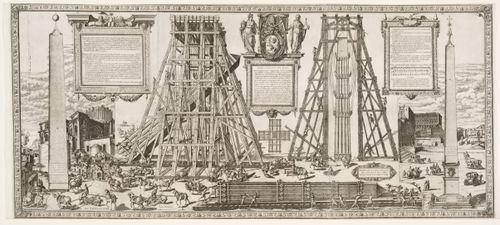
- During the moving of the obelisk, Fontana issued two prints, DR1987:0026 & DR1987:0027. The first (this print), was published in March 1586 just prior to the lowering, and distributed with a companion tract by Filippo Pigafetta. It shows both the original and final positions of the obelisk as well as the device proposed by Fontana for its transportation. This involved the use of a twin timber tower (the castello, as it was called, is seen in the central portion of the print) that was erected on either side of the obelisk and was used for lowering and raising the monolith. The second print (DR1987:0027) appeared in August, during the raising, and showed the lowering of the obelisk, as it had occured in late April, with a detailed inventory of all the men and horses involved in the operation. The transportation was begun on 30 April and was completed on 10 September, according to Fontana's description of the process in his book, 'Della trasportione dell'obelisco vaticano' of 1590, a work illustrated by Bonifazio and Guerra, the two artists responsible for the execution of these prints.
DR1987:0026
Description:
- During the moving of the obelisk, Fontana issued two prints, DR1987:0026 & DR1987:0027. The first (this print), was published in March 1586 just prior to the lowering, and distributed with a companion tract by Filippo Pigafetta. It shows both the original and final positions of the obelisk as well as the device proposed by Fontana for its transportation. This involved the use of a twin timber tower (the castello, as it was called, is seen in the central portion of the print) that was erected on either side of the obelisk and was used for lowering and raising the monolith. The second print (DR1987:0027) appeared in August, during the raising, and showed the lowering of the obelisk, as it had occured in late April, with a detailed inventory of all the men and horses involved in the operation. The transportation was begun on 30 April and was completed on 10 September, according to Fontana's description of the process in his book, 'Della trasportione dell'obelisco vaticano' of 1590, a work illustrated by Bonifazio and Guerra, the two artists responsible for the execution of these prints.
People:
Subject:
architecture, engineering
architecture, engineering
Date:
March 1586
March 1586
Title:
Plan, Elevation, and Perspective of the Castello Used in the Transportation of the Vatican Obelisk; and Views of the Original and Final Location of the Obelisk
Actions:
DR1987:0026
Description:
- During the moving of the obelisk, Fontana issued two prints, DR1987:0026 & DR1987:0027. The first (this print), was published in March 1586 just prior to the lowering, and distributed with a companion tract by Filippo Pigafetta. It shows both the original and final positions of the obelisk as well as the device proposed by Fontana for its transportation. This involved the use of a twin timber tower (the castello, as it was called, is seen in the central portion of the print) that was erected on either side of the obelisk and was used for lowering and raising the monolith. The second print (DR1987:0027) appeared in August, during the raising, and showed the lowering of the obelisk, as it had occured in late April, with a detailed inventory of all the men and horses involved in the operation. The transportation was begun on 30 April and was completed on 10 September, according to Fontana's description of the process in his book, 'Della trasportione dell'obelisco vaticano' of 1590, a work illustrated by Bonifazio and Guerra, the two artists responsible for the execution of these prints.
Plan, Elevation, and Perspective of the Castello Used in the Transportation of the Vatican Obelisk; and Views of the Original and Final Location of the Obelisk
Actions:
DR1987:0026
Description:
- During the moving of the obelisk, Fontana issued two prints, DR1987:0026 & DR1987:0027. The first (this print), was published in March 1586 just prior to the lowering, and distributed with a companion tract by Filippo Pigafetta. It shows both the original and final positions of the obelisk as well as the device proposed by Fontana for its transportation. This involved the use of a twin timber tower (the castello, as it was called, is seen in the central portion of the print) that was erected on either side of the obelisk and was used for lowering and raising the monolith. The second print (DR1987:0027) appeared in August, during the raising, and showed the lowering of the obelisk, as it had occured in late April, with a detailed inventory of all the men and horses involved in the operation. The transportation was begun on 30 April and was completed on 10 September, according to Fontana's description of the process in his book, 'Della trasportione dell'obelisco vaticano' of 1590, a work illustrated by Bonifazio and Guerra, the two artists responsible for the execution of these prints.
Form:
works of art
works of art
Date:
March 1586
March 1586
People:
Subject:
architecture, engineering
architecture, engineering
Title:
Cambridge
Cambridge
Actions:
Reference number:
PH1979:0600.01:001-036
Description:
This album comprises 28 albumen silver prints of monuments of Cambridge and the following description of views of Cambridge could apply to this album: "These views of Cambrige focus primarily on the University's great medieval colleges untouched by the additions, renovations and accretions of the twentieth century, but also document the uncluttered nature of the city itself in the third quarter of the nineteenth century. Sprouting gargoyles vie for attention with gothic pinnacles, graceful bridges reflect themselves in the River Cam, and top-hatted gentlemen stroll through the snowy lanes of winter while labourers, messengers and apprentices confront the camera's gaze." (Cambridge Book and Print Gallery). The monuments depicted are the following: Jesus College. New Buildings; Cambridge Divinity Schools; Queen's College Entrance Gate; St. John's Chapel, from Trinity Backs (Summer); St. John's Chapel, from Trinity Backs (Winter); St. John's College. Bridge of Sighs; Queen's Bridge; Queen's Gardens; Pembroke College; Catherine's College; Emanuel College; Magdelen College; St. Peters College; Dowing College; Cains College. Old Gateway; Sidney College; Trinity Hall; The Round Church; Senate House and Library; and Fitzwilliam Museum.
PH1979:0600.01:001-036
Description:
This album comprises 28 albumen silver prints of monuments of Cambridge and the following description of views of Cambridge could apply to this album: "These views of Cambrige focus primarily on the University's great medieval colleges untouched by the additions, renovations and accretions of the twentieth century, but also document the uncluttered nature of the city itself in the third quarter of the nineteenth century. Sprouting gargoyles vie for attention with gothic pinnacles, graceful bridges reflect themselves in the River Cam, and top-hatted gentlemen stroll through the snowy lanes of winter while labourers, messengers and apprentices confront the camera's gaze." (Cambridge Book and Print Gallery). The monuments depicted are the following: Jesus College. New Buildings; Cambridge Divinity Schools; Queen's College Entrance Gate; St. John's Chapel, from Trinity Backs (Summer); St. John's Chapel, from Trinity Backs (Winter); St. John's College. Bridge of Sighs; Queen's Bridge; Queen's Gardens; Pembroke College; Catherine's College; Emanuel College; Magdelen College; St. Peters College; Dowing College; Cains College. Old Gateway; Sidney College; Trinity Hall; The Round Church; Senate House and Library; and Fitzwilliam Museum.
People:
Subject:
architecture
architecture
Date:
ca. 1880
ca. 1880
Title:
Cambridge
Actions:
PH1979:0600.01:001-036
Description:
This album comprises 28 albumen silver prints of monuments of Cambridge and the following description of views of Cambridge could apply to this album: "These views of Cambrige focus primarily on the University's great medieval colleges untouched by the additions, renovations and accretions of the twentieth century, but also document the uncluttered nature of the city itself in the third quarter of the nineteenth century. Sprouting gargoyles vie for attention with gothic pinnacles, graceful bridges reflect themselves in the River Cam, and top-hatted gentlemen stroll through the snowy lanes of winter while labourers, messengers and apprentices confront the camera's gaze." (Cambridge Book and Print Gallery). The monuments depicted are the following: Jesus College. New Buildings; Cambridge Divinity Schools; Queen's College Entrance Gate; St. John's Chapel, from Trinity Backs (Summer); St. John's Chapel, from Trinity Backs (Winter); St. John's College. Bridge of Sighs; Queen's Bridge; Queen's Gardens; Pembroke College; Catherine's College; Emanuel College; Magdelen College; St. Peters College; Dowing College; Cains College. Old Gateway; Sidney College; Trinity Hall; The Round Church; Senate House and Library; and Fitzwilliam Museum.
Cambridge
Actions:
PH1979:0600.01:001-036
Description:
This album comprises 28 albumen silver prints of monuments of Cambridge and the following description of views of Cambridge could apply to this album: "These views of Cambrige focus primarily on the University's great medieval colleges untouched by the additions, renovations and accretions of the twentieth century, but also document the uncluttered nature of the city itself in the third quarter of the nineteenth century. Sprouting gargoyles vie for attention with gothic pinnacles, graceful bridges reflect themselves in the River Cam, and top-hatted gentlemen stroll through the snowy lanes of winter while labourers, messengers and apprentices confront the camera's gaze." (Cambridge Book and Print Gallery). The monuments depicted are the following: Jesus College. New Buildings; Cambridge Divinity Schools; Queen's College Entrance Gate; St. John's Chapel, from Trinity Backs (Summer); St. John's Chapel, from Trinity Backs (Winter); St. John's College. Bridge of Sighs; Queen's Bridge; Queen's Gardens; Pembroke College; Catherine's College; Emanuel College; Magdelen College; St. Peters College; Dowing College; Cains College. Old Gateway; Sidney College; Trinity Hall; The Round Church; Senate House and Library; and Fitzwilliam Museum.
Date:
ca. 1880
ca. 1880
People:
Subject:
architecture
architecture


