


805 Results
Form:
books
books
Actions:
Price:
$32.50
(available to order)
Summary:
"Seventy-nine short essays on design" brings together the best of designer Michael Bierut's critical writing—serious or humorous, flattering or biting, but always on the mark. Bierut is widely considered the finest observer on design writing today. Covering topics as diverse as Twyla Tharp and ITC Garamond, Bierut's texts pull design culture into crisp focus. He touches(...)
$32.50
(available to order)
Summary:
"Seventy-nine short essays on design" brings together the best of designer Michael Bierut's critical writing—serious or humorous, flattering or biting, but always on the mark. Bierut is widely considered the finest observer on design writing today. Covering topics as diverse as Twyla Tharp and ITC Garamond, Bierut's texts pull design culture into crisp focus. He touches(...)
Title:
Seventy-nine short essays on design
Actions:
Price:
$32.50
(available to order)
Summary:
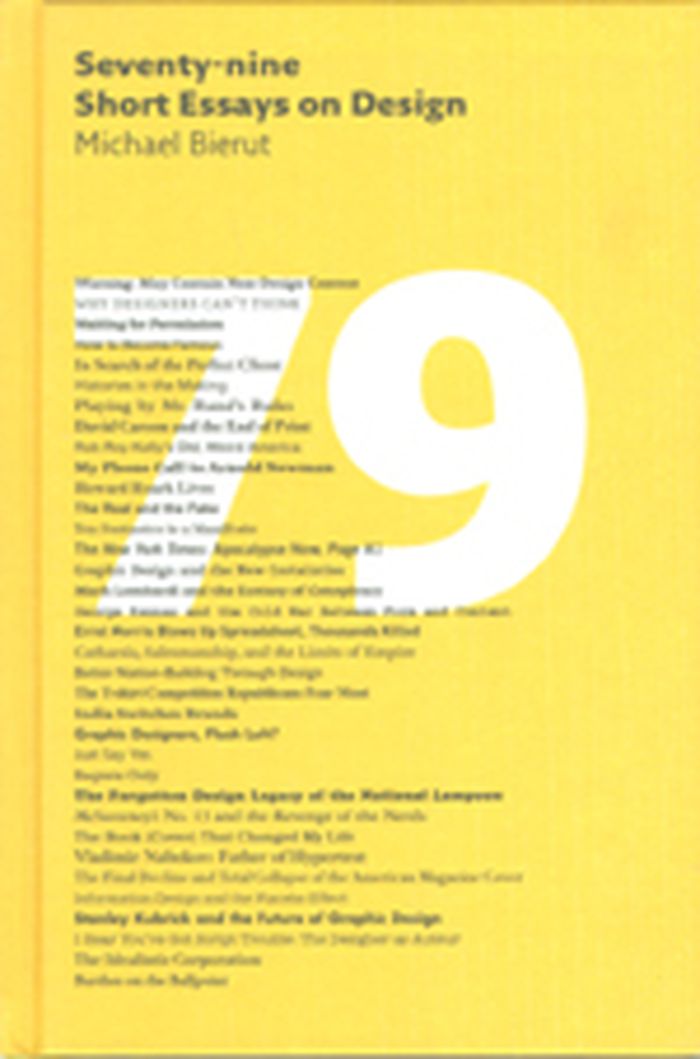
"Seventy-nine short essays on design" brings together the best of designer Michael Bierut's critical writing—serious or humorous, flattering or biting, but always on the mark. Bierut is widely considered the finest observer on design writing today. Covering topics as diverse as Twyla Tharp and ITC Garamond, Bierut's texts pull design culture into crisp focus. He touches on classics, like Massimo Vignelli and the cover of The Catcher in the Rye, as well as newcomers, like McSweeney's Quarterly Concern and color-coded terrorism alert levels. Along the way Nabakov's Pale Fire; Eero Saarinen; the paper clip; Celebration, Florida; the planet Saturn; the ClearRx pill bottle; and paper architecture all fall under his pen. His experience as a design practitioner informs his writing and gives it truth. In "Seventy-nine short essays on design", designers and nondesigners alike can share and revel in his insights.
Seventy-nine short essays on design
Actions:
Price:
$32.50
(available to order)
Summary:
"Seventy-nine short essays on design" brings together the best of designer Michael Bierut's critical writing—serious or humorous, flattering or biting, but always on the mark. Bierut is widely considered the finest observer on design writing today. Covering topics as diverse as Twyla Tharp and ITC Garamond, Bierut's texts pull design culture into crisp focus. He touches on classics, like Massimo Vignelli and the cover of The Catcher in the Rye, as well as newcomers, like McSweeney's Quarterly Concern and color-coded terrorism alert levels. Along the way Nabakov's Pale Fire; Eero Saarinen; the paper clip; Celebration, Florida; the planet Saturn; the ClearRx pill bottle; and paper architecture all fall under his pen. His experience as a design practitioner informs his writing and gives it truth. In "Seventy-nine short essays on design", designers and nondesigners alike can share and revel in his insights.
Form:
books
books
Publication:
July 2007, New York
July 2007, New York
Subject:
Interior Design
Interior Design
Form:
books
books
Actions:
Price:
$24.95
(available to order)
Summary:
Blending pop culture iconography with the existential threat of technological creations turning on their creators, "Emotional robots" is a compulsively readable graphic novella set in an all-too presciently depicted world in which advanced robots successfully compete with humans—in sports, music, and art—in pursuit of emotional intelligence. Displaced by the robots'(...)
$24.95
(available to order)
Summary:
Blending pop culture iconography with the existential threat of technological creations turning on their creators, "Emotional robots" is a compulsively readable graphic novella set in an all-too presciently depicted world in which advanced robots successfully compete with humans—in sports, music, and art—in pursuit of emotional intelligence. Displaced by the robots'(...)
Title:
Emotional robots: a question of existence
Actions:
Price:
$24.95
(available to order)
Summary:
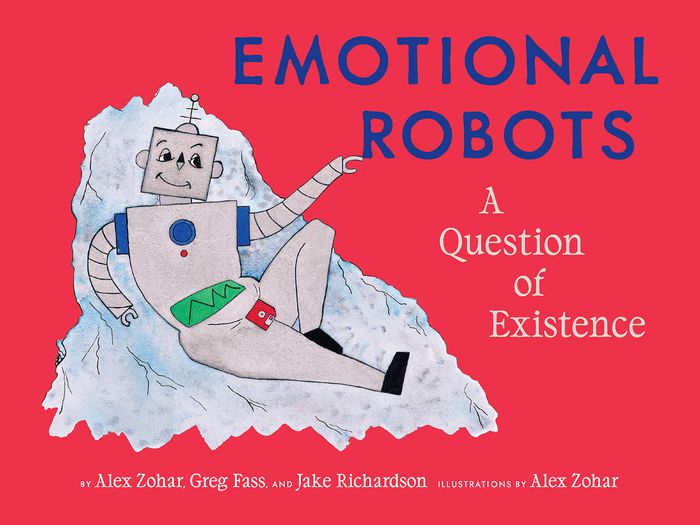
Blending pop culture iconography with the existential threat of technological creations turning on their creators, "Emotional robots" is a compulsively readable graphic novella set in an all-too presciently depicted world in which advanced robots successfully compete with humans—in sports, music, and art—in pursuit of emotional intelligence. Displaced by the robots' technological triumph, humans abandon Earth in search of a new planet to call home. But what happens to the robots when newer, faster, smarter, better robots replace them? What happens when civil unrest grows between robot generations? An astute take on the human condition and the illusory promises of technology, "Emotional robots" is captivating fable for the modern age. With keen wit and dark humor, it artfully tackles universal themes urgently relevant to our time, asking readers the question faced by each new generation of humans (and robots): Is history condemned to repeat itself?
Emotional robots: a question of existence
Actions:
Price:
$24.95
(available to order)
Summary:
Blending pop culture iconography with the existential threat of technological creations turning on their creators, "Emotional robots" is a compulsively readable graphic novella set in an all-too presciently depicted world in which advanced robots successfully compete with humans—in sports, music, and art—in pursuit of emotional intelligence. Displaced by the robots' technological triumph, humans abandon Earth in search of a new planet to call home. But what happens to the robots when newer, faster, smarter, better robots replace them? What happens when civil unrest grows between robot generations? An astute take on the human condition and the illusory promises of technology, "Emotional robots" is captivating fable for the modern age. With keen wit and dark humor, it artfully tackles universal themes urgently relevant to our time, asking readers the question faced by each new generation of humans (and robots): Is history condemned to repeat itself?
Form:
books
books
Publication:
May 2021
May 2021
Subject:
Illustration
Illustration
Form:
books
books
Actions:
Price:
$28.00
(available to order)
Summary:
Daily bad news about climate change, shrinking resources, global health crises, species extinction and growing inequalities cause tremendous anxiety and insecurity, especially since the COVID pandemic. The ambition of this book is to explain in simple but precise terms, by means of concise illustrations, what ''finance'' is, and how its most innovative form, sustainable(...)
$28.00
(available to order)
Summary:
Daily bad news about climate change, shrinking resources, global health crises, species extinction and growing inequalities cause tremendous anxiety and insecurity, especially since the COVID pandemic. The ambition of this book is to explain in simple but precise terms, by means of concise illustrations, what ''finance'' is, and how its most innovative form, sustainable(...)
Title:
Financing our common future, in the time of COVID-19
Actions:
Price:
$28.00
(available to order)
Summary:
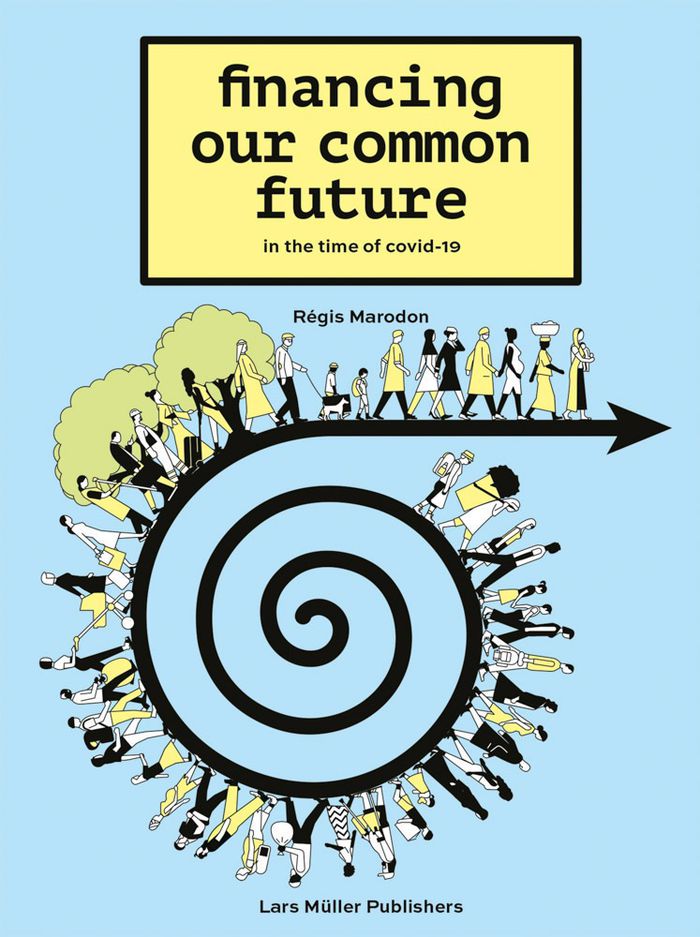
Daily bad news about climate change, shrinking resources, global health crises, species extinction and growing inequalities cause tremendous anxiety and insecurity, especially since the COVID pandemic. The ambition of this book is to explain in simple but precise terms, by means of concise illustrations, what ''finance'' is, and how its most innovative form, sustainable finance, can reconcile the well-being of mankind with the capacities of our planet. Is there a way to convince society that a fundamental transition is necessary—or even more, that it is possible? Can sustainable finance help? ''Financing our common future'' offers encouraging perspectives by showing how little-known groups of financial stakeholders, such as development banks, are actively working to make sustainable finance happen. The book invites you to enjoy a journey through a multitude of situations, to question our preconceptions and to open our mindset so we can envision better ways of moving forward.
Financing our common future, in the time of COVID-19
Actions:
Price:
$28.00
(available to order)
Summary:
Daily bad news about climate change, shrinking resources, global health crises, species extinction and growing inequalities cause tremendous anxiety and insecurity, especially since the COVID pandemic. The ambition of this book is to explain in simple but precise terms, by means of concise illustrations, what ''finance'' is, and how its most innovative form, sustainable finance, can reconcile the well-being of mankind with the capacities of our planet. Is there a way to convince society that a fundamental transition is necessary—or even more, that it is possible? Can sustainable finance help? ''Financing our common future'' offers encouraging perspectives by showing how little-known groups of financial stakeholders, such as development banks, are actively working to make sustainable finance happen. The book invites you to enjoy a journey through a multitude of situations, to question our preconceptions and to open our mindset so we can envision better ways of moving forward.
Form:
books
books
Publication:
January 2021
January 2021
Subject:
Social
Social
Form:
books
books

Actions:
Price:
$51.00
(available to order)
Summary:
''Africa-Arctic Flyway: Physiocratic states'' gathers documents of Peter Fend's efforts through Ocean Earth for a planet organized according to hydrology—water basins—rather than national and colonial borders. It lays out tools and technologies derived from art, architecture, and science to replace fossil fuels, dams, nuclear industry, and industrial farming. The ensuing(...)
$51.00
(available to order)
Summary:
''Africa-Arctic Flyway: Physiocratic states'' gathers documents of Peter Fend's efforts through Ocean Earth for a planet organized according to hydrology—water basins—rather than national and colonial borders. It lays out tools and technologies derived from art, architecture, and science to replace fossil fuels, dams, nuclear industry, and industrial farming. The ensuing(...)
Title:
Africa-Arctic Flyway: Physiocratic states
Actions:
Price:
$51.00
(available to order)
Summary:
''Africa-Arctic Flyway: Physiocratic states'' gathers documents of Peter Fend's efforts through Ocean Earth for a planet organized according to hydrology—water basins—rather than national and colonial borders. It lays out tools and technologies derived from art, architecture, and science to replace fossil fuels, dams, nuclear industry, and industrial farming. The ensuing proposal for governance builds on what is identified as the first school of economic thought: physiocracy. Here, via satellite-aided eco-taxation, governance pursues an increase in the numbers of fish, marine mammals, migratory birds, and insects. For instance, ideas from Earth art are applied to restoring wetlands and flyways in three swaths—the Americas, East Asia, and Eurafrica—converging on the Arctic. This book focuses on the Eurafrica flyway and surveys four decades of work. It asks, ''How do we go from visual art to reality?'' Fend answers: ''Through architecture.''
Africa-Arctic Flyway: Physiocratic states
Actions:
Price:
$51.00
(available to order)
Summary:
''Africa-Arctic Flyway: Physiocratic states'' gathers documents of Peter Fend's efforts through Ocean Earth for a planet organized according to hydrology—water basins—rather than national and colonial borders. It lays out tools and technologies derived from art, architecture, and science to replace fossil fuels, dams, nuclear industry, and industrial farming. The ensuing proposal for governance builds on what is identified as the first school of economic thought: physiocracy. Here, via satellite-aided eco-taxation, governance pursues an increase in the numbers of fish, marine mammals, migratory birds, and insects. For instance, ideas from Earth art are applied to restoring wetlands and flyways in three swaths—the Americas, East Asia, and Eurafrica—converging on the Arctic. This book focuses on the Eurafrica flyway and surveys four decades of work. It asks, ''How do we go from visual art to reality?'' Fend answers: ''Through architecture.''
Form:
books
books
Publication:
February 2023
February 2023
Subject:
Environment and environmental theory
Environment and environmental theory
Form:
books
books

Title:
Limber: essays
Limber: essays
Actions:
Price:
$19.95
(available to order)
Summary:
Angela Pelster's startling essay collection charts the world's history through its trees: roots in the ground, rings across wood, topiaries, wind-sculpted pines, the skinny poplars of her youth in Canada, and a desert in Niger, where "The Loneliest Tree in the World" once grew. In her backyard, a squirrel's decomposing body below a towering maple prompts a discussion of(...)
$19.95
(available to order)
Summary:
Angela Pelster's startling essay collection charts the world's history through its trees: roots in the ground, rings across wood, topiaries, wind-sculpted pines, the skinny poplars of her youth in Canada, and a desert in Niger, where "The Loneliest Tree in the World" once grew. In her backyard, a squirrel's decomposing body below a towering maple prompts a discussion of(...)
Title:
Limber: essays
Actions:
Price:
$19.95
(available to order)
Summary:
Angela Pelster's startling essay collection charts the world's history through its trees: roots in the ground, rings across wood, topiaries, wind-sculpted pines, the skinny poplars of her youth in Canada, and a desert in Niger, where "The Loneliest Tree in the World" once grew. In her backyard, a squirrel's decomposing body below a towering maple prompts a discussion of the science of rot, as well as a metaphor for the ways in which nature programs us to consume ourselves. Pelster is a writer who looks and listens closely: She watches tree frogs and questions how long we can love one another, she listens to the music of an artist who places paper-thin slices of sectioned tree trunks on his record player and hears the sounds’ mourning. Beautiful, deeply thoughtful, and wholly original, Limber valiantly asks what it means to sustain life on this planet we've inherited.
Limber: essays
Actions:
Price:
$19.95
(available to order)
Summary:
Angela Pelster's startling essay collection charts the world's history through its trees: roots in the ground, rings across wood, topiaries, wind-sculpted pines, the skinny poplars of her youth in Canada, and a desert in Niger, where "The Loneliest Tree in the World" once grew. In her backyard, a squirrel's decomposing body below a towering maple prompts a discussion of the science of rot, as well as a metaphor for the ways in which nature programs us to consume ourselves. Pelster is a writer who looks and listens closely: She watches tree frogs and questions how long we can love one another, she listens to the music of an artist who places paper-thin slices of sectioned tree trunks on his record player and hears the sounds’ mourning. Beautiful, deeply thoughtful, and wholly original, Limber valiantly asks what it means to sustain life on this planet we've inherited.
Form:
books
books
Publication:
June 2014
June 2014
Subject:
Landscape Theory
Landscape Theory
Form:
books
books
Actions:
Holdings:
Description:
258 pages ; 21 cm.
Description:
258 pages ; 21 cm.
Author:
Subject:
Publication:
Paris IIe : Éditions Kimé, [2023], ©2023
Paris IIe : Éditions Kimé, [2023], ©2023
Title:
Éc(h)o-graphies d'une terre déréglée : petit traité d'écocritique / Yves Clavaron.
Actions:
Holdings:
Description:
258 pages ; 21 cm.
Éc(h)o-graphies d'une terre déréglée : petit traité d'écocritique / Yves Clavaron.
Actions:
Holdings:
Description:
258 pages ; 21 cm.
Form:
books
books
Publication:
Paris IIe : Éditions Kimé, [2023], ©2023
Paris IIe : Éditions Kimé, [2023], ©2023
Author:
Subject:
Form:
books
books
Actions:
Price:
$41.99
(available to order)
Summary:
One of the fundamental dimensions of urbanization is its radical transformation of nature. Today domestic animals make up more than twice the biomass of people on the planet, and cities are replete with nonhuman life. Yet current accounts of the urban remain resolutely anthropocentric. ''Lively cities'' departs from conventions of urban studies to argue that cities are(...)
$41.99
(available to order)
Summary:
One of the fundamental dimensions of urbanization is its radical transformation of nature. Today domestic animals make up more than twice the biomass of people on the planet, and cities are replete with nonhuman life. Yet current accounts of the urban remain resolutely anthropocentric. ''Lively cities'' departs from conventions of urban studies to argue that cities are(...)
Title:
Lively cities: Reconfiguring urban ecology
Actions:
Price:
$41.99
(available to order)
Summary:
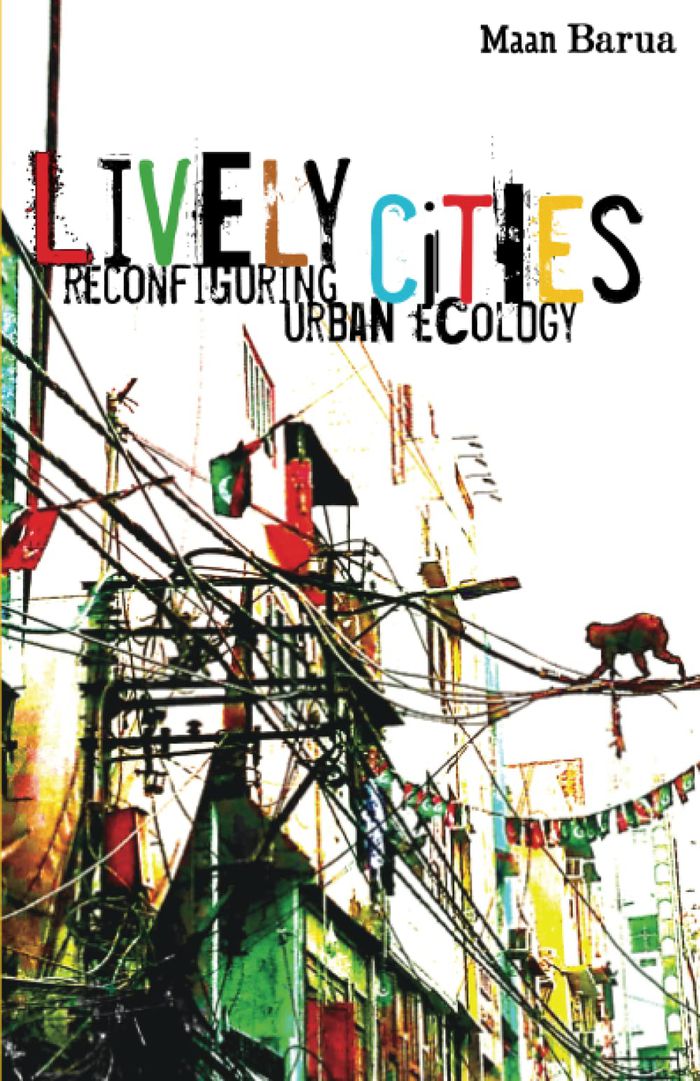
One of the fundamental dimensions of urbanization is its radical transformation of nature. Today domestic animals make up more than twice the biomass of people on the planet, and cities are replete with nonhuman life. Yet current accounts of the urban remain resolutely anthropocentric. ''Lively cities'' departs from conventions of urban studies to argue that cities are lived achievements forged by a multitude of entities, drawing attention to a suite of beings— human and nonhuman— that make up the material politics of city making. From macaques and cattle in Delhi to the invasive parakeet colonies in London, Maan Barua examines the rhythms, paths, and agency of nonhumans across the city. He reconceptualizes several key themes in urban thought, including infrastructure, the built environment, design, habitation, and everyday practices of dwelling and provides a critical intervention in animal and urban studies. Generating fresh conversations between posthumanism, postcolonialism, and political economy, Barua reveals how human and nonhuman actors shape, integrate, subsume, and relate to urban space in fascinating ways.
Lively cities: Reconfiguring urban ecology
Actions:
Price:
$41.99
(available to order)
Summary:
One of the fundamental dimensions of urbanization is its radical transformation of nature. Today domestic animals make up more than twice the biomass of people on the planet, and cities are replete with nonhuman life. Yet current accounts of the urban remain resolutely anthropocentric. ''Lively cities'' departs from conventions of urban studies to argue that cities are lived achievements forged by a multitude of entities, drawing attention to a suite of beings— human and nonhuman— that make up the material politics of city making. From macaques and cattle in Delhi to the invasive parakeet colonies in London, Maan Barua examines the rhythms, paths, and agency of nonhumans across the city. He reconceptualizes several key themes in urban thought, including infrastructure, the built environment, design, habitation, and everyday practices of dwelling and provides a critical intervention in animal and urban studies. Generating fresh conversations between posthumanism, postcolonialism, and political economy, Barua reveals how human and nonhuman actors shape, integrate, subsume, and relate to urban space in fascinating ways.
Form:
books
books
Publication:
May 2023
May 2023
Subject:
Urban Theory
Urban Theory
Form:
books
books
Title:
Globus cassus
Globus cassus
Actions:
Price:
$45.95
(available to order)
Summary:
Part flight of fancy, part Star Trek set, part seemingly drug-induced delusion, Globus Cassus is a solution to a global dilemma, which remains the same size while housing an ever-increasing global population. The catalyst for the project as described by its creator, artist Christian Waldvogel: "The rapidly increasing population notice that their planet will soon be too(...)
$45.95
(available to order)
Summary:
Part flight of fancy, part Star Trek set, part seemingly drug-induced delusion, Globus Cassus is a solution to a global dilemma, which remains the same size while housing an ever-increasing global population. The catalyst for the project as described by its creator, artist Christian Waldvogel: "The rapidly increasing population notice that their planet will soon be too(...)
Subject:
Art Theory
Art Theory
Publication:
March 2005, Baden
March 2005, Baden
Title:
Globus cassus
Actions:
Price:
$45.95
(available to order)
Summary:
Part flight of fancy, part Star Trek set, part seemingly drug-induced delusion, Globus Cassus is a solution to a global dilemma, which remains the same size while housing an ever-increasing global population. The catalyst for the project as described by its creator, artist Christian Waldvogel: "The rapidly increasing population notice that their planet will soon be too small. The Earth is dismantled to provide building material. This is taken away to create Globus Cassus, a new, much bigger habitat, thought out from scratch." And so begins the story of converting the Earth into a gigantic hollow structure. The project, precisely worked out and described in detail, breaks through the bounds of architecture to continue the story of our great contemporary Utopias. Globus Cassus is the core of the Swiss contribution to the 9th Architecture Biennale in Venice, and this book examines the novel project through a series of drawings, diagrams, and photographs of three-dimensional models.
Globus cassus
Actions:
Price:
$45.95
(available to order)
Summary:
Part flight of fancy, part Star Trek set, part seemingly drug-induced delusion, Globus Cassus is a solution to a global dilemma, which remains the same size while housing an ever-increasing global population. The catalyst for the project as described by its creator, artist Christian Waldvogel: "The rapidly increasing population notice that their planet will soon be too small. The Earth is dismantled to provide building material. This is taken away to create Globus Cassus, a new, much bigger habitat, thought out from scratch." And so begins the story of converting the Earth into a gigantic hollow structure. The project, precisely worked out and described in detail, breaks through the bounds of architecture to continue the story of our great contemporary Utopias. Globus Cassus is the core of the Swiss contribution to the 9th Architecture Biennale in Venice, and this book examines the novel project through a series of drawings, diagrams, and photographs of three-dimensional models.
Form:
books
books
Publication:
March 2005, Baden
March 2005, Baden
Subject:
Art Theory
Art Theory
Form:
books
books
Actions:
Price:
$25.95
(available to order)
Summary:
Cities around the world are in the midst of a profound transformation as the wealthy price out the remnants of the urban working class, especially people of color. Displacement is neither accidental or inevitable. It happens because a whole range of people and institutions profit handsomely. ''Defying displacement'', focused on the US but informed by global examples,(...)
$25.95
(available to order)
Summary:
Cities around the world are in the midst of a profound transformation as the wealthy price out the remnants of the urban working class, especially people of color. Displacement is neither accidental or inevitable. It happens because a whole range of people and institutions profit handsomely. ''Defying displacement'', focused on the US but informed by global examples,(...)
Title:
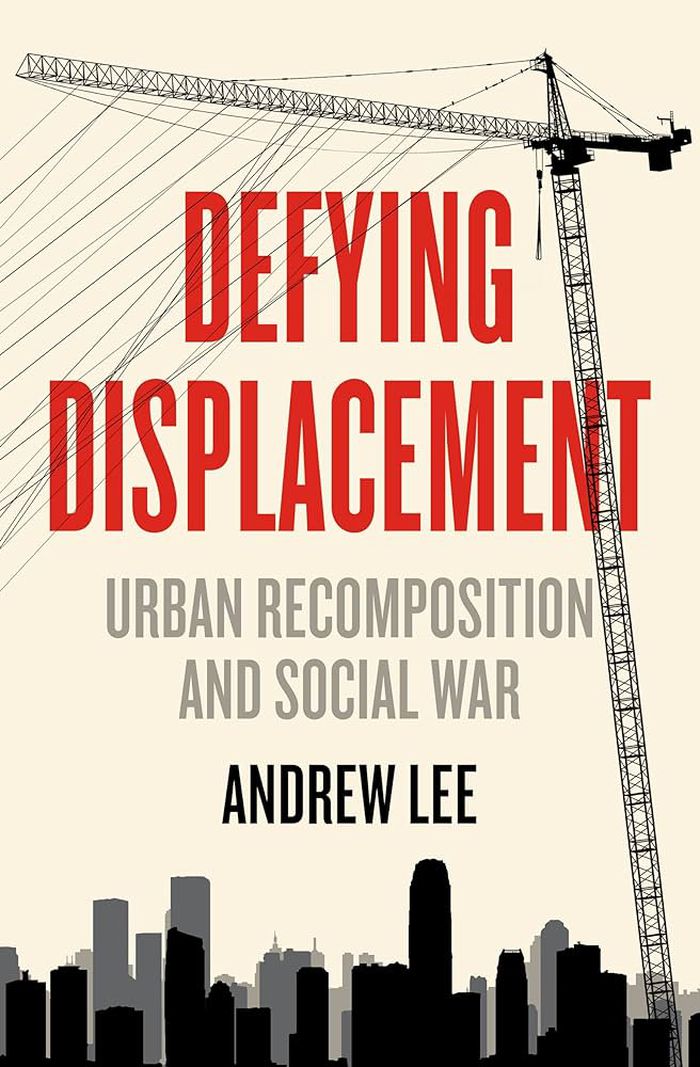
Defying displacement: Urban recomposition and social war
Actions:
Price:
$25.95
(available to order)
Summary:
Cities around the world are in the midst of a profound transformation as the wealthy price out the remnants of the urban working class, especially people of color. Displacement is neither accidental or inevitable. It happens because a whole range of people and institutions profit handsomely. ''Defying displacement'', focused on the US but informed by global examples, investigates gentrification from the perspective of the people fighting it, members of communities whose survival is threatened by some of the most powerful institutions on the planet. Andrew Lee names the names and identifies the actual state and corporate forces that work together to enrich a very specific group of people: property developers and real estate investors who make a killing, politicians who watch their tax bases grow, banks that write profitable loans for new businesses and mortgages for new homeowners. Meanwhile, business districts are planned, tax abatements unveiled, redevelopment schemes dreamed up, corporate and university campuses expanded, and ordinary people are driven from their homes.
Defying displacement: Urban recomposition and social war
Actions:
Price:
$25.95
(available to order)
Summary:
Cities around the world are in the midst of a profound transformation as the wealthy price out the remnants of the urban working class, especially people of color. Displacement is neither accidental or inevitable. It happens because a whole range of people and institutions profit handsomely. ''Defying displacement'', focused on the US but informed by global examples, investigates gentrification from the perspective of the people fighting it, members of communities whose survival is threatened by some of the most powerful institutions on the planet. Andrew Lee names the names and identifies the actual state and corporate forces that work together to enrich a very specific group of people: property developers and real estate investors who make a killing, politicians who watch their tax bases grow, banks that write profitable loans for new businesses and mortgages for new homeowners. Meanwhile, business districts are planned, tax abatements unveiled, redevelopment schemes dreamed up, corporate and university campuses expanded, and ordinary people are driven from their homes.
Form:
books
books
Publication:
February 2024
February 2024
Subject:
Humans and cities
Humans and cities
Form:
books
books
Price:
$81.50
(available in store)
Summary:
Do you know how to design for a circular economy? A truly sustainable, circular economy is both a robust and viable option for architecture. Through 24 inspirational case studies, interviews and essays, this book is an accessible and practical guide to how architects can move from a linear economy towards a circular economy. This atlas to sustainable, closed-loop systems(...)
$81.50
(available in store)
Summary:
Do you know how to design for a circular economy? A truly sustainable, circular economy is both a robust and viable option for architecture. Through 24 inspirational case studies, interviews and essays, this book is an accessible and practical guide to how architects can move from a linear economy towards a circular economy. This atlas to sustainable, closed-loop systems(...)
Title:
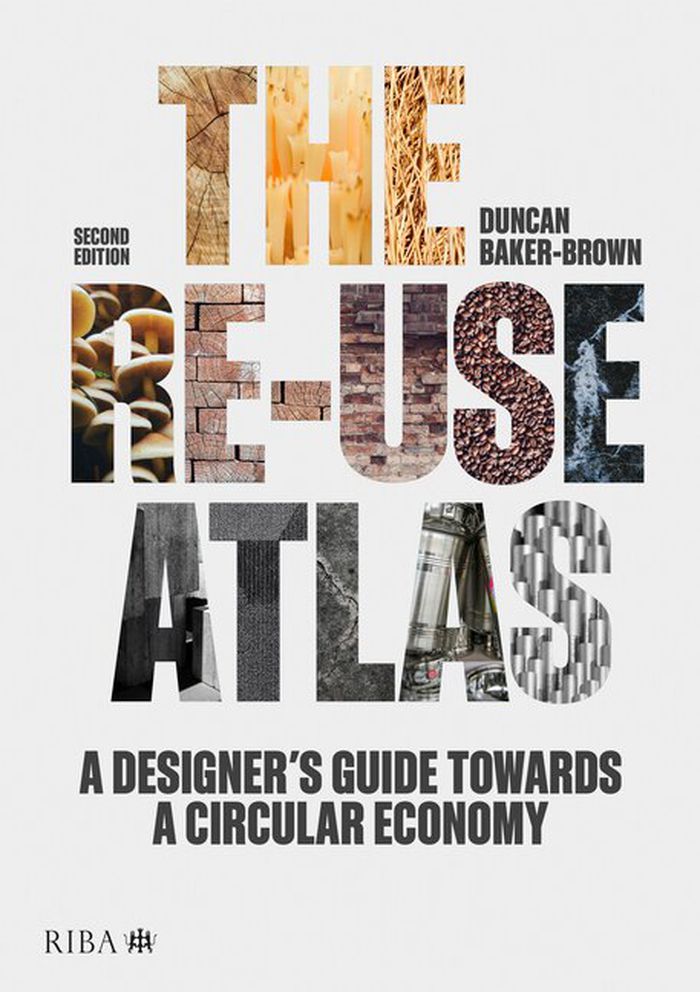
The re-use atlas: A designer's guide towards a circular economy
Actions:
Price:
$81.50
(available in store)
Summary:
Do you know how to design for a circular economy? A truly sustainable, circular economy is both a robust and viable option for architecture. Through 24 inspirational case studies, interviews and essays, this book is an accessible and practical guide to how architects can move from a linear economy towards a circular economy. This atlas to sustainable, closed-loop systems takes the reader on a journey through four distinct steps (Recycle, Reuse, Reduce, Circular Economy) that show how they can dramatically reduce the negative impact humans have on the planet. It gives architects the skills and knowledge to navigate through the emerging fields of resource management towards a true Circular Economy. Each step is supplemented with an in-depth interview with an expert who is successfully tacking one or more of the challenges facing all designers today. If we change our behaviour, we enable humanity to work with nature rather than against it.
The re-use atlas: A designer's guide towards a circular economy
Actions:
Price:
$81.50
(available in store)
Summary:
Do you know how to design for a circular economy? A truly sustainable, circular economy is both a robust and viable option for architecture. Through 24 inspirational case studies, interviews and essays, this book is an accessible and practical guide to how architects can move from a linear economy towards a circular economy. This atlas to sustainable, closed-loop systems takes the reader on a journey through four distinct steps (Recycle, Reuse, Reduce, Circular Economy) that show how they can dramatically reduce the negative impact humans have on the planet. It gives architects the skills and knowledge to navigate through the emerging fields of resource management towards a true Circular Economy. Each step is supplemented with an in-depth interview with an expert who is successfully tacking one or more of the challenges facing all designers today. If we change our behaviour, we enable humanity to work with nature rather than against it.
Form:
books
books
Publication:
November 2024
November 2024
Subject:
Green Architecture
Green Architecture


