


759 Results
Form:
books
books
Price:
$34.00
(available to order)
Summary:
In November 2022, the first annual Alchemy Lecture took place at York University in Toronto, bringing four deep and agile writers from different geographies and disciplines into vibrant conversation on a topic of urgent relevance: humans and borders. Now, in these pages, that conversation is captured and expanded in insightful, passionate ways. Architect, artist, and(...)
$34.00
(available to order)
Summary:
In November 2022, the first annual Alchemy Lecture took place at York University in Toronto, bringing four deep and agile writers from different geographies and disciplines into vibrant conversation on a topic of urgent relevance: humans and borders. Now, in these pages, that conversation is captured and expanded in insightful, passionate ways. Architect, artist, and(...)
Title:
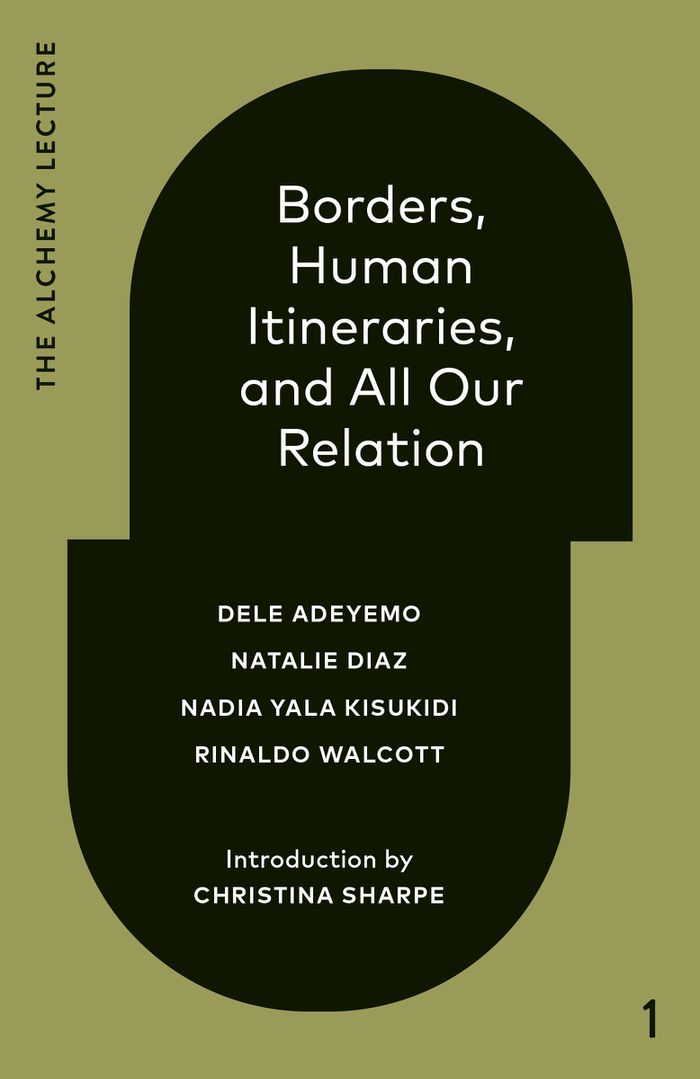
Borders, human itineraries, and all our relation. The alchemy lecture 1
Actions:
Price:
$34.00
(available to order)
Summary:
In November 2022, the first annual Alchemy Lecture took place at York University in Toronto, bringing four deep and agile writers from different geographies and disciplines into vibrant conversation on a topic of urgent relevance: humans and borders. Now, in these pages, that conversation is captured and expanded in insightful, passionate ways. Architect, artist, and urban theorist Dele Adeyemo (UK/Nigeria) calls attention to the complexity of Black infrastructures, questioning how “the environments that surround us condition the possibility of our being.” Poet Natalie Diaz (US/Mojave/Akimel O’otham) writes: “Like story, migration is the sensual movement of knowledge,” and asks, “What is the language we need to live right now?” Philosopher Nadia Yala Kisukidi (France) suggests there is no diasporic life “without the dynamics of fabulation, where we pass down, from generation to generation, the stories of our ancestors who walked barefoot for many months.” And cultural theorist Rinaldo Walcott (Canada) asks us to consider inheritances beyond white supremacist logics: “What might it mean to live a life, if we can’t risk desiring and working towards utopia?”
Borders, human itineraries, and all our relation. The alchemy lecture 1
Actions:
Price:
$34.00
(available to order)
Summary:
In November 2022, the first annual Alchemy Lecture took place at York University in Toronto, bringing four deep and agile writers from different geographies and disciplines into vibrant conversation on a topic of urgent relevance: humans and borders. Now, in these pages, that conversation is captured and expanded in insightful, passionate ways. Architect, artist, and urban theorist Dele Adeyemo (UK/Nigeria) calls attention to the complexity of Black infrastructures, questioning how “the environments that surround us condition the possibility of our being.” Poet Natalie Diaz (US/Mojave/Akimel O’otham) writes: “Like story, migration is the sensual movement of knowledge,” and asks, “What is the language we need to live right now?” Philosopher Nadia Yala Kisukidi (France) suggests there is no diasporic life “without the dynamics of fabulation, where we pass down, from generation to generation, the stories of our ancestors who walked barefoot for many months.” And cultural theorist Rinaldo Walcott (Canada) asks us to consider inheritances beyond white supremacist logics: “What might it mean to live a life, if we can’t risk desiring and working towards utopia?”
Form:
books
books
Publication:
October 2023
October 2023
Subject:
Social
Social
Form:
books
books
Actions:
Price:
$46.50
(available to order)
Summary:
Are there significant variations in the ways planners in different nations have influenced urban, regional, and national development? Do such variations arise from differences in planning cultures, meaning the collective ethos and dominant attitude of planners in different nations towards the appropriate roles of the state, market forces, and civil society? How are such(...)
$46.50
(available to order)
Summary:
Are there significant variations in the ways planners in different nations have influenced urban, regional, and national development? Do such variations arise from differences in planning cultures, meaning the collective ethos and dominant attitude of planners in different nations towards the appropriate roles of the state, market forces, and civil society? How are such(...)
Title:
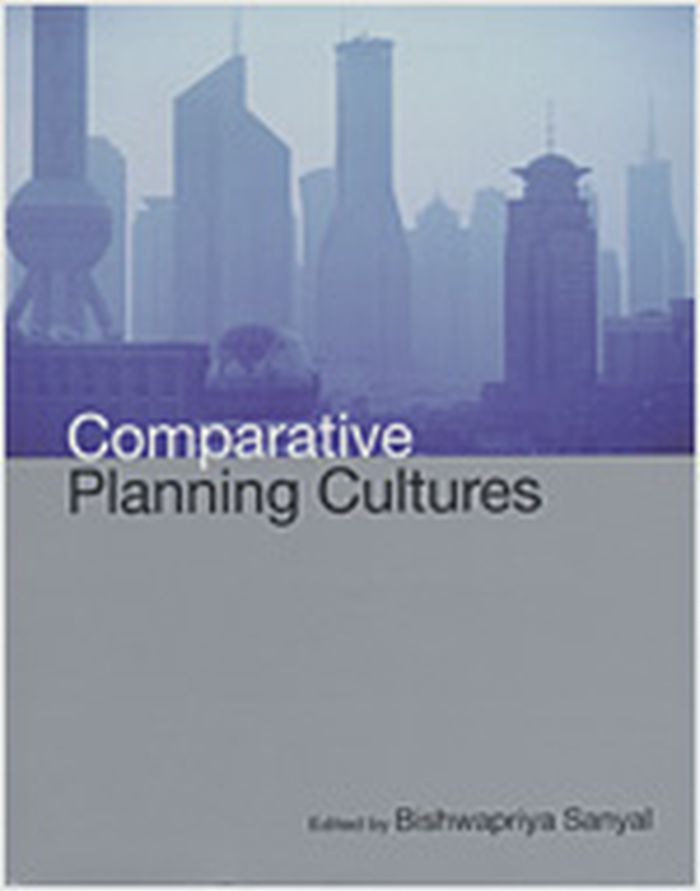
Comparative planning cultures
Actions:
Price:
$46.50
(available to order)
Summary:
Are there significant variations in the ways planners in different nations have influenced urban, regional, and national development? Do such variations arise from differences in planning cultures, meaning the collective ethos and dominant attitude of planners in different nations towards the appropriate roles of the state, market forces, and civil society? How are such professional cultures formed? Are they indigenous and immutable, or do they evolve with social, political, and economic changes both within and outside the national territories? Specifically, what has been the impact of the intensification of global interconnectedness in trade, capital flows, labor migration, and technological connectivity on national planning cultures? "Comparative planning cultures" addresses these questions, drawing on the planning experience in ten nations and at different territorial levels. The result is an understanding of planning culture that is complex and dynamic-in contrast to traditional notions of culture that evoke a sense of immutability and inheritance of unchanging social attributes of planners. The volume concludes that there is no cultural nucleus or core planning culture, no social gene that can be decoded to reveal the cultural DNA of planning practice of any nation.
Comparative planning cultures
Actions:
Price:
$46.50
(available to order)
Summary:
Are there significant variations in the ways planners in different nations have influenced urban, regional, and national development? Do such variations arise from differences in planning cultures, meaning the collective ethos and dominant attitude of planners in different nations towards the appropriate roles of the state, market forces, and civil society? How are such professional cultures formed? Are they indigenous and immutable, or do they evolve with social, political, and economic changes both within and outside the national territories? Specifically, what has been the impact of the intensification of global interconnectedness in trade, capital flows, labor migration, and technological connectivity on national planning cultures? "Comparative planning cultures" addresses these questions, drawing on the planning experience in ten nations and at different territorial levels. The result is an understanding of planning culture that is complex and dynamic-in contrast to traditional notions of culture that evoke a sense of immutability and inheritance of unchanging social attributes of planners. The volume concludes that there is no cultural nucleus or core planning culture, no social gene that can be decoded to reveal the cultural DNA of planning practice of any nation.
Form:
books
books
Publication:
April 2005, New York / London
April 2005, New York / London
Subject:
Urban Theory
Urban Theory
Form:
books
books
Title:
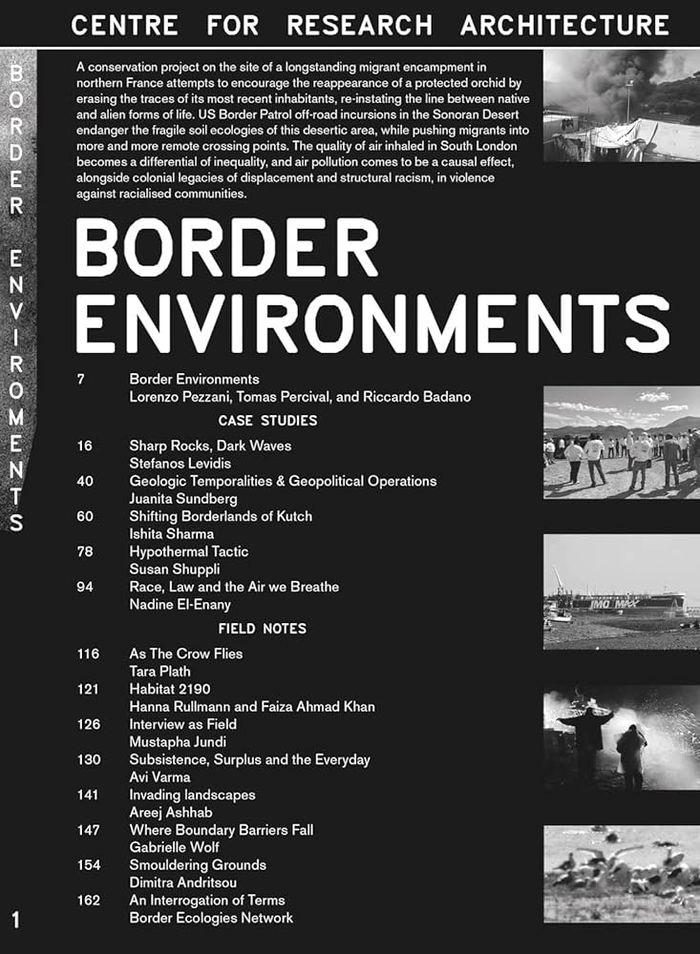
Border environments: CRA 1
Border environments: CRA 1
Actions:
Price:
$50.50
(available to order)
Summary:
Over the past fifteen years, the Centre for Research Architecture at Goldsmiths, University of London, has brought together established and emergent scholars who convene to work with each other and share their ideas and insights. These assemblies have produced a space of critical encounter for developing new investigative methods, expanded spatial practices, and(...)
$50.50
(available to order)
Summary:
Over the past fifteen years, the Centre for Research Architecture at Goldsmiths, University of London, has brought together established and emergent scholars who convene to work with each other and share their ideas and insights. These assemblies have produced a space of critical encounter for developing new investigative methods, expanded spatial practices, and(...)
Subject:
Architecture ecologies
Architecture ecologies
Publication:
September 2023
September 2023
Title:
Border environments: CRA 1
Actions:
Price:
$50.50
(available to order)
Summary:
Over the past fifteen years, the Centre for Research Architecture at Goldsmiths, University of London, has brought together established and emergent scholars who convene to work with each other and share their ideas and insights. These assemblies have produced a space of critical encounter for developing new investigative methods, expanded spatial practices, and speculative propositions designed to respond to and intervene in the urgent political conditions of our time. This new series invites the reader into this ever-evolving pedagogical context. Each book is organized around a specific spatial issue and brings together a heterogeneous range of materials and contributors. The first work in the series, ''Border Environments'', explores the entanglement of ecology and migration. It examines the interplay between discriminatory politics, emergent technologies, and bordering practices within the context of (constructed) natures by highlighting a variety of interventions, investigative techniques, visual projects, and modes of witnessing that address the role of both human and more-than-human actors in border struggles. As such, the book is also a provocation that can be used to identify and organize new lines of struggle connecting environmental and mobility justice.
Border environments: CRA 1
Actions:
Price:
$50.50
(available to order)
Summary:
Over the past fifteen years, the Centre for Research Architecture at Goldsmiths, University of London, has brought together established and emergent scholars who convene to work with each other and share their ideas and insights. These assemblies have produced a space of critical encounter for developing new investigative methods, expanded spatial practices, and speculative propositions designed to respond to and intervene in the urgent political conditions of our time. This new series invites the reader into this ever-evolving pedagogical context. Each book is organized around a specific spatial issue and brings together a heterogeneous range of materials and contributors. The first work in the series, ''Border Environments'', explores the entanglement of ecology and migration. It examines the interplay between discriminatory politics, emergent technologies, and bordering practices within the context of (constructed) natures by highlighting a variety of interventions, investigative techniques, visual projects, and modes of witnessing that address the role of both human and more-than-human actors in border struggles. As such, the book is also a provocation that can be used to identify and organize new lines of struggle connecting environmental and mobility justice.
Form:
books
books
Publication:
September 2023
September 2023
Subject:
Architecture ecologies
Architecture ecologies
Form:
books
books
Price:
$62.95
(available in store)
Summary:
Throughout the early twentieth century, waves of migration brought working-class people to the outskirts of Buenos Aires. This prompted a dilemma: Where should these restive populations be situated relative to the city’s spatial politics? Enter Antonio Bonet, a Catalan architect inspired by the transatlantic modernist and surrealist movements. Ana María León follows(...)
$62.95
(available in store)
Summary:
Throughout the early twentieth century, waves of migration brought working-class people to the outskirts of Buenos Aires. This prompted a dilemma: Where should these restive populations be situated relative to the city’s spatial politics? Enter Antonio Bonet, a Catalan architect inspired by the transatlantic modernist and surrealist movements. Ana María León follows(...)
Title:
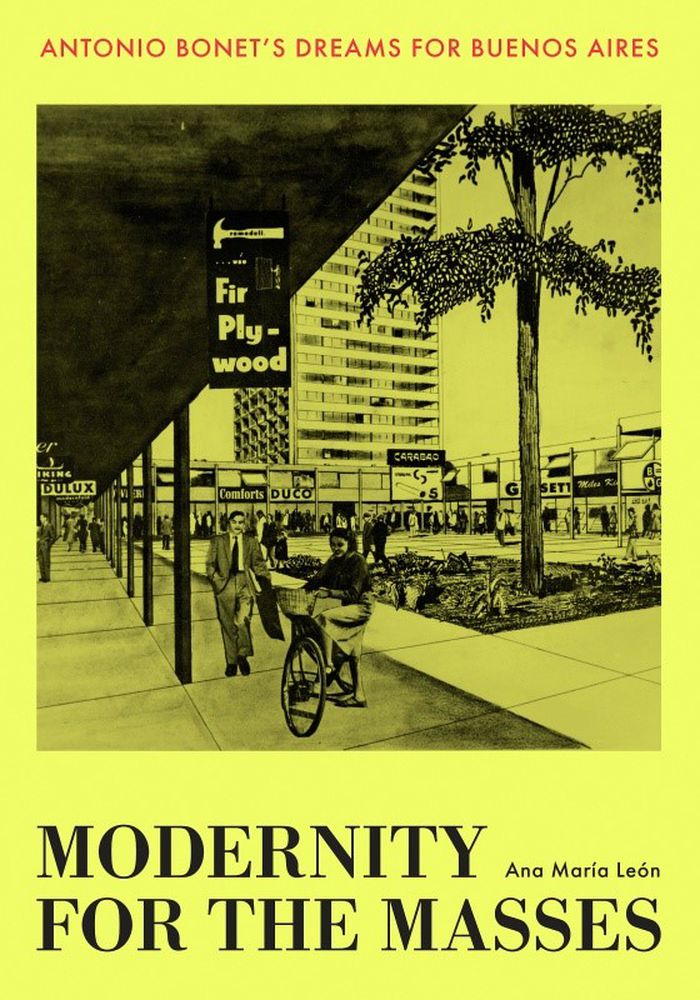
Modernity for the masses: Antonio Bonet's Dreams for Buenos Aires
Actions:
Price:
$62.95
(available in store)
Summary:
Throughout the early twentieth century, waves of migration brought working-class people to the outskirts of Buenos Aires. This prompted a dilemma: Where should these restive populations be situated relative to the city’s spatial politics? Enter Antonio Bonet, a Catalan architect inspired by the transatlantic modernist and surrealist movements. Ana María León follows Bonet's decades-long, state-backed quest to house Buenos Aires's diverse and fractious population. Working with totalitarian and populist regimes, Bonet developed three large-scale housing plans, each scuttled as a new government took over. Yet these incomplete plans—Bonet's dreams—teach us much about the relationship between modernism and state power. This volume finds in Bonet's projects the disconnect between modern architecture’s discourse of emancipation and the reality of its rationalizing control. Although he and his patrons constantly glorified the people and depicted them in housing plans, Bonet never consulted them. Instead he succumbed to official and elite fears of the people's latent political power. In careful readings of Bonet's work, León discovers the progressive erasure of surrealism's psychological sensitivity, replaced with an impulse, realized in modernist design, to contain the increasingly empowered population.
Modernity for the masses: Antonio Bonet's Dreams for Buenos Aires
Actions:
Price:
$62.95
(available in store)
Summary:
Throughout the early twentieth century, waves of migration brought working-class people to the outskirts of Buenos Aires. This prompted a dilemma: Where should these restive populations be situated relative to the city’s spatial politics? Enter Antonio Bonet, a Catalan architect inspired by the transatlantic modernist and surrealist movements. Ana María León follows Bonet's decades-long, state-backed quest to house Buenos Aires's diverse and fractious population. Working with totalitarian and populist regimes, Bonet developed three large-scale housing plans, each scuttled as a new government took over. Yet these incomplete plans—Bonet's dreams—teach us much about the relationship between modernism and state power. This volume finds in Bonet's projects the disconnect between modern architecture’s discourse of emancipation and the reality of its rationalizing control. Although he and his patrons constantly glorified the people and depicted them in housing plans, Bonet never consulted them. Instead he succumbed to official and elite fears of the people's latent political power. In careful readings of Bonet's work, León discovers the progressive erasure of surrealism's psychological sensitivity, replaced with an impulse, realized in modernist design, to contain the increasingly empowered population.
Form:
books
books
Publication:
April 2021
April 2021
Subject:
Urban Theory
Urban Theory
Form:
books
books
Price:
$49.95
(available in store)
Summary:
In the final days before the fall of Saigon in 1975, 125,000 Vietnamese who were evacuated or who made their own way out of the country resettled in the United States. Finding themselves in unfamiliar places yet still connected in exile, these refugees began building their own communities as memorials to a lost homeland. Known both officially and unofficially as Little(...)
$49.95
(available in store)
Summary:
In the final days before the fall of Saigon in 1975, 125,000 Vietnamese who were evacuated or who made their own way out of the country resettled in the United States. Finding themselves in unfamiliar places yet still connected in exile, these refugees began building their own communities as memorials to a lost homeland. Known both officially and unofficially as Little(...)
Title:
Building Little Saigon: Refugee urbanism in American cities and suburbs
Actions:
Price:
$49.95
(available in store)
Summary:
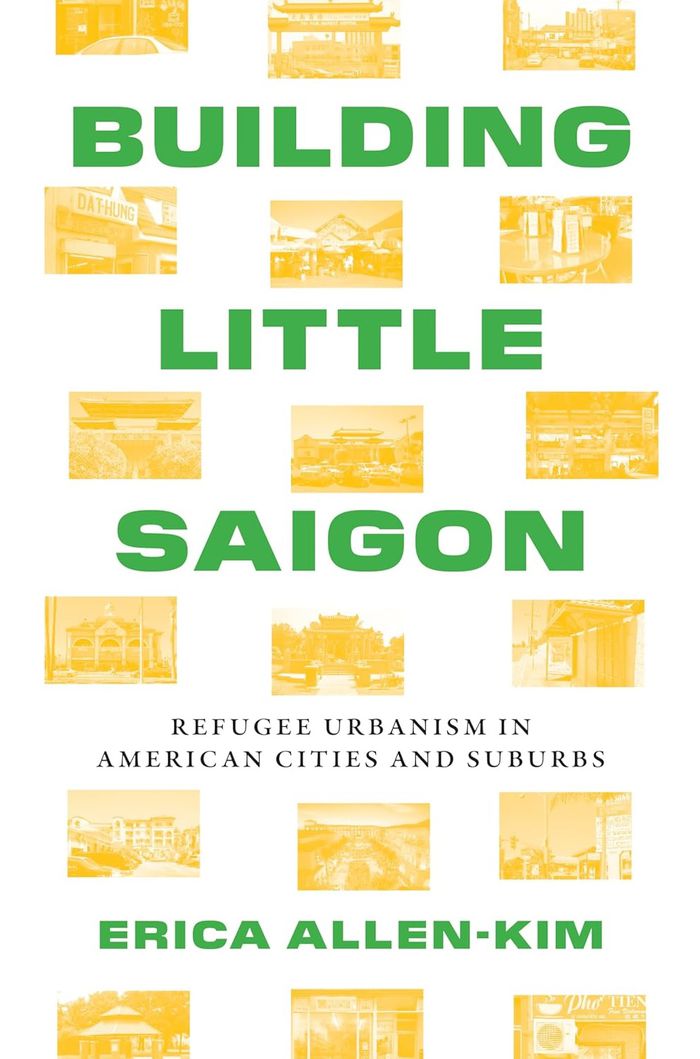
In the final days before the fall of Saigon in 1975, 125,000 Vietnamese who were evacuated or who made their own way out of the country resettled in the United States. Finding themselves in unfamiliar places yet still connected in exile, these refugees began building their own communities as memorials to a lost homeland. Known both officially and unofficially as Little Saigons, these built landscapes offer space for everyday activities as well as the staging of cultural heritage and political events. "Building Little Saigon" examines nearly fifty years of city building by Vietnamese Americans-who number over 2.2 million today. Author Erica Allen-Kim highlights architecture and planning ideas adapted by the Vietnamese communities who, in turn, have influenced planning policies and mainstream practices. Allen-Kim traveled to ten Little Saigons in the United States to visit archives, buildings, and public art and to converse with developers, community planners, artists, business owners, and Vietnam veterans. By examining everyday buildings-who made them and what they mean for those who know them-"Building Little Saigon" shows us the complexities of migration unfolding across lifetimes and generations.
Building Little Saigon: Refugee urbanism in American cities and suburbs
Actions:
Price:
$49.95
(available in store)
Summary:
In the final days before the fall of Saigon in 1975, 125,000 Vietnamese who were evacuated or who made their own way out of the country resettled in the United States. Finding themselves in unfamiliar places yet still connected in exile, these refugees began building their own communities as memorials to a lost homeland. Known both officially and unofficially as Little Saigons, these built landscapes offer space for everyday activities as well as the staging of cultural heritage and political events. "Building Little Saigon" examines nearly fifty years of city building by Vietnamese Americans-who number over 2.2 million today. Author Erica Allen-Kim highlights architecture and planning ideas adapted by the Vietnamese communities who, in turn, have influenced planning policies and mainstream practices. Allen-Kim traveled to ten Little Saigons in the United States to visit archives, buildings, and public art and to converse with developers, community planners, artists, business owners, and Vietnam veterans. By examining everyday buildings-who made them and what they mean for those who know them-"Building Little Saigon" shows us the complexities of migration unfolding across lifetimes and generations.
Form:
books
books
Publication:
July 2024
July 2024
Subject:
Urban Theory
Urban Theory
Form:
books
books

Actions:
Price:
$26.95
(available to order)
Summary:
The Salton Sea is a man-made catastrophe, redolent with the smell of algae and decomposing fish. Nevertheless, the lake's vast, placid expanses continue to attract birdwatchers, tourists and artists. In Greetings from the Salton Sea, photographer Kim Stringfellow explores the history of California's largest lake from its disastrous beginnings—the "sea" was formed when(...)
$26.95
(available to order)
Summary:
The Salton Sea is a man-made catastrophe, redolent with the smell of algae and decomposing fish. Nevertheless, the lake's vast, placid expanses continue to attract birdwatchers, tourists and artists. In Greetings from the Salton Sea, photographer Kim Stringfellow explores the history of California's largest lake from its disastrous beginnings—the "sea" was formed when(...)
Title:
Greetings from the Salton Sea: folly and intervention in the southern California landscape, 1905-2005
Actions:
Price:
$26.95
(available to order)
Summary:
The Salton Sea is a man-made catastrophe, redolent with the smell of algae and decomposing fish. Nevertheless, the lake's vast, placid expanses continue to attract birdwatchers, tourists and artists. In Greetings from the Salton Sea, photographer Kim Stringfellow explores the history of California's largest lake from its disastrous beginnings—the "sea" was formed when Colorado River levees broke and spilled into a depression 280 feet below sea level—to its heyday as a desert paradise in the 1950s and its current state as an environmental battleground. Like the 400-plus species of birds that use the lake as a halfway point in their annual migration, developers flocked to the water too: they planted palm trees, built golf courses, and hired showstoppers such as the Beach Boys to perform at area resorts. These days, politicians seek to redirect the lake's only source of replenishment—agricultural runoff from surrounding farms—to water golf courses and green lawns elsewhere. Greetings from the Salton Sea's photographs capture the war among policymakers, environmentalists, developers, and the individuals still living along the lake's shores. As Stringfellow aptly documents, it is a war for water and, ultimately, for existence.
Greetings from the Salton Sea: folly and intervention in the southern California landscape, 1905-2005
Actions:
Price:
$26.95
(available to order)
Summary:
The Salton Sea is a man-made catastrophe, redolent with the smell of algae and decomposing fish. Nevertheless, the lake's vast, placid expanses continue to attract birdwatchers, tourists and artists. In Greetings from the Salton Sea, photographer Kim Stringfellow explores the history of California's largest lake from its disastrous beginnings—the "sea" was formed when Colorado River levees broke and spilled into a depression 280 feet below sea level—to its heyday as a desert paradise in the 1950s and its current state as an environmental battleground. Like the 400-plus species of birds that use the lake as a halfway point in their annual migration, developers flocked to the water too: they planted palm trees, built golf courses, and hired showstoppers such as the Beach Boys to perform at area resorts. These days, politicians seek to redirect the lake's only source of replenishment—agricultural runoff from surrounding farms—to water golf courses and green lawns elsewhere. Greetings from the Salton Sea's photographs capture the war among policymakers, environmentalists, developers, and the individuals still living along the lake's shores. As Stringfellow aptly documents, it is a war for water and, ultimately, for existence.
Form:
books
books
Publication:
October 2011
October 2011
Subject:
Urban Theory
Urban Theory
Form:
books
books
Actions:
Price:
$84.00
(available to order)
Summary:
Otto Neurath’s famous "Modern man in the making," first published by Alfred A. Knopf in 1939, captures and describes the state of the world in the 1930s by using text and figurative illustrations. From 1925 on, Neurath and his team had worked on a new visual language termed "Isotype" (International System of Typographic Picture Education). At a time that saw new mass(...)
$84.00
(available to order)
Summary:
Otto Neurath’s famous "Modern man in the making," first published by Alfred A. Knopf in 1939, captures and describes the state of the world in the 1930s by using text and figurative illustrations. From 1925 on, Neurath and his team had worked on a new visual language termed "Isotype" (International System of Typographic Picture Education). At a time that saw new mass(...)
Title:
Modern man in the making. Facsimile
Actions:
Price:
$84.00
(available to order)
Summary:
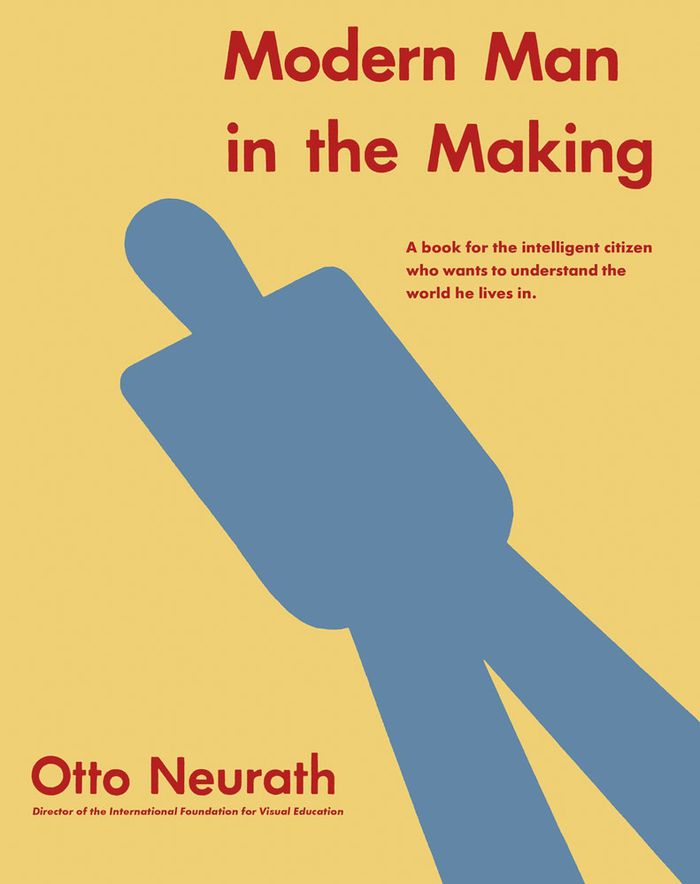
Otto Neurath’s famous "Modern man in the making," first published by Alfred A. Knopf in 1939, captures and describes the state of the world in the 1930s by using text and figurative illustrations. From 1925 on, Neurath and his team had worked on a new visual language termed "Isotype" (International System of Typographic Picture Education). At a time that saw new mass media making hitherto unthinkable amounts of information available, Neurath felt the need for a systematic visualization explaining facts, statistical data and comparative numbers in simple ways. The book can be seen as one of the most influential predecessors of today’s infographics. In the visuals, each symbol and color represents a certain group of objects or people, often compared repetitively over a certain time span. The topics covered in the book include diverse social issues of the time like mortality, health, employment, trade, education, mobility, migration and demographics. "Modern man in the making" shows Neurath’s democratic endeavor to make knowledge intelligible and available to all. It is a reminder of graphic art’s ability to inform and create context instead of presenting aesthetic qualities only. The book has inspired generations of designers and has led to sometimes peculiar imitations and further developments.
Modern man in the making. Facsimile
Actions:
Price:
$84.00
(available to order)
Summary:
Otto Neurath’s famous "Modern man in the making," first published by Alfred A. Knopf in 1939, captures and describes the state of the world in the 1930s by using text and figurative illustrations. From 1925 on, Neurath and his team had worked on a new visual language termed "Isotype" (International System of Typographic Picture Education). At a time that saw new mass media making hitherto unthinkable amounts of information available, Neurath felt the need for a systematic visualization explaining facts, statistical data and comparative numbers in simple ways. The book can be seen as one of the most influential predecessors of today’s infographics. In the visuals, each symbol and color represents a certain group of objects or people, often compared repetitively over a certain time span. The topics covered in the book include diverse social issues of the time like mortality, health, employment, trade, education, mobility, migration and demographics. "Modern man in the making" shows Neurath’s democratic endeavor to make knowledge intelligible and available to all. It is a reminder of graphic art’s ability to inform and create context instead of presenting aesthetic qualities only. The book has inspired generations of designers and has led to sometimes peculiar imitations and further developments.
Form:
books
books
Publication:
April 2024
April 2024
Subject:
Graphic Designers, Monographs
Graphic Designers, Monographs
Form:
books
books

Title:
Dandelions
Dandelions
Actions:
Price:
$27.50
(available to order)
Summary:
In ''Dandelions'', Thea Lenarduzzi pieces together her family history through four generations’ worth of migration between Italy and England, and the stories scattered like seeds along the way. Where, or what, is home? What has it meant, historically and personally, to be 'Italian' or 'English', or both in a culture that prefers us to choose? What does it mean to have(...)
$27.50
(available to order)
Summary:
In ''Dandelions'', Thea Lenarduzzi pieces together her family history through four generations’ worth of migration between Italy and England, and the stories scattered like seeds along the way. Where, or what, is home? What has it meant, historically and personally, to be 'Italian' or 'English', or both in a culture that prefers us to choose? What does it mean to have(...)
Title:
Dandelions
Actions:
Price:
$27.50
(available to order)
Summary:
In ''Dandelions'', Thea Lenarduzzi pieces together her family history through four generations’ worth of migration between Italy and England, and the stories scattered like seeds along the way. Where, or what, is home? What has it meant, historically and personally, to be 'Italian' or 'English', or both in a culture that prefers us to choose? What does it mean to have roots? Or to have left a piece of oneself somewhere long since abandoned? At the heart of this book brimming with the lives of remarkable and apparently unremarkable people is Thea’s grandmother Dirce, a former seamstress, who, now approaching 100, is a repository of tales that are by turns unpredictable, unreliable, significant. And that lead us deeper. There’s the one about Mussolini’s modern Icarus who crashed into the murk of a lake; about the Manchester factory worker who wanted only to be seen; about the shadowy demon who visits in your sleep; and the monument to a murdered politician that, when it rains, runs the colour of blood. Through the journeys of Dirce and her relatives, from the Friuli to Sheffield and Manchester and back again, a different kind of history emerges, in which self and place are warp and weft, tightly woven, with threads left hazardously trailing.
Dandelions
Actions:
Price:
$27.50
(available to order)
Summary:
In ''Dandelions'', Thea Lenarduzzi pieces together her family history through four generations’ worth of migration between Italy and England, and the stories scattered like seeds along the way. Where, or what, is home? What has it meant, historically and personally, to be 'Italian' or 'English', or both in a culture that prefers us to choose? What does it mean to have roots? Or to have left a piece of oneself somewhere long since abandoned? At the heart of this book brimming with the lives of remarkable and apparently unremarkable people is Thea’s grandmother Dirce, a former seamstress, who, now approaching 100, is a repository of tales that are by turns unpredictable, unreliable, significant. And that lead us deeper. There’s the one about Mussolini’s modern Icarus who crashed into the murk of a lake; about the Manchester factory worker who wanted only to be seen; about the shadowy demon who visits in your sleep; and the monument to a murdered politician that, when it rains, runs the colour of blood. Through the journeys of Dirce and her relatives, from the Friuli to Sheffield and Manchester and back again, a different kind of history emerges, in which self and place are warp and weft, tightly woven, with threads left hazardously trailing.
Form:
books
books
Publication:
May 2023
May 2023
Subject:
Literature and poetry
Literature and poetry
Form:
books
books

Title:
Designing the X
Designing the X
Actions:
Price:
$53.95
(available to order)
Summary:
As the pace of global change accelerates—ecologically, socially, and technologically—our traditional ways of understanding and responding to change fall short. We now live in an era of supercomplexity, where challenges like climate instability, migration, technological disruption, resource depletion, and systemic inequality converge and defy conventional(...)
$53.95
(available to order)
Summary:
As the pace of global change accelerates—ecologically, socially, and technologically—our traditional ways of understanding and responding to change fall short. We now live in an era of supercomplexity, where challenges like climate instability, migration, technological disruption, resource depletion, and systemic inequality converge and defy conventional(...)
Title:
Designing the X
Actions:
Price:
$53.95
(available to order)
Summary:
As the pace of global change accelerates—ecologically, socially, and technologically—our traditional ways of understanding and responding to change fall short. We now live in an era of supercomplexity, where challenges like climate instability, migration, technological disruption, resource depletion, and systemic inequality converge and defy conventional solutions. ''Designing the X'' meets this moment with a bold and timely proposition: when data, science, and analysis alone are insufficient to move us forward, we must turn to design as a powerful mode of reasoning through synthesis, where intuition meets insight and imagination drives action. Design enables us to move with complexity, not against it, and to shape futures beyond the limits of the present. Grounded in praxis and research—including 67 interviews with designers, technologists and scientists, innovators and entrepreneurs, urbanists, and educators— ''Designing the X'' makes a compelling case for design as an essential partner to science and technology: integrative, inventive, and profoundly human. The “X” stands for what’s missing in today’s analytic methods: the leap from parts to greater wholes, from current conditions to future potential. This book is for anyone seeking agency in an age of accelerating change. It’s a compass for those ready to imagine—and design—the future we cannot yet see.
Designing the X
Actions:
Price:
$53.95
(available to order)
Summary:
As the pace of global change accelerates—ecologically, socially, and technologically—our traditional ways of understanding and responding to change fall short. We now live in an era of supercomplexity, where challenges like climate instability, migration, technological disruption, resource depletion, and systemic inequality converge and defy conventional solutions. ''Designing the X'' meets this moment with a bold and timely proposition: when data, science, and analysis alone are insufficient to move us forward, we must turn to design as a powerful mode of reasoning through synthesis, where intuition meets insight and imagination drives action. Design enables us to move with complexity, not against it, and to shape futures beyond the limits of the present. Grounded in praxis and research—including 67 interviews with designers, technologists and scientists, innovators and entrepreneurs, urbanists, and educators— ''Designing the X'' makes a compelling case for design as an essential partner to science and technology: integrative, inventive, and profoundly human. The “X” stands for what’s missing in today’s analytic methods: the leap from parts to greater wholes, from current conditions to future potential. This book is for anyone seeking agency in an age of accelerating change. It’s a compass for those ready to imagine—and design—the future we cannot yet see.
Form:
books
books
Publication:
October 2025
October 2025
Subject:
Design Theory
Design Theory
Form:
books
books
Actions:
Price:
$140.00
(available in store)
Summary:
The past seventy-five years have been a time of extreme social and cultural transformations worldwide. Political and social upheaval, often contentious, disorienting and polarizing, is now a daily reality. Whether migration crises, territorial disputes, gender inequity, class divisions, racism, war, gun violence or environmental concerns, we live in a world rife with(...)
$140.00
(available in store)
Summary:
The past seventy-five years have been a time of extreme social and cultural transformations worldwide. Political and social upheaval, often contentious, disorienting and polarizing, is now a daily reality. Whether migration crises, territorial disputes, gender inequity, class divisions, racism, war, gun violence or environmental concerns, we live in a world rife with(...)
Title:
Flashpoint! Protest photography in print, 1950-present
Actions:
Price:
$140.00
(available in store)
Summary:
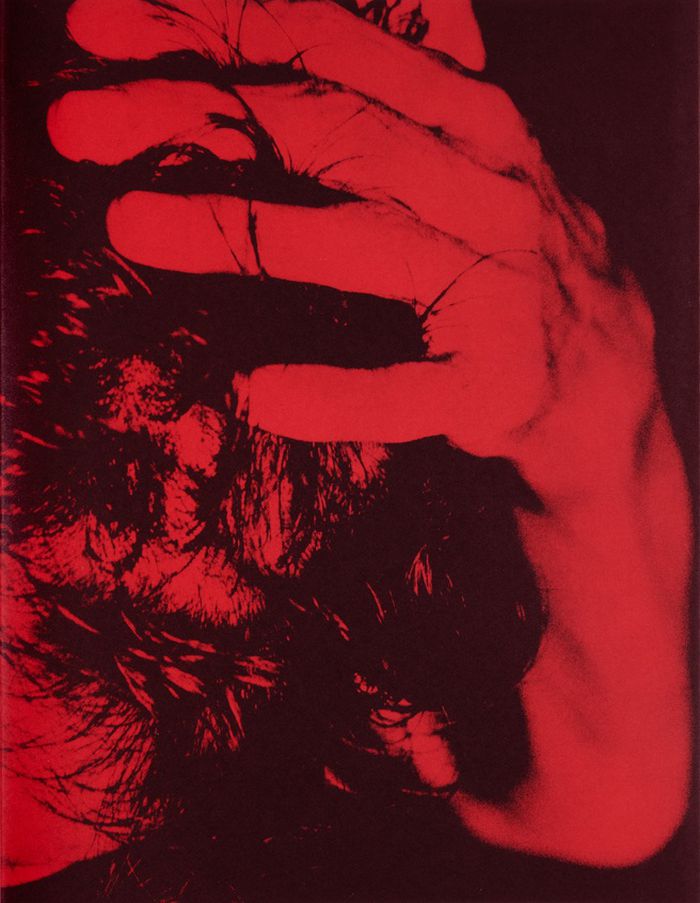
The past seventy-five years have been a time of extreme social and cultural transformations worldwide. Political and social upheaval, often contentious, disorienting and polarizing, is now a daily reality. Whether migration crises, territorial disputes, gender inequity, class divisions, racism, war, gun violence or environmental concerns, we live in a world rife with ideological and tribal conflicts. Since its inception, photography has captured defining historical moments, serving as either a tool or a document of protest—or both. In placing photobooks next to posters, DIY zines and independent journals, ''Flashpoint!'' explores the diverse roles and varying aesthetics that photography in print undertakes in its support of protest and resistance. Is it a “tool” conceived through an “aesthetic of urgency” to be used during events as they unfold, as in an anonymously designed poster or ink-stained fliers plastered on street walls? Or an elegantly designed photobook, published a year or more later, often with the help of well-known photographers, writers and designers, to document a past uprising? Whether outright rage or a more subtle artist-driven commentary, protest photography in print covers all of these formats and sometimes transcends rigid media definitions, as it blurs the lines between what constitutes a book, zine, journal, poster or newspaper.
Flashpoint! Protest photography in print, 1950-present
Actions:
Price:
$140.00
(available in store)
Summary:
The past seventy-five years have been a time of extreme social and cultural transformations worldwide. Political and social upheaval, often contentious, disorienting and polarizing, is now a daily reality. Whether migration crises, territorial disputes, gender inequity, class divisions, racism, war, gun violence or environmental concerns, we live in a world rife with ideological and tribal conflicts. Since its inception, photography has captured defining historical moments, serving as either a tool or a document of protest—or both. In placing photobooks next to posters, DIY zines and independent journals, ''Flashpoint!'' explores the diverse roles and varying aesthetics that photography in print undertakes in its support of protest and resistance. Is it a “tool” conceived through an “aesthetic of urgency” to be used during events as they unfold, as in an anonymously designed poster or ink-stained fliers plastered on street walls? Or an elegantly designed photobook, published a year or more later, often with the help of well-known photographers, writers and designers, to document a past uprising? Whether outright rage or a more subtle artist-driven commentary, protest photography in print covers all of these formats and sometimes transcends rigid media definitions, as it blurs the lines between what constitutes a book, zine, journal, poster or newspaper.
Form:
books
books
Publication:
April 2025
April 2025
Subject:
Photography Collections
Photography Collections


