


8452 Results
Form:
journals and magazines
journals and magazines
Title:
Perspecta 37 : famous
Perspecta 37 : famous
Actions:
Price:
$22.95
(available to order)
Summary:
Does fame empower architecture or undermine it? Does the star power or cult status of an architect enhance the art or dilute it? This issue of Perspecta examines the inner workings of fame as it relates to architecture though media and culture. It looks at how the commodification of architecture affects the design process - whether fame emphasizes all the wrong aspects of(...)
Subject:
Magazines
Magazines
Publication:
June 2005, Cambridge, Mass.
June 2005, Cambridge, Mass.
Title:
Perspecta 37 : famous
Actions:
Price:
$22.95
(available to order)
Summary:
Does fame empower architecture or undermine it? Does the star power or cult status of an architect enhance the art or dilute it? This issue of Perspecta examines the inner workings of fame as it relates to architecture though media and culture. It looks at how the commodification of architecture affects the design process - whether fame emphasizes all the wrong aspects of architecture or provides the only way an architect can produce truly ambitious projects. How does architecture generate fame? And how does fame generate architecture? Celebrity permeates all levels of contemporary society; architecture, academia, the architectural press, and the mainstream media all play a role in promoting the mystique of the designer genius. The tradition of learning through apprenticeship and the struggle to have projects commissioned and built perpetuate the importance of the famous architect. Does this serve architecture or only the architectural star? The contributors to Perspecta examine both sides of the argument: Architecture moves forward through a process of innovation; fame provides the architect with the leverage needed to accomplish innovation. Or is it that fame, because of its relationship to the media and popular tastes, inevitably dilutes the quality of the architecture? Does "famous" architecture glorify only itself and neglect the people, the values, and the functions that it must serve?
Form:
journals and magazines
journals and magazines
Publication:
June 2005, Cambridge, Mass.
June 2005, Cambridge, Mass.
Subject:
Magazines
Magazines
Form:
books
books
Title:
The network society
The network society
Actions:
Price:
$28.99
(available to order)
Summary:
In The Network Society, Darin Barney provides a compelling examination of the social, political and economic implications of network technologies and their application across a wide range of practices and institutions. Are we in the midst of a digital revolution? Have new information and communication technologies given birth to a new form of society, or do they(...)
Title:
The network society
Actions:
Price:
$28.99
(available to order)
Summary:
In The Network Society, Darin Barney provides a compelling examination of the social, political and economic implications of network technologies and their application across a wide range of practices and institutions. Are we in the midst of a digital revolution? Have new information and communication technologies given birth to a new form of society, or do they reinforce and extend existing patterns and relationships? This book provides a clear and engaging discussion of these and other questions. Using a sophisticated model of the relationship between technology and society, Barney investigates both what has changed, and what has remained the same, in the age of the Internet. Among the issues discussed are debates concerning the emergence of a 'knowledge economy'; digital restructuring of employment and work; globalization and the status of the nation-state; the prospects of digital democracy; the digital divide; new social movements; and culture, community and identity in the age of new media. This book provides an accessible resource for a thoughtful engagement with life in the network society. It will be essential reading for students in sociology and media and communication studies. This will be a valuable textbook for undergraduate students of sociology and media and communication studies.
Form:
books
books
Publication:
September 2004, Cambridge
September 2004, Cambridge
Subject:
Epistemology
Epistemology
Form:
books
books
Title:
What comes after farce?
What comes after farce?
Actions:
Price:
$33.95
(available to order)
Summary:
If farce follows tragedy, what follows farce? Where does the double predicament of a post-truth and post-shame politics leave artists and critics on the left? How to demystify a hegemonic order that dismisses its own contradictions? How to belittle a political elite that cannot be embarrassed, or to mock party leaders who thrive on the absurd? How to out-dada President(...)
Title:
What comes after farce?
Actions:
Price:
$33.95
(available to order)
Summary:
If farce follows tragedy, what follows farce? Where does the double predicament of a post-truth and post-shame politics leave artists and critics on the left? How to demystify a hegemonic order that dismisses its own contradictions? How to belittle a political elite that cannot be embarrassed, or to mock party leaders who thrive on the absurd? How to out-dada President Ubu? And, in any event, why add outrage to a media economy that thrives on the same? 'What Comes After Farce?' comments on shifts in art, criticism, and fiction in the face of the current regime of war, surveillance, extreme inequality, and media disruption. A first section focuses on the cultural politics of emergency since 9/11, including the use and abuse of trauma, paranoia, and kitsch. A second reviews the neoliberal makeover of art institutions during the same period. Finally, a third section surveys transformations in media as reflected in recent art, film, and fiction. Among the phenomena explored here are “machine vision” (images produced by machines for other machines without a human interface),“operational images” (images that do not represent the world so much as intervene in it), and the algorithmic scripting of information so pervasive in our everyday lives.
Form:
books
books
Publication:
June 2020
June 2020
Subject:
Critical Theory
Critical Theory
Form:
books
books
Title:
Logic of the collection
Logic of the collection
Actions:
Price:
$39.00
(available to order)
Summary:
In modernity, the museum was the institution that made art accessible to the broader public. An artwork was collected if it was considered beautiful, passionate, engaged, or critical—and primarily if it was deemed historically relevant. But today, with the total availability and saturation of images, the museum has lost its privileged status as the exclusive place for the(...)
Title:
Logic of the collection
Actions:
Price:
$39.00
(available to order)
Summary:
In modernity, the museum was the institution that made art accessible to the broader public. An artwork was collected if it was considered beautiful, passionate, engaged, or critical—and primarily if it was deemed historically relevant. But today, with the total availability and saturation of images, the museum has lost its privileged status as the exclusive place for the display of art. In our age of digital media, how does a particular artwork get selected for a museum collection? Which symbolic criteria must this artwork satisfy for it to obtain value? And in what ways does the institution of the museum remain relevant? 'Logic of the Collection' is framed by Boris Groys’s original and provocative proposition: an artwork is considered historically relevant if it fits the logic of the museum collection. In these critical essays, the philosopher and theorist of art and media analyzes the relationship between the logic of the collection and various modern ideologies. He reflects on the explosion of art production and distribution through the ascendency of digital media as well as the ways in which the accumulated artworks will be collected and preserved in the future, as the potential limits of public and private collections are reached.
Form:
books
books
Publication:
August 2021
August 2021
Subject:
Museology
Museology
Form:
books
books
Actions:
Holdings:
Description:
312 pages : illustrations ; 24 cm.
Description:
312 pages : illustrations ; 24 cm.
Subject:
- Architectural libraries History.,
- Architectural libraries France History.,
- Architectural libraries Europe History.,
- Architecture Bibliothèques Histoire.,
- Architecture Bibliothèques France Histoire.,
- Architecture Bibliothèques Europe Histoire.,
- Architectural libraries,
- Architekt,
- Architektur,
- Privatbibliothek,
- Spezialbibliothek,
- Europe,
- France,
- Specialized libraries Architecture,
- Aufsatzsammlung.,
- History
(See more)
Publication:
Paris : INHA : Alain Baudry et Cie, 2009.
Paris : INHA : Alain Baudry et Cie, 2009.
Title:
Bibliothèques d'architecture = Architectural libraries / sous la direction de Olga Medvedkova ; [ont participè à cet ouvrage Gerald Beasley, Gilles Bienvenu, Wolfgang Cillessen and others].
Actions:
Holdings:
Description:
312 pages : illustrations ; 24 cm.
Bibliothèques d'architecture = Architectural libraries / sous la direction de Olga Medvedkova ; [ont participè à cet ouvrage Gerald Beasley, Gilles Bienvenu, Wolfgang Cillessen and others].
Actions:
Holdings:
Description:
312 pages : illustrations ; 24 cm.
Form:
books
books
Publication:
Paris : INHA : Alain Baudry et Cie, 2009.
Paris : INHA : Alain Baudry et Cie, 2009.
Subject:
- Architectural libraries History.,
- Architectural libraries France History.,
- Architectural libraries Europe History.,
- Architecture Bibliothèques Histoire.,
- Architecture Bibliothèques France Histoire.,
- Architecture Bibliothèques Europe Histoire.,
- Architectural libraries,
- Architekt,
- Architektur,
- Privatbibliothek,
- Spezialbibliothek,
- Europe,
- France,
- Specialized libraries Architecture,
- Aufsatzsammlung.,
- History
(See more)
Form:
books
books
Actions:
Holdings:
Description:
448 pages : illustrations ; 26 cm
Description:
448 pages : illustrations ; 26 cm
Author:
Subject:
Publication:
London : Black Dog Pub., ©2007.
London : Black Dog Pub., ©2007.
Title:
The strange death of architectural criticism : Martin Pawley collected writings / edited by David Jenkins ; foreword by Norman Foster.
Actions:
Holdings:
Description:
448 pages : illustrations ; 26 cm
The strange death of architectural criticism : Martin Pawley collected writings / edited by David Jenkins ; foreword by Norman Foster.
Actions:
Holdings:
Description:
448 pages : illustrations ; 26 cm
Form:
books
books
Publication:
London : Black Dog Pub., ©2007.
London : Black Dog Pub., ©2007.
Form:
books
books
Actions:
Holdings:
Description:
279 pages : illustrations, portraits, plans, facsimiles ; 31 cm
Description:
279 pages : illustrations, portraits, plans, facsimiles ; 31 cm
Author:
- Christina Strunck -- Markus Neuwirth -- Jorge Fernández-Santos Ortiz-Iribas -- Klaus Güthlein -- Christina Strunck -- Stefanie Walker -- Silvia Carola Dobler -- Gerhard Wiedmann -- Giulia Fusconi -- Alba Cappellieri -- Jorge Fernández-Santos Ortiz-Iribas -- Sabina de Cavi.,
- Strunck, Christina.,
- Bibliotheca Hertziana, Max-Planck-Institut für Kunstgeschichte.
(See more)
Subject:
Publication:
München : Hirmer Verlag, ©2008.
München : Hirmer Verlag, ©2008.
Title:
Un regista de gran teatro del barocco : Johann Paul Schor und die internationale Sprache des Barock : Akten des Internationalen Studientages der Bibliotheca Hertziana, Rom, 6.-7. Oktober 2003 / herausgegeben von Christina Strunck.
Actions:
Holdings:
Description:
279 pages : illustrations, portraits, plans, facsimiles ; 31 cm
Form:
books
books
Publication:
München : Hirmer Verlag, ©2008.
München : Hirmer Verlag, ©2008.
Author:
- Christina Strunck -- Markus Neuwirth -- Jorge Fernández-Santos Ortiz-Iribas -- Klaus Güthlein -- Christina Strunck -- Stefanie Walker -- Silvia Carola Dobler -- Gerhard Wiedmann -- Giulia Fusconi -- Alba Cappellieri -- Jorge Fernández-Santos Ortiz-Iribas -- Sabina de Cavi.,
- Strunck, Christina.,
- Bibliotheca Hertziana, Max-Planck-Institut für Kunstgeschichte.
(See more)
Form:
books
books
Title:
Modern urban housing in China, 1840-2000 / edited by Lü Junhua, Peter G. Rowe, and Zhang Jie.
Modern urban housing in China, 1840-2000 / edited by Lü Junhua, Peter G. Rowe, and Zhang Jie.
Actions:
Holdings:
Description:
303 pages : illustrations, maps ; 24 cm
Description:
303 pages : illustrations, maps ; 24 cm
Subject:
- Architecture, Domestic China.,
- Apartment houses China.,
- Architecture China History Ming-Qing dynasties, 1368-1912.,
- Architecture China History 20th century.,
- City planning China.,
- Housing policy China.,
- Architecture China 19th century.,
- Viviendas sociales China.,
- Vivienda China.,
- Architecture domestique Chine.,
- Immeubles d'habitation Chine.,
- Architecture Chine 19e siècle.,
- Architecture Chine Histoire 20e siècle.,
- Urbanisme Chine.,
- Logement Politique gouvernementale Chine.,
- Architecture Chine Histoire 1368-1912 (Dynasties des Ming et des Qing),
- Architecture Ming-Qing dynasties,
- Apartment houses.,
- Architecture.,
- Architecture, Domestic.,
- City planning.,
- Housing policy.,
- Stadt,
- Haus,
- Wohnung,
- Architektur,
- Woningbouw.,
- Housing China 19th century.,
- Housing China 20th century.,
- China.,
- China Social conditions 19th century.,
- China Social conditions 20th century.,
- Housing China,
- Housing development China,
- Urbanization China History 19th century,
- Urbanization China History 20th century,
- Housing China 1840-2000.,
- Public housing China 1840-2000.,
- Aufsatzsammlung.,
- History.
(See more)
Publication:
Munich ; New York : Prestel, ©2001.
Munich ; New York : Prestel, ©2001.
Title:
Modern urban housing in China, 1840-2000 / edited by Lü Junhua, Peter G. Rowe, and Zhang Jie.
Actions:
Holdings:
Description:
303 pages : illustrations, maps ; 24 cm
Modern urban housing in China, 1840-2000 / edited by Lü Junhua, Peter G. Rowe, and Zhang Jie.
Actions:
Holdings:
Description:
303 pages : illustrations, maps ; 24 cm
Form:
books
books
Publication:
Munich ; New York : Prestel, ©2001.
Munich ; New York : Prestel, ©2001.
Subject:
- Architecture, Domestic China.,
- Apartment houses China.,
- Architecture China History Ming-Qing dynasties, 1368-1912.,
- Architecture China History 20th century.,
- City planning China.,
- Housing policy China.,
- Architecture China 19th century.,
- Viviendas sociales China.,
- Vivienda China.,
- Architecture domestique Chine.,
- Immeubles d'habitation Chine.,
- Architecture Chine 19e siècle.,
- Architecture Chine Histoire 20e siècle.,
- Urbanisme Chine.,
- Logement Politique gouvernementale Chine.,
- Architecture Chine Histoire 1368-1912 (Dynasties des Ming et des Qing),
- Architecture Ming-Qing dynasties,
- Apartment houses.,
- Architecture.,
- Architecture, Domestic.,
- City planning.,
- Housing policy.,
- Stadt,
- Haus,
- Wohnung,
- Architektur,
- Woningbouw.,
- Housing China 19th century.,
- Housing China 20th century.,
- China.,
- China Social conditions 19th century.,
- China Social conditions 20th century.,
- Housing China,
- Housing development China,
- Urbanization China History 19th century,
- Urbanization China History 20th century,
- Housing China 1840-2000.,
- Public housing China 1840-2000.,
- Aufsatzsammlung.,
- History.
(See more)
Form:
books
books
Holdings:
Description:
xiii, 226 pages : illustrations ; 24 cm
Description:
xiii, 226 pages : illustrations ; 24 cm
Subject:
- Racism Netherlands.,
- Sexual minorities Netherlands.,
- Racisme Pays-Bas.,
- Minorités sexuelles Pays-Bas.,
- Society.,
- Race relations,
- Racism,
- Sexual minorities,
- Kolonialismus,
- Rassismus,
- LGBTQ+ people,
- Netherlands Race relations.,
- Pays-Bas Relations raciales.,
- Netherlands,
- Niederlande
(See more)
Publication:
Durham : Duke University Press, 2016.
Durham : Duke University Press, 2016.
Title:
White innocence : paradoxes of colonialism and race / Gloria Wekker.
Actions:
Holdings:
Description:
xiii, 226 pages : illustrations ; 24 cm
White innocence : paradoxes of colonialism and race / Gloria Wekker.
Actions:
Holdings:
Description:
xiii, 226 pages : illustrations ; 24 cm
Form:
books
books
Publication:
Durham : Duke University Press, 2016.
Durham : Duke University Press, 2016.
Subject:
- Racism Netherlands.,
- Sexual minorities Netherlands.,
- Racisme Pays-Bas.,
- Minorités sexuelles Pays-Bas.,
- Society.,
- Race relations,
- Racism,
- Sexual minorities,
- Kolonialismus,
- Rassismus,
- LGBTQ+ people,
- Netherlands Race relations.,
- Pays-Bas Relations raciales.,
- Netherlands,
- Niederlande
(See more)
Form:
books
books
Actions:
Price:
$29.99
(available to order)
Summary:
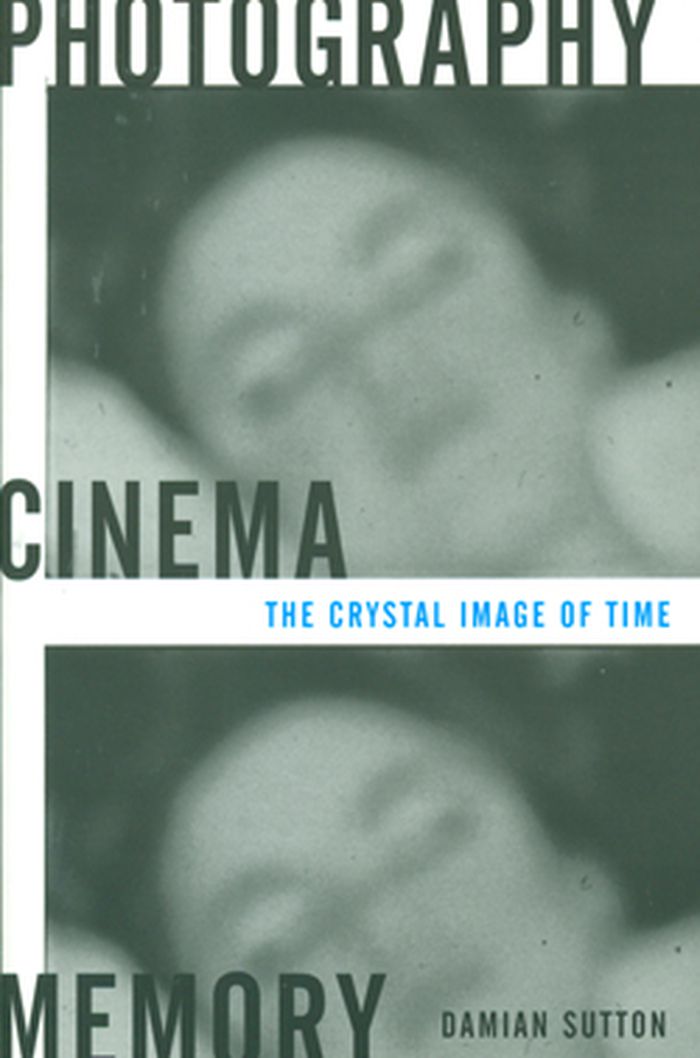
Cinema and photography are both intimately associated with time—cinema with time in passing, the photograph with the lost moment. In Photography, Cinema, Memory, Damian Peter Sutton explores time in both media to present a radical new understanding of the photographic image as always coming into being.
Title:
Photography , cinema, memory: the crystal image of time
Actions:
Price:
$29.99
(available to order)
Summary:
Cinema and photography are both intimately associated with time—cinema with time in passing, the photograph with the lost moment. In Photography, Cinema, Memory, Damian Peter Sutton explores time in both media to present a radical new understanding of the photographic image as always coming into being.
Form:
books
books
Publication:
June 2009
June 2009
Subject:
Architecture and Film, Set Design
Architecture and Film, Set Design


