


765 Results
Form:
books
books
Actions:
Price:
$35.00
(available to order)
Summary:
Some, like the Tasmanian tiger, are considered extinct--yet sightings are still reported. Some, like the giant squid, existed only as rumors until hard evidence finally appeared. And then there are the others, who roam a shadowy realm between myth, hucksterism and science--for example, Bigfoot and the Loch Ness Monster. Cryptozoology is the quest for unidentified and(...)
$35.00
(available to order)
Summary:
Some, like the Tasmanian tiger, are considered extinct--yet sightings are still reported. Some, like the giant squid, existed only as rumors until hard evidence finally appeared. And then there are the others, who roam a shadowy realm between myth, hucksterism and science--for example, Bigfoot and the Loch Ness Monster. Cryptozoology is the quest for unidentified and(...)
Publication:
February 2007, Zurich
February 2007, Zurich
Title:
Cryptology : out of the place scale
Actions:
Price:
$35.00
(available to order)
Summary:
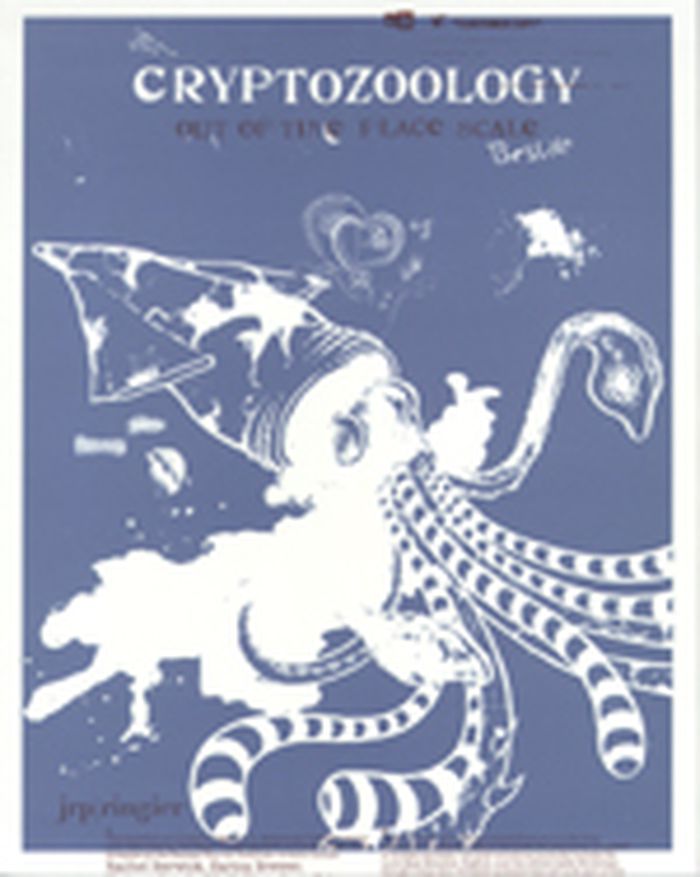
Some, like the Tasmanian tiger, are considered extinct--yet sightings are still reported. Some, like the giant squid, existed only as rumors until hard evidence finally appeared. And then there are the others, who roam a shadowy realm between myth, hucksterism and science--for example, Bigfoot and the Loch Ness Monster. Cryptozoology is the quest for unidentified and elusive species, and as such is often treated as a marginalized science more akin to farcical adventure. However, the subject makes for a perfectly fascinating zone of inquiry for contemporary artists interested in the fertile edges of the history of science and museums, taxonomy, myth, spectacle and fraud. Cryptozoology: Out of Time Place Scale mines the theoretical and design terrains of the twenty-first-century graphic novel and the medieval curio cabinet or Wunderkammer, exploring cryptozoology in art and popular culture. Originally exhibited at Maine's Bates College Museum of Art, it begins with Mark Dion's installation of a bureaucratic government agency, the Federal Wildlife Commission's Department of Cryptozoology, Bureau for the Investigation of Paranormal Phenomena and National Institute of Comparative Astrobiology, and features drawings, paintings, dioramas, taxidermy and performative photos by artists Rachel Berwick, Sarina Brewer, Walmor Correa, Ellen Lesperance, Robert Marbury, Jill Miller, Vic Muniz, Jeanine Oleson, Rosamond Purcell, Alexis Rockman, Marc Swanson, Jeffrey Vallance and Jamie Wyeth.
Cryptology : out of the place scale
Actions:
Price:
$35.00
(available to order)
Summary:
Some, like the Tasmanian tiger, are considered extinct--yet sightings are still reported. Some, like the giant squid, existed only as rumors until hard evidence finally appeared. And then there are the others, who roam a shadowy realm between myth, hucksterism and science--for example, Bigfoot and the Loch Ness Monster. Cryptozoology is the quest for unidentified and elusive species, and as such is often treated as a marginalized science more akin to farcical adventure. However, the subject makes for a perfectly fascinating zone of inquiry for contemporary artists interested in the fertile edges of the history of science and museums, taxonomy, myth, spectacle and fraud. Cryptozoology: Out of Time Place Scale mines the theoretical and design terrains of the twenty-first-century graphic novel and the medieval curio cabinet or Wunderkammer, exploring cryptozoology in art and popular culture. Originally exhibited at Maine's Bates College Museum of Art, it begins with Mark Dion's installation of a bureaucratic government agency, the Federal Wildlife Commission's Department of Cryptozoology, Bureau for the Investigation of Paranormal Phenomena and National Institute of Comparative Astrobiology, and features drawings, paintings, dioramas, taxidermy and performative photos by artists Rachel Berwick, Sarina Brewer, Walmor Correa, Ellen Lesperance, Robert Marbury, Jill Miller, Vic Muniz, Jeanine Oleson, Rosamond Purcell, Alexis Rockman, Marc Swanson, Jeffrey Vallance and Jamie Wyeth.
Form:
books
books
Publication:
February 2007, Zurich
February 2007, Zurich
Form:
books
books
Actions:
Price:
$45.00
(available to order)
Summary:
As digital technology advances at breakneck speed, images are circulating quicker than ever before. But what is the status of the image in the digital era? In this publication, art historian Hubert Burda (born 1940) examines the "iconic turn" in ten themed chapters and conversations with leading cultural theorists. In the first chapter, "The View Through the Window,"(...)
$45.00
(available to order)
Summary:
As digital technology advances at breakneck speed, images are circulating quicker than ever before. But what is the status of the image in the digital era? In this publication, art historian Hubert Burda (born 1940) examines the "iconic turn" in ten themed chapters and conversations with leading cultural theorists. In the first chapter, "The View Through the Window,"(...)
Title:
The digital wunderkammer : 10 chapters on the iconic turn
Actions:
Price:
$45.00
(available to order)
Summary:
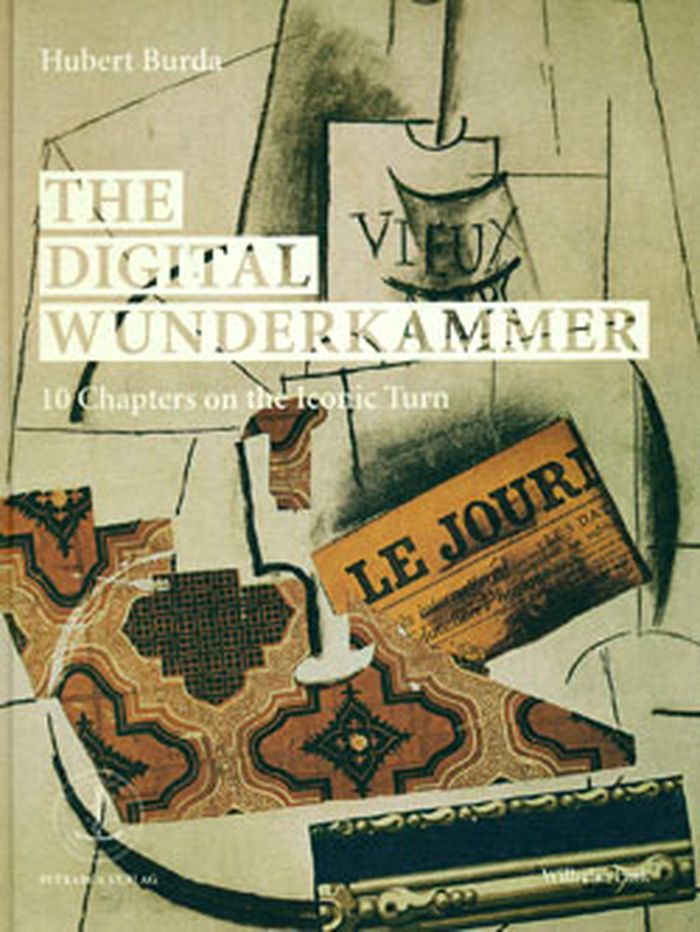
As digital technology advances at breakneck speed, images are circulating quicker than ever before. But what is the status of the image in the digital era? In this publication, art historian Hubert Burda (born 1940) examines the "iconic turn" in ten themed chapters and conversations with leading cultural theorists. In the first chapter, "The View Through the Window," Burda traces the connection between perspectival painting and the television, demonstrating in the second chapter how the image requires a frame, which in turn requires a material vehicle - the topic of the third chapter - that in our era has become a non-material vehicle with its own formal parameters. In the fourth chapter, "The Mobile Image," Burda shows how images have always been linked to portability, but now migrate to an unprecedented degree, so that anyone with a personal device can globally disseminate, say, footage from a concert via Youtube. A discussion of the capacity of individual images to placate or ennervate leads to a seventh chapter on the appetite for the Sublime and the rhetoric and representation of power throughout art history. Following a discussion of the democratization of celebrity culture, Burda proposes that the Google search box is perhaps the most interesting "interface" of our times, analogous to the seventeenth-century cabinet of curiosities (or wunderkammer). Conversations with Friedrich Kittler, Peter Sloterdijk, Bazon Brock, Horst Bredekamp and Hans Belting further extend this imaginative debate on the "iconic turn."
The digital wunderkammer : 10 chapters on the iconic turn
Actions:
Price:
$45.00
(available to order)
Summary:
As digital technology advances at breakneck speed, images are circulating quicker than ever before. But what is the status of the image in the digital era? In this publication, art historian Hubert Burda (born 1940) examines the "iconic turn" in ten themed chapters and conversations with leading cultural theorists. In the first chapter, "The View Through the Window," Burda traces the connection between perspectival painting and the television, demonstrating in the second chapter how the image requires a frame, which in turn requires a material vehicle - the topic of the third chapter - that in our era has become a non-material vehicle with its own formal parameters. In the fourth chapter, "The Mobile Image," Burda shows how images have always been linked to portability, but now migrate to an unprecedented degree, so that anyone with a personal device can globally disseminate, say, footage from a concert via Youtube. A discussion of the capacity of individual images to placate or ennervate leads to a seventh chapter on the appetite for the Sublime and the rhetoric and representation of power throughout art history. Following a discussion of the democratization of celebrity culture, Burda proposes that the Google search box is perhaps the most interesting "interface" of our times, analogous to the seventeenth-century cabinet of curiosities (or wunderkammer). Conversations with Friedrich Kittler, Peter Sloterdijk, Bazon Brock, Horst Bredekamp and Hans Belting further extend this imaginative debate on the "iconic turn."
Form:
books
books
Publication:
August 2011
August 2011
Subject:
Epistemology
Epistemology
Form:
books
books
Price:
$13.95
(available to order)
Summary:
In 1975, when political scientist Benedict Anderson reached Wat Phai Rong Wua, a massive temple complex in rural Thailand conceived by Buddhist monk Luang Phor Khom, he felt he had wandered into a demented Disneyland. One of the world's most bizarre tourist attractions, Wat Phai Rong Wua was designed as a cautionary museum of sorts; its gruesome statues depict violent and(...)
$13.95
(available to order)
Summary:
In 1975, when political scientist Benedict Anderson reached Wat Phai Rong Wua, a massive temple complex in rural Thailand conceived by Buddhist monk Luang Phor Khom, he felt he had wandered into a demented Disneyland. One of the world's most bizarre tourist attractions, Wat Phai Rong Wua was designed as a cautionary museum of sorts; its gruesome statues depict violent and(...)
Title:
The fate of rural hell : ascetism and desire in buddhist Thailand
Actions:
Price:
$13.95
(available to order)
Summary:
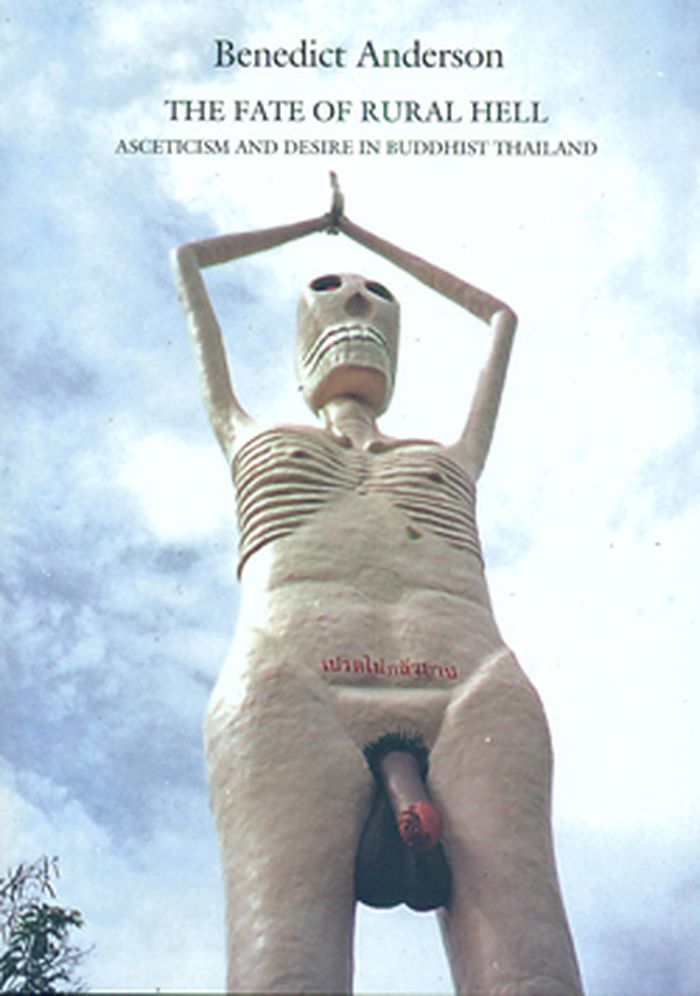
In 1975, when political scientist Benedict Anderson reached Wat Phai Rong Wua, a massive temple complex in rural Thailand conceived by Buddhist monk Luang Phor Khom, he felt he had wandered into a demented Disneyland. One of the world's most bizarre tourist attractions, Wat Phai Rong Wua was designed as a cautionary museum of sorts; its gruesome statues depict violent and torturous scenes that showcase what hell may be like. Over the next few decades, Anderson found himself transfixed by this unusual amalgamation of objects, returning several times to see attractions like the largest metal-cast Buddha figure in the world and the Palace of a Hundred Spires. The concrete statuaries and perverse art in Luang Phor Khom's personal museum of hell included, 'side by side, an upright human skeleton in a glass cabinet and a life-size replica of Michelangelo's gigantic nude David, wearing fashionable red underpants from the top of which poked part of a swollen, un-Florentine penis,' alongside dozens of statues of evildoers being ferociously punished in their afterlife. In The Fate of Rural Hell, Anderson unravels the intrigue of this strange setting, trying to discover what compels so many Thai visitors to travel to this popular spectacle and what order, if any, inspired its creation. At the same time, he notes the unexpected effects of the gradual advance of capitalism into the far reaches of rural Asia.
The fate of rural hell : ascetism and desire in buddhist Thailand
Actions:
Price:
$13.95
(available to order)
Summary:
In 1975, when political scientist Benedict Anderson reached Wat Phai Rong Wua, a massive temple complex in rural Thailand conceived by Buddhist monk Luang Phor Khom, he felt he had wandered into a demented Disneyland. One of the world's most bizarre tourist attractions, Wat Phai Rong Wua was designed as a cautionary museum of sorts; its gruesome statues depict violent and torturous scenes that showcase what hell may be like. Over the next few decades, Anderson found himself transfixed by this unusual amalgamation of objects, returning several times to see attractions like the largest metal-cast Buddha figure in the world and the Palace of a Hundred Spires. The concrete statuaries and perverse art in Luang Phor Khom's personal museum of hell included, 'side by side, an upright human skeleton in a glass cabinet and a life-size replica of Michelangelo's gigantic nude David, wearing fashionable red underpants from the top of which poked part of a swollen, un-Florentine penis,' alongside dozens of statues of evildoers being ferociously punished in their afterlife. In The Fate of Rural Hell, Anderson unravels the intrigue of this strange setting, trying to discover what compels so many Thai visitors to travel to this popular spectacle and what order, if any, inspired its creation. At the same time, he notes the unexpected effects of the gradual advance of capitalism into the far reaches of rural Asia.
Form:
books
books
Publication:
April 2012
April 2012
Subject:
Art Theory
Art Theory
Form:
books
books
Actions:
Price:
$29.95
(available to order)
Summary:
Architecte et intellectuel militant au sein de nombreux courants de gauche, Roland Castro a participé à cent débats d'idées depuis ses premiers engagements. Membre de l'Union des étudiants communistes, exclu du PCF en 1965, il devient maoïste dans les années 1970, rencontre Sartre, Lacan (avec qui il entame une psychanalyse de sept ans) et introduit dans sa réflexion(...)
$29.95
(available to order)
Summary:
Architecte et intellectuel militant au sein de nombreux courants de gauche, Roland Castro a participé à cent débats d'idées depuis ses premiers engagements. Membre de l'Union des étudiants communistes, exclu du PCF en 1965, il devient maoïste dans les années 1970, rencontre Sartre, Lacan (avec qui il entame une psychanalyse de sept ans) et introduit dans sa réflexion(...)
Subject:
Architecture Monographs
Architecture Monographs
Publication:
October 2010
October 2010
Title:
Roland Castro: La longue, lente, périlleuse (et poilue)
Actions:
Price:
$29.95
(available to order)
Summary:
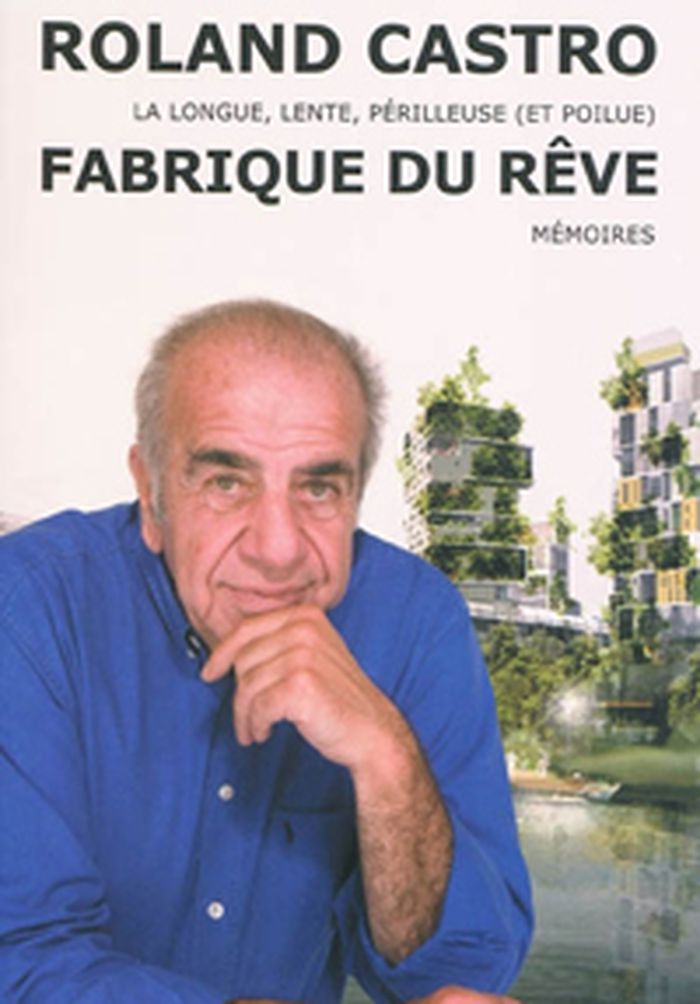
Architecte et intellectuel militant au sein de nombreux courants de gauche, Roland Castro a participé à cent débats d'idées depuis ses premiers engagements. Membre de l'Union des étudiants communistes, exclu du PCF en 1965, il devient maoïste dans les années 1970, rencontre Sartre, Lacan (avec qui il entame une psychanalyse de sept ans) et introduit dans sa réflexion d';architecte des aspects politiques et citoyens. Il ouvre un cabinet d'architecte en 1979, donne naissance à l'opération « Banlieues 89 » sous Mitterrand et fonde en 2003 le Mouvement de l'utopie concrète, qui défend « 89 propositions pour restaurer le lien social », afin d'amener la société vers plus d'égalité républicaine et de justice.Dans ces Mémoires, l'architecte engagé (qui ne permettra « à personne de dire que 65 ans est l'âge de la retraite ») revient sur les épisodes de sa vie : sa naissance deux jours avant la promulgation du Statut des Juifs d'octobre 1940, qui met sa famille au ban de la société ; la fréquentation autodidacte des bibliothèques municipales ; l'engagement anticolonial durant la guerre d'Algérie ; l'attrait des révolutions cubaines et chinoises ; le « mois sabbatique » de Mai 68 ; la « méchanceté » de Sartre et la reconnaissance pour Lacan, son « sauveur » ; l'élan de SOS Racisme et la stature de Mitterrand (« je me suis toujours fait une certaine idée de moi-même ») ; sa candidature à l'élection présidentielle en 2002 ; sa passion pour la France ; le grand Paris… sans oublier les six femmes et les cinq enfants de cet homme qui plaide pour une « immaturité féconde » et une « naïveté volontaire ».
Roland Castro: La longue, lente, périlleuse (et poilue)
Actions:
Price:
$29.95
(available to order)
Summary:
Architecte et intellectuel militant au sein de nombreux courants de gauche, Roland Castro a participé à cent débats d'idées depuis ses premiers engagements. Membre de l'Union des étudiants communistes, exclu du PCF en 1965, il devient maoïste dans les années 1970, rencontre Sartre, Lacan (avec qui il entame une psychanalyse de sept ans) et introduit dans sa réflexion d';architecte des aspects politiques et citoyens. Il ouvre un cabinet d'architecte en 1979, donne naissance à l'opération « Banlieues 89 » sous Mitterrand et fonde en 2003 le Mouvement de l'utopie concrète, qui défend « 89 propositions pour restaurer le lien social », afin d'amener la société vers plus d'égalité républicaine et de justice.Dans ces Mémoires, l'architecte engagé (qui ne permettra « à personne de dire que 65 ans est l'âge de la retraite ») revient sur les épisodes de sa vie : sa naissance deux jours avant la promulgation du Statut des Juifs d'octobre 1940, qui met sa famille au ban de la société ; la fréquentation autodidacte des bibliothèques municipales ; l'engagement anticolonial durant la guerre d'Algérie ; l'attrait des révolutions cubaines et chinoises ; le « mois sabbatique » de Mai 68 ; la « méchanceté » de Sartre et la reconnaissance pour Lacan, son « sauveur » ; l'élan de SOS Racisme et la stature de Mitterrand (« je me suis toujours fait une certaine idée de moi-même ») ; sa candidature à l'élection présidentielle en 2002 ; sa passion pour la France ; le grand Paris… sans oublier les six femmes et les cinq enfants de cet homme qui plaide pour une « immaturité féconde » et une « naïveté volontaire ».
Form:
books
books
Publication:
October 2010
October 2010
Subject:
Architecture Monographs
Architecture Monographs
Form:
books
books
Actions:
Holdings:
Description:
[82] leaves : all illustrations ; 33 cm
Description:
[82] leaves : all illustrations ; 33 cm
Author:
Subject:
Publication:
Amsterdam : [publisher not identified], [approximately 1680]
Amsterdam : [publisher not identified], [approximately 1680]
Title:
Architecture van verscheidene nieuwe poorten, kamer-deuren, schoorsteen-mantels, kerken, altaaren, galderyen, cabinetten, alkoves, solder-stukken, enz. / geordineert door Joan Le Pautre ; in 't licht uit-gegeeven dor Cornelis Danckerts = Architecture de diverses nouveaux portes, manteaux-des-cheminées, églises, autles, galeries, cabinettes, alkoves, compartimens, &c. / de l'invention de Jean Le Pautre ; mises en lumière par Corneille Danckerts.
Actions:
Holdings:
Description:
[82] leaves : all illustrations ; 33 cm
Architecture van verscheidene nieuwe poorten, kamer-deuren, schoorsteen-mantels, kerken, altaaren, galderyen, cabinetten, alkoves, solder-stukken, enz. / geordineert door Joan Le Pautre ; in 't licht uit-gegeeven dor Cornelis Danckerts = Architecture de diverses nouveaux portes, manteaux-des-cheminées, églises, autles, galeries, cabinettes, alkoves, compartimens, &c. / de l'invention de Jean Le Pautre ; mises en lumière par Corneille Danckerts.
Actions:
Holdings:
Description:
[82] leaves : all illustrations ; 33 cm
Form:
books
books
Publication:
Amsterdam : [publisher not identified], [approximately 1680]
Amsterdam : [publisher not identified], [approximately 1680]
Author:
Subject:


