


775 Results
Form:
books
books
Title:
Oval, a novel
Oval, a novel
Actions:
Price:
$16.95
(available to order)
Summary:
In the near future, Berlin's real estate is being flipped in the name of "sustainability," only to make the city even more unaffordable; artists are employed by corporations as consultants, and the weather is acting strange. When Anja and Louis are offered a rent-free home on an artificial mountain - yet another eco-friendly initiative run by a corporation - they seize(...)
$16.95
(available to order)
Summary:
In the near future, Berlin's real estate is being flipped in the name of "sustainability," only to make the city even more unaffordable; artists are employed by corporations as consultants, and the weather is acting strange. When Anja and Louis are offered a rent-free home on an artificial mountain - yet another eco-friendly initiative run by a corporation - they seize(...)
Title:
Oval, a novel
Actions:
Price:
$16.95
(available to order)
Summary:
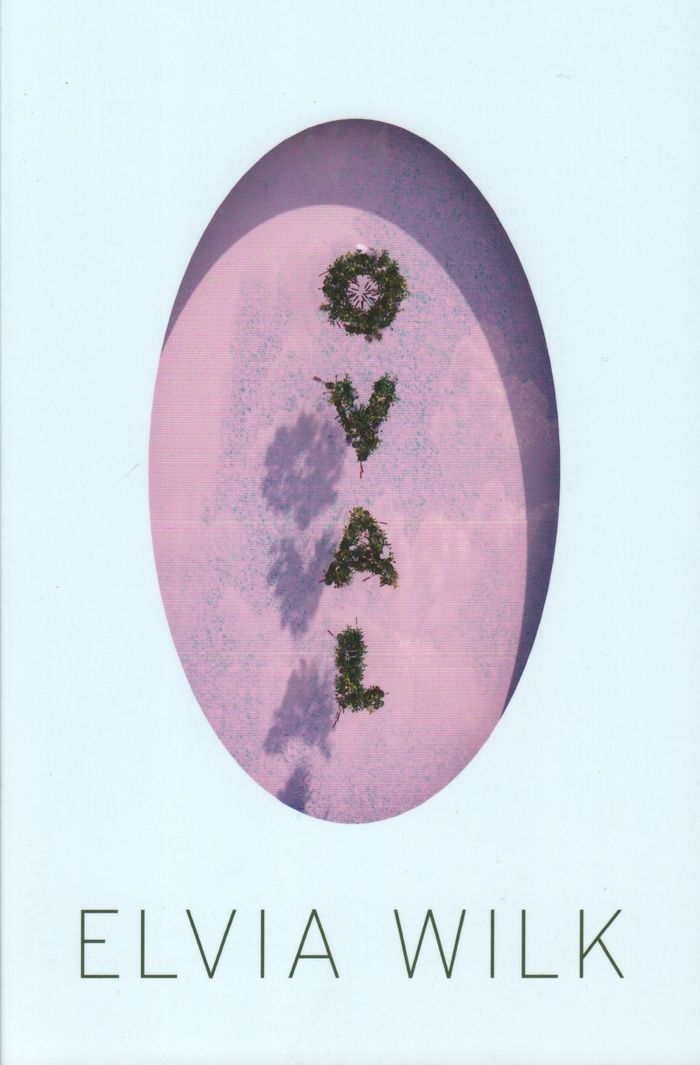
In the near future, Berlin's real estate is being flipped in the name of "sustainability," only to make the city even more unaffordable; artists are employed by corporations as consultants, and the weather is acting strange. When Anja and Louis are offered a rent-free home on an artificial mountain - yet another eco-friendly initiative run by a corporation - they seize the opportunity, but it isn't long before the experimental house begins malfunctioning. After Louis's mother dies, Anja is convinced he has changed. At work, Louis has become obsessed with a secret project: a pill called Oval that temporarily rewires the user's brain to be more generous. While Anja is horrified, Louis believes he has found the solution to Berlin's income inequality.
Oval, a novel
Actions:
Price:
$16.95
(available to order)
Summary:
In the near future, Berlin's real estate is being flipped in the name of "sustainability," only to make the city even more unaffordable; artists are employed by corporations as consultants, and the weather is acting strange. When Anja and Louis are offered a rent-free home on an artificial mountain - yet another eco-friendly initiative run by a corporation - they seize the opportunity, but it isn't long before the experimental house begins malfunctioning. After Louis's mother dies, Anja is convinced he has changed. At work, Louis has become obsessed with a secret project: a pill called Oval that temporarily rewires the user's brain to be more generous. While Anja is horrified, Louis believes he has found the solution to Berlin's income inequality.
Form:
books
books
Publication:
June 2019
June 2019
Subject:
Literature and poetry
Literature and poetry
Form:
books
books
Actions:
Price:
$57.00
(available in store)
Summary:
In 1983, Ursula Schulz-Dornburg accompanied two ethnologists and an architect on a research trip to Tana Toraja on the central Indonesian island of Sulawesi. Initiated by the Royal Tropical Institute of Amsterdam, the trip was intended to “explore the changing patterns in architecture and symbolism among the Sa‘dan Toraja”. On the way back from Rantepao to Ujung Pandang(...)
$57.00
(available in store)
Summary:
In 1983, Ursula Schulz-Dornburg accompanied two ethnologists and an architect on a research trip to Tana Toraja on the central Indonesian island of Sulawesi. Initiated by the Royal Tropical Institute of Amsterdam, the trip was intended to “explore the changing patterns in architecture and symbolism among the Sa‘dan Toraja”. On the way back from Rantepao to Ujung Pandang(...)
Title:
Ursula Schulz-Dornburg: Bugis Houses, Celebes
Actions:
Price:
$57.00
(available in store)
Summary:
In 1983, Ursula Schulz-Dornburg accompanied two ethnologists and an architect on a research trip to Tana Toraja on the central Indonesian island of Sulawesi. Initiated by the Royal Tropical Institute of Amsterdam, the trip was intended to “explore the changing patterns in architecture and symbolism among the Sa‘dan Toraja”. On the way back from Rantepao to Ujung Pandang airport, Schulz-Dornburg passed the distinctive houses of the Bugis or To-Ugiq people, perched on the yellow paddy fields. Fascinated by their complex, expressive architectures, she began to photograph the houses in the short time she had before leaving, realising that the structures would likely not exist in their traditional form for much longer. The result is a body of work that not only surveys the houses’ physical forms but also considers wide-ranging ideas of physical and emotional homebuilding and the precarious place of tradition in the present day. Poised between heaven and earth and standing above the water when the rice fields are flooded, the Bugis houses reflect the creation myth of their people, in which the gods of the upper and lower worlds came together to create man to populate the uninhabited middle world. The farmers depicted by Schulz-Dornburg are likewise suspended between historic tradition and the impending pressures of the contemporary world. As they go about their work or greet her camera, they and their homes are held in the balance between past and future, mythology and everyday reality. With these shrewd and sensitive images, Schulz-Dornburg captures life as it is built and lived within a particular culture and landscape, offering a searching reflection on the places we call home.
Ursula Schulz-Dornburg: Bugis Houses, Celebes
Actions:
Price:
$57.00
(available in store)
Summary:
In 1983, Ursula Schulz-Dornburg accompanied two ethnologists and an architect on a research trip to Tana Toraja on the central Indonesian island of Sulawesi. Initiated by the Royal Tropical Institute of Amsterdam, the trip was intended to “explore the changing patterns in architecture and symbolism among the Sa‘dan Toraja”. On the way back from Rantepao to Ujung Pandang airport, Schulz-Dornburg passed the distinctive houses of the Bugis or To-Ugiq people, perched on the yellow paddy fields. Fascinated by their complex, expressive architectures, she began to photograph the houses in the short time she had before leaving, realising that the structures would likely not exist in their traditional form for much longer. The result is a body of work that not only surveys the houses’ physical forms but also considers wide-ranging ideas of physical and emotional homebuilding and the precarious place of tradition in the present day. Poised between heaven and earth and standing above the water when the rice fields are flooded, the Bugis houses reflect the creation myth of their people, in which the gods of the upper and lower worlds came together to create man to populate the uninhabited middle world. The farmers depicted by Schulz-Dornburg are likewise suspended between historic tradition and the impending pressures of the contemporary world. As they go about their work or greet her camera, they and their homes are held in the balance between past and future, mythology and everyday reality. With these shrewd and sensitive images, Schulz-Dornburg captures life as it is built and lived within a particular culture and landscape, offering a searching reflection on the places we call home.
Form:
books
books
Publication:
July 2021
July 2021
Subject:
Photography monographs
Photography monographs
Form:
books
books
Title:
Baku: oil and urbanism
Baku: oil and urbanism
Actions:
Price:
$75.00
(available to order)
Summary:
Baku, the capital of Azerbaijan and formerly part of the Russian Empire and Soviet Union, is the original oil city, with oil and urbanism thoroughly intertwined—economically, politically, and physical—in the city’s fabric. Baku saw its first oil boom in the late nineteenth century, driven by the Russian branch of the Nobel family modernizing the oil fields around Baku as(...)
$75.00
(available to order)
Summary:
Baku, the capital of Azerbaijan and formerly part of the Russian Empire and Soviet Union, is the original oil city, with oil and urbanism thoroughly intertwined—economically, politically, and physical—in the city’s fabric. Baku saw its first oil boom in the late nineteenth century, driven by the Russian branch of the Nobel family modernizing the oil fields around Baku as(...)
Title:
Baku: oil and urbanism
Actions:
Price:
$75.00
(available to order)
Summary:
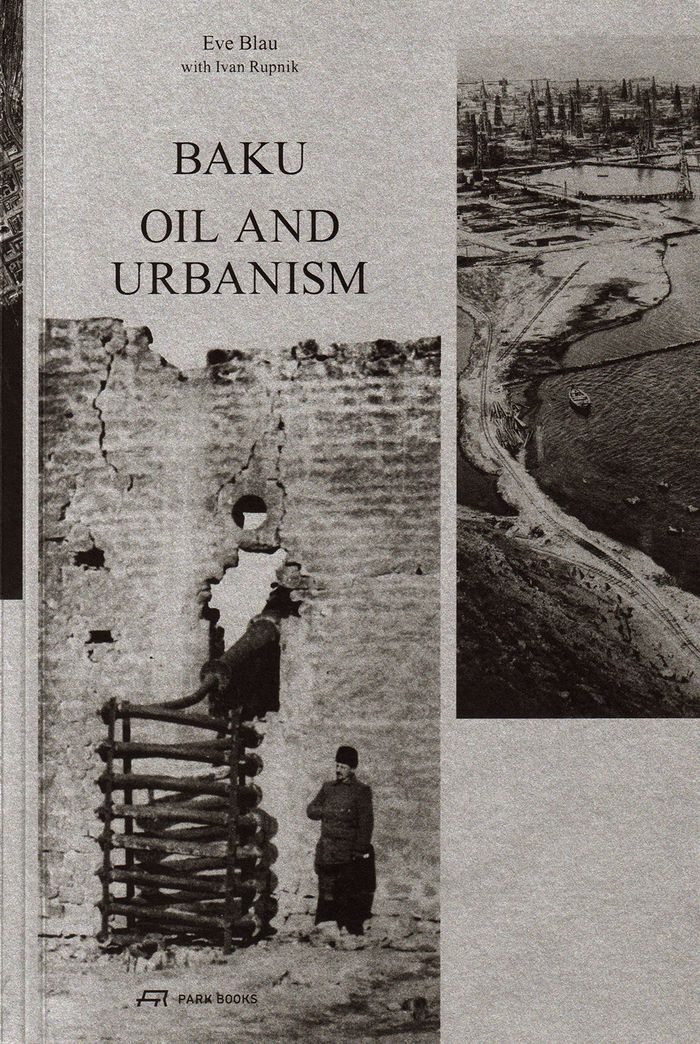
Baku, the capital of Azerbaijan and formerly part of the Russian Empire and Soviet Union, is the original oil city, with oil and urbanism thoroughly intertwined—economically, politically, and physical—in the city’s fabric. Baku saw its first oil boom in the late nineteenth century, driven by the Russian branch of the Nobel family modernizing the oil fields around Baku as local oil barons poured their new wealth into building a cosmopolitan city center. During the Soviet period, Baku became the site of an urban experiment: the shaping of an oil city of socialist man. That project included Neft Dashlari, a city built on trestles in the Caspian Sea and designed to house thousands of workers, schools, shops, gardens, clinics, and cinemas as well as 2,000 oil rigs, pipelines, and collecting stations. Today, as it heads into an uncertain post-oil future, Baku’s planners and business elites regard the legacy of its past as a resource that sustains new aspirations and identities.
Baku: oil and urbanism
Actions:
Price:
$75.00
(available to order)
Summary:
Baku, the capital of Azerbaijan and formerly part of the Russian Empire and Soviet Union, is the original oil city, with oil and urbanism thoroughly intertwined—economically, politically, and physical—in the city’s fabric. Baku saw its first oil boom in the late nineteenth century, driven by the Russian branch of the Nobel family modernizing the oil fields around Baku as local oil barons poured their new wealth into building a cosmopolitan city center. During the Soviet period, Baku became the site of an urban experiment: the shaping of an oil city of socialist man. That project included Neft Dashlari, a city built on trestles in the Caspian Sea and designed to house thousands of workers, schools, shops, gardens, clinics, and cinemas as well as 2,000 oil rigs, pipelines, and collecting stations. Today, as it heads into an uncertain post-oil future, Baku’s planners and business elites regard the legacy of its past as a resource that sustains new aspirations and identities.
Form:
books
books
Publication:
February 2019
February 2019
Form:
books
books
Actions:
Price:
$52.00
(available in store)
Summary:
The cradle-to-cradle principle envisions buildings returning to the natural cycle after use. In practice, however, most are only partially composed of natural or compostable materials. One notable exception is Florian Nagler’s Garden House, winner of the Detail Award, which closely follows this principle. Another route is the reuse or refurbishment of components from(...)
$52.00
(available in store)
Summary:
The cradle-to-cradle principle envisions buildings returning to the natural cycle after use. In practice, however, most are only partially composed of natural or compostable materials. One notable exception is Florian Nagler’s Garden House, winner of the Detail Award, which closely follows this principle. Another route is the reuse or refurbishment of components from(...)
Title:
Detail 6 2025 : Circular construction
Actions:
Price:
$52.00
(available in store)
Summary:
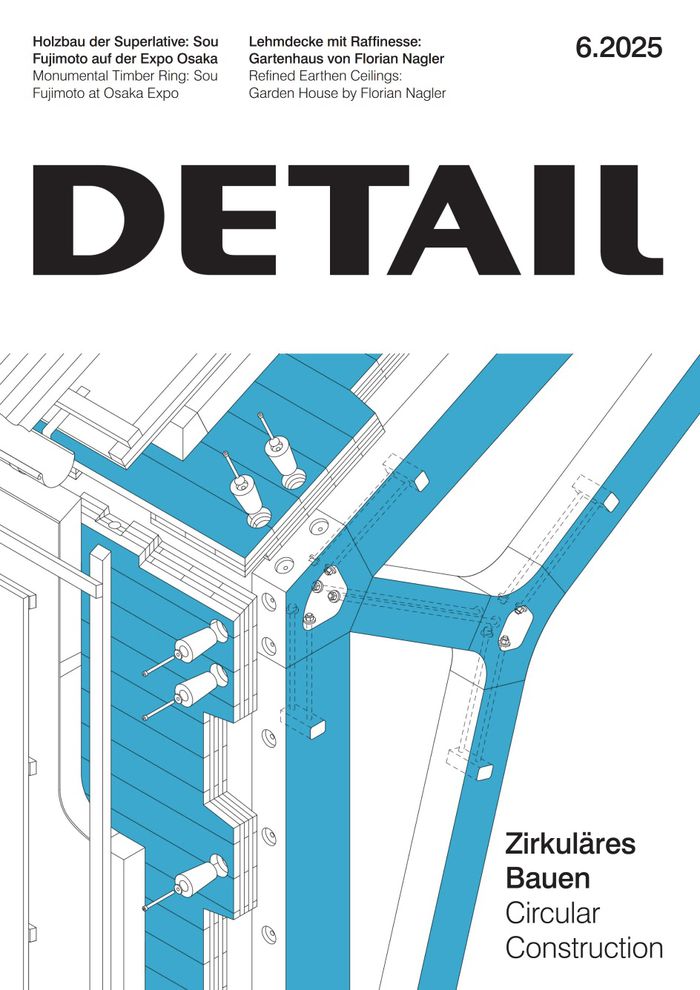
The cradle-to-cradle principle envisions buildings returning to the natural cycle after use. In practice, however, most are only partially composed of natural or compostable materials. One notable exception is Florian Nagler’s Garden House, winner of the Detail Award, which closely follows this principle. Another route is the reuse or refurbishment of components from demolished buildings. But this, too, is complex – components are often scarce and costly to extract and and make fit for new applications. To facilitate recycling, some structures are being designed for disassembly. Yet even timber joints fixed with screws can prove difficult to undo after years in place. A research group in Arles sees itself as a recycler of remnants, developing new materials from construction debris and agricultural waste: sunflower stalks become acoustic panels, while rice straw from cultivation is turned into insulation. The team also experiments with local resources: in nearby salt pans, salt crystallises on metal racks to form tiles, while algae are used to make lamps, vases, and wall finishes. Architecture made from rubble, clad in salt, rice, and seaweed – a compelling vision of the future. Perhaps the most promising path lies in combining these diverse strategies.
Detail 6 2025 : Circular construction
Actions:
Price:
$52.00
(available in store)
Summary:
The cradle-to-cradle principle envisions buildings returning to the natural cycle after use. In practice, however, most are only partially composed of natural or compostable materials. One notable exception is Florian Nagler’s Garden House, winner of the Detail Award, which closely follows this principle. Another route is the reuse or refurbishment of components from demolished buildings. But this, too, is complex – components are often scarce and costly to extract and and make fit for new applications. To facilitate recycling, some structures are being designed for disassembly. Yet even timber joints fixed with screws can prove difficult to undo after years in place. A research group in Arles sees itself as a recycler of remnants, developing new materials from construction debris and agricultural waste: sunflower stalks become acoustic panels, while rice straw from cultivation is turned into insulation. The team also experiments with local resources: in nearby salt pans, salt crystallises on metal racks to form tiles, while algae are used to make lamps, vases, and wall finishes. Architecture made from rubble, clad in salt, rice, and seaweed – a compelling vision of the future. Perhaps the most promising path lies in combining these diverse strategies.
Form:
books
books
Publication:
June 2025
June 2025
Subject:
Magazines
Magazines
Form:
books
books
Actions:
Price:
$84.00
(available to order)
Summary:
Arthur Brown Jr. (1874-1957) is celebrated by his peers for such masterpieces as the City Hall, War Memorial Opera House, Temple Emanu-El, and Coit Tower in San Francisco; the Pasadena City Hall; and the Labor-ICC block of the Federal Triangle in Washington, DC. Brown epitomized the idea that architecture not only houses society’s daily rituals and defining events but(...)
$84.00
(available to order)
Summary:
Arthur Brown Jr. (1874-1957) is celebrated by his peers for such masterpieces as the City Hall, War Memorial Opera House, Temple Emanu-El, and Coit Tower in San Francisco; the Pasadena City Hall; and the Labor-ICC block of the Federal Triangle in Washington, DC. Brown epitomized the idea that architecture not only houses society’s daily rituals and defining events but(...)
Title:
Arthur Brown, Jr. : progressive classicist
Actions:
Price:
$84.00
(available to order)
Summary:
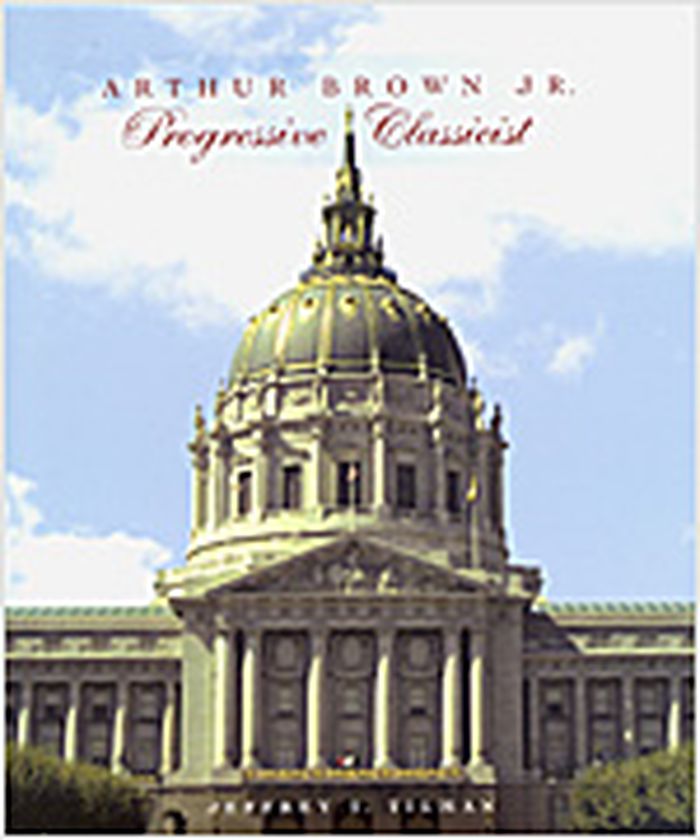
Arthur Brown Jr. (1874-1957) is celebrated by his peers for such masterpieces as the City Hall, War Memorial Opera House, Temple Emanu-El, and Coit Tower in San Francisco; the Pasadena City Hall; and the Labor-ICC block of the Federal Triangle in Washington, DC. Brown epitomized the idea that architecture not only houses society’s daily rituals and defining events but also can itself shape the sociopolitical landscape of America. "Arthur Brown Jr.: progressive classicist" unifies the varied strands of the architect’s life, from the architectural forms and methods of the Ecole des Beaux-Arts in Paris to the reforming spirit and self-reliant confidence of San Francisco after the earthquake and fire of 1906 to the challenging economics and changing aesthetics of machine-age America. It details the development of Brown’s major works and many other civic, commercial, religious, academic, and residential buildings. It chronicles his unflagging commitment to the classical tradition, which he employed in contemporary, forward-looking institutional buildings that emphasized continuity with the past while meeting the needs of the future. To Brown, the classical tradition was not a sacrosanct, unchanging body of knowledge; it was an expanding and evolving set of ideas about architectural design that permitted, and even demanded, change as new conditions and technologies were developed.
Arthur Brown, Jr. : progressive classicist
Actions:
Price:
$84.00
(available to order)
Summary:
Arthur Brown Jr. (1874-1957) is celebrated by his peers for such masterpieces as the City Hall, War Memorial Opera House, Temple Emanu-El, and Coit Tower in San Francisco; the Pasadena City Hall; and the Labor-ICC block of the Federal Triangle in Washington, DC. Brown epitomized the idea that architecture not only houses society’s daily rituals and defining events but also can itself shape the sociopolitical landscape of America. "Arthur Brown Jr.: progressive classicist" unifies the varied strands of the architect’s life, from the architectural forms and methods of the Ecole des Beaux-Arts in Paris to the reforming spirit and self-reliant confidence of San Francisco after the earthquake and fire of 1906 to the challenging economics and changing aesthetics of machine-age America. It details the development of Brown’s major works and many other civic, commercial, religious, academic, and residential buildings. It chronicles his unflagging commitment to the classical tradition, which he employed in contemporary, forward-looking institutional buildings that emphasized continuity with the past while meeting the needs of the future. To Brown, the classical tradition was not a sacrosanct, unchanging body of knowledge; it was an expanding and evolving set of ideas about architectural design that permitted, and even demanded, change as new conditions and technologies were developed.
Form:
books
books
Publication:
November 2005, New York
November 2005, New York
Subject:
Architecture Monographs
Architecture Monographs


