


782 Results
Form:
books
books
Actions:
Price:
$71.50
(available to order)
Summary:
An exhibition catalogue from the Migros Museum featuring 21 artists and architects including Anish Kapoor, Jane and Louise Wilson, James Casebere, and Daniel Libeskind among others. The exhibition takes as its point of departure three contexts in which space occupies a central position: Sigmund Freud’s notion of “das Unheimliche” and psychoanalytical elaboration of(...)
Subject:
Contemporary Art Monographs
Contemporary Art Monographs
Publication:
November 2003, Zurich / Gdansk
November 2003, Zurich / Gdansk
Title:
Bewitched, bothered and bewildered : spatial emotion in contemporary art and architecture
Actions:
Price:
$71.50
(available to order)
Summary:
An exhibition catalogue from the Migros Museum featuring 21 artists and architects including Anish Kapoor, Jane and Louise Wilson, James Casebere, and Daniel Libeskind among others. The exhibition takes as its point of departure three contexts in which space occupies a central position: Sigmund Freud’s notion of “das Unheimliche” and psychoanalytical elaboration of space and its emotion; Michel Foucault’s other spaces – heterotopias and their counter-site qualities of socio-political implications; and Walter Benjamin’s outmoded and repressed space with all its auratic traces (fake or authentic) of philosophical and historic charge. “Bewitched, Bothered and Bewildered” aims to exploit the psychological associations of space with its multiplicity of emotional overtones, mapping its extremes and its psychic environment. Focusing on spatial pathologies (agoraphobia, vertigo, claustrophobia...), the exhibition identifies space as a cause of mental disorder, fear or estrangement, ultimate trauma. Hysteria, panic and neurosis overlap with other spatial stories of psychic unrest and unease: distortions and perversions (warped space); anxiety and enigmas (haunted space); spatial inconvenience and discomfort, perfectly domestic and yet alienating; space half-spoken, half-pronounced: a promise, a puzzle, a magic spell, temptation.
Form:
books
books
Publication:
November 2003, Zurich / Gdansk
November 2003, Zurich / Gdansk
Subject:
Contemporary Art Monographs
Contemporary Art Monographs
Form:
books
books
Actions:
Price:
$34.00
(available to order)
Summary:
The open terrain of new media is closing fast. Market concentration, legal consolidation and tightening governmental control have effectively ended the myth of the free and open networks. In Delusive Spaces, Eric Kluitenberg takes a critical position that retains a utopian potential for emerging media cultures. The book investigates the archeology of media and machine,(...)
Title:
Delusive spaces: essays on culture, media and technology
Actions:
Price:
$34.00
(available to order)
Summary:
The open terrain of new media is closing fast. Market concentration, legal consolidation and tightening governmental control have effectively ended the myth of the free and open networks. In Delusive Spaces, Eric Kluitenberg takes a critical position that retains a utopian potential for emerging media cultures. The book investigates the archeology of media and machine, mapping the different methods and metaphors that speak about technology. Returning to the present, Kluitenberg discusses the cultural use of new media in an age of post-governmental politics. Delusive Spaces concludes with the impossibility of representation. Going beyond the obvious delusions of the 'new' and the 'free', Kluitenberg theorizes artistic practices and European cultural policies, demonstrating a provocative engagement with the utopian dimension of technology. Eric Kluitenberg is a Dutch media theorist, writer and organizer. Since the late 1980s, he has been involved in numerous international projects in the field of electronic art, media culture, and information politics. Kluitenberg heads the media program at De Balie, Centre for Culture and Politics in Amsterdam. He is the editor of the Book of Imaginary Media (NAi Publishers, 2006) and the theme issue Hybrid Space of Open, journal on art and the public domain (2007).
Form:
books
books
Publication:
April 2008, Rotterdam
April 2008, Rotterdam
Subject:
Epistemology
Epistemology
Form:
books
books
Actions:
Price:
$35.95
(available in store)
Summary:
From the late nineteenth through most of the twentieth century, the evangelical Protestant Grenfell Mission in Newfoundland and Labrador, Canada, created a network of hospitals, schools, orphanages, stores, and industries with the goal of bringing health and organized society to settler fisherfolk and Indigenous populations. This infrastructure also served to support(...)
Title:
Slow disturbance: infrastructural mediation on the settler colonial resource frontier
Actions:
Price:
$35.95
(available in store)
Summary:
From the late nineteenth through most of the twentieth century, the evangelical Protestant Grenfell Mission in Newfoundland and Labrador, Canada, created a network of hospitals, schools, orphanages, stores, and industries with the goal of bringing health and organized society to settler fisherfolk and Indigenous populations. This infrastructure also served to support resource extraction of fisheries off Labrador's coast. In 'Slow Disturbance' Rafico Ruiz engages with the Grenfell Mission to theorize how settler colonialism establishes itself through what he calls infrastructural mediation—the ways in which colonial lifeworlds, subjectivities, and affects come into being through the creation and maintenance of infrastructures. Drawing on archival documents, maps, interviews with municipal officials, teachers, and residents, as well as his field photography, Ruiz shows how the mission's infrastructural mediation—from its attempts to restructure the local economy to the aerial surveying and mapping of the coastline—responded to the colony's environmental conditions in ways that expanded the bounds of the settler frontier. By tracing the mission's history and the mechanisms that enabled its functioning, Ruiz complicates understandings of mediation and infrastructure while expanding current debates surrounding settler colonialism and extractive capitalism.
Form:
books
books
Publication:
April 2021
April 2021
Subject:
Architecture ecologies
Architecture ecologies
Form:
books
books

Actions:
Price:
$48.00
(available in store)
Summary:
Centering on a notion of nomadic space, this publication offers the first in-depth overview of the projects, photo archives, and architectural investigations of Sámi architect and artist Joar Nango, and includes a series of essays and conversations with long-time collaborators and discussion partners. Conceived as platforms that consciously create autonomous spaces in(...)
Subject:
Contemporary Art Monographs
Contemporary Art Monographs
Publication:
April 2024
April 2024
Title:
Joar Nango: Girjegumpi, The Sámi Architectural Library
Actions:
Price:
$48.00
(available in store)
Summary:
Centering on a notion of nomadic space, this publication offers the first in-depth overview of the projects, photo archives, and architectural investigations of Sámi architect and artist Joar Nango, and includes a series of essays and conversations with long-time collaborators and discussion partners. Conceived as platforms that consciously create autonomous spaces in which Sámi and indigenous cultures can grow, Nango's projects seek encounters and open processes, developing new forms of expression and alliance with non-Sámi contexts. Often developed in collaboration with practitioners from a range of fields including architecture, art, theory, and crafts, Nango's practice operates between institutional and public spaces. Featured projects include ongoing discursive social platforms such as the mobile Sámi architecture library Girjegumpi, a series of films and conversations titled ''Post-Capitalist Architecture TV'', image archives documenting contemporary expressions of Sámi architectural principles in Northern Scandinavia and beyond, and European Everything, first presented at documenta 14, for which Nango traveled by van along the borders of Europe from his home in Tromsø, Northern Norway to Athens in Greece, mapping the fringe and the excluded of this political and cultural terrain.
Form:
books
books
Publication:
April 2024
April 2024
Subject:
Contemporary Art Monographs
Contemporary Art Monographs
Form:
books
books
Title:
Queering architecture
Queering architecture
Actions:
Price:
$52.50
(available to order)
Summary:
Featuring contributions from a range of significant voices in the field, this volume renews the conversation around what it means to speak of the "queer" in the context of architecture, and offers a fresh take on the methodological and epistemological challenges this poses to the discipline of architectural theory. Architecture as a discipline, a profession and an applied(...)
Title:
Queering architecture
Actions:
Price:
$52.50
(available to order)
Summary:
Featuring contributions from a range of significant voices in the field, this volume renews the conversation around what it means to speak of the "queer" in the context of architecture, and offers a fresh take on the methodological and epistemological challenges this poses to the discipline of architectural theory. Architecture as a discipline, a profession and an applied practice, is always subordinate to its own conceptual framework, which is one of orderliness. It refers to buildings, but also to infrastructures of thought and knowledge, to conventions and taxonomies, to structures of governance, hierarchies of power and systems of administration. How, then, can one look at queering architectural discourse when the very term "queer", celebrated for its elusive, slippery nature, resists and attacks such order? Divided into four subsections, the essays in this anthology each purse a distinct line of inquiry - methods, practices, spaces, and pedagogies - in order to help particularize the proposed queering of architecture. They demonstrate the paradoxical nature of the endeavour from a diverse range of perspectives – from the questions of mapping queer theory in architecture; to the issues of queer architectural archives, or lack thereof; to the non-Western linguistic challenges to the very term queer alongside decolonial approaches to architecture via indigeneity and landscape.
Form:
books
books
Publication:
May 2024
May 2024
Subject:
Gender Theory in Architecture
Gender Theory in Architecture
Form:
books
books

Price:
$54.00
(available to order)
Summary:
The relationship between sound and space has become central to both creative practices in music and sound art and contemporary scholarship on sound. Entire subfields have emerged in connection to the spatial aspects of sound, from spatial audio and sound installation to acoustic ecology and soundscape studies. But how did our understanding of sound become spatial? In(...)
Title:
Stereophonica: Sound and space in science, technology and the arts
Actions:
Price:
$54.00
(available to order)
Summary:
The relationship between sound and space has become central to both creative practices in music and sound art and contemporary scholarship on sound. Entire subfields have emerged in connection to the spatial aspects of sound, from spatial audio and sound installation to acoustic ecology and soundscape studies. But how did our understanding of sound become spatial? In ''Stereophonica,'' Gascia Ouzounian examines a series of historical episodes that transformed ideas of sound and space, from the advent of stereo technologies in the nineteenth century to visual representations of sonic environments today. Developing a uniquely interdisciplinary perspective, Ouzounian draws on both the history of science and technology and the history of music and sound art. She investigates the binaural apparatus that allowed nineteenth-century listeners to observe sound in three dimensions; examines the development of military technologies for sound location during World War I; revisits experiments in stereo sound at Bell Telephone Laboratories in the 1930s; and considers the creation of "optimized acoustical environments" for theaters and factories. She explores the development of multichannel "spatial music" in the 1950s and sound installation art in the 1960s; analyzes the mapping of soundscapes; and investigates contemporary approaches to sonic urbanism, sonic practices that reimagine urban environments through sound.
Form:
books
books
Publication:
February 2021
February 2021
Subject:
Acoustics
Acoustics
Form:
books
books
Price:
$60.00
(available to order)
Summary:
In the 1950s, the figure of the arrow had a strange kind of ubiquity in architectural drawings, publications, and advertisements, symbolizing everything from the circulation of cold and warm air in a kitchen fridge to the flow of traffic in assorted New Towns. Twenty-five years earlier there were barely any arrows within architectural publications, and 15 years later they(...)
Title:
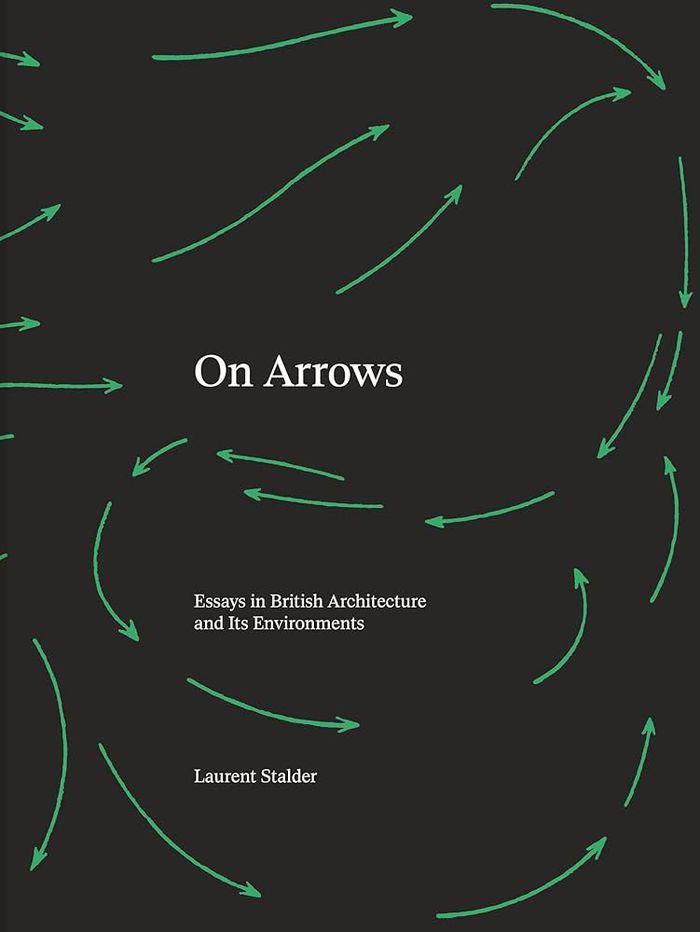
On arrows: Essays in British architecture and its environments
Actions:
Price:
$60.00
(available to order)
Summary:
In the 1950s, the figure of the arrow had a strange kind of ubiquity in architectural drawings, publications, and advertisements, symbolizing everything from the circulation of cold and warm air in a kitchen fridge to the flow of traffic in assorted New Towns. Twenty-five years earlier there were barely any arrows within architectural publications, and 15 years later they had all but disappeared. In ''On Arrows'', Laurent Stalder looks back at the near past to trace the idea of performance in architecture by following this pervasive yet relatively unnoticed figure within the history of British architecture. During its short, intense period of use, the arrow pointed beyond any one singular author, typology, or scale, to the operative dimension of architecture and its environments, working both as an appropriate representational technique and a concrete tool for design. Stalder uses the arrow to move through the different dimensions of performance, mapping out the changing set of constellations that made up postwar British architecture and its environments: the constructive aspects, structural properties, infrastructural innovations, spatial challenges as well as their aesthetic and practical consequences. It is the arrow, he writes, that brings together debates from within different disciplines—from building physics, to sociology, structural design, and historiography, inscribed as they are in the materials, spaces, and buildings that are all too often considered in isolation from one another.
Form:
books
books
Publication:
January 2025
January 2025
Subject:
Architectural Theory
Architectural Theory
Form:
books
books
Title:
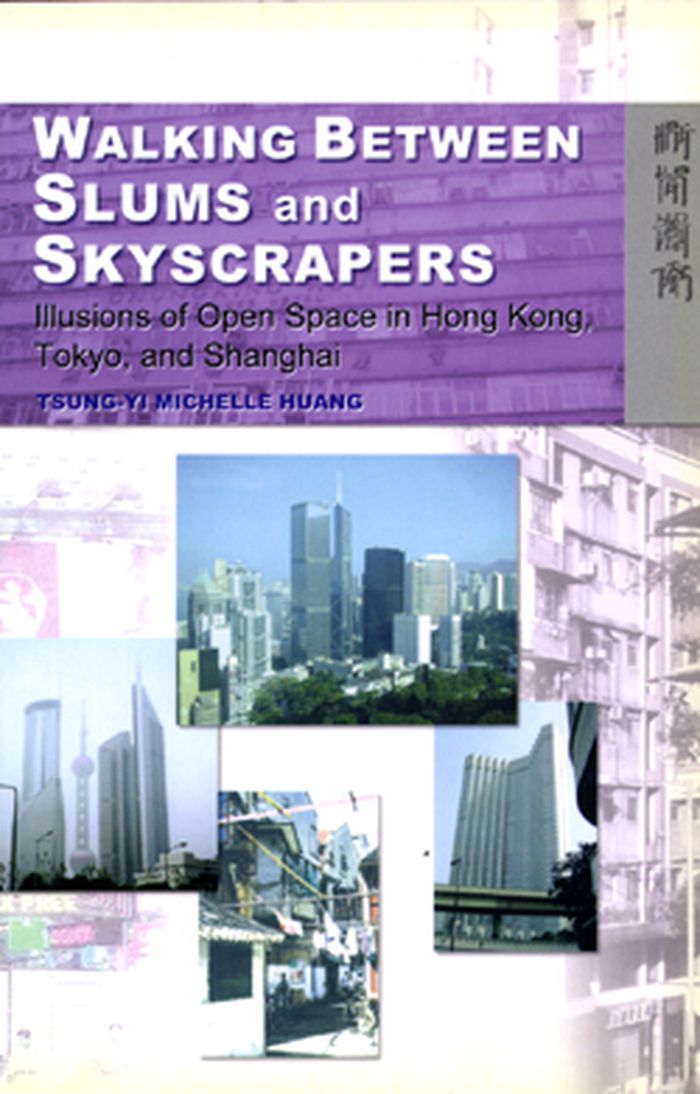
Walking between slums and skycrapers: illusions of open space in Hong Kong, Tokyo, and Shanghai
Walking between slums and skycrapers: illusions of open space in Hong Kong, Tokyo, and Shanghai
Actions:
Price:
$24.95
(available to order)
Summary:
The book is concerned with the effects of globalization on living space focusing specifically on East Asian metropolises, such as Hong Kong, Tokyo, and Shanghai. Globalization has given rise to accessible catch-phrases such as the 'global village' and 'this is a small world.' In each part of the book the author juxtaposes a 'social' account of the city's urban space as it(...)
Publication:
April 2004, Hong Kong
April 2004, Hong Kong
Title:
Walking between slums and skycrapers: illusions of open space in Hong Kong, Tokyo, and Shanghai
Actions:
Price:
$24.95
(available to order)
Summary:
The book is concerned with the effects of globalization on living space focusing specifically on East Asian metropolises, such as Hong Kong, Tokyo, and Shanghai. Globalization has given rise to accessible catch-phrases such as the 'global village' and 'this is a small world.' In each part of the book the author juxtaposes a 'social' account of the city's urban space as it has been reshaped by the process of globalization with a 'private' account of the urban landscape as experienced by its walkers. Rather than rest here, the author wishes to show that for many of the inhabitants of the new global city, the 'shrinking world' phenomenon is deeply literal: the 'lived' space of everyday life is shrinking to make room for rezoning, construction of new infrastructure, and space modification - all in the name of urban development. Tsung-yi Michelle Huang received her Ph.D. in Comparative Literature from State University of New York at Stony Brook. Her works on cinema, literature, cultural studies, global cities, and Hong Kong culture have been published in the Quarterly Review of Film and Video, Journal of Narrative Theory, among others. Recently she has been working in a project that defines and examines specific East Asian metropolises as both 'linked' cities and distinctive global centers, mapping the tension within these domains. She is currently an Assistant Professor of English Literature at National Taiwan Normal University.
Form:
books
books
Publication:
April 2004, Hong Kong
April 2004, Hong Kong
Form:
books
books
Price:
$38.99
(available in store)
Summary:
It is perhaps the eighth wonder of our world that despite modern mapping and satellite photography our planet continues to surprise us. Hidden lairs beneath layers of rock, forgotten cities rising out of deserted lands and even mankind's own feats of engineering eccentricity lie in the most unusual of destinations. Travis Elborough goes in search of the obscure and(...)
Title:
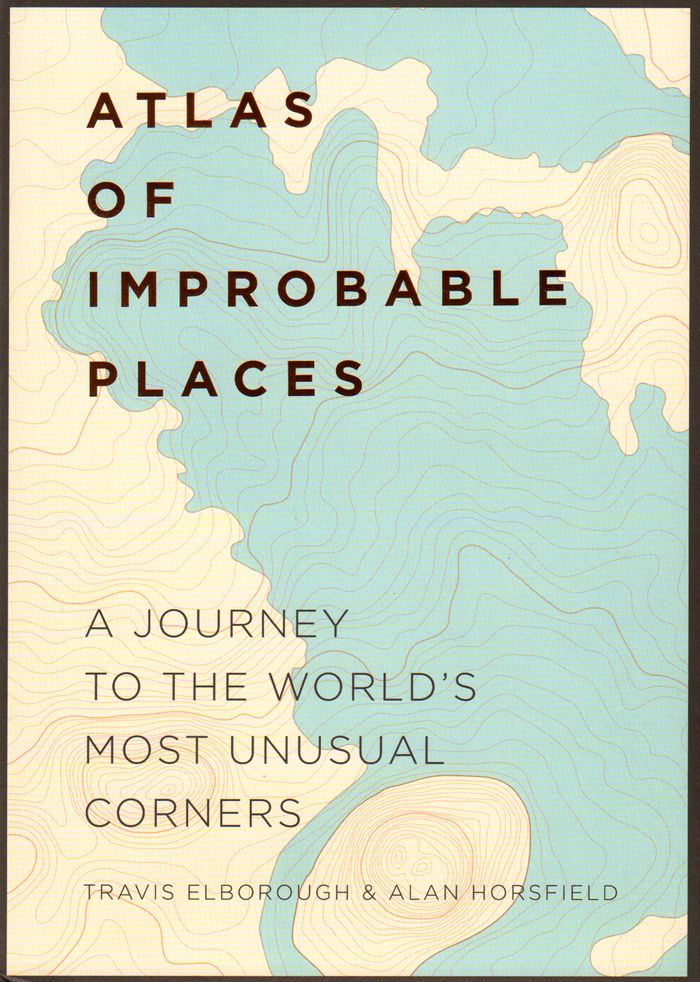
Atlas of improbable places: a journey to the world's most unusual corners
Actions:
Price:
$38.99
(available in store)
Summary:
It is perhaps the eighth wonder of our world that despite modern mapping and satellite photography our planet continues to surprise us. Hidden lairs beneath layers of rock, forgotten cities rising out of deserted lands and even mankind's own feats of engineering eccentricity lie in the most unusual of destinations. Travis Elborough goes in search of the obscure and bizarre, the beautiful and estranged. Taking in the defiant relics of ancient cities such as Ani, a once thriving metropolis lost to conquered lands, and the church tower of San Juan Parangaricuto, that miraculously stands as the sole survivor of a town sunk by lava. Through the labyrinths of Berlin and Beijing - underground realms dug for refuge, espionage and even, as Canada's Moose Jaw, used as the playground for gangsters trading liquor and money over cards. Never forgetting the freaks and wonders of nature's own unusual masterpieces: the magical underground river shaped like a dragon's mouth in the Philippines and the floating world of Palmerston. With beautiful maps and stunning photography illustrating each destination, Atlas of Improbable Places is a fascinating voyage to the world's most incredible destinations. As the Island of Dolls and the hauntingly titled Door to Hell - an inextinguishable fire pit - attest, mystery is never far away. The truths and myths behind their creation are as varied as the destinations themselves. Standing as symbols of worship, testaments to kingships or even the strange and wonderful traditions of old and new, these curious places are not just extraordinary sights but reflections on man's own relationship with the world around us
Form:
books
books
Publication:
October 2016
October 2016
Subject:
Architectural Plans and Cartography
Architectural Plans and Cartography
Form:
books
books
Title:
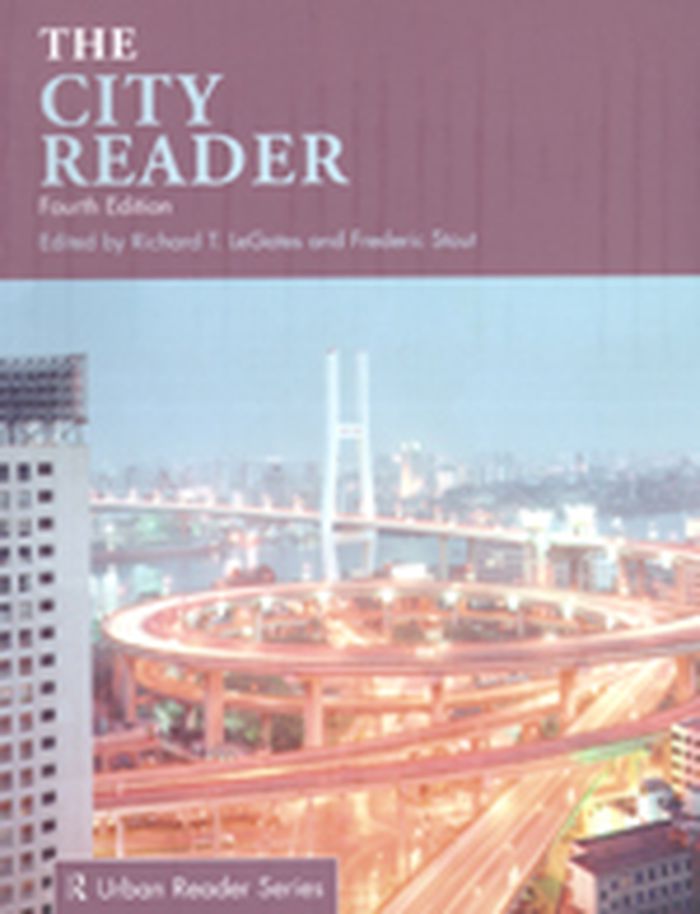
The city reader 4th edition
The city reader 4th edition
Actions:
Price:
$83.95
(available to order)
Summary:
The fourth edition of the highly successful The City Reader brings together the very best of publications on the city. Classic writings by such authors as Lewis Mumford, Ernest W. Burgess, LeCorbusier, Lewis Wirth, Jane Jacobs and Kevin Lynch meet the best contemporary writings of, among others, Sir Peter Hall, Richard Florida, Mike Davis, Michael Porter, Robert Putnam,(...)
Subject:
Urban Theory
Urban Theory
Publication:
August 2007, London New York
August 2007, London New York
Title:
The city reader 4th edition
Actions:
Price:
$83.95
(available to order)
Summary:
The fourth edition of the highly successful The City Reader brings together the very best of publications on the city. Classic writings by such authors as Lewis Mumford, Ernest W. Burgess, LeCorbusier, Lewis Wirth, Jane Jacobs and Kevin Lynch meet the best contemporary writings of, among others, Sir Peter Hall, Richard Florida, Mike Davis, Michael Porter, Robert Putnam, Andrus Duany, Saskia Sassen, and Manuel Castells. New to the fourth edition are important classic writings on urban economics by Wilbur Thomson and on bosses and machines by James Bryce, Jane Addams, and William L. Riordan, and new contemporary material on sustainable urban development , the creative class, metropolitics, occidentalism, Asian megacities, and urban futurism by The Bruntland Commission, Richard Florida, Myron Orfield, Ian Buruma and Avishai Margalit, Aprodicio Laquian, and Joel Kotkin. Fifty-seven generous selections are included: a combination of forty-six readings from the third edition and eleven entirely new selections. Structured to aid student understanding, the anthology features main and part Introductions, as well as individual introductions to the selected articles. Each selection is introduced with a brief intellectual biography and a review of the author s writings and related literature, an explanation of how the piece fits into the broader context of urban history and practice, competing ideological perspectives on the city, and the major current debates concerning race and gender, globalization, terrorism, the impact of information technology on cities, civic engagement, and postmodernism. The City Reader provides the comprehensive mapping of the terrain of Urban Studies, old and new. It is illustrated with over forty photographs and is essential reading for anyone interested in the city.
Form:
books
books
Publication:
August 2007, London New York
August 2007, London New York
Subject:
Urban Theory
Urban Theory


