


83 Results
Form:
books
books

Title:
Lee Friedlander: Christmas
Lee Friedlander: Christmas
Actions:
Price:
$100.00
(available in store)
Summary:
Whether or not you celebrated Christmas at some point during the last 70 years, you have no doubt encountered many of the scenes shown here in Lee Friedlander's eclectic black-and-white documentation of the holiday season across America. From city sidewalks to cookie-cutter suburbs, Friedlander captures it all: main street store window displays; plastic nativities on(...)
$100.00
(available in store)
Summary:
Whether or not you celebrated Christmas at some point during the last 70 years, you have no doubt encountered many of the scenes shown here in Lee Friedlander's eclectic black-and-white documentation of the holiday season across America. From city sidewalks to cookie-cutter suburbs, Friedlander captures it all: main street store window displays; plastic nativities on(...)
Title:
Lee Friedlander: Christmas
Actions:
Price:
$100.00
(available in store)
Summary:
Whether or not you celebrated Christmas at some point during the last 70 years, you have no doubt encountered many of the scenes shown here in Lee Friedlander's eclectic black-and-white documentation of the holiday season across America. From city sidewalks to cookie-cutter suburbs, Friedlander captures it all: main street store window displays; plastic nativities on snow-covered lawns; inflatable snowglobes and Santa Clauses; questionable St. Nicholas–themed lingerie; oversize or underwhelming Christmas trees; and houses so covered in string lights as to demand nothing short of a miracle from the local power grid. As in all of his work, Friedlander's images of Christmas reflect his own version of the holiday. Is Christmas in America a religious celebration? A commercial precept? A misunderstanding? An indulgent blasphemy? Or all of the above? The only certain thing is that December 25 has provided an opportunity for the people's photographer to hold up a mirror to a flawed, inventive, preoccupied and wonderful society.
Lee Friedlander: Christmas
Actions:
Price:
$100.00
(available in store)
Summary:
Whether or not you celebrated Christmas at some point during the last 70 years, you have no doubt encountered many of the scenes shown here in Lee Friedlander's eclectic black-and-white documentation of the holiday season across America. From city sidewalks to cookie-cutter suburbs, Friedlander captures it all: main street store window displays; plastic nativities on snow-covered lawns; inflatable snowglobes and Santa Clauses; questionable St. Nicholas–themed lingerie; oversize or underwhelming Christmas trees; and houses so covered in string lights as to demand nothing short of a miracle from the local power grid. As in all of his work, Friedlander's images of Christmas reflect his own version of the holiday. Is Christmas in America a religious celebration? A commercial precept? A misunderstanding? An indulgent blasphemy? Or all of the above? The only certain thing is that December 25 has provided an opportunity for the people's photographer to hold up a mirror to a flawed, inventive, preoccupied and wonderful society.
Form:
books
books
Publication:
October 2025
October 2025
Subject:
Photography monographs
Photography monographs
Form:
books
books
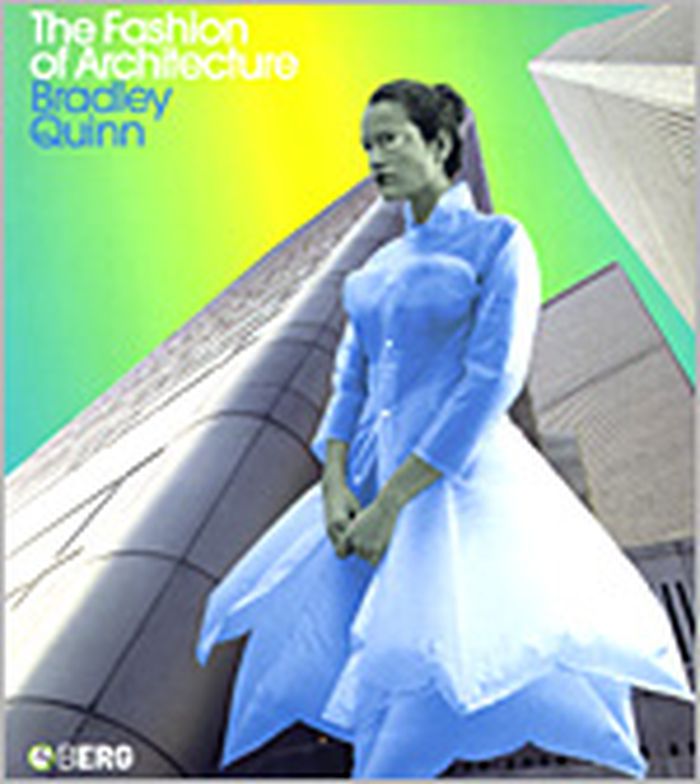
Title:
The fashion of architecture
The fashion of architecture
Actions:
Price:
$44.95
(available to order)
Summary:
Architecture is making its presence felt in cutting-edge fashion. The pliable metals, membrane structures, lightweight glasses and plastics used in building construction are creeping onto the catwalk. As they do so, their impact on recent textile developments has produced fabrics that enable clothing to act as individual climate-controlled environments that can exchange(...)
$44.95
(available to order)
Summary:
Architecture is making its presence felt in cutting-edge fashion. The pliable metals, membrane structures, lightweight glasses and plastics used in building construction are creeping onto the catwalk. As they do so, their impact on recent textile developments has produced fabrics that enable clothing to act as individual climate-controlled environments that can exchange(...)
Title:
The fashion of architecture
Actions:
Price:
$44.95
(available to order)
Summary:
Architecture is making its presence felt in cutting-edge fashion. The pliable metals, membrane structures, lightweight glasses and plastics used in building construction are creeping onto the catwalk. As they do so, their impact on recent textile developments has produced fabrics that enable clothing to act as individual climate-controlled environments that can exchange information with embedded sensors, resulting in wearable "dwellings" that act as both shelter and clothing. At the same time, architects are borrowing the techniques of pleating, stapling, cutting and draping from traditional tailoring to design buildings that are flexible, interactive, inflatable and even portable. Although the relationship between architecture and fashion was recognized more than a century ago, the connection between them has rarely been explored by historians, designers or practicing architects. "The Fashion of Architecture" is the first attempt to investigate the contemporary relationship between architecture and fashion in considerable depth, by examining the ideas, imagery, techniques and materials used by visionaries such as Martin Margiela, Issey Miyake, Alexander McQueen, Tadao Ando and Daniel Libeskind. As mavericks ranging from Hussein Chalayan and Rei Kawakubo to Rem Koolhaas and Zaha Hadid describe architecture’s role in the formation of fashion identities, new readings of both areas emerge. Probing and far-reaching in its content, The Fashion of Architecture is the most comprehensive study of this exciting area to date.
The fashion of architecture
Actions:
Price:
$44.95
(available to order)
Summary:
Architecture is making its presence felt in cutting-edge fashion. The pliable metals, membrane structures, lightweight glasses and plastics used in building construction are creeping onto the catwalk. As they do so, their impact on recent textile developments has produced fabrics that enable clothing to act as individual climate-controlled environments that can exchange information with embedded sensors, resulting in wearable "dwellings" that act as both shelter and clothing. At the same time, architects are borrowing the techniques of pleating, stapling, cutting and draping from traditional tailoring to design buildings that are flexible, interactive, inflatable and even portable. Although the relationship between architecture and fashion was recognized more than a century ago, the connection between them has rarely been explored by historians, designers or practicing architects. "The Fashion of Architecture" is the first attempt to investigate the contemporary relationship between architecture and fashion in considerable depth, by examining the ideas, imagery, techniques and materials used by visionaries such as Martin Margiela, Issey Miyake, Alexander McQueen, Tadao Ando and Daniel Libeskind. As mavericks ranging from Hussein Chalayan and Rei Kawakubo to Rem Koolhaas and Zaha Hadid describe architecture’s role in the formation of fashion identities, new readings of both areas emerge. Probing and far-reaching in its content, The Fashion of Architecture is the most comprehensive study of this exciting area to date.
Form:
books
books
Publication:
December 2003, Oxford / New York
December 2003, Oxford / New York
Subject:
Architectural Theory
Architectural Theory
Form:
books
books
Title:
Portable architecture
Portable architecture
Actions:
Price:
$85.50
(available to order)
Summary:
Designers included in the first edition have continued to exercise their skills on new projects that are progressions from their former work. The nature of this book is that the case studies are primarily projects that have been taken to completion, however, it is of interest that several of the designers included here are currently involved in much more(...)
$85.50
(available to order)
Summary:
Designers included in the first edition have continued to exercise their skills on new projects that are progressions from their former work. The nature of this book is that the case studies are primarily projects that have been taken to completion, however, it is of interest that several of the designers included here are currently involved in much more(...)
Title:
Portable architecture
Actions:
Price:
$85.50
(available to order)
Summary:
Designers included in the first edition have continued to exercise their skills on new projects that are progressions from their former work. The nature of this book is that the case studies are primarily projects that have been taken to completion, however, it is of interest that several of the designers included here are currently involved in much more ambitious projects. The Millennium Dome is also discussed in the introduction as an example of large scale portable architecture and a high profile building in the UK. The overriding purpose of this book is to show that portable buildings are eminently feasible, capable of a wide range of roles and economic to build and operate. They can also be subversive as well as sensitive, amusing as well as appropriate, energetic as well as economic. This second edition of 'Portable Architecture' includes work by two new design teams and seven new case studies to help further define the relevant characteristics of this important strand of contemporary building design. The projects completed by the two new designers introduced in this edition have been included for very difference reasons. Architects Branson Coates designed Powerhouse::UK, a temporary British products design exhibition sponsored by the UK Department of Trade and Industry represents an establishment based endorsement of a portable building. Festo KG's 'Airtecture' hall uses inflatable technology and fundamentally could not be more different, it was not reported in the main stream press yet it won many industrial design awards.
Portable architecture
Actions:
Price:
$85.50
(available to order)
Summary:
Designers included in the first edition have continued to exercise their skills on new projects that are progressions from their former work. The nature of this book is that the case studies are primarily projects that have been taken to completion, however, it is of interest that several of the designers included here are currently involved in much more ambitious projects. The Millennium Dome is also discussed in the introduction as an example of large scale portable architecture and a high profile building in the UK. The overriding purpose of this book is to show that portable buildings are eminently feasible, capable of a wide range of roles and economic to build and operate. They can also be subversive as well as sensitive, amusing as well as appropriate, energetic as well as economic. This second edition of 'Portable Architecture' includes work by two new design teams and seven new case studies to help further define the relevant characteristics of this important strand of contemporary building design. The projects completed by the two new designers introduced in this edition have been included for very difference reasons. Architects Branson Coates designed Powerhouse::UK, a temporary British products design exhibition sponsored by the UK Department of Trade and Industry represents an establishment based endorsement of a portable building. Festo KG's 'Airtecture' hall uses inflatable technology and fundamentally could not be more different, it was not reported in the main stream press yet it won many industrial design awards.
Form:
books
books
Publication:
January 1900, Oxford
January 1900, Oxford
Subject:
Engineering Structures
Engineering Structures


