


3779 Results
Form:
events
events
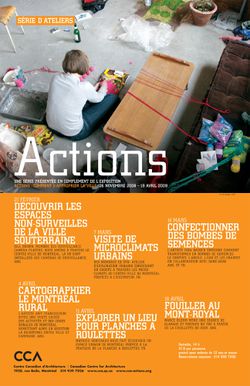
Actions:
Description:
Bill Brown leads participants on a guided tour through Montréal’s underground city, pointing out the locations of surveillance cameras and discussing the role of surveillance in public space. Brown is a member of Surveillance Camera Players, a New York City-based group that maps surveillance cameras in urban spaces. In conjunction with the exhibition Actions: What You Can(...)
Bill Brown leads participants on a guided tour through Montréal’s underground city, pointing out the locations of surveillance cameras and discussing the role of surveillance in public space. Brown is a member of Surveillance Camera Players, a New York City-based group that maps surveillance cameras in urban spaces. In conjunction with the exhibition Actions: What You Can(...)
Location:
Complexe Desjardins
Complexe Desjardins
Date:
21 February 2009
21 February 2009
Title:
Discovering the Unmonitored Underground City
Actions:
Description:
Bill Brown leads participants on a guided tour through Montréal’s underground city, pointing out the locations of surveillance cameras and discussing the role of surveillance in public space. Brown is a member of Surveillance Camera Players, a New York City-based group that maps surveillance cameras in urban spaces. In conjunction with the exhibition Actions: What You Can(...)
Discovering the Unmonitored Underground City
Actions:
Description:
Bill Brown leads participants on a guided tour through Montréal’s underground city, pointing out the locations of surveillance cameras and discussing the role of surveillance in public space. Brown is a member of Surveillance Camera Players, a New York City-based group that maps surveillance cameras in urban spaces. In conjunction with the exhibition Actions: What You Can(...)
Form:
events
events
Date:
21 February 2009
21 February 2009
Location:
Complexe Desjardins
Complexe Desjardins
Level of archival description:
Project
Project
Reference number:
AP206.S1.1975.PR01
Description:
This project series documents Aditya Prakash's proposal for an alternative plan for Chandigarh, India, which came to be known as the Linear City. Prakash began developing and advocating for this idea around the early 1970s. The Linear City had two fundamental ideas at its core. The first was to raise the roadways in Chandigarh (or any future city) 10-12 feet from ground level. This, he proposed, would separate vehicular traffic from pedestrians, eliminating all the hazardous impacts of traffic on daily life. The large part of the drawings for this project show sector plans and city blocks with evenly dispersed roundabout roadways as major transit hubs, wrapping around but high above centres of pedestrian activity that included shops, markets and green spaces. The sale of the land below the roadways would pay for the upheaval. He also recommended building this city only a few sectors deep, but endlessly expanding it length-wise, with a raised canal along one side to provide an additional transportation network and irrigation. The second fundamental idea of this city was the creation of self-sustaining sectors in the city plan, advocating that each neighbourhood should have the infrastructure to provide food and recycling for its residents. He fervently argued for the reimagination of modernist Chandigarh by incorporating sustainable, local traditions - the rural should exist in harmony with the urban. In opposition to Le Corbusier and Pierre Jeanneret, he believed areas for recycling, animal husbandry, and growing food should be incorporated into the fabric of the city.[1] This project is recorded largely through original drawings of city plans, perspectives and axonometric views detailing Prakash's new vision for the city. It seems that many of the perspectives were drawn by family friend Sandeep Virmani, after listening to Prakash's ideas.[2] The project is also recorded through photographs, negatives and slides showing plans and the project model. A small amount of notes and an article on the project are also included. [1]Vikramaditya Prakash, One Continuous Line: Art, Architecture and Urbanism of Aditya Prakash (Ahmedabad, India: Mapin Publishing Pvt. Ltd., 2019), 164-181. [2]Prakash, One Continuous Line, 169.
AP206.S1.1975.PR01
Description:
This project series documents Aditya Prakash's proposal for an alternative plan for Chandigarh, India, which came to be known as the Linear City. Prakash began developing and advocating for this idea around the early 1970s. The Linear City had two fundamental ideas at its core. The first was to raise the roadways in Chandigarh (or any future city) 10-12 feet from ground level. This, he proposed, would separate vehicular traffic from pedestrians, eliminating all the hazardous impacts of traffic on daily life. The large part of the drawings for this project show sector plans and city blocks with evenly dispersed roundabout roadways as major transit hubs, wrapping around but high above centres of pedestrian activity that included shops, markets and green spaces. The sale of the land below the roadways would pay for the upheaval. He also recommended building this city only a few sectors deep, but endlessly expanding it length-wise, with a raised canal along one side to provide an additional transportation network and irrigation. The second fundamental idea of this city was the creation of self-sustaining sectors in the city plan, advocating that each neighbourhood should have the infrastructure to provide food and recycling for its residents. He fervently argued for the reimagination of modernist Chandigarh by incorporating sustainable, local traditions - the rural should exist in harmony with the urban. In opposition to Le Corbusier and Pierre Jeanneret, he believed areas for recycling, animal husbandry, and growing food should be incorporated into the fabric of the city.[1] This project is recorded largely through original drawings of city plans, perspectives and axonometric views detailing Prakash's new vision for the city. It seems that many of the perspectives were drawn by family friend Sandeep Virmani, after listening to Prakash's ideas.[2] The project is also recorded through photographs, negatives and slides showing plans and the project model. A small amount of notes and an article on the project are also included. [1]Vikramaditya Prakash, One Continuous Line: Art, Architecture and Urbanism of Aditya Prakash (Ahmedabad, India: Mapin Publishing Pvt. Ltd., 2019), 164-181. [2]Prakash, One Continuous Line, 169.
People:
Date:
circa 1975-2003
circa 1975-2003
Title:
Linear city, Chandigarh, India (circa 1975-1987)
Actions:
AP206.S1.1975.PR01
Description:
This project series documents Aditya Prakash's proposal for an alternative plan for Chandigarh, India, which came to be known as the Linear City. Prakash began developing and advocating for this idea around the early 1970s. The Linear City had two fundamental ideas at its core. The first was to raise the roadways in Chandigarh (or any future city) 10-12 feet from ground level. This, he proposed, would separate vehicular traffic from pedestrians, eliminating all the hazardous impacts of traffic on daily life. The large part of the drawings for this project show sector plans and city blocks with evenly dispersed roundabout roadways as major transit hubs, wrapping around but high above centres of pedestrian activity that included shops, markets and green spaces. The sale of the land below the roadways would pay for the upheaval. He also recommended building this city only a few sectors deep, but endlessly expanding it length-wise, with a raised canal along one side to provide an additional transportation network and irrigation. The second fundamental idea of this city was the creation of self-sustaining sectors in the city plan, advocating that each neighbourhood should have the infrastructure to provide food and recycling for its residents. He fervently argued for the reimagination of modernist Chandigarh by incorporating sustainable, local traditions - the rural should exist in harmony with the urban. In opposition to Le Corbusier and Pierre Jeanneret, he believed areas for recycling, animal husbandry, and growing food should be incorporated into the fabric of the city.[1] This project is recorded largely through original drawings of city plans, perspectives and axonometric views detailing Prakash's new vision for the city. It seems that many of the perspectives were drawn by family friend Sandeep Virmani, after listening to Prakash's ideas.[2] The project is also recorded through photographs, negatives and slides showing plans and the project model. A small amount of notes and an article on the project are also included. [1]Vikramaditya Prakash, One Continuous Line: Art, Architecture and Urbanism of Aditya Prakash (Ahmedabad, India: Mapin Publishing Pvt. Ltd., 2019), 164-181. [2]Prakash, One Continuous Line, 169.
Linear city, Chandigarh, India (circa 1975-1987)
Actions:
AP206.S1.1975.PR01
Description:
This project series documents Aditya Prakash's proposal for an alternative plan for Chandigarh, India, which came to be known as the Linear City. Prakash began developing and advocating for this idea around the early 1970s. The Linear City had two fundamental ideas at its core. The first was to raise the roadways in Chandigarh (or any future city) 10-12 feet from ground level. This, he proposed, would separate vehicular traffic from pedestrians, eliminating all the hazardous impacts of traffic on daily life. The large part of the drawings for this project show sector plans and city blocks with evenly dispersed roundabout roadways as major transit hubs, wrapping around but high above centres of pedestrian activity that included shops, markets and green spaces. The sale of the land below the roadways would pay for the upheaval. He also recommended building this city only a few sectors deep, but endlessly expanding it length-wise, with a raised canal along one side to provide an additional transportation network and irrigation. The second fundamental idea of this city was the creation of self-sustaining sectors in the city plan, advocating that each neighbourhood should have the infrastructure to provide food and recycling for its residents. He fervently argued for the reimagination of modernist Chandigarh by incorporating sustainable, local traditions - the rural should exist in harmony with the urban. In opposition to Le Corbusier and Pierre Jeanneret, he believed areas for recycling, animal husbandry, and growing food should be incorporated into the fabric of the city.[1] This project is recorded largely through original drawings of city plans, perspectives and axonometric views detailing Prakash's new vision for the city. It seems that many of the perspectives were drawn by family friend Sandeep Virmani, after listening to Prakash's ideas.[2] The project is also recorded through photographs, negatives and slides showing plans and the project model. A small amount of notes and an article on the project are also included. [1]Vikramaditya Prakash, One Continuous Line: Art, Architecture and Urbanism of Aditya Prakash (Ahmedabad, India: Mapin Publishing Pvt. Ltd., 2019), 164-181. [2]Prakash, One Continuous Line, 169.
Level of archival description:
Project
Project
Date:
circa 1975-2003
circa 1975-2003
People:
Form:
articles
articles
Title:
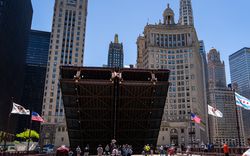
Architectures of Dissent
Architectures of Dissent
Actions:
Jola Idowu looks to Chicago and the infrastructure of protest
Issue:
Keep Safe
Keep Safe
Published:
19 August 2024
19 August 2024
Title:
Architectures of Dissent
Jola Idowu looks to Chicago and the infrastructure of protest
Actions:
Architectures of Dissent
Jola Idowu looks to Chicago and the infrastructure of protest
Actions:
Issue:
Keep Safe
Keep Safe
Level of archival description:
Project
Project
Reference number:
AP075.S1.1974.PR01
Description:
Project series documents Cornelia Hahn Oberlander's project for the landscape of Robson Square Provincial Government Complex in Vancouver, British Columbia. Oberlander worked on this project in 1974-1982 with architect Arthur Erickson and architect Bing Thom. The project consisted in designing a new provincial civic complex that included a courthouse and provincial government offices. The initial plan consisted in a 55-storey highrise. Arthur Erickson suggested to lay the building on its side and spread it accross three city blocks (known as Block 51, Block 61 and Block 71) and add a green roof to create linear park. Oberlander's ideas for the landscape concept was to create a space accessible for everyone that will be attractive and interesting in all seasons. Her design consisted in a series of pathways, stairs and terraces, mainly situated on Block 61, and rising gradually up to 30 feets above the Robson street level. The design was intented to "encourage pedestrians to cut accross the urban grid". [1] Planters where included to buildings facades to create a hanging garden using hanging plants. The project series contains design development drawings and working drawings for the landscape design, such as landscape plans, landscape sections, elevations and details, grading and irrigation plans, and planting plans. The drawings includes in this project series also comprises plans of the complex buildings used as reference. The majority of the drawings are reprographic copies. The series also comprises five original sketches by Oberlander. The project is also documented through interior and exterior photographs of the building, photographs of the landscape and various views of the completed complex. The project series also includes textual records, including documents related to the plants selection, specifications, financial documents, concept development notes of Oberlander, correspondence with architects, clients and consultants, documentation and research material, and clippings and articles on Robson Square project. Source: [1] Herrington, Susan. Cornelia Hahn Oberlander: Making the Modern Landscape, University of Virginia Press, 2014, 304 pages. p. 123.
AP075.S1.1974.PR01
Description:
Project series documents Cornelia Hahn Oberlander's project for the landscape of Robson Square Provincial Government Complex in Vancouver, British Columbia. Oberlander worked on this project in 1974-1982 with architect Arthur Erickson and architect Bing Thom. The project consisted in designing a new provincial civic complex that included a courthouse and provincial government offices. The initial plan consisted in a 55-storey highrise. Arthur Erickson suggested to lay the building on its side and spread it accross three city blocks (known as Block 51, Block 61 and Block 71) and add a green roof to create linear park. Oberlander's ideas for the landscape concept was to create a space accessible for everyone that will be attractive and interesting in all seasons. Her design consisted in a series of pathways, stairs and terraces, mainly situated on Block 61, and rising gradually up to 30 feets above the Robson street level. The design was intented to "encourage pedestrians to cut accross the urban grid". [1] Planters where included to buildings facades to create a hanging garden using hanging plants. The project series contains design development drawings and working drawings for the landscape design, such as landscape plans, landscape sections, elevations and details, grading and irrigation plans, and planting plans. The drawings includes in this project series also comprises plans of the complex buildings used as reference. The majority of the drawings are reprographic copies. The series also comprises five original sketches by Oberlander. The project is also documented through interior and exterior photographs of the building, photographs of the landscape and various views of the completed complex. The project series also includes textual records, including documents related to the plants selection, specifications, financial documents, concept development notes of Oberlander, correspondence with architects, clients and consultants, documentation and research material, and clippings and articles on Robson Square project. Source: [1] Herrington, Susan. Cornelia Hahn Oberlander: Making the Modern Landscape, University of Virginia Press, 2014, 304 pages. p. 123.
People:
Date:
1970-1995
1970-1995
Title:
Robson Square Provincial Government Complex, Vancouver, British Columbia (1974-1982)
Actions:
AP075.S1.1974.PR01
Description:
Project series documents Cornelia Hahn Oberlander's project for the landscape of Robson Square Provincial Government Complex in Vancouver, British Columbia. Oberlander worked on this project in 1974-1982 with architect Arthur Erickson and architect Bing Thom. The project consisted in designing a new provincial civic complex that included a courthouse and provincial government offices. The initial plan consisted in a 55-storey highrise. Arthur Erickson suggested to lay the building on its side and spread it accross three city blocks (known as Block 51, Block 61 and Block 71) and add a green roof to create linear park. Oberlander's ideas for the landscape concept was to create a space accessible for everyone that will be attractive and interesting in all seasons. Her design consisted in a series of pathways, stairs and terraces, mainly situated on Block 61, and rising gradually up to 30 feets above the Robson street level. The design was intented to "encourage pedestrians to cut accross the urban grid". [1] Planters where included to buildings facades to create a hanging garden using hanging plants. The project series contains design development drawings and working drawings for the landscape design, such as landscape plans, landscape sections, elevations and details, grading and irrigation plans, and planting plans. The drawings includes in this project series also comprises plans of the complex buildings used as reference. The majority of the drawings are reprographic copies. The series also comprises five original sketches by Oberlander. The project is also documented through interior and exterior photographs of the building, photographs of the landscape and various views of the completed complex. The project series also includes textual records, including documents related to the plants selection, specifications, financial documents, concept development notes of Oberlander, correspondence with architects, clients and consultants, documentation and research material, and clippings and articles on Robson Square project. Source: [1] Herrington, Susan. Cornelia Hahn Oberlander: Making the Modern Landscape, University of Virginia Press, 2014, 304 pages. p. 123.
Robson Square Provincial Government Complex, Vancouver, British Columbia (1974-1982)
Actions:
AP075.S1.1974.PR01
Description:
Project series documents Cornelia Hahn Oberlander's project for the landscape of Robson Square Provincial Government Complex in Vancouver, British Columbia. Oberlander worked on this project in 1974-1982 with architect Arthur Erickson and architect Bing Thom. The project consisted in designing a new provincial civic complex that included a courthouse and provincial government offices. The initial plan consisted in a 55-storey highrise. Arthur Erickson suggested to lay the building on its side and spread it accross three city blocks (known as Block 51, Block 61 and Block 71) and add a green roof to create linear park. Oberlander's ideas for the landscape concept was to create a space accessible for everyone that will be attractive and interesting in all seasons. Her design consisted in a series of pathways, stairs and terraces, mainly situated on Block 61, and rising gradually up to 30 feets above the Robson street level. The design was intented to "encourage pedestrians to cut accross the urban grid". [1] Planters where included to buildings facades to create a hanging garden using hanging plants. The project series contains design development drawings and working drawings for the landscape design, such as landscape plans, landscape sections, elevations and details, grading and irrigation plans, and planting plans. The drawings includes in this project series also comprises plans of the complex buildings used as reference. The majority of the drawings are reprographic copies. The series also comprises five original sketches by Oberlander. The project is also documented through interior and exterior photographs of the building, photographs of the landscape and various views of the completed complex. The project series also includes textual records, including documents related to the plants selection, specifications, financial documents, concept development notes of Oberlander, correspondence with architects, clients and consultants, documentation and research material, and clippings and articles on Robson Square project. Source: [1] Herrington, Susan. Cornelia Hahn Oberlander: Making the Modern Landscape, University of Virginia Press, 2014, 304 pages. p. 123.
Level of archival description:
Project
Project
Date:
1970-1995
1970-1995
People:
Form:
events
events
Title:
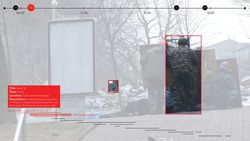
The expanded role: SITU
The expanded role: SITU
Actions:
Description:
Bradley Samuels presents recent SITU Research work and the role that research plays within the larger practice of SITU as a whole. A series of case studies will be presented which explore an expanded role for architectural and spatial practice across a range of fields—from human rights and public policy to earth science and workspace design. SITU Research’s past work(...)
Bradley Samuels presents recent SITU Research work and the role that research plays within the larger practice of SITU as a whole. A series of case studies will be presented which explore an expanded role for architectural and spatial practice across a range of fields—from human rights and public policy to earth science and workspace design. SITU Research’s past work(...)
Location:
Paul-Desmarais Theatre
Paul-Desmarais Theatre
Date:
14 January 2016
14 January 2016
Title:
The expanded role: SITU
Actions:
Description:
Bradley Samuels presents recent SITU Research work and the role that research plays within the larger practice of SITU as a whole. A series of case studies will be presented which explore an expanded role for architectural and spatial practice across a range of fields—from human rights and public policy to earth science and workspace design. SITU Research’s past work(...)
The expanded role: SITU
Actions:
Description:
Bradley Samuels presents recent SITU Research work and the role that research plays within the larger practice of SITU as a whole. A series of case studies will be presented which explore an expanded role for architectural and spatial practice across a range of fields—from human rights and public policy to earth science and workspace design. SITU Research’s past work(...)
Form:
events
events
Date:
14 January 2016
14 January 2016
Location:
Paul-Desmarais Theatre
Paul-Desmarais Theatre
Form:
photographs
photographs
Actions:
Reference number:
AP149.S4.SS2.002
Description:
Group consists of sets of slides of visual material for lectures on research project of the Minimum Cost Housing Group. The group includes: - a set on open spaces in urban environment, related to the fifth Human Settlement Training Packages by Mininum Cost Housing Group - a set of slides on sanitation and sanitation systems previsously stored in a folder entitled "Sanitation" - a set of slides on doors in India and Mexico previously stored in a folder entitled "Doors", - a set entitled ''People'' - and a set on technology for housing developement, low cost houses construction, including slides on the Minimum Cost Housing Group's housing project, such as Ecol Operation, Maison Lessard project and Saddle Lake project, previously stored in a folder entitled "Technology".
AP149.S4.SS2.002
Description:
Group consists of sets of slides of visual material for lectures on research project of the Minimum Cost Housing Group. The group includes: - a set on open spaces in urban environment, related to the fifth Human Settlement Training Packages by Mininum Cost Housing Group - a set of slides on sanitation and sanitation systems previsously stored in a folder entitled "Sanitation" - a set of slides on doors in India and Mexico previously stored in a folder entitled "Doors", - a set entitled ''People'' - and a set on technology for housing developement, low cost houses construction, including slides on the Minimum Cost Housing Group's housing project, such as Ecol Operation, Maison Lessard project and Saddle Lake project, previously stored in a folder entitled "Technology".
People:
Date:
1970s-1990s
1970s-1990s
Title:
Visual material for lectures on subject researchs
Actions:
AP149.S4.SS2.002
Description:
Group consists of sets of slides of visual material for lectures on research project of the Minimum Cost Housing Group. The group includes: - a set on open spaces in urban environment, related to the fifth Human Settlement Training Packages by Mininum Cost Housing Group - a set of slides on sanitation and sanitation systems previsously stored in a folder entitled "Sanitation" - a set of slides on doors in India and Mexico previously stored in a folder entitled "Doors", - a set entitled ''People'' - and a set on technology for housing developement, low cost houses construction, including slides on the Minimum Cost Housing Group's housing project, such as Ecol Operation, Maison Lessard project and Saddle Lake project, previously stored in a folder entitled "Technology".
Visual material for lectures on subject researchs
Actions:
AP149.S4.SS2.002
Description:
Group consists of sets of slides of visual material for lectures on research project of the Minimum Cost Housing Group. The group includes: - a set on open spaces in urban environment, related to the fifth Human Settlement Training Packages by Mininum Cost Housing Group - a set of slides on sanitation and sanitation systems previsously stored in a folder entitled "Sanitation" - a set of slides on doors in India and Mexico previously stored in a folder entitled "Doors", - a set entitled ''People'' - and a set on technology for housing developement, low cost houses construction, including slides on the Minimum Cost Housing Group's housing project, such as Ecol Operation, Maison Lessard project and Saddle Lake project, previously stored in a folder entitled "Technology".
Form:
photographs
photographs
Date:
1970s-1990s
1970s-1990s
People:
Form:
articles
articles
Title:
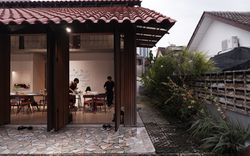
Connecting Collectivity
Connecting Collectivity
Actions:
Clarissa Lim Kye Lee and Yap Sau Bin in conversation
Level of archival description:
Sub-series
Sub-series
Actions:
Reference number:
AP075.S3.SS2
Description:
This sub-series documents Cornelia Hahn Oberlander's administrative records of her practice as landscape architect from the end of the 1950s to the end ot the 2010s. It comprises material related to her consulting services on her own various landscape projects and urban planning projects, and also her consulting services for projects submitted as member of a larger project team for private or public projects. Her office records also contains documents related the planning of her work, her patents applications and designs for her own landscape or playground furnitures, and her professional correspondence. The sub-series also documents Oberlander press and promotional activities, such as interviews she gave, articles written about her, about her work as landscape architect, her statements or her activism for social and environmental causes or preservation landmark buildings and spaces. The sub-series contains documents related to Oberlander's consulting services, including requests for services, proposals by her or by the project team, correspondence, or documentation collected for projects calls of interest to Oberlander. Oberlander's office records for planning of projects and other activities includes professional correspondence files, agendas and planners, message books and notebooks, patents applications and plans for her designs, and office references, such landscape architecture regulations and guidelines, and landscape specifications templates. The sub-series also comprises promotional material, such as photographs of her previous projects, press clippings of articles or periodicals with articles about her or her work, promotional panels for some of her major projects, and brochures or leaflets on her most well known projects. It includes also contains recordings of interviews on TV or radio shows she gave, biographical information on Oberlander, versions of her CV's, portaits of her, and lists and project write-ups.
AP075.S3.SS2
Description:
This sub-series documents Cornelia Hahn Oberlander's administrative records of her practice as landscape architect from the end of the 1950s to the end ot the 2010s. It comprises material related to her consulting services on her own various landscape projects and urban planning projects, and also her consulting services for projects submitted as member of a larger project team for private or public projects. Her office records also contains documents related the planning of her work, her patents applications and designs for her own landscape or playground furnitures, and her professional correspondence. The sub-series also documents Oberlander press and promotional activities, such as interviews she gave, articles written about her, about her work as landscape architect, her statements or her activism for social and environmental causes or preservation landmark buildings and spaces. The sub-series contains documents related to Oberlander's consulting services, including requests for services, proposals by her or by the project team, correspondence, or documentation collected for projects calls of interest to Oberlander. Oberlander's office records for planning of projects and other activities includes professional correspondence files, agendas and planners, message books and notebooks, patents applications and plans for her designs, and office references, such landscape architecture regulations and guidelines, and landscape specifications templates. The sub-series also comprises promotional material, such as photographs of her previous projects, press clippings of articles or periodicals with articles about her or her work, promotional panels for some of her major projects, and brochures or leaflets on her most well known projects. It includes also contains recordings of interviews on TV or radio shows she gave, biographical information on Oberlander, versions of her CV's, portaits of her, and lists and project write-ups.
People:
Date:
1953-2018
1953-2018
Title:
Administrative records and promotional material
Actions:
AP075.S3.SS2
Description:
This sub-series documents Cornelia Hahn Oberlander's administrative records of her practice as landscape architect from the end of the 1950s to the end ot the 2010s. It comprises material related to her consulting services on her own various landscape projects and urban planning projects, and also her consulting services for projects submitted as member of a larger project team for private or public projects. Her office records also contains documents related the planning of her work, her patents applications and designs for her own landscape or playground furnitures, and her professional correspondence. The sub-series also documents Oberlander press and promotional activities, such as interviews she gave, articles written about her, about her work as landscape architect, her statements or her activism for social and environmental causes or preservation landmark buildings and spaces. The sub-series contains documents related to Oberlander's consulting services, including requests for services, proposals by her or by the project team, correspondence, or documentation collected for projects calls of interest to Oberlander. Oberlander's office records for planning of projects and other activities includes professional correspondence files, agendas and planners, message books and notebooks, patents applications and plans for her designs, and office references, such landscape architecture regulations and guidelines, and landscape specifications templates. The sub-series also comprises promotional material, such as photographs of her previous projects, press clippings of articles or periodicals with articles about her or her work, promotional panels for some of her major projects, and brochures or leaflets on her most well known projects. It includes also contains recordings of interviews on TV or radio shows she gave, biographical information on Oberlander, versions of her CV's, portaits of her, and lists and project write-ups.
Administrative records and promotional material
Actions:
AP075.S3.SS2
Description:
This sub-series documents Cornelia Hahn Oberlander's administrative records of her practice as landscape architect from the end of the 1950s to the end ot the 2010s. It comprises material related to her consulting services on her own various landscape projects and urban planning projects, and also her consulting services for projects submitted as member of a larger project team for private or public projects. Her office records also contains documents related the planning of her work, her patents applications and designs for her own landscape or playground furnitures, and her professional correspondence. The sub-series also documents Oberlander press and promotional activities, such as interviews she gave, articles written about her, about her work as landscape architect, her statements or her activism for social and environmental causes or preservation landmark buildings and spaces. The sub-series contains documents related to Oberlander's consulting services, including requests for services, proposals by her or by the project team, correspondence, or documentation collected for projects calls of interest to Oberlander. Oberlander's office records for planning of projects and other activities includes professional correspondence files, agendas and planners, message books and notebooks, patents applications and plans for her designs, and office references, such landscape architecture regulations and guidelines, and landscape specifications templates. The sub-series also comprises promotional material, such as photographs of her previous projects, press clippings of articles or periodicals with articles about her or her work, promotional panels for some of her major projects, and brochures or leaflets on her most well known projects. It includes also contains recordings of interviews on TV or radio shows she gave, biographical information on Oberlander, versions of her CV's, portaits of her, and lists and project write-ups.
Level of archival description:
Sub-series
Sub-series
Date:
1953-2018
1953-2018
People:
Level of archival description:
Project
Project
Reference number:
CD034.S1.1974.PR01
Description:
This project series contains four reproductions of drawings displayed in the exhibit to document the neighbourhood Quinta do Bacalhau-Monte Coxo, in Lisbon, Portugal. The exhibit text explained the following: The project architect Manuel Vicente was already working on a design for the intervention in the Quintas de Bacalhau and Monte Coxo when he was co-opted by SAAL. The proposed typology referred to another ambitious urban project of 615 housing units, Quinta das Fonsecas - Quinta da Calçada neighbourhood by the architect Raúl Hestnes Ferreira. The intention was to bring the city to the outlying shanty town areas. None of these projects was carried out in full, and they are now fragmented and besieged by the traffic system without having produced any of the essential community and socialising facilities. In Bacalhau-Monte Coxo the structure of the internal patios reveals the ways in which the public space and community was organised. The architecture assigned importance to the facades, although access to the community courtyards was also a central design concept. In a 1976 interview, the architect himself argued that the release of bourgeois guilt allowed for spatial beauty, adopting the slogan 'Facades First' in defence of architectural design. In a way, this proposal anticipated the post-modern, although in a form that did not deny architecture's social engagement. The design emphasizes a strong idea of architectural autonomy, unfortunately only a part of the project was actually built. (The SAAL Process, Housing in Portugal 1974–76) Manuel Vicente worked for SAAL/Lisbon and Central South with the following collaborators: Afonso José Baptista, Agostinho Xavier de Andrade, António Albano Leitão, Cristina Catela Martins Pereira, Eduardo Serrano de Sousa, Gentil Noras, José Manuel Diniz Cabral Caldeira, Manuel Augusto Lopes de Sousa, Nuno Matos Silva, Rita Cabral and the resident association Cooperativa de Habitação Económica Portugal Novo, that was founded on September 6th, 1974. The team built 384 dwellings. The operation began in September 1974, with a construction date in January 1977. This project series contains reproductions of design development drawings and a cadastral plan. The original drawings were produced in 1974 or after and were reproduced in 2015 for the exhibit.
CD034.S1.1974.PR01
Description:
This project series contains four reproductions of drawings displayed in the exhibit to document the neighbourhood Quinta do Bacalhau-Monte Coxo, in Lisbon, Portugal. The exhibit text explained the following: The project architect Manuel Vicente was already working on a design for the intervention in the Quintas de Bacalhau and Monte Coxo when he was co-opted by SAAL. The proposed typology referred to another ambitious urban project of 615 housing units, Quinta das Fonsecas - Quinta da Calçada neighbourhood by the architect Raúl Hestnes Ferreira. The intention was to bring the city to the outlying shanty town areas. None of these projects was carried out in full, and they are now fragmented and besieged by the traffic system without having produced any of the essential community and socialising facilities. In Bacalhau-Monte Coxo the structure of the internal patios reveals the ways in which the public space and community was organised. The architecture assigned importance to the facades, although access to the community courtyards was also a central design concept. In a 1976 interview, the architect himself argued that the release of bourgeois guilt allowed for spatial beauty, adopting the slogan 'Facades First' in defence of architectural design. In a way, this proposal anticipated the post-modern, although in a form that did not deny architecture's social engagement. The design emphasizes a strong idea of architectural autonomy, unfortunately only a part of the project was actually built. (The SAAL Process, Housing in Portugal 1974–76) Manuel Vicente worked for SAAL/Lisbon and Central South with the following collaborators: Afonso José Baptista, Agostinho Xavier de Andrade, António Albano Leitão, Cristina Catela Martins Pereira, Eduardo Serrano de Sousa, Gentil Noras, José Manuel Diniz Cabral Caldeira, Manuel Augusto Lopes de Sousa, Nuno Matos Silva, Rita Cabral and the resident association Cooperativa de Habitação Económica Portugal Novo, that was founded on September 6th, 1974. The team built 384 dwellings. The operation began in September 1974, with a construction date in January 1977. This project series contains reproductions of design development drawings and a cadastral plan. The original drawings were produced in 1974 or after and were reproduced in 2015 for the exhibit.
People:
Date:
circa 1974
circa 1974
Title:
Bairro Quinta do Bacalhau–Monte Coxo, Lisbon
Actions:
CD034.S1.1974.PR01
Description:
This project series contains four reproductions of drawings displayed in the exhibit to document the neighbourhood Quinta do Bacalhau-Monte Coxo, in Lisbon, Portugal. The exhibit text explained the following: The project architect Manuel Vicente was already working on a design for the intervention in the Quintas de Bacalhau and Monte Coxo when he was co-opted by SAAL. The proposed typology referred to another ambitious urban project of 615 housing units, Quinta das Fonsecas - Quinta da Calçada neighbourhood by the architect Raúl Hestnes Ferreira. The intention was to bring the city to the outlying shanty town areas. None of these projects was carried out in full, and they are now fragmented and besieged by the traffic system without having produced any of the essential community and socialising facilities. In Bacalhau-Monte Coxo the structure of the internal patios reveals the ways in which the public space and community was organised. The architecture assigned importance to the facades, although access to the community courtyards was also a central design concept. In a 1976 interview, the architect himself argued that the release of bourgeois guilt allowed for spatial beauty, adopting the slogan 'Facades First' in defence of architectural design. In a way, this proposal anticipated the post-modern, although in a form that did not deny architecture's social engagement. The design emphasizes a strong idea of architectural autonomy, unfortunately only a part of the project was actually built. (The SAAL Process, Housing in Portugal 1974–76) Manuel Vicente worked for SAAL/Lisbon and Central South with the following collaborators: Afonso José Baptista, Agostinho Xavier de Andrade, António Albano Leitão, Cristina Catela Martins Pereira, Eduardo Serrano de Sousa, Gentil Noras, José Manuel Diniz Cabral Caldeira, Manuel Augusto Lopes de Sousa, Nuno Matos Silva, Rita Cabral and the resident association Cooperativa de Habitação Económica Portugal Novo, that was founded on September 6th, 1974. The team built 384 dwellings. The operation began in September 1974, with a construction date in January 1977. This project series contains reproductions of design development drawings and a cadastral plan. The original drawings were produced in 1974 or after and were reproduced in 2015 for the exhibit.
Bairro Quinta do Bacalhau–Monte Coxo, Lisbon
Actions:
CD034.S1.1974.PR01
Description:
This project series contains four reproductions of drawings displayed in the exhibit to document the neighbourhood Quinta do Bacalhau-Monte Coxo, in Lisbon, Portugal. The exhibit text explained the following: The project architect Manuel Vicente was already working on a design for the intervention in the Quintas de Bacalhau and Monte Coxo when he was co-opted by SAAL. The proposed typology referred to another ambitious urban project of 615 housing units, Quinta das Fonsecas - Quinta da Calçada neighbourhood by the architect Raúl Hestnes Ferreira. The intention was to bring the city to the outlying shanty town areas. None of these projects was carried out in full, and they are now fragmented and besieged by the traffic system without having produced any of the essential community and socialising facilities. In Bacalhau-Monte Coxo the structure of the internal patios reveals the ways in which the public space and community was organised. The architecture assigned importance to the facades, although access to the community courtyards was also a central design concept. In a 1976 interview, the architect himself argued that the release of bourgeois guilt allowed for spatial beauty, adopting the slogan 'Facades First' in defence of architectural design. In a way, this proposal anticipated the post-modern, although in a form that did not deny architecture's social engagement. The design emphasizes a strong idea of architectural autonomy, unfortunately only a part of the project was actually built. (The SAAL Process, Housing in Portugal 1974–76) Manuel Vicente worked for SAAL/Lisbon and Central South with the following collaborators: Afonso José Baptista, Agostinho Xavier de Andrade, António Albano Leitão, Cristina Catela Martins Pereira, Eduardo Serrano de Sousa, Gentil Noras, José Manuel Diniz Cabral Caldeira, Manuel Augusto Lopes de Sousa, Nuno Matos Silva, Rita Cabral and the resident association Cooperativa de Habitação Económica Portugal Novo, that was founded on September 6th, 1974. The team built 384 dwellings. The operation began in September 1974, with a construction date in January 1977. This project series contains reproductions of design development drawings and a cadastral plan. The original drawings were produced in 1974 or after and were reproduced in 2015 for the exhibit.
Level of archival description:
Project
Project
Date:
circa 1974
circa 1974
People:
Form:
exhibitions
exhibitions
Title:
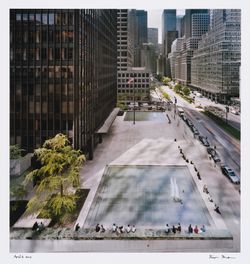
Seagram Plaza
Seagram Plaza
Actions:
Description:
The plaza at the Seagram Building in New York, designed by Ludwig Mies van der Rohe and completed in 1958, was a litmus test of what an open space in the city could be. Raised three steps above the sidewalk along Park Avenue, the plaza is an oasis of calm, distant from the commotion and turbulence of the street. The way in which the plaza has been adopted by New Yorkers(...)
The plaza at the Seagram Building in New York, designed by Ludwig Mies van der Rohe and completed in 1958, was a litmus test of what an open space in the city could be. Raised three steps above the sidewalk along Park Avenue, the plaza is an oasis of calm, distant from the commotion and turbulence of the street. The way in which the plaza has been adopted by New Yorkers(...)
Location:
Hall cases
Hall cases
Date:
1 May 2013 to 18 August 2013
1 May 2013 to 18 August 2013
Title:
Seagram Plaza
Actions:
Description:
The plaza at the Seagram Building in New York, designed by Ludwig Mies van der Rohe and completed in 1958, was a litmus test of what an open space in the city could be. Raised three steps above the sidewalk along Park Avenue, the plaza is an oasis of calm, distant from the commotion and turbulence of the street. The way in which the plaza has been adopted by New Yorkers(...)
Seagram Plaza
Actions:
Description:
The plaza at the Seagram Building in New York, designed by Ludwig Mies van der Rohe and completed in 1958, was a litmus test of what an open space in the city could be. Raised three steps above the sidewalk along Park Avenue, the plaza is an oasis of calm, distant from the commotion and turbulence of the street. The way in which the plaza has been adopted by New Yorkers(...)
Form:
exhibitions
exhibitions
Date:
1 May 2013 to
18 August 2013
1 May 2013 to
18 August 2013
Location:
Hall cases
Hall cases


