


1026 Results
Form:
books
books
Price:
$34.50
(available to order)
Summary:
Archives are collections of records that are preserved for historical, cultural and evidentiary purposes. As such, archives are considered as sites of a past, places that contain traces of a collective memory of a nation, a people or a group. Digital archives have changed from stable entities into flexible systems, at times referred to with the term ‘Living Archives’. In(...)
$34.50
(available to order)
Summary:
Archives are collections of records that are preserved for historical, cultural and evidentiary purposes. As such, archives are considered as sites of a past, places that contain traces of a collective memory of a nation, a people or a group. Digital archives have changed from stable entities into flexible systems, at times referred to with the term ‘Living Archives’. In(...)
Title:
Lost and living (in) archives collectively shaping new memories
Actions:
Price:
$34.50
(available to order)
Summary:
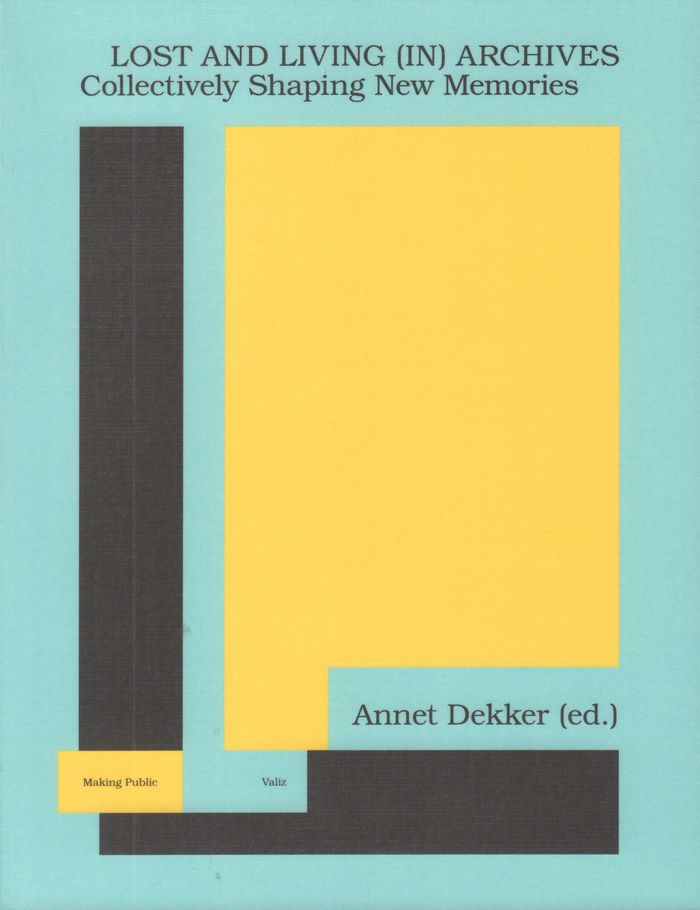
Archives are collections of records that are preserved for historical, cultural and evidentiary purposes. As such, archives are considered as sites of a past, places that contain traces of a collective memory of a nation, a people or a group. Digital archives have changed from stable entities into flexible systems, at times referred to with the term ‘Living Archives’. In which ways has this change affected our relationship to the past? Will the erased, forgotten and neglected be redeemed, and new memories be allowed? Will the fictional versus factual mode of archiving offer the democracy that the public domain implies, or is it another way for public instruments of power to operate? Lost and Living (in) Archives shows that archives are not simply a recording, a reflection, or an image of an event, but that THEY shape the event itself and thus influence the past, present and future.
Lost and living (in) archives collectively shaping new memories
Actions:
Price:
$34.50
(available to order)
Summary:
Archives are collections of records that are preserved for historical, cultural and evidentiary purposes. As such, archives are considered as sites of a past, places that contain traces of a collective memory of a nation, a people or a group. Digital archives have changed from stable entities into flexible systems, at times referred to with the term ‘Living Archives’. In which ways has this change affected our relationship to the past? Will the erased, forgotten and neglected be redeemed, and new memories be allowed? Will the fictional versus factual mode of archiving offer the democracy that the public domain implies, or is it another way for public instruments of power to operate? Lost and Living (in) Archives shows that archives are not simply a recording, a reflection, or an image of an event, but that THEY shape the event itself and thus influence the past, present and future.
Form:
books
books
Publication:
November 2017
November 2017
Subject:
Archive, library and the digital
Archive, library and the digital
Form:
books
books

Title:
The digital condition
The digital condition
Actions:
Price:
$27.95
(available to order)
Summary:
Our daily lives, our culture, and our politics are now shaped by the digital condition, in which greater numbers of people are engaged in negotiating meaning in ever more dimensions of life, from the trivial to the profound. They are making use of a complex communication infrastructure, currently dominated by social mass media such as Twitter and Facebook, on which they(...)
$27.95
(available to order)
Summary:
Our daily lives, our culture, and our politics are now shaped by the digital condition, in which greater numbers of people are engaged in negotiating meaning in ever more dimensions of life, from the trivial to the profound. They are making use of a complex communication infrastructure, currently dominated by social mass media such as Twitter and Facebook, on which they(...)
Title:
The digital condition
Actions:
Price:
$27.95
(available to order)
Summary:
Our daily lives, our culture, and our politics are now shaped by the digital condition, in which greater numbers of people are engaged in negotiating meaning in ever more dimensions of life, from the trivial to the profound. They are making use of a complex communication infrastructure, currently dominated by social mass media such as Twitter and Facebook, on which they have come to depend.Amidst a confusing plurality, Felix Stalder argues that there are three key constituents of this condition: the use of existing cultural materials for one’s own production, the way in which new meaning is established as a collective endeavor, and the underlying role of algorithms and automated decision-making processes that give shape to massive volumes of data. These three characteristics define what Stalder calls “the digital condition.”
The digital condition
Actions:
Price:
$27.95
(available to order)
Summary:
Our daily lives, our culture, and our politics are now shaped by the digital condition, in which greater numbers of people are engaged in negotiating meaning in ever more dimensions of life, from the trivial to the profound. They are making use of a complex communication infrastructure, currently dominated by social mass media such as Twitter and Facebook, on which they have come to depend.Amidst a confusing plurality, Felix Stalder argues that there are three key constituents of this condition: the use of existing cultural materials for one’s own production, the way in which new meaning is established as a collective endeavor, and the underlying role of algorithms and automated decision-making processes that give shape to massive volumes of data. These three characteristics define what Stalder calls “the digital condition.”
Form:
books
books
Publication:
December 2017
December 2017
Subject:
Archive, library and the digital
Archive, library and the digital
Form:
books
books

Title:
Fantasies of the library
Fantasies of the library
Actions:
Price:
$24.50
(available to order)
Summary:
''Fantasies of the Library'' imagines, and enacts, the library as both keeper of books and curator of ideas as a platform of the future. The book includes an essay on the institutional ordering principles of book collections; a conversation with the proprietors of the Prelinger Library in San Francisco; reflections on the role of cultural memory and the archive; and a(...)
$24.50
(available to order)
Summary:
''Fantasies of the Library'' imagines, and enacts, the library as both keeper of books and curator of ideas as a platform of the future. The book includes an essay on the institutional ordering principles of book collections; a conversation with the proprietors of the Prelinger Library in San Francisco; reflections on the role of cultural memory and the archive; and a(...)
Subject:
Archive, library and the digital
Archive, library and the digital
Publication:
August 2018
August 2018
Title:
Fantasies of the library
Actions:
Price:
$24.50
(available to order)
Summary:
''Fantasies of the Library'' imagines, and enacts, the library as both keeper of books and curator of ideas as a platform of the future. The book includes an essay on the institutional ordering principles of book collections; a conversation with the proprietors of the Prelinger Library in San Francisco; reflections on the role of cultural memory and the archive; and a dialogue with a new media theorist about experiments at the intersection of curatorial practice and open-source ebooks. The reader emerges from this book-as-exhibition with the growing conviction that the library is not only a curatorial space but a bibliological imaginary, ripe for the exploration of consequential paginated affairs. The physicality of the book- and this book- ''resists the digital,'' argues coeditor Etienne Turpin, ''but not in a nostalgic way.''
Fantasies of the library
Actions:
Price:
$24.50
(available to order)
Summary:
''Fantasies of the Library'' imagines, and enacts, the library as both keeper of books and curator of ideas as a platform of the future. The book includes an essay on the institutional ordering principles of book collections; a conversation with the proprietors of the Prelinger Library in San Francisco; reflections on the role of cultural memory and the archive; and a dialogue with a new media theorist about experiments at the intersection of curatorial practice and open-source ebooks. The reader emerges from this book-as-exhibition with the growing conviction that the library is not only a curatorial space but a bibliological imaginary, ripe for the exploration of consequential paginated affairs. The physicality of the book- and this book- ''resists the digital,'' argues coeditor Etienne Turpin, ''but not in a nostalgic way.''
Form:
books
books
Publication:
August 2018
August 2018
Subject:
Archive, library and the digital
Archive, library and the digital
Form:
books
books
Title:
Future histories: What Ada Lovelace, Tom Paine, and the Paris Commune can teach us about digital
Future histories: What Ada Lovelace, Tom Paine, and the Paris Commune can teach us about digital
Actions:
Price:
$36.95
(available to order)
Summary:
When we talk about technology we always talk about tomorrow and the future - which makes it hard to figure out how to even get there. In "Future Histories", public interest lawyer and digital specialist Lizzie O'Shea argues that we need to stop looking forward and start looking backwards. Weaving together histories of computing and progressive social movements with modern(...)
$36.95
(available to order)
Summary:
When we talk about technology we always talk about tomorrow and the future - which makes it hard to figure out how to even get there. In "Future Histories", public interest lawyer and digital specialist Lizzie O'Shea argues that we need to stop looking forward and start looking backwards. Weaving together histories of computing and progressive social movements with modern(...)
Title:
Future histories: What Ada Lovelace, Tom Paine, and the Paris Commune can teach us about digital
Actions:
Price:
$36.95
(available to order)
Summary:
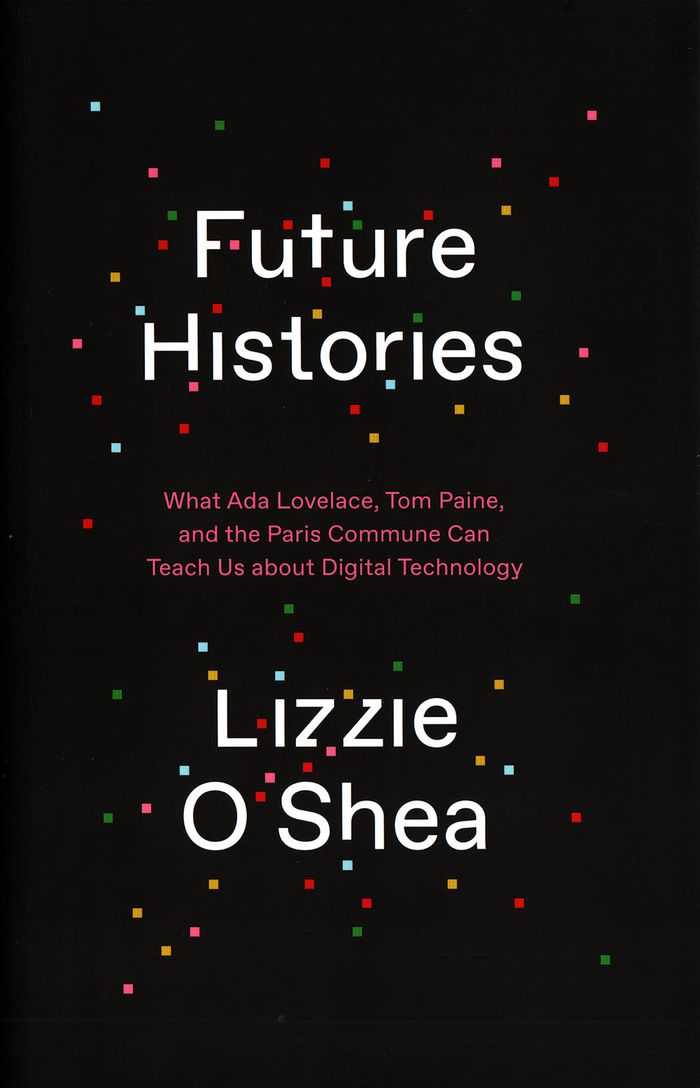
When we talk about technology we always talk about tomorrow and the future - which makes it hard to figure out how to even get there. In "Future Histories", public interest lawyer and digital specialist Lizzie O'Shea argues that we need to stop looking forward and start looking backwards. Weaving together histories of computing and progressive social movements with modern theories of the mind, society, and self, O'Shea constructs a "usable past" that can help us determine our digital future.
Future histories: What Ada Lovelace, Tom Paine, and the Paris Commune can teach us about digital
Actions:
Price:
$36.95
(available to order)
Summary:
When we talk about technology we always talk about tomorrow and the future - which makes it hard to figure out how to even get there. In "Future Histories", public interest lawyer and digital specialist Lizzie O'Shea argues that we need to stop looking forward and start looking backwards. Weaving together histories of computing and progressive social movements with modern theories of the mind, society, and self, O'Shea constructs a "usable past" that can help us determine our digital future.
Form:
books
books
Publication:
May 2019
May 2019
Subject:
Archive, library and the digital
Archive, library and the digital
Form:
books
books
Actions:
Price:
$38.50
(available to order)
Summary:
Over the past fifty years, preservation policy has evolved very little, despite escalating accusations that landmarking and historic districting can inhibit affordable housing, economic development, and socioeconomic diversity. The potential to understand these dynamics and effect positive change is hindered by a lack of data and evidence-based research to better(...)
$38.50
(available to order)
Summary:
Over the past fifty years, preservation policy has evolved very little, despite escalating accusations that landmarking and historic districting can inhibit affordable housing, economic development, and socioeconomic diversity. The potential to understand these dynamics and effect positive change is hindered by a lack of data and evidence-based research to better(...)
Title:
Preservation and the new data landscape
Actions:
Price:
$38.50
(available to order)
Summary:
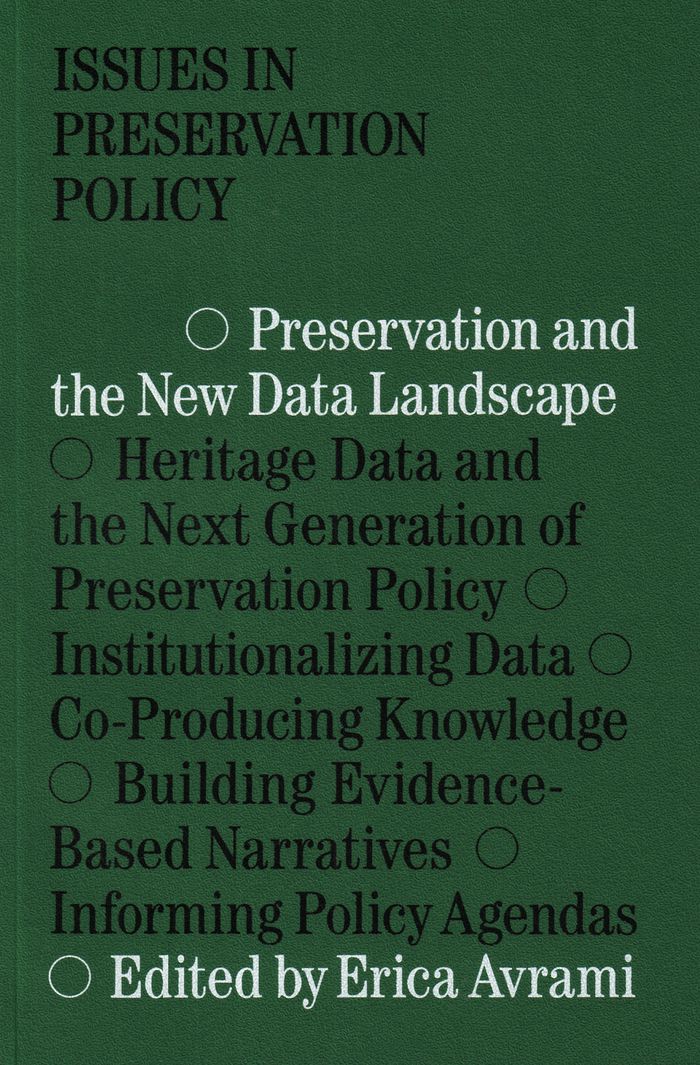
Over the past fifty years, preservation policy has evolved very little, despite escalating accusations that landmarking and historic districting can inhibit affordable housing, economic development, and socioeconomic diversity. The potential to understand these dynamics and effect positive change is hindered by a lack of data and evidence-based research to better understand these impacts. One of the biggest barriers to preservation research has been the lack of data sets that can be used for geospatial, evidence-based, and longitudinal analyses. This first book in the series ''Issues in Preservation Policy'' explores the ways that enhancing the collection, accuracy, and management of data can serve a critical role in identifying vulnerable neighborhoods, understanding the role of older buildings in economic vitality and community resilience, planning sustainable growth, and more.
Preservation and the new data landscape
Actions:
Price:
$38.50
(available to order)
Summary:
Over the past fifty years, preservation policy has evolved very little, despite escalating accusations that landmarking and historic districting can inhibit affordable housing, economic development, and socioeconomic diversity. The potential to understand these dynamics and effect positive change is hindered by a lack of data and evidence-based research to better understand these impacts. One of the biggest barriers to preservation research has been the lack of data sets that can be used for geospatial, evidence-based, and longitudinal analyses. This first book in the series ''Issues in Preservation Policy'' explores the ways that enhancing the collection, accuracy, and management of data can serve a critical role in identifying vulnerable neighborhoods, understanding the role of older buildings in economic vitality and community resilience, planning sustainable growth, and more.
Form:
books
books
Publication:
March 2019
March 2019
Subject:
Archive, library and the digital
Archive, library and the digital
Form:
books
books
Actions:
Price:
$34.95
(available to order)
Summary:
En plein air — painting outdoors — traditionally describes the impressionist revolt against the studio. This book compiles texts by media scholars, scientists, artists, anthropologists and theorists exploring the concept of en plein air in terms of the digital, a realm with ever-evolving boundaries.
$34.95
(available to order)
Summary:
En plein air — painting outdoors — traditionally describes the impressionist revolt against the studio. This book compiles texts by media scholars, scientists, artists, anthropologists and theorists exploring the concept of en plein air in terms of the digital, a realm with ever-evolving boundaries.
Title:
En plein air: ethnographies of the digital
Actions:
Price:
$34.95
(available to order)
Summary:
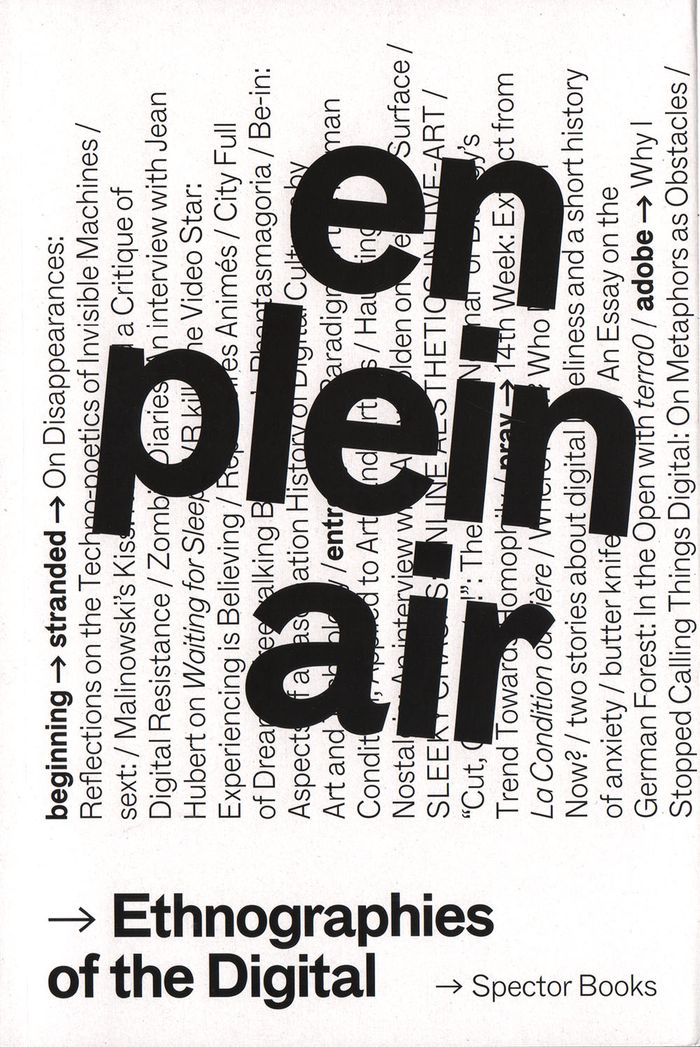
En plein air — painting outdoors — traditionally describes the impressionist revolt against the studio. This book compiles texts by media scholars, scientists, artists, anthropologists and theorists exploring the concept of en plein air in terms of the digital, a realm with ever-evolving boundaries.
En plein air: ethnographies of the digital
Actions:
Price:
$34.95
(available to order)
Summary:
En plein air — painting outdoors — traditionally describes the impressionist revolt against the studio. This book compiles texts by media scholars, scientists, artists, anthropologists and theorists exploring the concept of en plein air in terms of the digital, a realm with ever-evolving boundaries.
Form:
books
books
Publication:
April 2019
April 2019
Subject:
Archive, library and the digital
Archive, library and the digital
Form:
books
books
Actions:
Price:
$31.95
(available to order)
Summary:
L'architecture, son évolution comme sa connaissance, dépend en grande partie de la circulation et de la transmission dans l'espace et le temps d'une accumulation d'expériences, de règles ou de modèles. Voilà pourquoi ce livre examine les moyens de communication utilisés par les architectes occidentaux, de Vitruve à l'époque moderne, en montrant comment chaque média influe(...)
$31.95
(available to order)
Summary:
L'architecture, son évolution comme sa connaissance, dépend en grande partie de la circulation et de la transmission dans l'espace et le temps d'une accumulation d'expériences, de règles ou de modèles. Voilà pourquoi ce livre examine les moyens de communication utilisés par les architectes occidentaux, de Vitruve à l'époque moderne, en montrant comment chaque média influe(...)
Title:
L'architecture à l'âge de l'imprimerie
Actions:
Price:
$31.95
(available to order)
Summary:
L'architecture, son évolution comme sa connaissance, dépend en grande partie de la circulation et de la transmission dans l'espace et le temps d'une accumulation d'expériences, de règles ou de modèles. Voilà pourquoi ce livre examine les moyens de communication utilisés par les architectes occidentaux, de Vitruve à l'époque moderne, en montrant comment chaque média influe sur les formes spécifiques de la pensée architecturale et sur les modalités de la diffusion des savoirs.
L'architecture à l'âge de l'imprimerie
Actions:
Price:
$31.95
(available to order)
Summary:
L'architecture, son évolution comme sa connaissance, dépend en grande partie de la circulation et de la transmission dans l'espace et le temps d'une accumulation d'expériences, de règles ou de modèles. Voilà pourquoi ce livre examine les moyens de communication utilisés par les architectes occidentaux, de Vitruve à l'époque moderne, en montrant comment chaque média influe sur les formes spécifiques de la pensée architecturale et sur les modalités de la diffusion des savoirs.
Form:
books
books
Publication:
April 2009, Paris
April 2009, Paris
Subject:
Archive, library and the digital
Archive, library and the digital
Form:
books
books
Actions:
Price:
$90.00
(available in store)
Summary:
Print on demand has revolutionized publishing. Digital printing and online platforms such as Blurb, Lulu and Kindle Direct Publishing allow anyone to publish work immediately and without financial risk, opening up spaces beyond the trade book world and ostensibly democratizing production. Today an entire subculture is exploring print on demand in search of new economies(...)
$90.00
(available in store)
Summary:
Print on demand has revolutionized publishing. Digital printing and online platforms such as Blurb, Lulu and Kindle Direct Publishing allow anyone to publish work immediately and without financial risk, opening up spaces beyond the trade book world and ostensibly democratizing production. Today an entire subculture is exploring print on demand in search of new economies(...)
Subject:
Archive, library and the digital
Archive, library and the digital
Publication:
September 2025
September 2025
Title:
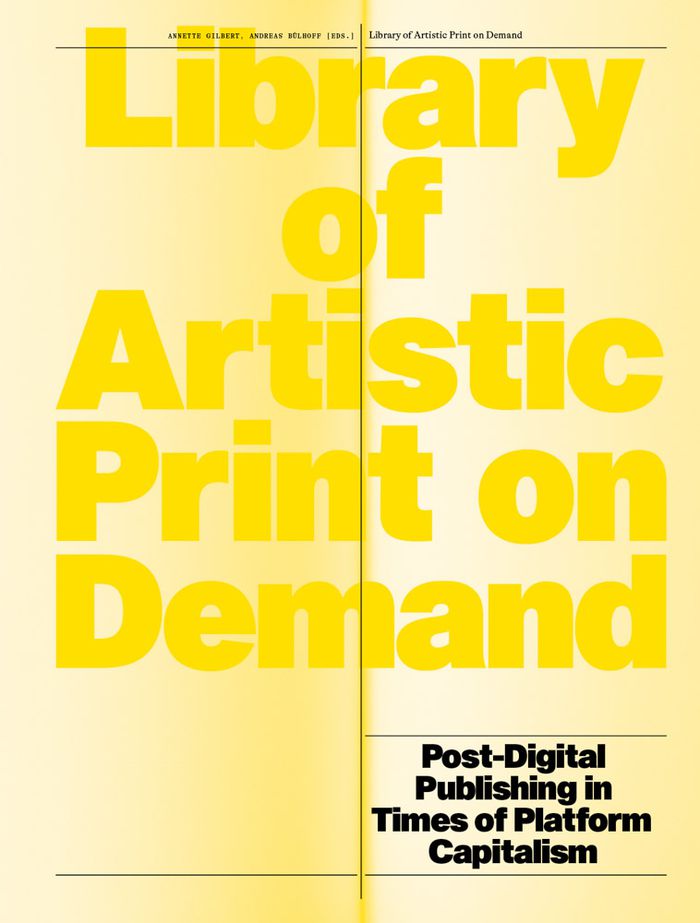
Library of artistic print on demand: Post-digital publishing in times of platform capitalism
Actions:
Price:
$90.00
(available in store)
Summary:
Print on demand has revolutionized publishing. Digital printing and online platforms such as Blurb, Lulu and Kindle Direct Publishing allow anyone to publish work immediately and without financial risk, opening up spaces beyond the trade book world and ostensibly democratizing production. Today an entire subculture is exploring print on demand in search of new economies and publics, while also critically negotiating our digital present. "The Library of Artistic Print on Demand" maps this experimental field for the first time, exploring its global spread, history, contradictions and political relevance through writings from international publishers and authors.
Library of artistic print on demand: Post-digital publishing in times of platform capitalism
Actions:
Price:
$90.00
(available in store)
Summary:
Print on demand has revolutionized publishing. Digital printing and online platforms such as Blurb, Lulu and Kindle Direct Publishing allow anyone to publish work immediately and without financial risk, opening up spaces beyond the trade book world and ostensibly democratizing production. Today an entire subculture is exploring print on demand in search of new economies and publics, while also critically negotiating our digital present. "The Library of Artistic Print on Demand" maps this experimental field for the first time, exploring its global spread, history, contradictions and political relevance through writings from international publishers and authors.
Form:
books
books
Publication:
September 2025
September 2025
Subject:
Archive, library and the digital
Archive, library and the digital
Form:
books
books
Price:
$33.95
(available to order)
Summary:
A social history of AI that finally reveals its roots in the spatial computation of industrial factories and the surveillance of collective behaviour. What is AI? A dominant view describes it as the quest ''to solve intelligence,'' a solution supposedly to be found in the secret logic of the mind or in the deep physiology of the brain, such as in its complex neural(...)
$33.95
(available to order)
Summary:
A social history of AI that finally reveals its roots in the spatial computation of industrial factories and the surveillance of collective behaviour. What is AI? A dominant view describes it as the quest ''to solve intelligence,'' a solution supposedly to be found in the secret logic of the mind or in the deep physiology of the brain, such as in its complex neural(...)
Title:
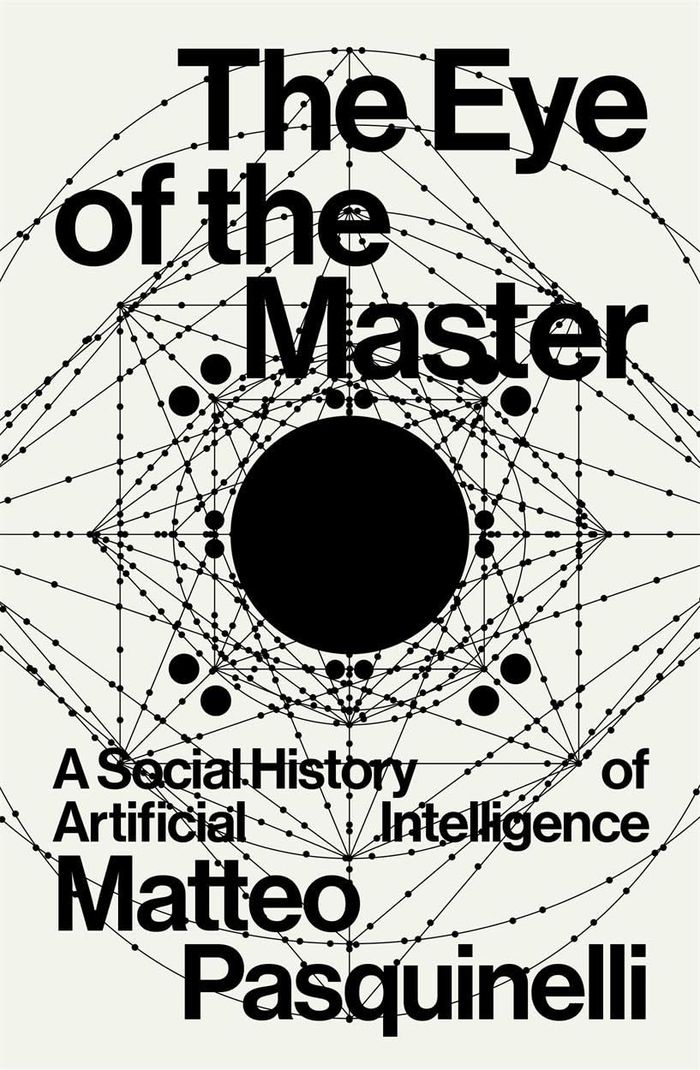
The eye of the master: A social history of artificial intelligence
Actions:
Price:
$33.95
(available to order)
Summary:
A social history of AI that finally reveals its roots in the spatial computation of industrial factories and the surveillance of collective behaviour. What is AI? A dominant view describes it as the quest ''to solve intelligence,'' a solution supposedly to be found in the secret logic of the mind or in the deep physiology of the brain, such as in its complex neural networks. ''The eye of the master'' argues, to the contrary, that the inner code of AI is shaped not by the imitation of biological intelligence, but the intelligence of labour and social relations, as it is found in Babbage's ''calculating engines'' of the industrial age as well as in the recent algorithms for image recognition and surveillance. The idea that AI may one day become autonomous (or ''sentient'', as someone thought of Google's LaMDA) is pure fantasy. Computer algorithms have always imitated the form of social relations and the organisation of labour in their own inner structure and their purpose remains blind automation. ''The eye of the master'' urges a new literacy on AI for scientists, journalists and new generations of activists, who should recognise that the ''mystery'' of AI is just the automation of labour at the highest degree, not intelligence per se.
The eye of the master: A social history of artificial intelligence
Actions:
Price:
$33.95
(available to order)
Summary:
A social history of AI that finally reveals its roots in the spatial computation of industrial factories and the surveillance of collective behaviour. What is AI? A dominant view describes it as the quest ''to solve intelligence,'' a solution supposedly to be found in the secret logic of the mind or in the deep physiology of the brain, such as in its complex neural networks. ''The eye of the master'' argues, to the contrary, that the inner code of AI is shaped not by the imitation of biological intelligence, but the intelligence of labour and social relations, as it is found in Babbage's ''calculating engines'' of the industrial age as well as in the recent algorithms for image recognition and surveillance. The idea that AI may one day become autonomous (or ''sentient'', as someone thought of Google's LaMDA) is pure fantasy. Computer algorithms have always imitated the form of social relations and the organisation of labour in their own inner structure and their purpose remains blind automation. ''The eye of the master'' urges a new literacy on AI for scientists, journalists and new generations of activists, who should recognise that the ''mystery'' of AI is just the automation of labour at the highest degree, not intelligence per se.
Form:
books
books
Publication:
October 2023
October 2023
Subject:
Archive, library and the digital
Archive, library and the digital
Form:
books
books
Title:
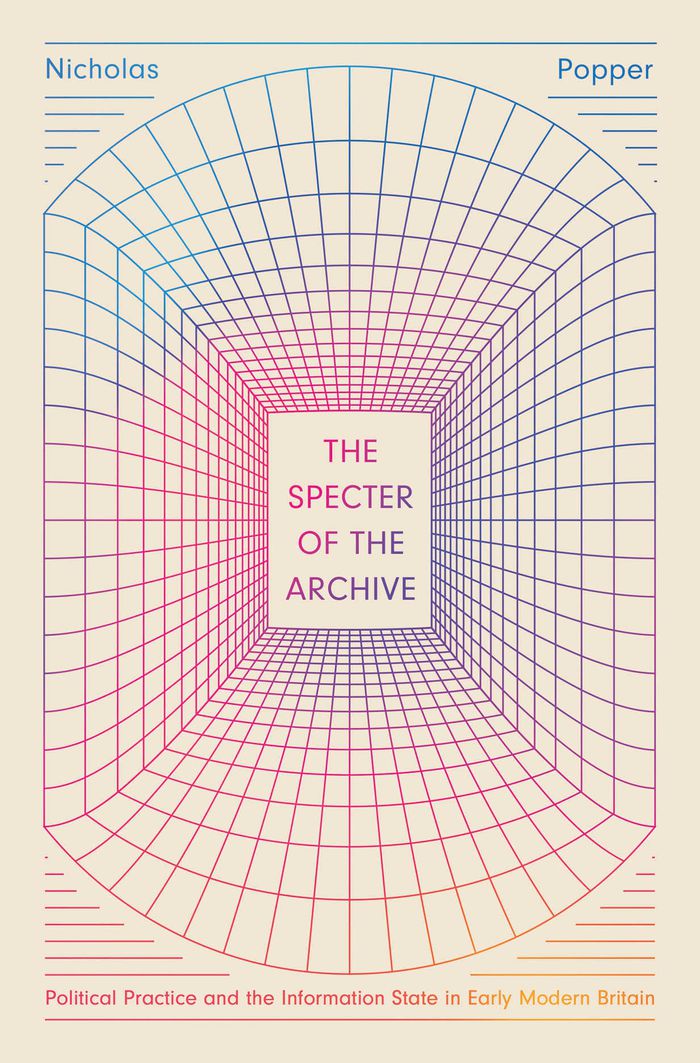
The specter of the archive: Political practice and the information state in early modern Britain
The specter of the archive: Political practice and the information state in early modern Britain
Actions:
Price:
$53.95
(available to order)
Summary:
In ''The Specter of the Archive'', Nicholas Popper shows that earlier eras had to grapple with the same problem—how to deal with too much information at their fingertips. He reveals that early modern Britain was a society newly drowning in paper, a light and durable technology whose spread allowed statesmen to record drafts, memoranda, and other ephemera that might(...)
$53.95
(available to order)
Summary:
In ''The Specter of the Archive'', Nicholas Popper shows that earlier eras had to grapple with the same problem—how to deal with too much information at their fingertips. He reveals that early modern Britain was a society newly drowning in paper, a light and durable technology whose spread allowed statesmen to record drafts, memoranda, and other ephemera that might(...)
Title:
The specter of the archive: Political practice and the information state in early modern Britain
Actions:
Price:
$53.95
(available to order)
Summary:
In ''The Specter of the Archive'', Nicholas Popper shows that earlier eras had to grapple with the same problem—how to deal with too much information at their fingertips. He reveals that early modern Britain was a society newly drowning in paper, a light and durable technology whose spread allowed statesmen to record drafts, memoranda, and other ephemera that might otherwise have been lost, and also made it possible for ordinary people to collect political texts. As original paperwork and copies alike flooded the government, information management became the core of politics. Focusing on two of the primary political archives of early modern England, the Tower of London Record Office and the State Paper Office, Popper traces the circulation of their materials through the government and the broader public sphere.
The specter of the archive: Political practice and the information state in early modern Britain
Actions:
Price:
$53.95
(available to order)
Summary:
In ''The Specter of the Archive'', Nicholas Popper shows that earlier eras had to grapple with the same problem—how to deal with too much information at their fingertips. He reveals that early modern Britain was a society newly drowning in paper, a light and durable technology whose spread allowed statesmen to record drafts, memoranda, and other ephemera that might otherwise have been lost, and also made it possible for ordinary people to collect political texts. As original paperwork and copies alike flooded the government, information management became the core of politics. Focusing on two of the primary political archives of early modern England, the Tower of London Record Office and the State Paper Office, Popper traces the circulation of their materials through the government and the broader public sphere.
Form:
books
books
Publication:
January 2024
January 2024
Subject:
Archive, library and the digital
Archive, library and the digital


