


953 Results
Form:
journals and magazines
journals and magazines

Actions:
Price:
$13.00
(available to order)
Summary:
Commentaries Managing the Present Kristin Ross Mexico 1968: The Revolution of Shame Bruno Bosteels 'Liberate socialist eminences from their bourgeois cocks!' Lynne Segal Reviews Julian Bourg, From Revolution to Ethics: May ’68 and Contemporary French Thought Knox Peden Badiou, De Quoi Sarkozy est-il le nom? Circonstances Peter Hallward Naomi Klein,(...)
Title:
Radical Philosophy 149 may / june
Actions:
Price:
$13.00
(available to order)
Summary:
Commentaries Managing the Present Kristin Ross Mexico 1968: The Revolution of Shame Bruno Bosteels 'Liberate socialist eminences from their bourgeois cocks!' Lynne Segal Reviews Julian Bourg, From Revolution to Ethics: May ’68 and Contemporary French Thought Knox Peden Badiou, De Quoi Sarkozy est-il le nom? Circonstances Peter Hallward Naomi Klein, The Shock Doctrine: The Rise of Disaster Capitalism Robert Spencer John Roberts, The Intangibilities of Form: Skill and Deskilling in Art after the Readymade Steve Edwards Andrew Hemingway, ed., Marxism and the History of Art: From William Morris to the New Left Gail Day Joanna Hodge, Derrida on Time Jean-Paul Martinon
Form:
journals and magazines
journals and magazines
Publication:
January 1900, London , New York
January 1900, London , New York
Subject:
Magazines
Magazines
Form:
journals and magazines
journals and magazines
Actions:
Price:
$40.00
(available to order)
Summary:
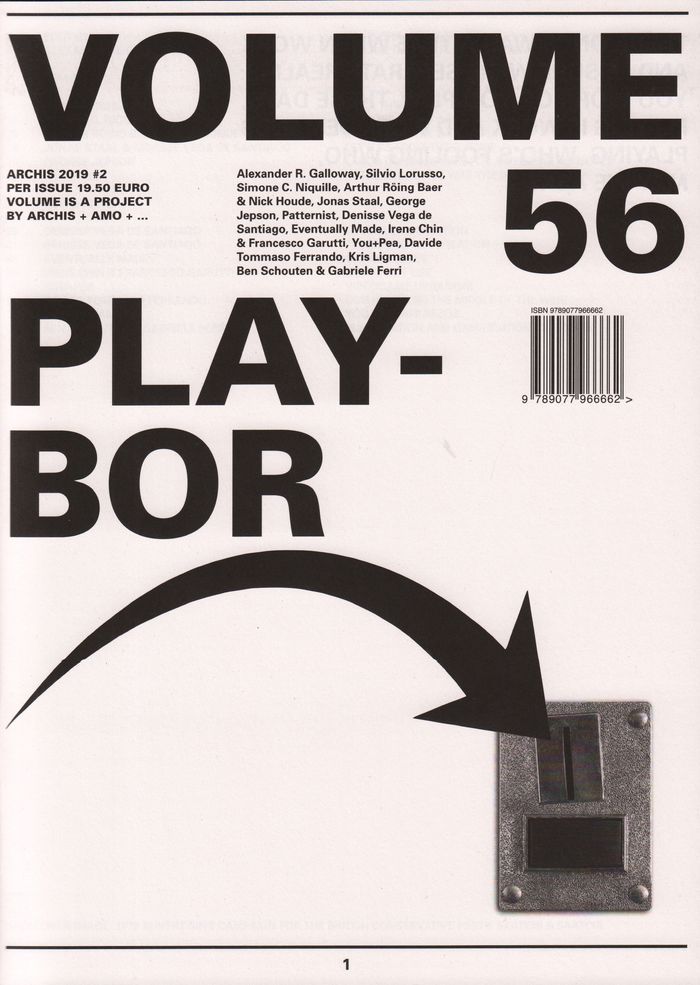
No longer are work and leisure separate realms. These days, playing is work and work demands play. This gamification of the workspace uses points, levels, and feedback, aiming to improve the worker’s engagement, boost productivity, facilitate learning, optimise systems, and more. Through the production of playful work, gamification shapes identities that fit the needs of(...)
Title:
Volume 56: Playbor. Powerplay,Playground
Actions:
Price:
$40.00
(available to order)
Summary:
No longer are work and leisure separate realms. These days, playing is work and work demands play. This gamification of the workspace uses points, levels, and feedback, aiming to improve the worker’s engagement, boost productivity, facilitate learning, optimise systems, and more. Through the production of playful work, gamification shapes identities that fit the needs of capitalism: enthusiastic, self-engaged, and self-exploitative subjects. This issue of ‘Volume’ is divided in two sections: ''Powerplay'', in which the renewed relations between work and leisure are explored, and ''Playground'', where the spatial implications of this recent focus on gaming are addressed.
Form:
journals and magazines
journals and magazines
Publication:
January 2020
January 2020
Subject:
Magazines
Magazines
Form:
books
books
Actions:
Price:
$13.99
(available in store)
Summary:
Accelerationism is the bastard offspring of a furtive liaison between Marxism and science fiction. Its basic premise is that the only way out is the way through: to get beyond capitalism, we need to push its technologies to the point where they explode. This may be dubious as a political strategy, but it works as a powerful artistic program. Other authors have debated(...)
Title:
No speed limit: essays on accelerationsim
Actions:
Price:
$13.99
(available in store)
Summary:
Accelerationism is the bastard offspring of a furtive liaison between Marxism and science fiction. Its basic premise is that the only way out is the way through: to get beyond capitalism, we need to push its technologies to the point where they explode. This may be dubious as a political strategy, but it works as a powerful artistic program. Other authors have debated the pros and cons of accelerationist politics; 'No Speed Limit' makes the case for an accelerationist aesthetics. Our present moment is illuminated, both for good and for ill, in the cracked mirror of science-fictional futurity.
Form:
books
books
Publication:
May 2016
May 2016
Subject:
Critical Theory
Critical Theory
Form:
books
books

Actions:
Price:
$60.00
(available in store)
Summary:
Alienation is often found at the heart of Italian photographer Cristiano Volk’s work, wherein the human experience is always central. Described by Volk as ''a single, neon-hued hallucination'', ''Laissez-Faire'' is a meticulously curated meditation in which he uses his camera to capture the signs and symbols of capitalism and commodity culture. Individuals no longer(...)
Title:
Cristiano Volk : laissez-faire
Actions:
Price:
$60.00
(available in store)
Summary:
Alienation is often found at the heart of Italian photographer Cristiano Volk’s work, wherein the human experience is always central. Described by Volk as ''a single, neon-hued hallucination'', ''Laissez-Faire'' is a meticulously curated meditation in which he uses his camera to capture the signs and symbols of capitalism and commodity culture. Individuals no longer experience reality directly, but instead live their entire lives behind screens. He collapses the usual parameters that shape our worldly existences – day and night, inside and outside, public and private, digital and real – into a feverishly imagined new universe, vaguely menacing and drenched in a cyberpunk sheen.
Form:
books
books
Publication:
March 2022
March 2022
Subject:
Photography monographs
Photography monographs
Form:
books
books
Actions:
Price:
$56.95
(available to order)
Summary:
In Outlaw Territories, Felicity Scott traces the relation of architecture and urbanism to human unsettlement and territorial insecurity during the 1960s and 1970s. Investigating a set of responses to the growing urban unrest in the developed and developing worlds, Scott revisits an era when the discipline of architecture staked out a role in global environmental(...)
Title:
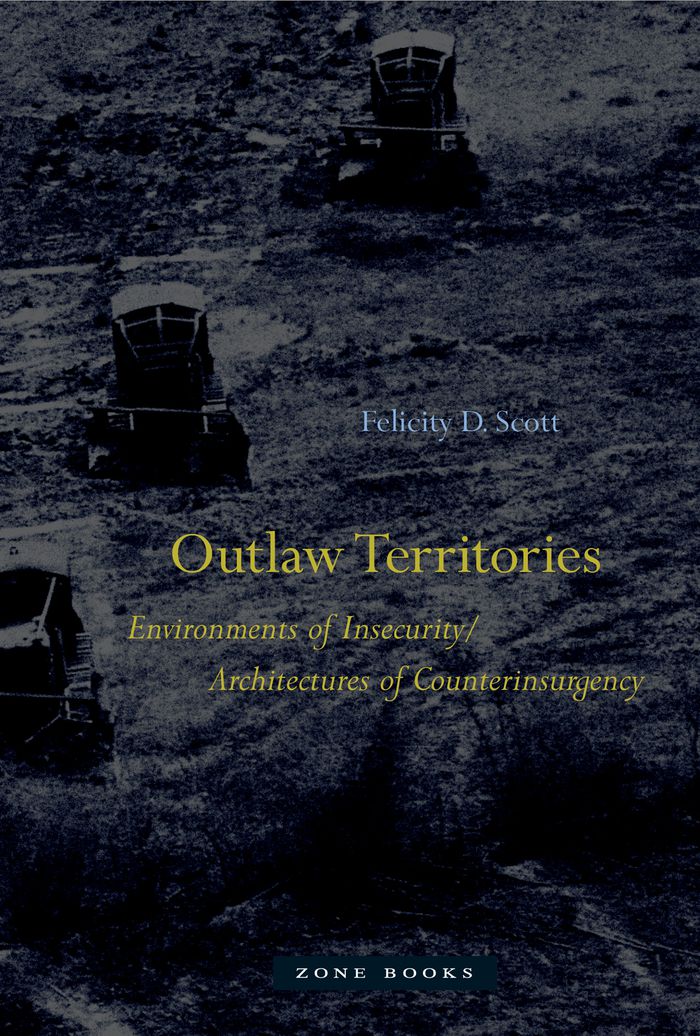
Outlaw Territories: Environments of Insecurity/ Architectures of Counterinsurgency
Actions:
Price:
$56.95
(available to order)
Summary:
In Outlaw Territories, Felicity Scott traces the relation of architecture and urbanism to human unsettlement and territorial insecurity during the 1960s and 1970s. Investigating a set of responses to the growing urban unrest in the developed and developing worlds, Scott revisits an era when the discipline of architecture staked out a role in global environmental governance and the biopolitical management of populations. She describes architecture’s response to the displacement of persons brought on by migration, urbanization, environmental catastrophe, and warfare, and she traces architecture’s relationship to the material, environmental, psychological, and geopolitical transformations brought on by postindustrial technologies and neoliberal capitalism after World War II. At the height of the U.S.-led war in Vietnam and Cambodia, with ongoing decolonization struggles in many parts of the world, architecture not only emerged as a target of political agitation because of its inherent normativity but also became heavily enmeshed with military, legal, and humanitarian apparatuses, participating in scientific and technological research dedicated to questions of international management and security. Once architecture became aligned with a global matrix of forces concerned with the environment, economic development, migration, genocide, and war, its role shifted at times toward providing strategic expertise for institutions born of neoliberal capitalism. Scott investigates this nexus and questions how and to what ends architecture and the environment came to be intimately connected to the expanded exercise of power within the shifting geopolitical frameworks at this time.
Form:
books
books
Publication:
February 2016
February 2016
Subject:
Architectural Theory
Architectural Theory
Form:
books
books
Actions:
Price:
$49.95
(available in store)
Summary:
Point Saint-Charles, a historically white working-class neighbourhood with a strong Irish and French presence, and Little Burgundy, a multiracial neighbourhood that is home to the city’s English-speaking Black community, face each other across Montreal’s Lachine Canal, once an artery around which work and industry in Montreal were clustered and by which these two(...)
Title:
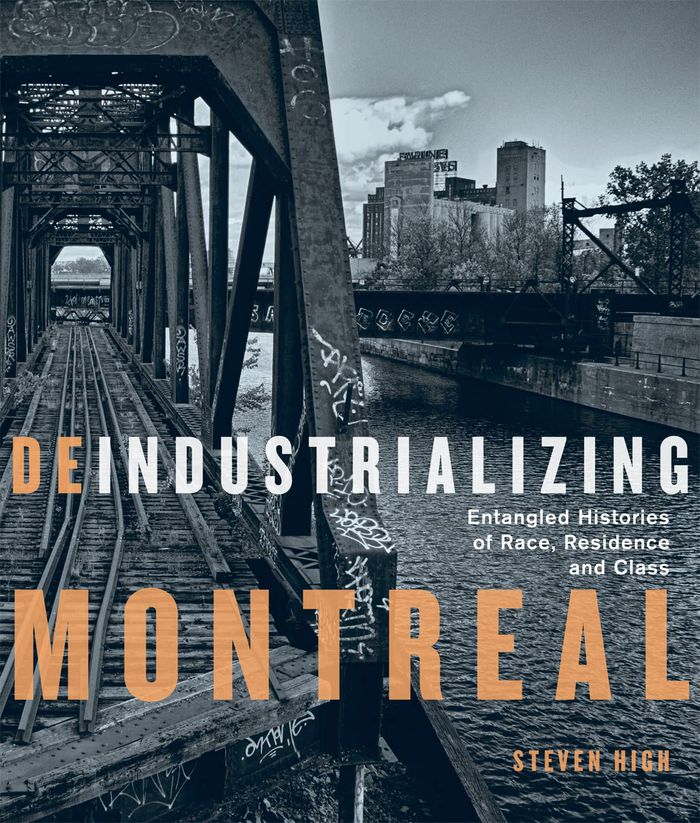
Deindustrializing Montreal: entangled histories of race, residence, and class
Actions:
Price:
$49.95
(available in store)
Summary:
Point Saint-Charles, a historically white working-class neighbourhood with a strong Irish and French presence, and Little Burgundy, a multiracial neighbourhood that is home to the city’s English-speaking Black community, face each other across Montreal’s Lachine Canal, once an artery around which work and industry in Montreal were clustered and by which these two communities were formed and divided. ''Deindustrializing Montreal'' challenges the deepening divergence of class and race analysis by recognizing the intimate relationship between capitalism, class struggles, and racial inequality. Fundamentally, deindustrialization is a process of physical and social ruination as well as part of a wider political project that leaves working-class communities impoverished and demoralized. The structural violence of capitalism occurs gradually and out of sight, but it doesn’t play out the same for everyone. Point Saint-Charles was left to rot until it was revalorized by gentrification, whereas Little Burgundy was torn apart by urban renewal and highway construction. This historical divergence had profound consequences in how urban change has been experienced, understood, and remembered. Drawing extensive interviews, a massive and varied archive of imagery, and original photography by David Lewis into a complex chorus, Steven High brings these communities to life, tracing their history from their earliest years to their decline and their current reality. He extends the analysis of deindustrialization, often focused on single-industry towns, to cities that have seemingly made the post-industrial transition.
Form:
books
books
Publication:
May 2022
May 2022
Subject:
Architecture de Montréal
Architecture de Montréal
Form:
books
books
Actions:
Holdings:
Description:
189 pages : illustrations (chiefly color) ; 18 cm
Description:
189 pages : illustrations (chiefly color) ; 18 cm
Author:
Subject:
Publication:
Paris : Parigramme, [2023], ©2023
Paris : Parigramme, [2023], ©2023
Title:
Architectures industrielles : Paris et environs : 100 bâtiments remarquables / Marie Françoise Laborde.
Actions:
Holdings:
Description:
189 pages : illustrations (chiefly color) ; 18 cm
Architectures industrielles : Paris et environs : 100 bâtiments remarquables / Marie Françoise Laborde.
Actions:
Holdings:
Description:
189 pages : illustrations (chiefly color) ; 18 cm
Form:
books
books
Publication:
Paris : Parigramme, [2023], ©2023
Paris : Parigramme, [2023], ©2023
Author:
Subject:
Form:
books
books
Actions:
Holdings:
Description:
495 pages, 1 unnumbered page : illustrations (chiefly color), plans (chiefly color), portraits (some color) ; 30 cm
Description:
495 pages, 1 unnumbered page : illustrations (chiefly color), plans (chiefly color), portraits (some color) ; 30 cm
Author:
Subject:
Publication:
New York, NY : Columbia University, [2020], [New York, New York] : Distributed by Columbia University Press., ©2020
New York, NY : Columbia University, [2020], [New York, New York] : Distributed by Columbia University Press., ©2020
Title:
Superpowers of scale / Andrés Jaque / Office for Political Innovation.
Actions:
Holdings:
Description:
495 pages, 1 unnumbered page : illustrations (chiefly color), plans (chiefly color), portraits (some color) ; 30 cm
Superpowers of scale / Andrés Jaque / Office for Political Innovation.
Actions:
Holdings:
Description:
495 pages, 1 unnumbered page : illustrations (chiefly color), plans (chiefly color), portraits (some color) ; 30 cm
Form:
books
books
Publication:
New York, NY : Columbia University, [2020], [New York, New York] : Distributed by Columbia University Press., ©2020
New York, NY : Columbia University, [2020], [New York, New York] : Distributed by Columbia University Press., ©2020
Author:
Subject:
Form:
books
books
Price:
$138.00
(available to order)
Summary:
If postmodernism is indeed ''the cultural logic of late capitalism,'' why did typical postmodernist themes like ornament, colour, history and identity find their application in the architecture of the socialist Second World? How do we explain the retreat into paper architecture and theoretical discussion in societies still nominally devoted to socialist modernization?(...)
Title:
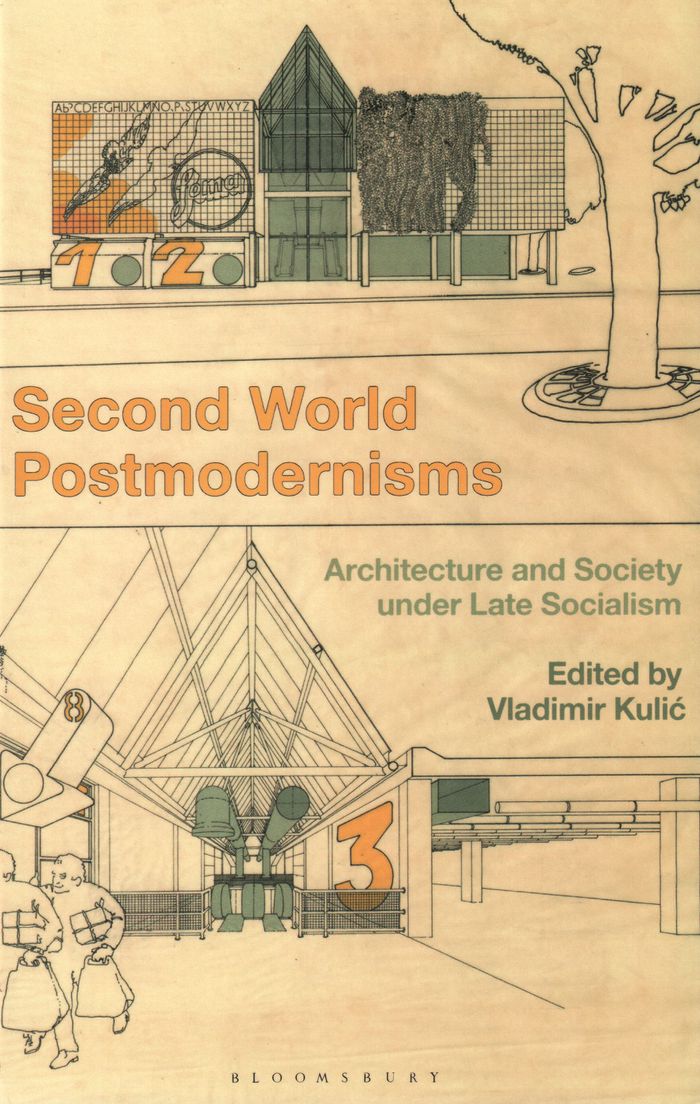
Second world postmodernisms: architecture and society under late socialism
Actions:
Price:
$138.00
(available to order)
Summary:
If postmodernism is indeed ''the cultural logic of late capitalism,'' why did typical postmodernist themes like ornament, colour, history and identity find their application in the architecture of the socialist Second World? How do we explain the retreat into paper architecture and theoretical discussion in societies still nominally devoted to socialist modernization? Exploring the intersection of two areas of growing scholarly interest - postmodernism and the architecture of the former socialist world - this edited collection stakes out new ground in charting architecture's various transformations in the 1970s and 80s. Fourteen essays together explore the question of whether or not architectural postmodernism had a specific Second World variant.
Form:
books
books
Publication:
February 2019
February 2019
Subject:
Architectural Theory
Architectural Theory
Form:
journals and magazines
journals and magazines
Title:
Scapegoat 07 : Incarceration
Scapegoat 07 : Incarceration
Actions:
Price:
$25.00
(available to order)
Summary:
As a mytheme, the figure of the scapegoat carries the burden of the city and its sins. Walking in exile, the scapegoat was once freed from the constraints of civilization. Today, with no land left unmapped, and with processes of urbanization central to political economic struggles, Scapegoat is exiled within the reality of global capital. The journal examines the(...)
Title:
Scapegoat 07 : Incarceration
Actions:
Price:
$25.00
(available to order)
Summary:
As a mytheme, the figure of the scapegoat carries the burden of the city and its sins. Walking in exile, the scapegoat was once freed from the constraints of civilization. Today, with no land left unmapped, and with processes of urbanization central to political economic struggles, Scapegoat is exiled within the reality of global capital. The journal examines the relationship between capitalism and the built environment, confronting the coercive and violent organization of space, the exploitation of labour and resources, and the unequal distribution of environmental risks and benefits. Throughout our investigation of design and its promises, we return to the politics of making as a politics to be constructed.
Form:
journals and magazines
journals and magazines
Publication:
December 2014
December 2014
Subject:
Magazines
Magazines


