


1059 Results
Form:
books
books
Actions:
Price:
$38.00
(available to order)
Summary:
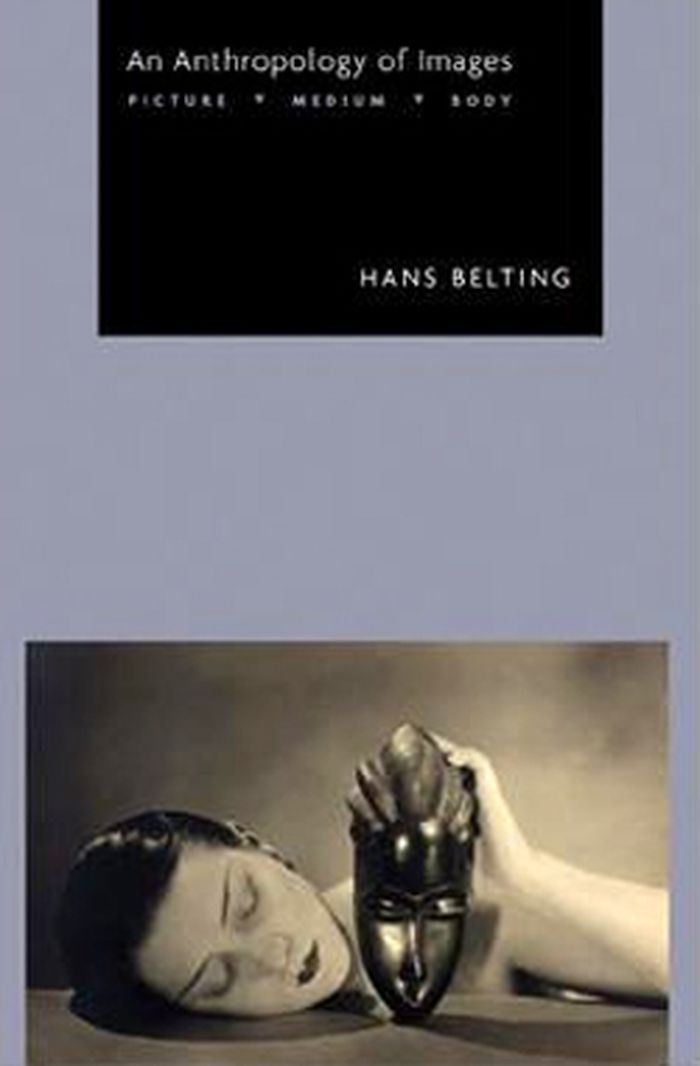
Refusing to reduce images to their material embodiment yet acknowledging the importance of the historical media in which images are manifested, An Anthropology of Images presents a challenging and provocative new account of what pictures are and how they function.
$38.00
(available to order)
Summary:
Refusing to reduce images to their material embodiment yet acknowledging the importance of the historical media in which images are manifested, An Anthropology of Images presents a challenging and provocative new account of what pictures are and how they function.
Title:
An anthropology of images: picture, medium, body
Actions:
Price:
$38.00
(available to order)
Summary:
Refusing to reduce images to their material embodiment yet acknowledging the importance of the historical media in which images are manifested, An Anthropology of Images presents a challenging and provocative new account of what pictures are and how they function.
An anthropology of images: picture, medium, body
Actions:
Price:
$38.00
(available to order)
Summary:
Refusing to reduce images to their material embodiment yet acknowledging the importance of the historical media in which images are manifested, An Anthropology of Images presents a challenging and provocative new account of what pictures are and how they function.
Form:
books
books
Publication:
July 2014
July 2014
Subject:
Art Theory
Art Theory
Form:
books
books

Actions:
Price:
$54.95
(available to order)
Summary:
Picturing Mexico: From the Camera Lucida to Film explores the early artistic and cultural factors that contributed to the emergence of film in a heterogeneous media environment at the turn of the 20th century. Focusing his attention upon lithographs and photographs of Mexico created by European and North American visitors, Fullerton argues that the introduction of the(...)
$54.95
(available to order)
Summary:
Picturing Mexico: From the Camera Lucida to Film explores the early artistic and cultural factors that contributed to the emergence of film in a heterogeneous media environment at the turn of the 20th century. Focusing his attention upon lithographs and photographs of Mexico created by European and North American visitors, Fullerton argues that the introduction of the(...)
Title:
Picturing Mexico: from the camera lucida to film
Actions:
Price:
$54.95
(available to order)
Summary:
Picturing Mexico: From the Camera Lucida to Film explores the early artistic and cultural factors that contributed to the emergence of film in a heterogeneous media environment at the turn of the 20th century. Focusing his attention upon lithographs and photographs of Mexico created by European and North American visitors, Fullerton argues that the introduction of the illustrated press and the popular photographic album towards the end of the 19th century transformed the private space of the printed page. He contends that the dynamics of the moving image were informed by the convergence of these media forms.
Picturing Mexico: from the camera lucida to film
Actions:
Price:
$54.95
(available to order)
Summary:
Picturing Mexico: From the Camera Lucida to Film explores the early artistic and cultural factors that contributed to the emergence of film in a heterogeneous media environment at the turn of the 20th century. Focusing his attention upon lithographs and photographs of Mexico created by European and North American visitors, Fullerton argues that the introduction of the illustrated press and the popular photographic album towards the end of the 19th century transformed the private space of the printed page. He contends that the dynamics of the moving image were informed by the convergence of these media forms.
Form:
books
books
Publication:
April 2014
April 2014
Subject:
Theory of Photography
Theory of Photography
Form:
journals and magazines
journals and magazines

Price:
$27.95
(available in store)
Summary:
TURBA is the first journal for the study, theory, and praxis of curatorial strategies in the live arts. The live arts are broadly defined as those arts in which contingent, momentary acts and events, performed by human or other autonomous agents, are crucial to the aesthetic perception and the emergence of meaning in ephemeral time-based work. They include, but are not(...)
$27.95
(available in store)
Summary:
TURBA is the first journal for the study, theory, and praxis of curatorial strategies in the live arts. The live arts are broadly defined as those arts in which contingent, momentary acts and events, performed by human or other autonomous agents, are crucial to the aesthetic perception and the emergence of meaning in ephemeral time-based work. They include, but are not(...)
Title:
TURBA vol. 4 issue 2 : Curating audience-relationships & engagements
Actions:
Price:
$27.95
(available in store)
Summary:
TURBA is the first journal for the study, theory, and praxis of curatorial strategies in the live arts. The live arts are broadly defined as those arts in which contingent, momentary acts and events, performed by human or other autonomous agents, are crucial to the aesthetic perception and the emergence of meaning in ephemeral time-based work. They include, but are not limited to, dance, music, sound art, theatre, performance art, verbal arts, circus arts, live media arts and inter-arts performance works. With this journal, we aim to create a platform for the exploration of ideas, concepts, constraints, expectations, and contingencies which guide and drive curatorial practices in these fields.
TURBA vol. 4 issue 2 : Curating audience-relationships & engagements
Actions:
Price:
$27.95
(available in store)
Summary:
TURBA is the first journal for the study, theory, and praxis of curatorial strategies in the live arts. The live arts are broadly defined as those arts in which contingent, momentary acts and events, performed by human or other autonomous agents, are crucial to the aesthetic perception and the emergence of meaning in ephemeral time-based work. They include, but are not limited to, dance, music, sound art, theatre, performance art, verbal arts, circus arts, live media arts and inter-arts performance works. With this journal, we aim to create a platform for the exploration of ideas, concepts, constraints, expectations, and contingencies which guide and drive curatorial practices in these fields.
Form:
journals and magazines
journals and magazines
Publication:
October 2025
October 2025
Form:
books
books
Actions:
Price:
$32.95
(available to order)
Summary:
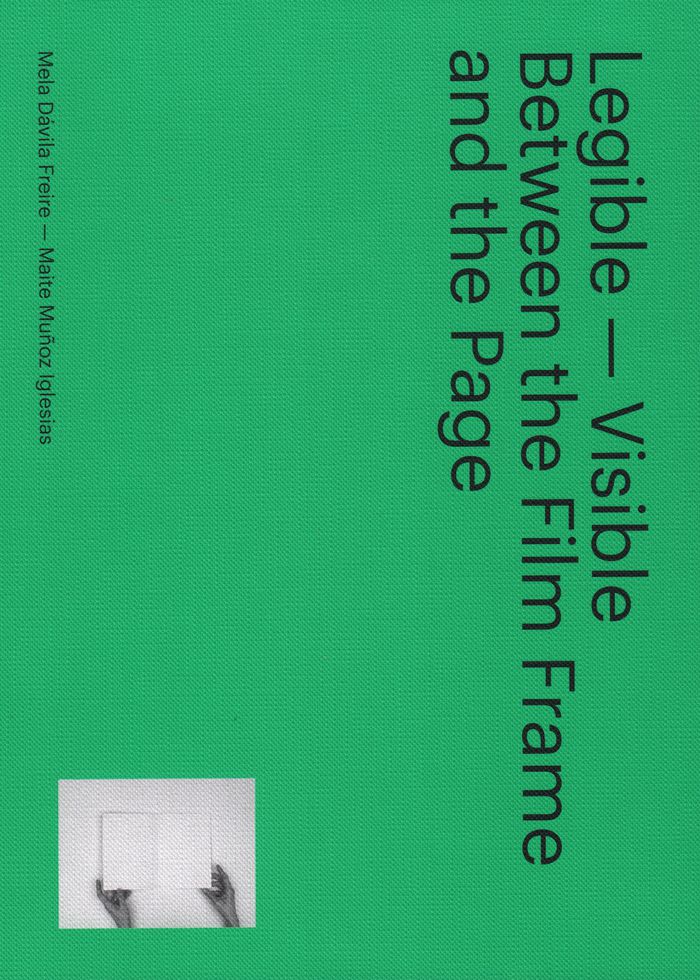
''Legible-Visible'' explores the relationship between print publications and audio-visual documents, two of the most important media in the social and cultural landscape of our time—and two forms that also define the evolution of contemporary art in the twentieth and twenty-first centuries. Mela Dávila and Maite Muñoz here show how the arrival of inexpensive home video(...)
$32.95
(available to order)
Summary:
''Legible-Visible'' explores the relationship between print publications and audio-visual documents, two of the most important media in the social and cultural landscape of our time—and two forms that also define the evolution of contemporary art in the twentieth and twenty-first centuries. Mela Dávila and Maite Muñoz here show how the arrival of inexpensive home video(...)
Title:
Legible-visible: between the film frame and the page
Actions:
Price:
$32.95
(available to order)
Summary:
''Legible-Visible'' explores the relationship between print publications and audio-visual documents, two of the most important media in the social and cultural landscape of our time—and two forms that also define the evolution of contemporary art in the twentieth and twenty-first centuries. Mela Dávila and Maite Muñoz here show how the arrival of inexpensive home video technologies in the 1970s and then of digital media at the turn of the millennium sparked revolutions in the creation and diffusion of both video artworks and artists' publications. Dávila proposes a theoretical and historical framework for works long dismissed by the market because of their serial nature, while Muñoz shows how artists have taken advantage of the permeability between publications and audovisual elements.
Legible-visible: between the film frame and the page
Actions:
Price:
$32.95
(available to order)
Summary:
''Legible-Visible'' explores the relationship between print publications and audio-visual documents, two of the most important media in the social and cultural landscape of our time—and two forms that also define the evolution of contemporary art in the twentieth and twenty-first centuries. Mela Dávila and Maite Muñoz here show how the arrival of inexpensive home video technologies in the 1970s and then of digital media at the turn of the millennium sparked revolutions in the creation and diffusion of both video artworks and artists' publications. Dávila proposes a theoretical and historical framework for works long dismissed by the market because of their serial nature, while Muñoz shows how artists have taken advantage of the permeability between publications and audovisual elements.
Form:
books
books
Publication:
August 2018
August 2018
Subject:
Art Theory
Art Theory
Form:
books
books
Price:
$22.00
(available to order)
Summary:
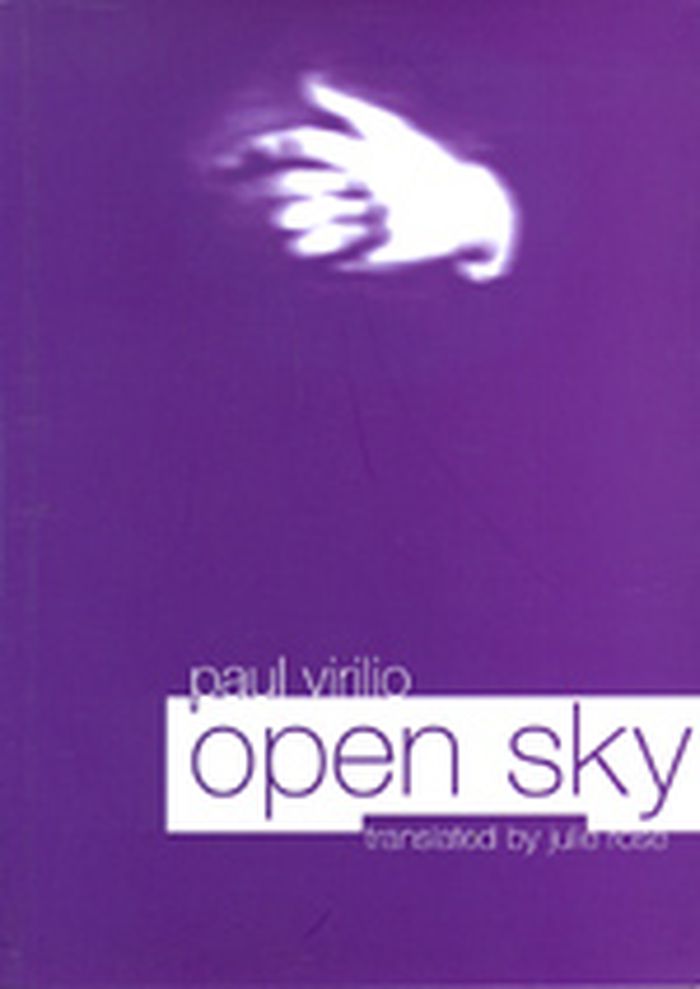
Deepening and extending his earlier work, Paul Virilio explores the growing danger of what he calls a "generalized accident," provoked by the breakdown of our collective and individual relation to time, space and movement in the contex of global electronic media. Translated by Julie Rose.
$22.00
(available to order)
Summary:
Deepening and extending his earlier work, Paul Virilio explores the growing danger of what he calls a "generalized accident," provoked by the breakdown of our collective and individual relation to time, space and movement in the contex of global electronic media. Translated by Julie Rose.
Title:
Open sky
Actions:
Price:
$22.00
(available to order)
Summary:
Deepening and extending his earlier work, Paul Virilio explores the growing danger of what he calls a "generalized accident," provoked by the breakdown of our collective and individual relation to time, space and movement in the contex of global electronic media. Translated by Julie Rose.
Open sky
Actions:
Price:
$22.00
(available to order)
Summary:
Deepening and extending his earlier work, Paul Virilio explores the growing danger of what he calls a "generalized accident," provoked by the breakdown of our collective and individual relation to time, space and movement in the contex of global electronic media. Translated by Julie Rose.
Form:
books
books
Publication:
July 1997, London / New York
July 1997, London / New York
Subject:
Critical Theory
Critical Theory
Form:
books
books
Title:
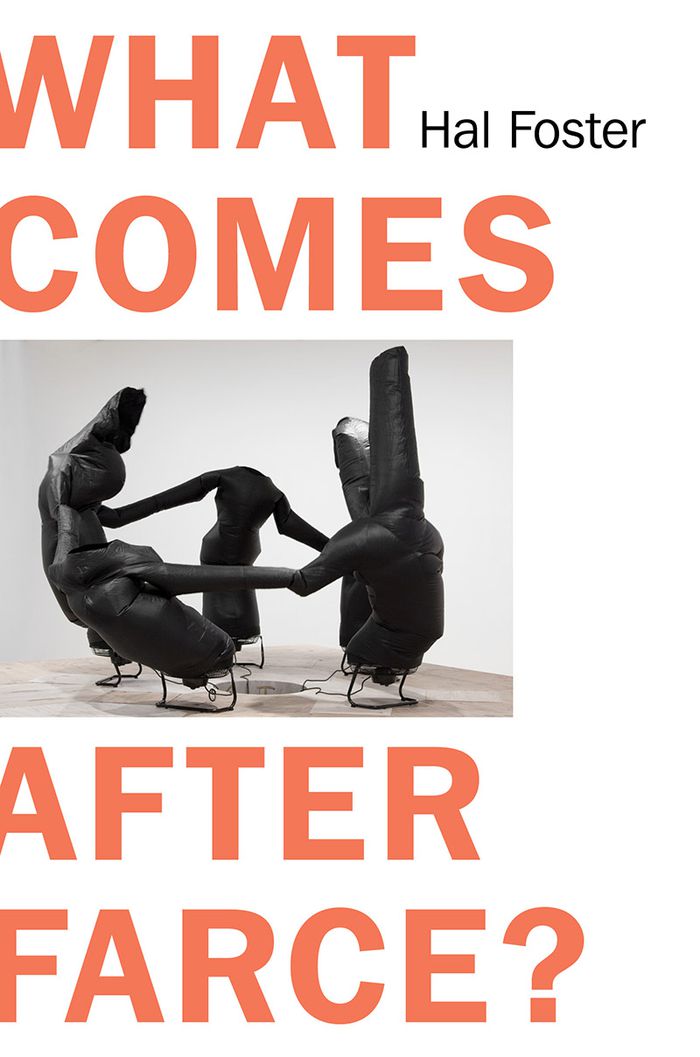
What comes after farce?
What comes after farce?
Actions:
Price:
$33.95
(available to order)
Summary:
If farce follows tragedy, what follows farce? Where does the double predicament of a post-truth and post-shame politics leave artists and critics on the left? How to demystify a hegemonic order that dismisses its own contradictions? How to belittle a political elite that cannot be embarrassed, or to mock party leaders who thrive on the absurd? How to out-dada President(...)
$33.95
(available to order)
Summary:
If farce follows tragedy, what follows farce? Where does the double predicament of a post-truth and post-shame politics leave artists and critics on the left? How to demystify a hegemonic order that dismisses its own contradictions? How to belittle a political elite that cannot be embarrassed, or to mock party leaders who thrive on the absurd? How to out-dada President(...)
Title:
What comes after farce?
Actions:
Price:
$33.95
(available to order)
Summary:
If farce follows tragedy, what follows farce? Where does the double predicament of a post-truth and post-shame politics leave artists and critics on the left? How to demystify a hegemonic order that dismisses its own contradictions? How to belittle a political elite that cannot be embarrassed, or to mock party leaders who thrive on the absurd? How to out-dada President Ubu? And, in any event, why add outrage to a media economy that thrives on the same? 'What Comes After Farce?' comments on shifts in art, criticism, and fiction in the face of the current regime of war, surveillance, extreme inequality, and media disruption. A first section focuses on the cultural politics of emergency since 9/11, including the use and abuse of trauma, paranoia, and kitsch. A second reviews the neoliberal makeover of art institutions during the same period. Finally, a third section surveys transformations in media as reflected in recent art, film, and fiction. Among the phenomena explored here are “machine vision” (images produced by machines for other machines without a human interface),“operational images” (images that do not represent the world so much as intervene in it), and the algorithmic scripting of information so pervasive in our everyday lives.
What comes after farce?
Actions:
Price:
$33.95
(available to order)
Summary:
If farce follows tragedy, what follows farce? Where does the double predicament of a post-truth and post-shame politics leave artists and critics on the left? How to demystify a hegemonic order that dismisses its own contradictions? How to belittle a political elite that cannot be embarrassed, or to mock party leaders who thrive on the absurd? How to out-dada President Ubu? And, in any event, why add outrage to a media economy that thrives on the same? 'What Comes After Farce?' comments on shifts in art, criticism, and fiction in the face of the current regime of war, surveillance, extreme inequality, and media disruption. A first section focuses on the cultural politics of emergency since 9/11, including the use and abuse of trauma, paranoia, and kitsch. A second reviews the neoliberal makeover of art institutions during the same period. Finally, a third section surveys transformations in media as reflected in recent art, film, and fiction. Among the phenomena explored here are “machine vision” (images produced by machines for other machines without a human interface),“operational images” (images that do not represent the world so much as intervene in it), and the algorithmic scripting of information so pervasive in our everyday lives.
Form:
books
books
Publication:
June 2020
June 2020
Subject:
Critical Theory
Critical Theory
Form:
books
books
Actions:
Price:
$17.95
(available to order)
Summary:
Almost a half-century after Yayoi Kusama debuted her landmark installation Infinity Mirror Room - Phalli's Field (1965) in New York, the work remains challenging and unclassifiable. Shifting between the Pop-like and the Surreal, the Minimal and the metaphorical, the figurative and the abstract, the psychotic and the erotic, with references to "free love" and psychedelia,(...)
$17.95
(available to order)
Summary:
Almost a half-century after Yayoi Kusama debuted her landmark installation Infinity Mirror Room - Phalli's Field (1965) in New York, the work remains challenging and unclassifiable. Shifting between the Pop-like and the Surreal, the Minimal and the metaphorical, the figurative and the abstract, the psychotic and the erotic, with references to "free love" and psychedelia,(...)
Title:
Yayoi Kusuma : Infinity mirror room - Phalli's Field
Actions:
Price:
$17.95
(available to order)
Summary:
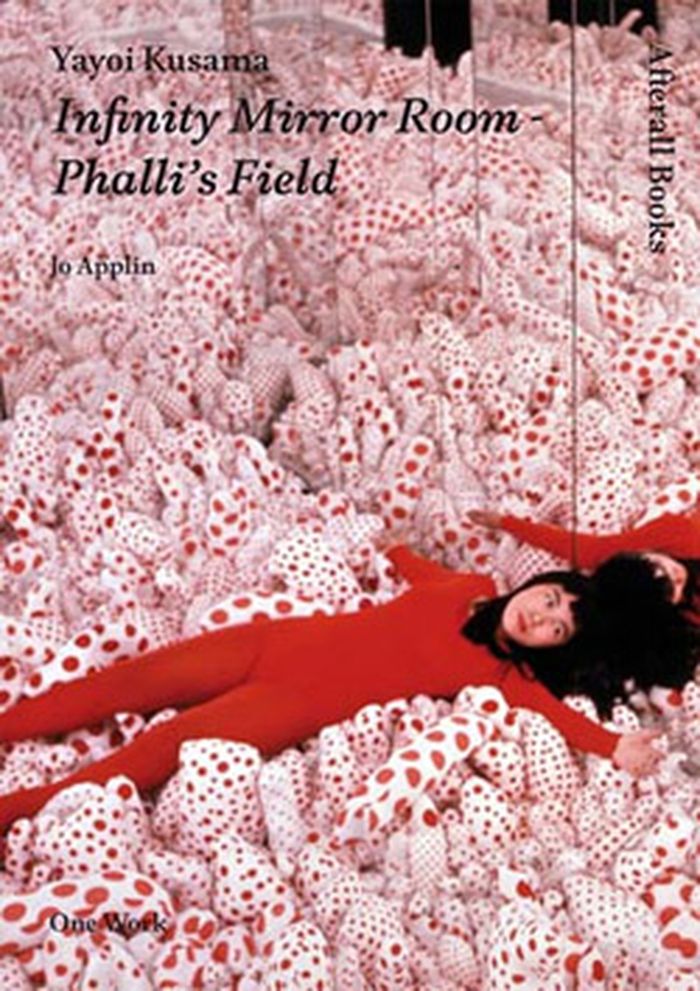
Almost a half-century after Yayoi Kusama debuted her landmark installation Infinity Mirror Room - Phalli's Field (1965) in New York, the work remains challenging and unclassifiable. Shifting between the Pop-like and the Surreal, the Minimal and the metaphorical, the figurative and the abstract, the psychotic and the erotic, with references to "free love" and psychedelia, it seemed to embody all that the 1960s was about, while at the same time denying the prevailing aesthetics of its time. The installation itself was a room lined with mirrored panels and carpeted with several hundred brightly polka-dotted soft fabric protrusions into which the visitor was completely absorbed. Kusama simply called it "a sublime, miraculous field of phalluses." A precursor of performance-based feminist art practice, media pranksterism, and "Occupy" movements, Kusama (born in 1929) was once as well known as her admirers - Andy Warhol, Donald Judd, and Joseph Cornell. In this first monograph on an epoch-defining work, Jo Applin looks at the installation in detail and places it in the context of subsequent art practice and theory as well as Kusama's own (as she called it) "obsessional art." Applin also discusses Kusama's relationship to her contemporaries, particularly those working with environments, abstract-erotic sculpture, and mirrors, and those grappling with such issues as abstraction, eroticism, sexuality, and softness. The work of Lee Lozano, Claes Oldenburg, Louise Bourgeois, and Eva Hesse is seen anew when considered in relation to Yayoi Kusama's.
Yayoi Kusuma : Infinity mirror room - Phalli's Field
Actions:
Price:
$17.95
(available to order)
Summary:
Almost a half-century after Yayoi Kusama debuted her landmark installation Infinity Mirror Room - Phalli's Field (1965) in New York, the work remains challenging and unclassifiable. Shifting between the Pop-like and the Surreal, the Minimal and the metaphorical, the figurative and the abstract, the psychotic and the erotic, with references to "free love" and psychedelia, it seemed to embody all that the 1960s was about, while at the same time denying the prevailing aesthetics of its time. The installation itself was a room lined with mirrored panels and carpeted with several hundred brightly polka-dotted soft fabric protrusions into which the visitor was completely absorbed. Kusama simply called it "a sublime, miraculous field of phalluses." A precursor of performance-based feminist art practice, media pranksterism, and "Occupy" movements, Kusama (born in 1929) was once as well known as her admirers - Andy Warhol, Donald Judd, and Joseph Cornell. In this first monograph on an epoch-defining work, Jo Applin looks at the installation in detail and places it in the context of subsequent art practice and theory as well as Kusama's own (as she called it) "obsessional art." Applin also discusses Kusama's relationship to her contemporaries, particularly those working with environments, abstract-erotic sculpture, and mirrors, and those grappling with such issues as abstraction, eroticism, sexuality, and softness. The work of Lee Lozano, Claes Oldenburg, Louise Bourgeois, and Eva Hesse is seen anew when considered in relation to Yayoi Kusama's.
Form:
books
books
Publication:
November 2012
November 2012
Subject:
Art Theory
Art Theory
Form:
books
books
Actions:
Price:
$48.00
(available to order)
Summary:
Is there a cultural logic of what we have come to call the information age? Have the technologies and techniques centered on the computer provided not only tools but also the metaphors through which we now understand the social and economic formation of our world? In Control, Seb Franklin addresses the conditions of knowledge that make the concept of the "information(...)
$48.00
(available to order)
Summary:
Is there a cultural logic of what we have come to call the information age? Have the technologies and techniques centered on the computer provided not only tools but also the metaphors through which we now understand the social and economic formation of our world? In Control, Seb Franklin addresses the conditions of knowledge that make the concept of the "information(...)
Title:
Control: digitality as cultural logic
Actions:
Price:
$48.00
(available to order)
Summary:
Is there a cultural logic of what we have come to call the information age? Have the technologies and techniques centered on the computer provided not only tools but also the metaphors through which we now understand the social and economic formation of our world? In Control, Seb Franklin addresses the conditions of knowledge that make the concept of the "information economy" possible while at the same time obscuring its effects on material social spaces. In so doing, Franklin traces three intertwined threads: the relationships among information, labor, and social management that emerged in the nineteenth century; the mid-twentieth-century diffusion of computational metaphors; and the appearance of informatic principles in certain contemporary socioeconomic and cultural practices. Drawing on critical theory, media theory, and the history of science, Franklin names control as the episteme grounding late capitalism. Beyond any specific device or set of technically mediated practices, digitality functions within this episteme as the logical basis for reshaped concepts of labor, subjectivity, and collectivity, as well as for the intensification of older modes of exclusion and dispossession. In tracking the pervasiveness of this logical mode into the present, Franklin locates the cultural traces of control across a diverse body of objects and practices, from cybernetics to economic theory and management styles, and from concepts of language and subjectivity to literary texts, films, and video games.
Control: digitality as cultural logic
Actions:
Price:
$48.00
(available to order)
Summary:
Is there a cultural logic of what we have come to call the information age? Have the technologies and techniques centered on the computer provided not only tools but also the metaphors through which we now understand the social and economic formation of our world? In Control, Seb Franklin addresses the conditions of knowledge that make the concept of the "information economy" possible while at the same time obscuring its effects on material social spaces. In so doing, Franklin traces three intertwined threads: the relationships among information, labor, and social management that emerged in the nineteenth century; the mid-twentieth-century diffusion of computational metaphors; and the appearance of informatic principles in certain contemporary socioeconomic and cultural practices. Drawing on critical theory, media theory, and the history of science, Franklin names control as the episteme grounding late capitalism. Beyond any specific device or set of technically mediated practices, digitality functions within this episteme as the logical basis for reshaped concepts of labor, subjectivity, and collectivity, as well as for the intensification of older modes of exclusion and dispossession. In tracking the pervasiveness of this logical mode into the present, Franklin locates the cultural traces of control across a diverse body of objects and practices, from cybernetics to economic theory and management styles, and from concepts of language and subjectivity to literary texts, films, and video games.
Form:
books
books
Publication:
November 2015
November 2015
Subject:
Archive, library and the digital
Archive, library and the digital
Form:
books
books
Actions:
Price:
$39.95
(available to order)
Summary:
The first volume in a new series from Jovis on landscape architecture today, Landscape Vision Motion asks the question: what objectives can be achieved in the theoretical exchange between visual studies, digital media, film, space and motion in the field of landscape architecture? Professionals from various fields contribute.
$39.95
(available to order)
Summary:
The first volume in a new series from Jovis on landscape architecture today, Landscape Vision Motion asks the question: what objectives can be achieved in the theoretical exchange between visual studies, digital media, film, space and motion in the field of landscape architecture? Professionals from various fields contribute.
Title:
Landscape vision motion (landscript no.1)
Actions:
Price:
$39.95
(available to order)
Summary:
The first volume in a new series from Jovis on landscape architecture today, Landscape Vision Motion asks the question: what objectives can be achieved in the theoretical exchange between visual studies, digital media, film, space and motion in the field of landscape architecture? Professionals from various fields contribute.
Landscape vision motion (landscript no.1)
Actions:
Price:
$39.95
(available to order)
Summary:
The first volume in a new series from Jovis on landscape architecture today, Landscape Vision Motion asks the question: what objectives can be achieved in the theoretical exchange between visual studies, digital media, film, space and motion in the field of landscape architecture? Professionals from various fields contribute.
Form:
books
books
Publication:
October 2012
October 2012
Subject:
Landscape Theory
Landscape Theory
Form:
books
books
Actions:
Price:
$39.95
(available to order)
Summary:
Re-Imagining the City: Art, Globalization, and Urban Spaces examines how contemporary processes of globalization are transforming cultural experience and production in urban spaces. It maps how cultural productions in art, architecture, and communications media are contributing to the reimagining of place and identity through events, artifacts, and attitudes.
$39.95
(available to order)
Summary:
Re-Imagining the City: Art, Globalization, and Urban Spaces examines how contemporary processes of globalization are transforming cultural experience and production in urban spaces. It maps how cultural productions in art, architecture, and communications media are contributing to the reimagining of place and identity through events, artifacts, and attitudes.
Subject:
Architectural Theory
Architectural Theory
Publication:
February 2013
February 2013
Title:
Re-imagining the city : art, globalization and urban spaces
Actions:
Price:
$39.95
(available to order)
Summary:
Re-Imagining the City: Art, Globalization, and Urban Spaces examines how contemporary processes of globalization are transforming cultural experience and production in urban spaces. It maps how cultural productions in art, architecture, and communications media are contributing to the reimagining of place and identity through events, artifacts, and attitudes.
Re-imagining the city : art, globalization and urban spaces
Actions:
Price:
$39.95
(available to order)
Summary:
Re-Imagining the City: Art, Globalization, and Urban Spaces examines how contemporary processes of globalization are transforming cultural experience and production in urban spaces. It maps how cultural productions in art, architecture, and communications media are contributing to the reimagining of place and identity through events, artifacts, and attitudes.
Form:
books
books
Publication:
February 2013
February 2013
Subject:
Architectural Theory
Architectural Theory


