


951 Results
Form:
books
books

Title:
In defense of lost causes
In defense of lost causes
Actions:
Price:
$34.95
(available to order)
Summary:
Is global emancipation a lost cause? Are universal values outdated relics of an earlier age? In the postmodern world, ideologies of all kinds have been cast in doubt. In this combative new work, renowned theorist Slavoj Zizek takes on the reigning postmodern agenda with a manifesto for several "lost causes". From a provocative redemption of Heideggers engagement with the(...)
$34.95
(available to order)
Summary:
Is global emancipation a lost cause? Are universal values outdated relics of an earlier age? In the postmodern world, ideologies of all kinds have been cast in doubt. In this combative new work, renowned theorist Slavoj Zizek takes on the reigning postmodern agenda with a manifesto for several "lost causes". From a provocative redemption of Heideggers engagement with the(...)
Title:
In defense of lost causes
Actions:
Price:
$34.95
(available to order)
Summary:
Is global emancipation a lost cause? Are universal values outdated relics of an earlier age? In the postmodern world, ideologies of all kinds have been cast in doubt. In this combative new work, renowned theorist Slavoj Zizek takes on the reigning postmodern agenda with a manifesto for several "lost causes". From a provocative redemption of Heideggers engagement with the Third Reich as "a right step in the wrong direction" to reasserting class struggle as the underlying reality of global capitalism, to a defense of the emancipatory legacy of Christianity against New Age spiritualism, Zizek confronts the failures of contemporary theory and proposes unexpected resolutions.
In defense of lost causes
Actions:
Price:
$34.95
(available to order)
Summary:
Is global emancipation a lost cause? Are universal values outdated relics of an earlier age? In the postmodern world, ideologies of all kinds have been cast in doubt. In this combative new work, renowned theorist Slavoj Zizek takes on the reigning postmodern agenda with a manifesto for several "lost causes". From a provocative redemption of Heideggers engagement with the Third Reich as "a right step in the wrong direction" to reasserting class struggle as the underlying reality of global capitalism, to a defense of the emancipatory legacy of Christianity against New Age spiritualism, Zizek confronts the failures of contemporary theory and proposes unexpected resolutions.
Form:
books
books
Publication:
April 2008, London, New York
April 2008, London, New York
Subject:
Critical Theory
Critical Theory
Form:
books
books
Actions:
Price:
$27.95
(available to order)
Summary:
The violence wrought by climate change, toxic drift, deforestation, oil spills, and the environmental aftermath of war takes place gradually and often invisibly. Using the innovative concept of “slow violence” to describe these threats, Rob Nixon focuses on the inattention we have paid to the attritional lethality of many environmental crises, in contrast with the(...)
$27.95
(available to order)
Summary:
The violence wrought by climate change, toxic drift, deforestation, oil spills, and the environmental aftermath of war takes place gradually and often invisibly. Using the innovative concept of “slow violence” to describe these threats, Rob Nixon focuses on the inattention we have paid to the attritional lethality of many environmental crises, in contrast with the(...)
Title:
Slow violence and the environmentalism of the poor
Actions:
Price:
$27.95
(available to order)
Summary:
The violence wrought by climate change, toxic drift, deforestation, oil spills, and the environmental aftermath of war takes place gradually and often invisibly. Using the innovative concept of “slow violence” to describe these threats, Rob Nixon focuses on the inattention we have paid to the attritional lethality of many environmental crises, in contrast with the sensational, spectacle-driven messaging that impels public activism today. Slow violence, because it is so readily ignored by a hard-charging capitalism, exacerbates the vulnerability of ecosystems and of people who are poor, disempowered, and often involuntarily displaced, while fueling social conflicts that arise from desperation as life-sustaining conditions erode.
Slow violence and the environmentalism of the poor
Actions:
Price:
$27.95
(available to order)
Summary:
The violence wrought by climate change, toxic drift, deforestation, oil spills, and the environmental aftermath of war takes place gradually and often invisibly. Using the innovative concept of “slow violence” to describe these threats, Rob Nixon focuses on the inattention we have paid to the attritional lethality of many environmental crises, in contrast with the sensational, spectacle-driven messaging that impels public activism today. Slow violence, because it is so readily ignored by a hard-charging capitalism, exacerbates the vulnerability of ecosystems and of people who are poor, disempowered, and often involuntarily displaced, while fueling social conflicts that arise from desperation as life-sustaining conditions erode.
Form:
books
books
Publication:
March 2013
March 2013
Subject:
Environment and environmental theory
Environment and environmental theory
Form:
books
books
Actions:
Price:
$99.95
(available to order)
Summary:
Currently based in London and Zürich, Sergison Bates architects has been active since 1996 and since gained international renown. This issue presents an overview of their output from the past dozen years, including private homes, urban housing, care facilities, office buildings, public libraries, and more. Among these are the Novartis Welcome Centre and Office Building in(...)
$99.95
(available to order)
Summary:
Currently based in London and Zürich, Sergison Bates architects has been active since 1996 and since gained international renown. This issue presents an overview of their output from the past dozen years, including private homes, urban housing, care facilities, office buildings, public libraries, and more. Among these are the Novartis Welcome Centre and Office Building in(...)
Title:
El Croquis 187: Sergison Bates 2004-2016
Actions:
Price:
$99.95
(available to order)
Summary:
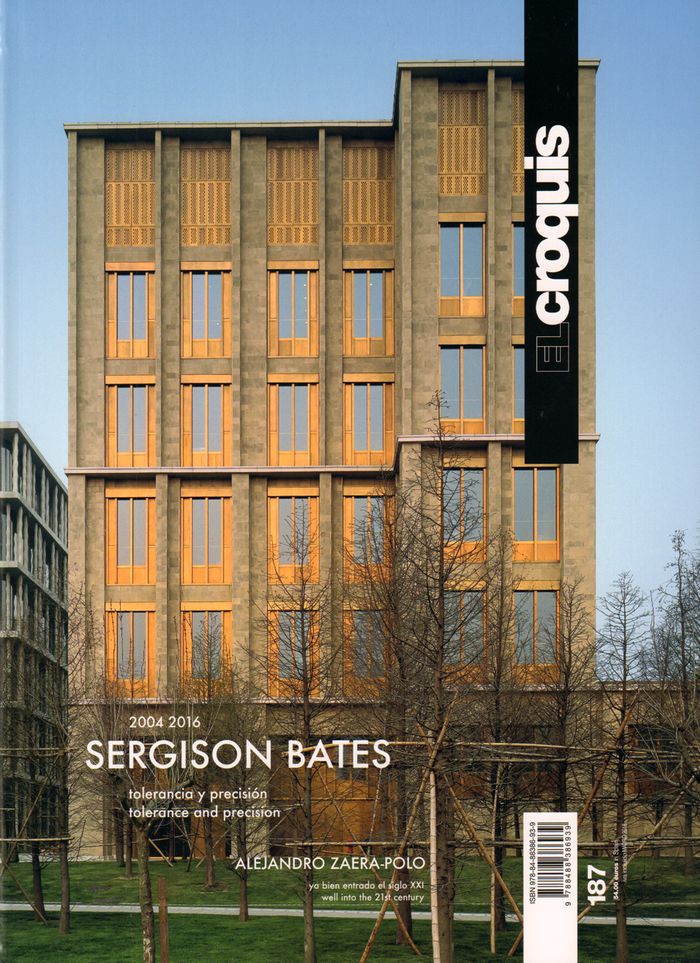
Currently based in London and Zürich, Sergison Bates architects has been active since 1996 and since gained international renown. This issue presents an overview of their output from the past dozen years, including private homes, urban housing, care facilities, office buildings, public libraries, and more. Among these are the Novartis Welcome Centre and Office Building in Shanghai, a university campus in London, a city library and public square in Mendrisio, a hotel in Doha, and urban residences in Vienna and Antwerp. Also published in this issue is the essay “Well into the 20th Century: The Architectures of Post-Capitalism?”, by architect Alejandro Zaera-Polo.
El Croquis 187: Sergison Bates 2004-2016
Actions:
Price:
$99.95
(available to order)
Summary:
Currently based in London and Zürich, Sergison Bates architects has been active since 1996 and since gained international renown. This issue presents an overview of their output from the past dozen years, including private homes, urban housing, care facilities, office buildings, public libraries, and more. Among these are the Novartis Welcome Centre and Office Building in Shanghai, a university campus in London, a city library and public square in Mendrisio, a hotel in Doha, and urban residences in Vienna and Antwerp. Also published in this issue is the essay “Well into the 20th Century: The Architectures of Post-Capitalism?”, by architect Alejandro Zaera-Polo.
Form:
books
books
Publication:
December 2016
December 2016
Subject:
Architecture Monographs
Architecture Monographs
Form:
books
books
Price:
$138.00
(available to order)
Summary:
If postmodernism is indeed ''the cultural logic of late capitalism,'' why did typical postmodernist themes like ornament, colour, history and identity find their application in the architecture of the socialist Second World? How do we explain the retreat into paper architecture and theoretical discussion in societies still nominally devoted to socialist modernization?(...)
$138.00
(available to order)
Summary:
If postmodernism is indeed ''the cultural logic of late capitalism,'' why did typical postmodernist themes like ornament, colour, history and identity find their application in the architecture of the socialist Second World? How do we explain the retreat into paper architecture and theoretical discussion in societies still nominally devoted to socialist modernization?(...)
Title:
Second world postmodernisms: architecture and society under late socialism
Actions:
Price:
$138.00
(available to order)
Summary:
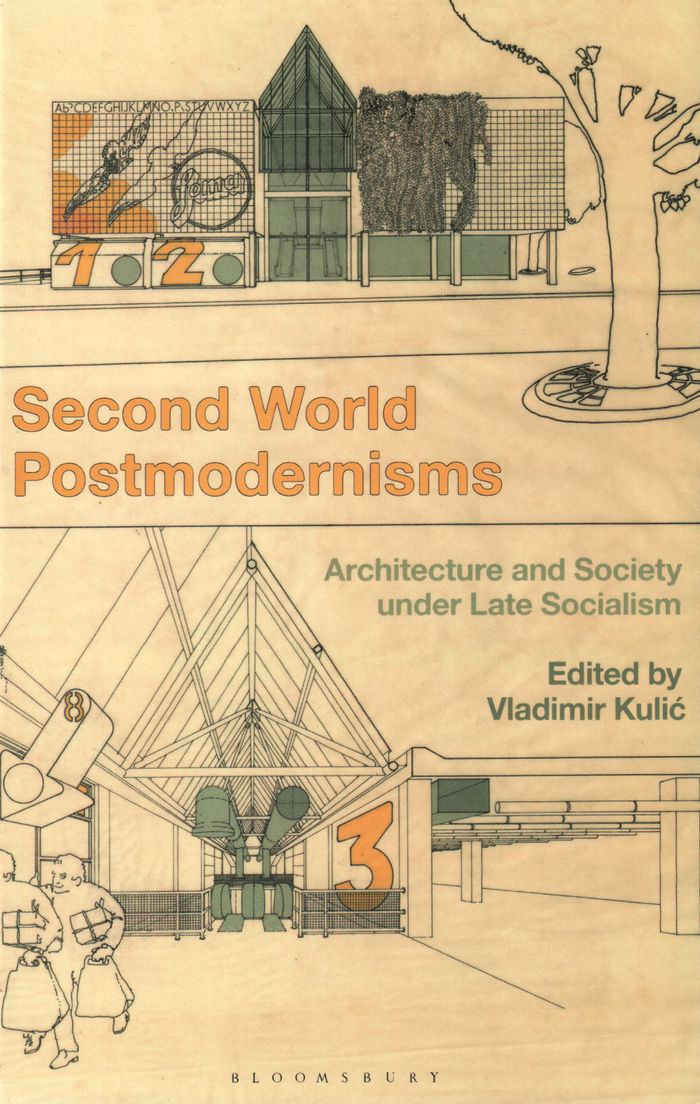
If postmodernism is indeed ''the cultural logic of late capitalism,'' why did typical postmodernist themes like ornament, colour, history and identity find their application in the architecture of the socialist Second World? How do we explain the retreat into paper architecture and theoretical discussion in societies still nominally devoted to socialist modernization? Exploring the intersection of two areas of growing scholarly interest - postmodernism and the architecture of the former socialist world - this edited collection stakes out new ground in charting architecture's various transformations in the 1970s and 80s. Fourteen essays together explore the question of whether or not architectural postmodernism had a specific Second World variant.
Second world postmodernisms: architecture and society under late socialism
Actions:
Price:
$138.00
(available to order)
Summary:
If postmodernism is indeed ''the cultural logic of late capitalism,'' why did typical postmodernist themes like ornament, colour, history and identity find their application in the architecture of the socialist Second World? How do we explain the retreat into paper architecture and theoretical discussion in societies still nominally devoted to socialist modernization? Exploring the intersection of two areas of growing scholarly interest - postmodernism and the architecture of the former socialist world - this edited collection stakes out new ground in charting architecture's various transformations in the 1970s and 80s. Fourteen essays together explore the question of whether or not architectural postmodernism had a specific Second World variant.
Form:
books
books
Publication:
February 2019
February 2019
Subject:
Architectural Theory
Architectural Theory
Form:
books
books
Title:
The society of the spectacle
The society of the spectacle
Actions:
Price:
$23.95
(available to order)
Summary:
Translated by Donald Nicholson-Smith. Few works of political and cultural theory have been as enduringly provocative as Guy Debord's "The society of the spectacle". From its publication amid the social upheavals of the 1960s up to the present, the volatile theses of this book have decisively transformed debates on the shape of modernity, capitalism and everyday life in(...)
$23.95
(available to order)
Summary:
Translated by Donald Nicholson-Smith. Few works of political and cultural theory have been as enduringly provocative as Guy Debord's "The society of the spectacle". From its publication amid the social upheavals of the 1960s up to the present, the volatile theses of this book have decisively transformed debates on the shape of modernity, capitalism and everyday life in(...)
Title:
The society of the spectacle
Actions:
Price:
$23.95
(available to order)
Summary:
Translated by Donald Nicholson-Smith. Few works of political and cultural theory have been as enduringly provocative as Guy Debord's "The society of the spectacle". From its publication amid the social upheavals of the 1960s up to the present, the volatile theses of this book have decisively transformed debates on the shape of modernity, capitalism and everyday life in the late twentieth century. Now finally available in a superb English translation approved by the author, Debord's text remains as crucial as ever for understanding the contemporary effects of power, which are increasingly inseparable from the new virtual worlds of our rapidly changing image/information culture.
The society of the spectacle
Actions:
Price:
$23.95
(available to order)
Summary:
Translated by Donald Nicholson-Smith. Few works of political and cultural theory have been as enduringly provocative as Guy Debord's "The society of the spectacle". From its publication amid the social upheavals of the 1960s up to the present, the volatile theses of this book have decisively transformed debates on the shape of modernity, capitalism and everyday life in the late twentieth century. Now finally available in a superb English translation approved by the author, Debord's text remains as crucial as ever for understanding the contemporary effects of power, which are increasingly inseparable from the new virtual worlds of our rapidly changing image/information culture.
Form:
books
books
Publication:
November 1995, New York
November 1995, New York
Form:
books
books
Actions:
Price:
$42.95
(available to order)
Summary:
Degrowth is an emerging social movement that overlaps with proposals for systemic change such as anti-globalization and climate justice, commons and transition towns, basic income and Buen Vivir. ''Degrowth in Movement(s)'' reflects on the current situation of social movements aiming at overcoming capitalism, industrialism and domination. The essays ask: What is the key(...)
$42.95
(available to order)
Summary:
Degrowth is an emerging social movement that overlaps with proposals for systemic change such as anti-globalization and climate justice, commons and transition towns, basic income and Buen Vivir. ''Degrowth in Movement(s)'' reflects on the current situation of social movements aiming at overcoming capitalism, industrialism and domination. The essays ask: What is the key(...)
Subject:
Critical Theory
Critical Theory
Publication:
June 2020
June 2020
Title:
Degrowth in movements: exploring pathways for transformation
Actions:
Price:
$42.95
(available to order)
Summary:
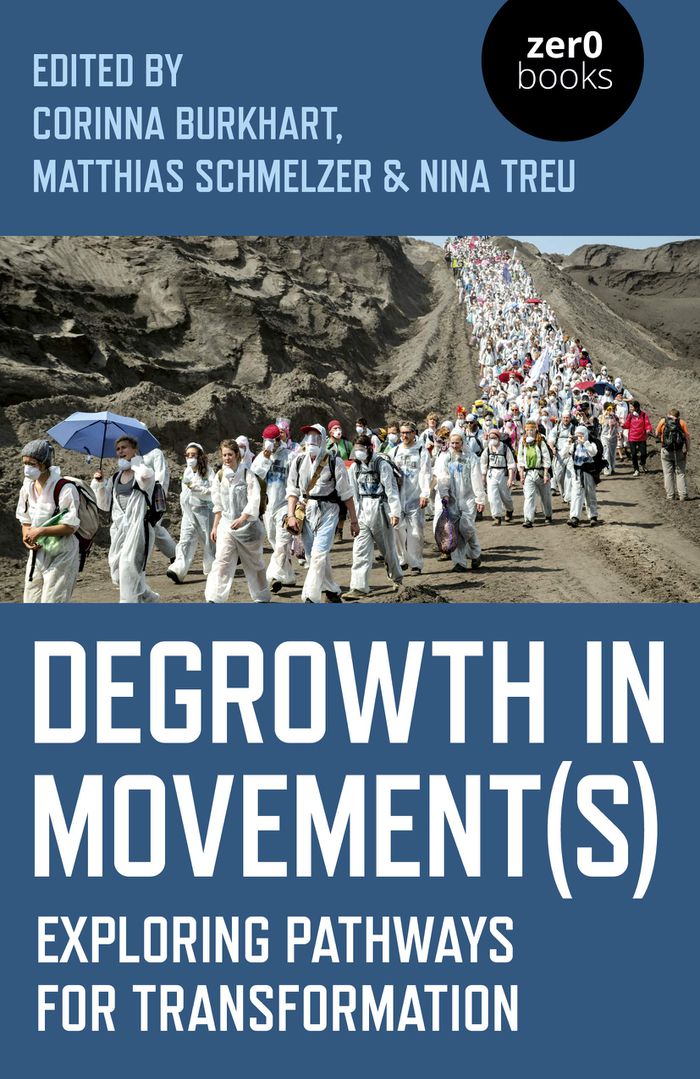
Degrowth is an emerging social movement that overlaps with proposals for systemic change such as anti-globalization and climate justice, commons and transition towns, basic income and Buen Vivir. ''Degrowth in Movement(s)'' reflects on the current situation of social movements aiming at overcoming capitalism, industrialism and domination. The essays ask: What is the key idea of the respective movement? Who is active? What is the relation with the degrowth movement? What can the degrowth movement learn from these other movements and the other way around? Which common proposals, but also which contradictions, oppositions and tensions exist? And what alliances could be possible for broader systemic transformations?
Degrowth in movements: exploring pathways for transformation
Actions:
Price:
$42.95
(available to order)
Summary:
Degrowth is an emerging social movement that overlaps with proposals for systemic change such as anti-globalization and climate justice, commons and transition towns, basic income and Buen Vivir. ''Degrowth in Movement(s)'' reflects on the current situation of social movements aiming at overcoming capitalism, industrialism and domination. The essays ask: What is the key idea of the respective movement? Who is active? What is the relation with the degrowth movement? What can the degrowth movement learn from these other movements and the other way around? Which common proposals, but also which contradictions, oppositions and tensions exist? And what alliances could be possible for broader systemic transformations?
Form:
books
books
Publication:
June 2020
June 2020
Subject:
Critical Theory
Critical Theory
Form:
books
books

Price:
$65.00
(available to order)
Summary:
This book is the result of eight years of research and the production of a series of photographs taken in 2013, 2015 and 2018 during Gianpaolo Arena’s travels through Vietnam. Both the photographs and the essays examine the complex bond between landscape and human civilization. In this sprawling sequence of urban growth, places and portraits we find continual antitheses(...)
$65.00
(available to order)
Summary:
This book is the result of eight years of research and the production of a series of photographs taken in 2013, 2015 and 2018 during Gianpaolo Arena’s travels through Vietnam. Both the photographs and the essays examine the complex bond between landscape and human civilization. In this sprawling sequence of urban growth, places and portraits we find continual antitheses(...)
Title:
A folktale from Vietnam: speeding motorcycles and roasted lemongrass
Actions:
Price:
$65.00
(available to order)
Summary:
This book is the result of eight years of research and the production of a series of photographs taken in 2013, 2015 and 2018 during Gianpaolo Arena’s travels through Vietnam. Both the photographs and the essays examine the complex bond between landscape and human civilization. In this sprawling sequence of urban growth, places and portraits we find continual antitheses of periods and customs that sometimes clash, at others meld. This project captures fragments of different rituals and ways of life of the contemporary Vietnamese society. The author offer a glimpse of Vietnam’s present and future cities between time and decay, culture and capitalism, folklore and propaganda.
A folktale from Vietnam: speeding motorcycles and roasted lemongrass
Actions:
Price:
$65.00
(available to order)
Summary:
This book is the result of eight years of research and the production of a series of photographs taken in 2013, 2015 and 2018 during Gianpaolo Arena’s travels through Vietnam. Both the photographs and the essays examine the complex bond between landscape and human civilization. In this sprawling sequence of urban growth, places and portraits we find continual antitheses of periods and customs that sometimes clash, at others meld. This project captures fragments of different rituals and ways of life of the contemporary Vietnamese society. The author offer a glimpse of Vietnam’s present and future cities between time and decay, culture and capitalism, folklore and propaganda.
Form:
books
books
Publication:
November 2021
November 2021
Subject:
Photography monographs
Photography monographs
Form:
books
books

Title:
Conflict in my Outlook
Conflict in my Outlook
Actions:
Price:
$45.00
(available to order)
Summary:
We live in a hyper-mediated world, drowning in an ocean of images and information. ''Conflict in my outlook'' gathers contemporary artworks and new texts that shed light on human experience in an era of ubiquitous networked technologies. From digital intimacies and the weaponization of social media to invisible power structures, clickwork, and the 'gig' economy,(...)
$45.00
(available to order)
Summary:
We live in a hyper-mediated world, drowning in an ocean of images and information. ''Conflict in my outlook'' gathers contemporary artworks and new texts that shed light on human experience in an era of ubiquitous networked technologies. From digital intimacies and the weaponization of social media to invisible power structures, clickwork, and the 'gig' economy,(...)
Publication:
June 2022
June 2022
Title:
Conflict in my Outlook
Actions:
Price:
$45.00
(available to order)
Summary:
We live in a hyper-mediated world, drowning in an ocean of images and information. ''Conflict in my outlook'' gathers contemporary artworks and new texts that shed light on human experience in an era of ubiquitous networked technologies. From digital intimacies and the weaponization of social media to invisible power structures, clickwork, and the 'gig' economy, contributors seek a better future in the context of algorithmic racism, machine learning, and the new colonial frontiers of surveillance capitalism. The anthology, which is published on the occasion of a two-part exhibition series at UQ Art Museum, focuses on art as a means to explore the techno-politics that define our age.
Conflict in my Outlook
Actions:
Price:
$45.00
(available to order)
Summary:
We live in a hyper-mediated world, drowning in an ocean of images and information. ''Conflict in my outlook'' gathers contemporary artworks and new texts that shed light on human experience in an era of ubiquitous networked technologies. From digital intimacies and the weaponization of social media to invisible power structures, clickwork, and the 'gig' economy, contributors seek a better future in the context of algorithmic racism, machine learning, and the new colonial frontiers of surveillance capitalism. The anthology, which is published on the occasion of a two-part exhibition series at UQ Art Museum, focuses on art as a means to explore the techno-politics that define our age.
Form:
books
books
Publication:
June 2022
June 2022
Form:
journals and magazines
journals and magazines
Title:
Scapegoat 07 : Incarceration
Scapegoat 07 : Incarceration
Actions:
Price:
$25.00
(available to order)
Summary:
As a mytheme, the figure of the scapegoat carries the burden of the city and its sins. Walking in exile, the scapegoat was once freed from the constraints of civilization. Today, with no land left unmapped, and with processes of urbanization central to political economic struggles, Scapegoat is exiled within the reality of global capital. The journal examines the(...)
$25.00
(available to order)
Summary:
As a mytheme, the figure of the scapegoat carries the burden of the city and its sins. Walking in exile, the scapegoat was once freed from the constraints of civilization. Today, with no land left unmapped, and with processes of urbanization central to political economic struggles, Scapegoat is exiled within the reality of global capital. The journal examines the(...)
Title:
Scapegoat 07 : Incarceration
Actions:
Price:
$25.00
(available to order)
Summary:
As a mytheme, the figure of the scapegoat carries the burden of the city and its sins. Walking in exile, the scapegoat was once freed from the constraints of civilization. Today, with no land left unmapped, and with processes of urbanization central to political economic struggles, Scapegoat is exiled within the reality of global capital. The journal examines the relationship between capitalism and the built environment, confronting the coercive and violent organization of space, the exploitation of labour and resources, and the unequal distribution of environmental risks and benefits. Throughout our investigation of design and its promises, we return to the politics of making as a politics to be constructed.
Scapegoat 07 : Incarceration
Actions:
Price:
$25.00
(available to order)
Summary:
As a mytheme, the figure of the scapegoat carries the burden of the city and its sins. Walking in exile, the scapegoat was once freed from the constraints of civilization. Today, with no land left unmapped, and with processes of urbanization central to political economic struggles, Scapegoat is exiled within the reality of global capital. The journal examines the relationship between capitalism and the built environment, confronting the coercive and violent organization of space, the exploitation of labour and resources, and the unequal distribution of environmental risks and benefits. Throughout our investigation of design and its promises, we return to the politics of making as a politics to be constructed.
Form:
journals and magazines
journals and magazines
Publication:
December 2014
December 2014
Subject:
Magazines
Magazines
Form:
books
books
Title:
Life is not useful
Life is not useful
Actions:
Price:
$17.95
(available in store)
Summary:
Indigenous leader and activist Ailton Krenak reminds us that we must awaken from the comatose senselessness we have been immersed in since the beginning of the modern colonial project, where order, progress, development, consumerism, and capitalism have taken over our entire existence, leaving us only very partially alive, and, in fact, almost dead. To awaken from the(...)
$17.95
(available in store)
Summary:
Indigenous leader and activist Ailton Krenak reminds us that we must awaken from the comatose senselessness we have been immersed in since the beginning of the modern colonial project, where order, progress, development, consumerism, and capitalism have taken over our entire existence, leaving us only very partially alive, and, in fact, almost dead. To awaken from the(...)
Title:
Life is not useful
Actions:
Price:
$17.95
(available in store)
Summary:
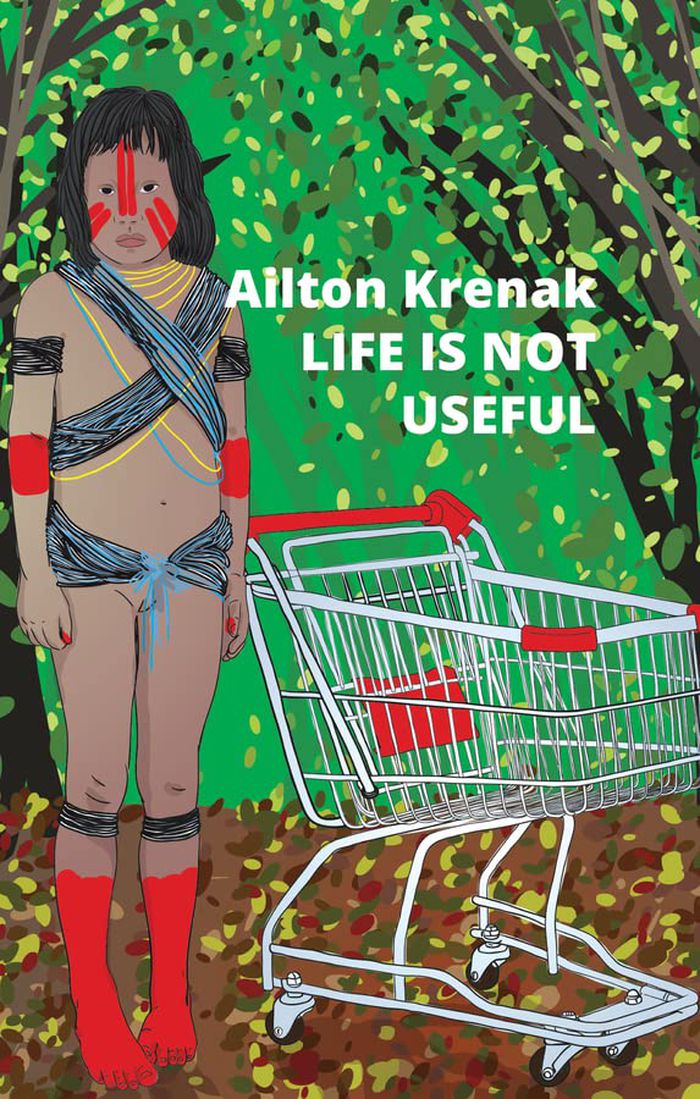
Indigenous leader and activist Ailton Krenak reminds us that we must awaken from the comatose senselessness we have been immersed in since the beginning of the modern colonial project, where order, progress, development, consumerism, and capitalism have taken over our entire existence, leaving us only very partially alive, and, in fact, almost dead. To awaken from the coma of modernity is, for Krenak, to awaken to the possibility of becoming attuned to “the cosmic sense of life.” He points out that the COVID-19 pandemic affects all so-called “human” lives and that the time is ripe for us all to reflect on and undo the exclusivity and distinction that have characterized the concept of humanity throughout Western modernity.
Life is not useful
Actions:
Price:
$17.95
(available in store)
Summary:
Indigenous leader and activist Ailton Krenak reminds us that we must awaken from the comatose senselessness we have been immersed in since the beginning of the modern colonial project, where order, progress, development, consumerism, and capitalism have taken over our entire existence, leaving us only very partially alive, and, in fact, almost dead. To awaken from the coma of modernity is, for Krenak, to awaken to the possibility of becoming attuned to “the cosmic sense of life.” He points out that the COVID-19 pandemic affects all so-called “human” lives and that the time is ripe for us all to reflect on and undo the exclusivity and distinction that have characterized the concept of humanity throughout Western modernity.
Form:
books
books
Publication:
May 2023
May 2023
Subject:
Social
Social


