


858 Results
Form:
books
books
Actions:
Price:
$44.95
(available to order)
Summary:
Today, one in five homeowners in American cities and suburbs lives in a multifamily home rather than a single-family dwelling. As the American dream evolves, precipitated by declining real estate prices and a renewed interest in city living, many predict that condos will become the predominant form of housing in the 21st century. In this unprecedented study Matthew Gordon(...)
Title:
High life : condo living in the suburban century
Actions:
Price:
$44.95
(available to order)
Summary:
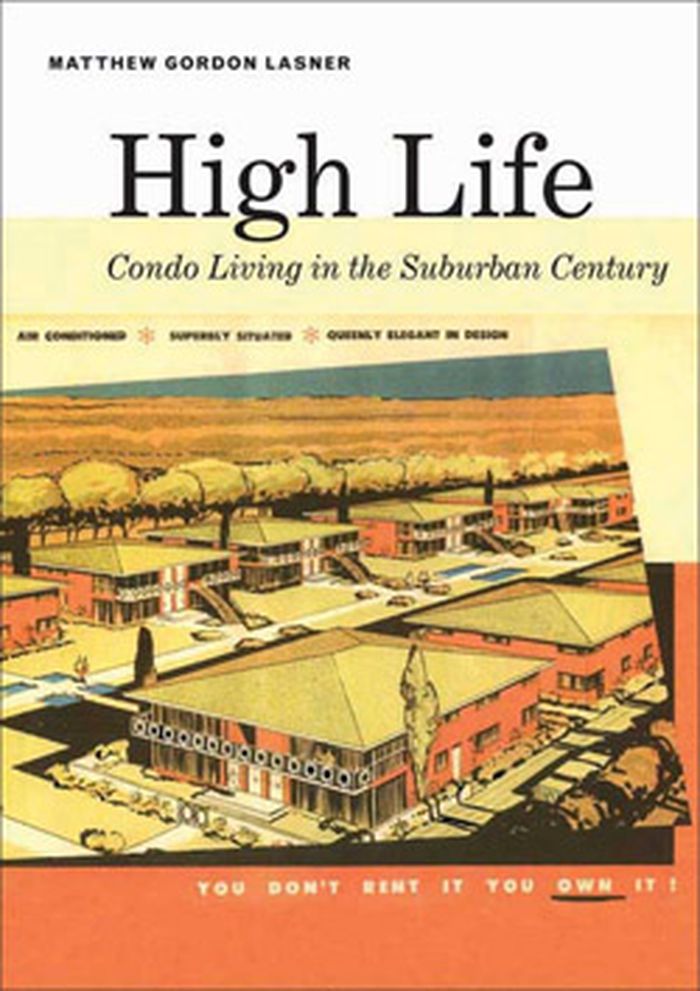
Today, one in five homeowners in American cities and suburbs lives in a multifamily home rather than a single-family dwelling. As the American dream evolves, precipitated by declining real estate prices and a renewed interest in city living, many predict that condos will become the predominant form of housing in the 21st century. In this unprecedented study Matthew Gordon Lasner explores the history of co-owned multifamily housing in the United States, from New York City's first co-op, in 1881, to contemporary condo and townhouse complexes coast to coast. Lasner explains the complicated social, economic, and political factors that have increased demand for this way of living, situating the trend within the larger housing market and broad shifts in residential architecture. He contrasts the prevalence and popularity of condos, townhouses, and other privately governed communities with their ambiguous economic, legal, and social standing, as well as their striking absence from urban and architectural history.
Form:
books
books
Publication:
October 2012
October 2012
Subject:
Architectural Theory
Architectural Theory
Form:
books
books

Actions:
Price:
$30.00
(available to order)
Summary:
Architectural drawings are charged with responsibility. They have a legal and contractual status, an educational function, command the act of construction and direct the work involved in constructing the building: drawings have a reason for being in the world that goes beyond their own limits. What happens when the drawing is freed from these responsibilities? What idea(...)
Title:
Fala architects: Butterflies farfalle
Actions:
Price:
$30.00
(available to order)
Summary:
Architectural drawings are charged with responsibility. They have a legal and contractual status, an educational function, command the act of construction and direct the work involved in constructing the building: drawings have a reason for being in the world that goes beyond their own limits. What happens when the drawing is freed from these responsibilities? What idea of architecture might emerge from drawings that can speak other languages? What might architecture become if it were free to experiment with other concerns? The series of drawings by fala presented in this book seem to ask exactly that question. They are drawings made after the fact. After construction, they are freed from the external responsibility of persuading or instructing; they have no duty to convince about anything that might exist beyond themselves. This is the opposite of the traditional linear process of sketch > drawing > construction. Here, the building acts as a preliminary sketch to the drawing.
Form:
books
books
Publication:
July 2023
July 2023
Subject:
Architecture Monographs
Architecture Monographs
Form:
books
books
Actions:
Price:
$42.00
(available to order)
Summary:
By the end of the twentieth century, US architecture and engineering firms held more capital than entire countries, employed more people than were housed in most cities, and rented offices in more nations than comprised the UN. Within them, architects were designing not single buildings but urban systems, including the multinational infrastructures, legal codes, and(...)
Title:
Incoporating architects: How American architecture became a practice of empire
Actions:
Price:
$42.00
(available to order)
Summary:
By the end of the twentieth century, US architecture and engineering firms held more capital than entire countries, employed more people than were housed in most cities, and rented offices in more nations than comprised the UN. Within them, architects were designing not single buildings but urban systems, including the multinational infrastructures, legal codes, and financial mechanisms on which those systems came to depend. However, despite the extraordinary power of these architects, their histories remain shrouded in myth and concealed—by design. This forensic analysis traces a history of architects at one such firm, AECOM, as they assembled their own multinational corporation and embedded themselves in the operations of American empire after World War II, shielding themselves from the instabilities of a postwar political economy. ''Incorporating Architects'' reveals how architects, through their businesses more than their drawings or buildings, modulated the political economy, gripped the reins of their profession, and produced the global injustices that define our neoliberal present.
Form:
books
books
Publication:
June 2025
June 2025
Subject:
Architectural Theory
Architectural Theory
Form:
books
books
Actions:
Price:
$23.95
(available to order)
Summary:
The term "guerrilla" may bring to mind a small band of armed soldiers, moving in the dead of night on a stealth mission. In the case of guerrilla gardening, the soldiers are planters, the weapons are shovels, and the mission is to transform an abandoned lot into a thing of beauty. Once an environmentalist's nonviolent direct action for inner-city renewal, this approach to(...)
Title:
Guerrilla gardening : a manualfesto
Actions:
Price:
$23.95
(available to order)
Summary:
The term "guerrilla" may bring to mind a small band of armed soldiers, moving in the dead of night on a stealth mission. In the case of guerrilla gardening, the soldiers are planters, the weapons are shovels, and the mission is to transform an abandoned lot into a thing of beauty. Once an environmentalist's nonviolent direct action for inner-city renewal, this approach to urban beautification is spreading to all types of people in cities around the world. These modern-day Johnny Appleseeds perform random acts of gardening, often without the property owner's prior knowledge or permission. Typical targets are vacant lots, railway land, underused public squares, and back alleys. The concept is simple, whimsical and has the cheeky appeal of being a not-quite-legal call to action. Dig in some soil, plant a few seeds, or mend a sagging fence - one good deed inspiring another, with win-win results all around.
Form:
books
books
Publication:
April 2007, Gabriola Island
April 2007, Gabriola Island
Subject:
Urban Landscapes
Urban Landscapes
Form:
books
books
Actions:
Price:
$60.00
(available to order)
Summary:
Shrinking cities have pushed urban design and classical city planning to their limits. This new challenge requires new approaches in which the "hard" tools of construction are joined by the "soft" tools of political, social, cultural, and communicative interventions. This book provides an international overview of experimental concepts for taking action in shrinking(...)
Title:
Shrinking cities, volume 2: interventions
Actions:
Price:
$60.00
(available to order)
Summary:
Shrinking cities have pushed urban design and classical city planning to their limits. This new challenge requires new approaches in which the "hard" tools of construction are joined by the "soft" tools of political, social, cultural, and communicative interventions. This book provides an international overview of experimental concepts for taking action in shrinking cities from the fields of architecture, landscape architecture, urban construction, the media, performance, and art. The approaches range from artistic intercessions and self-empowerment projects to architectural and landscape interventions, and from strategies of media communication and city marketing to new legal regulations and utopian designs. A series of essays provides a critical discussion of both successful and failed projects of recent decades from such countries as the United States, Great Britain, the Netherlands, Austria, Russia, and Japan. Projects featured (selection): William Alsop, Crimson, Jeremy Deller, Gordon Matta-Clark, OMA, Cedric Price, Andreas Siekmann, Robert Smithson, Superflex, O. M. Ungers
Form:
books
books
Publication:
June 2006, Ostfildern
June 2006, Ostfildern
Subject:
Urban Theory
Urban Theory
Form:
books
books
Actions:
Price:
$39.00
(available to order)
Summary:
How we deal with land has far-reaching implications for architecture and urban development. The last decade has seen a dramatic rise in the privatization of urban land and in speculation. Many European cities that today find themselves under extreme development pressure have virtually no land left to build on. In view of the acute housing shortage, the question of who(...)
Title:
Architecture on common ground: positions and models on the land property issue
Actions:
Price:
$39.00
(available to order)
Summary:
How we deal with land has far-reaching implications for architecture and urban development. The last decade has seen a dramatic rise in the privatization of urban land and in speculation. Many European cities that today find themselves under extreme development pressure have virtually no land left to build on. In view of the acute housing shortage, the question of who owns the land is therefore more relevant than ever. To what extent are we able to treat the land as a common good and guard it from the excesses of capitalism? ''Architecture on common ground'' provides a historical overview of land property from Henry George to the present. Interviews with stakeholders in global models provide insights into the current handling of the land issue. The book presents outstanding projects based on either a legal or spatial distribution of land and thus makes a valuable contribution to the current discussion on sustainable land policy.
Form:
books
books
Publication:
April 2021
April 2021
Subject:
Urban Theory
Urban Theory
Form:
books
books
Price:
$83.95
(available to order)
Summary:
This important book tells the multifaceted story of humankind’s relationship with flooding, a story that is permeated with a history of both worship and fear. Modern water engineering has turned plains and valleys into fully inhabitable environments. At the same time, those environments have become highly vulnerable to climate change. In efforts to prevent future floods,(...)
Title:
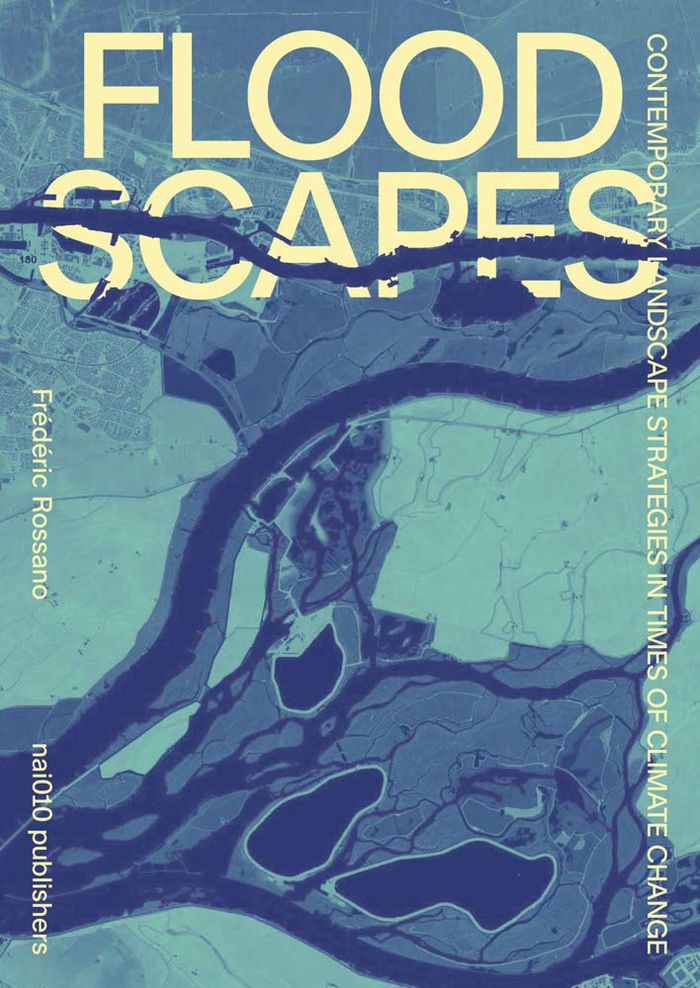
Floodscapes: contemporary landscape strategies in times of climate change
Actions:
Price:
$83.95
(available to order)
Summary:
This important book tells the multifaceted story of humankind’s relationship with flooding, a story that is permeated with a history of both worship and fear. Modern water engineering has turned plains and valleys into fully inhabitable environments. At the same time, those environments have become highly vulnerable to climate change. In efforts to prevent future floods, countries are rediscovering adaptation strategies: making room for flooding, redistributing risks and reconsidering the use and legal status of floodplains. Through historical investigations and six contemporary projects implemented in four European countries, "Floodscapes" illustrates how flood-mitigation measures can be embedded in local space and culture. Merged with landscape development, agriculture, recreation, nature, and even urban growth, river management becomes a design issue, giving landscape architects and urban designers a prominent role in future transitions. This book provides an in-depth look into the most common natural disaster in the US, and the innovative solutions that have arisen.
Form:
books
books
Publication:
June 2021
June 2021
Subject:
Environment and environmental theory
Environment and environmental theory
Form:
books
books
Actions:
Holdings:
Description:
175 pages : illustrations ; 22 cm.
Description:
175 pages : illustrations ; 22 cm.
Author:
Subject:
Publication:
Barcelona : MACBA, Museu d'Art Contemporani de Barcelona : RM Verlag Ciudad de México : MUAC, Museo Universitario Arte Contemporáneo, UNAM, 2017.
Barcelona : MACBA, Museu d'Art Contemporani de Barcelona : RM Verlag Ciudad de México : MUAC, Museo Universitario Arte Contemporáneo, UNAM, 2017.
Title:
Forensic Architecture : hacia una estética investigativa / [textos : Ferran Barenblit...[and others] ; coordinación editorial : Ekaterina Álvarez Romero (MUAC), Clara Plasencia (MACBA)].
Actions:
Holdings:
Description:
175 pages : illustrations ; 22 cm.
Forensic Architecture : hacia una estética investigativa / [textos : Ferran Barenblit...[and others] ; coordinación editorial : Ekaterina Álvarez Romero (MUAC), Clara Plasencia (MACBA)].
Actions:
Holdings:
Description:
175 pages : illustrations ; 22 cm.
Form:
books
books
Publication:
Barcelona : MACBA, Museu d'Art Contemporani de Barcelona : RM Verlag Ciudad de México : MUAC, Museo Universitario Arte Contemporáneo, UNAM, 2017.
Barcelona : MACBA, Museu d'Art Contemporani de Barcelona : RM Verlag Ciudad de México : MUAC, Museo Universitario Arte Contemporáneo, UNAM, 2017.
Author:
Subject:
Form:
books
books
Title:
The abuse of property
The abuse of property
Actions:
Price:
$24.95
(available to order)
Summary:
In ''The abuse of property,'' Daniel Loick offers a multifaceted philosophical critique of the concept of property, broadly understood. He argues that property should not be the dominant framework in which human beings regulate the use of things, that property is not the same as use. Property rights, in his view, are not conditions of freedom or justice, but deficient,(...)
Title:
The abuse of property
Actions:
Price:
$24.95
(available to order)
Summary:
In ''The abuse of property,'' Daniel Loick offers a multifaceted philosophical critique of the concept of property, broadly understood. He argues that property should not be the dominant framework in which human beings regulate the use of things, that property is not the same as use. Property rights, in his view, are not conditions of freedom or justice, but deficient, dysfunctional, and harmful ways of interacting with other people and the natural environment. He dissects not only the classic justifications of property (from John Locke’s justification of property as a natural right based on individual freedom to Hegel’s justification of property as a form of mutual recognition) but also the classic critiques of property, from Proudhon and Marx up to Adorno and Agamben. Through an innovative critical approach to legal studies, Loick demonstrates how the concept of property, historically applied to things and people and still a linchpin of our distorted relation with the world, forms a direct line from the Occupy movement to Black Lives Matter and beyond.
Form:
books
books
Publication:
August 2023
August 2023
Subject:
Critical Theory
Critical Theory
Form:
books
books
Actions:
Price:
$32.95
(available to order)
Summary:
Rubbing two sticks together produces heat and light while one stick alone is just a stick. It is the friction that produces movement, action, and effect. Anthropologist Anna Lowenhaupt Tsing challenges the widespread view that globalization invariably signifies a clash of cultures, developing friction as a metaphor for the diverse and conflicting social interactions that(...)
Title:
Friction: an ethnography of global connection
Actions:
Price:
$32.95
(available to order)
Summary:
Rubbing two sticks together produces heat and light while one stick alone is just a stick. It is the friction that produces movement, action, and effect. Anthropologist Anna Lowenhaupt Tsing challenges the widespread view that globalization invariably signifies a clash of cultures, developing friction as a metaphor for the diverse and conflicting social interactions that make up our contemporary world. Tsing focuses on the rainforests of Indonesia, where in the 1980s and 1990s capitalist interests increasingly reshaped the landscape not so much through corporate design as through awkward chains of legal and illegal entrepreneurs that wrested the land from previous claimants, creating resources for distant markets. In response, environmental movements arose to defend the rainforests and the communities of people who live in them. Not confined to a village, province, or nation, the social drama of the Indonesian rainforests includes local and national environmentalists, international science, North American investors, advocates for Brazilian rubber tappers, United Nations funding agencies, mountaineers, village elders, and urban students—all drawn into unpredictable, messy misunderstandings, but misunderstandings that sometimes work out.
Form:
books
books
Publication:
September 2024
September 2024
Subject:
Critical Theory
Critical Theory


